Physical Address
304 North Cardinal St.
Dorchester Center, MA 02124
Physical Address
304 North Cardinal St.
Dorchester Center, MA 02124

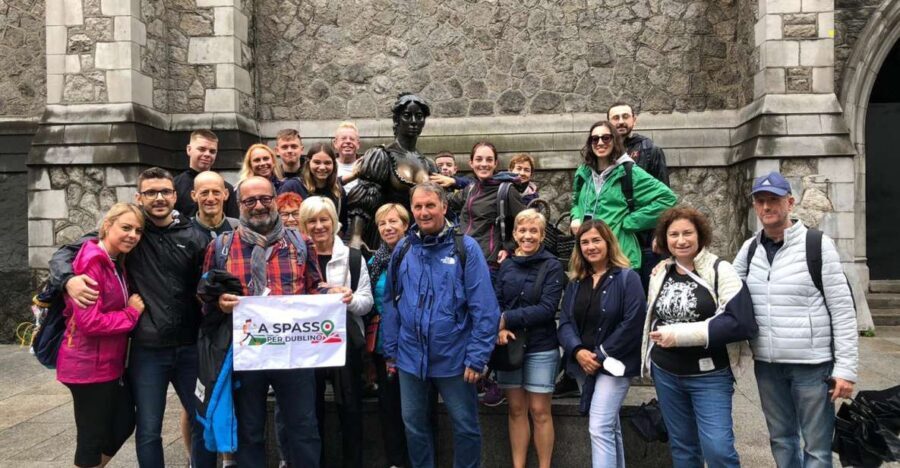
Walk Dublin’s central landmarks with an Italian-speaking guide, from Trinity College and Dublin Castle to Temple Bar, the Ha’penny Bridge and the Spire.
The Ha’penny Bridge is a fitting hinge for this Dublin walk: cross the Liffey and the city’s story shifts from the landmarks around Trinity College and Dublin Castle to the General Post Office and the north side. An Italian-speaking guide ties those places together, from St. Patrick’s arrival to the Anglo-Irish Treaty of 1921.
I like that the route links major sights with useful local advice, so you get both a city overview and ideas for the rest of your stay. I also like that it is led in Italian, a real help if you want to follow the history closely rather than piece it together from signs.
One point to check before booking: the activity is described as three hours, while its title calls it 2.45 hours, and the finish is given as both the Spire and the starting point. Confirm the current timing and endpoint when you reserve.
This is a walking introduction to central Dublin, not a visit focused on one building or museum. The value is in connecting the landmarks: Trinity College, Dublin Castle, the cathedrals, Temple Bar and the river all help explain how the capital’s past and present meet in a compact area.
The route begins at the Henry Grattan statue on College Green, in front of Trinity College. That gives you an easy reference point for the first stretch, and a guide can help put the nearby sights into context before you head toward the rest of the city center.
The walk is offered in Italian, with a live guide. That matters if you want to ask questions and follow the story in a language you are comfortable with. The pace and group size are not specified, so if either is important to you, check with the provider before booking.
If you enjoy exploring Dublin on foot, these walking tours might also suit your style
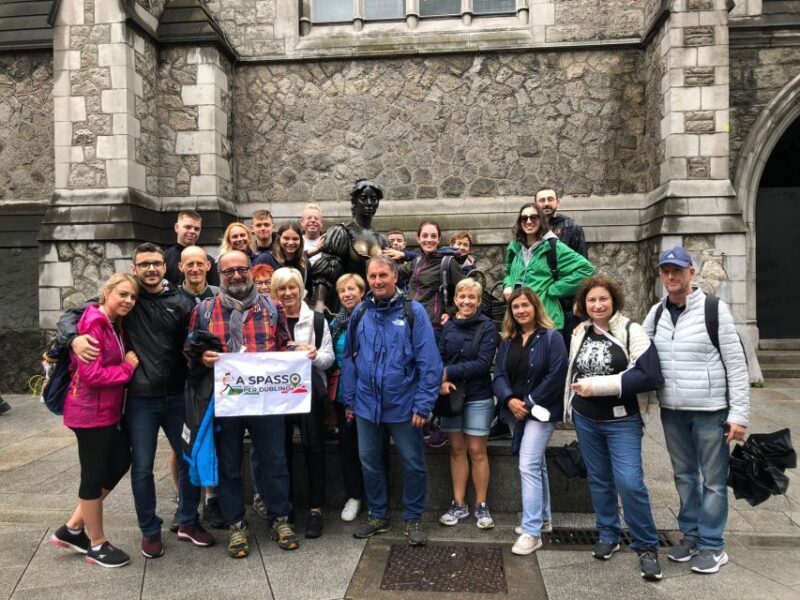
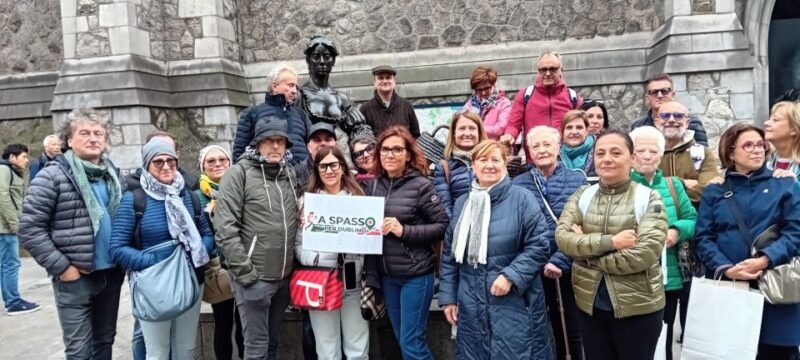
Early in the walk, you stop at the Molly Malone statue and hear the legend associated with her. It is a quick way into Dublin’s folklore and a familiar landmark that you can later find again on your own.
The route then reaches Dublin Castle, where the guide explains its role as the seat of British control in Ireland up to the signing of the Anglo-Irish Treaty in 1921. That context makes the castle more than a handsome facade: it gives you a point of reference for a major shift in Irish political history.
The tour lists Dublin Castle as a guided stop, but admission is not included. Treat this as an outside visit unless you confirm otherwise. If you want to explore the interior, you will need to plan for a separate entrance ticket and extra time.
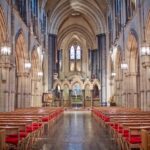
St. Patrick’s Cathedral and Christ Church Cathedral bring the walk into Dublin’s religious past. You will have the chance to admire their impressive exteriors and hear how the city’s story reaches back to St. Patrick’s arrival to evangelize among pagans.
Both stops are described as guided visits, but the tour does not include entrance fees. That distinction matters: this is a city walk that covers the main monuments, not a package of admissions. If going inside either cathedral is a priority, ask about the schedule and budget for entry separately.
Seeing the two facades on one route also helps you get your bearings. You can note their locations and decide later whether you want to return for a closer look, rather than trying to fit an interior visit into an already full walking tour.
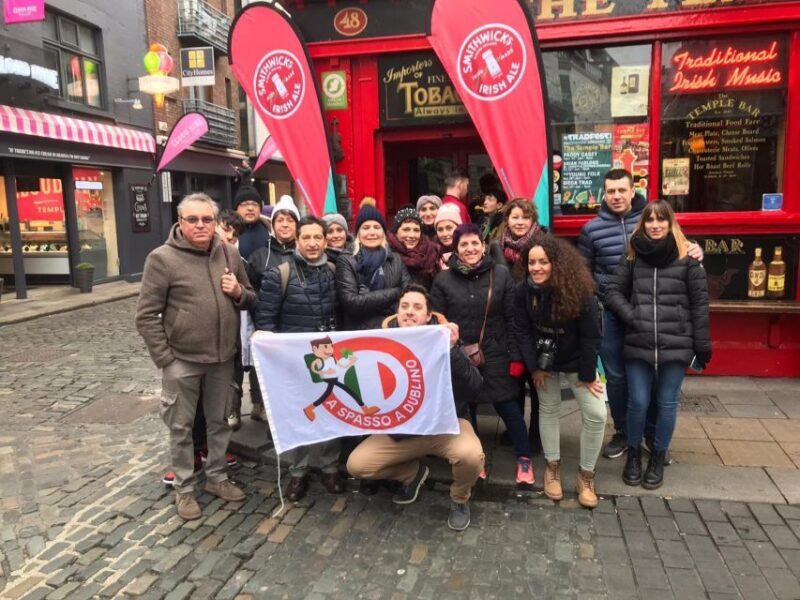
Temple Bar is Dublin’s popular entertainment district, and the walk passes through it as part of the city-center route. It is a useful place to learn where the nightlife and pub scene are concentrated, even if you do not plan to stop for a drink during the tour.
Your guide can also suggest where to find Irish stew, live music or a pub that suits your plans. These tips are among the walk’s practical strengths: you can use them that evening, while the streets and landmarks are still fresh in your mind.
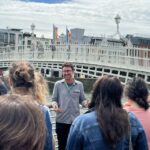
Next comes the Ha’penny Bridge, the local name for the Liffey Bridge. Crossing the river gives the route a clear change of scene and takes you toward significant sites on Dublin’s north side. The bridge itself is a memorable landmark, but it also works as a simple way to understand how the tour links both sides of the center.
More Great Tours Nearby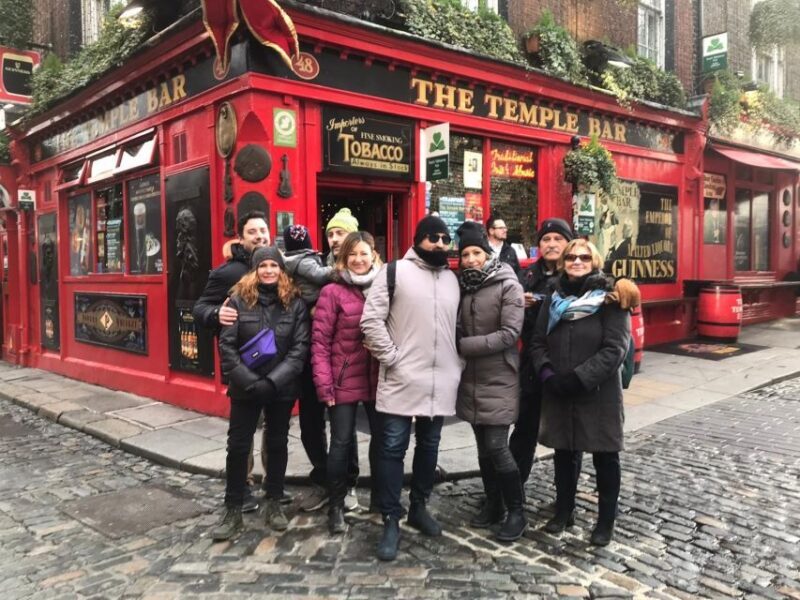
On the north side, the route includes the General Post Office, described as one of the capital’s last Georgian buildings. The GPO Museum is named as a stop, but entrance fees are excluded, so do not assume the guided walk includes entry to the museum. The guide can still help you understand why the building belongs among the city’s important historic sites.
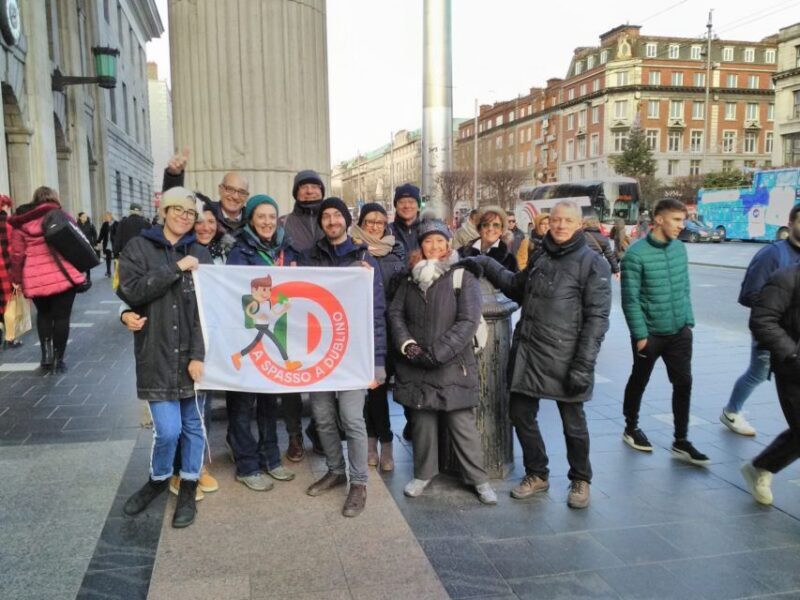
The planned route ends at the Spire on O’Connell Street. However, the meeting information also says the activity ends back at the starting point on College Green. Because those details do not match, confirm the actual endpoint before you set your plans for after the walk.
The full route makes sense as an orientation walk: you move from the Trinity area through the historic center, cross the river and finish near a major north-side landmark. If the endpoint is the Spire, you will be well placed to continue exploring O’Connell Street; if the group returns to College Green, you will finish where you began.
A good city walk depends on how clearly the guide tells the story, and the feedback points to engaging, attentive guiding as a real strength. Melania is praised for lively storytelling and for keeping an eight-year-old interested. Michela V. is described as informed, helpful and especially useful for planning the rest of a Dublin stay.
Those are specific strengths worth weighing, particularly if you are travelling with children or want more than a list of dates and names. Guide assignments can change, though, so do not book on the assumption that either Melania or Michela V. will lead your departure.
The tour’s subject matter spans early Christian history, the period of British control, the 1921 treaty and the city today. That breadth is useful for a first visit, but it also means you should expect an overview rather than a long, detailed study of any one monument.

At $28 per person, the main value is the Italian-language guiding and the connected route through central Dublin. You get a city orientation and a chance to ask questions without paying for a separate entrance to each site. If you prefer to explore entirely on your own, the price may feel less worthwhile; if the stories and local advice matter to you, it is a reasonable way to start.
The listed extras include a 15% discount at The Well Restaurant, Wallace Tavernam and the Irish Whiskey Museum, a 10% discount at Sfuso, and a special bundle at Caffè Cagliostro. These can add value if you plan to visit those places, but they should be treated as optional perks, not a reason to book by themselves.
The duration is listed as three hours, while the tour title says 2.45 hours. Starting times depend on availability. Wear comfortable shoes, and bring a sun hat, sunglasses or an umbrella to suit the weather. Large bags and luggage are not allowed.
The activity is not suitable for wheelchair users. It offers free cancellation up to 24 hours in advance and a reserve-now, pay-later option, which can help if your plans are not final. At the end of each tour, you may also get the chance to book day trips from Dublin to places such as the Cliffs of Moher, Giant’s Causeway, Howth, Galway, Connemara, Cork, Blarney Castle, Belfast and Newgrange.
Book this if you want a broad introduction to Dublin’s central sights in Italian, especially at the start of a stay. The mix of landmarks, historical context and practical suggestions can help you decide what deserves more of your time later.
It is less suited to you if you need wheelchair access, want included entry to the castle, cathedrals or GPO Museum, or are looking for a deep visit to a single attraction. Before you commit, ask the provider to confirm the actual duration and whether the walk ends at the Spire or returns to College Green. Those two details will make it easier to plan the rest of your day.
“Melania, our guide, has been very effective and her storytelling fun and interesting! Furthermore, she had been wonderful with my 8 years old daugh…”
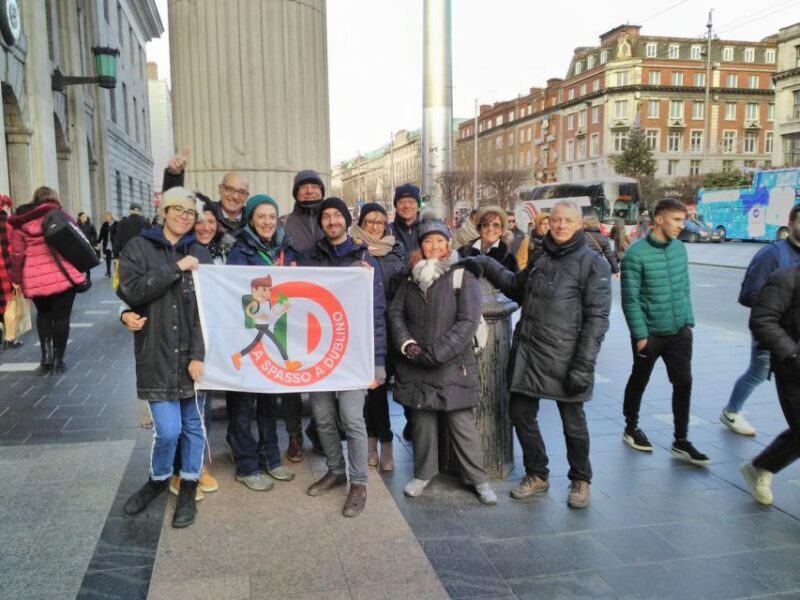
The activity information gives a duration of three hours, while the tour title says 2.45 hours. Check the current details for your chosen departure.
The live tour guide speaks Italian.
Meet at the Henry Grattan statue on College Green, in front of Trinity College. Look for a guide wearing a badge with the local supplier’s name.
The route description gives the Spire as the finish, while the meeting information says the activity ends back at the starting point. Confirm the endpoint with the provider before booking.
No. Entrance fees are not included.
No. The activity is listed as not suitable for wheelchair users.
You can check availability for your dates here: