Physical Address
304 North Cardinal St.
Dorchester Center, MA 02124
Physical Address
304 North Cardinal St.
Dorchester Center, MA 02124

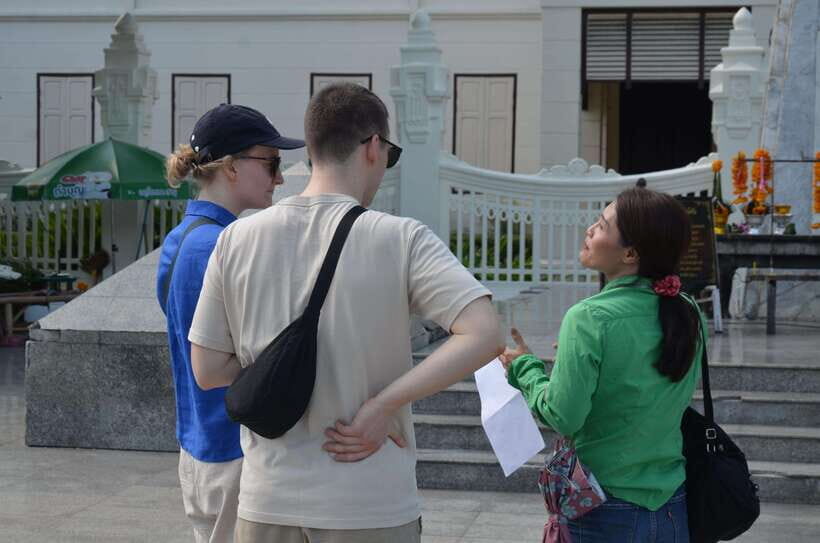
Walk Chiang Mai’s Old City with a local guide, visiting four landmark temples and the Three Kings Monument in a small, three-hour group.
Wat Chiang Man is a good place to begin understanding Chiang Mai: it dates to the city’s founding in 1296, and its old temple grounds introduce the Lanna style you’ll see again along the route. Over three hours, you walk through the Old City to four important temple sites and the Three Kings Monument, with a local guide explaining the history, Buddhist customs and details you might otherwise pass by.
I like two things in particular: the small group, capped at 10, makes it easier to ask questions, and the route pairs famous temples with the unusual all-teak hall at Wat Phan Tao. Guides such as Jen, Pun and Danny have led tours, and their personal interests and stories add welcome character to the walk.
The main consideration is that this is a walking tour in the heat or rain, with temple entry fees on top of the $21 price. You’ll also need clothes that cover your shoulders and knees, so plan your outfit before setting out.
Chiang Mai’s Old City is compact enough to explore on foot, and that is a real advantage here. Rather than treating each temple as a separate photo stop, the walk connects them with the city’s civic center and local streets. Your guide supplies the historical and cultural context that helps the buildings feel like parts of a living city, not a string of ornate facades.
The tour begins at Wat Chiang Man and moves west, with a stop at the Three Kings Monument before continuing to Wat Phra Singh, Wat Phan Tao and Wat Chedi Luang. The listed stop times add up to just over two hours, leaving the rest of the three-hour outing for walking between sites and moving through the grounds.
You should expect a steady walking pace, not a strenuous hike. Still, the route involves time on your feet, and some of the walk takes place near busy roads. Wear comfortable shoes, bring water for after the bottle provided, and tell your guide if you need a slower pace.
If you enjoy exploring Chiang Mai on foot, these walking tours might also suit your style
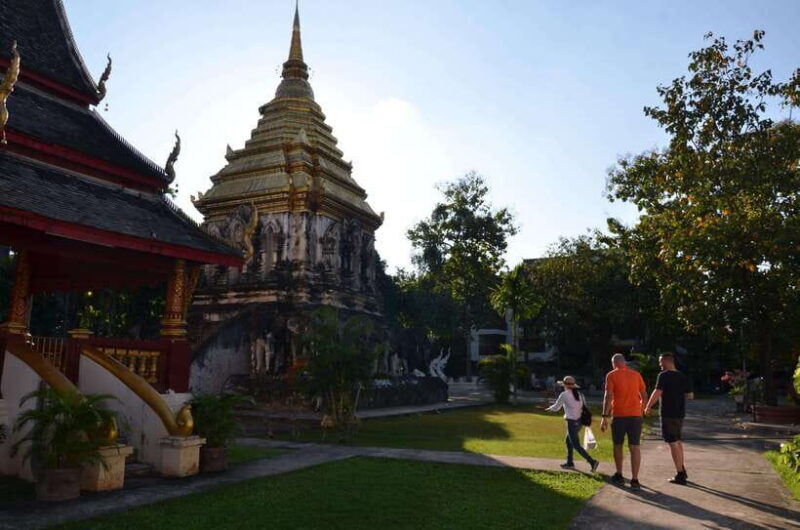
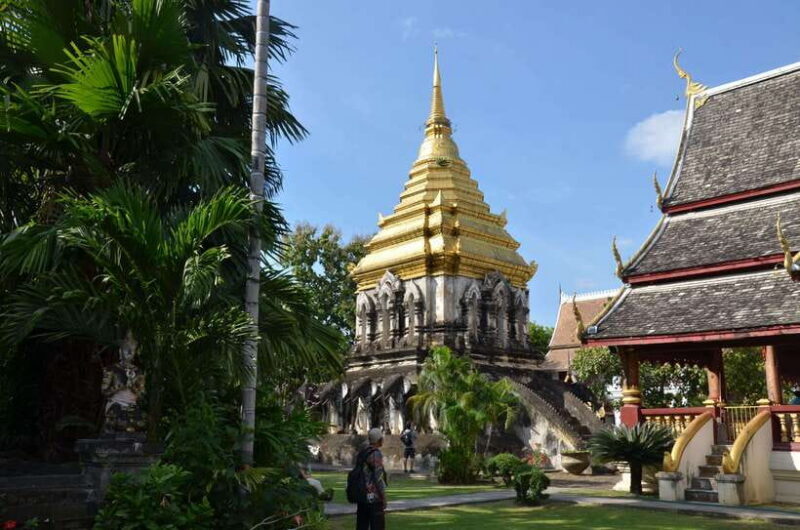
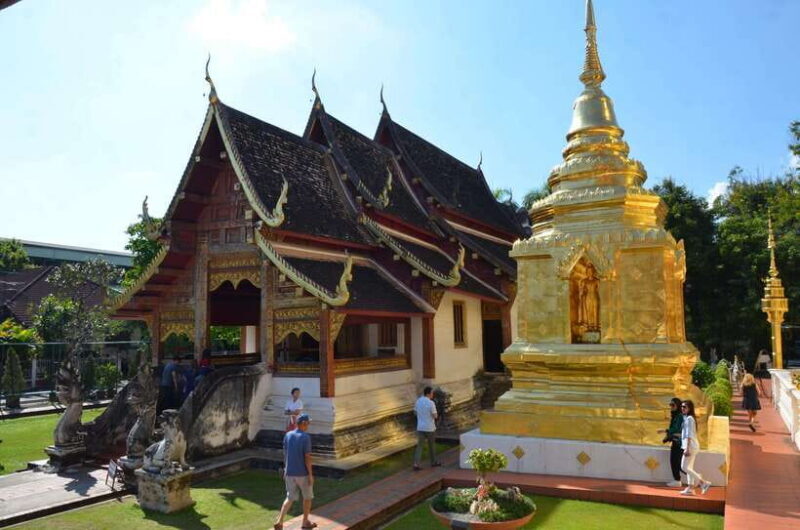
At Wat Chiang Man, you start with the earliest chapter of Chiang Mai’s story. The temple was built in 1296, the year the city was founded, and is described as the oldest temple in Chiang Mai. Your guide has about 30 minutes here to introduce its history and point out architectural features.
This first stop gives the rest of the route a useful frame. The city’s temples are places of worship, but their buildings also reflect the history and artistic traditions of the Lanna region. A guide can help you notice those details and explain how Buddhist practice shapes the way the temples are used.
You’ll have time to look around and take photographs, but the visit is still part of a group walk. If you want a long, quiet exploration of each temple, plan a return visit on your own. The tour’s strength is the overview and the explanations along the way.
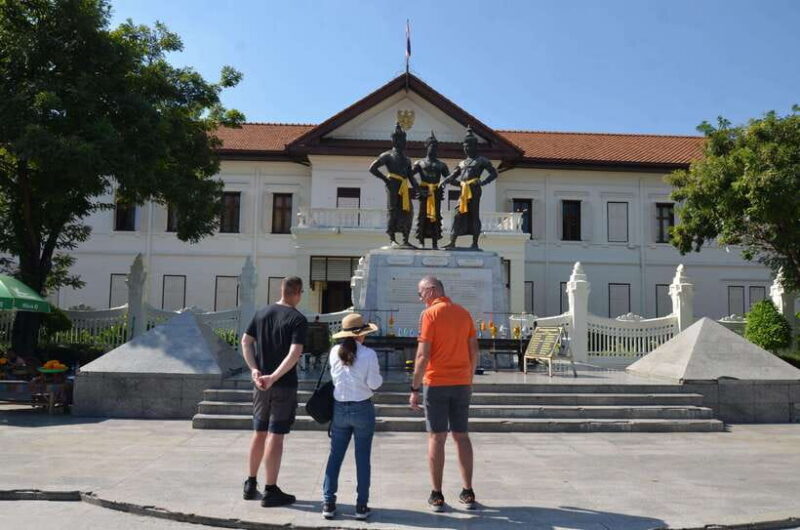
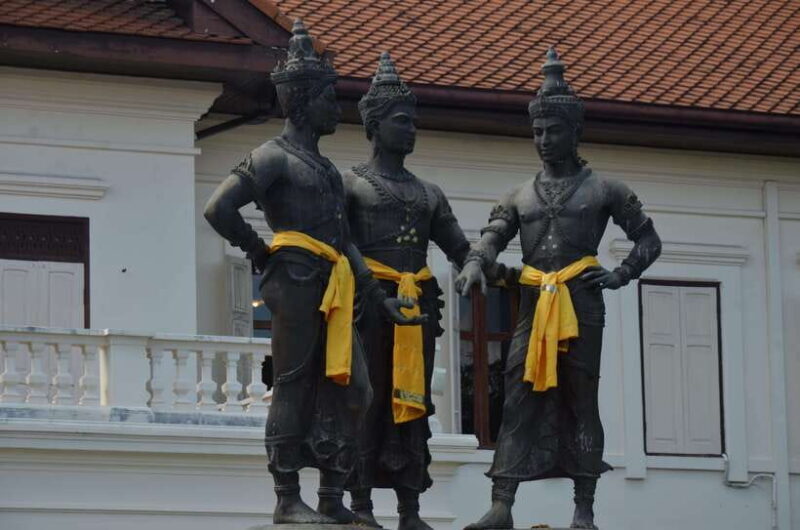
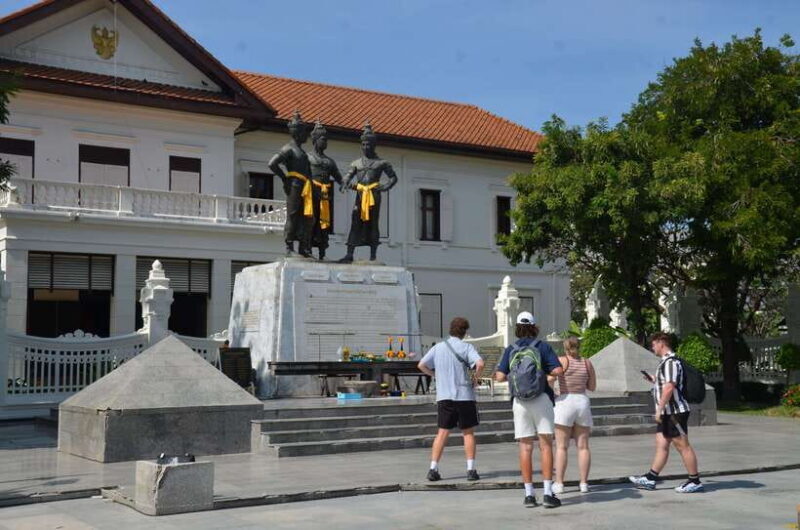
The next stop is the Three Kings Monument, a large open square in the heart of the walled Old City. The scheduled visit is short, about 10 minutes, so think of it as a quick orientation point rather than a long stop.
The monument helps connect the temples to Chiang Mai’s civic identity. A guide can explain why the Three Kings are commemorated and place the square within the city’s story. It is also a chance to see the Old City from a more open vantage before returning to temple grounds and smaller streets.
Some people particularly enjoy the walk between the main stops, where shops and cafés offer glimpses of everyday Old City life. This is not a food tour, and there is no meal included, but you can ask your guide for local café or meal suggestions. Guides have also shared recommendations for coffee and khao soi, Chiang Mai’s well-known noodle dish.
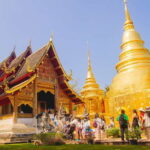
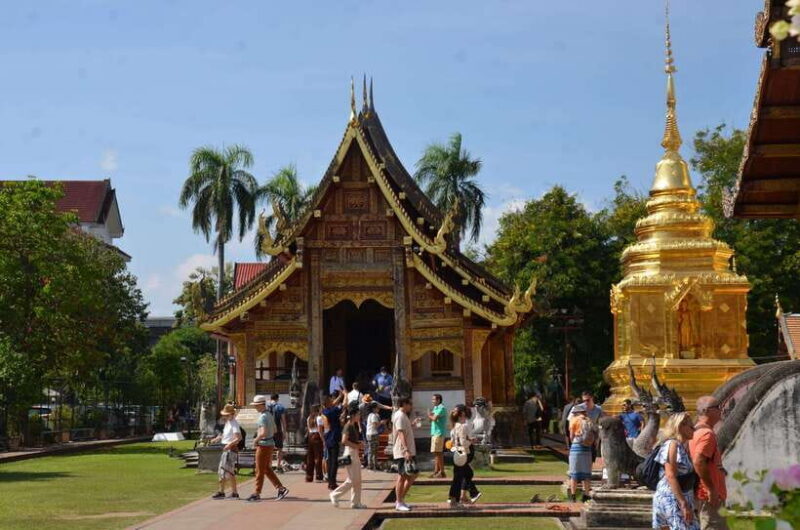
Wat Phra Singh gets about 40 minutes, making it one of the longer visits. It is known as one of Thailand’s finest examples of classic Lanna-style temple architecture. If you’re new to the region, this is a good place to look carefully at the forms and decoration while your guide explains what you are seeing.
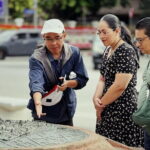
The guide’s explanations are a central part of the visit. Several guides on this tour, including Jen and Pun, have been praised for taking questions and explaining temple history, Buddhist stories and local customs in clear English. Danny has also shared his experience as a former monk, offering a personal perspective on Buddhist life. Your assigned guide will vary, but the tour is designed around that local interpretation.
The entry fee here is 50 THB and is not included in the $21 tour price. Carry cash for the two paid temples, and remember that the tour price is only part of your total cost. The fee is modest, but it is worth knowing about before you arrive.
More Great Tours Nearby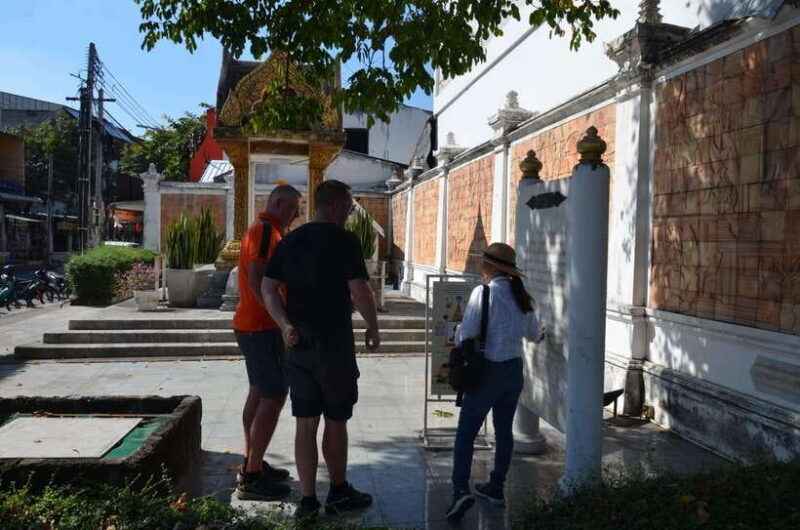
Wat Phan Tao offers a change of texture. Its main temple hall, or viharn, is built almost entirely of teak wood. The building was originally part of a royal palace, and the hall contains an enormous teak throne once used by Chiang Mai’s rulers.
The scheduled stop is about 15 minutes, shorter than the visits at Wat Phra Singh and Wat Chedi Luang. That makes this a concise look rather than a long visit, but the wooden construction gives the route welcome variety. After seeing stone and decorated temple structures, the dark teak hall feels distinct.
Keep your camera handy, but give yourself time to listen as well. The tour is at its best when the guide can explain what makes a feature worth noticing, rather than leaving you to guess at its purpose.
If you prefer having a local expert, these guided Chiang Mai experiences could work well
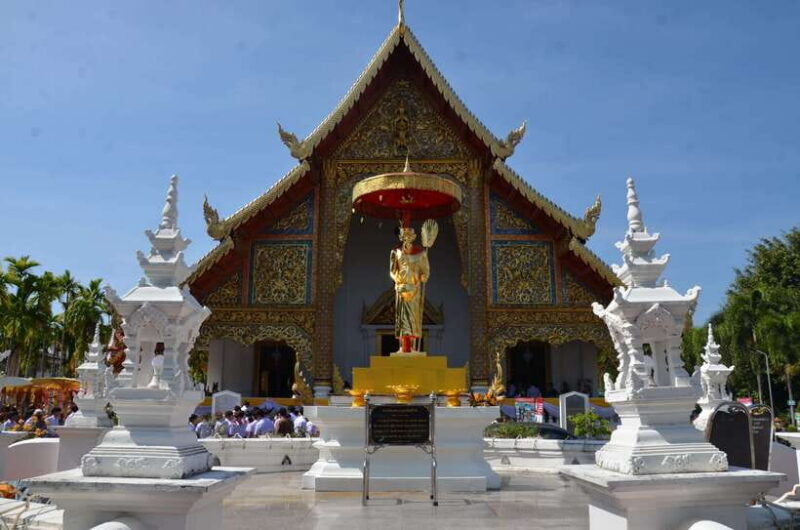
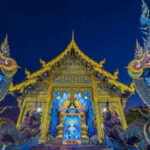
The final major stop is Wat Chedi Luang, where the tour spends about 40 minutes. Its large ruined chedi is one of the route’s most striking sights. The damage is part of the structure you see today, and the scale of the remains gives you a vivid sense of the temple’s importance.
The visit also includes the main prayer hall, where you can see a majestic standing Buddha. This is a fitting place to bring together the themes of the walk: architecture, Chiang Mai’s past and the Buddhist traditions that remain part of daily life.
Entry costs an additional 50 THB. The tour ends at Wat Chedi Luang, so you can stay in the area afterward if you want more time, though the guided portion itself is scheduled for three hours.
The temples are beautiful on their own, but the guide is what turns a pleasant walk into a more useful introduction. You can ask about the meaning of a building or image, hear local stories, and get a clearer picture of how Chiang Mai’s history and Buddhist practice relate to the sites.
The group limit of 10 supports a more conversational feel than a large coach tour. Groups can be smaller, too. One guide, John, led a group of four, while another outing had only two participants. Group size depends on bookings, but a small maximum gives you a better chance to hear explanations and ask your own questions.
Guides named in recent departures include Jen, Pun, Danny, Jane, Faan, Jackie and others. Their approaches differ, but the tour’s aim stays the same: explain the temples, answer questions and help you understand what you are looking at. Some guides also share practical recommendations for coffee or food, a useful bonus when you’re just getting to know the city.
At $21 per person, the tour is good value if you want an informed overview of the Old City rather than simply directions between temples. You get three hours with an English-speaking local guide and a bottle of water. Add 100 THB for the two temple entry fees, plus anything you choose to spend on food or drinks.
The walking format keeps the experience low-impact and avoids time spent transferring between nearby sites. It also means you are exposed to the weather. July to mid-October is rainy season, so bring an umbrella or raincoat during those months. A hat and sunscreen are sensible in brighter weather.
Meet your guide at Wat Chiang Man and look for the Beyond Experience sign. One practical wrinkle: the meeting point is inside the temple grounds, and the sign may not be easy to spot. Arrive with enough time to find the group, and keep the organizer’s contact details handy in case you need help locating the guide.
Wear comfortable clothes that cover your shoulders and knees. Shorts, short skirts and sleeveless shirts are not allowed at the temples. Bring comfortable shoes, a hat, sunscreen, rain protection in wet months, cash for entrance fees and a scarf if you need an extra layer of coverage.
This tour is not suitable for pregnant women or people with back problems. It does not include food, and luggage or large bags are not allowed. The voucher is valid only on the date booked. You can cancel up to 24 hours in advance for a full refund, and the reserve-now, pay-later option lets you hold a place without paying at the time of booking.
I’d choose this tour if you’re new to Chiang Mai and want a clear introduction to the Old City, its temples and Lanna architecture. It’s especially useful if you like asking questions and want someone to explain the significance of what you see, rather than collecting temple visits without context.
It also suits anyone with only a few days in Chiang Mai who wants to see several major sites without arranging each stop independently. The small group and three-hour format make it a manageable first outing, and you can return later to spend more time at the temples that catch your eye.
If you prefer to explore at your own pace, dislike walking in warm or rainy weather, or want an in-depth visit to just one temple, a self-guided visit may suit you better. But for a modest price, this is a practical way to see four important temples and understand more of what lies behind their architecture.
My call: book it if you want a friendly, guided introduction to Chiang Mai’s Old City. Bring temple-appropriate clothes, cash for the two entry fees and weather protection, then let the guide fill in the story as you walk.
“Easy pace and started early so it wasn’t too hot. Our guide Jen was very sweet and knowledgeable. Recommended small group tour”
The tour lasts three hours.
Meet your guide at Wat Chiang Man and look for the Beyond Experience sign.
The tour finishes at Wat Chedi Luang, also called Watchediluang Varaviharn.
The route visits Wat Chiang Man, Wat Phra Singh, Wat Phan Tao and Wat Chedi Luang. It also stops at the Three Kings Monument.
No. Wat Phra Singh costs 50 THB and Wat Chedi Luang costs 50 THB. Carry cash for these fees.
The tour is conducted in English by a local guide.
Wear comfortable clothes that cover your shoulders and knees. Shorts, short skirts and sleeveless shirts are not allowed when entering temples.
Bring comfortable shoes, a hat, sunscreen, cash and a scarf if useful. During the rainy season from July to mid-October, bring an umbrella or raincoat.
You can check availability for your dates here: