Physical Address
304 North Cardinal St.
Dorchester Center, MA 02124
Physical Address
304 North Cardinal St.
Dorchester Center, MA 02124

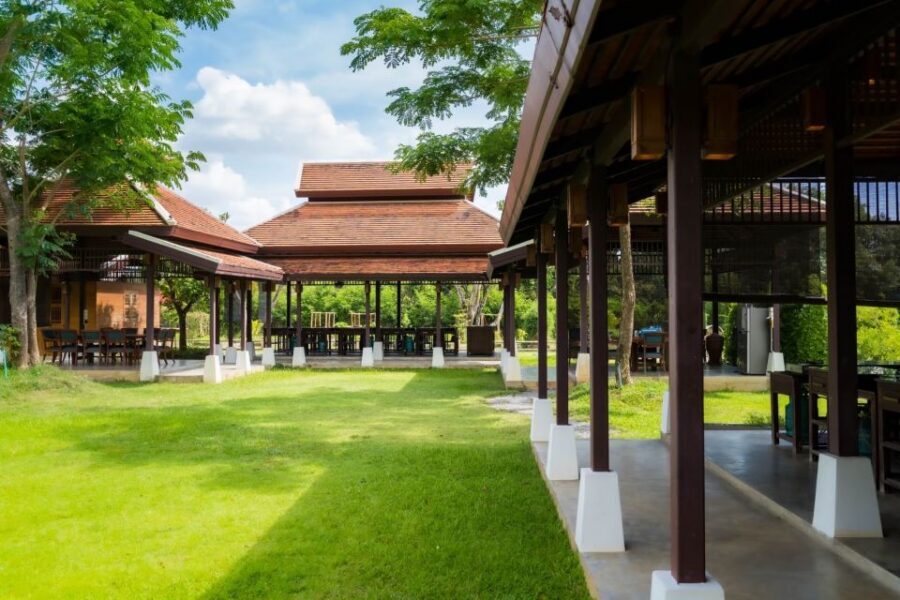
Cook Thai classics at Grandma’s Chiang Mai school, with a market visit, organic farm walk, fresh ingredients and your own cooking station.
Thai cooking gets more interesting when you can see, smell and handle the ingredients before they reach the pan. At Grandma’s Home Cooking School, you visit a local market on selected sessions, walk an organic farm, then cook at your own station. I like the farm-to-kitchen connection and the chance to make curry paste from scratch with a mortar and pestle.
I also like that this is more than a demonstration: you choose from the menu at the start, cook step by step, then sit down to eat what you made. The main consideration is that the four session types differ in length and activities, so check which one you are booking. The full-day option adds traditional coconut milk making, while evening sessions do not include the market visit.
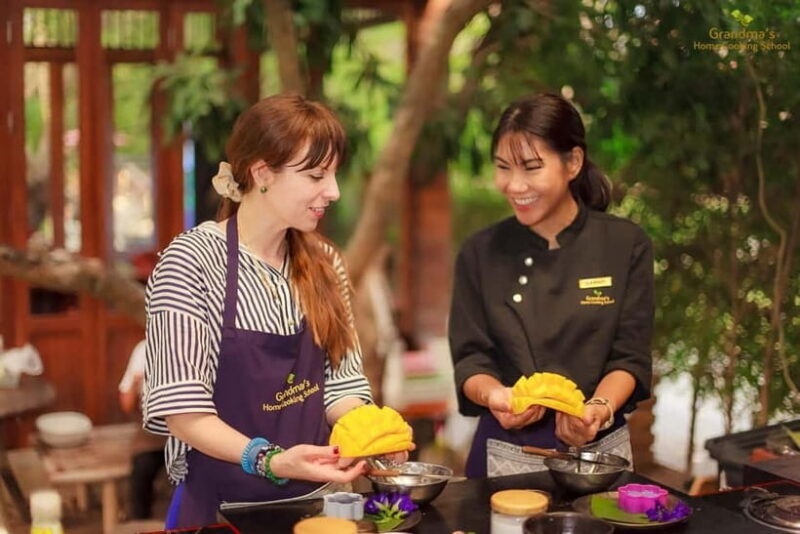
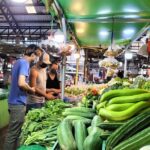
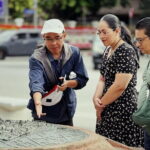
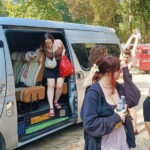
The experience begins with hotel pickup in an air-conditioned van for hotels within five kilometres of central Chiang Mai. Morning, afternoon and full-day groups visit a local market with an instructor; the evening session skips that stop and spends its time at the farm and school instead.
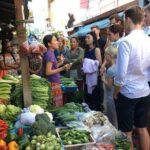
The market visit gives you a useful introduction to what goes into Thai cooking. Rather than meeting unfamiliar herbs and vegetables only as ingredients in a finished dish, you can see and smell them before cooking. That context can make restaurant menus easier to understand later, and it gives you a better chance of recognizing ingredients if you try the recipes at home.
The amount of time spent at each stop depends on the session you choose. The advertised duration ranges from about 210 minutes to seven hours, so this is not one fixed itinerary with four different start times. Check the available session details before booking, especially if you want the market visit or the full-day coconut milk activity.
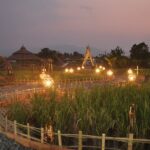
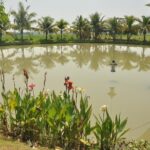
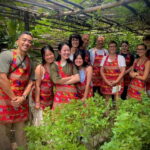
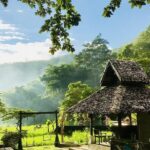
After the market, or directly after pickup for some sessions, you head to the school’s farm. The setting is part of the appeal: reviews describe gardens, rice-field surroundings and open-air cooking areas, rather than a classroom enclosed by four walls. You walk among herbs and vegetables and learn how some of the ingredients used in the recipes grow.
There is a mushroom hut where you can pick mushrooms, and you may be able to harvest vegetables if they are ready. That last detail matters: the farm is a working growing space, not a promise that every crop will be available to pick on every visit.
You can check availability for your dates here: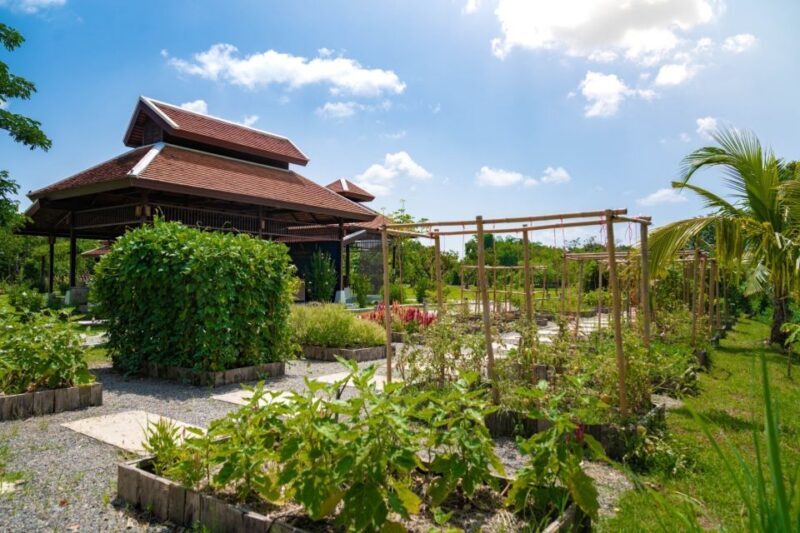
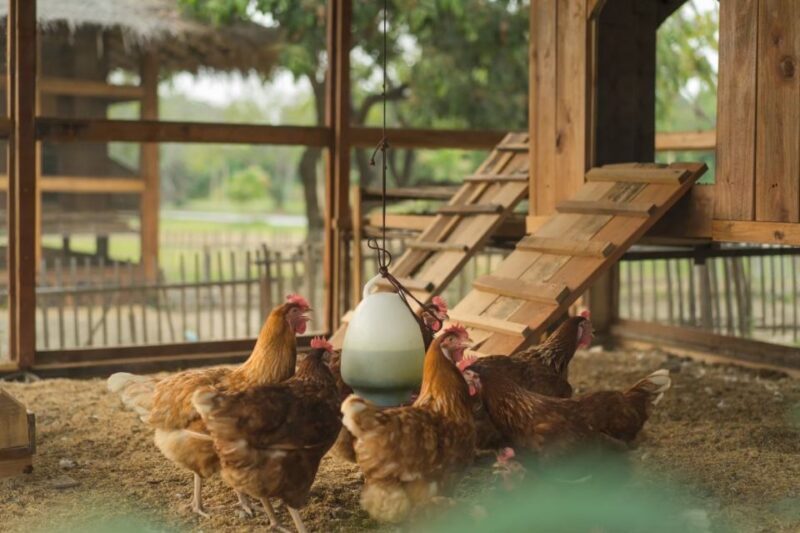
The farm visit has an easygoing, hands-on character. You can feed the chickens, collect fresh eggs and even give them a gentle hug. It is a small but memorable change of pace from the market and cooking stations, and it helps connect the meal to ingredients that are grown or gathered on site.
Your instructor introduces herbs and vegetables used in Thai dishes, sometimes inviting you to pick them. Smelling and handling ingredients can help you understand why a recipe uses a particular leaf or spice, even if you are not yet confident enough to identify it in a shop.
Wear comfortable shoes for the farm walk and bring a sun hat. The activity is outdoors, and the farm tour involves moving around the grounds. The school describes the farm as a large organic farm, but do not expect a long agricultural tour: the emphasis is on seeing ingredients and taking part in a few simple activities before cooking.
The full-day option adds a distinctive task: making fresh coconut milk the traditional way with a wooden grater. This is not included in every session, so choose the longer class if that process is important to you. It is a good example of what the full-day format offers beyond simply adding more cooking time.
Shoppers can discover Chiang Mai's markets and boutiques through these guided experiences
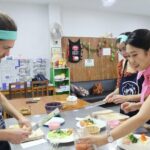
In the open-air kitchen, you cook at your own station with step-by-step guidance from an English-speaking instructor. You do not need cooking experience. The process is designed for beginners, and the individual stations mean you are doing the chopping, mixing and cooking rather than watching one chef prepare everything.
The menu includes a range of familiar Thai dishes: Pad Thai, Pad Kra Prow, Green Curry, Red Curry, Panang Curry, Tom Yum, Tom Kha, Som Tam and spring rolls. Khao Soi, the northern Thai curry noodle soup closely associated with Chiang Mai, is another highlight. Each person chooses a menu at the beginning of class, so take a moment to consider what you most want to learn before cooking starts.
A particularly useful part is making curry paste from scratch with a mortar and pestle. This gives you a feel for the work behind a dish that is often bought ready-made outside Thailand. It also makes the class more than a sequence of recipe cards: you see how ingredients are combined and can ask questions as you go.
The exact number of dishes depends on the session and menu. Some accounts of half-day classes describe three dishes, while evening classes can include four. A full-day course may cover more. Treat the list as a selection of possible dishes, not a guarantee that every participant cooks every one.
The instructors help you adapt ingredients for dietary needs when told in advance. Vegetarian and Halal options are available, and the school can adjust for gluten-free diets, allergies or other special requirements. One gluten-free participant was accommodated with suitable sauces and spring rolls. Still, share your needs before class begins so the team has time to prepare.
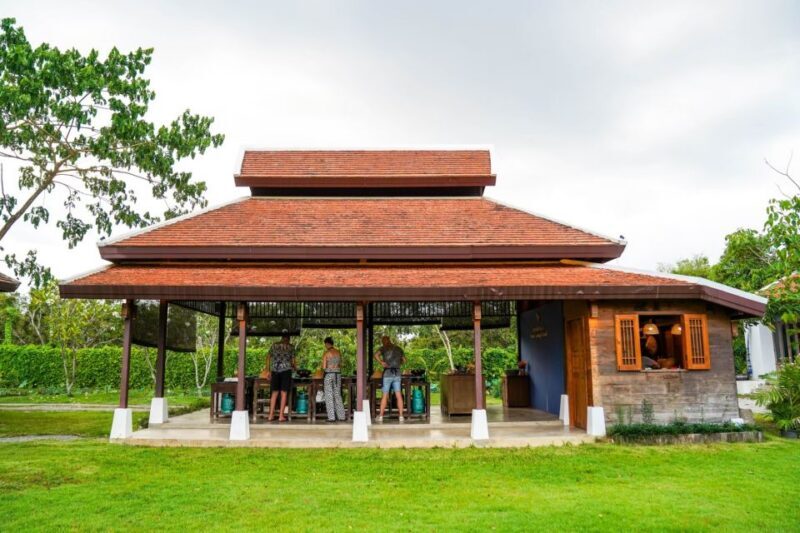
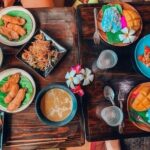
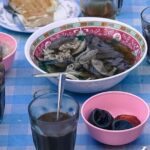
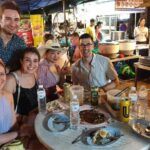
When the cooking is done, you sit down to eat what you have prepared. This is a substantial part of the experience, not a token tasting. The class can leave you very full, so avoid planning a large meal immediately beforehand. That is especially sensible for the full-day option.
Mango sticky rice is part of the dessert offering, but how you take part depends on the session. It is served in morning and afternoon classes, while full-day and evening participants learn to make it themselves. The full-day class also includes coconut milk preparation, giving it the most complete hands-on sequence.
You receive a digital recipe e-book to use after the class. The aim is not simply to remember a good meal, but to have instructions you can try again at home. A few people have had trouble accessing the digital recipes, so save the information provided and check that you can open the e-book before leaving the school.
The welcome drink is a choice of Thai milk tea, Thai lemon tea or butterfly pea flower tea. Herbal drinks and unlimited drinking water are also included. Alcoholic drinks are not included, though they are available to buy.
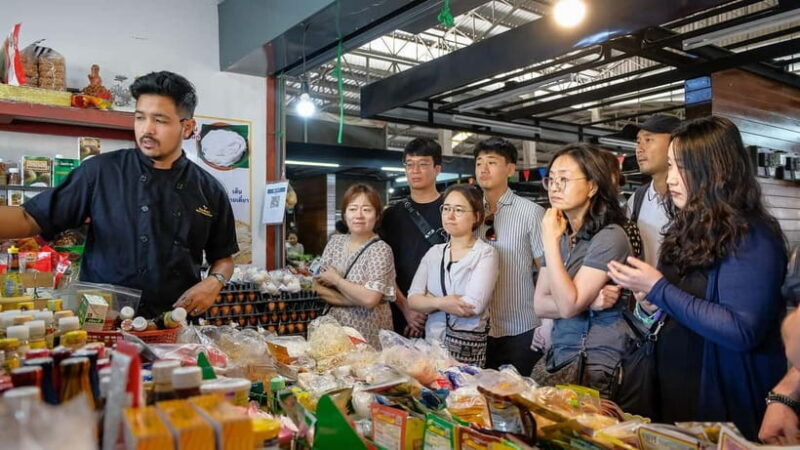
The right session depends on what you want from the day. Morning, afternoon and full-day classes include the market visit. Evening classes focus on the farm and cooking, which can make them a good fit if you want to combine the experience with dinner rather than spend most of the day on an activity.
The full-day option is the most complete, with the market, farm, cooking and traditional coconut milk preparation. It also takes the most time, and the amount of food can be considerable. Choose it if you are keen to learn several techniques and have the time; choose a shorter class if your priority is cooking a few Thai dishes without giving up most of the day.
The stated duration runs from about three and a half hours to seven hours. Because the sessions have different schedules and activities, confirm the start time and plan your other sightseeing around the specific option. Pickup information gives an approximate 3:30 to 4:00 PM window, but session times vary, so confirm your assigned pickup details with the school.
More Great Tours Nearby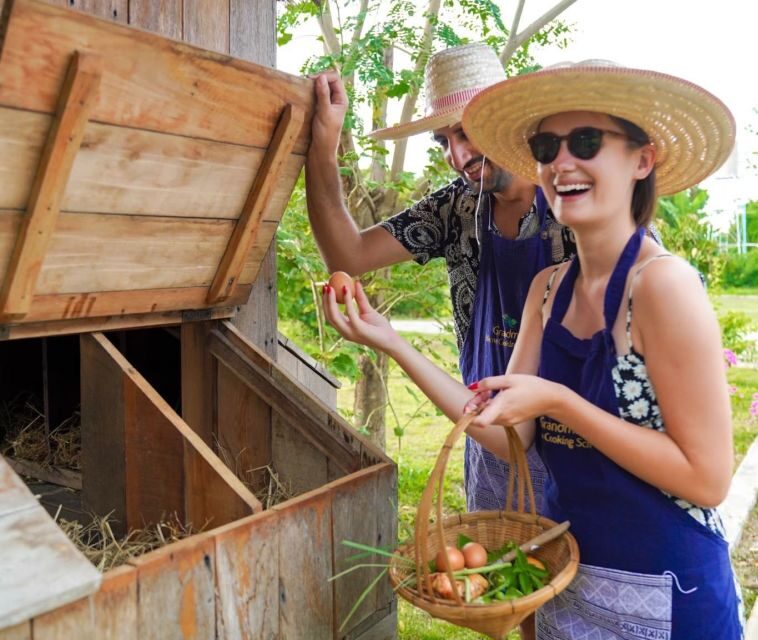
At $34 per person, the price is strong value if you want a combined food, farm and cooking activity. The fee includes a cooking station, instructor, farm visit, applicable market tour, drinks, recipe e-book and hotel pickup and drop-off within five kilometres of the city center. It also covers the meal you cook, which is usually enough food to serve as dinner or a substantial lunch.
Transport is a practical plus. Most accounts describe timely pickup and smooth transfers, and transport has a 92 percent perfect score. One participant found the van a little snug, and another had limited communication about the pickup time. Keep your phone accessible and confirm the pickup details in advance, particularly if you are joining a session with a specific departure window.
Pickup outside the five-kilometre zone may require an extra charge or a nearby meeting point. Alcohol and travel insurance are not included. Children under 10 are considered visitors rather than participants and will not have their own cooking station, though they can join a parent at theirs. If a child wants an individual station, book at the adult price.
The operation is polished and well organized, with several kitchen areas and assistants helping with ingredients and clearing used equipment. That efficiency keeps the class moving, but this is not necessarily an intimate lesson in a small family home. The name Grandma’s Home Cooking School points to a warm, family-style approach; the actual setup is a professional cooking school that can host multiple groups.
You might also be interested in these Chiang Mai experiences
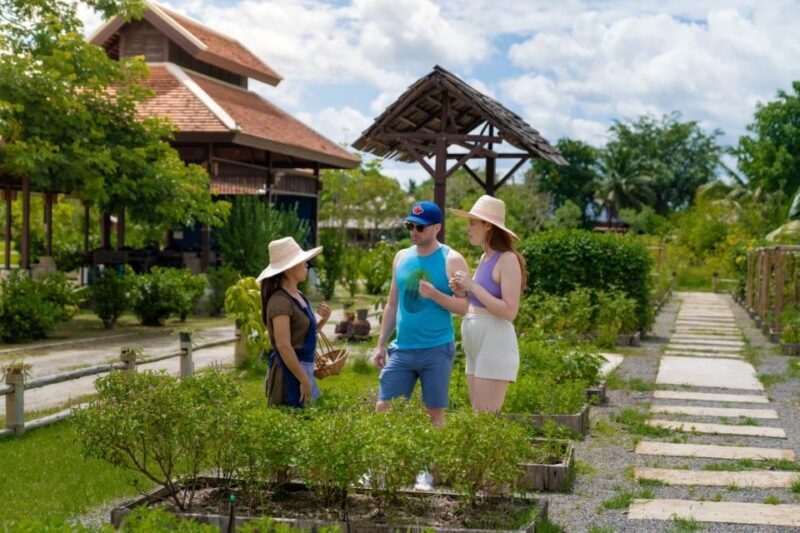
This is a good choice if you want to understand Thai food by making it, not just eating it. First-time cooks can follow the instructor’s steps, while people who already enjoy cooking will appreciate the farm ingredients, curry paste preparation and chance to learn several dishes in one session.
It also suits families, provided you understand the station rules for children under 10. The garden, chickens and food preparation give children more variety than a cooking lesson alone, though the class still requires attention and time on your feet.
If you are looking for a quiet, private lesson with a chef, this may feel more organized and group-focused than you want. If you enjoy a sociable class, helpful instruction and a full plate at the end, the format is a better match. Instructors named in recent classes include Kiki, Jimmie, Patty, Roger and others, but you cannot count on a particular teacher for your session.
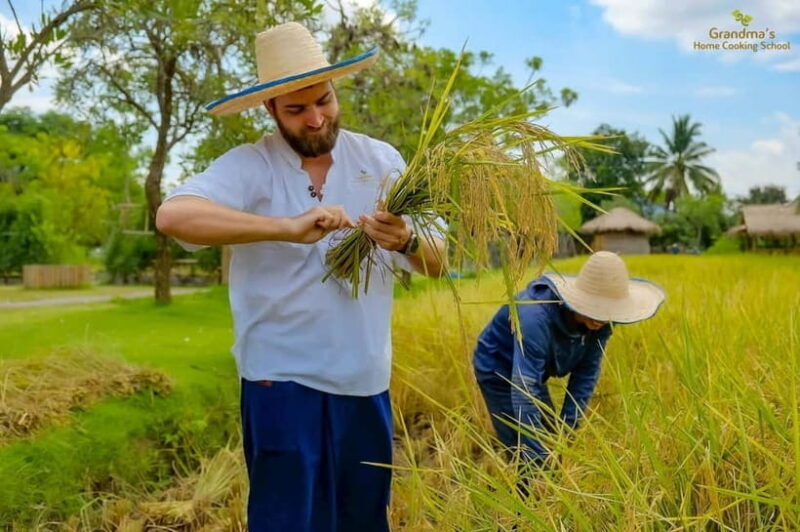
I would book this if you want a practical introduction to Thai cooking that combines ingredients, a farm visit and hands-on preparation. The strongest reasons are the own-station format, the chance to make curry paste and the way Khao Soi gives the class a clear Chiang Mai connection.
Pick the session carefully. Choose morning, afternoon or full day for the market; choose full day for traditional coconut milk making; choose evening if you want the class to double as dinner. At $34, the included transport, instruction, food and recipe e-book make this a worthwhile use of a few hours, as long as you are comfortable with a structured group activity and a generous meal.
“This was my favorite activity I’ve done in Chiang Mai. Highly recommend p. The transportation to and from was seamless and our instructor Kiki wa…”
The options range from about 210 minutes to seven hours. The exact duration depends on whether you choose a morning, afternoon, evening or full-day session.
No. The market tour is included in morning, afternoon and full-day classes. The evening session does not include a market visit.
Traditional coconut milk preparation with a wooden grater is included only with the full-day option.
The menu includes choices such as Pad Thai, Pad Kra Prow, Green Curry, Red Curry, Panang Curry, Tom Yum, Tom Kha, Som Tam, spring rolls and Khao Soi. You choose your menu at the start of class.
Yes. Vegetarian and Halal options are available, and ingredients can be adjusted for gluten-free diets, allergies or other special needs. Tell the school before class starts.
Pickup and drop-off are included for hotels within five kilometres of Chiang Mai city center. For hotels farther away, a nearby meeting point or a small extra charge may apply.
Children under 10 are considered visitors and do not get their own station, but they can cook with a parent. Book at the adult price if you want a child to have a separate station.
Wear comfortable shoes for the farm walk and bring a sun hat. Pets are not allowed.
You can check availability for your dates here: