Physical Address
304 North Cardinal St.
Dorchester Center, MA 02124
Physical Address
304 North Cardinal St.
Dorchester Center, MA 02124

See Chiang Rai’s White, Blue and Huay Pla Kang temples, Mae Kachan Hot Springs and a Karen village on a long day trip from Chiang Mai.
Chiang Rai’s White Temple is no ordinary stop on a temple route. Artist Chalermchai Kositpipat’s all-white creation pairs intricate glass details with traditional Buddhist imagery and unexpected modern art, making this long drive north worthwhile for anyone curious about how sacred architecture keeps changing.
I like that the day combines three very different temples with a hot-spring rest stop and a village visit, rather than making the journey a temple-only march. I also like the practical value: at about $35, the price includes round-trip transport, a guide and entry to the three temples.
The trade-off is the distance. Expect a packed day with many hours on the road, and some travellers find the ride bumpy, especially where there are roadworks. The village visit also costs an extra 300 baht and may prompt questions about how the Karen women’s neck-ring tradition is presented to visitors.
This is a day trip built around distance. The schedule includes several stretches by air-conditioned coach, including a roughly two-and-a-quarter-hour ride between the village and the White Temple, followed by about three hours on the return to Chiang Mai. Add the sightseeing stops and lunch, and you have a substantial day out.
That mileage is the price of seeing Chiang Rai’s best-known sights without arranging an overnight stay or your own transport. It also means you should not expect a slow, deeply detailed visit at every stop. The tour aims to show you a broad selection in one day, with a guide keeping the schedule moving and explaining the places along the way.
The group meets at Burger King Thapae in Hotel M Chiang Mai, 15 minutes before departure, unless you have selected a pickup option. With Chiang Mai traffic, leave extra time. The tour will not wait for late arrivals, and missing the departure because you arrived late does not qualify for a refund or rescheduling.
There is a small but important timing oddity in the tour information: the duration is shown as 11 hours and also as 810 minutes, which is 13.5 hours. Some people describe the outing as closer to 12 hours. Treat it as a full-day commitment, and do not book a flight for the same day.
You might also be interested in these Chiang Mai experiences
After the first drive of about 90 minutes, Mae Kachan Hot Springs gives you a chance to stretch and reset. The stop is brief and is not a swimming break. You can enjoy the natural setting, and visitors have been able to dip their feet in the hot water.
The stop is also useful for a coffee, Thai tea or a snack before the longer ride ahead. There are shops at the site, so it can feel more like a roadside rest area than a remote thermal retreat. Set your expectations accordingly: the value is the pause and the chance to see the springs, not a long soak.
Bring some small bills. A tour participant noted that smaller vendors may struggle to change large notes, and it is easier to pay for snacks or crafts with modest denominations.
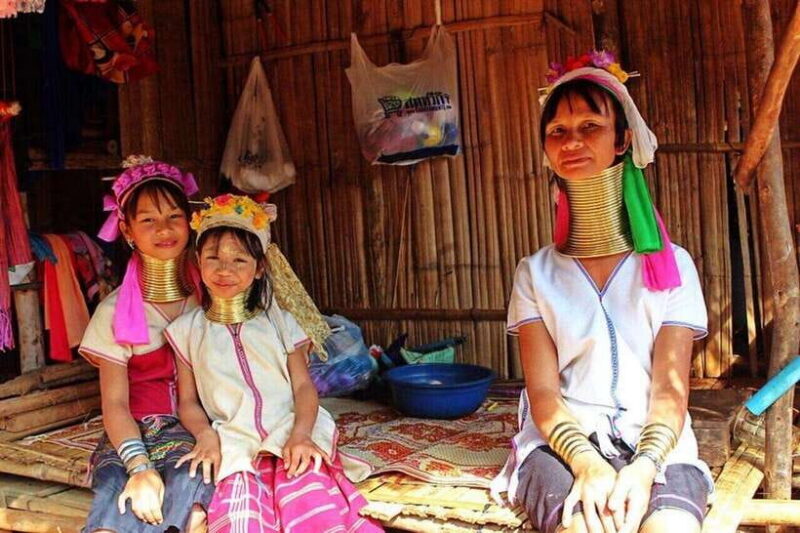
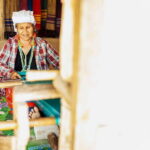
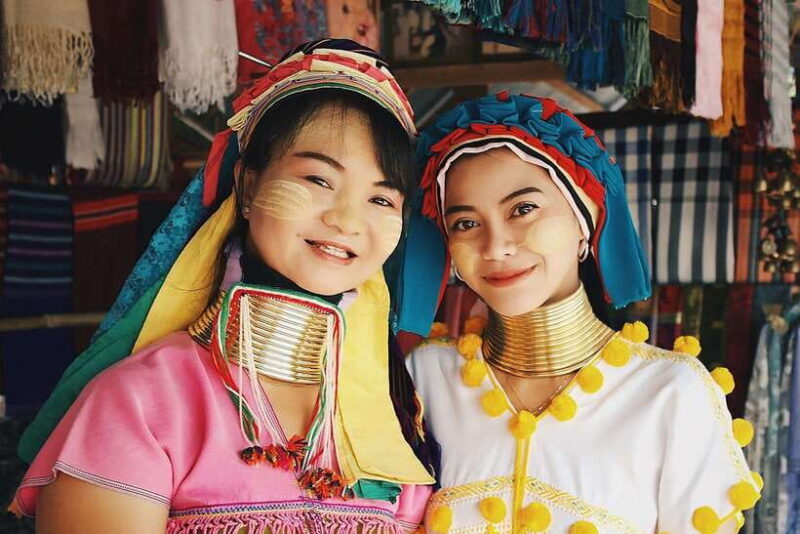
The next stop is the Mae Kachan Hill Tribe and Long Neck Village. The visit offers a chance to see brass neck rings worn by Karen women and to browse locally made crafts, including woven scarves. The village visit is not included in the tour price, so budget 300 baht for entry.
This stop deserves a little thought before you book. For some people, seeing the neck-ring tradition in person is a meaningful opportunity to learn about a community’s customs; for others, the visitor setting can feel uncomfortable, particularly when the focus is on women and girls wearing the rings. The visit is short, and the information provided does not promise a workshop or extended conversation with artisans.
If you go, approach the village as a place where people live, not simply a photo backdrop. Buy a craft only if you genuinely want it, and be respectful when taking pictures. Woven goods and other handmade items offer a direct way to support local makers, but the tour does not include the village admission in its price.
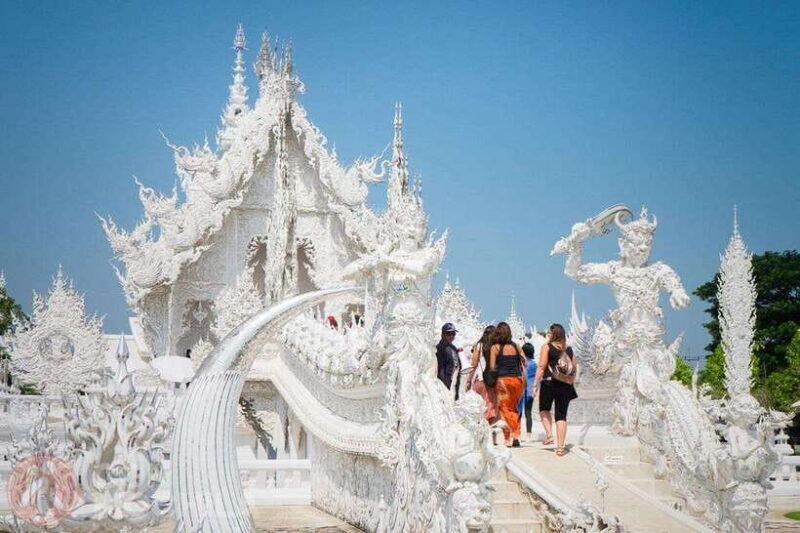
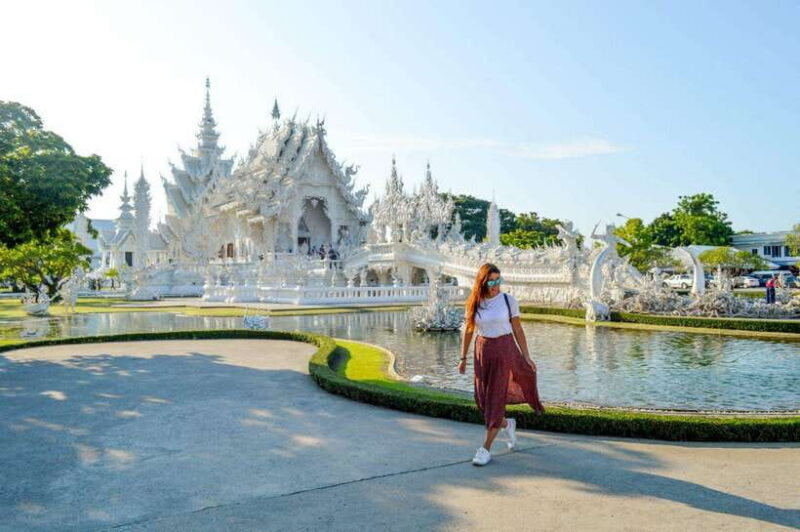
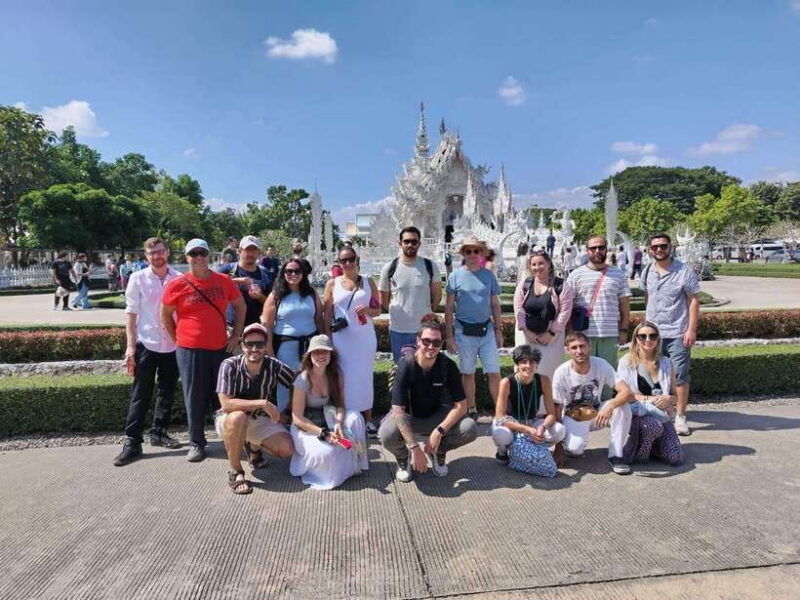
Wat Rong Khun, commonly called the White Temple, is the day’s signature stop. Artist Chalermchai Kositpipat created it with a white design that represents purity, while reflective glass details suggest Buddhist wisdom. Traditional religious references sit alongside modern images, giving the temple an unusual visual language.
Take time to look closely rather than treating the site as a quick photo stop. The fine details are part of the appeal, and the contrast between the clean white surfaces and the imagery is what makes the temple feel different from older temple complexes. The entrance fee is included.
Lunch is scheduled in Chiang Rai after the White Temple. Food is not included, so bring money and allow for the fact that this is a group stop within a tightly timed day. Some guides can point you toward options, including places with vegetarian food, but your meal choice and cost are your own.
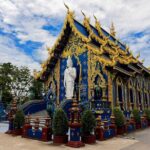
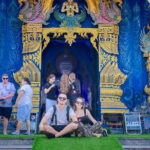
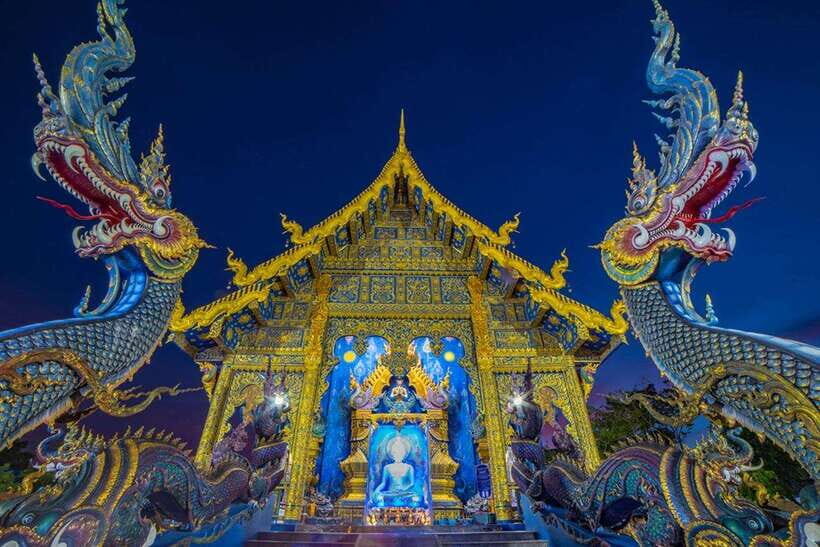
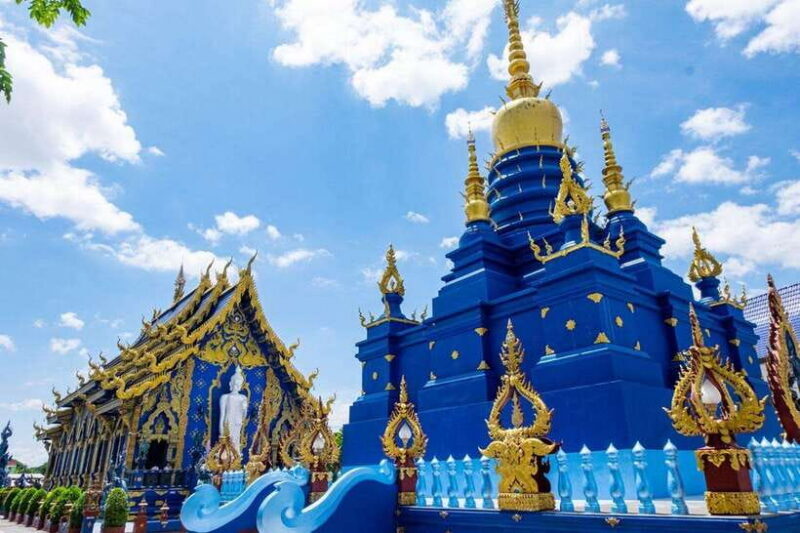
More Great Tours NearbyThe Blue Temple offers a very different mood. Its deep blue interior and gold details make a vivid setting for the bright Buddha figure at the center, while dragon statues guard the entrance. The design brings modern and traditional elements together without copying the White Temple’s look.
This is often the stop people find most peaceful, though the tour schedule still gives you a set amount of time. Look beyond the main hall to the entrance figures and details around the grounds. Some food and drink stalls may be available nearby; coconut blue ice cream has been a popular treat, but it is an extra purchase, not part of the tour.
The Blue Temple’s entry fee is included. As at the other temples, dress modestly and follow local customs. Comfortable shoes help, but remember that this is still a temple visit, not just an architectural photo stop.
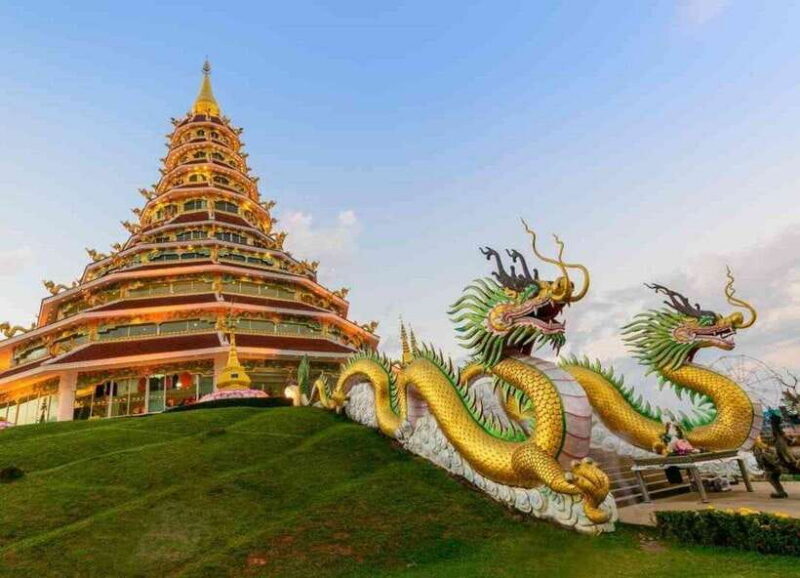
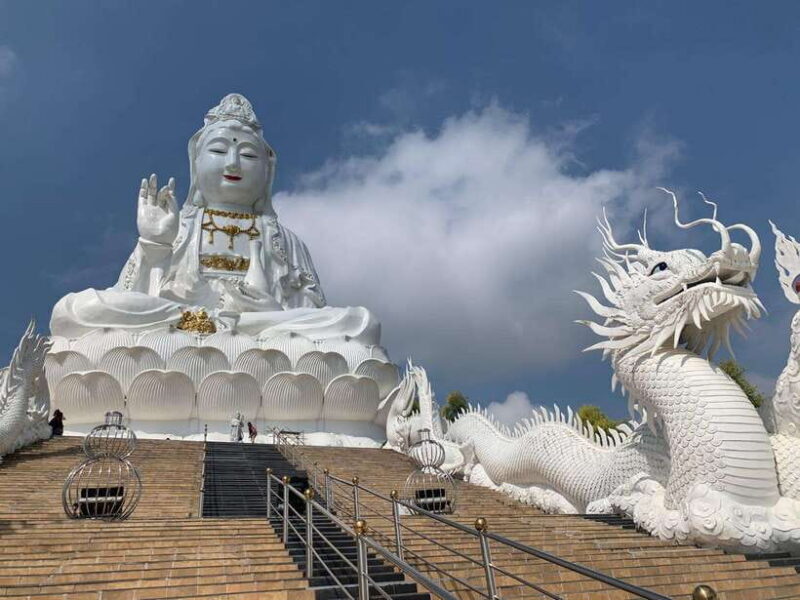
The final temple stop is Huay Pla Kang, known for its large statue of Guan Yin, the Goddess of Mercy, and its nine-level pagoda. The grounds offer a change of pace after the more visually intense White and Blue Temples, and the pagoda’s carved figures and decorations reward a closer look.
The tour description notes that you can climb to the top for views. That climb may make this stop more demanding than the earlier visits, and some people wish they had more time here. There are several stairs and other things to see, so decide early how you want to spend your stop: explore the pagoda, visit the grounds, eat, or take a quieter pause.
A past visitor with a mobility need was helped onto an electric vehicle by the guide, but that does not guarantee one will be available for every tour. The activity is not suitable for people with mobility impairments, so check carefully before booking if stairs or walking are a concern.
A good guide matters on a day with this much driving and this many stops. The guide’s job is not only to explain temple art and local customs, but to keep everyone clear on meeting times and help the group make the most of limited time. Guides named Benz, Kwan, Ruby, Ann and Dee have been praised for clear explanations, warmth, humour and practical help. Your guide will depend on the departure.
The tour information says the official guide speaks English only, while a QR-code audio guide is offered in 41 languages. Bring your own earphones; they are not supplied. The activity details also list Spanish among the live-guide languages, so if a Spanish-speaking guide is essential, confirm this before booking rather than relying on the audio guide.
Group tours run on a firm schedule. If you need to step away or ask a question, keep track of the return time your guide gives you. A few people find explanations on the coach harder to hear when they are tired, so listen carefully at the stops and ask the guide for clarification when there is time.
At about $35 per person, this is a strong-value way to reach Chiang Rai’s major sights from Chiang Mai. The fare includes round-trip transport in an air-conditioned vehicle, an official guide, mandatory insurance, and entry to the White Temple, Blue Temple and Huay Pla Kang Temple. Those costs add up if you arrange transport and admissions separately, though a private car would give you more control over timing.
You will pay extra for lunch, the village admission and personal snacks or crafts. The 300-baht village fee is the largest stated extra; earphones are also your responsibility. Bring a charged phone and consider a power bank, since the temples are photogenic and you may use your battery throughout the day. Some coaches have USB ports, but do not count on one being available.
The coach ride can be bumpy, and roadworks can slow the journey. Reports also vary on how much time people feel they have at each temple. The overall pace is designed to fit a lot into one day, so if you prefer lingering over details or want a quiet, unhurried visit, staying overnight in Chiang Rai may suit you better.
Wear comfortable clothes and shoes, and pack sunglasses, a sun hat, sunscreen and insect repellent. Modest dress is important at the temples. Bring your passport or ID card, as requested, and your own earphones if you want to use the multilingual audio guide.
Do not bring large bags or luggage, and alcohol and drugs are not allowed. Keep enough cash for lunch, the village fee and small purchases. Most important, arrive on time at the meeting point or be ready in your hotel lobby 10 minutes before a selected pickup.
Book it if you have one day to spare in Chiang Mai and want to see the White and Blue Temples, Huay Pla Kang, the hot springs and a Karen village without planning transport yourself. The included temple admissions, guide and air-conditioned ride make the $35 fare good value, and a lively guide can make the long journey feel more rewarding.
Skip it if you dislike long coach rides, need a relaxed pace, have mobility limitations or feel uneasy about the village visit. Go in prepared for a full day, bring your own earphones and some small bills, and think ahead about how you want to approach the village stop. With those expectations in place, this is an efficient introduction to Chiang Rai’s standout temples and varied local traditions.
“Benz was an amazing guide. Extremely knowledgeable and kind. We got to see the white temple, blue temple … big Buddha temple and the Kayan villag…”
It is described as an 11-hour tour, though the duration is also listed as 810 minutes, which does not match. Plan for a full day, and do not schedule a flight for that day.
The stated meeting point is Burger King Thapae at Hotel M Chiang Mai. Arrive 15 minutes before departure. Pickup may be available with a selected option.
Yes. Round-trip transport from Chiang Mai in an air-conditioned vehicle is included.
Yes. Entry to the White Temple, Blue Temple and Huay Pla Kang Temple is included.
No. The village entrance fee is 300 baht per person.
No. Lunch is not included. The itinerary schedules a lunch stop in Chiang Rai.
No. Swimming is not allowed at the hot springs. The stop is for a short visit and rest.
The tour information says the official guide speaks English only and that a QR-code audio guide is available in 41 languages. Bring your own earphones. Spanish is also listed in the activity language details, so confirm live-guide availability if needed.
Bring your passport or ID card, comfortable shoes and clothes, sunglasses, a sun hat, sunscreen and insect repellent. Bring earphones if you plan to use the audio guide.
The tour is listed as not suitable for people with mobility impairments. Huay Pla Kang includes stairs, so check carefully before booking if mobility is a concern.
You can check availability for your dates here: