Physical Address
304 North Cardinal St.
Dorchester Center, MA 02124
Physical Address
304 North Cardinal St.
Dorchester Center, MA 02124

Make matcha, taste a seasonal Japanese sweet, and learn tea ceremony basics in a 45-minute English-led experience in central Osaka.
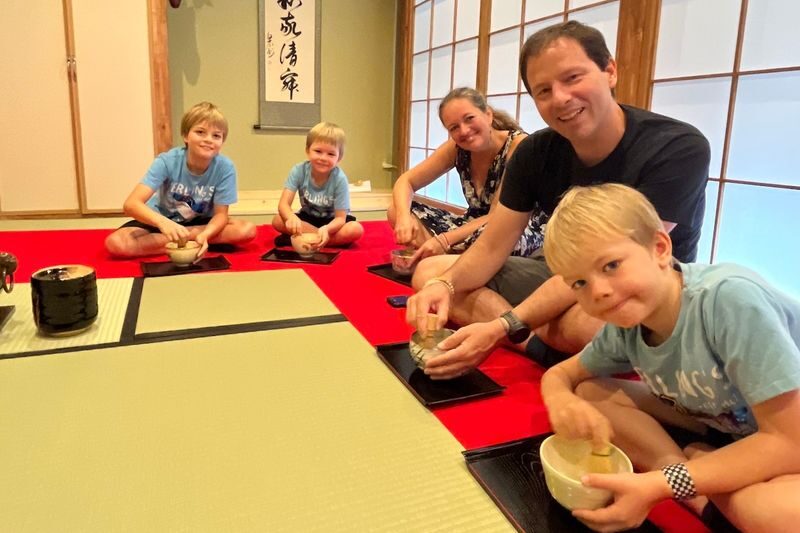
A short walk from Kintetsu-Nippombashi Station, this 45-minute session offers a quiet change of pace from central Osaka. You’ll hear a brief introduction to tea ceremony, watch your instructor prepare matcha, then make a bowl yourself and taste it with a seasonal Japanese sweet.
I like two things in particular: you take part, rather than only watching, and the English-speaking instructors explain the tools and manners in plain terms. The setting is a traditional tatami room, and past hosts have included Eri, Mayumi, Kazu, and Haruna, though your instructor may differ.
One consideration: this is a compact introduction, not a long or highly formal tea gathering. Sessions can feel crowded when the room is busy, so book it for a clear first look at the tradition, not for a private, unhurried lesson.
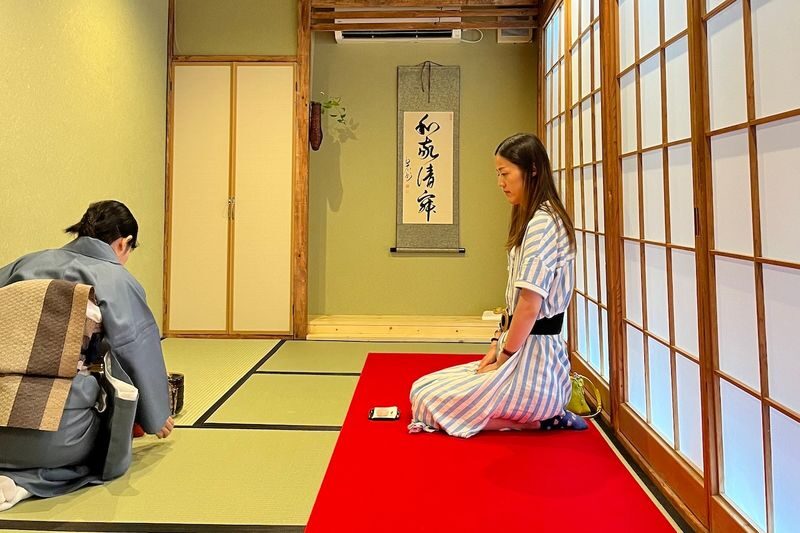
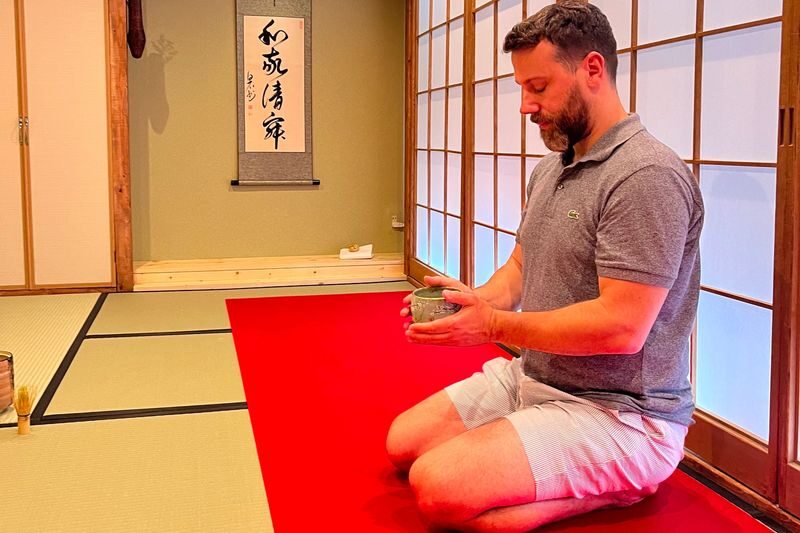
Dotonbori is known for bright signs, restaurants, and a steady stream of people. This tea ceremony takes place above street level, in a traditional Japanese room at Tea Ceremony Osaka The Osaka. The contrast is part of the appeal: you step away from the street for a brief session centered on careful movements, a bowl of tea, and a sweet.
The experience is designed for visitors who are new to tea ceremony. You do not need to know the rules in advance or have tried matcha before. Your English-speaking instructor explains the background and basic manners, then shows how the tools are used before inviting you to prepare tea yourself.
The venue is at 2F, 1-chome Higashi-5-26, Dotonbori, Chuo Ward. From Kintetsu-Nippombashi Station, use Exit 6 and walk about three minutes. Search Google Maps for Tea Ceremony Osaka The Osaka to find the correct entrance. The address can be a little hard to parse in English, so allow time to check the map rather than setting off at the last minute.
Looking for more options in Osaka? Here are some other experiences worth considering.
The session begins with a welcome in the tatami room. Your instructor, dressed in traditional kimono, gives a brief account of the tea ceremony’s history and spirit. This first part helps make sense of what follows: the gestures are not simply steps for making a drink, but part of a set of customs and acts of hospitality.
The introduction is short by design. In 45 minutes, you get enough context to recognize the main tools and understand the basic manners, without turning the session into a lecture. If you want a detailed study of tea schools, history, or ceremony styles, this is only a starting point. If you want a clear, approachable introduction before moving on with your Osaka day, the pace makes sense.
The teachers’ manner is one of the experience’s strengths. Hosts named in past sessions include Eri, Mayumi, Kazu, Haruna, and Akiko. The instructor assigned to your time may be someone else, but the session is led by Japanese teachers who speak English and have experience with tea ceremony. That matters when small gestures and unfamiliar tools are involved: you can follow the explanation as it happens, rather than trying to infer the meaning from a demonstration alone.
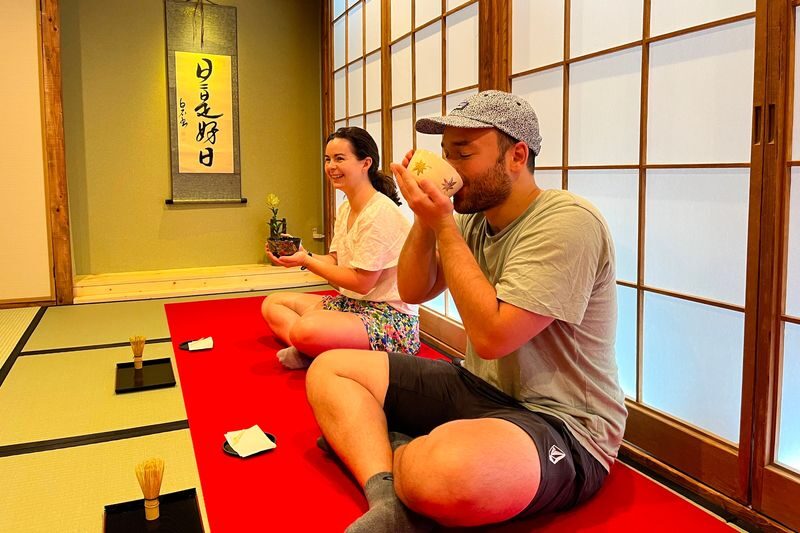
Next comes a live demonstration. The instructor prepares matcha using traditional tools and shows the sequence, while explaining how to handle the utensils and observe basic etiquette. Watch closely, but don’t worry about memorizing every movement. The point is to notice how the steps fit together before trying them yourself.
This is also where the session’s calm mood becomes most apparent. Matcha preparation asks you to slow down and pay attention to what is in front of you. The room gives you a marked contrast with the busy streets outside, though the experience is still a group activity, not a silent private ceremony.
A few practical details help set expectations. The demonstration is an introduction, not a full-length formal gathering. You’ll see the instructor’s version of the preparation and learn the basics, then move into the hands-on part. If you are hoping to observe a long ceremony with many stages, look for a more extended option.
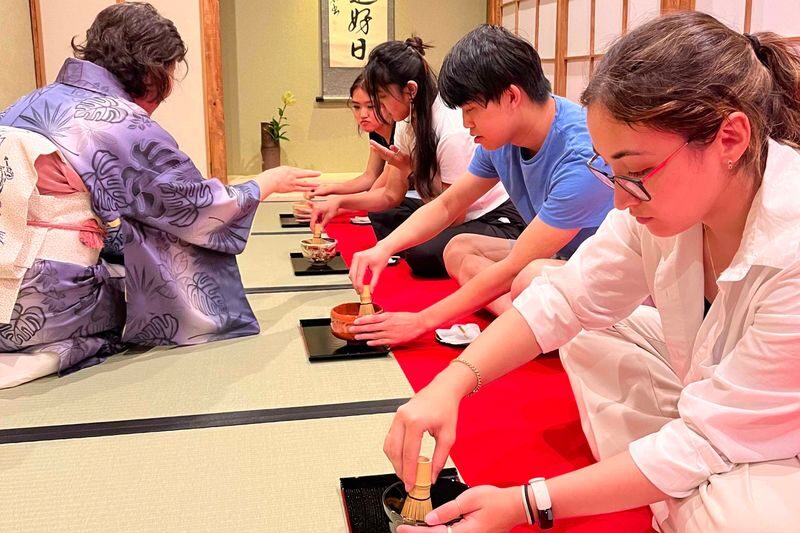
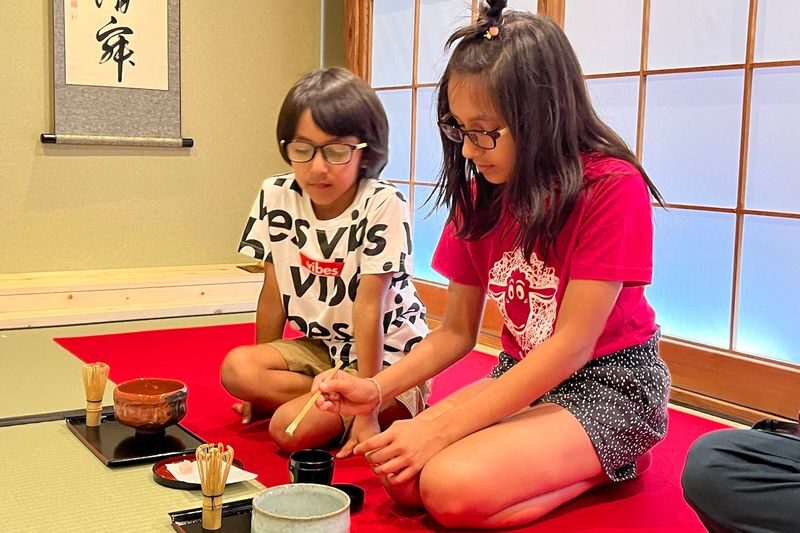
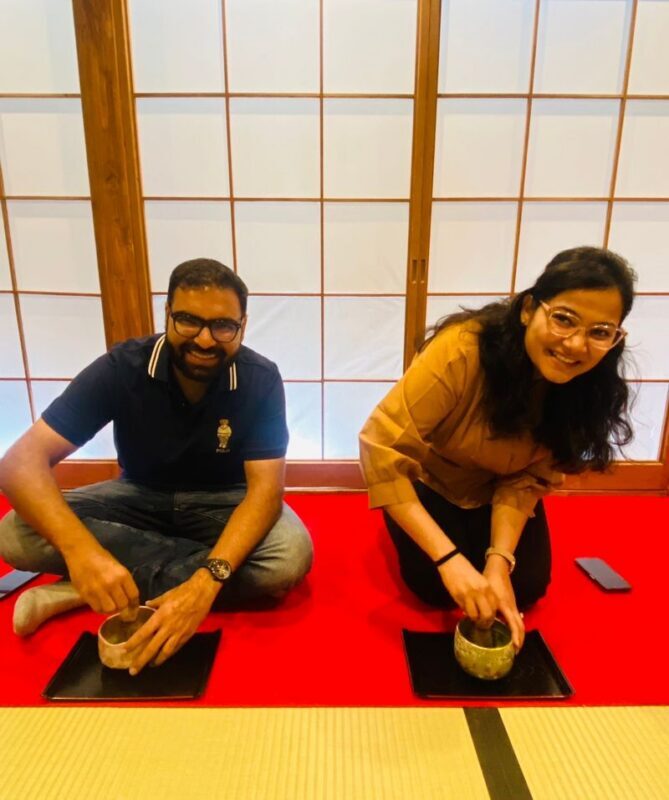
The most involving part is preparing your own matcha with the traditional tools. The instructor guides you through the process, so you are not left to guess how to use them. Making the tea yourself gives the explanation a practical point: you see how the tools feel in your hands and get a sense of the preparation rather than only hearing about it.
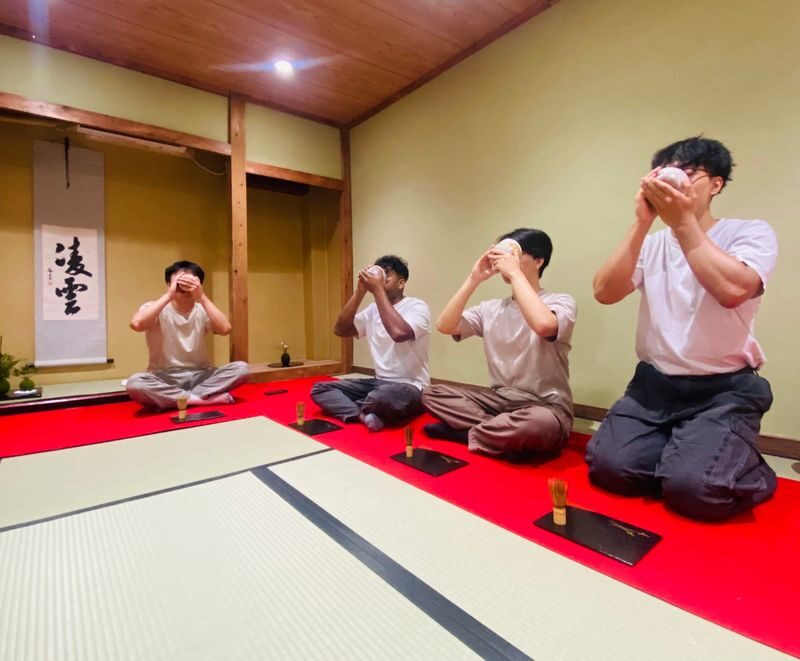
Then you taste your matcha with a traditional Japanese sweet. Seasonal sweets are included, and nerikiri, a shaped confection, has been served in some sessions. The sweet balances the tea and adds another small cultural detail to the experience. The specific sweet may vary, so don’t count on one exact flavor or design.
This hands-on format is a good fit for families and first-time matcha drinkers. Children can take part from age five, and the steps are explained clearly enough to keep the activity accessible. Children aged 12 and over are charged the adult rate. The session is not recommended for infants, and children under five are not allowed into the shared plan, even if the other people in the booking are adults.
Forty-five minutes is enough to get a useful overview, see a demonstration, make tea, and taste the sweet without giving up half a day. That makes the activity easy to pair with time in Dotonbori or nearby Namba. You can also choose from set start times: 10:00, 11:00, 12:00, 14:00, 15:00, or 16:00.
The short duration has a trade-off. There is limited time for long questions or extended practice, and a busy session may feel less personal than a one-on-one lesson. One past participant found the room a little crowded, which is worth keeping in mind if you value extra space and individual attention. The shared format also means you may be taking part alongside people from other bookings.
The activity’s high 4.9 out of 5 rating from 411 ratings reflects a strong response to the clear teaching, friendly hosts, and chance to make matcha. Still, an introductory class is not the right choice for everyone. If you already know the ceremony basics or want a rigorous lesson, you may find it brief. If you are curious and want to try the practice in a welcoming setting, the compact format is a plus.
At a starting price of $24.65, the value rests on more than the bowl of tea. The fee includes admission, an English-speaking instructor, matcha, and a traditional sweet. You also get a demonstration and guided practice, which makes this a more complete introduction than simply ordering matcha at a café.
Transport and personal expenses are not included. Since the venue is in central Dotonbori and a short walk from Kintetsu-Nippombashi Station, getting there can be straightforward if you are already exploring the area. The activity is a meet-up, not a ride or a sightseeing tour, so plan your own route and keep the booked start time in mind.
For a short cultural activity in central Osaka, the price is reasonable if you value direct participation and an English explanation. It is less compelling if all you want is a drink or if you expect an elaborate ceremony. Think of it as a guided first lesson with tasting, not a full-day cultural program.
Arrive five minutes before your selected start time. The venue says late arrivals and no-shows are not refundable, so don’t cut it close. Your return time follows the 45-minute schedule: for example, a 10:00 start is scheduled to end at 10:45. Available return times depend on the start time you choose.
You can book for the following day, and confirmation is usually sent within minutes. The mobile voucher is accepted, and it is valid only on the date and time selected. You can cancel for a full refund if you do so at least 24 hours before the activity date, using local destination time.
The experience cannot accommodate dietary allergies, so it is not a safe choice if you need allergy-related changes. Outside food and drinks are not allowed, and pets are prohibited. The activity is stroller-friendly, but it is not recommended for infants. Anyone who appears intoxicated may be refused service without a refund.
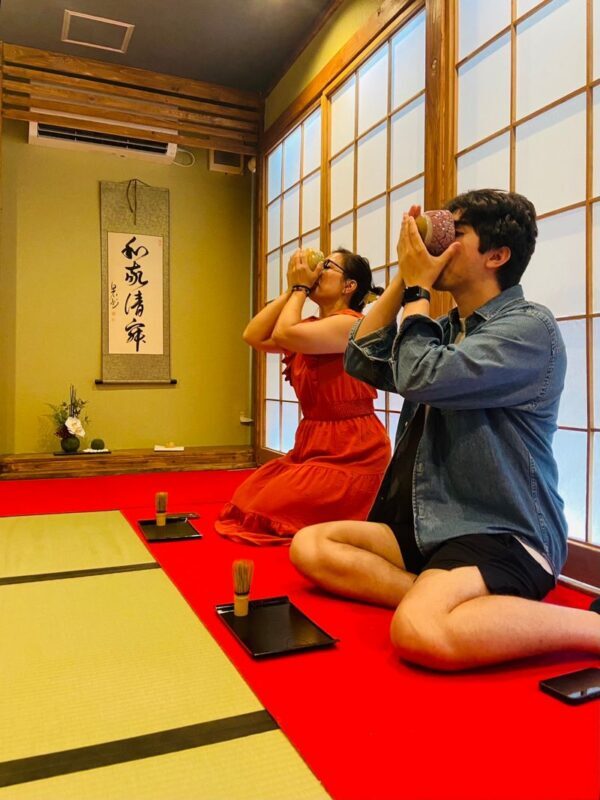
I’d choose this session if you want a short, hands-on introduction to Japanese tea culture without committing to a longer class. It suits first-time visitors, couples, families with school-age children, and anyone who likes to understand a custom by trying it. The English explanations, demonstration, and chance to whisk your own tea make the experience approachable even if matcha and ceremony etiquette are new to you.
It may not suit you if you want a quiet private session, have a food allergy the venue cannot accommodate, or prefer a long, formal ceremony. The room can be busy, and the lesson is intentionally concise.
Book it if you want to learn the basics and make your own matcha in central Osaka. For the best fit, choose a time that leaves you unhurried, arrive early, and think of the session as a lively introduction rather than an exhaustive study.
“Learned about the culture of the Japanese tea ceremony.”
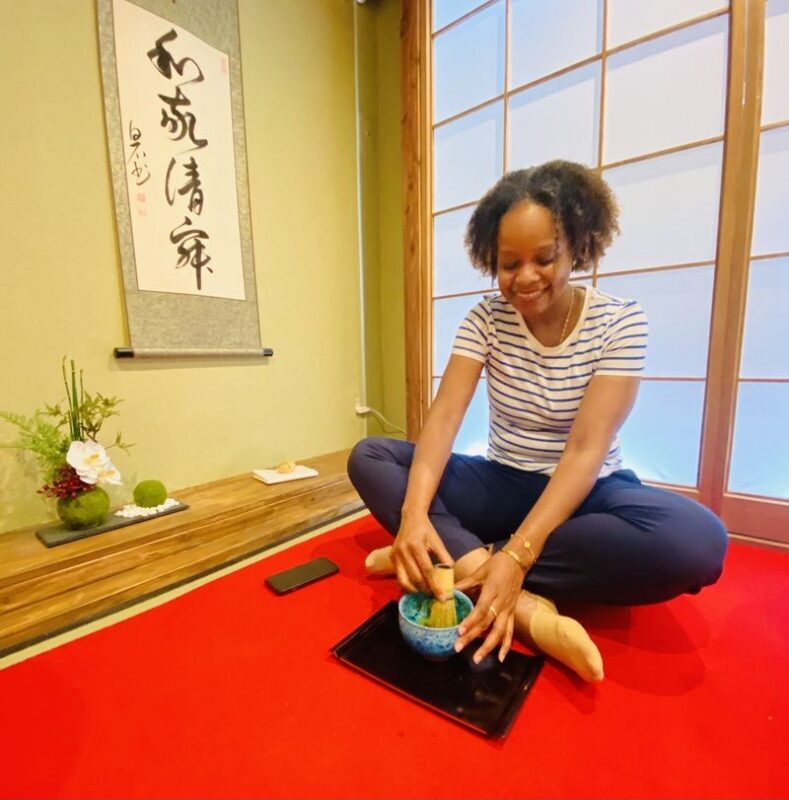
The session lasts 45 minutes, including the welcome, introduction, demonstration, hands-on matcha preparation, and tasting.
It takes place at Tea Ceremony Osaka The Osaka, on the second floor at 1-chome Higashi-5-26, Dotonbori, Chuo Ward, Osaka 542-0077.
Take a train to Kintetsu-Nippombashi Station, leave through Exit 6, and walk about three minutes. Searching Google Maps for Tea Ceremony Osaka The Osaka is recommended.
Available start times are 10:00, 11:00, 12:00, 14:00, 15:00, and 16:00. Availability may vary, and you must attend at the time selected when booking.
The price includes admission, an English-speaking instructor, tax, matcha, and a traditional Japanese sweet. Transport and other personal expenses are not included.
Children aged five and older can participate. Children aged 12 and older are charged the adult rate. Children under five cannot enter with the shared plan.
No. The activity is unable to accommodate dietary requirements related to allergies.
You can receive a full refund if you cancel at least 24 hours before the activity date, based on local destination time. Late arrivals and no-shows are not refundable.
Bring your mobile voucher and arrive five minutes before your selected start time. Outside food and drinks are not allowed.