Physical Address
304 North Cardinal St.
Dorchester Center, MA 02124
Physical Address
304 North Cardinal St.
Dorchester Center, MA 02124

See Doi Suthep at sunrise, then visit Wat Pha Lat and Wat Umong with a local guide on this temple-focused Chiang Mai half-day tour.
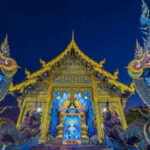
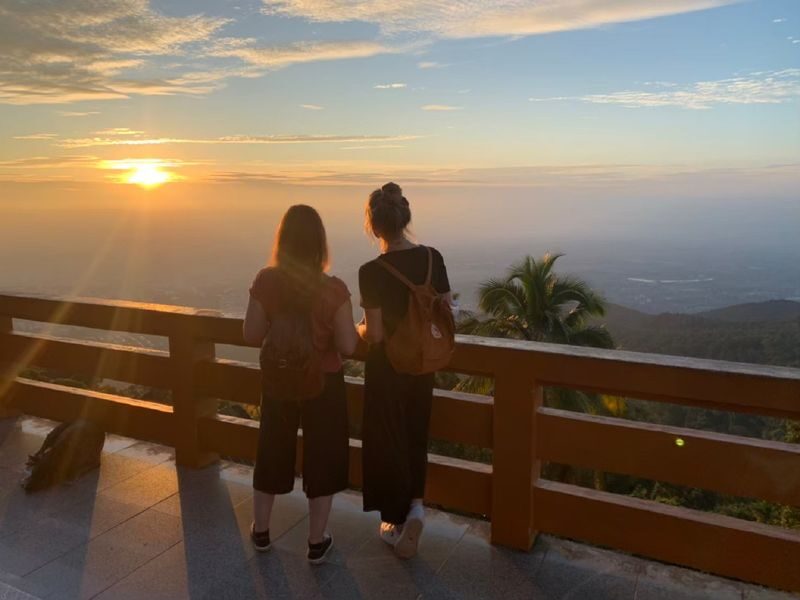
Doi Suthep before sunrise is a different place from the temple you’ll see in the daytime: the golden pagoda glows in the dark, the mountain air is cool, and the city below begins to wake. This half-day tour pairs that early visit with Wat Pha Lat and Wat Umong, giving you three very different temples in one morning.
I like the strong cultural focus: guides such as former monk James explain Buddhist practices and temple details, and you may be able to make an offering to monks. I also like the contrast between Doi Suthep’s grand hilltop setting, Wat Pha Lat’s jungle paths, and Wat Umong’s tunnels.
The catch is the 5:00 a.m. start, and the sunrise is never guaranteed. You’ll also spend much of the morning at temples, so this suits you best if you’re keen on Buddhist sites and can manage stairs and walking.
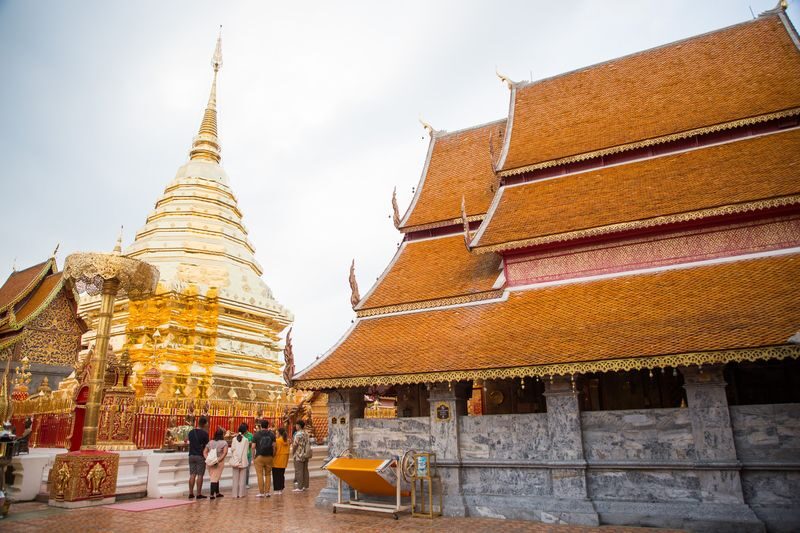
The name puts sunrise first, but the sunrise is only one part of the morning. You’ll visit Doi Suthep, the Kruba Srivichai Monument, Wat Pha Lat, and Wat Umong, with guided time at each. The schedule allows about two hours at Doi Suthep, 30 minutes at the monument, and an hour apiece at the other temples. Traffic and weather can alter the order or timing.
That makes this a useful choice if you want more than a quick photo stop at the mountain temple. The guide can explain the places you’re seeing, while transport connects sites that would be awkward to combine on your own in the early hours. The trade-off is clear: this is a temple-focused outing, not a general tour of Chiang Mai.
The advertised small-group options start at US$25.45 for a meeting-point departure and US$28.45 with hotel pickup. A private tour starts at US$160.59. The broader starting price is listed as US$22.79, but the package details for the meeting-point option give US$25.45, so check the price shown for your chosen date and package before booking.
Admission to Doi Suthep, listed as THB50, and Wat Umong, listed as THB20, is included. English-speaking guiding, insurance, bottled water, and carbon-offset credits are also part of the package. Meals, other drinks, personal expenses, and tips are not. For the cost of a modest Chiang Mai outing, the value is mainly in the transport, early access, and interpretation across three temples, rather than in the admission fees alone.
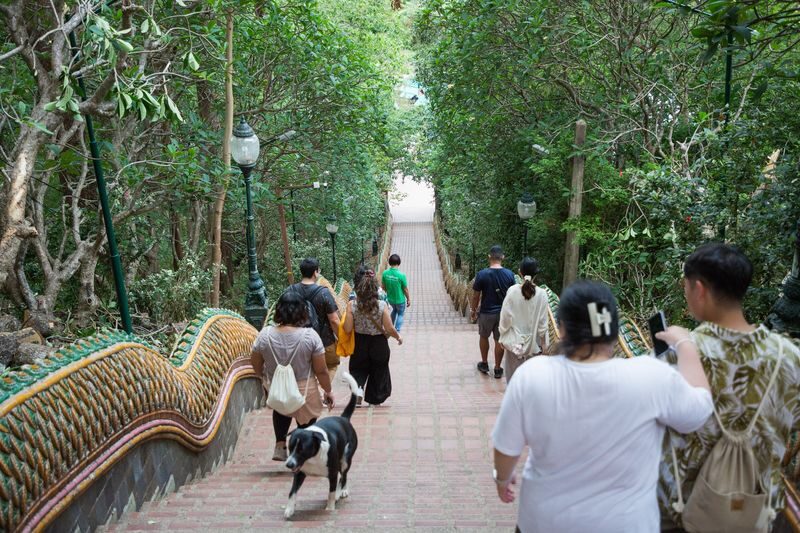
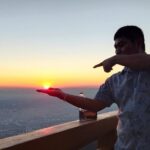
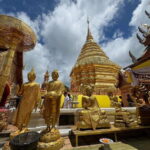
The day begins high above Chiang Mai at Wat Phra That Doi Suthep. The tour aims to arrive around sunrise, when the temple is still quiet and the golden pagoda is especially striking against the early light. On a clear morning, you can see the city spread below. Clouds can hide the sunrise, though the temple and the quiet atmosphere still make the visit worthwhile.
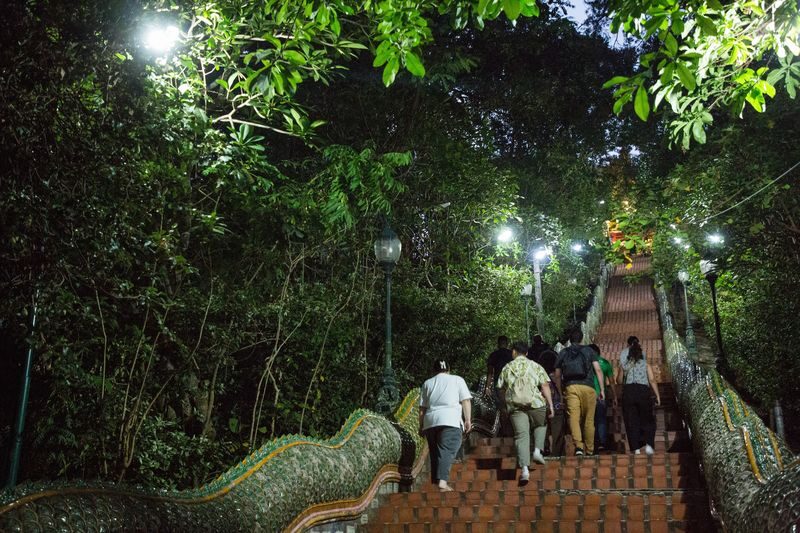
Reaching the temple’s upper area means climbing 309 steps. That climb may feel long before breakfast, especially if you’re not used to walking uphill, but the view from the top rewards the effort. An escalator or cable car may be available at the site, but don’t count on it operating at this hour. One visitor noted the escalator was not running in the morning, so be prepared for the stairs.
This is also where the guide’s explanations can make the visit more meaningful. Guides have talked about the temple’s murals, decorative pillars, Buddhist stories, and local customs. James, a former monk, has shared first-hand context about monastic life and Buddhist practice. The quality of your experience depends in part on your guide, but the tour’s emphasis on explanation is a real asset if you want to understand what you’re looking at.
Early visits can offer a calmer setting than a later stop, but the timing is weather-dependent. If clouds roll in, you may miss the sunrise view. Bring a camera, but allow yourself to look up from it too: the gold, the chanting, and the quiet before the day’s crowds are part of the appeal.
You might also be interested in these Chiang Mai experiences
After Doi Suthep, the tour stops at the Kruba Srivichai Monument for about 30 minutes. Kruba Srivichai was a revered monk associated with the road up the mountain. The stop gives your guide a chance to connect the temple visit with the people and effort behind access to this mountaintop shrine.
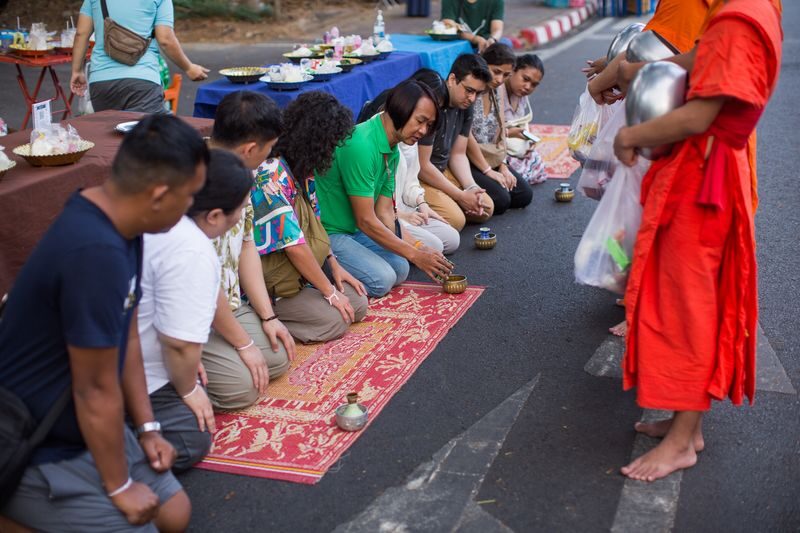
The morning may also include an opportunity to make merit by offering food to monks. This is a meaningful way to learn about a living religious practice, but it should be approached with care and respect. The offering is not simply a photo opportunity. Follow your guide’s instructions, and remember that participation may depend on how the visit is arranged that day. Some guides have helped participants buy food before making an offering; bring a little cash if you want to take part.
One practical point: the offering is presented as part of the experience, but it is not guaranteed in every departure. A past participant found that it was omitted, so if this matters to you, ask the operator before your tour. You can still learn about the custom even if you don’t participate.
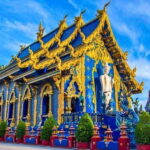
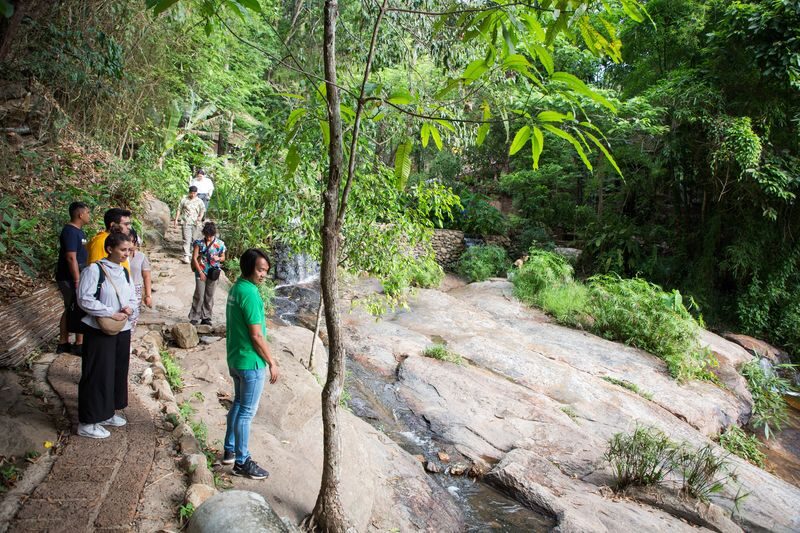
Wat Pha Lat is often called the Hidden Temple, and its setting is a sharp change from Doi Suthep’s grand scale. Surrounded by lush jungle, it has serene statues and shrines, with a quieter feel that invites you to slow down. The tour allows about an hour here, enough time to walk around and hear the guide explain the site.
This is a good part of the morning for anyone who values atmosphere as much as famous landmarks. Rather than a single sweeping view, the pleasure is in noticing the details and the way the temple sits among the trees. Some guides have also used this stop to talk about meditation and the meaning of figures such as nagas, tigers, and deities.
The natural setting has a practical drawback: mosquitoes. Bring insect repellent, especially if you’re prone to bites. Comfortable shoes matter here, too, since the tour involves walking between temple areas. Wat Pha Lat’s calm mood is part of its appeal, but it is still an outdoor stop, not a sheltered museum visit.
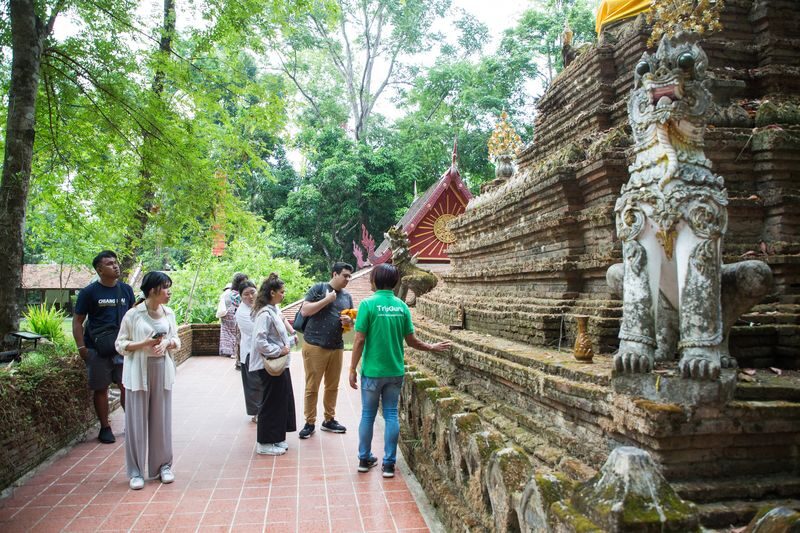
The final temple is Wat Umong, described as 700 years old. Its underground tunnels and large chedi make it distinct from the two earlier stops. The tour allows about an hour to explore, giving you time to see the tunnels and grounds with a guide rather than simply passing through.
The tunnels offer a different kind of temple visit: enclosed, old, and more intimate than Doi Suthep’s open mountain setting. A guide can help explain the site’s history and religious use, while the forested surroundings make a gentle finish to a busy morning. One guide-led visit even included a chance to try local instruments and drinks at a small event, though that should be treated as an occasional extra, not a standard feature.
There may be bats in the tunnels, so don’t expect a polished indoor attraction. Wat Umong is an active religious site with a quiet, lived-in feel. As at the other temples, modest clothing is important, and you should follow your guide’s instructions around places of worship.
The meeting-point option departs at 5:00 a.m. from McDonald’s at Tha Phae Gate in Chiang Mai Old City. Arrive 10 minutes early; late arrivals and no-shows are not refunded. If you’re staying within the free pickup area, the small-group hotel-pickup option may be easier. Free pickup is limited to central Chiang Mai within about two kilometres of Tha Phae Gate and nearby areas around the Old City, including parts of Chang Klan Road, Thapae Road, and Wualai Road. Your exact pickup time depends on where participants are staying, and the driver is expected to contact you the evening before.
The listed return point for current bookings is Central Chiang Mai Airport, with a return time of 10:30 a.m. Drop-off rules have changed over time, so confirm the details for your booking rather than assuming you’ll be taken back to your hotel. If you need to make onward plans, leave a buffer in case traffic or weather changes the schedule.
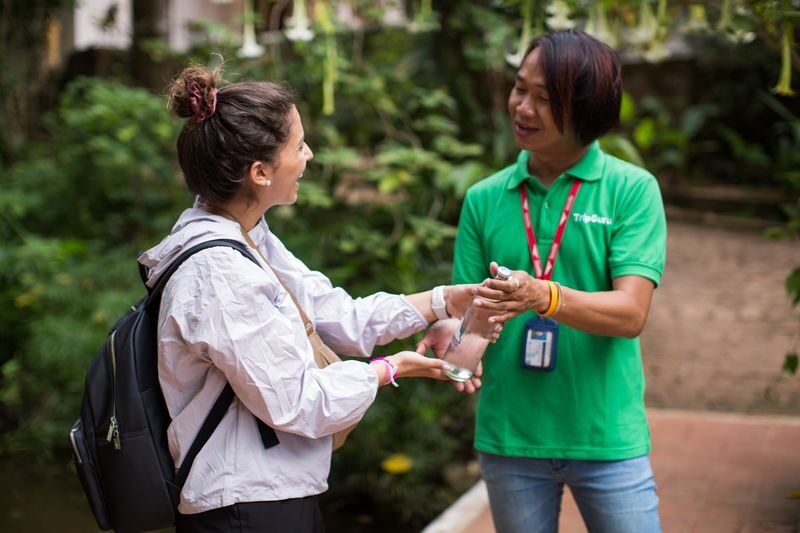
There is no meal or breakfast included. The tour can finish around 10:00 or 10:30 a.m., depending on the departure and timing, so you may be hungry by the end. Carry cash for personal expenses and consider having a snack before setting off. Bottled water is included, and the operator describes it as a glass bottle, but bring your own water if you want more than the supplied amount.
Dress for temple visits with clothing that covers your arms and legs. Comfortable shoes are essential for the stairs and temple grounds. A light jacket can be useful on the mountain before sunrise, while a hat, sunglasses, sunscreen, and insect repellent will help as the morning warms up.
This is a strong fit for you if you want to see Chiang Mai’s signature mountain temple at dawn and learn about Buddhist culture along the way. It also suits solo visitors who prefer a guided outing and transport between sites, and anyone who likes a morning with several distinct stops rather than a single temple visit.
The small-group package may be a good middle ground: it costs less than a private tour while still including transport and an English-speaking guide. A private tour costs much more, but may suit you if you value a more personal pace. Group size can vary, and some departures may feel very small.
Consider another option if you dislike early starts, need a relaxed breakfast, or don’t want to climb stairs and walk between temple areas. The operator does not recommend this activity for people with impaired mobility, pregnant women, or people with certain medical conditions such as high blood pressure or epilepsy. The tour is also not a good choice if you mainly want a guaranteed sunrise. The views depend on the weather.
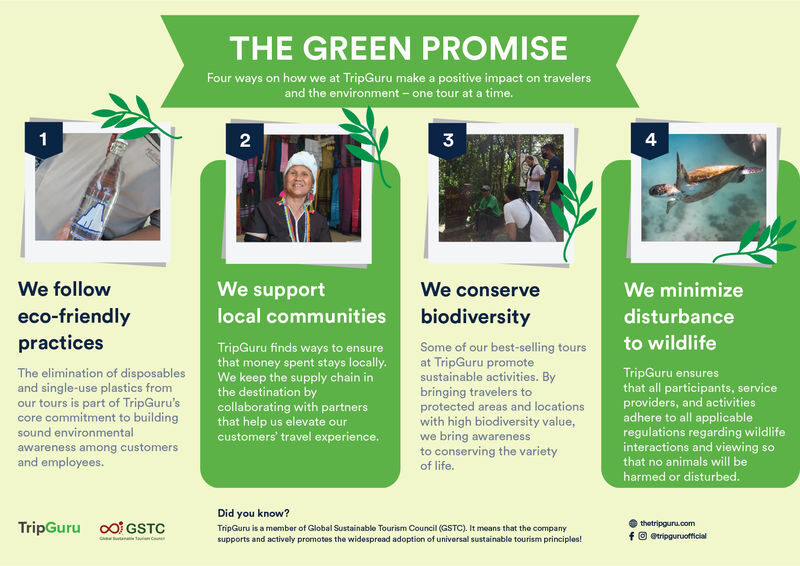
The operator identifies the tour as GSTC-certified and says it offsets carbon emissions. Glass water bottles are another thoughtful measure. These details won’t change the early alarm, but they may matter if you’re comparing tours with similar routes.
Book it if you’re happy to start before dawn and want context as well as photos. The combination of Doi Suthep, the possible merit-making experience, Wat Pha Lat, and Wat Umong gives you a rounded morning of northern Thai Buddhist sites. Guides such as James, Banana, and Happy have been praised for clear explanations, warm hosting, and help with photographs.
Skip it if you want a slow morning, a guaranteed sunrise, or a tour with food included. Before paying, check whether your selected package includes hotel pickup, confirm the return point, and ask about the offering if it is important to you. For temple-minded visitors, the early start can be worth it.
“Really good experience and transport even if it's early in the morning when the sky is Clair you can see the sunrise better. Nuttaya was a very goo…”
The meeting-point departure is listed for 5:00 a.m. Meet at McDonald’s at Tha Phae Gate and arrive 10 minutes early.
Hotel pickup is included in the small-group hotel-pickup package for specified central Chiang Mai areas. If your hotel is outside the free pickup area, choose the meeting-point option.
At Doi Suthep, reaching the temple’s upper area involves 309 stairs. The tour also includes walking around the temple grounds and other sites, so comfortable shoes are recommended.
Admission to Doi Suthep, listed as THB50, and Wat Umong, listed as THB20, is included. Meals, drinks beyond the included bottled water, personal expenses, and tips are not.
No. The view depends on weather conditions. Cloud cover can obscure the sunrise, though the temples and early-morning atmosphere remain part of the visit.
Wear clothing that covers your arms and legs, and bring comfortable shoes, a camera, insect repellent, and cash for personal expenses. A light jacket may be useful on the mountain before sunrise.