Physical Address
304 North Cardinal St.
Dorchester Center, MA 02124
Physical Address
304 North Cardinal St.
Dorchester Center, MA 02124

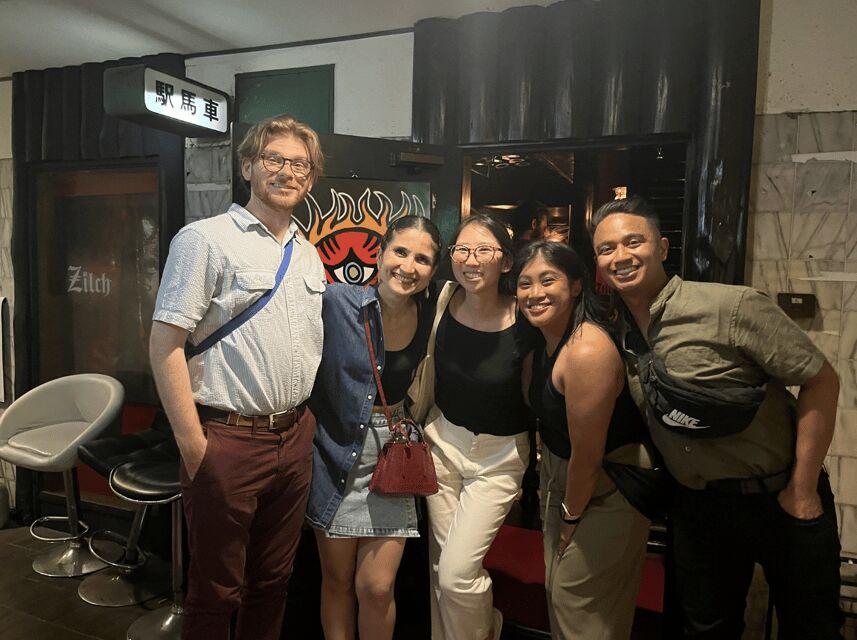
Follow an English-speaking local through Dotonbori and Uranamba for small bars, sake, Osaka food, and a lively three-hour night out.
Osaka’s best bar-hopping often happens away from the bright main streets, behind unmarked doors and down narrow lanes. On this three-hour walk, a local guide leads you from Dotonbori toward Namba and Uranamba, helping you find izakayas and bars you might not choose on your own.
I like two things especially: the small group, usually around five to ten people, makes it easier to ask questions and meet fellow visitors; and the mix of food, drinks, and local culture gives the night more substance than a simple pub crawl. One important consideration: the $19 price covers the guide and walking tour, not your food or drinks, so bring cash and budget for the stops.
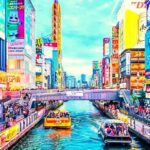
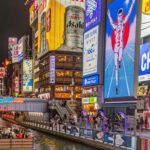
The meeting point is in front of the Glico sign, at the Dotombori Humanity Song Monument. That puts you in the middle of a well-known Osaka district, but the tour’s value is not simply in seeing the famous sign. Your guide uses the area as a starting point for a walk through streets and lanes that can be hard to read when you are new to the city.
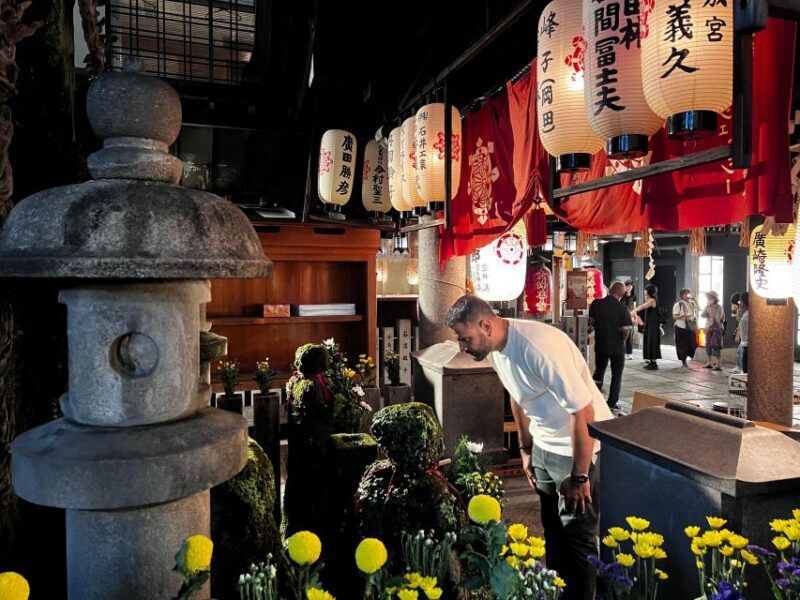
The Dotonbori portion lasts about 15 minutes. It is a brief introduction, not a long history walk, but your guide may point out temples, interesting shops, and tucked-away alleys while giving you a sense of local culture. I like this as a warm-up: you begin outdoors, get oriented, and have a chance to talk before settling into the smaller, more social spaces of a bar.
The guide’s local perspective is a major part of the experience. Guides named in past outings include Taiga, Seina, Kosuke, Hitomi, Naoko, and Daichi. They have helped visitors understand Osaka’s food and drink traditions, the origins of particular sake, and local customs around drinking. Your guide will vary, so don’t book expecting a particular person, but the chance to ask questions as you go is one of the tour’s real advantages.
You can check availability for your dates here: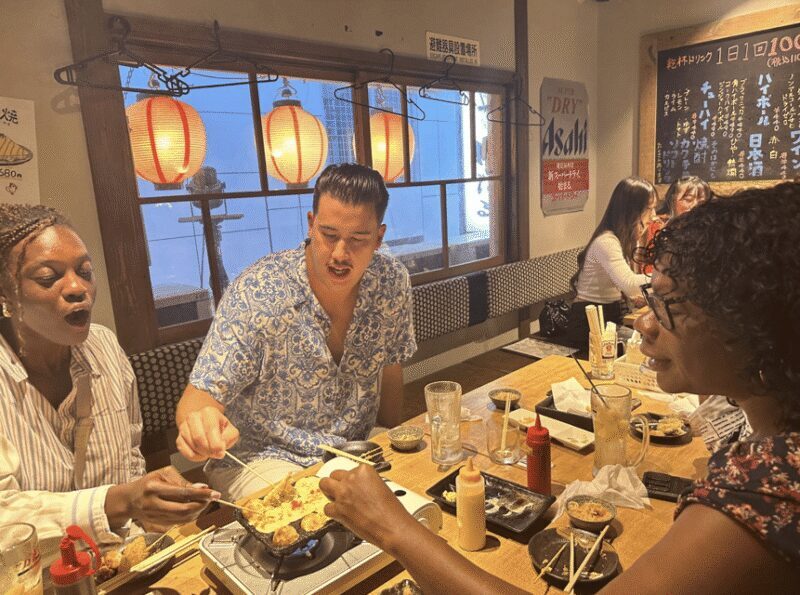
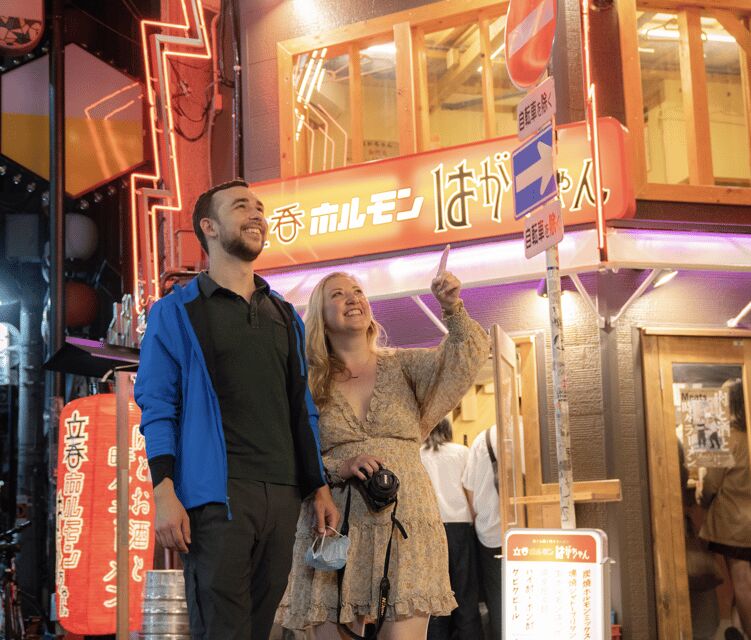
After Dotonbori, most of the evening is spent in the Namba area, including Uranamba. The schedule allows about two and a half hours here for walking, sightseeing, food, and drinks. Rather than staying in one large nightlife spot, the guide moves the group between bars and izakayas, using local connections to choose places that can suit a small group.
That matters in Osaka, where a lively street does not guarantee an easy evening for a first-time visitor. You may spot a tiny bar and wonder if it is open, if it has room, or how to order. With a guide, you can follow someone who knows the area and can help the group settle in. Some outings include a bar that is not open to general customers, giving you a look at places you might not find or enter independently.
The exact route and venues can change. People have visited three different places on some evenings, while others describe an izakaya, a sake stop, and a whiskey bar. Treat those as examples, not a fixed promise. The sensible expectation is a guided route through local nightlife, with the guide choosing the stops for that particular group.
If you enjoy exploring Osaka on foot, these walking tours might also suit your style
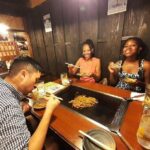
Food is part of the appeal, but it is not included in the $19 tour price. Depending on the stops, you may be able to try local dishes alongside your drinks. Past outings have featured sushi and sashimi, other izakaya food, and the chance to make your own takoyaki, the familiar Osaka octopus snack. Some people have especially enjoyed making takoyaki at the first stop, but the activity is not guaranteed.
Drink choices have included local beer, sake, cocktails, and Japanese spirits such as whiskey. Sake tastings can be more instructive than simply ordering a glass: guides have explained the origins of different sake and helped the group compare what is being poured. If you are curious about Japanese drinks but unsure where to begin, this kind of context can make each stop more useful.
Be clear about your preferences. One past outing included a whiskey stop where you chose a single drink rather than sampling a flight. If you do not usually drink whiskey, or prefer smaller samples, tell your guide what you like and ask what options are available. Guides have helped with drink recommendations and dietary requests, but you should share dietary restrictions in advance rather than assume every venue can accommodate them.
The meal-and-drink arrangement is informal: the cost is split among the group, and amounts of 99 yen or less are rounded up to make the arithmetic easier. Because food and alcohol are extra, your final spend depends on what you order and the venues you visit. Bring cash, as requested, and think of the $19 as payment for access to a guided night out, not as an all-in food and drink package.
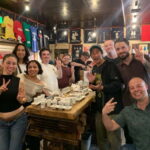
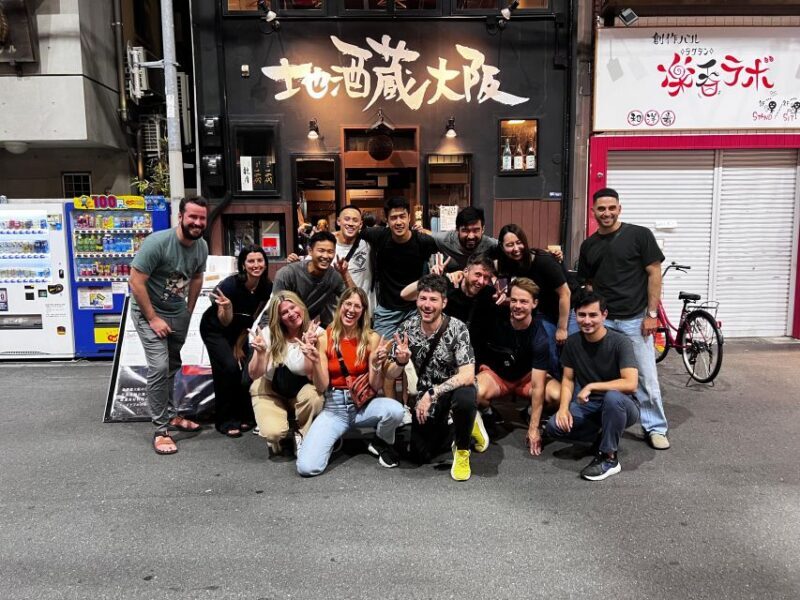
The group is normally around five to ten people, which is small enough for conversation but large enough to bring a mix of backgrounds. That balance is useful if you are traveling alone. You have a guide to help with the evening and a ready-made group to talk with, without joining a large crowd moving on a whistle.
The guides also seem to set the tone. Taiga, Seina, Kosuke, and others have been praised for making people feel included, explaining local culture, and keeping the evening running smoothly. That human connection is central to the tour: you are not just being shown a sequence of addresses, you are spending the night with a local host who can answer questions and help strangers relax together.
Karaoke sometimes becomes part of the fun, either at a local bar or as an informal end to the evening. Some groups have continued the night afterward, but the scheduled tour lasts three hours. Think of karaoke as a possible bonus, not a guaranteed stop or an included extra.
At $19 per person, the base price is low for a three-hour guided outing. You are paying for an English-speaking local guide and a route through Dotonbori, Namba, and Uranamba, with help finding places and understanding what you are eating and drinking. If the guide gets you into a small venue you would not have approached alone, that local access can be worth more than a checklist of famous bars.
But the headline price can be misleading if you assume it covers the evening’s consumption. It does not include food or drinks, so you will need extra money for every stop where you order. The most practical way to judge the value is to separate the guiding fee from your night’s tab: the tour makes the bar-hopping easier and more social, while you remain in control of how much you eat and drink.
There is no hotel pickup or drop-off. You meet at the monument by the Glico sign and walk from there, so plan your own journey to and from the starting point. Comfortable shoes are recommended, and cash is important for the separate food and drink costs.
More Great Tours NearbyThis is a good fit if you want to sample Osaka nightlife but would rather not choose every venue yourself. It is especially useful for a solo visitor, a couple hoping to meet people, or anyone curious about izakaya culture and Japanese drinks. You do not need to be a sake expert; asking questions and trying a small range of local food and drink is the point.
It is also a practical first-night activity. A guide can introduce you to the rhythm of local bars, show you some small venues, and give you ideas for places to return to later. If you prefer a quiet dinner, want a fixed menu, or need drinks included in the price, this is less suitable. It is a walking social outing, and the venues and purchases are part of the evening’s cost.
The tour is not suitable for anyone under 20, and minors under 20 must not consume alcohol. If you have dietary restrictions, contact the organizers beforehand. English is the tour language.
If you prefer having a local expert, these guided Osaka experiences could work well
Book it if you want an easy way into Osaka’s local bar scene, enjoy meeting people, and are comfortable paying separately for what you order. The strongest reasons to go are the guides’ local insight, the small-group atmosphere, and the chance to visit venues you might miss on your own. The takoyaki, sake explanations, and karaoke can make the night memorable, but they depend on the stops and group.
Skip it if you want a fully priced package, a guaranteed menu, or a set list of bars. Bring cash, wear comfortable shoes, and arrive ready to follow the guide’s lead. For a modest guiding fee, it offers a friendly route into the city’s after-dark food and drink culture, with the freedom to keep your own tab in check.
“Our tour guide Taiga was amazing he really made the entire experience amazing. He can also sing karaoke which was an added bonus 😂 😂 😂”
The walking tour lasts three hours. The Dotonbori introduction is about 15 minutes, followed by roughly two and a half hours in Namba and the surrounding area.
Meet in front of the Glico sign at the Dotombori Humanity Song Monument.
No. The price includes a local guide and walking tour. Food and drinks are paid for separately, and you should bring cash.
Possible drinks include Japanese sake, local beer, cocktails, and spirits. The specific drinks depend on the venues and the evening.
No. People under 20 are not suitable for the activity, and minors under 20 should not consume alcohol.
The live tour guide speaks English. Bring comfortable shoes and cash for food and drinks.
You can check availability for your dates here: