Physical Address
304 North Cardinal St.
Dorchester Center, MA 02124
Physical Address
304 North Cardinal St.
Dorchester Center, MA 02124

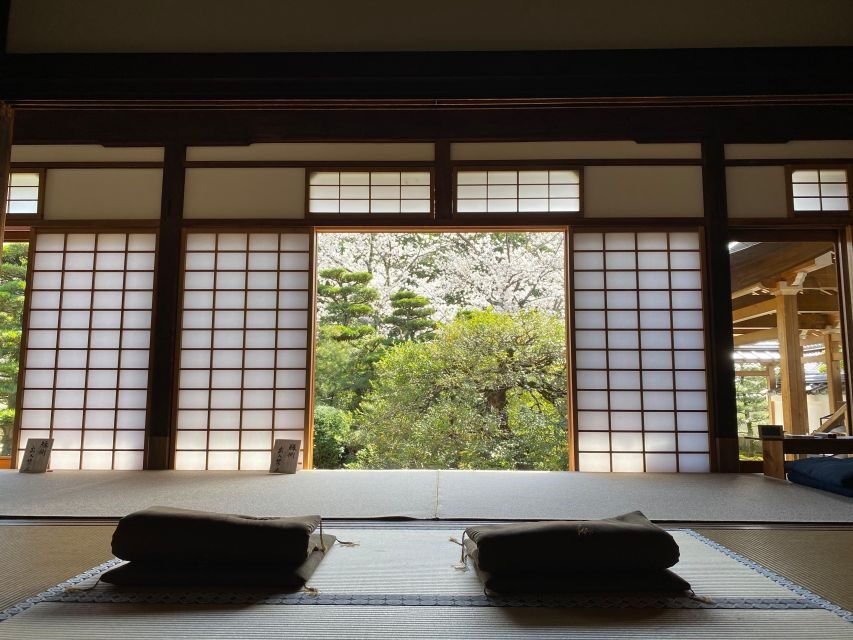
Practice zazen with Jusho-in’s chief priest, then learn about matcha over tea and seasonal sweets in a historic Kyoto temple garden.
Jusho-in offers something Kyoto’s crowded sights rarely do: a quiet room, a garden view, and time to sit still. In this two-hour visit, chief priest and 16th-generation abbot Eitetsu Nishida introduces Zen, then guides you through two 20-minute zazen sessions before tea and seasonal sweets.
I like the mix of hands-on meditation and conversation with the abbot, and the chance to learn how Zen and matcha connect in a temple setting. The garden, attributed to painter Eitoku Kano and dating back about 400 years, gives the tea portion a fine setting.
One thing to consider: sitting upright for two 20-minute sessions can be uncomfortable, especially if you’re not used to meditation. Chairs are available, but the temple is not wheelchair accessible, and a rented kimono can make sitting harder.
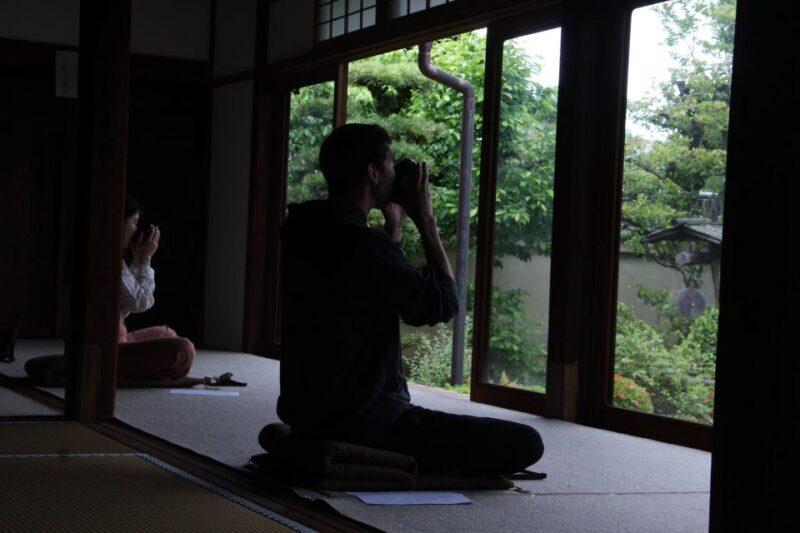
The visit begins at the north gate of Myoshin-ji Temple, where a guide meets you and walks with the group to Jusho-in. The meeting point can vary with the option you book, so check your confirmation rather than assuming every departure uses the same spot. The listed address is 18 Taniguchisonomachi, and the gate is also identified as 北総門.
Myoshin-ji is a large Zen temple complex, not a single building. Jusho-in is one of its 46 sub-temples, so the short walk in helps set the scene: you are entering a temple community, not simply stepping into a room set up for a meditation class.
There is no hotel pickup or drop-off. Plan your own way to the meeting point, and leave enough time to find the correct gate. If you have a little time after the session, consider walking around the wider Myoshin-ji grounds. That is a useful way to extend the visit, but it is separate from the two-hour experience.
Looking for more options in Kyoto? Here are some other experiences worth considering.
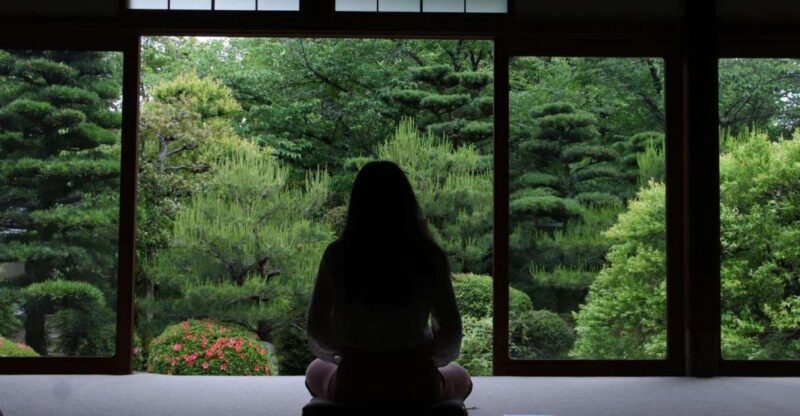
At Jusho-in, the priest first explains the basics of zazen, the seated meditation practice associated with Zen. Then you sit for two 20-minute sessions, with a pause between them for stretching, questions, and further guidance. That structure is helpful for beginners: you can try the practice, ask what you’re unsure about, then return with a better sense of what to do.
The aim is not to prove you can clear your mind on command. You’ll be shown how to sit and focus, but thoughts will still show up. Many people find that part harder than expected. That is not a sign you have failed. It is simply what happens when you spend time noticing your own attention.
Eitetsu Nishida is the 16th-generation abbot of Jusho-in. Before becoming a monk, he worked as a national public servant for 10 years, then completed three and a half years of rigorous training. His teaching is described as warm and humorous, a useful fit for a practice that can feel serious or unfamiliar at first.
Jusho-in follows Rinzai Zen, a branch of Mahayana Buddhism introduced to Japan in the 12th century. Rinzai places importance on direct experience and the possibility of sudden insight, rather than relying only on religious texts. You do not need prior knowledge to take part. The session gives you a practical first look at the tradition, not a full course in Buddhist thought.
The language setup is English, with a live guide or interpreter. The abbot also speaks English, though one visitor found his accent difficult to follow. If you’re concerned about missing details, pay attention to the guide’s explanations and ask questions during the pause. This is a cultural introduction, not a silent retreat, and questions are part of the experience.
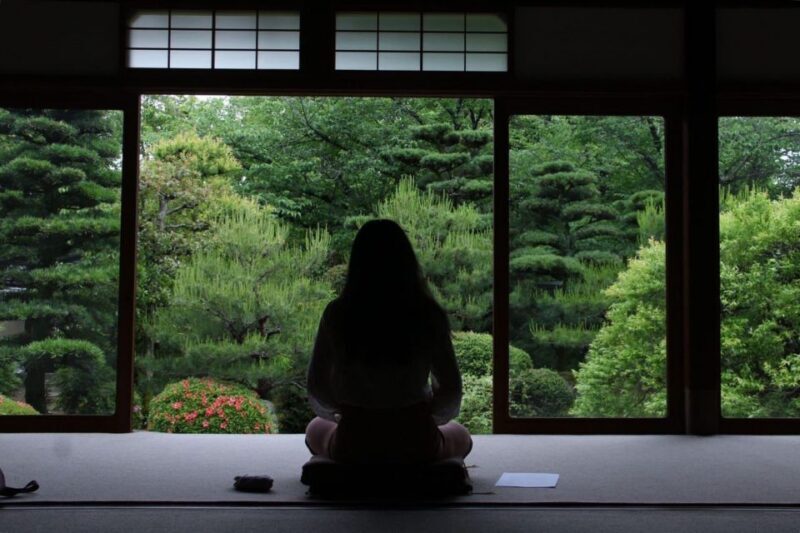
Zazen asks you to sit upright and stay still for a while. If sitting cross-legged is uncomfortable, tell the team: chairs are available for people who need them. The setting is intended for focused meditation, but it is not wheelchair accessible, so this is an important limit to check before booking.
Seating is assigned in reservation order. You may not be able to choose your place in the room, so book with that in mind if seat location matters to you. The experience runs rain or shine, and the meditation takes place indoors. A visitor in winter appreciated having blankets when the doors were open toward the garden, but conditions can vary; wear clothes you can sit comfortably in.
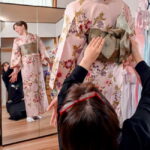
Skip the rented kimono for this activity. It can restrict your movement and make meditation less comfortable. There are no special clothing or equipment requirements, so simple, comfortable clothes are the practical choice.
The activity is open to all ages, but that does not mean every child will enjoy sitting quietly through two meditation sessions. If you’re bringing children, consider their comfort with stillness and the length of the practice. The setting and teaching are welcoming, but the core activity is quiet, focused sitting.
After meditation, Eitetsu introduces matcha and its history. You then drink the powdered green tea with traditional seasonal sweets, often called wagashi. The tea portion is more than a snack break: it gives you a chance to notice the etiquette around receiving and drinking tea, and to ask how that ritual relates to Zen practice.
The tea and sweet are selected to go together, and the seasonal element makes this part feel tied to the time of year. The point is not to master a formal tea ceremony in a few minutes. Rather, you get an accessible introduction to matcha and a chance to slow down over a carefully served cup.
The setting is a small temple building overlooking a garden attributed to Eitoku Kano, a renowned 16th-century painter. The garden is said to have remained unchanged since its creation about 400 years ago. Its appearance shifts with the seasons: cherry blossoms in spring, fresh greenery in summer, autumn leaves, and snow in winter.
The garden view is a key part of the visit, but the experience is not a garden tour. You’ll appreciate it from the temple during tea, with time to take in the view and talk with the priest and team. If you expect a long walk through landscaped grounds, this is not that. The focus stays on meditation, tea, and the temple’s setting.
More Great Tours NearbyA guide accompanies the walk and helps explain the practice in English. The temple entry, priest’s talk, tea and sweets, and photo session are included in the $109 per-person price. That is more than a basic meditation class: you are paying for access to a historic temple, direct instruction from its abbot, interpretation, tea, and a record of the visit.
A photographer uses a single-lens reflex camera to capture moments during the experience. The photo data is sent within a few days after the tour ends, so it is not an instant souvenir. It is a thoughtful extra, since you can focus on the practice rather than trying to take pictures yourself.
The visit is offered as a private or small-group experience. Group size can affect how much room there is for conversation, but the format is designed to leave time for questions rather than rush from one attraction to another. The total duration is about two hours, including explanations of zazen and tea.
Booking flexibility is useful if your Kyoto plans are still shifting: you can reserve now and pay later, and cancellations made at least 24 hours ahead qualify for a full refund. After that window, refunds are not available. Weapons or sharp objects, alcohol, and drugs are not allowed.
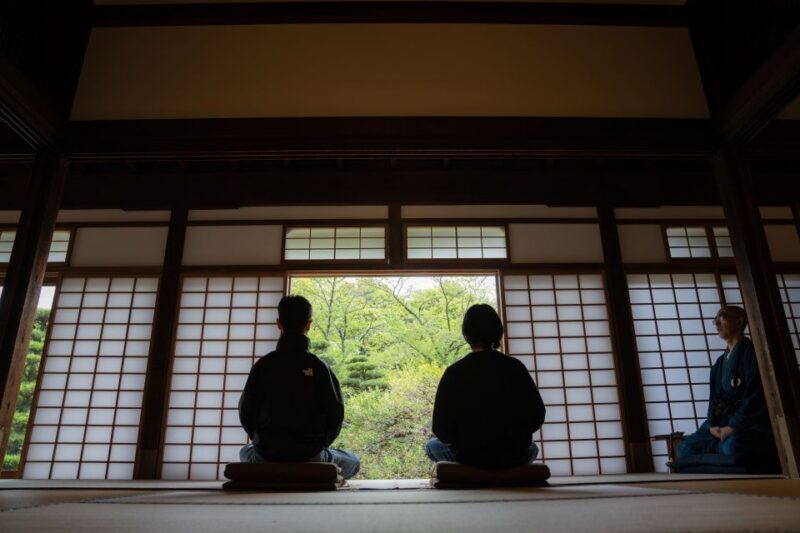
At $109 per person, this is a considered purchase, not a budget temple visit. You are paying for a guided cultural activity with a clear structure, rather than admission to the temple alone. The priest’s teaching, two meditation sessions, English-language support, matcha and sweets, and a later photo delivery all contribute to the price.
The best value is for someone who wants a meaningful introduction to Zen, not just a scenic stop. You get time to practice, hear context from the abbot, and ask questions in a small-group setting. The garden and tea add atmosphere, but the main value is the chance to learn directly from the person leading the practice.
If your priority is seeing as many Kyoto sights as possible in a short time, two hours may feel like a large share of your day. The experience also does not include transport, so account for your journey to and from Myoshin-ji. If you want a quiet pause with substance, the time and price are easier to justify.
This experience suits first-time meditators as well as people who already practice. Beginners can learn the basic posture and try a short session, while people familiar with meditation may value the chance to practice in a Zen temple under an abbot’s guidance. You do not need to arrive with religious knowledge or a particular spiritual outlook.
It also works well for anyone who wants a change of pace from Kyoto’s famous sights. The visit is calm and personal, with room for questions and a garden to contemplate rather than a checklist of photo stops. Couples, solo visitors, and families with older children may all find something here, provided everyone is comfortable with quiet sitting.
It is less suitable if you need wheelchair access, cannot sit comfortably even with a chair, or would rather spend the morning moving through multiple sights. This is a focused activity, and its slower rhythm is the point. Go in willing to be still, even if your mind does not cooperate perfectly.
Book if you want a clear, welcoming introduction to zazen and a chance to speak with Eitetsu Nishida in a historic temple. The pairing of meditation, matcha, seasonal sweets, and the garden makes the two hours feel complete, while the interpreter and available chairs help make the practice more approachable.
Think twice if mobility access is essential, sitting is painful, or your schedule is too tight to reach Myoshin-ji without a hotel transfer. For a thoughtful break from Kyoto’s busiest attractions, though, this is a strong choice. Wear comfortable clothes, arrive at the meeting point listed for your booking, and give yourself permission to notice the wandering mind rather than fight it.
“Loved this experience from start to finish! Everyone there was kind, patient, and informative and happy to answer all our questions. Learned lots a…”
It lasts about two hours, including explanations of zazen and tea.
The meeting point is at the north gate of Myoshin-ji Temple. The precise meeting point may vary by booking option, so check your reservation details.
Yes. An English-speaking live guide is provided.
There are two zazen sessions, each lasting 20 minutes.
No special experience is required. The abbot introduces zazen and guides the sessions.
Yes. Chairs are available for people who need assistance sitting during zazen.
No. The experience is not wheelchair accessible.
The price includes a guide, temple entry, the chief priest’s talk, Japanese tea and sweets, and a photo session. Photo data is sent within a few days after the tour.
Yes. It runs rain or shine.
You can cancel up to 24 hours before the experience for a full refund. Cancellations after that are not refundable.
You can check availability for your dates here: