Physical Address
304 North Cardinal St.
Dorchester Center, MA 02124
Physical Address
304 North Cardinal St.
Dorchester Center, MA 02124

Ride into Carrara’s marble quarries by 4x4, explore open and tunnel sites, take in mountain views, and taste Colonnata lard.
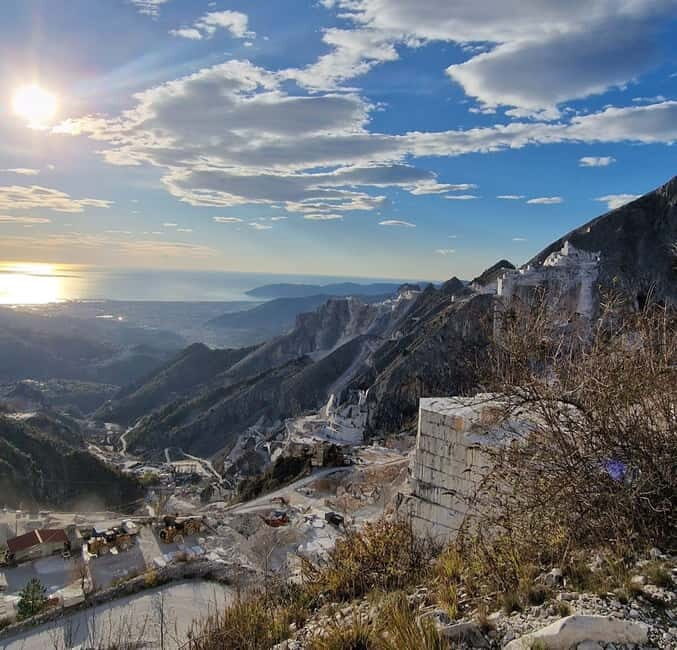
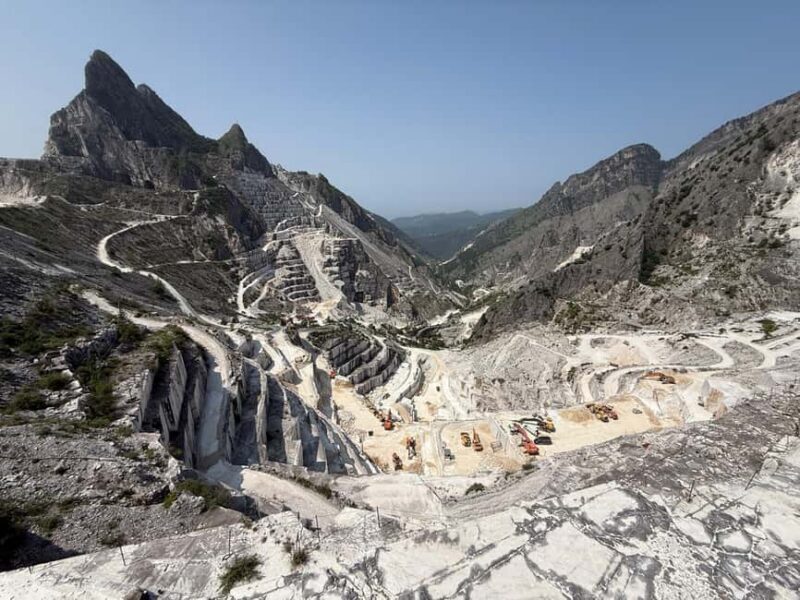
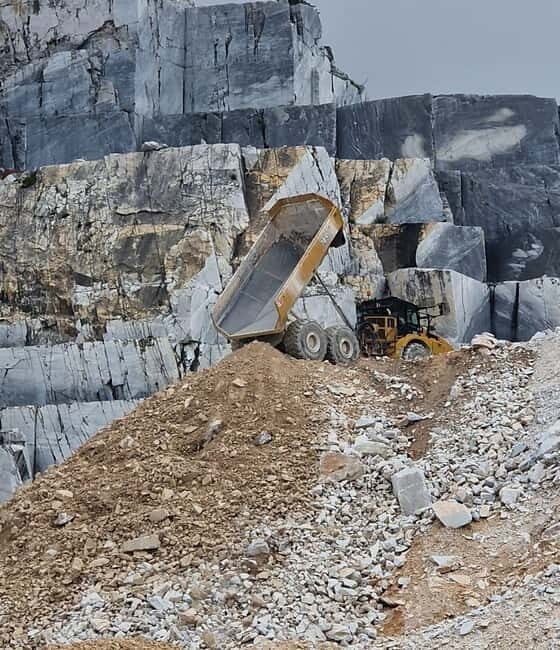
Carrara’s marble quarries are not a distant white stripe on a mountainside. In a 4×4, you climb winding quarry roads, pass active extraction sites, and enter a marble tunnel called the Cathedral of Marble. The scale is the point: you see the stone in the mountain, not only polished into statues and countertops.
I like two things in particular: the vehicle gets you into quarry areas that are difficult to reach by other means, and the guides connect the dramatic scenery with the history and working life of the marble industry. The Colonnata lard tasting adds a local flavor, quite literally, to a tour that might otherwise be all stone and scenery.
The main consideration is the ride itself. The roads are steep and rough, and you spend a good part of the tour in the vehicle. One visitor found the trip shorter than the advertised 2.5 hours, so allow for some variation in timing.
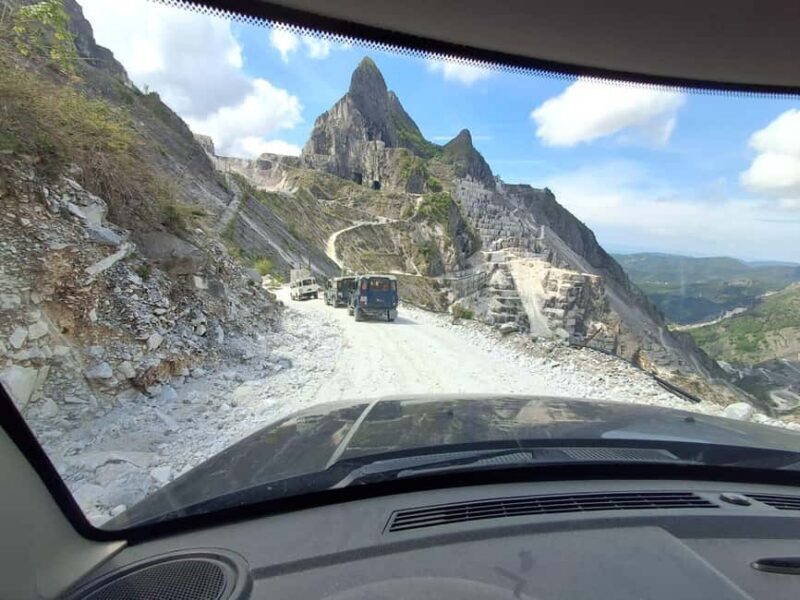
Carrara marble has traveled far beyond Tuscany, appearing in famous sculpture and buildings around the world. Here, you can see the source: huge pale cuts across the mountains, exposed stone faces, and blocks being worked in places where quarrying is still underway.
The scale can be hard to grasp from a distant viewpoint. Inside the quarries, the cut surfaces and sheer walls make the extraction process more tangible. You are not just looking at a finished slab in a showroom; you are seeing the raw material and the industrial setting that turns it into one.
That mix of beauty and work is part of what makes the trip compelling. The quarries are striking, but they are also places of labor and production. Guides have covered subjects ranging from geology and quarrying methods to Carrara’s social and economic history. Luca is especially praised for explaining the subject with energy and humor, while Serena has spoken about her family’s long connection to the marble trade. The guide on your departure may differ, but the best part of the format is having someone interpret what you are seeing as the road climbs.
You can check availability for your dates here: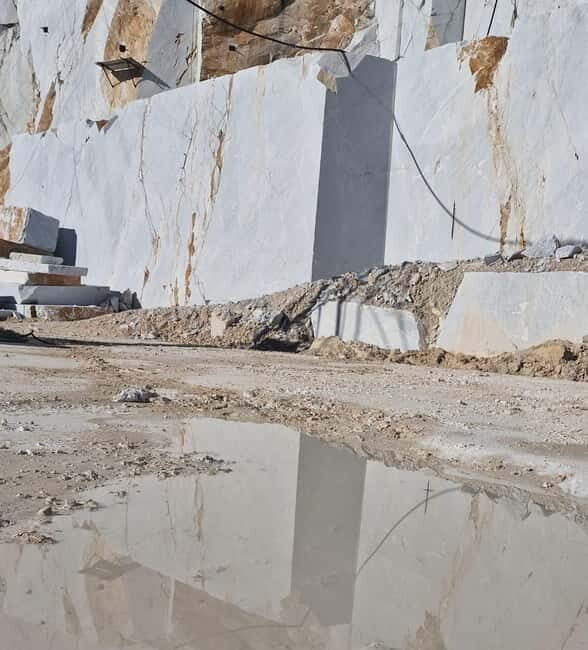
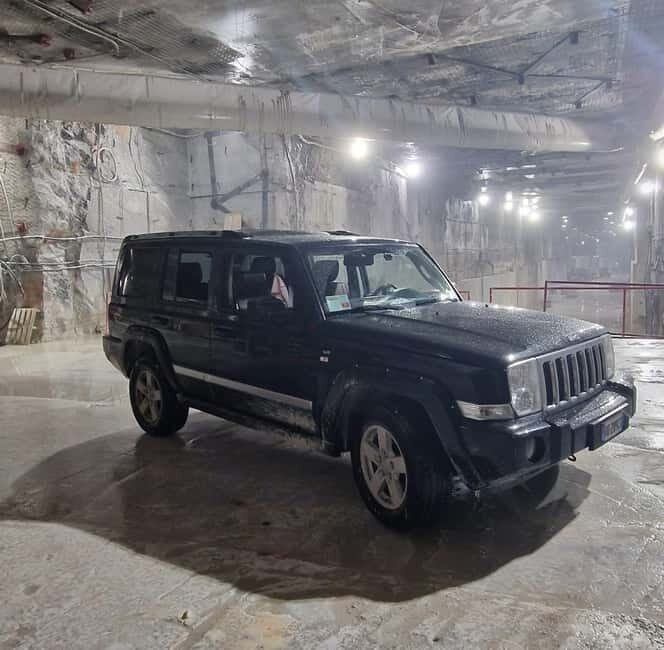
The tour begins at Piazza Vittorio Veneto, by the Carrara dei Marmi obelisk. From there, you board an off-road vehicle and head toward the quarry basins. The route is designed to reach places that are difficult to access on your own, with climbs and descents along winding roads.
The three named areas, Colonnata, Miseglia, and Torano, give the outing a useful sense of range. Instead of viewing one quarry from a single roadside stop, you move through several parts of the marble district. The scenery changes along the route, and the mountain roads themselves are part of the experience.
You should expect to see some sights from the vehicle. Quarry roads can be busy, steep, or unsuitable for stopping wherever you like, and safety matters. A visitor noted that some views were more easily seen through the window than on foot. That is worth keeping in mind if you want a long, unhurried photography session at every stop.
The route includes two viewpoint stops, listed as ten minutes each, along with guided visits and a stop at a local bar. The planned timing gives you chances to get out, take pictures, and listen, but this is not a long hiking tour. You will do relatively little walking compared with the time spent riding.
Looking for more options in Carrara? Here are some other experiences worth considering.
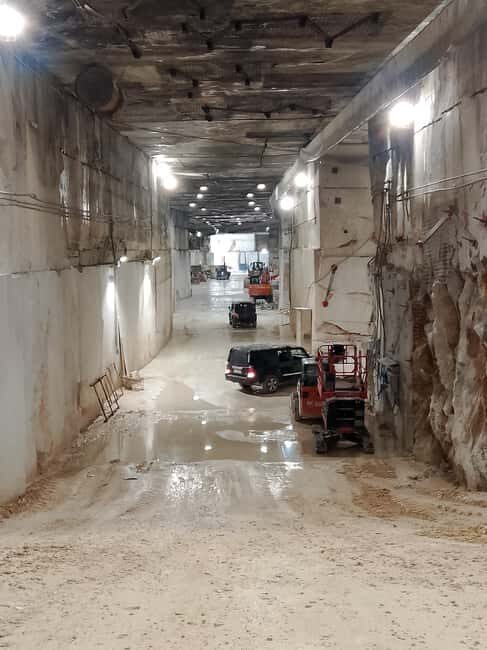
The tunnel quarry is the signature moment. Called the Cathedral of Marble, it offers a very different view from the open cuts: instead of a pale wall under the sky, you enter a cavernous space carved into the mountain. The name is apt, though the setting remains a working quarry rather than a decorated building.
The tunnel visit is a particular reason to choose this tour over a simple roadside viewpoint. Several people describe entering the mountain as the most memorable part, and it is easy to see why. The enclosed scale, raw marble, and evidence of extraction make the quarry feel less like a scenic stop and more like a place where the mountain is being reshaped.
Access to active quarries can depend on what is happening on site. One visitor who joined after quarry operations had closed for the day was taken inside a working mine, but you should not assume every departure follows identical conditions. The stated tour includes access to quarries in progress, both open-air and underground; the guide and site conditions determine what you see on the day.
Wear closed-toe shoes, and bring a camera if you want to record the contrast between the bright open cuts and the darker tunnel interior. Sunglasses are also on the suggested packing list for the exposed viewpoints. The route is primarily vehicle-based, but the terrain is still a quarry environment, not a smooth museum floor.
The food stop gives the tour a human-scale counterpoint to the enormous stone works. You stop at a local bar for a tasting of Lardo di Colonnata, the famous local cured pork fat associated with the village of Colonnata. The tasting is included in the price and takes about 15 minutes.
It is a sample, not a full meal, so plan lunch or dinner separately. Still, it is a useful way to connect the quarry trip with the local food culture. The name Colonnata appears in both the quarry route and the tasting, making the stop feel tied to the place rather than added as a generic snack break.
Food is not the main reason to book. If you are choosing between this and a food-focused excursion, this is first a quarry tour with a brief taste along the way. But if you want a short local flavor alongside the industrial and scenic stops, it fits neatly.
The full outing is advertised as about 2.5 hours, with morning and afternoon departures. The route includes several short vehicle legs, a 25-minute visit at a stop, the lard tasting, two 10-minute photo stops, and a 20-minute guided visit. The experience is a sequence of short sections rather than one long stop at a single quarry.
In practice, the timing may vary. One person reported a tour lasting around two hours rather than the advertised two and a half. That does not mean you should count on a shorter outing; use the stated duration when planning connections and the rest of your day. Quarry access, road conditions, and how the visit unfolds can affect the pace.
The guide rides with you and provides commentary during the trip. The English- and Italian-language tours make the geology, quarry work, and history more accessible, and the guides are a major part of the value. Luca is repeatedly singled out for his enthusiasm and willingness to answer questions. Serena and Tommaso have also been praised for their knowledge and driving, with Tommaso noted for handling the mountain roads confidently.
An atelier visit and sunset departure may be arranged on request. These are not listed as standard parts of every tour, so ask before booking if either is important to you. One visitor also experienced an art workshop where sculpture copies were made, but treat that as a possible addition, not a guaranteed stop.
More Great Tours Nearby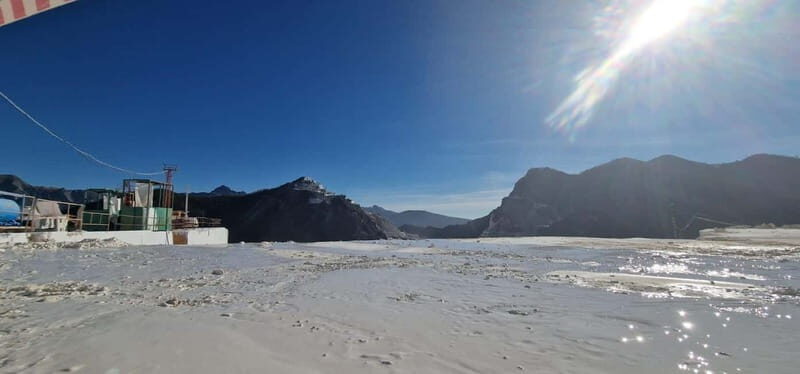
At $81 per person, this is not the cheapest way to spend a couple of hours in Tuscany. The value comes from the access and the combination of transport, guiding, and quarry visits. Fuel, an on-board guide, and the lard tasting are included, while the 4×4 takes you onto roads and into areas that are not practical to reach by ordinary public transport.
If you have your own car, you may still find the guided trip worth the cost. The quarries are a specialized working environment, and the guide adds context to the views and extraction methods. Driving mountain quarry roads yourself is not the same as having a local guide explain the sites while a skilled driver handles the route.
The price may feel high if you mainly want a quick photo of the mountains or if you are not interested in how marble is quarried. One visitor considered the price slightly steep, while another called it unusually good value. That difference makes sense: the tour pays off most for people who want the access, the explanations, and the tunnel visit, not just a scenic drive.
The tour has a 4.9 rating from 437 reviews, a strong signal of consistent satisfaction, though your own experience will depend on the guide, route conditions, and the exact access available that day. For a half-day activity focused on a distinctive part of Tuscany, the price is reasonable if you make full use of the quarry visits and commentary.
Meet at Piazza Vittorio Veneto in Carrara, in front of the marble obelisk. The maximum permitted delay is 15 minutes after departure, so aim to arrive early rather than treating that as a grace period. If you are driving, the meeting point is described as convenient.
If you arrive by train, plan your onward connection rather than assuming a taxi will be easy to find. Getting a taxi in Carrara has proved difficult for at least one person, and the station-to-meeting-point walk was about 2 km. Ask the operator about transport options before travel if that distance or an uncertain taxi is a concern.
Bring sunglasses, a camera, biodegradable sunscreen, closed-toe shoes, and a reusable water bottle. Oversize luggage is not allowed, so leave large bags elsewhere. The ride can be rough, and a visitor with significant back pain may find it uncomfortable. Pregnant people and wheelchair users are not suited to this activity.
Dogs are welcome, but tell the operator in advance so there is adequate room in the vehicle. That is a helpful option if your dog is part of your trip, though the bumpy ride and quarry setting may not suit every animal.
Book it if you want more than a view from the road. The combination of three quarry basins, open-air cuts, a tunnel visit, and guide commentary makes this a strong choice for anyone curious about marble, mining, sculpture, or the working side of Tuscany. It also suits people who enjoy an adventurous vehicle ride and do not mind a little jolting.
You may prefer another outing if you want extensive walking, a quiet museum visit, or a long workshop with local sculptors. An atelier can be arranged on request, but it is not a standard guarantee. Likewise, the lard tasting is a small sample, not a meal.
For most people who can manage a rough mountain drive, I would put this tour high on the Carrara list. Confirm any special request in advance, allow enough time to reach the meeting point, and go for the quarry itself. The tunnel is the part you will be glad you did not skip.
“Luca is a fantastic guide with a lot of knowledge and enthusiasm.”
The tour is advertised as 2.5 hours. The time can vary, and one person reported an outing of about two hours, so leave some flexibility in your schedule.
The listed price is $81 per person. Fuel, an on-board guide, and the Lardo di Colonnata tasting are included.
The route covers the Colonnata, Miseglia, and Torano extraction basins.
Yes. The tour includes entry to a tunnel quarry known as the Cathedral of Marble. Access and the exact route may depend on conditions at the quarry.
Yes. A taste of Lardo di Colonnata is included, with a stop at a local bar.
Meet at Piazza Vittorio Veneto in Carrara, in front of the Carrara dei Marmi obelisk.
The live tour guide is available in English and Italian.
Yes. Dogs are welcome, but notify the operator in advance so they can allow enough space in the vehicle.
You can check availability for your dates here: