Physical Address
304 North Cardinal St.
Dorchester Center, MA 02124
Physical Address
304 North Cardinal St.
Dorchester Center, MA 02124

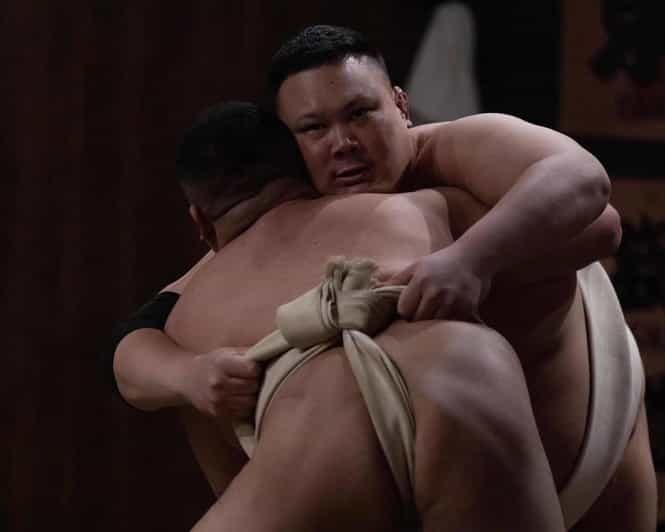
See retired sumo wrestlers demonstrate rituals and bouts in Ginza, with clear explanations, photos, chanko-nabe and optional hands-on training.
Sumo is more than two wrestlers pushing each other out of a ring. At this indoor Ginza show, retired professionals demonstrate bouts and rituals at close range, with an English-speaking host helping you follow the action. You can see the shiko stomp, salt throwing and pre-bout face-off, then watch the wrestlers put their strength and balance to work.
I like two things in particular: the explanations make sumo easier to understand, and the chance to join a simple demonstration can turn an evening of watching into a story you’ll tell later. The central location is another practical plus, especially if you are already exploring Ginza or Yurakucho.
Keep expectations in the right ring: this is an entertainment show, not an official tournament. The optional training-style session is a separate, more physical choice, and food details can vary by option and date.
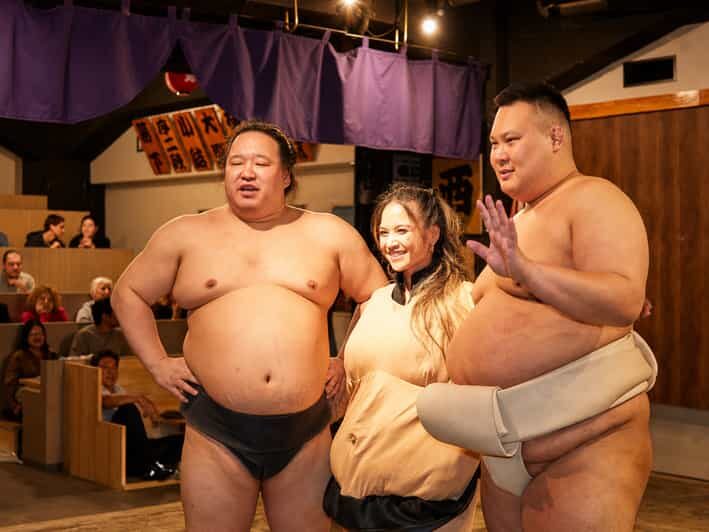
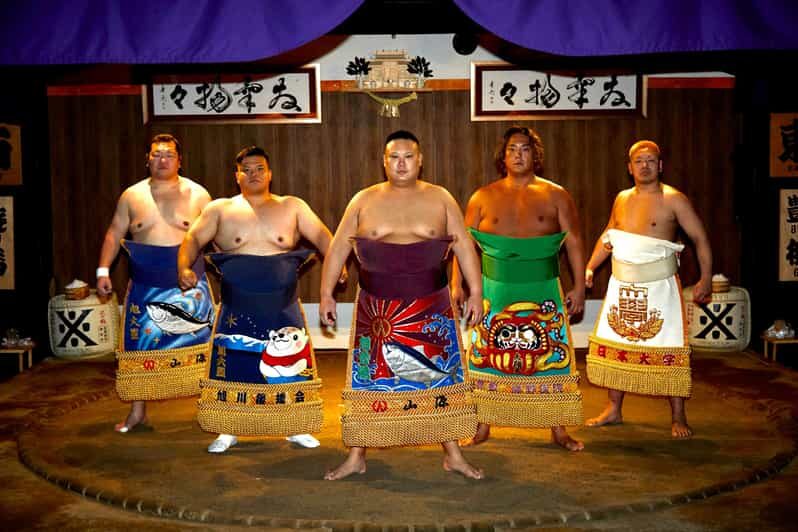
The Tokyo Ginza Sumo Show is designed to make sumo accessible without asking you to know the rules in advance. Retired professional wrestlers perform demonstrations while a host explains what you are seeing. That matters: the rituals can look theatrical at first, but a little context helps you notice how much attention goes into each movement.
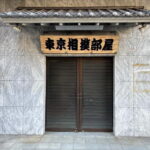
The show takes place indoors at Ginza INZ 1 B1, in the centre of Tokyo. It lasts about 90 minutes, a manageable stretch for an evening activity or a break between sightseeing stops. You are not setting aside half a day, yet there is time for demonstrations, explanations and some audience interaction.
The format suits families, couples, groups and solo visitors looking for a cultural activity that does not require Japanese-language fluency. It is also a useful option on a rainy day or during a hot afternoon. The show is built for an international audience, so expect entertainment alongside cultural explanation rather than the quiet formality of a tournament.
That distinction is important. A professional sumo tournament follows a strict competitive format, while this is a performance created to show you the sport and its customs. If your main goal is to watch official matches, this is not a substitute. If you want an approachable introduction and the chance to see wrestlers up close, the format makes good sense.
You might also be interested in these Tokyo experiences
A sumo bout begins well before the wrestlers collide. You may see movements such as shiko, the high leg lift and stomp, and the tossing of salt. These actions are more than decoration: they are part of the rituals surrounding a match. The host and wrestlers explain what they mean, giving you something to watch for beyond size and force.
The face-off before a bout is a good example. From a screen or a distant seat, it can pass quickly. Here, the wrestlers are close enough for you to see their posture and the moment they prepare to charge. Then comes the burst of action: short, powerful and dependent on balance as much as strength.
The demonstrations also help make sumo legible to beginners. You can see how a wrestler tries to move an opponent off balance or out of the ring, and why a bout can turn in an instant. English and Japanese support keeps the explanations accessible, although the exact presentation and performers may vary.
Names associated with the show include host Nick and wrestlers such as Shido, Yama, Matsu and Bungo. The line-up may change, but the format is designed to pair the action with a clear explanation. The hosts and wrestlers are not simply there to perform; they help you understand the traditions and give the event its light, welcoming tone.
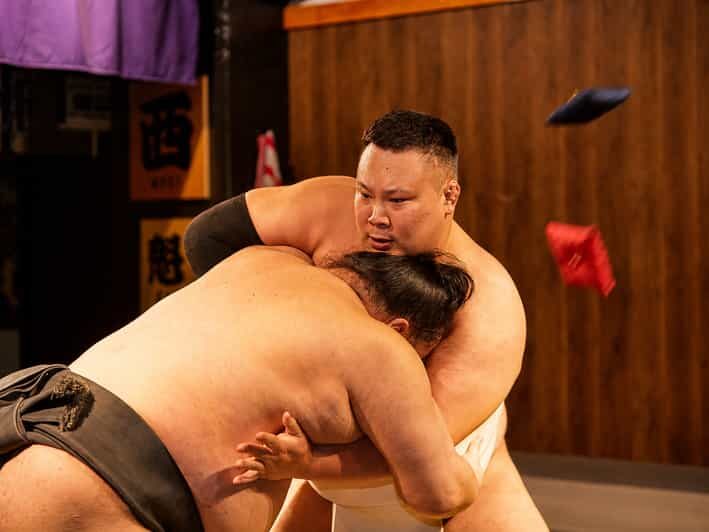
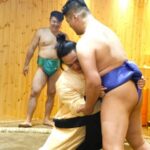
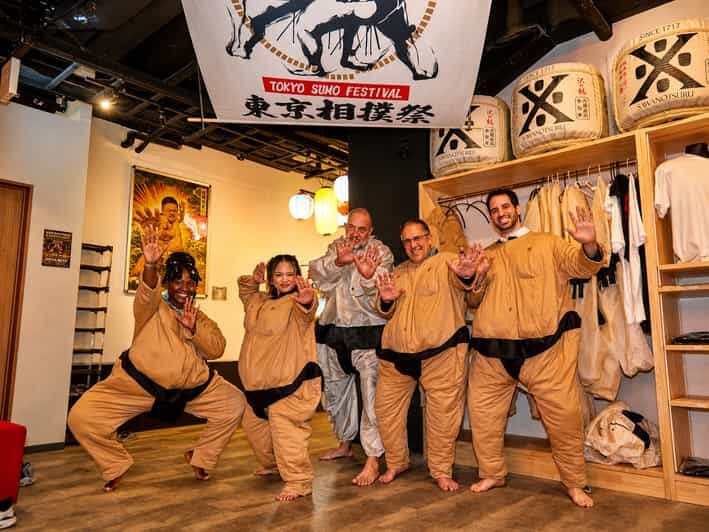
The show is not a sit-still, watch-only affair. Selected audience members may be invited to try basic sumo movements or take part in a playful challenge with a wrestler. Some participants have worn a sumo suit for a brief bout, which can be a memorable moment for children and adults alike.
You should not count on being selected for a particular activity. Participation depends on the show, and the main product is the live performance, not a guaranteed one-to-one training session. If being active is the main reason you want to book, check whether your chosen option specifically includes the hands-on training-style experience.
That option may include shiko, suri-ashi, a sliding-foot movement used in sumo, and simple guided drills. It is a more physical session than the entertainment show, so choose it only if you want to move and take instruction. It is not suitable for children under five, pregnant participants or anyone with a serious medical condition.
For everyone else, the interactive moments can be enjoyed from your seat. You can watch, take photos and follow the demonstrations without stepping into the ring. The show welcomes photos and video, which is handy if you want a keepsake of the action, but remember to stay attentive rather than filming every minute.
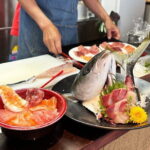
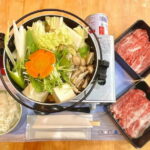
Chanko-nabe is a hot pot closely associated with the everyday life of sumo wrestlers. Having the chance to taste it adds a food connection to the demonstrations, rather than leaving sumo as something you only see in the ring.
There is a practical caveat: the experience information describes complimentary chanko-nabe, but also says food and drink availability may vary by option and date. Treat it as a possible part of the program, not a certainty, and check the details for the session you choose. Food and drinks are otherwise listed as not included, so do not assume every booking comes with a meal.
Outside food is only permitted for people with halal requirements or severe food allergies. If that applies to you, contact the staff ahead of time to clarify what can be arranged. This is a cashless venue, so bring a credit card or another supported cashless payment method for any on-site purchases.
More Great Tours Nearby
The venue is at Ginza INZ 1 B1, close to several major stations. It is about one minute on foot from Ginza Station Exit C9, about one minute from Ginza-itchome Station and about two minutes from JR Yurakucho Station. For a central Tokyo activity, that is a particularly simple arrival.
The location also makes it easy to build a day around the show. You can browse Ginza, visit Ginza Six or Tokyu Plaza Ginza, or walk toward Tokyo International Forum. Kabukiza Theatre, Tsukiji Outer Market, Hibiya Park, the Imperial Palace area and Tokyo Station are also nearby by foot, subway or taxi.
The show itself lasts 1.5 hours, but leave extra time for getting through the station and finding the basement venue. If you are connecting it with another activity, avoid scheduling your next stop too tightly. You will enjoy the event more if you are not checking the clock while the wrestlers are squaring off.
The venue is listed as wheelchair accessible, but wheelchair users should contact staff in advance for assistance. Children must be accompanied by a guardian. These details are easy to overlook when booking a short activity, so sort them out before you arrive.
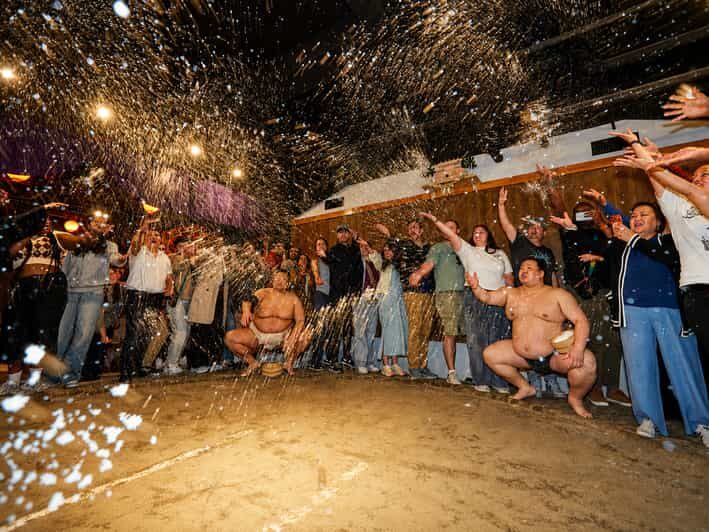
At $57 per person, this is a mid-priced cultural activity, not a bargain-basement photo stop. The value comes from the combination: live demonstrations by retired professional wrestlers, explanations of the rituals, audience interaction, photo opportunities and a central location. If chanko-nabe is included with your chosen option, that adds a food element as well.
The 90-minute duration also helps the price feel more reasonable. You get enough time to understand the basics and see several kinds of movement without giving up an entire afternoon. For a first-time visitor to sumo, the guided format can be more useful than watching an unfamiliar sport without context.
On the other hand, the price is harder to justify if you expect the tension of an official tournament or a full training session. This is a staged entertainment show, and the training-style experience is optional. Before paying, make sure the selected option matches what you want: a lively introduction, or a more active session.
The show’s strongest qualities are its clear explanations, friendly interaction and accessible atmosphere. It is meant to be fun, and the theatrical side is part of the deal. You get a taste of sumo culture, not a complete account of the sport or a replacement for a tournament.
I would put this high on the list for first-time visitors who want to understand the basics of sumo in an engaging way. Families can appreciate the short format and interactive moments, while couples and groups can share the photo opportunities and light-hearted challenges. It can also work well for anyone wanting an indoor activity near Ginza, Yurakucho or Tokyo Station.
It is a less natural fit if you want an austere, competition-focused view of sumo. The event is designed for visitors, with explanations and entertainment built in. That can make the sport more approachable, but it also means the show is not the same as attending a tournament.
If you are deciding between the standard show and the training option, think about what you want from the hour and a half. Pick the show for the performance, rituals and explanations. Choose the hands-on option only if you are keen to try the movements and meet the physical demands.
“Experience was excellent! Perfect duration and engaging”
No. The main experience is an entertainment show performed by retired professional wrestlers, not an official tournament.
The experience lasts about 1.5 hours.
It is at Ginza INZ 1 B1 in central Ginza. It is about one minute from Ginza Station Exit C9 and Ginza-itchome Station, and about two minutes from JR Yurakucho Station.
Yes. English and Japanese support explains basic rules, rituals and movements such as shiko stomping and salt throwing.
Yes. Photo and video opportunities are included.
Chanko-nabe is described as part of the experience, but food and drink availability can vary by selected option and date. Check the details for your booking.
The more active option is not suitable for children under five, pregnant participants or people with serious medical conditions. Children must be accompanied by a guardian.
You can check availability for your dates here: