Physical Address
304 North Cardinal St.
Dorchester Center, MA 02124
Physical Address
304 North Cardinal St.
Dorchester Center, MA 02124

See Bangkok’s temples, markets and malls on a flexible 24, 48 or 72-hour bus pass, with air-conditioned seats, GPS audio and live bus tracking.
Bangkok’s sights are spread across a huge, traffic-clogged city. This double-decker bus links temples, Chinatown, shopping malls and riverfront stops, giving you a useful first look and the option to get off when a place catches your eye.
I like the freedom to build your own route, and the practical mix of air-conditioned seats and open-air views. The GPS audio guide, free earphones and phone-based bus tracking also make it easier to follow along without arranging a private guide.
The catch is time: buses run only during the day, and traffic can slow the circuit or leave you waiting. If you want to explore several stops in depth, a 24-hour pass may feel rushed; I’d consider 48 hours.
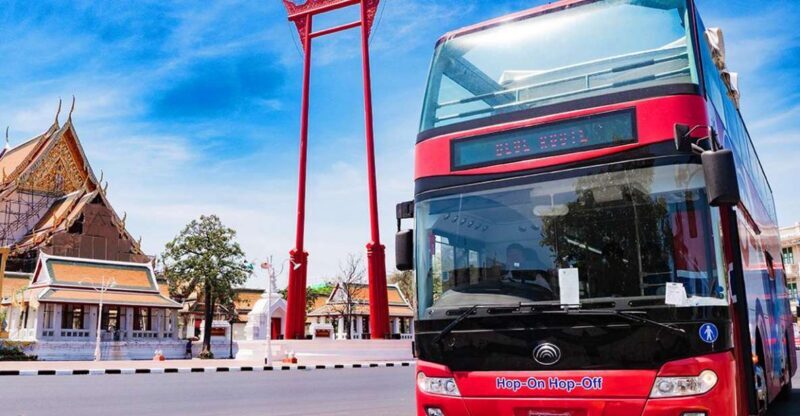
Bangkok can be hard to read on a first visit. One minute you are near a gleaming shopping centre; the next, a temple courtyard or a street market. The bus route gives you a simple framework for seeing how some of the city’s best-known sights fit together. It can also help you decide which places deserve a longer visit.
The pass gives you unlimited rides for the selected period, but the bus itself does not run all day. Departures from the first stop begin around 10 a.m. and finish in the mid-afternoon, with the precise interval described as roughly 35 to 40 minutes. Traffic can stretch that gap. Plan around the service window rather than assuming you can return to the bus in the evening.
I would treat the first circuit as an orientation ride, not a guaranteed sightseeing sprint. You can stay aboard to watch the city pass and hear the commentary, then use a later loop to visit a few chosen stops. The live location map is especially useful for timing that second part of the day.
You can check availability for your dates here:
The bus begins at Siam Paragon, with another listed service point at CentralWorld. Along the way, the route covers shopping districts, Chinatown, temples, the Grand Palace area, the river and Patpong Night Market. The stop names refer to nearby areas or landmarks, so check your map and stop information before setting off on foot.
Some materials describe 15 stops, while the route information names additional places, including CentralWorld as a service point. Use the live map and the information provided with your ticket to confirm the current boarding points. The main value is the broad sweep of the route, rather than an exact stop count.
Looking for more options in Bangkok? Here are some other experiences worth considering.
Siam Paragon is a useful starting point if you are already in the central shopping district. MBK Center and Samyan Mitrtown give the route a modern, urban side before it heads toward older parts of Bangkok. These stops can suit you if shopping or a meal is part of your plan, but they are less compelling if your limited time is reserved for temples and historic sights.
The first stop is also a natural place to ride the whole circuit and get your bearings. Just remember that the full loop takes hours in traffic. A ride-through is a good overview, but it is not a shortcut across town.
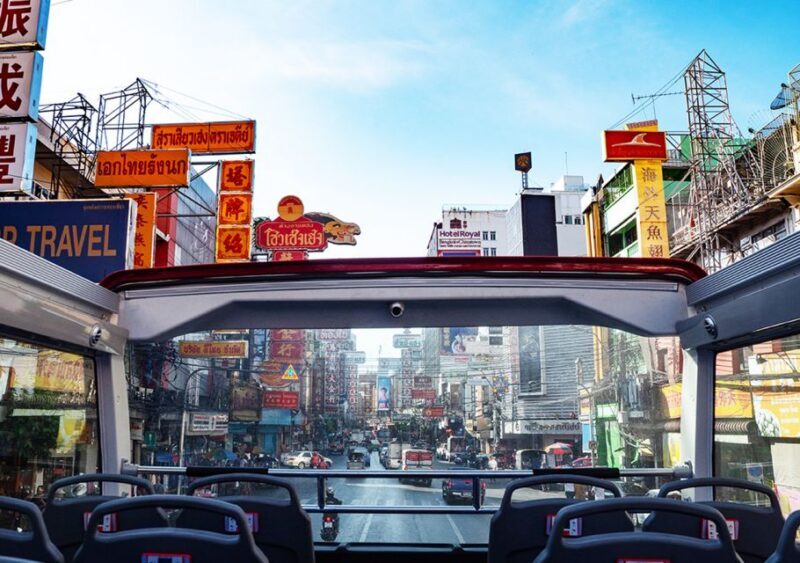
The Golden Buddha stop serves Wat Trai Mit, home to the Golden Buddha, and sits near the Chinatown area. Chinatown is one of the route’s most appealing places to get off if you want to explore beyond the view from the top deck. The bus can get you near the district, but its streets and food stalls are best experienced on foot.
Allow more time here than a quick photo stop. If you are trying to fit several temples into one day, be realistic: getting off, walking around and catching a later bus all take time. The tour does not include food or drinks, so plan your own meal stop.
Wat Ratchanatdaram, also called Loha Prasat, is a distinctive temple stop on the route. Nearby, Khao San Road offers a different feel, with a well-known visitor district rather than a quiet temple visit. The Giant Swing and Wat Suthat are close enough to make a worthwhile pairing if you want to see more than one nearby sight.
This stretch is a good example of the route’s variety: religious landmarks, city streets and a lively visitor area all appear in the same circuit. The trade-off is that the bus only gets you to the area. You still need to decide how long to spend at each place, and then watch the clock for the next departure.
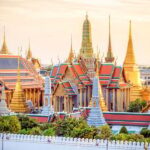
More Great Tours NearbyWat Pho and the Royal Grand Palace area are among the most important stops for a first visit to Bangkok. They are not sights to squeeze into a few minutes. If you want to go inside and explore, leave a generous part of your day for them, and consider a longer pass so that traffic or a long visit does not derail your plans.
The bus provides a convenient link to the area, but does not include entry, a live guide or a guided temple visit. The audio commentary is recorded and triggered by GPS, so it works best as background context while riding, not as a substitute for detailed guidance at the sites.
The route continues to Wat Rakhang and Wat Arun, then crosses into a modern riverside side of the city at ICONSIAM. Wat Arun is a major reason to use this service if it matches your sightseeing priorities. ICONSIAM, by contrast, gives you a large contemporary shopping stop and a place to pause indoors.
The bus connects these areas, but Bangkok’s traffic and river crossings can make travel time hard to predict. The route is useful for reaching several districts without having to plan every leg yourself; it is not a promise that each transfer will be quick. Check the live bus position before leaving a stop.
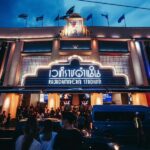
King Power Mahanakhon and Patpong Night Market add modern city views and a market area to the route. The bus runs during daytime hours, so do not assume that a pass gives you an evening ride to Patpong. You can use the stop to plan a visit, but arrange your own onward transport if your plans run past the last bus.
CentralWorld is also listed as a service point, alongside Siam Paragon. Because the stop descriptions and route lists vary in how they count locations, use the map and staff information to confirm where to board rather than relying on a stop count alone.
The advertised circuit takes about 3 to 3.5 hours without getting off. That is a long time to stay aboard, but it is useful for seeing the shape of the city in one go. Traffic is the main variable. A bus that normally comes around every 35 to 40 minutes may be delayed, and some riders have experienced longer waits later in the day.
The first departure is around 10 a.m., with the last leaving the first stop at roughly 3:25 p.m. The exact times are presented slightly differently in the service information, so check the current schedule and tracker on the day. Arrive 10 to 15 minutes before the expected bus, especially if you are boarding at a stop where buses may be full.
The bus stops may not have prominent hop-on hop-off signs. Use the map or brochure to pinpoint the boarding location, and watch the live bus tracker. One visitor tip worth keeping: regular public bus stops may be used, so do not wait only for a special tour sign.
A 24-hour ticket lasts 24 hours from validation, not just until the end of the calendar day. For example, if you first board at 2 p.m. on Tuesday, the pass remains valid until 2 p.m. Wednesday. This clock-based validity can be handy if you plan to split sightseeing across two partial days, but remember that the buses themselves do not operate around the clock.
A 24-hour pass makes sense if you mainly want a city overview, expect to stay aboard for much of the route, or plan to visit only a couple of stops. If you want to spend meaningful time at the Grand Palace, Wat Pho, Chinatown or ICONSIAM, 48 hours gives you more breathing room. A 72-hour pass suits a slower visit, though its value depends on how often you expect to ride.
At about $25 per person, the pass is most useful when you make several rides or use it to connect multiple sights. If you board once, stay on for the circuit, then rely on other transport for the rest of your stay, its value is less certain. Compare the price with how many stops you will actually visit, not just how many appear on the route.
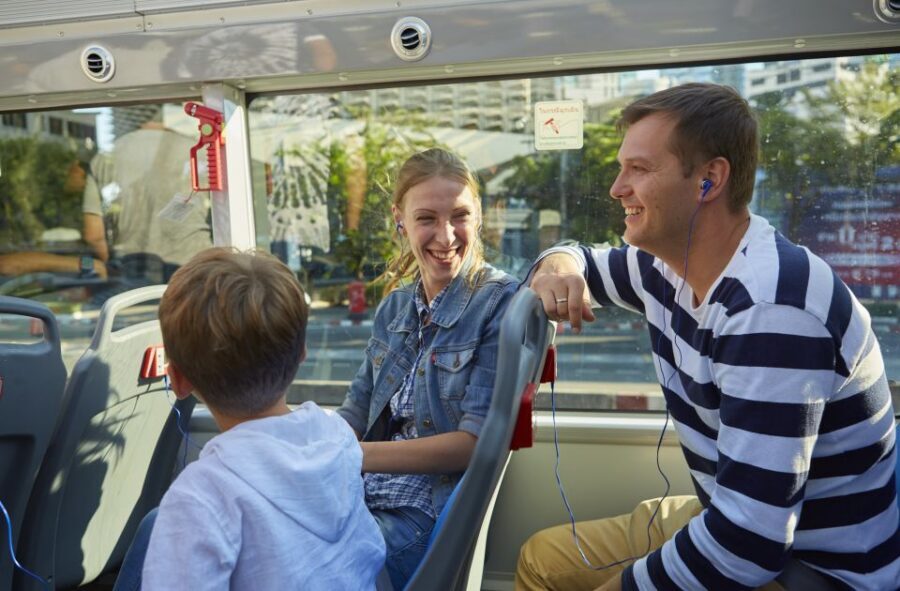
You can choose between open-air seats on the upper deck and shelter inside. The top deck offers a better view of the streets, but Bangkok’s heat and sun are real considerations. The indoor area provides air conditioning, a welcome break between walks. The bus has been described as clean and comfortable, though a full bus can limit your choice of seats.
Free earphones are provided for the pre-recorded audio guide in seven languages: English, Thai, Mandarin, Korean, Spanish, German and French. The commentary is triggered by GPS, so it follows the bus’s location rather than a live guide’s timing. It gives useful context, but it is brief and can occasionally cut off or jump between topics. Treat it as an introduction, not a full history lesson.
There is no live guide included. The driver handles the ride, and staff can help with boarding, but you should not expect a person to lead you around each sight. A free map or guidebook and a mobile app with GPS bus locations help fill that practical gap.
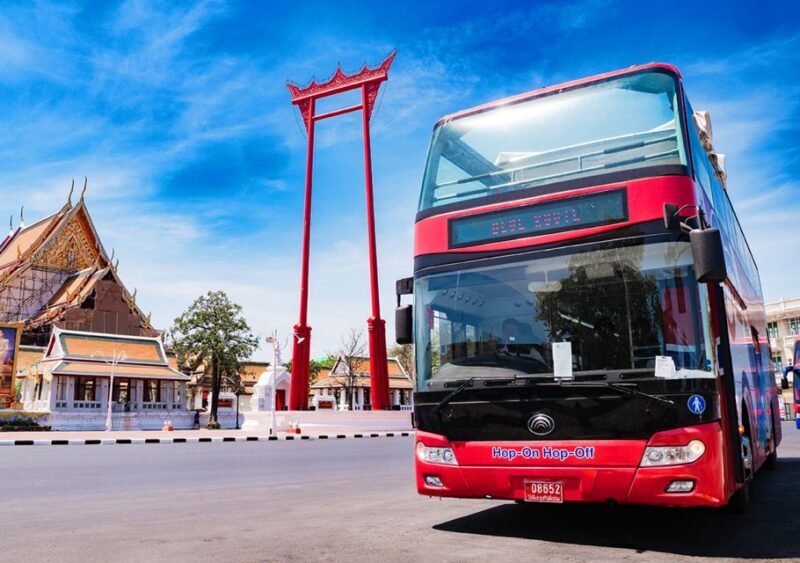
I would recommend this route to first-time visitors who want a broad overview, families who value a comfortable break from the heat, and anyone who prefers not to plan every ride between central sights. The air-conditioned option is especially helpful if you need to rest between walks, and the hop-on hop-off format lets you spend longer at the places that matter to you.
It is also useful if you have limited time and want to see the city’s main areas from the bus, even if you do not get off at every stop. But if you want deep commentary, a guided temple visit or a fast way to cross Bangkok during rush-hour traffic, this is not the right tool on its own. Pair it with walking, the city’s other transport options or a separate guide, depending on your plans.
Book it if you want an easy overview and expect to use the stops to explore several parts of the city. I would lean toward 48 hours if temples, Chinatown and the riverside are all on your list. Choose 24 hours for a simple orientation ride and a couple of visits, and 72 hours only if you want a deliberately unhurried pace.
The main compromise is schedule flexibility: the pass lasts 24, 48 or 72 hours, but bus service is limited to daytime departures and traffic can stretch the wait. If you plan around that, use the tracker and allow time for each stop, this is a comfortable way to connect Bangkok’s major sights without trying to conquer the whole city in one hurried loop.
“Great Bus Tour, many good places to visit, bus nice and cool”
Riding from the first stop to the last without getting off takes about 3 to 3.5 hours, depending on traffic and road closures.
Departures from the first stop are listed at roughly every 35 to 40 minutes, from around 10 a.m. until about 3:25 p.m. Traffic can cause delays.
No. It is valid for 24 hours from the time you first use it. A pass first used at 2 p.m. on Tuesday remains valid until 2 p.m. Wednesday.
The pre-recorded audio guide is available in English, Thai, Mandarin Chinese, Korean, Spanish, German and French.
No. The bus has a GPS-triggered recorded audio guide. A live guide is not included.
Siam Paragon and CentralWorld are listed as service points. At Siam Paragon, the meeting point is on the ground floor at the South Gate, in front of LOCK BOX Plus+ near Bangkok Bank. At CentralWorld, it is in front of Hug Thai Gate on the first floor.
No. Show your confirmation to the driver or staff at a bus stop. They will issue your ticket.
No. Food and drinks are not included, and hotel pickup and drop-off are also excluded.
Children aged 5 and under are free of charge.
You can check availability for your dates here: