Physical Address
304 North Cardinal St.
Dorchester Center, MA 02124
Physical Address
304 North Cardinal St.
Dorchester Center, MA 02124

Walk Rome’s Appian Way, see the Cecilia Metella tomb and aqueducts, then visit a catacomb near closing time with private transport.
The Appian Way tour trades Rome’s crowded center for old paving stones, open countryside and underground burial corridors. Its most unusual feature comes at the end: you enter the Catacombs of San Sebastiano or Domitilla as the last visitors of the day, when the tunnels are quieter.
I like two things especially: the chance to see the Aqueduct Park, where the scale of Roman engineering is easier to grasp than it is in a museum, and the air-conditioned van that links sites spread well beyond the center. Guides such as Federico, Antonella, Chiara and Paris have led departures, though your guide will vary.
The main consideration is that this is a walking tour, not a ride-through history lesson. Expect time outdoors, uneven and sometimes bumpy travel, and tight underground passages. Summer heat can make the open-air stops tiring, while visitors who are claustrophobic may prefer another way to spend the afternoon.
This tour visits a side of Rome many first-time visitors miss. The Appian Way, aqueducts and catacombs sit outside the familiar cluster of major city-center sights, so seeing them independently can take more planning than simply following a map. Here, a guide and van bring the stops together in one half-day outing.
The sequence also gives the experience a useful rhythm. You start above ground on a historic road, pause at a monumental tomb, spend longer in the open parkland around the aqueducts, then finish below ground in the catacombs. It is a good change of pace after several days of churches, museums and busy streets.
The tour lasts 195 minutes, or 3 hours and 15 minutes. The listed stops include 25 minutes on the Appian Way, 25 minutes at Cecilia Metella, 45 minutes at the aqueduct park and 80 minutes at the catacombs, with transport between sites. The time adds up to a full outing, but the van helps keep it from becoming a long march.
You can check availability for your dates here: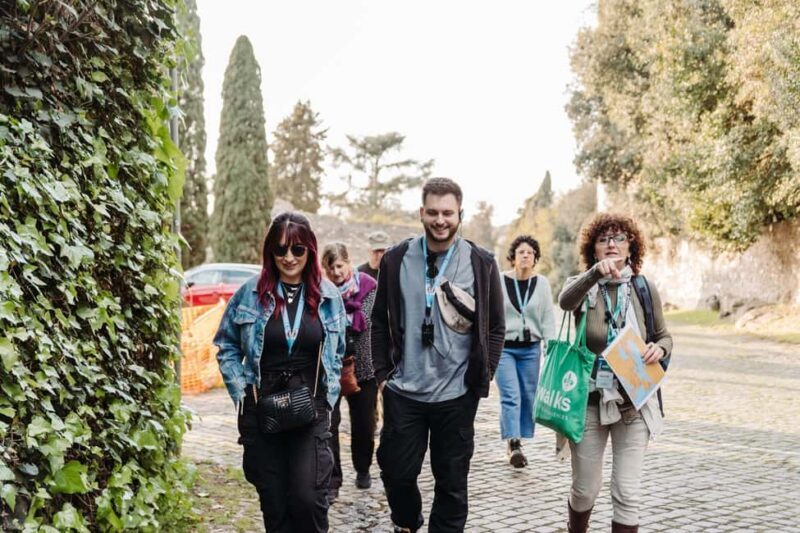
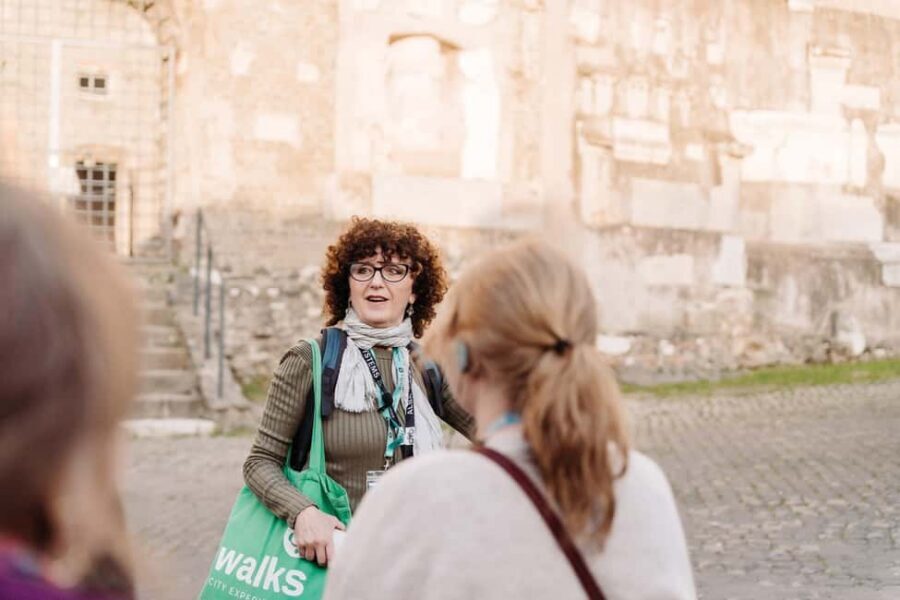
The meeting point is in front of Piramide metro station, across from Piazzale Ostiense. Arrive 15 minutes early and look for the guide holding a green Walks sign. If you take a taxi, use the metro station as your destination: the meeting point is not simply any nearby address around the station.
Hotel pickup and drop-off are not included, so plan your own way to and from the start. The tour returns to Piramide. That is a practical location for a clear meeting, but do not count on being collected at your hotel or dropped at a different Rome landmark afterward.
The ride between stops is part of the value. These sites are spread out, and doing them in one outing by public transport would mean more transfers and less time on site. The van is air-conditioned, which matters most on hot days, though the roads can be bumpy. Bring water and be ready for a mix of vehicle time and walking.
Looking for more options in Rome? Here are some other experiences worth considering.
The Appian Way was one of Rome’s earliest roads, a route used by legions, merchants and other visitors as Roman power expanded. The old paving stones give you a direct, physical sense of the road’s age. Underfoot, this is not a polished museum floor; take steady steps and wear shoes suited to uneven ground.
Set your expectations carefully. The Appian Way is still an active road, so the experience is not a silent walk through an untouched ruin. That can surprise people expecting a wholly pedestrian ancient lane. The appeal is instead the contrast: Roman paving and tombs alongside a road still used today.
You have about 25 minutes for a guided visit and walk. That is enough to get a feel for the route and hear how it fits into Rome’s past, but it is not a long countryside hike. If you want hours of solitary walking, this tour is too structured. If you want to encounter the road without arranging a separate excursion, the short stop works well.
The Mausoleum of Cecilia Metella is a large, circular tomb dating to the 1st century BCE. Its scale makes it easy to picture how important a family monument could be in Roman life. The guide explains the family behind it and the building’s long survival, adding context to what might otherwise look like a striking but puzzling stone cylinder.
The stop lasts about 25 minutes and includes a guided visit and time to look around. It is a compact pause, not an extended archaeological visit, so you will want to listen closely and use the time for photos outside. The tour prohibits cameras inside the catacombs, but that restriction does not apply to outdoor stops.
This is one of the tour’s clearest links between the road and Roman social life. The Appian Way was not only a route for movement; it also became a place lined with tombs and monuments. Cecilia Metella’s mausoleum makes that roadside setting tangible.
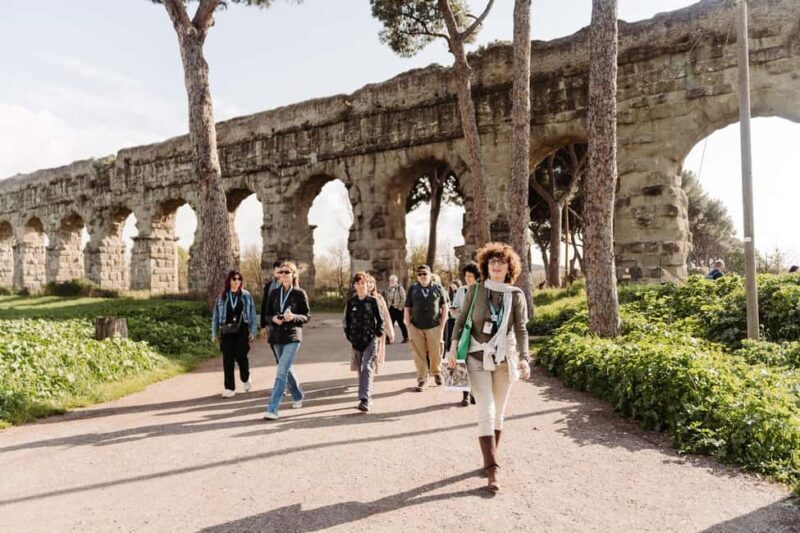
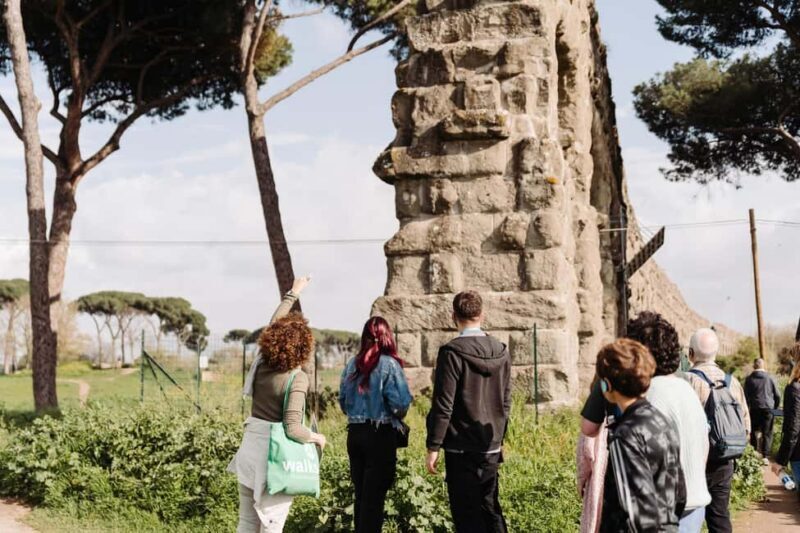
Parco degli Acquedotti is the most spacious stop, with about 45 minutes for a guided visit, sightseeing and walking. Here you stand beneath remains of the aqueducts that carried water toward Rome. Their height and length make the engineering easier to grasp in person than in a picture or diagram.
I would give this stop your full attention. The setting is park-like and open, a sharp contrast with the dense center of Rome, and the aqueducts have room around them to show their scale. The visit also helps connect Roman engineering to daily life: these structures were built to supply water to the city, not simply to impress people centuries later.
The open space has a trade-off. You are exposed to the weather, and there is less shade than you may want on a hot afternoon. One visitor described a 36-degree day and a guide who adjusted the route to find shade where possible. That is a useful reminder: guides can respond to conditions, but they cannot make a summer afternoon cool. In warmer months, bring water, wear sun protection and be prepared for outdoor walking.
Some people would happily spend longer here. The 45-minute stop is enough to take in the remains and hear the story, but if aqueducts are your main interest, the visit may feel brief. The tour has several stops to fit into one outing, so it cannot linger indefinitely.
More Great Tours Nearby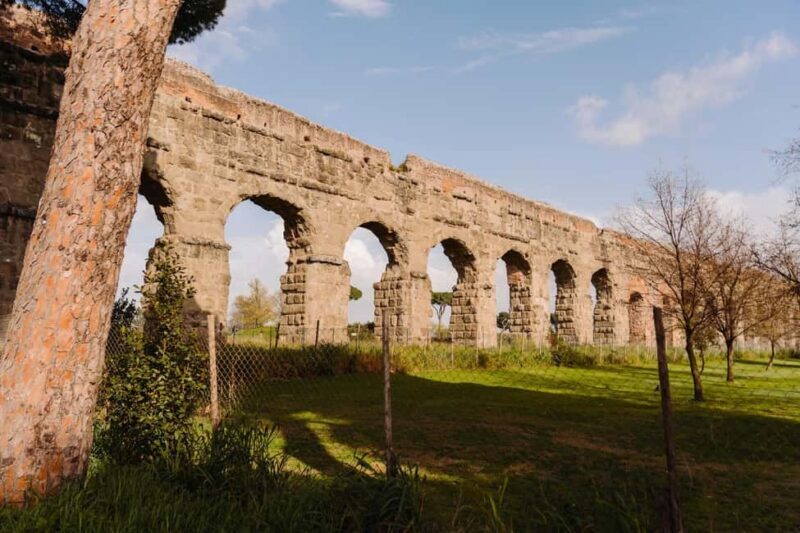
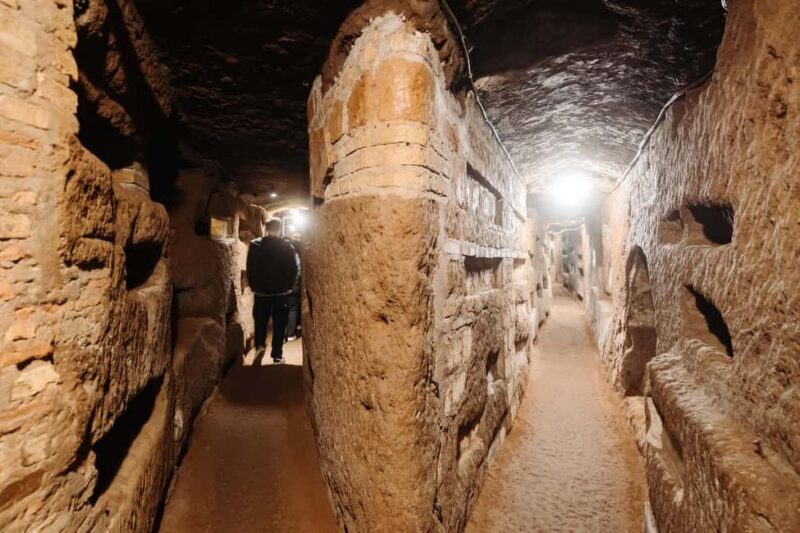
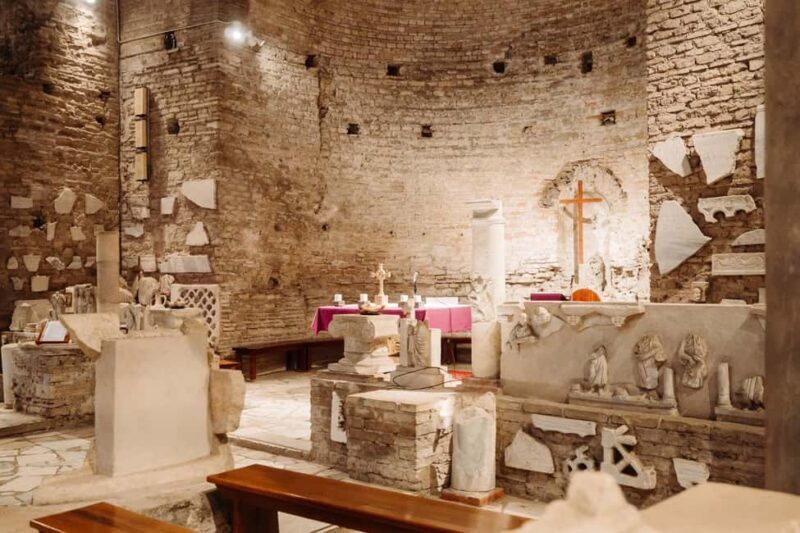
The catacomb visit is the finale and the longest stop, with about 80 minutes set aside. Depending on the day, you visit the Catacombs of San Sebastiano or Domitilla. Entry is included, and a catacomb guide leads the underground portion. The near-closing-time access is a real draw: the aim is to explore as the last visitors of the day, away from the heavier crowds that can shape a more typical visit.
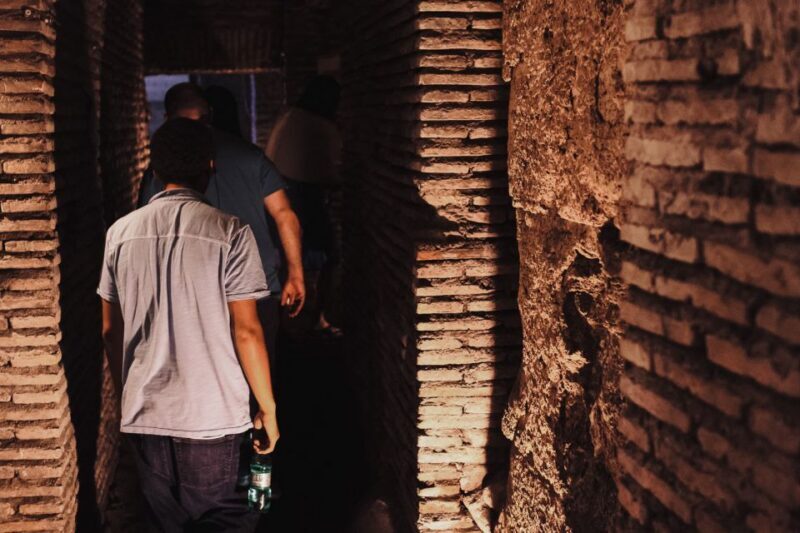
Below ground, expect narrow tunnels, early Christian burial sites and ancient frescoes. The catacombs offer a different kind of history from the road and aqueducts: they bring you into spaces connected with burial and religious life. Keep in mind that these are not like the Paris catacombs, with walls of exposed bones. The interest here is the underground setting, burial spaces, artwork and the beliefs they help explain.
The tunnels are tight, and the environment may feel confining if you dislike enclosed spaces. Photography inside is not allowed, so you will need to pay attention rather than rely on a camera to preserve the visit. The religious setting also has a dress code: everyone must cover shoulders and knees. Long pants and a long-sleeved shirt are the simplest option, or bring a scarf or other covering to put on before entering.
The catacomb portion can feel short to people who find it especially fascinating, even with 80 minutes allocated. The total includes the guided visit and related time at the site, so do not expect an unhurried private exploration. The schedule balances the underground stop with the road, tomb and aqueducts.
At $64 per person, this is best judged as a guided half-day outing with transport and catacomb entry, not as a simple walk. You get an English-speaking guide, air-conditioned transport between the spread-out sites, and admission to one of the two catacombs. A separate expert leads the catacomb visit.
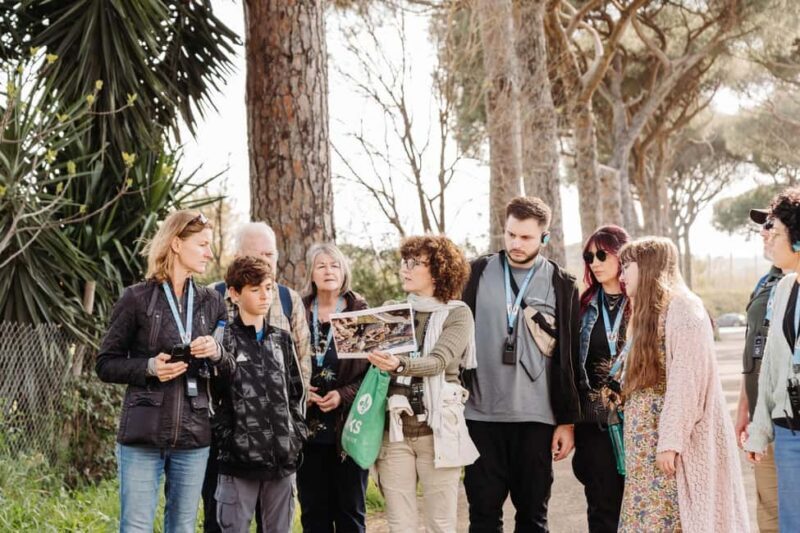
The strongest reason to book is the guide-led context. The stops are impressive on their own, but a good guide can connect the Appian Way to Rome’s growth, explain the tomb’s family story and make the aqueducts feel like working infrastructure rather than scenic ruins. Past departures have been led by Federico, Antonella, Chiara, Paris, Silvia and others. Your guide is not guaranteed to be any particular person, but the names associated with this tour are often praised for clear explanations, warmth and energy.
Transport is another part of the calculation. The stops lie beyond the center, and the van makes it possible to see all four without spending much of the afternoon navigating connections. The ride also offers a welcome break between outdoor sections. On the other hand, private, air-conditioned transport does not mean the tour is private: private or small-group options are available, but group size depends on the departure.
If you are comparing this with a self-guided visit, weigh the price against your time and comfort. You could plan transport independently, but you would need to coordinate the sites and catacomb entry yourself. If you value a guide and want the logistics handled between stops, $64 is a reasonable price for the package. If you prefer to spend a long time at one site or set your own pace, a guided schedule may feel restrictive.
I would choose this tour if you have already seen some of central Rome and want a different setting, or if ancient roads and engineering interest you as much as temples and churches. It also suits anyone who likes having a guide explain the links between places rather than seeing each stop as an isolated photo opportunity.
It is less suited to visitors who have trouble walking at a moderate pace. The tour is not wheelchair accessible, and it is not suitable for people with mobility impairments or strollers. There is walking at each stop, and the route includes uneven paving and tight catacomb passages. Anyone with claustrophobia should think twice about the underground visit.
Families with small children should note that baby strollers are not allowed. Visitors should also avoid shorts, short skirts and sleeveless shirts for the catacombs. The dress requirements apply to everyone, regardless of gender.
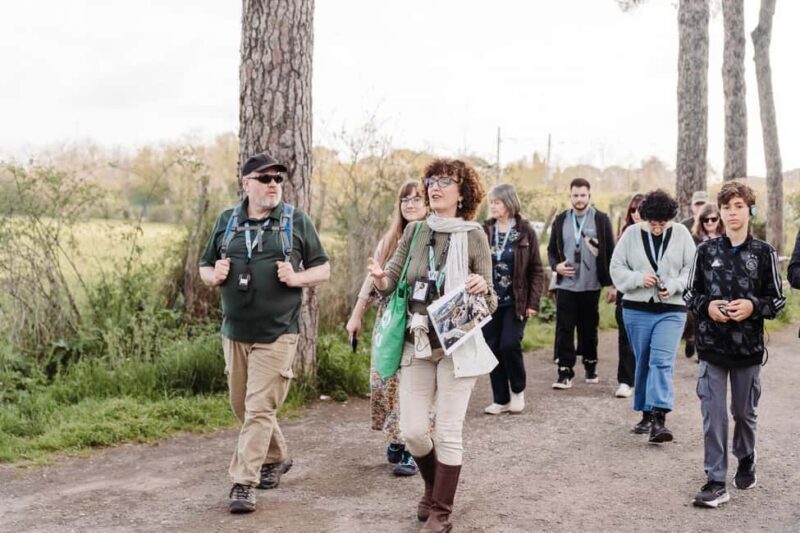
Wear comfortable shoes with good footing. The Appian Way’s paving is old, and the roads between stops can be rough. For the catacombs, cover your shoulders and knees; long pants and a long-sleeved top meet the stated requirements. Cameras are not permitted inside the catacombs, and photography there is prohibited.
The tour runs in English, and starting times vary, so check availability for your date. You can cancel up to 24 hours in advance for a full refund, and the reserve-now, pay-later option allows you to hold a place without paying immediately. Those terms are useful if your Rome plans are still shifting, but the more important choice is whether the walking and enclosed passages suit you.
Book it if you want to get beyond central Rome without spending half a day sorting out transport, and if the combination of ancient road, aqueducts and early Christian burial sites appeals to you. The most compelling reasons are the guided context, the open-air scale of the aqueducts and the quieter catacomb visit near closing time.
Skip it if you want a leisurely, self-directed day, cannot manage moderate walking, or feel uneasy in narrow underground spaces. For the right person, this is a satisfying change of scene from Rome’s headline sights. Bring water, wear appropriate clothes and arrive at the Piramide metro station early.
“Comfortable transportation with a knowledgeable guide! We fully enjoyed the experience especially the aqueduct park. Sylvie our guide had great ene…”
The tour lasts 195 minutes, or 3 hours and 15 minutes.
It begins in front of Piramide metro station, across from Piazzale Ostiense, and returns to Piramide.
You will visit the Catacombs of San Sebastiano or Domitilla, depending on the day.
Yes. Entry to San Sebastiano or Domitilla is included, along with an expert catacomb guide.
Yes. Private, air-conditioned transport between sites is included. Hotel pickup and drop-off are not included.
Wear long pants and a long-sleeved shirt, or otherwise make sure your shoulders and knees are covered before entering the catacombs. Shorts, short skirts and sleeveless shirts are not allowed.
No. Cameras and photography inside the catacombs are not allowed.
You can check availability for your dates here: