Physical Address
304 North Cardinal St.
Dorchester Center, MA 02124
Physical Address
304 North Cardinal St.
Dorchester Center, MA 02124

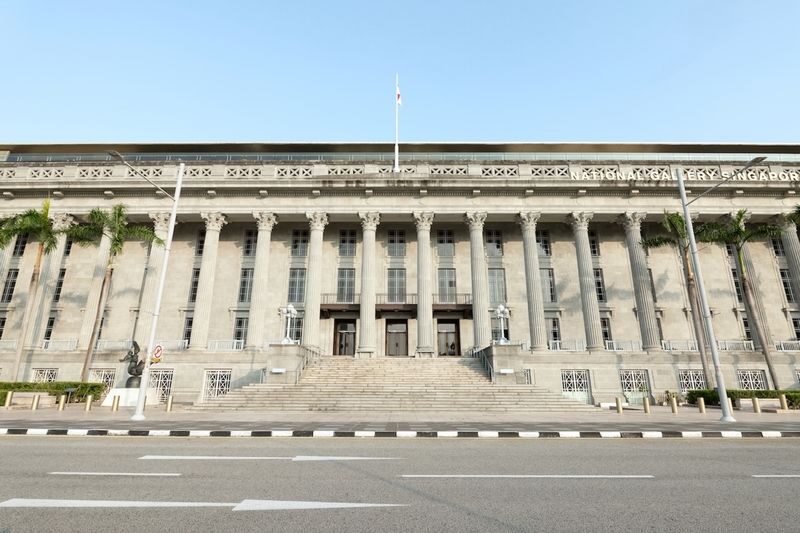
Explore Singapore and Southeast Asian art inside the former City Hall and Supreme Court, with practical ticket, timing, café, and transport tips.
Singapore’s National Gallery makes a striking first impression: modern Southeast Asian art fills the former City Hall and Supreme Court, two grand civic buildings joined into one large museum. I like the way the art tells Singapore’s story and the way the old courtrooms and grand staircases give the visit a sense of place.
The collection and the building can fill two to four hours, and the air-conditioned galleries offer a welcome break from Singapore’s heat or rain. One thing to plan around: gallery closures and exhibition access can change, so check what is open before paying, especially during the current renovation period.
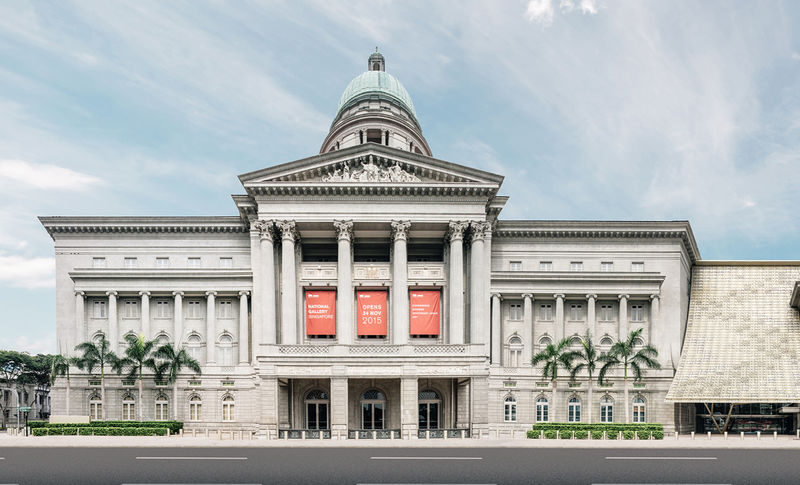
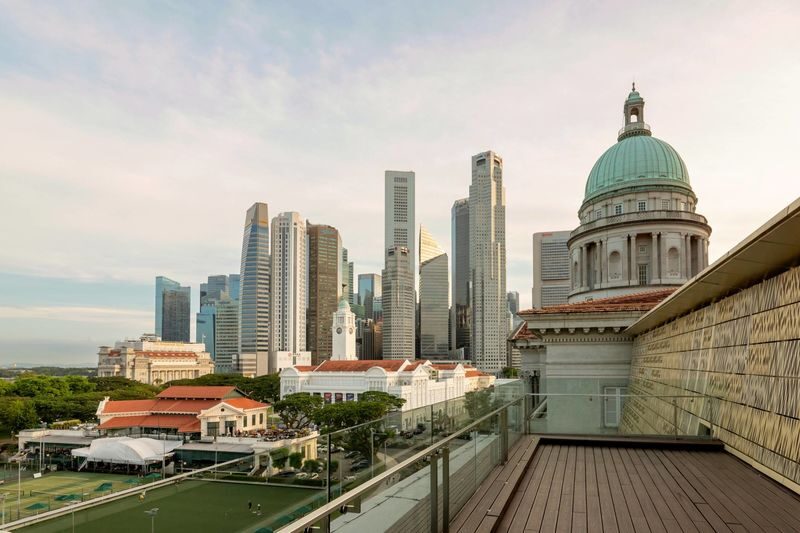
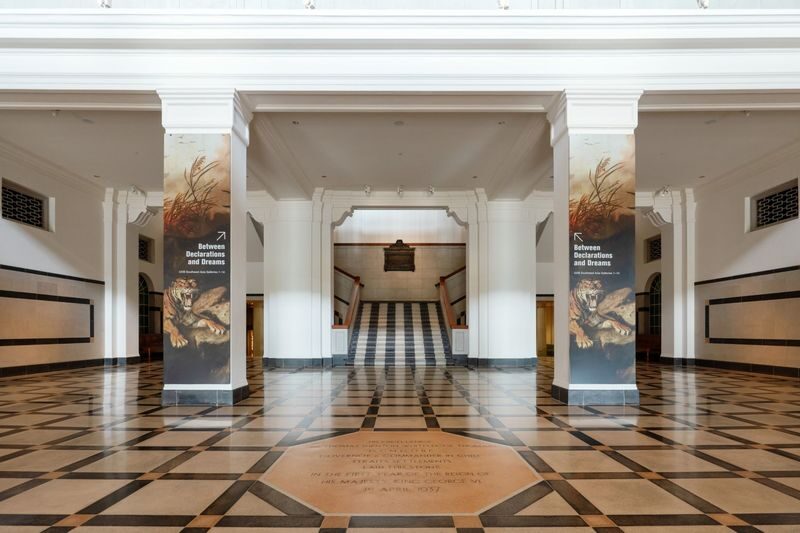
The National Gallery is in Singapore’s Civic District, at 1 St Andrew’s Road. Its two buildings once served as the seat of city government and the country’s highest court. Their formal façades, broad staircases and carefully restored interiors make the architecture part of the visit, not just a route between paintings.
Inside, the scale is substantial: the gallery has a combined floor area of 64,000 square metres and holds more than 9,000 works. You will not see everything in one visit, and you do not need to try. Think of this as a chance to get a thoughtful introduction to Singaporean and Southeast Asian art, rather than a mission to cover every room.
The permanent galleries trace art from the 19th century to the present. Their themes ask questions about identity, home, change and what art is for. That approach can be more useful than a simple march through dates and styles: it gives you a way to connect individual works with the region’s history and changing societies.
If you are new to Southeast Asian art, give yourself time to read the gallery explanations. Some works may feel abstract or unfamiliar at first, particularly if you do not know much about Singapore’s cultural context. The labels can help you see what an artist is responding to, and why a subject or material matters.
The standard permanent-gallery ticket is advertised from $14.05, with the exact price depending on the package and booking details. It is for foreign nationals. Singapore citizens and permanent residents can enter the permanent galleries for free, and students and teachers at local institutions can also get free entry by showing a valid card at the Basement Concourse Information Counter.
General admission is described as admitting you to the DBS Singapore Gallery and Wu Guanzhong Gallery. That is a useful starting point, but do not assume every named gallery will be open on your date. Temporary closures have affected access, and the renovation plan from April 1, 2026, closes galleries on Levels 3, 4 and 5 of the former Supreme Court Wing, along with the UOB Discovery Space and UOB Theatrette.
A ticket for permanent galleries is also not a pass to every special exhibition. Some visitors have needed to exchange their voucher for a sticker at the counter, and special shows can have separate admission requirements. Before you set out, check the gallery’s latest opening information and confirm which spaces your ticket covers.
The ticket options also include a general-admission package with a SGD5 dining voucher, and a Klook Exclusive Combo with a high tea set at Bakery Brera Café. The high tea set includes an egg mayo croissant sandwich, a canelé and your choice of black coffee or tea, with service tax and GST included. It is a pleasant add-on if you were already planning to stop for a snack, but compare the package price with the value of what you will actually use.
You might also be interested in these Singapore experiences
The revamped DBS Singapore Gallery presents Singapore’s art history as a story with several routes through it. Its guiding questions include who gets to tell that story, what home means and how artists decide what counts as art. Rather than treating the collection as a fixed parade of masterpieces, the gallery invites you to notice the choices and changing viewpoints behind the works.
That makes this a good first stop if you want context for the city beyond its modern skyline. Art can record shifts in work, identity and daily life that are easy to miss when you are moving quickly between sights. You may find that a painting becomes more interesting once you understand the social moment it came from.
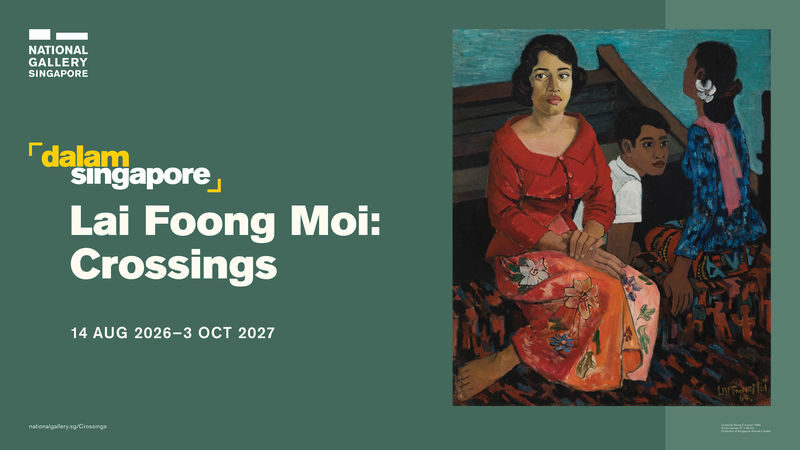
A planned exhibition, Lai Foong Moi: Crossings, runs from August 14, 2026, to October 3, 2027, in the DBS Singapore Gallery on Level 2 of the City Hall Wing. It brings together paintings and archival material by the underexplored Nanyang artist Lai Foong Moi, whose work examines identity, gender, labour and urban life during the 1960s and 1970s. The show is part of the gallery’s Dalam Singapore series, which brings lesser-known chapters of local art history to new audiences.
A second scheduled exhibition, Art Remembers, runs from August 21 to October 18, 2026, in the Singtel Special Exhibition Gallery 1 and City Hall Chamber on Level 3 of the City Hall Wing. Its 20 works consider how artists use archives to bring forgotten or marginalised histories into view. These dates are useful if you are planning a visit around a particular show, but check that the exhibition is open on your day and that your ticket includes it.
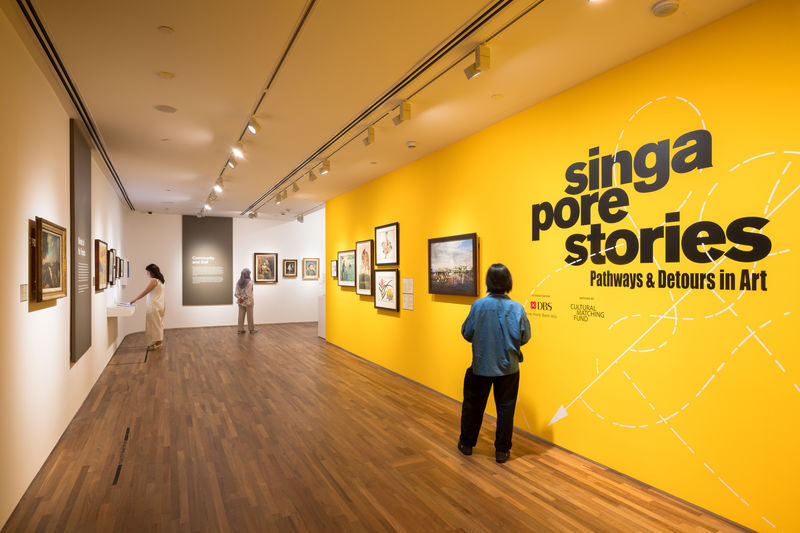
The Wu Guanzhong Gallery is included in the general-admission description, but its status can change. Visitors have encountered it closed, and the wider renovation announcement means parts of the former Supreme Court Wing will be unavailable from April 1, 2026. Do not build your whole visit around one room without checking its current status.
This matters because the museum is large, and the route can feel unclear if you arrive without a plan. Before you start walking, ask the visitor counter which galleries your ticket covers and what is closed. It is a small step that can save you from crossing the building in search of an exhibition that is not accessible.
You may also find free exhibition spaces on the ground floor, but these are separate from the paid galleries. Treat them as a bonus rather than a substitute for the admission areas you intended to see. The gallery regularly offers free guided tours; check its official website for the current schedule if you prefer an introduction with a guide.
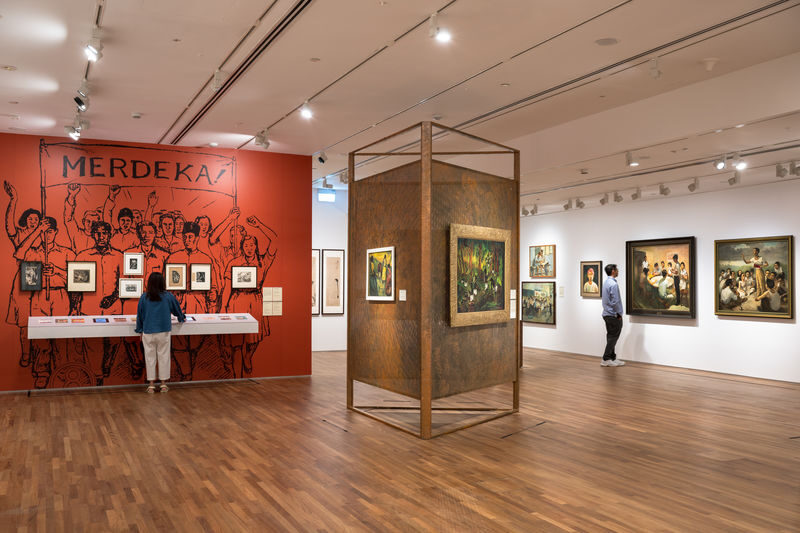
Two hours is enough for a selective visit to the galleries included with your ticket. Allow closer to four if you like reading the labels, want to explore the architecture at an unhurried pace, or plan to stop for food. The building’s size and sometimes confusing route make a little extra time useful.
A simple plan is to start at the visitor counter, confirm which galleries are open, then focus on the DBS Singapore Gallery and any included exhibition that interests you. After that, take time to notice the staircases and public spaces instead of rushing straight to the exit. The architecture is one of the reasons this museum feels different from a standard set of white-walled galleries.
The museum is also a practical choice on a hot or rainy day. You can spend a good part of the afternoon indoors, with toilets and places to eat in the building. The trade-off is that the air conditioning can feel chilly after a while. Bring a light cardigan if you tend to get cold.
Photography is allowed in the venue, but flash is prohibited. Videos and photographs for commercial purposes, as well as live broadcasting, are not permitted. Selfie sticks and tripods are also barred, and bags may be inspected for security. Leave food and drinks outside the galleries.
The high tea combo gives you a reason to pause after the galleries rather than rushing on to the next attraction. Bakery Brera Café serves the included sandwich, canelé and coffee or tea, and is open daily from 9am to 7pm. The café voucher must be exchanged at the National Gallery visitor counter along with the admission voucher, then presented at the café to claim the set.
Other food options include Kopi 1930 and Twenty Eight Café, both open daily from 10am to 7pm, and Rempapa, open Wednesday to Sunday from 8am to 6pm. Opening hours can change, so confirm them before making a meal plan around a particular café. Outside food and drinks are not allowed inside the venue.
For value, the café package makes most sense if you will use the food included and want an easy break on site. If you would rather choose your own meal, compare the general admission and dining-voucher options. A small voucher is only useful if it fits your plans; do not let a bundled extra make the decision for you.
Culture seekers can explore more Singapore museums and galleries
The gallery has two main entrances: Coleman Street and the Padang Atrium, which faces the Padang. City Hall MRT station is about a seven-minute walk away via the Art Connector. Clarke Quay station is roughly a ten-minute walk along the Singapore River, while Raffles Place is about ten minutes on foot through the business district.
Several bus routes stop nearby. Buses 63, 51, 80, 32 and 851 stop opposite Peninsula Place, about a five-minute walk from the Coleman Street entrance. Routes 195 and 961 stop at Parliament Place near the Padang entrance. Buses 61, 124, 145, 166, 174 and 197 stop opposite The Treasury Building, around a seven-minute walk away; routes 75, 100, 107, 130, 131 and 167 stop near Victoria Concert Hall, about five minutes from the gallery.
Taxis can drop off at the Coleman Street entrance, where there is also a taxi stand. Cars can drop off and pick up passengers there, and the gallery has a car park entrance on Coleman Street. If you are visiting more than one Civic District sight, the central location also makes it easy to continue on foot.
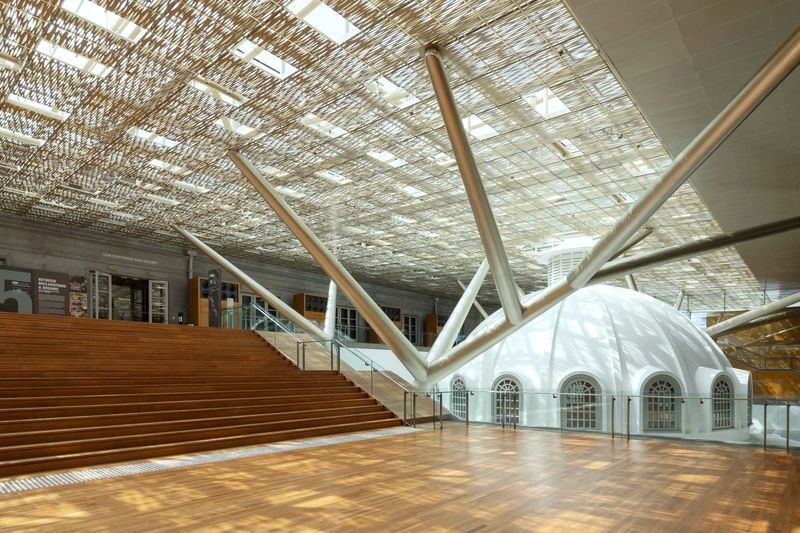
I would book this if you want to understand Singapore and Southeast Asian art in a setting that is itself part of the story. The strongest reasons to go are the combination of regional art and landmark architecture, the thoughtful themes in the Singapore Gallery, and the comfort of having a substantial indoor attraction in the city centre.
It is a less certain choice if you are paying mainly to see one specific gallery or exhibition. Renovations and temporary closures can change what is accessible, and admission is not free for foreign visitors. Check the gallery status and ticket inclusions first, then choose between general admission and a food package based on what you will genuinely use.
Plan for at least two hours, wear comfortable shoes for a large building, and carry a light layer. The voucher information gives a validity deadline of October 31, 2026, so make sure your intended visit falls within the dates shown on your voucher. If the art and architecture both appeal, this is a worthwhile half-day stop. If you only want a quick photo of the building, you can admire its exterior without buying a gallery ticket.
“it was a great half day spent with contemporary art collections and and some historical background which family enjoyed a lot. Great architecture a…”
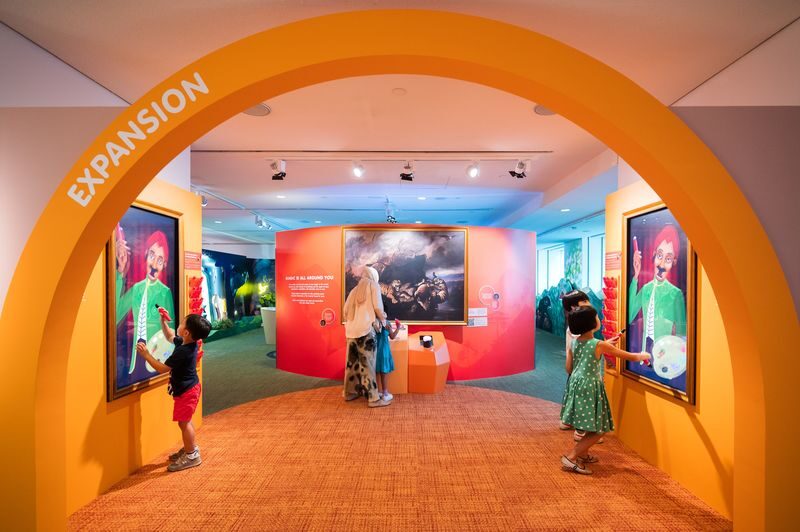
Plan for two to four hours. Two hours works for a focused visit, while four gives you more time for the galleries, architecture and a café break.
The ticket is described as covering the DBS Singapore Gallery and Wu Guanzhong Gallery. Gallery access can change during closures, so confirm what is open on your visit date.
Singapore citizens and permanent residents can enter the permanent galleries for free.
Concession tickets are available to foreign students, children aged 7 to 12, and seniors aged 60 and above. Student tickets require valid identification.
Not necessarily. General admission covers specified permanent galleries, while some special exhibitions require a separate ticket. Check the current terms for the exhibition you want to see.
It includes an egg mayo croissant sandwich, a canelé and a choice of black coffee or tea. Service tax and GST are included.
City Hall station is about a seven-minute walk via the Art Connector. Clarke Quay station is about a ten-minute walk along the Singapore River, and Raffles Place is roughly ten minutes away on foot.