Physical Address
304 North Cardinal St.
Dorchester Center, MA 02124
Physical Address
304 North Cardinal St.
Dorchester Center, MA 02124

Ride a private tuk-tuk through Phnom Penh, visit landmark temples and markets, then cross the Mekong to see silk making and village life.
Silk Island gives this Phnom Penh tour its change of pace: after city temples and traffic, you cross the Mekong by ferry and ride past village homes, farms and silk workshops. The full-day option adds the Royal Palace, Central Market and several major religious sites, while the half-day version focuses on the island and its surroundings.
I like two things in particular: the private tuk-tuk makes it easy to pause and ask questions, and Silk Island shows everyday craft and rural life beyond the city center. One thing to plan for is the choice of tour: the half-day and full-day routes are quite different, and some entry fees are extra.
The tour comes in two forms, and the difference matters. The half-day Silk Island tour visits Golden Temple, a tofu-skin producer, vegetable farms, a silk farm and local villages. It is the better fit if you have limited time or want to spend your outing mainly outside the city center.
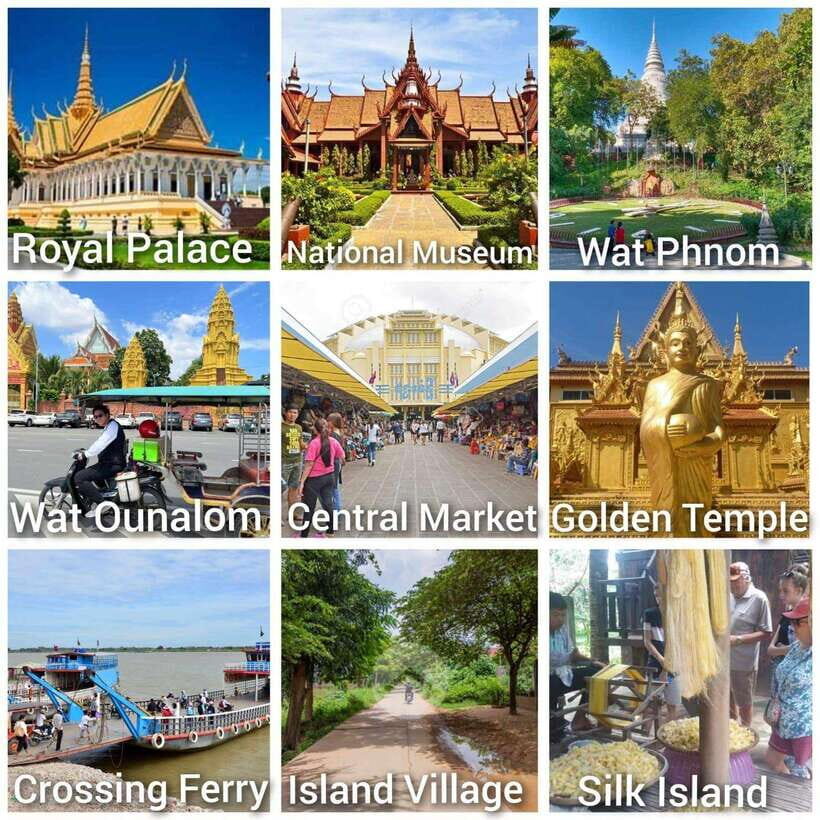
The full-day city and island tour adds Phnom Penh’s principal landmarks before heading across the river. Expect the Independence Monument, the Sihanouk statue, the Royal Palace area, Wat Ounalom, Central Market and Wat Phnom, followed by Golden Temple and Silk Island. It offers a wide-ranging introduction, but the schedule is full and the stops are not all long visits.
The stated duration spans four hours to a full day because the options differ. The detailed city route is a long outing, while the island-only route is shorter. Check the selected option and available start time carefully rather than assuming the tour title means one fixed itinerary.
Looking to discover more of Phnom Penh? Consider these other city tour options
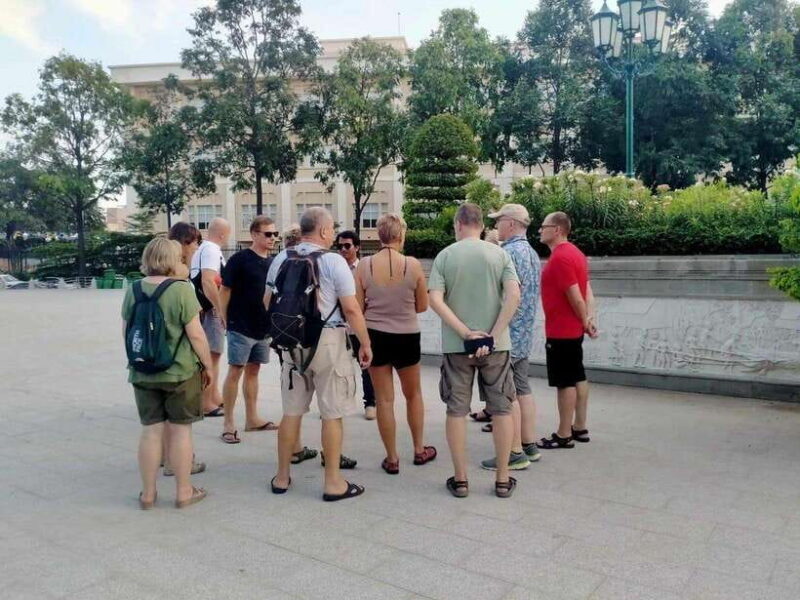
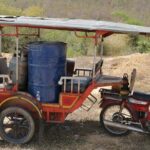
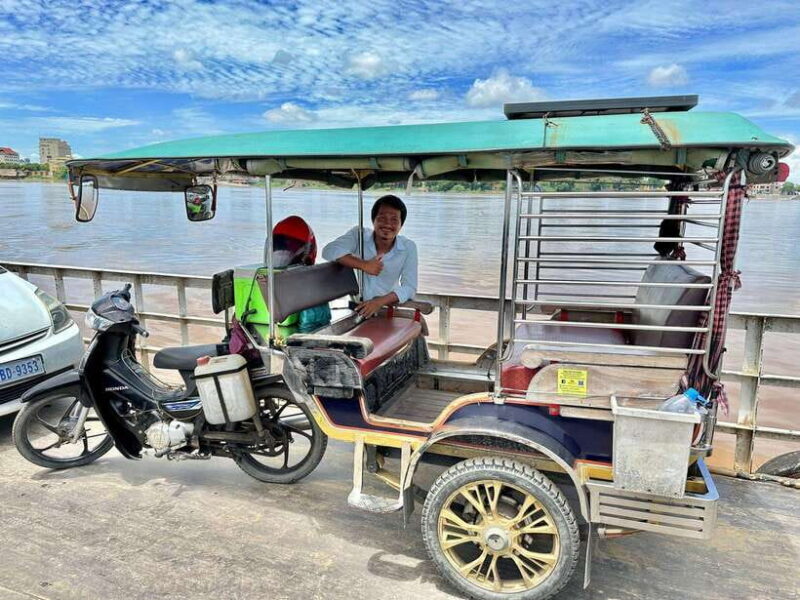
Your driver-guide picks you up at your accommodation and takes you between stops by tuk-tuk. In Phnom Penh, that open-sided ride brings you close to street life and makes short hops between landmarks feel less like a transfer and more like part of the day. It also means you are exposed to heat, dust and rain, so bring comfortable clothes and expect the weather rather than a sealed, air-conditioned coach.
The tour provides cold drinking water and umbrellas when needed. Several guides have also offered extra cold drinks, and one visitor noted that a guide lent them a wrap to cover their shoulders and knees at the Royal Palace. Treat such help as a welcome possibility, not something guaranteed with every booking.
A private group means you can ask questions and request a little more or less time at a stop. Guides such as Visal, Pum, Vanna, Mr Lim, Nick and Vann have been named by people who took the tour. If you have a preferred guide, you can ask when booking, but the information does not promise that a request can be met.
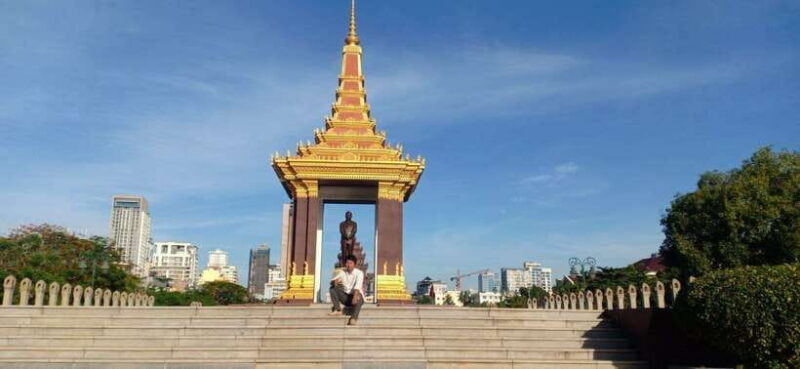
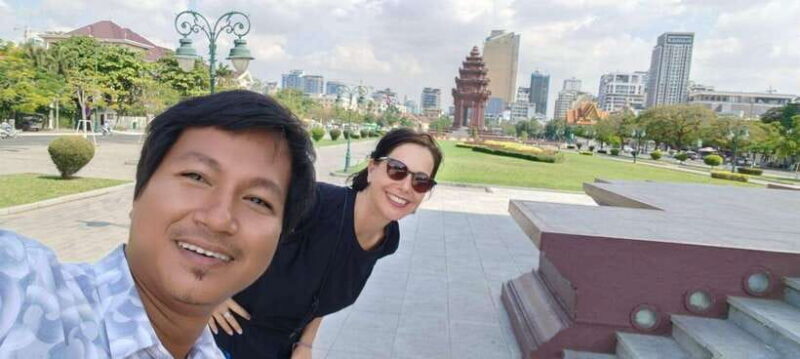
On the full-day route, the first central stop is the Independence Monument, built in a Khmer style and associated with Cambodia’s liberation from French rule. You have about 15 minutes for sightseeing and photos, so think of it as an introduction rather than a long historical visit.
The nearby statue honors King Father Norodom Sihanouk, a major figure in modern Cambodian history. The stop is also brief, but a guide can give context that helps connect the monuments to the country’s recent past. If you want more time to ask questions, the private format makes this a good moment to speak up.
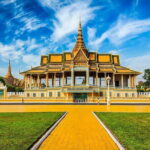
The Royal Palace is the city tour’s main interior visit. The planned stop is about an hour, though the time available for exploring depends on the day’s pace and the palace visit itself. The grounds offer striking Khmer architecture and good opportunities for photographs.
Admission is listed at $10, with another $10 for a live guide. You can instead visit without a live guide, and there is no audio guide. The tuk-tuk guide can explain the broader setting, but that is not the same as having a guide inside the palace. Dress modestly, with shoulders and knees covered; bring suitable clothing rather than counting on a loan wrap.
The National Museum is a short photo stop on the route, not a scheduled museum visit. You can admire its traditional Khmer design from outside, but if you want to see the collections, this tour’s stated plan does not set aside time to go in.
More Great Tours Nearby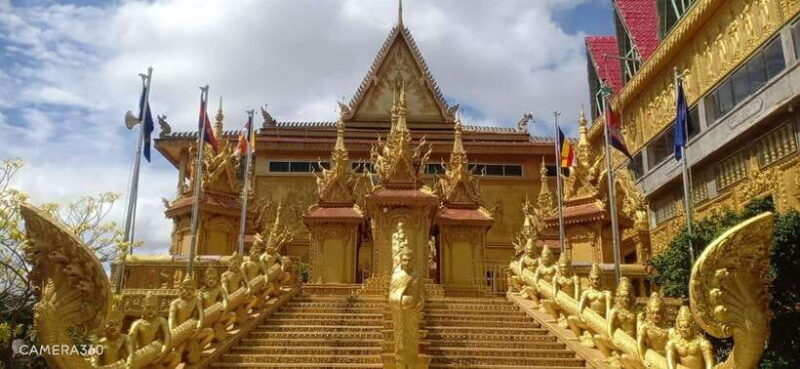
Wat Ounalom is one of Phnom Penh’s oldest and most important Buddhist temples. The visit allows around 30 minutes to see its grounds, stupas and courtyard. It gives you a quieter pause in a day otherwise shaped by traffic, markets and major monuments.
Central Market is a different kind of stop. Its hour-long visit leaves room to browse stalls selling clothing, crafts and other goods, or simply take in the market’s busy rhythm. It is a practical place to shop, but you may want to decide in advance whether you are browsing or buying so the stop does not swallow time you would rather spend elsewhere.
The combination works well: Wat Ounalom offers a look at living religious practice, while the market shows the city’s everyday commercial side. Neither stop is a substitute for an in-depth visit, but together they give the full-day route some variety.
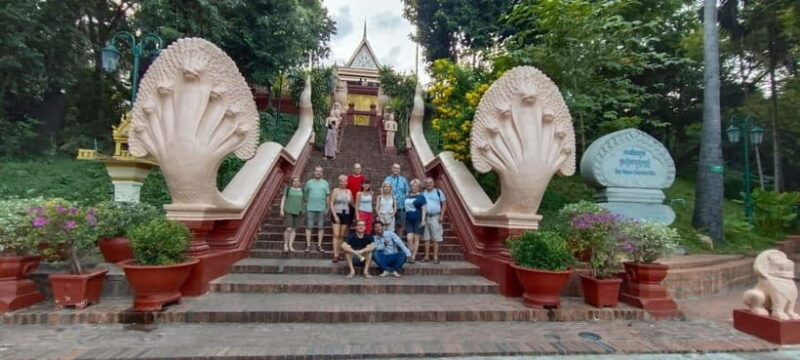
Wat Phnom is a hilltop temple linked to the legend of Lady Penh and the four Buddha statues she is said to have found. The story is also tied to the origin of Phnom Penh’s name. Entry is listed at $1, and the walk up the steps is short but worth keeping in mind if stairs are difficult.
The itinerary allows about 30 minutes here, followed by a one-hour break in Phnom Penh. Lunch timing can be discussed with your guide, and food is not included in the tour price. Guides have taken people to local restaurants, and some have had lunch on or near Silk Island instead. Ask early about timing and preferred location, especially if you want to eat before the ferry crossing.
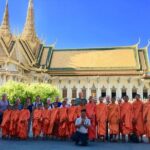
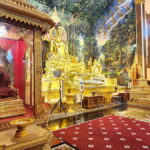
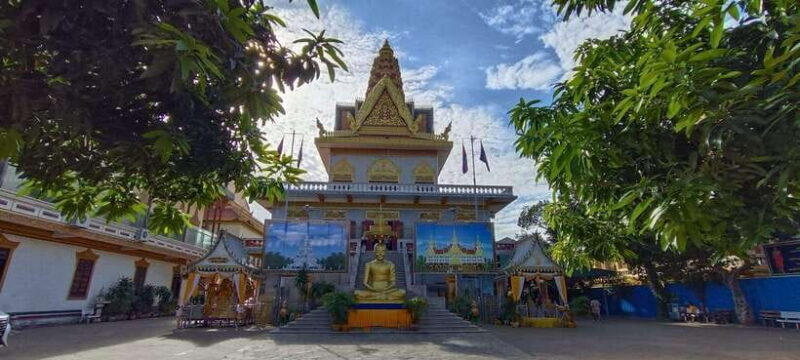
Golden Temple is the transition from city sights to island life. The stop is planned for about 30 minutes, enough to see its gold-colored architecture and details, take photographs and enjoy a quieter setting. It is a religious site, so dress and behave respectfully.
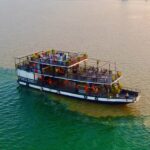
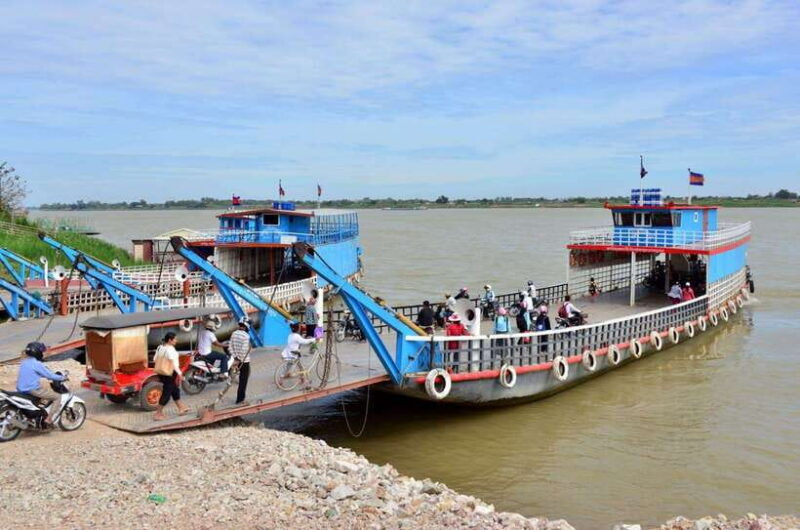
From there, you ride to the river and take the Mekong ferry to Silk Island. The crossing offers a change of scene and is one of the outing’s most memorable transitions: the city gives way to a slower route through villages and farmland. The ferry crossing is included, while the tuk-tuk ride continues on the other side.
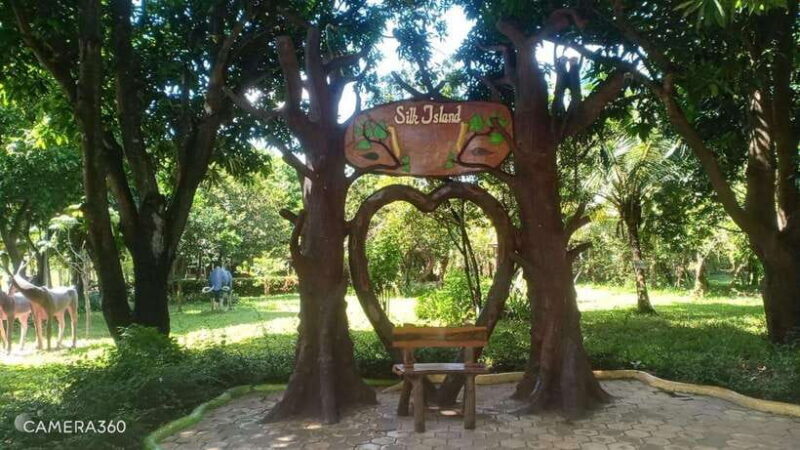
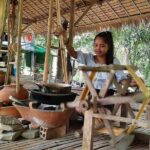
Silk Island, also known as Koh Dach, is the clearest reason to choose this tour over a city-only sightseeing circuit. At the silk farm, you can learn about the full cloth-making process and watch local artisans at work. The weaving is not just a finished product behind glass; the visit explains the stages that turn silk into fabric.
The full-day itinerary gives the island about two hours, and the half-day route concentrates more of its time here. You may also visit vegetable farms, local villages and a tofu-skin producer. One particularly interesting stop is seeing soybeans turned into tofu skin, a practical food-making process that can be more surprising than its simple ingredients suggest.
The tuk-tuk ride along island roads is part of the appeal. You get a closer sense of daily life than you would from a large bus, with opportunities for spontaneous stops when the guide has something useful to show. There is some walking, especially on the island, but the tour information does not describe long distances. Wear comfortable clothes and shoes, and keep water close in the heat.
One cost detail needs checking: the included list says the silk farm entry ticket is provided, while the exclusions also list a $2 Silk Farm fee. Confirm with the operator before setting your budget. Do not assume the fee is included or excluded until that point is clear.
At $30 per person, the base price includes hotel pickup and drop-off, private tuk-tuk transport, a driver-guide, cold water, umbrellas when needed and the Mekong ferry crossing. That is a useful bundle for a private day out, particularly if you value having your own guide and the freedom to adjust the pace.
The true cost depends on the route and choices you make. The Royal Palace costs $10 to enter, with a further $10 if you want a live guide there. Wat Phnom costs $1, lunch is extra, and the Silk Farm charge needs clarification because the fee information conflicts. These additions can make the full-day option noticeably more expensive than the advertised starting price.
There is also a value question around time. The full-day route packs in many stops, which is handy if you have only one day in Phnom Penh. But you will get brief visits at some landmarks, and a person who wants long museum or palace visits may prefer to explore those sites independently. The half-day route is better value if Silk Island is your priority and you do not need a city overview.
Choose the full-day option if you want a quick orientation to Phnom Penh’s central landmarks, appreciate having a local guide explain their context, and are comfortable moving through a busy schedule. It is also a practical choice for a first day in the city, when you want to understand the layout before exploring further on your own.
Choose the half-day route if you have already seen the main city sights, have limited time, or are most interested in crafts and village life. Families may appreciate the silk-making demonstration and the variety of stops, though the tour is not suitable for wheelchair users and involves some walking.
This experience does not include genocide sites. That makes it appropriate if you prefer a day centered on temples, daily life and cultural landmarks. It is not a replacement for Phnom Penh’s historical sites connected to the Khmer Rouge period; it simply follows a different subject and tone.
Book this tour if you want a personal, flexible way to see several parts of Phnom Penh and are especially curious about Silk Island. The strongest reasons are the guide’s local explanations, the easy tuk-tuk transport and the chance to see silk production alongside village life. For the best fit, choose the route based on what you want to spend time doing, then confirm the Silk Farm fee and any preferred guide request before paying.
Skip the full-day option if you want unhurried time inside museums or at each landmark. For a shorter, more focused outing, the half-day island tour is the clearer choice. Either way, bring modest clothing for temples, water-friendly clothes for a hot day, and enough time in your schedule to enjoy the ferry and island roads without watching the clock.
“Brilliant day out on the tour went to so many nice places, well worthwhile. Tour guide and Tuk-Tuk driver Visal was very informative, interesting a…”
The half-day option focuses on Golden Temple, tofu skin, vegetable farms, a silk farm and villages on Silk Island. The full-day option adds Phnom Penh landmarks such as the Royal Palace, Central Market, Wat Ounalom and Wat Phnom before visiting Golden Temple and Silk Island.
No. The tour does not include genocide sites.
No. Admission is listed at $10. A live guide inside costs an additional $10, or you can visit without one. There is no audio guide.
The fee information is inconsistent: the included items say the ticket is included, while the exclusions list a $2 fee. Confirm this with the operator before booking.
No. Food and lunch are not included. You can discuss with your guide when to take a lunch break.
Yes. The ferry crossing is included.
Wear comfortable clothes and bring a charged smartphone. For the Royal Palace, cover your shoulders and knees. The tour provides cold water and umbrellas when needed.
No. The tour is not suitable for wheelchair users. It involves some walking, particularly on Silk Island.
You can check availability for your dates here: