Physical Address
304 North Cardinal St.
Dorchester Center, MA 02124
Physical Address
304 North Cardinal St.
Dorchester Center, MA 02124

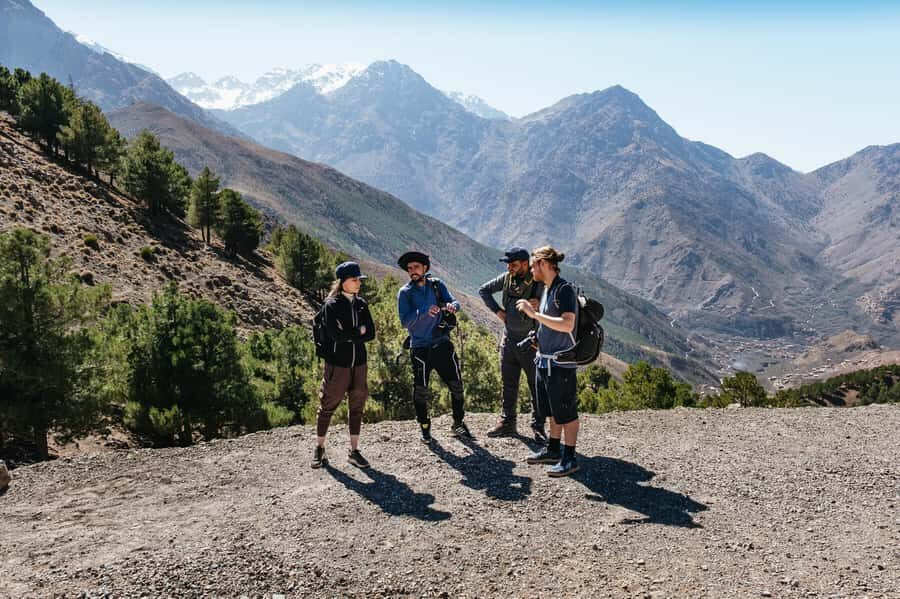
Trade Marrakech for a two-day Atlas Mountains trek with Berber village stops, mountain meals, a local guide and an overnight stay.
The best part of this two-day trek is the change of pace: one morning you’re in Marrakech, and soon you’re walking mountain paths between Amazigh villages, with the peaks of the High Atlas all around. The route includes views of Mount Toubkal, but this is a village-to-village trek, not a climb to the summit.
I like the mix of big mountain views and everyday village life, and the practical support: a guide, cook, mules for luggage, meals, sleeping bags and transport from your Marrakech hotel are included. Guides such as Kamal, Mustafa, Hassan and Hussain have been singled out for setting a considerate pace and sharing local knowledge, though your guide will vary.
The main caution is the effort and the cold. The route is rocky, includes steep sections and can feel harder at altitude, while nights in the mountains may be very cold, especially in winter. Bring proper footwear and warm layers, even if Marrakech feels mild.
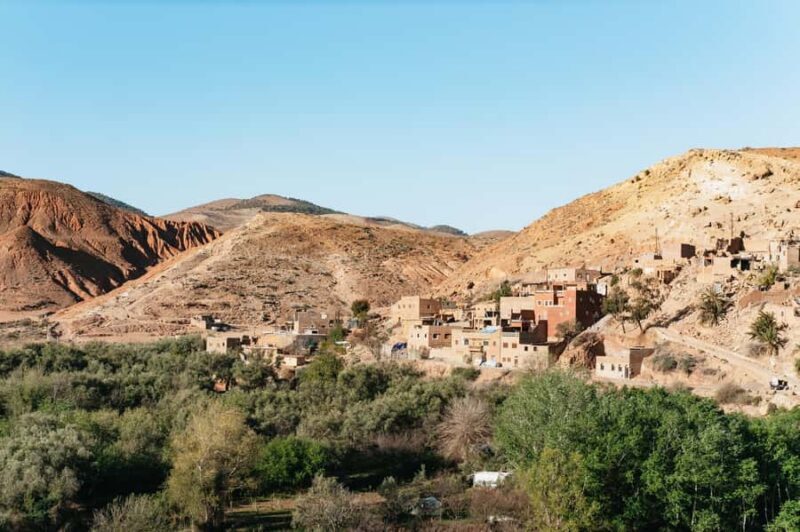
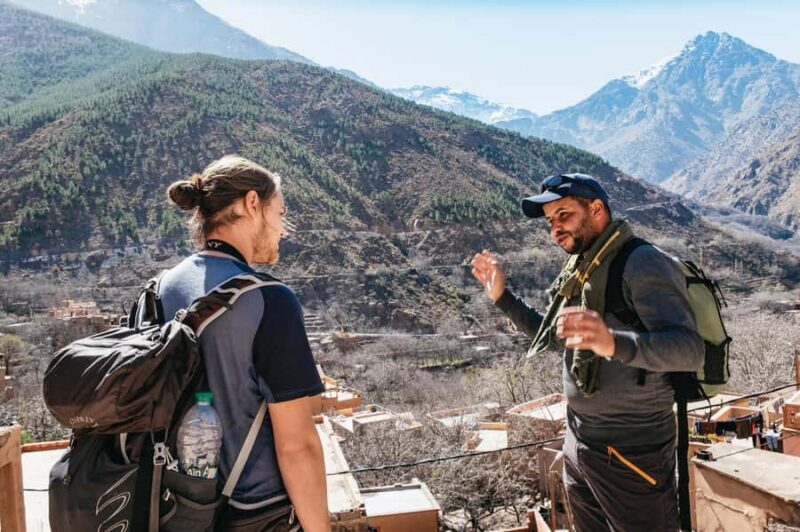
The drive from Marrakech heads toward the High Atlas by way of Tahnnaout, Oued Ghighaya and Asni. You leave the city behind, pass through valleys and villages, and arrive in Imlil, where you meet your guide and trekking crew over mint tea.
Hotel pickup and drop-off are included, which saves you the hassle of arranging transport to a trailhead. The drive can take longer if you are among the first people collected, so do not plan a tight appointment in Marrakech on either end of the tour. The return is expected in the late afternoon on day two, but road and group conditions can affect the timing.
Imlil is the starting point, not the main event. After meeting the crew, the group sets off on foot toward the Azzaden Valley. A cook and muleteers accompany the trek, with the mules carrying luggage. Keep your daypack light, but bring the things you need while walking, including water, sun protection and any extra layer you might want during a rest stop.
Outdoor enthusiasts can explore more Marrakesh trails with these hiking options
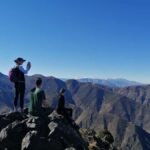
The first major section climbs toward Tizi Mzik pass. The reward is a wide view across the Azzaden Valley and nearby Atlas peaks, with Mount Toubkal among the mountains you may see. Lunch at the pass makes a welcome pause, and a meal outdoors with the peaks in view is one of the trek’s defining moments.
The climb is not a casual stroll. The advertised walking time is five to six hours each day, while actual outings can be shorter, often around three to five hours depending on the group and route. Some people describe days of roughly seven to ten kilometres, with about 500 metres of climbing on each day. Treat those figures as a guide, not a promise: weather, snow, fitness and route changes all matter.
The trail mixes easier stretches with rocky, steeper sections. Several people who hike regularly found it manageable, while beginners appreciated patient guides and regular breaks. If you are not used to walking, expect the uphill sections and altitude to take effort. Some paths have steep drops, so a fear of heights may make parts uncomfortable.
After lunch, the route descends through a juniper forest toward Tizi Oussem. Going downhill over loose or uneven ground can be just as demanding as climbing. Hiking boots or sturdy shoes with good grip are a better choice than trainers, and poles can help on steep or slippery sections.
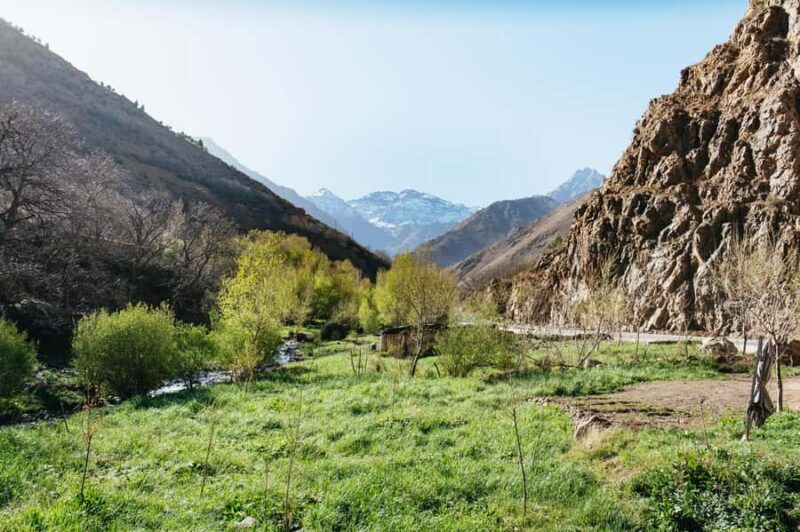
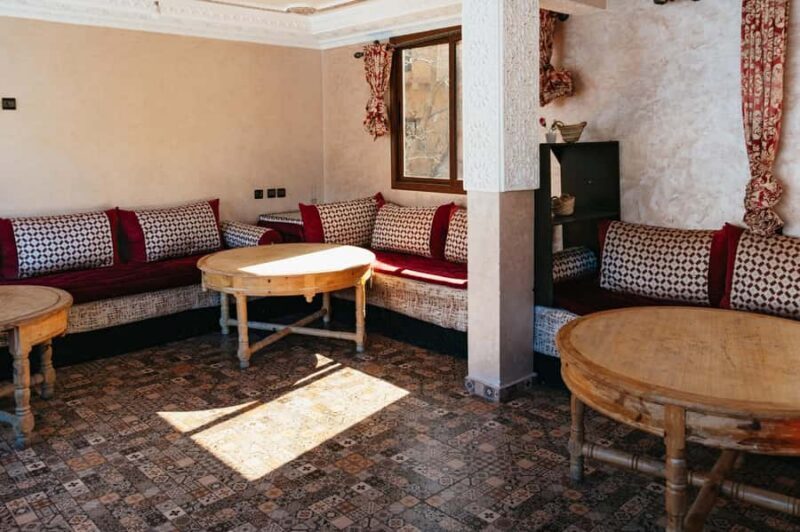
The overnight stop is in a mountain village, often in a basic visitorhouse or riad. The exact accommodation and room setup can vary: some people have had twin rooms with private bathrooms, while others have shared facilities. Expect simple comfort, not a polished resort. Cleanliness and comfort have been praised, but mattresses and amenities may be modest.
Dinner is a traditional Moroccan meal, often tagine, and the cook travels with the trekking crew. The food is a real strength of this trip. Lunches, dinner and breakfast are included, and meals have been described as plentiful. Dietary needs have been accommodated in some cases, including vegetarian and gluten-free meals, but tell the provider about your needs before setting out rather than assuming every request can be met.
Mountain nights are cold, even when the walking day is warm. Some accommodation has no heating, and blankets may be provided, but you should bring warm sleepwear and layers. A sleeping bag is included; a liner can add comfort and warmth. Bring your own towel, too, as towels are not guaranteed.
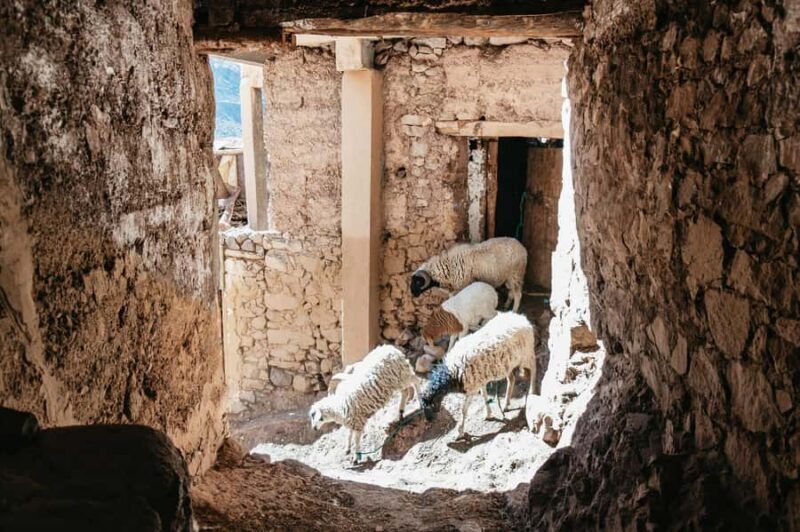
The overnight stop is also a chance to spend time in a village rather than simply pass through it. Guides can explain local Amazigh culture and the communities you are walking among. Keep your expectations grounded: this is a short stay in a working mountain village, not a staged cultural show.
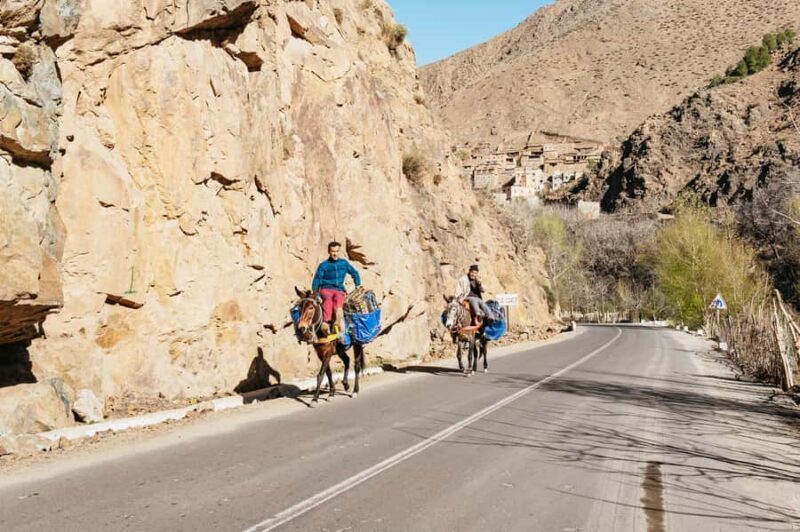
After breakfast, the trek heads toward Id Issa. The morning light can bring out the colors of the valley, and there is time to look around the village before continuing. Your guide may explain local life along the way, and the small group format makes it easier to ask questions than on a large coach excursion.
The route then crosses Tizi Oujdid and passes through Matat. As on day one, conditions shape the walk. Snow has sometimes blocked a planned route, and guides have adapted by choosing another path. That flexibility is valuable in mountain terrain, but it also means the exact route and views cannot be guaranteed.
Lunch is served at a walnut grove beside a river, a quieter end to the walking portion of the trip. Then you return by road to Marrakech, with drop-off at your hotel in the late afternoon. The contrast is part of the appeal: you leave the city for two days of walking and village life, then return without needing to organize separate transport or meals.
More Great Tours Nearby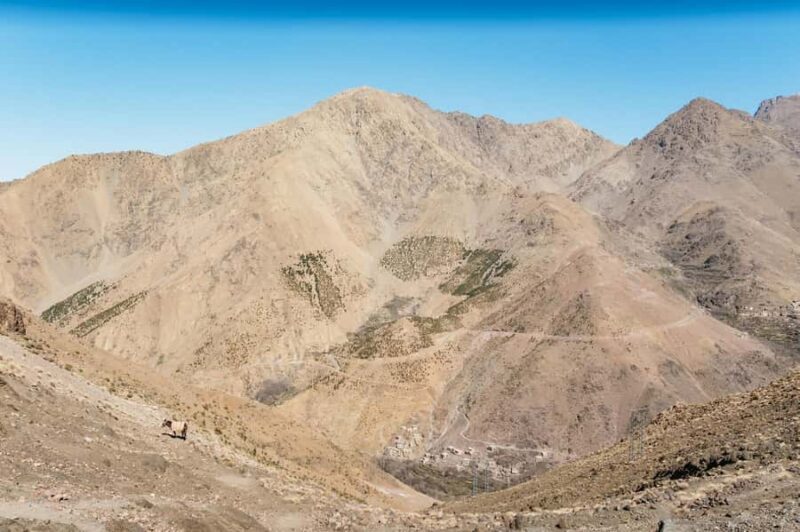
At $96 per person, the price includes a guide, cook, muleteers and mules for luggage, all meals, coffee and tea, one night’s accommodation, sleeping bags, and hotel pickup and drop-off. That is a useful bundle for a two-day trip: you do not have to arrange a mountain transfer, find a visitorhouse or carry your overnight bag on the trail.
The value is strongest if you want a guided, supported introduction to the Atlas. The guide handles the route and pace, the cook prepares meals, and the mule support means you can walk with a lighter pack. A small group, capped at 14, gives the trip a more personal feel than a large bus tour, though the group’s pace still depends on the mix of abilities.
Budget for a few practical extras. Bring water, as it is not listed among the included items; bottled water may be available to buy along the way or at the accommodation. You may also want cash for small purchases, plus toilet paper and a towel. The free cancellation window is up to 24 hours before departure, and a reserve-now, pay-later option is offered.
You might also be interested in these Marrakesh experiences
The official essentials are comfortable shoes, sunglasses, a sun hat, a camera and sunscreen. I would add sturdy hiking footwear with good grip, a warm hat, gloves, layers, and a raincoat. Mountain weather can shift, and winter temperatures can fall close to freezing at night. Even in warmer months, evenings may feel sharply colder than the city.
Pack a small daypack with water, snacks if you want them, sunscreen and anything you need during the walk. The mules carry luggage, but it is considerate to keep your overnight bag compact. Hiking poles can be useful on rocky descents; some guides have been able to lend them, but do not count on that.
The tour is not suitable for pregnant women. Beyond that, be honest with yourself about fitness, balance and comfort on steep paths. You do not need to be a summit climber, but you should be ready for several hours of walking on uneven ground on both days.
Choose this trip if you want mountain scenery and village contact without committing to a summit climb. It suits beginner hikers with reasonable fitness and enthusiasm, as well as regular walkers looking for a short break from Marrakech. Families have completed it with school-age children, and solo travellers can join a small group, though the group composition changes.
It may not satisfy you if you want a demanding, all-day hike or a climb of Mount Toubkal. Some people found the walking shorter than expected, while others found the uphill sections more strenuous than they had anticipated. If you are an experienced trekker seeking a bigger challenge, look at a longer route; if your priority is a manageable two-day introduction, this itinerary is a better fit.
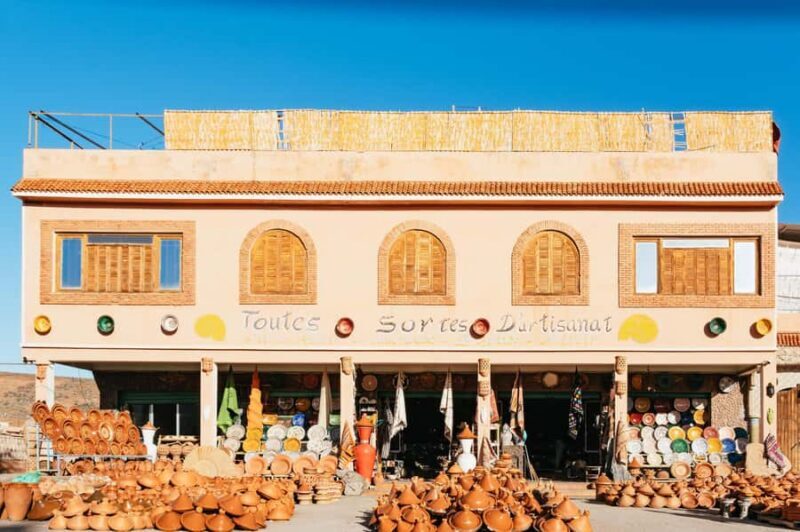
I would book this trek if you have two days to spare and want more than a quick mountain photo stop. The combination of Tizi Mzik, village paths, a local guide, hearty meals and an overnight stay makes the trip feel distinct from Marrakech’s city sights, and the included transport and mule support add real value.
Go prepared for uneven ground, variable walking times and a cold night. If you pack good shoes, warm layers and water, you’ll be better placed to enjoy the views rather than wish you had brought another pair of socks.
“Our guide Mohamed and our cook Ibrahim were very kind. The hike was a nice mix of accessible roads and trickier paths. Beautiful scenery and a nice…”
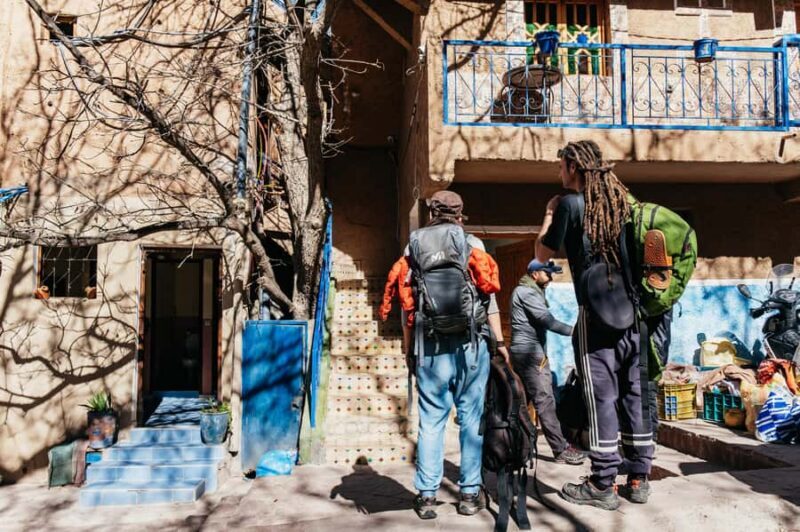
The tour describes five to six hours of hiking each day. Actual walking time can vary, and some groups have finished in around three to five hours.
No. The route offers views of Mount Toubkal and other Atlas peaks, but it is a village-to-village trek, not a summit climb.
Lunch on day one, dinner, breakfast on day two and lunch are included, along with coffee and tea. Traditional Moroccan dishes such as tagine are served.
Yes. The price includes one night in mountain accommodation. It is generally simple, and room and bathroom arrangements can vary.
Mules carry luggage, so you can keep your overnight bag off your back during the hike. You should still bring a daypack for water and essentials.
Bring comfortable shoes, sunglasses, a sun hat, a camera and sunscreen. Sturdy hiking shoes, warm layers, gloves and a raincoat are also sensible, especially in winter.
No. Pregnant women are listed as not suitable for this activity.
Guides are available in Arabic, English, French, Spanish and German.
You can check availability for your dates here: