Physical Address
304 North Cardinal St.
Dorchester Center, MA 02124
Physical Address
304 North Cardinal St.
Dorchester Center, MA 02124

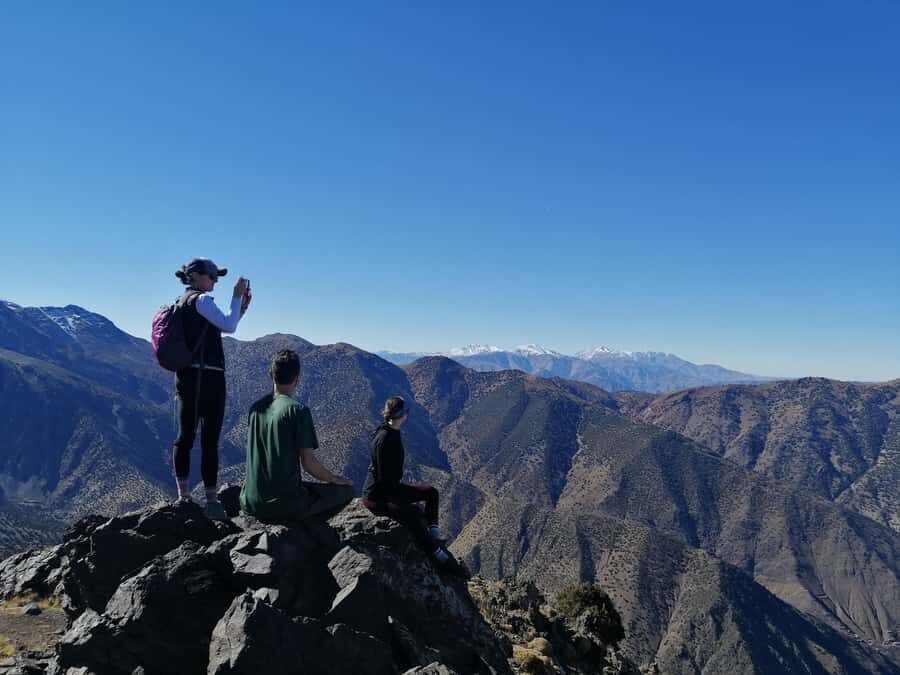
Trek Mount Toubkal from Marrakech in two demanding days, with a local guide, Atlas Mountain refuge stay, meals, and sunrise summit attempt.
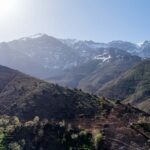
Mount Toubkal is a big mountain packed into a short trip. In two days, you go from Marrakech to Imlil, climb to a refuge at 3,207 meters, then set off before dawn for North Africa’s highest summit. The route is demanding, but the payoff is a sunrise above the High Atlas, with views toward the plain of Marrakech and, on clear days, the Anti-Atlas and Sahara.
I like two things here: local guides who keep an eye on the whole group, and the practical value of having transport, meals, a refuge night, and a guide included for $122. The trek also gives you more than a quick summit photo. You walk through Atlas villages and mountain valleys, with time to stop for lunch and tea.
The catch is the pace and effort. Day one takes about five to six hours uphill; summit day can run 10 to 12 hours of trekking, including the long descent. Cold, snow, wind, altitude, or fitness can affect the summit attempt, so book this as a serious mountain hike, not a casual add-on to a Marrakech city break.
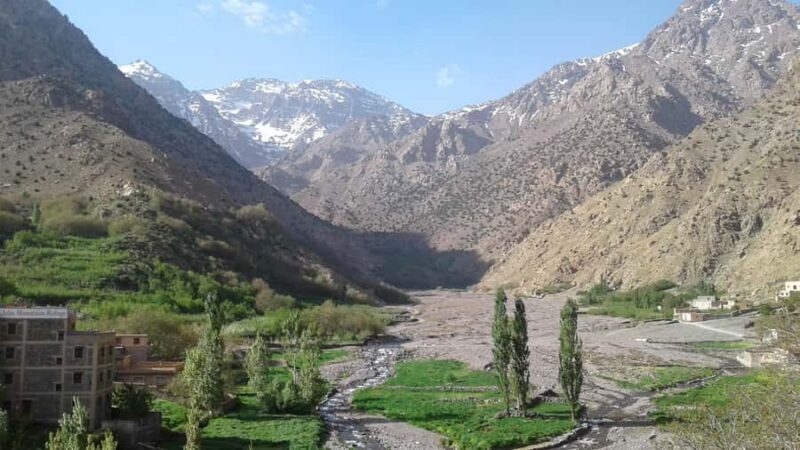
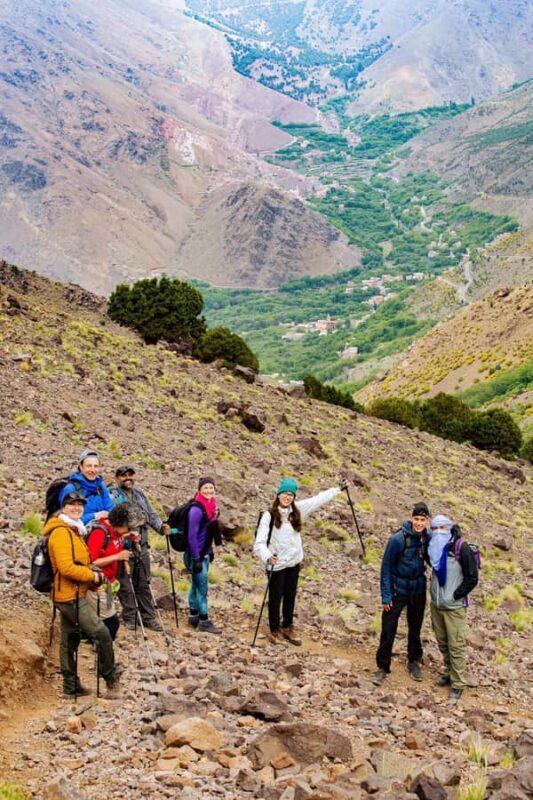
The outing begins with pickup at your Marrakech accommodation, or at the nearest point a vehicle can reach. That detail matters in the Medina, where narrow lanes can keep a minibus from coming right to your door. Confirm the pickup address and meeting point in advance.
The drive takes you to Imlil, the mountain village where the walking begins. You meet your local team here, sort out any rented gear, and start up the Aït Mizane valley. The drive is a useful transition: Marrakech’s city streets give way to the foothills and then the High Atlas, while the trek itself starts at a much higher elevation than the city.
The group is limited to 16 people, and the guide speaks one of the listed languages: English, French, Spanish, or Arabic. Groups can include hikers with different levels of experience. Guides such as Ayoub, Hamza, Oussama, Hicham, and Nouredin have been named by people who took the trek, but you should not assume a particular guide will lead your departure.
Evening activities in Marrakesh include these interesting options
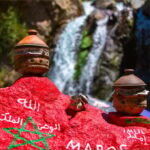
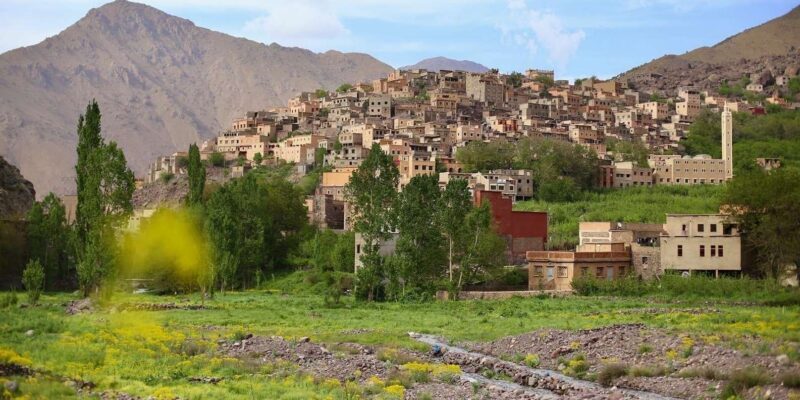
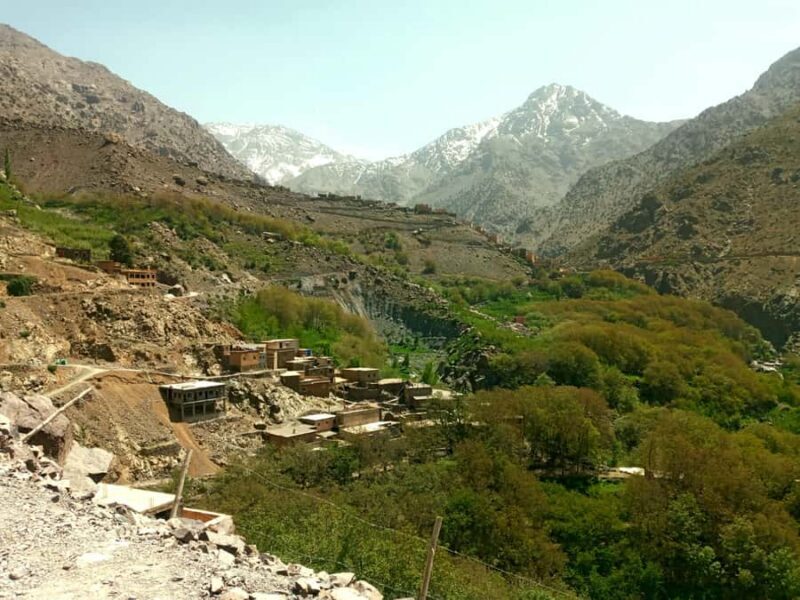
From Imlil, the trail climbs through the valley toward Aremd, then continues to Sidi Chamarouch, a mountain sanctuary beside a waterfall. These stops break up the climb and give you a chance to pause and take in the village life and changing mountain scenery. The route is not just a fast march to base camp, though you will still feel the steady gain in height.
The walk from Imlil to the Toubkal Refuge takes about five to six hours. The stated starting and finishing elevations tell you what to expect: you climb from 1,740 meters to 3,207 meters in one day. That sustained ascent is the main physical test before summit day. A guide can help set the pace and keep the group together, but your legs still have to do the work.
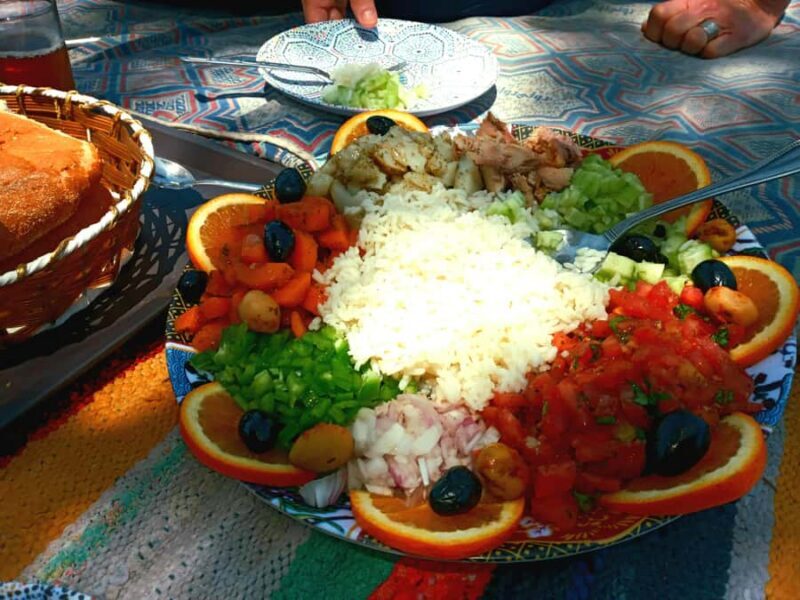
Lunch is included, and you may find places along the route where you can buy drinks or snacks. Carry cash in small notes for purchases along the way. The package includes two lunches across the trip, but drinks are not included, so budget for water and any extras you want to buy.
The final approach to the refuge follows steep paths and rocky ground. Once there, you have dinner and spend the night. Expect a functional mountain stop rather than a private hotel room. The refuge is communal, and sleeping arrangements can mean close-set bunks in a shared dormitory. You may get little uninterrupted sleep, especially if someone nearby snores, so earplugs are a small item with a big potential payoff.
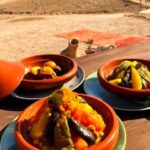
The refuge’s hospitality is part of the appeal. You have a warm meal, a roof, and a place to rest before the early start. The food has drawn particular praise, though one person found the portions a little modest. If you are used to eating heavily after a long hike, bring a few extra snacks.
Summit day begins early, often well before sunrise. Past groups have started between about 2:30 and 4 a.m., but the exact schedule depends on the outing and conditions. You leave the refuge in darkness and climb over steep, rocky terrain. The route crosses streams and includes rough sections, so a headlamp, warm layers, gloves, and solid hiking shoes are important.
The summit is the goal, but it is not guaranteed. High winds, very low temperatures, or snow can make the route unsafe. On one winter outing, extreme weather stopped the summit attempt; mountain safety decisions can change with conditions. A guide who turns the group around is doing the right job. The mountain will still be there for another season.
If conditions allow, reaching the top gives you a broad view across the High Atlas. The plain of Marrakech lies to the north, with the Anti-Atlas and Sahara to the south. Sunrise is a special reason for the early start: the first light spreads across the ridges while you are high above the valley. But it is cold up there, and wind can make it feel much colder than the forecast suggests. Bring proper gloves and a warm jacket, not just a spare layer for the walk down.
After a break at the summit, you descend toward the refuge and continue back to Imlil. The total walking time for the day is about 10 to 12 hours. Do not underestimate the descent. It is long, and tired legs and knees have to manage uneven ground after the uphill climb. Good fitness helps, but so do trekking poles if you are comfortable using them.
The trip ends back in Imlil, followed by the drive to Marrakech and drop-off. This is a full two-day commitment, not a half-day excursion. If you have plans in Marrakech afterward, leave breathing room rather than booking a tight dinner or onward connection.
At $122 per person, the price covers a substantial amount: hotel pickup and drop-off in Marrakech, transport, a local guide, a night at the refuge, one breakfast, two lunches, and one dinner. A mule carries luggage from April to November. With those essentials bundled together, the fee is strong value for a guided overnight mountain trek.
The inclusions also make the trip easier to organize. You do not need to arrange separate transport to Imlil, find a place to sleep on the mountain, or plan every meal. A guide helps with pacing and group safety, which matters on a route where the group may have mixed experience and where weather can alter the day.
You still need to budget for drinks, tips, and any equipment you rent. Trekking gear and sleeping bags are not included. Rental equipment has been available on some trips, including items such as gloves, headlamps, and sleeping bags, but availability and prices can vary. Ask the operator what is available for your dates and bring your own essentials if you can.
More Great Tours Nearby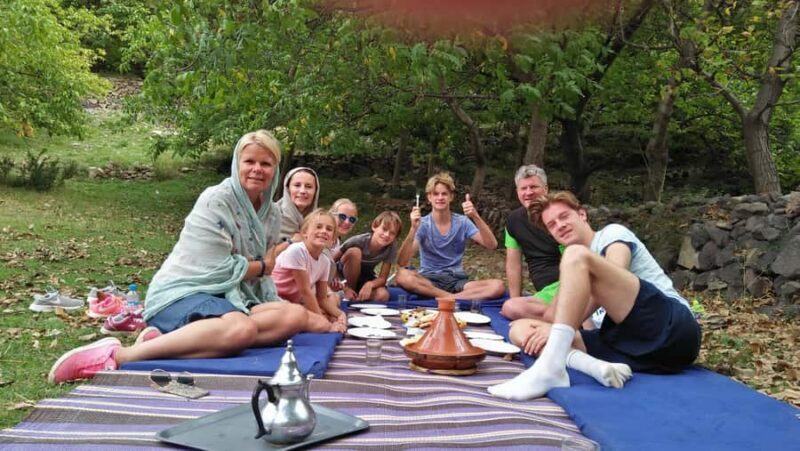
Start with comfortable, broken-in hiking shoes. The route is steep and rocky, and ordinary city trainers are a poor choice. Bring a daypack, a warm jacket, gloves, a hat, and a head covering. Temperatures can drop sharply before dawn and at the summit, even if Marrakech feels mild.
Pack a change of clothes, a charged phone, a camera, cash, and a small first aid kit. A passport and travel insurance are also on the recommended list. If you are hiking in a colder season, check the forecast and ask the provider what snow and cold-weather gear you will need. The route can be much colder and whiter than a visitor expects from a stay in Marrakech.
From April to November, a mule carries luggage, but you should still keep your own daypack manageable. A sleeping bag is not included, though rentals may be available. Confirm this ahead of time rather than reaching the trail without a suitable option.
Outdoor enthusiasts can explore more Marrakesh trails with these hiking options
This is a good choice if you are reasonably fit, enjoy long days outdoors, and want a guided mountain challenge with logistics handled for you. The small-group format can make the experience sociable, and the shared effort often brings people together. The guides’ care for the group is one of the strongest parts of the trip, especially when someone needs extra help or has to turn back.
It is not a beginner-friendly stroll. One participant who was fit and used to long walks still found the route harder than expected, while another warned that the altitude gain comes quickly. You do not need to be an elite mountaineer, but you should be comfortable with sustained uphill hiking, an early start, and a long descent. The experience is not suitable for children under 12 or people over 70, according to the stated restrictions.
You also need to accept that reaching the summit is not the only measure of a successful trip. People have turned back because of altitude symptoms or dangerous weather and still valued the trek. Be honest about how you feel, and let the guide make safety decisions.
Book it if you want a serious two-day hike, are in good enough shape for long uphill and downhill hours, and like the idea of a sunrise summit attempt with a local guide. For $122, transport, meals, the refuge night, and guiding make this a practical way to tackle Toubkal from Marrakech.
Think twice if you want a relaxed outing, need a private room, or have little experience with strenuous hikes. Pack for cold conditions, check what gear you can rent, and keep your schedule flexible in case weather changes the plan. If you are ready for a tough climb and can treat safety, not the summit, as the final word, this is a memorable way to meet the High Atlas.
“Hamza was a great guide and made the trip safe and fun”
The activity lasts two days. Day one takes about five to six hours of trekking, and day two takes about 10 to 12 hours.
You are picked up in Marrakech and driven to Imlil valley, where the trek begins.
The Toubkal Refuge is at 3,207 meters. The hike starts in Imlil at 1,740 meters.
Yes. A local guide is included. Guide languages listed are English, French, Spanish, and Arabic.
The package includes one breakfast, two lunches, and one dinner. Drinks are not included.
Yes. One night at the Toubkal Refuge is included. The accommodation is communal and dormitory-style.
A mule carries luggage from April through November. You should still carry a daypack for items you need during the hike.
No. Trekking gear is not included. A sleeping bag may be available to rent, and rental gear has been offered on some trips.
No. Weather and safety conditions can prevent a summit attempt. The trek includes a summit ascent, but conditions may change the plan.
It is not suitable for children under 12 or people over 70. The route is also a strenuous hike, with a long uphill first day and a 10-to-12-hour second day.
You can check availability for your dates here: