Physical Address
304 North Cardinal St.
Dorchester Center, MA 02124
Physical Address
304 North Cardinal St.
Dorchester Center, MA 02124

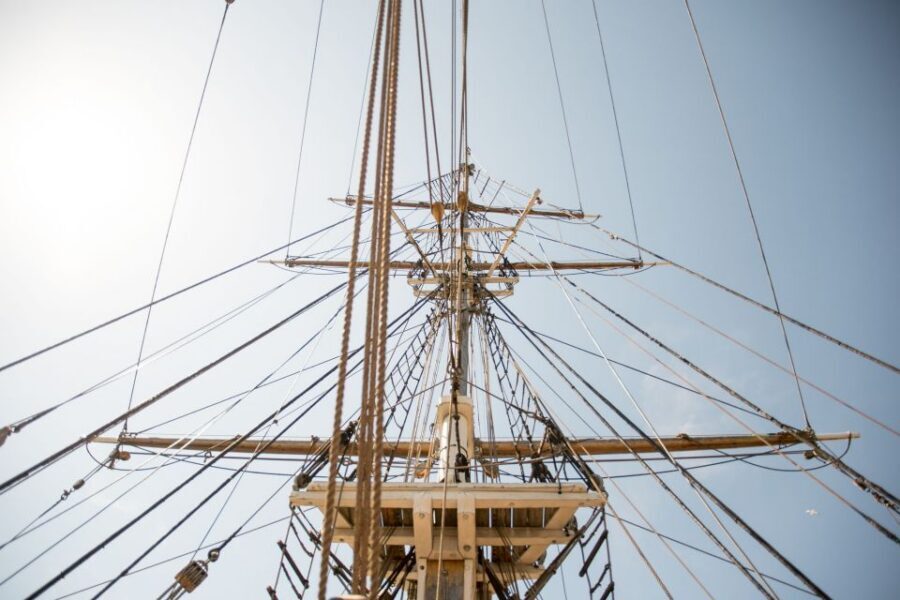
Step aboard Dublin’s Jeanie Johnston for a 50-minute guided tour of famine-era emigration, cramped shipboard life, and Docklands views.
The Jeanie Johnston tells a stark story in a setting that makes it hard to keep history at arm’s length: you stand on a tall ship much like the one that carried people fleeing Ireland during the famine. The cramped lower deck brings the hardship into focus, while the upper deck puts the ship and Dublin’s Docklands in view.
I like two things in particular: the guide’s personal stories about passengers and crew, and the chance to see how the ship worked above and below deck. At about $16 for a guided tour lasting 50 minutes, it offers a compact, worthwhile history lesson.
One thing to consider: the ship is not suitable for wheelchair users or people with limited mobility. You’ll need to move around the vessel, including going below deck, so comfortable shoes matter.
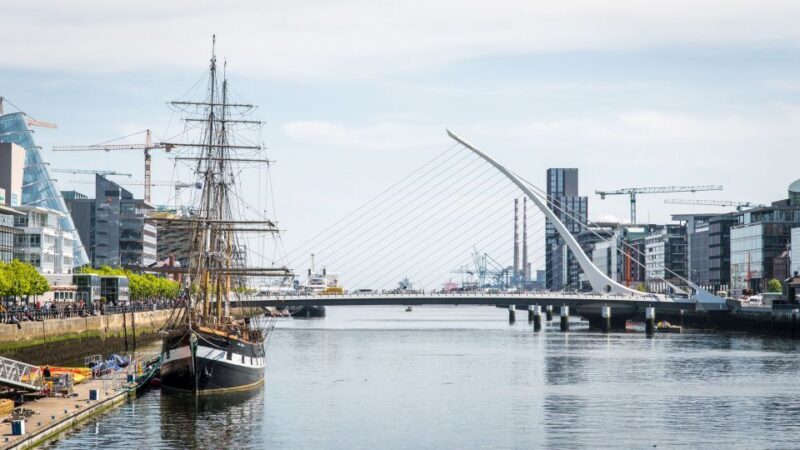
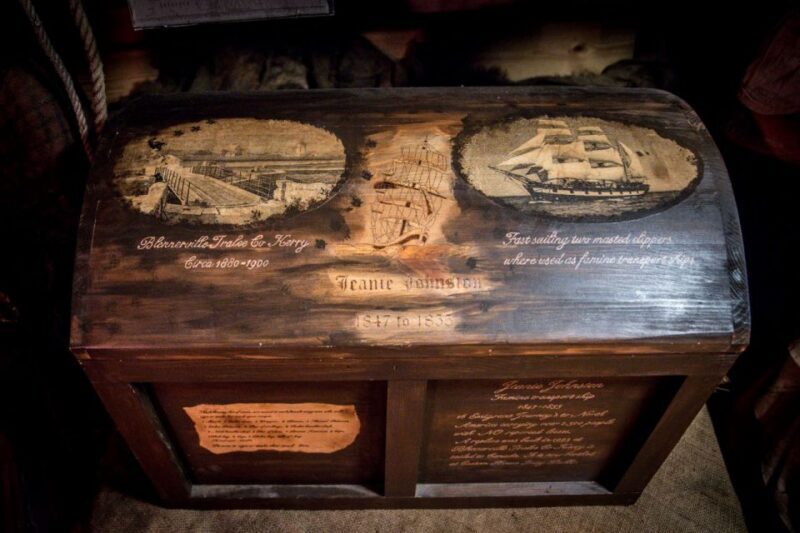
Ireland’s famine years forced roughly one million people to leave the country. About 2,500 of them sailed aboard the Jeanie Johnston, seeking a future across the ocean. This tour gives those numbers a human scale by taking you through the ship and introducing you to the people who travelled and worked on it.
The Jeanie Johnston you visit is a replica of the original ship. That distinction is worth keeping in mind: you are seeing a modern-built vessel that brings the earlier ship’s design and story to life, rather than stepping onto a surviving famine-era ship. The tour also explains the original ship’s history and the replica’s construction.
I like this approach because the history is not limited to dates and broad events. You hear about passengers’ personal circumstances, how they paid for a crossing, what they ate, and how they occupied their time. Those details make the voyage easier to imagine without pretending that a short tour can capture the full scale of famine and emigration.
The Jeanie Johnston also had a notable record. It made 16 voyages to America without a passenger dying at sea, an unusual point in a story otherwise marked by risk and grim conditions. The tour sets that fact alongside the dangers passengers faced, including disease, starvation, and disaster. A safe outcome for those aboard did not make the journey easy.
History buffs will find these Dublin heritage tours enlightening
The tour begins above deck, where you can take in the ship’s masts and construction while the guide explains its purpose and working life. You’ll hear how the original Jeanie Johnston changed from transporting timber to carrying people. That shift provides a useful starting point: a sailing ship was not just a dramatic shape on the water, but a vessel adapted to meet the needs of its trade.
Look closely at the details as your guide talks. The ship’s craftsmanship gives the story a physical anchor, and the tall masts help you appreciate the size and demands of a sailing vessel. The tour also places the Jeanie Johnston within the 19th-century shipping trade, so you get more than a single-ship biography.
Outside, Dublin’s Docklands add a different kind of context. You can feel the wind, hear gulls, and look out over the water from the ship’s deck. It is a pleasant change of pace from a gallery or indoor exhibition, though the weather will affect how comfortable this part feels. The ship is also one of the area’s most photographed attractions, so the deck gives you a natural spot for a picture.
This opening section is useful even if you already know the broad outline of the famine. It helps you orient yourself to the vessel before you go below, and the guide can answer questions as they arise. Visitors have particularly praised guides such as Steve, Claire, and Eoin for explaining the subject clearly and keeping the group involved. The tour depends on that spoken storytelling, so being ready to listen and ask questions will add to the visit.
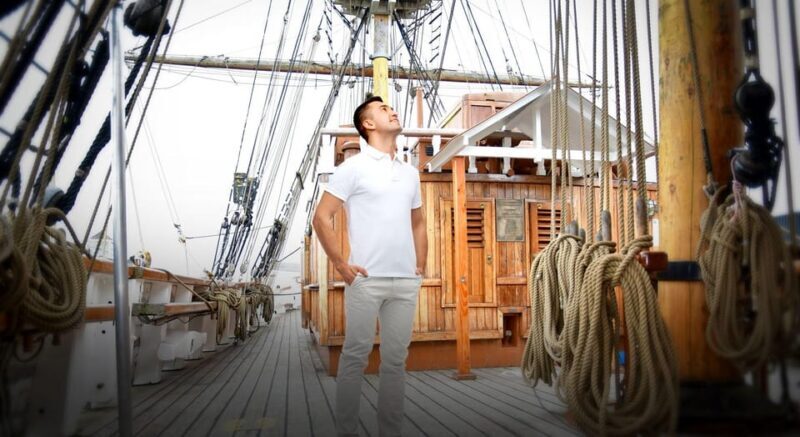
The lower deck is the heart of the experience. You go below to see the cramped quarters where as many as 250 passengers spent most of their time. They emerged for only about half an hour of fresh air each day. The contrast between the open upper deck and the restricted space below makes the conditions easier to grasp than a written description alone.
Expect the room to feel tight rather than comfortable. You’ll hear how passengers managed food, sleep, and the long hours at sea, as well as how they passed the time. You’ll also learn what they paid for the crossing and what awaited them at their destination. The tour’s focus on named passengers and crew gives those facts a personal edge.
This is the part that can make the visit emotional. The cramped setting puts the risks of disease and starvation into view, while the guide’s stories connect those risks to individual lives. The topic is serious, and the tour does not avoid that. If you are visiting with children, it may be worth preparing them for discussion of famine and hardship. At the same time, guides have been able to hold the attention of children as young as seven and answer plenty of questions from older kids.
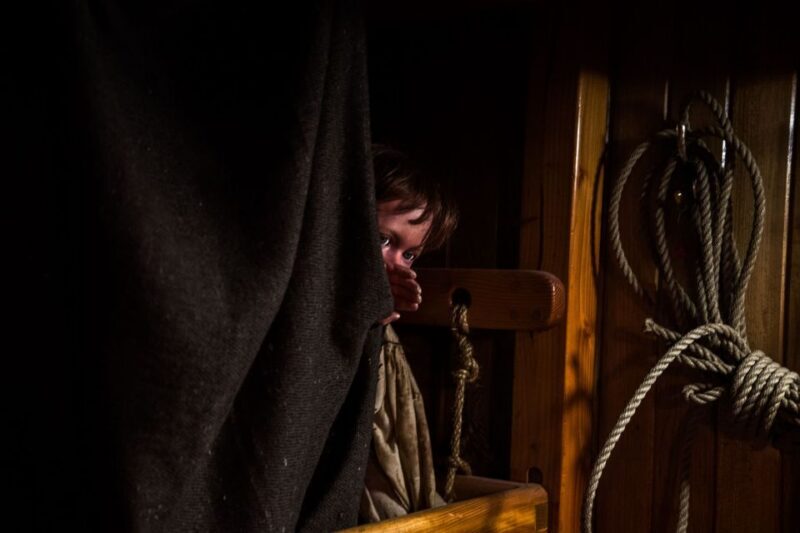
The ship includes figures representing people aboard, which can help make the space feel more immediate. They may not suit every child, especially one uneasy around lifelike figures, so take your family’s preferences into account. The guide’s manner can make a difference here: some have used humour alongside serious detail, and guides have been praised for bringing children into the conversation without making light of the subject.
You don’t need to be an expert in Irish history to follow the tour. The guide lays out the story in clear terms and can respond to questions. The best way to approach the lower deck is to give yourself time to look around and picture the ordinary routines as well as the crises. A voyage across the ocean was not one dramatic moment after another. It was also many days of waiting, eating, sleeping, and trying to endure confined conditions.
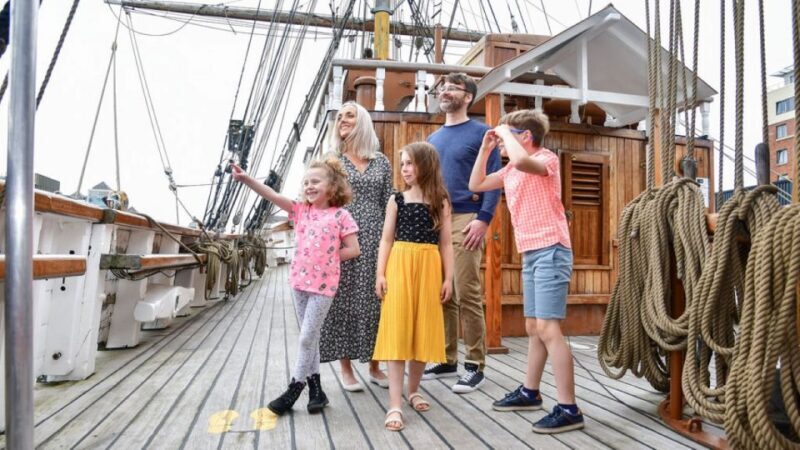
The guide is more than a narrator here. The ship’s spaces are compact, and the visit is short, so a clear account helps connect one part of the vessel to the next. Guides including Josh, Steve, Claire, Katrina, Eoin, Owen, Gearoid, and Rolland have been singled out for engaging storytelling, clear explanations, and thoughtful answers to questions.
The strongest guiding style for this subject balances gravity with warmth. The history deserves a serious tone, but a little humour and a conversational approach can help a mixed-age group stay with the story. Families in particular may appreciate a guide who invites questions and makes the people aboard seem real rather than distant figures in a textbook.
It is a guided visit in English, not a self-guided walk around the ship. That is a plus if you want context and personal stories, but it also means the pace and emphasis depend partly on your guide and group. If a particular question matters to you, ask it during the tour. The guide is there to explain the ship and its history, and visitors have found that questions are welcome.
More Great Tours Nearby
For a focused introduction, yes. In 50 minutes, you get an upper-deck look at the ship, an explanation of its history and construction, and a below-deck account of passenger life. It is long enough to leave with a better sense of the voyage, but short enough to fit into a broader day in Dublin.
The brevity has a trade-off. You should not expect a full account of every aspect of the famine or Irish emigration. The tour concentrates on the Jeanie Johnston, its passengers and crew, and the conditions aboard. If you want to study the famine in greater depth, treat this as one part of a wider visit to Dublin’s history sites rather than a complete account.
At $16 per person, the value is good if you want a guided, tangible encounter with the subject. You are paying for access to the ship and a live guide, not just a view from the quay. The combination of the physical setting and personal stories is what makes the ticket worthwhile. If you are short on time or prefer to explore at your own pace, the fixed 50-minute guided format may be less appealing.
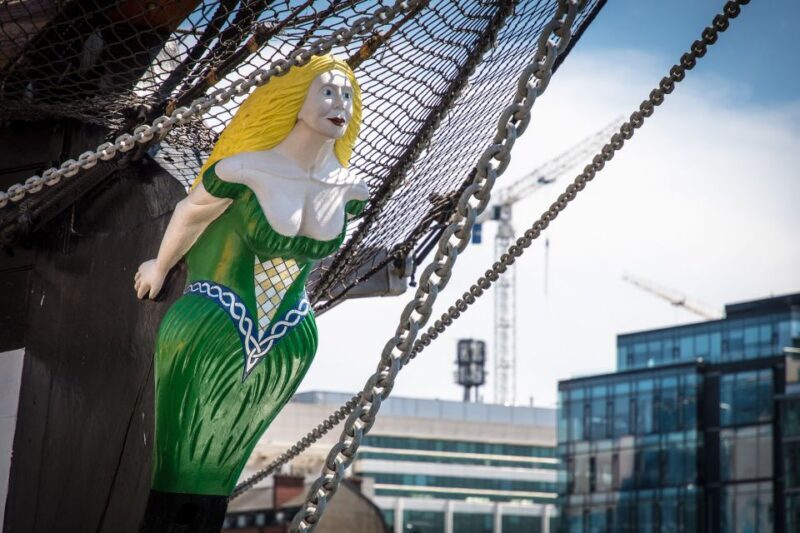
The meeting point is the Jeanie Johnston Tallship at City Moorings, Custom House Quay, Dublin 1. The tour ends back at the same place, so you do not need to arrange transport from a separate endpoint. Hotel pickup and drop-off are not included.
Wear comfortable shoes. You’ll be walking around a ship and going below deck, and the tour is not recommended for people with limited mobility. It is not suitable for wheelchair users. If accessibility is a concern, check carefully before booking rather than assuming the vessel can accommodate you.
Starting times vary, so check availability for the date you want. The tour is in English and lasts 50 minutes. You can cancel up to 24 hours in advance for a full refund, and a reserve-now, pay-later option is available if you want more flexibility with your plans.
This is a good fit if you want to understand the human side of Irish famine emigration, enjoy maritime history, or prefer a compact guided visit to a long museum session. The ship gives you a sense of scale and confinement that is difficult to get from an exhibit panel alone. If you are travelling with children, the tour can work well, especially when they are ready to listen and ask questions about a serious subject.
It is less suitable if you need step-free access, use a wheelchair, or have difficulty moving through confined spaces. It may also be a modest stop for anyone expecting an extensive museum or a long, detailed exploration of famine history. For most visitors with an interest in Dublin’s past, though, the combination of ship, setting, and human stories makes the short visit feel well spent.
Book the Jeanie Johnston if you want a direct, memorable introduction to the people who fled Ireland during the famine and the conditions they faced at sea. The upper deck offers a fine look at the vessel and Docklands, while the cramped lower deck gives the story its force. At $16 and 50 minutes, it is a sensible addition to a Dublin day.
Skip it if the ship’s stairs and limited mobility access make the visit impractical, or if you want a broad, in-depth account of the famine rather than a focused story about one vessel. For everyone else, bring comfortable shoes, make time for the guide’s stories, and be ready for a serious but engaging lesson in Irish history.
“Josh was a great story teller! My husband and I thoroughly enjoyed this tour. Great information that really took you back to the times of emigration”
The guided tour lasts 50 minutes. Starting times vary, so check availability for your chosen date.
It starts at the Jeanie Johnston Tallship, City Moorings, Custom House Quay, Dublin 1.
The tour ends back at the meeting point on the ship.
The live guided tour is in English.
It includes entrance and access to the guided tour of the Jeanie Johnston Tallship.
No. Hotel pickup and drop-off are not included.
Wear comfortable shoes for moving around the ship.
No. The tour is not suitable for wheelchair users or people with mobility impairments.
Yes. You can cancel up to 24 hours in advance for a full refund.
You can check availability for your dates here: