Physical Address
304 North Cardinal St.
Dorchester Center, MA 02124
Physical Address
304 North Cardinal St.
Dorchester Center, MA 02124

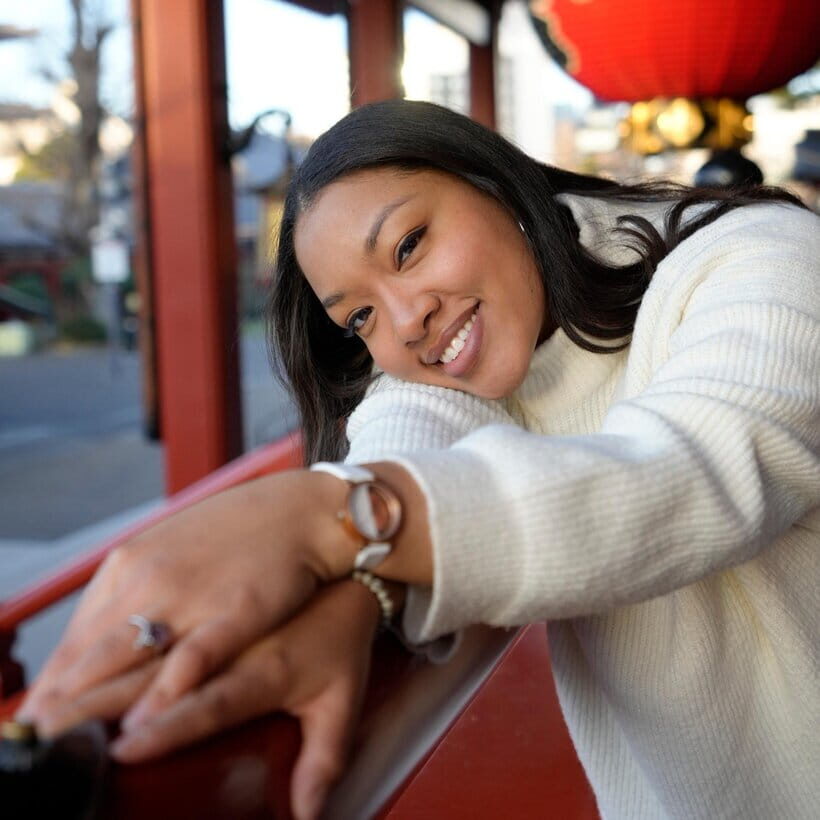
Walk Kyoto’s lantern-lit Gion and Higashiyama with a local guide, learn about geiko culture, and see shrines and pagodas after dark.
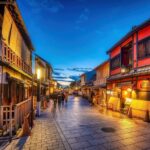
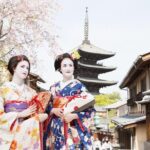
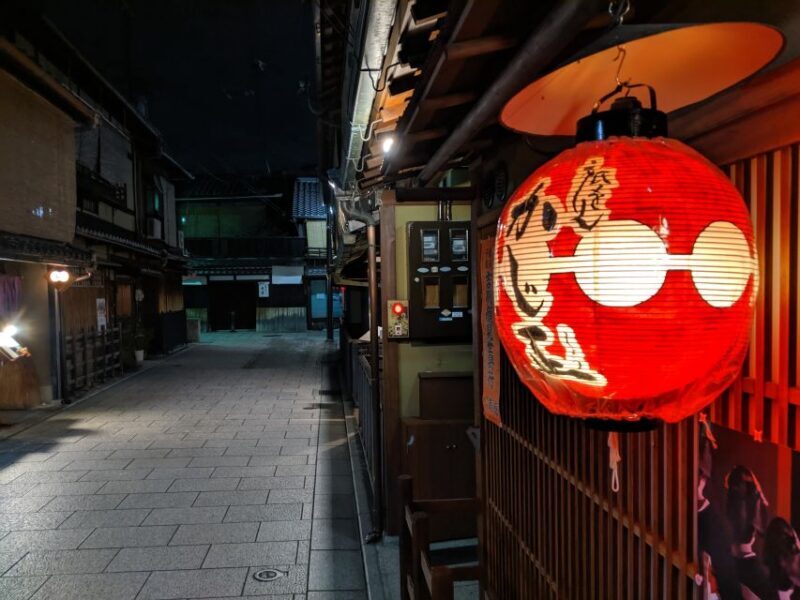
Gion changes character after dark. Lantern light picks out the wooden buildings, and the quieter lanes make it easier to notice the district’s details while your guide explains its past and the lives of geiko and maiko. You might glimpse women in full costume, but the best reason to come is learning how to look at this working neighborhood with care.
I like the evening timing, which leaves more room to appreciate the streets without daytime crowds, and the mix of shrine visits, old lanes and cultural context. One thing to weigh: some stretches can be dark, and a geiko sighting is luck, not a promised part of the tour.
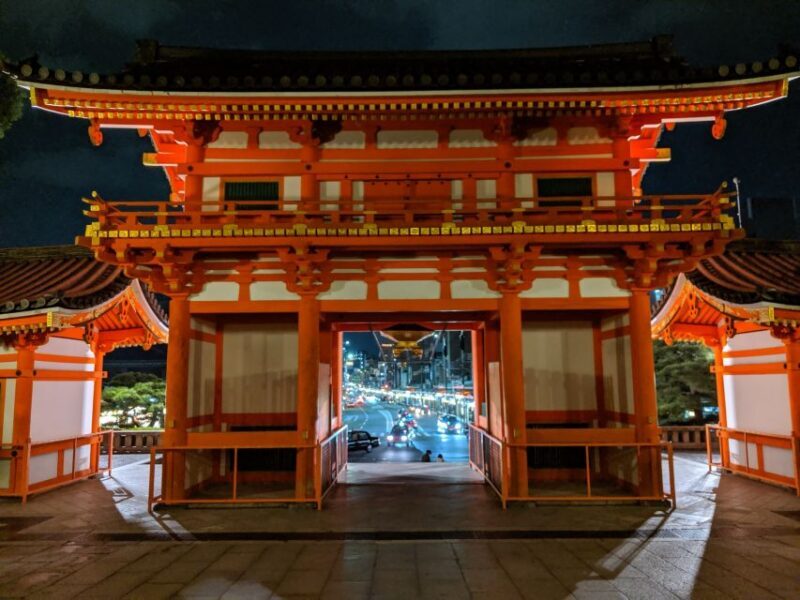
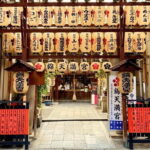
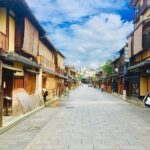
Gion is Kyoto’s centuries-old entertainment district, and night brings out a quieter side of it. Lanterns glow against wooden façades, while narrow lanes feel less like a procession of photo stops and more like streets with a life of their own. The calmer pace is a good setting for hearing how the area works, not just what it looks like.
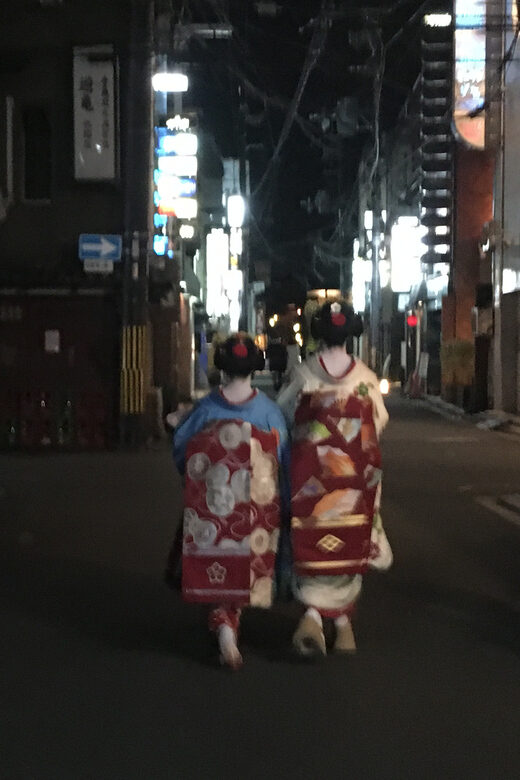
This is a walking tour, not a geiko-spotting expedition. Your guide explains the customs surrounding geiko and apprentice maiko, and why the women who work in this tradition deserve respect and privacy. You might see a few in full costume near the end, but you should not expect them to stop or pose. They are going about their work, not performing for a tour group.
The format is especially useful on your first evening in Kyoto. A guide can connect the shrines, streets and entertainment district, giving you a mental map for later exploring. The walk also ends with recommendations for somewhere to eat or have a drink, handy when you are still getting your bearings.
Looking for more options in Kyoto? Here are some other experiences worth considering.
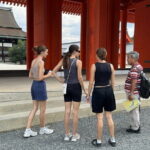
The walk begins at one of two possible meeting points: Tsuruha Drug Yasaka Shrine Store or FamilyMart in Kyoto Gion. The exact location depends on the option you book, so check your confirmation rather than assuming the group meets at the same place every time.
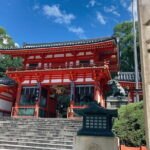
Yasaka Shrine is the first stop, with about 20 minutes for a guided visit. A shrine at night has a different feel from a daytime visit: the light and quieter surroundings make it easier to pause and take in the grounds. Your guide can explain the site and the customs associated with Shinto practice, helping you understand what you are seeing rather than simply taking a photograph and moving on.
The short stop is a useful opening, but it is not a long, independent visit. If you want extra time at Yasaka Shrine, consider returning on your own. This tour’s value comes from the sequence and explanation, not from lingering at any single site.
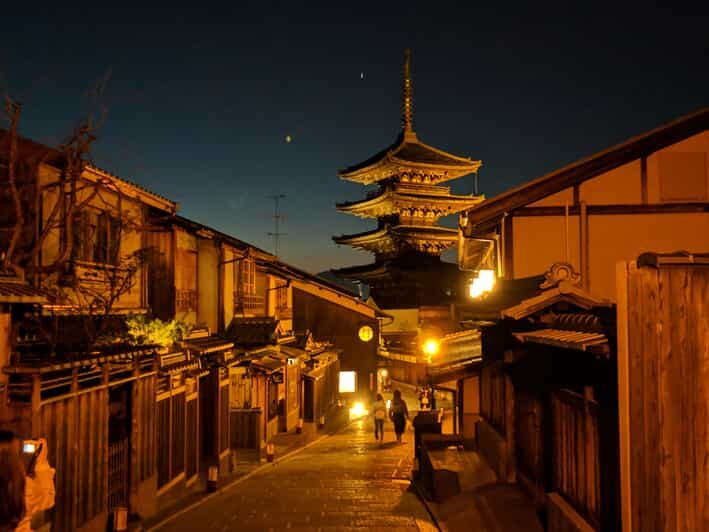
From the shrine, the group heads toward Ninenzaka for another guided stop of roughly 20 minutes. The narrow street and traditional buildings show the architectural character that many people picture when they think of old Kyoto. At night, fewer people on the lane can make the walk feel less hurried, though the low light is something to keep in mind if you want sharp photos.
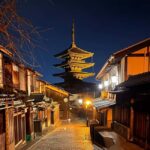
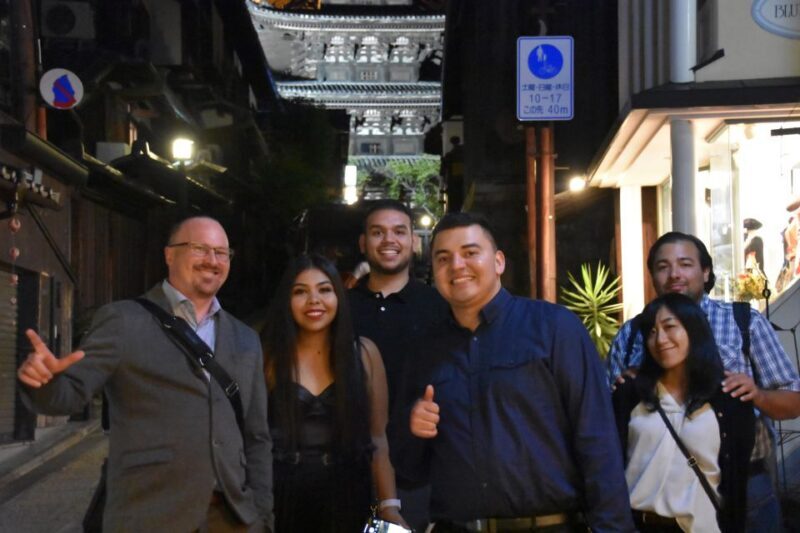
Hōkan-ji Temple follows, with around 20 minutes set aside for a photo stop. Its pagoda is one of the walk’s visual highlights, particularly when lit after dark. Your guide can help you find a good angle and explain the site’s place in the district, but this is still a brief stop, not a full temple visit.
The evening mood is part of the appeal, and part of the trade-off. Some details are easier to see in daylight, and a dark street can make uneven paving harder to spot. Wear shoes you are comfortable walking in, and take your time rather than rushing to keep up for a photograph.
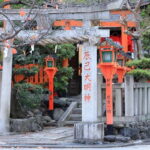
The next visit is Yasui Kompira-Gu Shrine, with about 15 minutes to look around. The itinerary gives this stop less time than the first shrine and the pagoda, so think of it as a short introduction rather than a deep visit. Your guide’s explanation can add context to the grounds and their customs.
After that, the tour spends about 45 minutes in Gion. This is the longest stretch of the walk, and it gives the guide time to bring together the district’s history, daily life and geiko culture. The emphasis is not only on spotting a striking street or costume. It is on understanding why this neighborhood developed as it did and how its traditions continue.
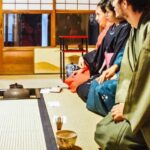
The tour description also includes a walk through the grounds of a Zen temple in the quiet of night. The named itinerary stops focus on the shrines, Ninenzaka, Hōkan-ji and Gion, so ask the guide what the route includes on your chosen departure if a particular temple visit matters to you. Routes and meeting details can vary by booking option.
More Great Tours Nearby
For many visitors, geiko culture is the subject they know least about and are most curious to understand. A good guide can explain the distinction between a geiko and an apprentice maiko, the customs of their work, and the years of training behind the public image. The tour’s cultural explanation is a better reason to book than the hope of a sighting.
Guides on this walk include Karim, Kevin, Janiel, Janelle, Ben, Diana, Salomé, Hina and others. The guide assigned to your date can vary, so you cannot choose or count on a particular person. The strongest guiding style described for this experience is conversational: people have found it easy to ask questions, and guides have connected local history with broader aspects of Japanese life. Ben, for example, has used tablet visuals to help explain background information, though that approach is not guaranteed on every tour.
A respectful approach matters here. If you happen to see a geiko or maiko, give her space and follow your guide’s instructions. The point is to learn about the tradition, not treat its practitioners as a photo opportunity.
The advertised duration is two hours, with the walk divided among short stops and a longer stretch through Gion. The pace has been described as relaxed, with time for questions, but you will still be on your feet and moving between locations. If you prefer a more personal setting, private or small-group options are available.
Nighttime is a genuine advantage for atmosphere and thinner crowds, but it comes with practical limits. Streets and temple grounds can be dark, especially in less brightly lit spots. In winter, the walk can also feel cold; dress for the forecast and wear shoes suited to walking on old streets.
The tour is offered in English and French. Food and drinks are not included, but your guide can suggest a place to eat or have a drink afterward. That makes the tour a useful evening plan: you get an introduction to the area, then can stay nearby for dinner instead of having to cross town.
At $24 per person, the price is reasonable for a two-hour guided walk through two of Kyoto’s best-known historic districts. You are paying for the guide’s explanations and route, not an entrance ticket, meal or guaranteed encounter with a geiko. If you like hearing stories and asking questions, that context is the main value.
The tour is less compelling if you only want a quick photo of the pagoda or plan to wander independently. You can visit streets and shrines without a guide, but you will miss the interpretation that ties them together. For first-time visitors, that connection can make a short walk more useful than a longer unstructured stroll.
You can reserve now and pay later, and cancellation is free up to 24 hours before the tour. Starting times depend on availability. The guide’s phone number is shared with you; if you have trouble locating the meeting point, call at least ten minutes before the start. WhatsApp is recommended. Late arrivals or people who cannot find the guide are not refunded, so check the meeting point carefully and leave time to get there.
I would put this near the start of a first Kyoto visit if you want a friendly orientation and a thoughtful introduction to Gion. It suits people who enjoy walking, local history and cultural context, especially those curious about geiko and maiko traditions. The night setting adds a quieter, more atmospheric view of the district.
It is also a good fit if you want a guide to help you notice details you might otherwise pass by, then point you toward food or drinks afterward. It is less suited to anyone who needs a guaranteed geiko sighting, wants a long visit inside each temple or shrine, or prefers to explore only in daylight.
Book it for the stories, the evening streets and the cultural context. Treat any geiko or maiko sighting as a bonus, dress for the weather, and confirm your exact meeting place before you set out.
“Amazing tour! The guide was very informative and had a lot of knowledge of the places he showed us. Despite the cold weather the experience was ama…”
The guided walk lasts two hours.
The listed price is $24 per person. Food and drinks are not included.
It covers the Gion and Higashiyama districts, with stops at Yasaka Shrine, Ninenzaka, Hōkan-ji Temple, Yasui Kompira-Gu Shrine and Gion.
The tour is offered in English and French.
You might see women in full costume toward the end of the walk, but a sighting is not guaranteed.
There are two possible starting locations: Tsuruha Drug Yasaka Shrine Store or FamilyMart in Kyoto Gion. The meeting point depends on the option you book.
Yes. Private and small-group options are available.
No. Food and drinks are not included, though your guide can recommend a place to eat or have a drink after the walk.
Call the guide at least ten minutes before the tour begins if you are having trouble locating the meeting point. WhatsApp is recommended. Late arrivals or people unable to find the guide are not refunded.
You can check availability for your dates here: