Physical Address
304 North Cardinal St.
Dorchester Center, MA 02124
Physical Address
304 North Cardinal St.
Dorchester Center, MA 02124

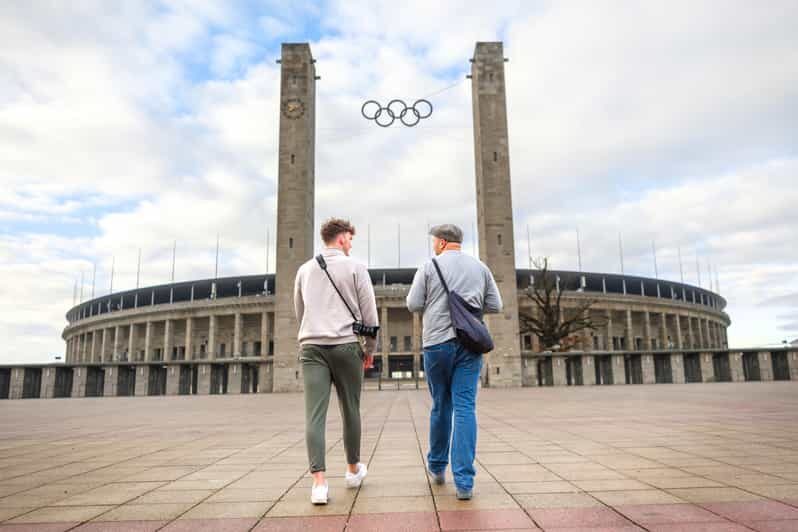
Tour Berlin’s Olympic Stadium with access to the players’ rooms, VIP spaces and warm-up hall, plus a guide’s account of its sporting and political past.
The striking thing about Berlin’s Olympic Stadium is how its scale and past sit side by side. On this one-hour guided tour, you see the venue where the 1936 Olympics took place, then follow the route through spaces used by today’s athletes, including the changing rooms and the underground warm-up hall.
I like two things especially: the access behind the scenes, which makes the building more than a view from the stands, and the guide’s mix of sporting and political history. The tour also brings you down beside the blue track, where the stadium’s size becomes much easier to grasp.
One consideration: an hour goes quickly, and there are stairs. The route does not include the Bell Tower or Langemarckhalle, so if those are high on your list, plan to see them separately.

This is not simply a walk around a large football ground. The guided route takes you into parts of the Olympiastadion that are usually off limits, so the building becomes a working venue as well as a landmark. You get a sense of how athletes prepare, how VIP areas are arranged and how the stadium handles major events.
The stadium is now home to Hertha Berlin, but the tour is not just for football fans. Guides connect the club’s present-day use of the ground with its earlier Olympic role and the events that have shaped its public meaning. That wider perspective is a major reason I’d consider the tour even if you rarely watch sport.
The short format has a useful advantage: you can fit it into a day without giving up a large block of sightseeing time. The trade-off is that the stadium has a lot to explain, and an hour can feel brief once you start asking questions.
If you prefer having a local expert, these guided Berlin experiences could work well
The stadium’s 1936 role is central to understanding the place. That Olympics took place during the Nazi period, when sport and spectacle were used for political purposes. A good tour helps you hold both facts in view: this is an impressive venue, and its history is not politically neutral.
The guide gives context as you move through the site, rather than leaving you to read the architecture on your own. Visitors have praised guides such as Henrietta, Eva and Florian for bringing together the stadium’s past and present, and for making room for questions. Guide assignments can vary, of course, but the English-language tour is designed to cover more than match-day trivia.
The construction itself adds to the scale of the story. One visitor was struck by the fact that the stadium was built in about a year and a half. The building’s size is impressive on its own; knowing how quickly it went up makes the project feel even more remarkable.
You may also hear about later restoration and changes in use. That matters because the stadium is not a frozen exhibit. It remains an active sports venue, and its history continues through new competitions and events.
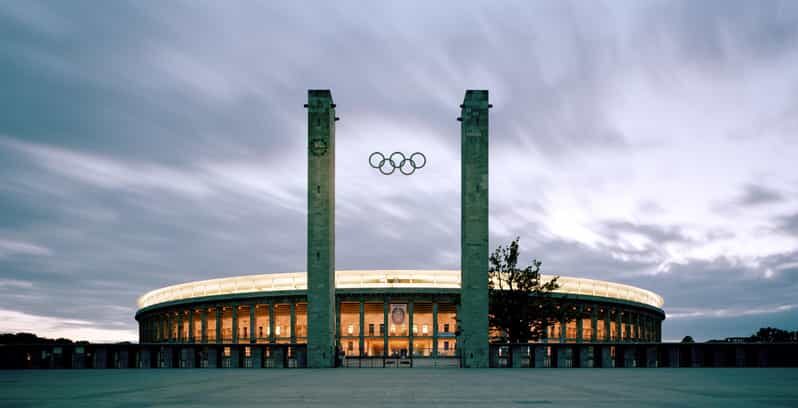
The players’ changing rooms are among the most tangible stops. From the stands, a stadium can feel abstract: rows of seats, a pitch and a vast roofline. In the dressing rooms, the scale narrows to the practical details of preparing for competition.
The tour may also visit VIP areas, artists’ changing rooms, a press room and the Jesse Owens lounge. These spaces show how a major stadium serves different groups beyond the athletes on the field. Access to otherwise restricted areas is a real part of the value here, not just a bonus detail.
The underground warm-up hall offers a different view of the venue. Athletes can prepare below ground before coming out into the stadium, a reminder that the visible spectacle depends on a network of workspaces behind it. If you are mainly interested in football, this stop still makes sense: it shows the preparation that happens before players appear in the tunnel and on the pitch.
The exact sequence and spaces you visit may depend on the tour route. The stadium is an operating venue, so it is sensible to enjoy the access you get rather than assume every room will always be open.
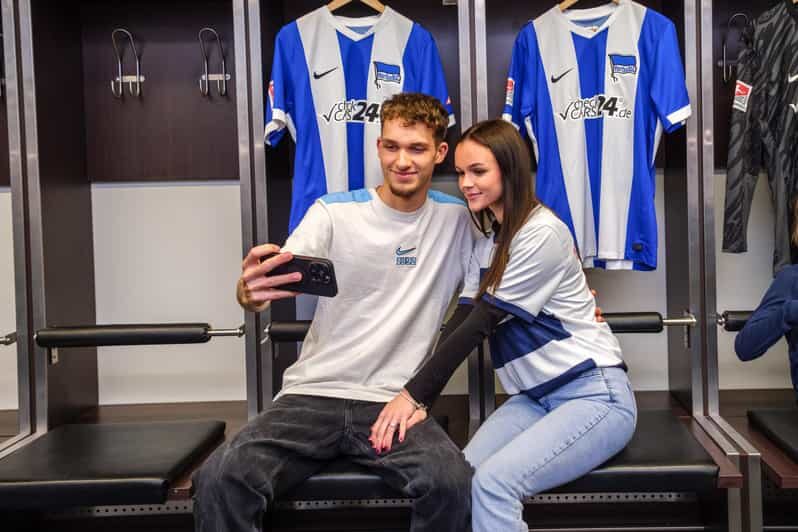
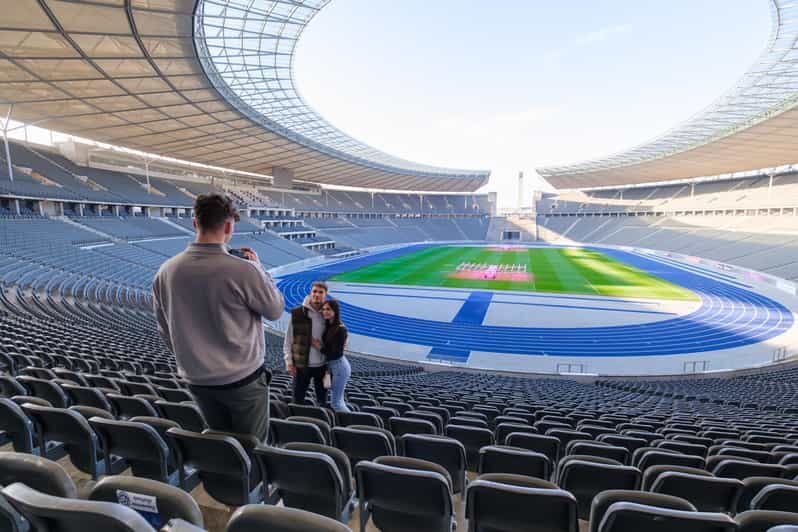
A highlight is reaching the edge of the pitch via the players’ route. Standing beside the blue running track gives you a close view of the playing surface and a clear sense of the stadium’s breadth. From the seating bowl, the field can look like a scene on a screen. At track level, the distance between the pitch and the upper stands becomes striking.
The guide uses this vantage point to explain the venue’s architecture and its modern role as a multifunctional stadium. The track is a useful reminder that this is not only a football ground. It has hosted athletics as well as major international football events.
Take photos here if you like, but keep an ear out for the guide’s explanations. The view is memorable, yet the context is what helps you understand why this particular stadium has mattered across several eras.
More Great Tours NearbyThe Olympiastadion has hosted several high-profile competitions, including the 2006 FIFA World Cup Final, the 12th IAAF World Championships in Athletics in 2009 and the 2015 UEFA Champions League Final. These events give the modern stadium story some weight: the venue has continued to draw major sporting occasions long after the 1936 Olympics.
The guides also connect the stadium to Hertha Berlin, its current football tenant. That is a useful layer if you follow the club, but the tour’s broader account keeps the experience accessible if you do not. One guide, Florian, was praised for mixing football with history in a way that included non-fans. The best version of this tour does not assume you know the offside rule.
Some stops may bring up individual athletes and the stadium’s sporting records. The names of winners are engraved at the venue, a detail that helps turn an abstract list of events into a visible record. If you care about sport, these details add a personal dimension. If you care more about architecture or history, they still show how the building has been used.
The guide is central to the experience. You are not just being shown doors and corridors; you are getting the political background, sports stories and practical details that give each place meaning. Across tours, guides including Florian, Henrietta, Maria and Eva have been noted for humor, clear storytelling and willingness to answer questions.
That variation in style can be part of the fun. Some guides are lively and eccentric; others may take a more measured approach. Either way, the format allows you to ask questions as you go, and the hour tends to move at a brisk pace.
A few practical observations are worth keeping in mind. One visitor noted that the tour involved plenty of stairs. Dress for the weather too: parts of the route are outdoors, and the open stadium can feel windy in colder months. Bring a layer even if the city streets feel mild.
After the guided portion, you may be able to continue exploring the stadium grounds and stadium independently. That gives you a little breathing room after the quick-paced tour, though you should check which areas are open on the day.
At the stated price of $19 per person, the cost includes both entry and the guided tour. The main value is access: you get into areas that a basic visit to the stadium may not include, and a guide supplies the history that makes those spaces worth seeing.
If you are comparing the tour with entry alone, think about what you want from the visit. A self-guided look may be enough if you simply want to see the stadium. But for a modest extra outlay, the guided option adds restricted areas, the pitch-side perspective and a clear account of the site’s political and sporting past. That is a fair exchange for an hour.
The experience is less compelling if you are pressed for time and only want a quick photo of the exterior. It also may not satisfy visitors hoping for an exhaustive architectural tour or access to every historic building on the grounds. The Bell Tower and Langemarckhalle are not included.
The tour has a 4.7 rating from 698 reviews, and praise tends to focus on the guides, the mix of history and sport, and access to the changing rooms and VIP areas. Those are precisely the features that justify choosing a guided visit over a simple look around.
I’d recommend it to sports fans, architecture-minded visitors and anyone interested in Berlin’s 20th-century history. It also works well for families: the tour is short, the rooms are varied, and the combination of an underground warm-up space and a pitch-side visit gives younger visitors something concrete to picture.
You do not need to be a Hertha supporter. The stadium’s political history and later international events give the tour broader appeal, and guides have made the story welcoming to people with little interest in football.
The main reasons to skip it are limited time, difficulty with stairs or a strong preference for seeing the Bell Tower or Langemarckhalle. The stadium is wheelchair accessible, but specify when booking if you need wheelchair assistance. Pets and oversize luggage are not allowed, and free parking is available on site.
Book if you want more than a view from the seats. The changing rooms, underground warm-up hall and track-side stop make the stadium feel like a real working place, while a good guide helps you understand its difficult past and sporting present. For $19, it is a strong-value hour, especially if you enjoy history or sport. Just plan for stairs, dress for the weather, and remember that the Bell Tower and Langemarckhalle are outside this tour.
“The guide is very good and we enjoyed very much the visit”
The tour lasts one hour.
The live tour guide speaks English.
The route includes areas such as players’ dressing rooms, the underground warm-up hall and VIP spaces. It also takes you beside the pitch and blue running track.
No. The tour does not access the Bell Tower or the Langemarckhalle.
Yes. The stadium offers barrier-free access. Specify when booking if you need wheelchair assistance.
Yes. Free parking is available on site.
No. Pets and oversize luggage are not allowed.
You can check availability for your dates here: