Physical Address
304 North Cardinal St.
Dorchester Center, MA 02124
Physical Address
304 North Cardinal St.
Dorchester Center, MA 02124

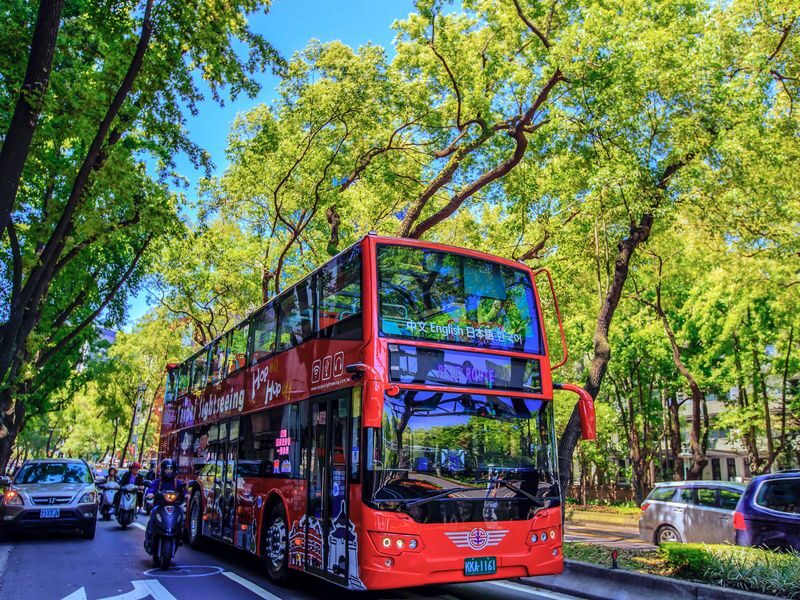
See Taipei 101, Ximending and more by red and blue double-decker bus, with flexible tickets, multilingual audio and a schedule worth checking first.
Taipei’s double-decker bus gives you a simple way to connect 23 stops across two routes, from Taipei Main Station to sights such as Taipei 101, Ximending and the National Palace Museum. I like the top deck for a slower look at the streets, and the audio guide for adding context without needing to plan a full guided tour.
I also like the flexibility of choosing a four-hour ticket or a longer pass, then hopping off where a stop interests you. The catch is that buses may be widely spaced, and a full bus can leave you waiting for the next one, so this works best with a timetable in hand.
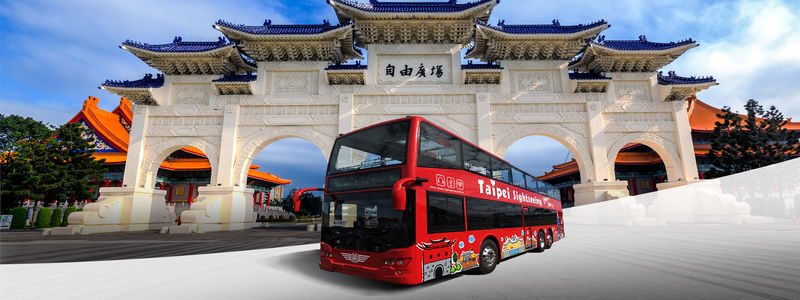
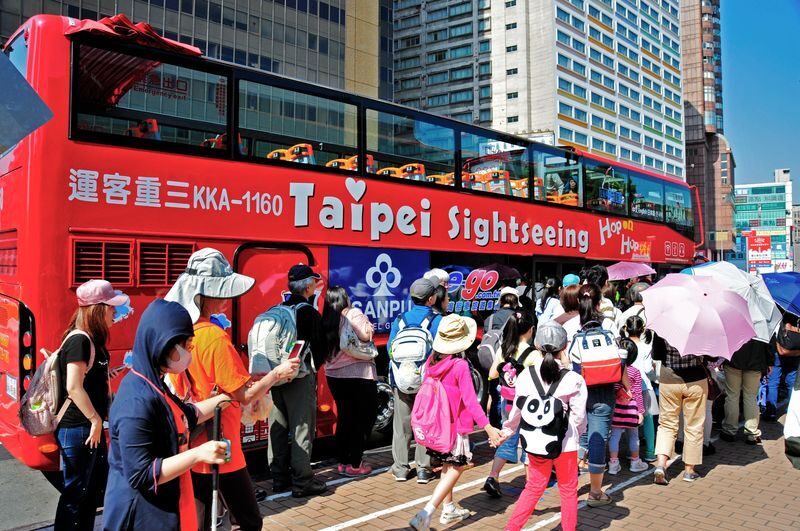
The sightseeing bus is less a nonstop tour than a moving overview of Taipei. From the upper deck, you can watch the city change between commercial streets, temples, parks and landmark buildings, then hop off when you want a closer look.
The red and blue routes serve different parts of the city. Together, they cover well-known places such as Taipei 101, the National Palace Museum, Chiang Kai-shek Memorial Hall, Ximending, Sun Yat-sen Memorial Hall, Xingtian Temple and the Ximen Red House. There are 23 stops in all, but the bus does not necessarily stop at every one automatically. If nobody is waiting to board and no passenger signals to get off, it may continue past.
That detail matters. Treat each stop as a place you can request or choose to board, rather than expecting a bus to pause at every point like a narrated city circuit. At the stop, arrive before the scheduled time and be ready to board. The driver cannot wait in the stop area for late passengers.
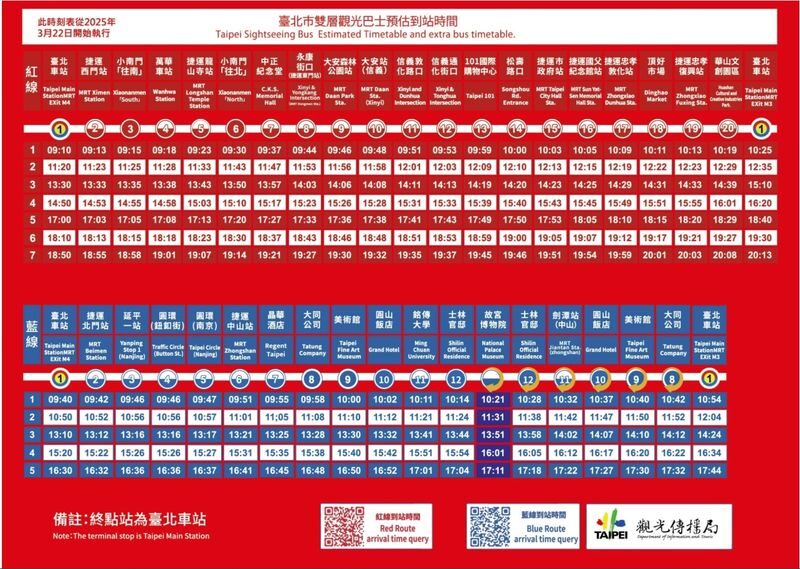
The bus starts and ends at Taipei Main Station. If you get on somewhere along the route, plan for the ride to finish back at the main station rather than returning you to the place you boarded. A single-trip ticket becomes invalid when you get off, so confirm that your ticket is a multi-hour pass before making plans to hop off and ride again.
You might also be interested in these Taipei experiences
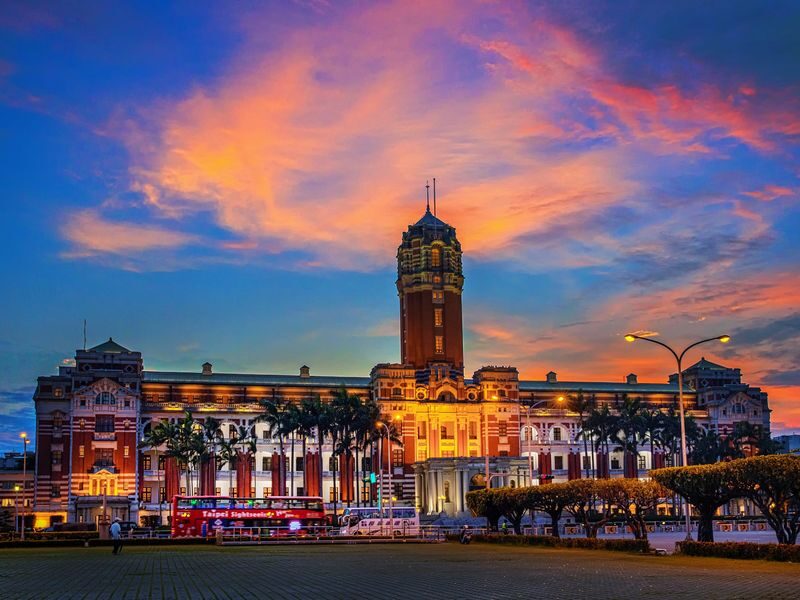
Taipei 101 is one of the route’s signature landmarks and a useful point of reference as you cross the city. The bus gives you a passing view, not an admission ticket or a visit to the tower, so get off if you want time to explore beyond the street-level sight.
The National Palace Museum is a major reason to consider the blue route. It holds enough to fill a substantial visit, so do not treat it as a quick stop unless you have only a brief plan. Build the bus timetable into your museum visit: if the next service is far away, the museum can turn a short hop into a longer commitment.
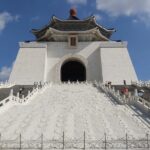
Chiang Kai-shek Memorial Hall gives the ride a strong historical landmark among its modern city sights. It is one of the places that helps make the bus useful for a first pass through Taipei: you can spot what catches your eye, then decide whether to return for a longer visit.
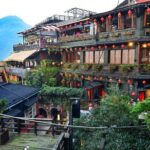
Ximending and the Ximen Red House bring you into a different kind of city stop, with the Red House named among the attractions served by the routes. If you want to spend time on foot here, check when the next bus leaves before you step away from the stop.
Sun Yat-sen Memorial Hall and Xingtian Temple widen the picture beyond the best-known postcard landmarks. The bus also passes Daan Park, a stop that can help you notice quieter green space and nearby places to revisit later. A ride is useful for spotting possibilities, but it cannot replace time on the ground.
The attractions do not form a single compact walking route. That is the trade-off of covering a broad area by bus: you gain an overview and reduce the effort of navigating between districts, but the timetable can make spontaneous detours harder.
The four-hour pass is a good fit if you want a city overview, a taste of the upper-deck ride and perhaps one or two stops. Its four hours begin when you validate it on board, not when you book. That sounds generous, but it can disappear quickly if you wait for a bus, stop for a meal or spend a long time at a museum.
If your aim is to ride both routes, plan the day around the timetable rather than assuming that you can finish one line and immediately join the other. Some riders have managed a blue-line ride and a red-line ride within a longer outing, while others have found the gap between buses too long to fit both routes comfortably into a short ticket.
The nine-hour daytime ticket gives you more room to hop off, but more hours do not make buses run more frequently. It suits a day when you are happy to work around departure times and focus on a small number of stops. If you want to see many attractions at your own pace, Taipei’s regular public transport may be more practical.
The 24-hour and 48-hour passes offer longer validity and unlimited stops along the route, according to the ticket options. They can help if you want to spread the sightseeing ride across more time, but they do not remove the main limitation: you still need to match your plans to the bus schedule and available seats.
Prices start at $9.35, with the final cost depending on the package. For that price, you are paying for a sightseeing ride, a route overview and the convenience of hopping off and back on within your ticket’s validity. It is not necessarily a bargain as pure transportation, especially if you already know where you want to go and can take the metro instead. Its value is strongest when you want to see the city from above and use the bus to decide what deserves more of your time.
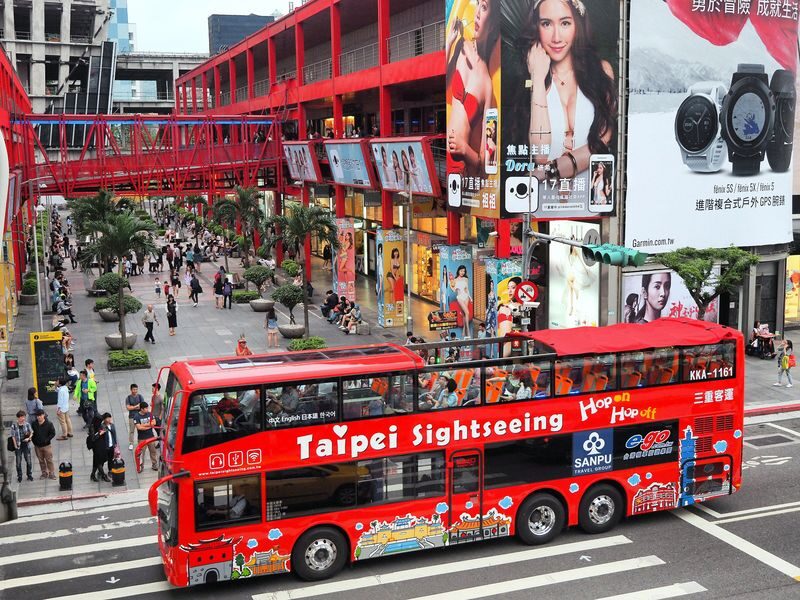
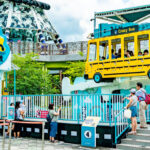
The red double-decker is easy to spot, with attraction illustrations on its exterior and semi-open-air seating upstairs. The higher viewpoint is part of the fun, but do not expect an unobstructed panorama from every seat. A barrier is present on the top deck, and the bus may close its roof in rain.
Taipei weather matters. On a hot day, the open upper deck can feel exposed; in rain, you may lose some of the open-air appeal. There are air-conditioned seats on the second floor, but choose your seat with the forecast in mind. The ride can still be pleasant in light rain, though wet weather may also obscure views of places such as Taipei 101.
The recorded audio guide is available in Chinese, English, Japanese, Korean and Thai. It gives you background as you pass the sights, but there is no live host explaining the city or answering questions. Bring your own earphones if you prefer listening privately, and keep expectations modest about hearing every word: the bus’s speakers can be difficult to make out when the vehicle is noisy or crowded.
Free Wi-Fi is provided on board, a handy extra for checking maps or looking up a stop as you go. Still, download or save the route information before boarding. A connection is useful, but it should not be your only way to find the next bus or confirm where to wait.
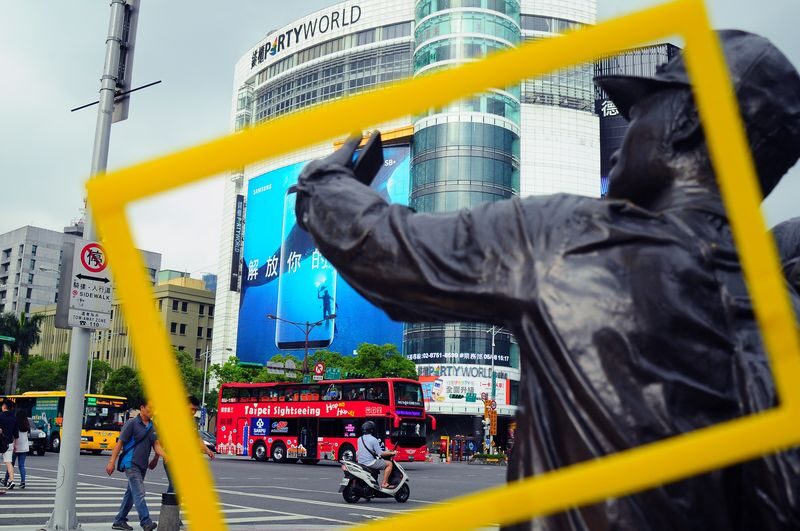
The most important planning step is checking the official route map and timetable before you go. Traffic can affect arrival times, and the operating vehicles may be fewer than you expect. Reports of long gaps between services make this more than a minor precaution: a missed bus can take a meaningful chunk out of a four-hour ticket.
At Taipei Main Station, look for the pickup near Exit M4, on the Zhongxiao side. The station is large, so allow time to find the right exit and the bus stop. If you plan to board at another stop, confirm its exact location in advance. A wrong turn at Ximending or another unfamiliar stop can mean missing the bus altogether.
Boarding depends on the queue and available seats. If a service is full, you may not be able to get on, and a used ticket is not refunded simply because you could not board that particular bus. Arrive early, keep your plans flexible and avoid scheduling a tight connection after the ride.
There is a route-stop change announced from November 6, 2025, due to construction at MRT Northern Circular Line Y27 Station. On the blue line toward the National Palace Museum, the Shilin Official Residence stop changes to the Zhongshan northbound location; on the return, the stop changes to MRT Shilin Station, Zhongshan southbound. Check the official announcement and current timetable before relying on an older map.
Use your mobile voucher to board. Tickets are available for booking on the day, and the voucher is valid for 60 days from booking confirmation, expiring at 23:59 on the final day. Cancellations and refunds are not available under the stated terms, so choose the ticket length carefully.
Children 114 cm tall or shorter can ride free. Half-price tickets are listed for Taiwan residents aged 65 or older, children aged 6 to 12 who are taller than 115 cm, and people with a disability certificate plus one companion; eligible passengers must show identification or the relevant document to staff. Each paying adult may bring up to two children aged 0 to 5. Check the terms with staff if your child’s age, height or eligibility is close to a stated threshold.
I would choose this ride if I were new to Taipei, wanted an easy city overview, and had enough time to sit back rather than rush from one sight to the next. It can be especially useful for a solo visitor or anyone who wants to see several districts without planning each connection. The view from upstairs, multilingual audio and the chance to mark places for a later visit are genuine advantages.
It is less suited to a packed sightseeing day with strict timings. If you want to spend a set amount of time at each attraction, the bus’s intervals can turn a tidy plan into a waiting game. The metro is a stronger choice when speed and predictable connections matter more than the elevated city view.
Book it if you see the ride as part of the outing, not just as transport. Choose four hours for a short overview and a few planned stops; consider a longer pass if you want more room to explore and can work around the timetable. Before paying, check the current departure times, route changes and the exact boarding point.
Skip it if you need to reach several sights quickly, dislike waiting, or expect a live guide and frequent buses. Taipei’s metro is often the more efficient way to get around. But for a relaxed first look at the city, especially when you want to spot places to revisit, the double-decker offers a memorable view and a practical starting point.
“The chair is hard and my hips hurt!”
The bus starts and ends at Taipei Main Station. The pickup point is near Taipei Main Station Exit M4, on the Zhongxiao side.
There are two routes, red and blue, serving 23 stops.
Named attractions include Taipei 101, the National Palace Museum, Chiang Kai-shek Memorial Hall, Ximending, Sun Yat-sen Memorial Hall, Xingtian Temple, Ximen Red House and Daan Park.
It is valid for four hours after you validate it when boarding.
The options include a nine-hour daytime ticket, a 24-hour pass and a 48-hour pass. The longer passes allow unlimited stops along the route during their validity.
Audio commentary is available in Chinese, English, Japanese, Korean and Thai.
Yes. Free Wi-Fi is provided on board.
Yes, you can board at a stop along the route if there is space. The bus’s starting and ending points are Taipei Main Station, so plan to finish there rather than returning to your original boarding stop.
Children 114 cm tall or shorter can join free. Each paying adult can bring up to two children aged 0 to 5; additional children require a child ticket.
No. The stated ticket terms do not allow cancellations or refunds.