Physical Address
304 North Cardinal St.
Dorchester Center, MA 02124
Physical Address
304 North Cardinal St.
Dorchester Center, MA 02124

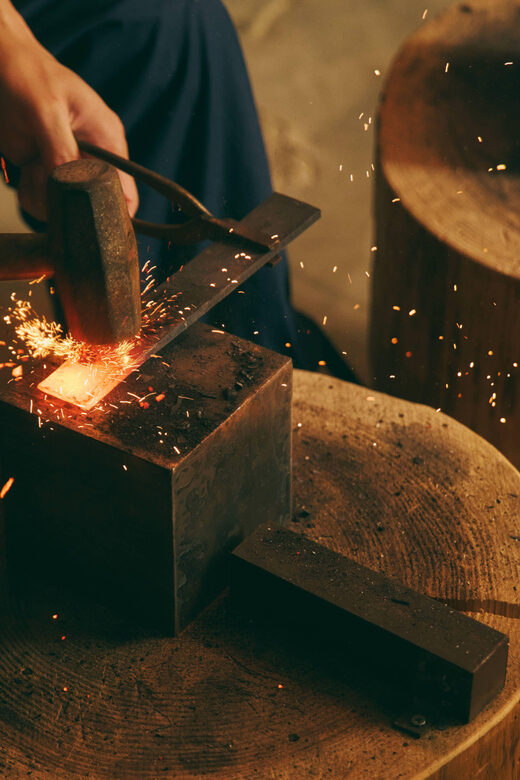
Forge a Japanese-style knife in Kyoto with expert guidance, hot steel, hammering, sharpening, and a practical handmade souvenir to take home.
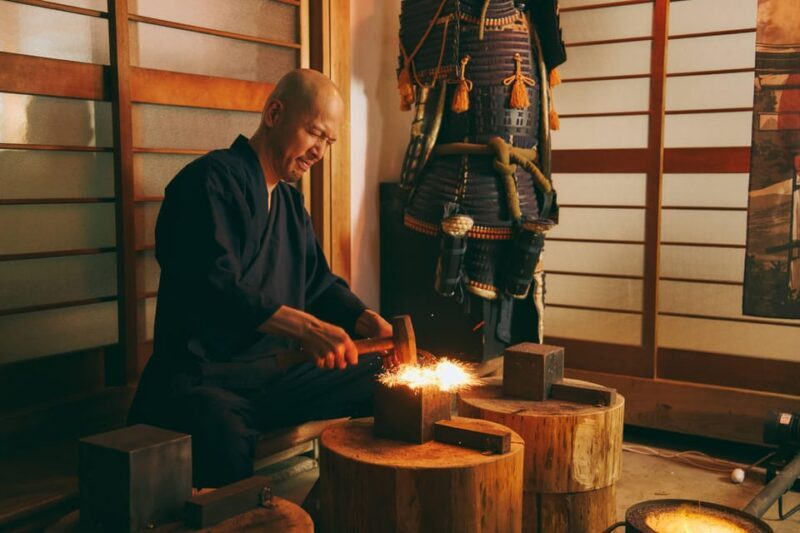
A red-hot bar of steel, a hammer, and a Japanese knife taking shape under your own hands: this Kyoto workshop is a rare chance to try blacksmithing, not just watch it. In about three hours, you’ll forge and finish a small handmade knife with close guidance from Mao, a professional knife maker with more than a decade of experience.
I like two things in particular: you take home a useful knife you helped make, and the instructors make an unfamiliar craft approachable with clear safety guidance. The workshop also has a practical rhythm, from heating and hammering to sharpening and polishing, so you leave with a sense of how the blade comes together.
One thing to plan for: this is physical work near a hot furnace, and the studio location needs careful checking. The meeting point is listed as a one-minute walk from Yase-Hieizan station, but one participant found the walk closer to 15 minutes and another was sent to the wrong studio. Confirm the exact address before setting out.
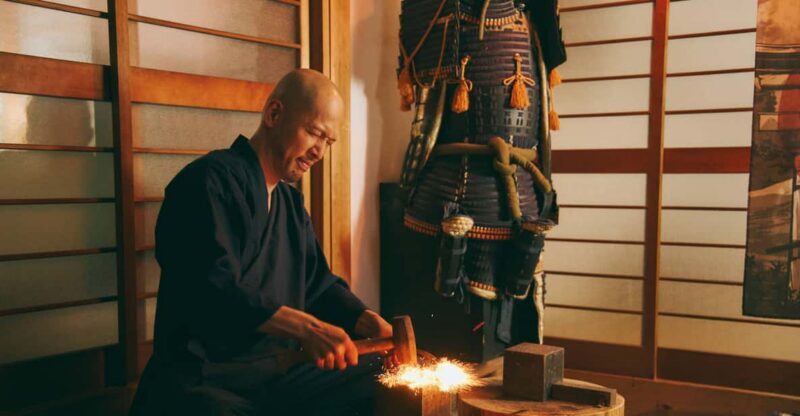
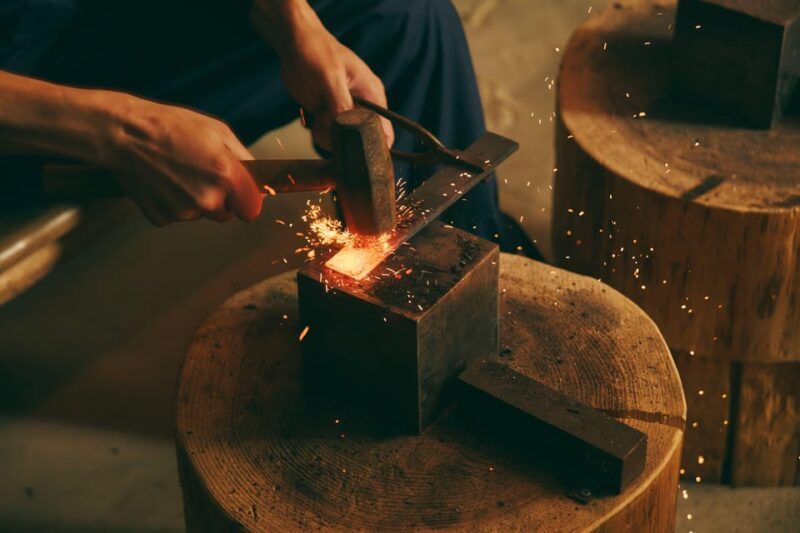
This is a hands-on workshop in Sakyo-ku, Kyoto, where you make a small Japanese-style knife rather than simply observe a smith at work. The three-hour session is designed to fit into a travel day, but it still gives you a taste of several demanding stages: forging, shaping, sharpening, and polishing.
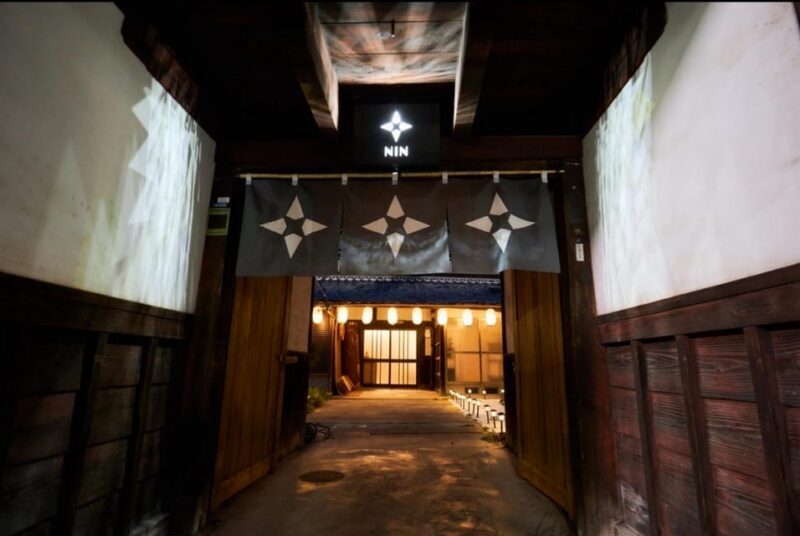
The experience is run by Kendo Experience at one of two studios, Studio NIN Yase or Studio NIN Kendo. Staff confirm which location you should attend before your visit, so do not assume that the address you first see is necessarily the final destination.
Mao is described as a seasoned knife professional with more than ten years in the field. Other instructors and team members named in participant accounts include Taka, Mits, Atsushi, and Daiki. The exact instructor will depend on your session, but the consistent point is close, patient help. You do not need prior metalworking experience to take part.
The workshop has a 4.8 rating from 350 reviews, and the strongest praise centers on the instructors’ clear explanations, friendly manner, and support through a challenging process. That matters here. The work involves high heat and sharp tools, so confidence comes from knowing what to do and having someone close by when you need help.
Looking for more options in Kyoto? Here are some other experiences worth considering.
You arrive, meet the instructor, and change into traditional blacksmith attire. It is a small touch, but it helps mark the shift from sightseeing into workshop mode. Socks are the one item you need to bring; the costume, towel, water, tools, materials, box, and bag are provided.
Before any steel is heated, the instructor introduces the tools and safety rules. You’ll see the hammers, tongs, and grinders you will use, and learn how to handle them. Take this part seriously. The workshop involves metal heated to very high temperatures, and the activity information notes that participants are responsible in the unlikely event of an injury or accident.
Mao or another instructor then explains the basic stages of Japanese kitchen-knife making. This is a useful orientation, though the session is a compact introduction rather than a long history lesson. If craft history is your main interest, ask questions as you go. Participants have found the instructors willing to talk about techniques and the history of Japanese blacksmithing, but one person wished for more time devoted to history.
The furnace is the moment the process becomes real. A piece of raw iron is heated until it glows red, then you take turns striking it with a hammer. Your instructor shows you the angle, rhythm, and force to use, and stays close as the steel begins to take shape.
This is the highlight for many people, and also the part that asks the most of you. Hammering is repetitive and more tiring than some expect. One participant’s advice was to stretch before arriving, and it is worth taking. You’ll be standing and working near a hot furnace, so this is not a passive activity or a cool, quiet craft class.
The instructors help you make a blade that looks and feels like your own work, while correcting mistakes that might otherwise leave you unhappy with the result. That balance is important. You take part in the shaping, but you are not left to guess your way through a potentially dangerous process.
Expect the heat to be noticeable, especially in summer. A participant who attended in August described the workshop as hot, but said the team provided frozen neck coolers and had air conditioning. Conditions and equipment may vary, so dress for a hands-on session and follow the instructor’s advice.
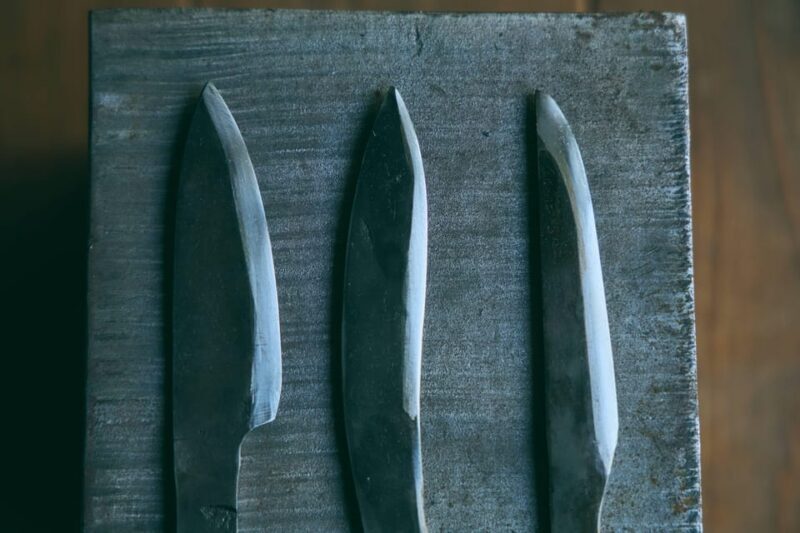
After forging, the metal is cooled and checked for shape. You refine rough edges and prepare the blade for sharpening. Then you use sharpening stones and grinders with guidance from the instructor. This is where the knife starts to look less like a piece of worked steel and more like something you can use.
The final stage is polishing. The stated result is a handmade knife about 13 to 15 cm long, ready to take home in a box and bag. The finish may be a rustic Kurouchi style, a dark, raw-forged look that is part of the knife’s character. One useful piece of advice from someone who made a knife here: do not expect every blade to become a bright silver showpiece. The workshop’s appeal is partly in the visible signs of forging.
Knife options can differ. One participant noted that choosing a version with a handle cost an additional 5,000 yen, payable by cash or card. Since that detail may depend on the available choices, ask about options and extra charges before you begin if the handle matters to you.
You can take photos and videos throughout the process, and the team may also help capture moments along the way. That is a welcome extra when your hands are busy holding tools. At the end, you can ask questions about technique, history, and knife care.
More Great Tours NearbyAt $154 per person, this is not a bargain souvenir stop. It is better judged as a guided craft session that includes instruction, materials, tools, clothing, and a handmade object you can keep. The knife gives the fee lasting value, particularly if you cook or want a gift with a story behind it.
The value also lies in trying a rare skill. Blacksmithing is not a routine activity on a Kyoto itinerary, and you get to participate in the process rather than watch a short demonstration. The trade-off is that the finished knife is a small, practical blade, not a large custom knife made over many hours. Larger knives require more than five hours and cost over $400, while this workshop uses a shorter format.
The schedule is listed as three hours, although the knife-making format is also described as a refined 2.5-hour process. Plan on the full three hours, and avoid booking a tight connection or another activity immediately afterward. The time gives you a proper start-to-finish experience, but some participants would have welcomed more time to work on the blade.
The listed meeting point is Studio Shinobi YASE, at 168-1 Yase-no-secho, Sakyo-ku, Kyoto City. It is described as a one-minute walk from the Yase-Hieizan exit of the Eizan Electric Railway, and arriving by train is recommended. Taxis are also available.
There is an important wrinkle: the operation uses two studios in Sakyo-ku, Studio NIN Yase and Studio NIN Kendo, and staff message you to confirm which one to attend. One person found the directions confusing and was initially sent to the other studio. Another described a walk of about 15 minutes from the train station. These accounts do not match the one-minute directions, so check the exact studio name, address, and map pin with the team before you travel.
Small groups are available, and some sessions have been especially small. That can mean more individual help, though group size is not guaranteed. The class is offered in English and Japanese, which makes it a reasonable choice for visitors who do not speak Japanese.
This is a strong choice if you like hands-on activities, want a practical souvenir, or are curious about Japanese craft beyond temples and museums. It can also work well for a family with older teenagers and adults, as long as everyone is comfortable following safety directions and doing physical work. One participant’s 17-year-old son loved it; the stated age information, however, says children under 15 are not suitable, while another note says they must attend with a guardian. Confirm the age policy directly if you are booking for someone under 15.
Solo visitors can enjoy it too. You share the workshop with the instructor and other participants, and the making process gives you plenty to focus on. Couples, friends, and families can also make separate knives and leave with distinct keepsakes from the same session.
Skip it if you want a quiet, low-effort activity, have little interest in working with your hands, or are uncomfortable around hot metal and sharp tools. You should also keep in mind that a handmade knife may have an imperfect finish. That is part of what makes it personal, but it may disappoint anyone expecting factory-level uniformity.
Book this workshop if you want a memorable Kyoto activity that gives you both a new skill and a useful object to take home. The patient instruction, clear safety briefing, and full sequence from glowing steel to sharpened blade make the price easier to justify than a simple souvenir purchase.
Before paying, confirm which studio you will visit, allow time to find it, and ask about knife options or any added cost for a handle. Go ready to work, stretch first, and think of the finished knife as a handmade keepsake, not a flawless factory product. If that sounds appealing, this is an unusual and rewarding way to spend part of a day in Kyoto.
“loads of fun and great teachers. We are very happy with our knives and everything we learned. One of our favourite experiences we did in Japan.”
The activity is listed as three hours. The knife-making format is also described as about 2.5 hours, so plan for the full three-hour visit.
The listed price is $154 per person. A knife with a handle may have an additional charge; one participant reported paying 5,000 yen extra for that option.
The finished handmade knife is about 13 to 15 cm long.
No prior experience is specified as a requirement. The instructor explains tool handling and guides you through forging, shaping, sharpening, and polishing.
Bring socks. A costume, towel, water, tools, materials, box, and bag are included.
The listed meeting point is Studio Shinobi YASE, at 168-1 Yase-no-secho, Sakyo-ku, Kyoto City. The operation uses two studios, so confirm which location you should attend before setting out.
Yes. The listed meeting point is a short walk from the Yase-Hieizan exit of the Eizan Electric Railway, and arriving by train is recommended. Confirm the exact studio and directions, as reported walking times differ.
Instruction is available in English and Japanese.
The activity information says it is not suitable for children under 15. A separate note says children under 15 must be accompanied by a guardian, so confirm the age policy with the provider before booking.
You can check availability for your dates here: