Physical Address
304 North Cardinal St.
Dorchester Center, MA 02124
Physical Address
304 North Cardinal St.
Dorchester Center, MA 02124

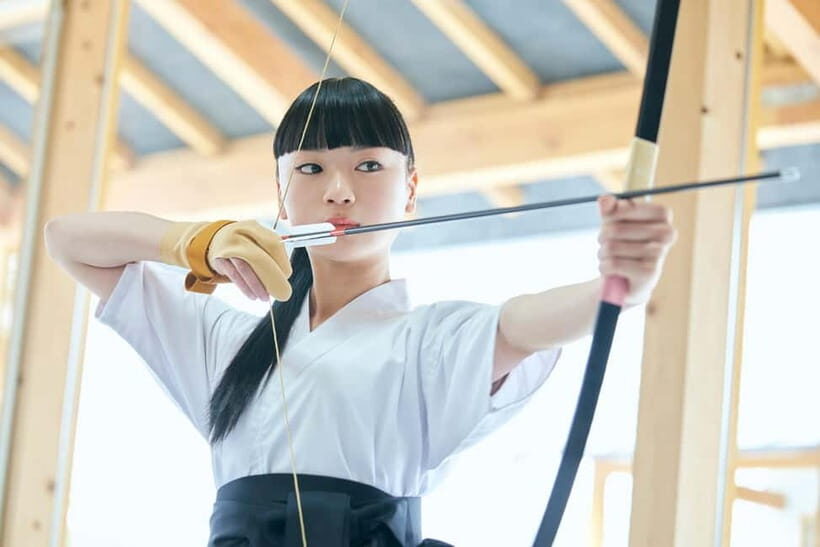
Try kyudo in Hiroshima for $41: wear traditional dress, learn the bow’s ritual movements, and shoot at a target in a small beginner-friendly group.
Kyudo is not simply archery with a different bow. Each movement follows a traditional routine, from handling the equipment to setting up a shot, so your attention is on the whole process, not just the target. At Hiroshima Castle SHARAKU, you can try that discipline for yourself, even if you have never held a bow.
I like two things in particular: you get into traditional dogi and hakama before shooting, and beginners are allowed to try the real sport rather than spend the hour watching a lesson. The small group, capped at four, also gives instructors room to help you adjust your form.
One consideration: an hour passes quickly, and kyudo has plenty of rules and details to learn. The instruction is listed in English, but some instructors may rely on a translation app, so expect clear demonstrations as well as spoken explanations.
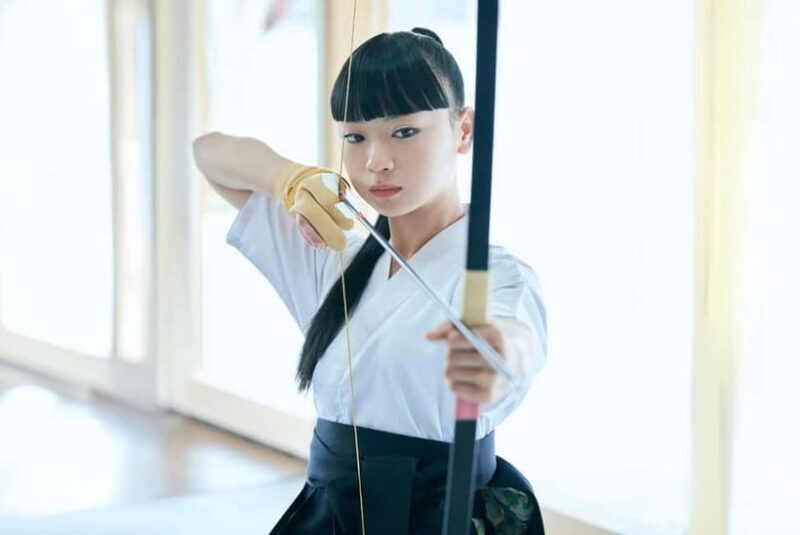
Kyudo is Japanese archery practiced with focus on both mind and body. The point is not only to send an arrow toward a target. Each movement follows a traditional sequence that shows respect for the bow, the arrows, and the people sharing the practice space.
That makes this a different kind of activity from a casual turn with a bow. You’ll learn the steps for preparing and releasing an arrow, then repeat them as you build confidence. The process can feel formal at first, but that is part of the appeal: you are learning a small piece of a martial art, not just trying out equipment.
There is a practical limit to what an hour can teach. This is an introduction, not a course in kyudo, and you should not expect to master its technique in one visit. Still, a focused lesson followed by actual shooting gives you a useful taste of why the sport takes patience.
You can check availability for your dates here: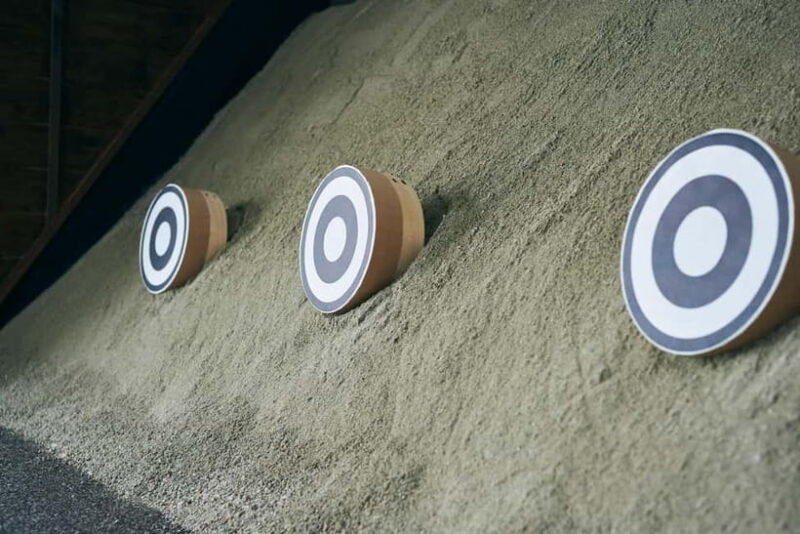
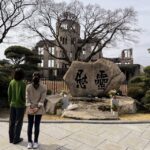
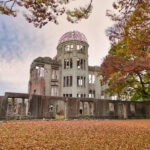
The meeting point is listed as Hiroshima Castle Sannomaru, inside a shopping mall. Look for the shop named HIROSHIMA CASTLE SHARAKU. The activity is about a 15-minute walk from the Atomic Bomb Dome, which makes it a convenient addition to a day around central Hiroshima.
The location detail matters because the meeting point is a shop, not simply an outdoor spot beside the castle. Check that you have the exact shop name before setting out, and leave enough time to find it. Hotel pickup and drop-off are not included, so you’ll need to make your own way there.
If you’re planning your day around the Peace Memorial Park and Atomic Bomb Dome, this can fit without requiring a separate excursion across the city. Just remember the activity itself takes an hour, with time divided between changing, instruction, shooting, and photos.
Looking for more options in Hiroshima? Here are some other experiences worth considering.
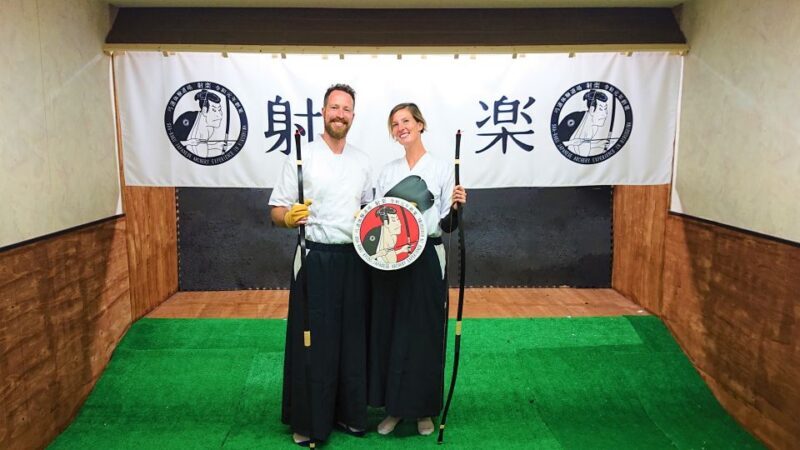
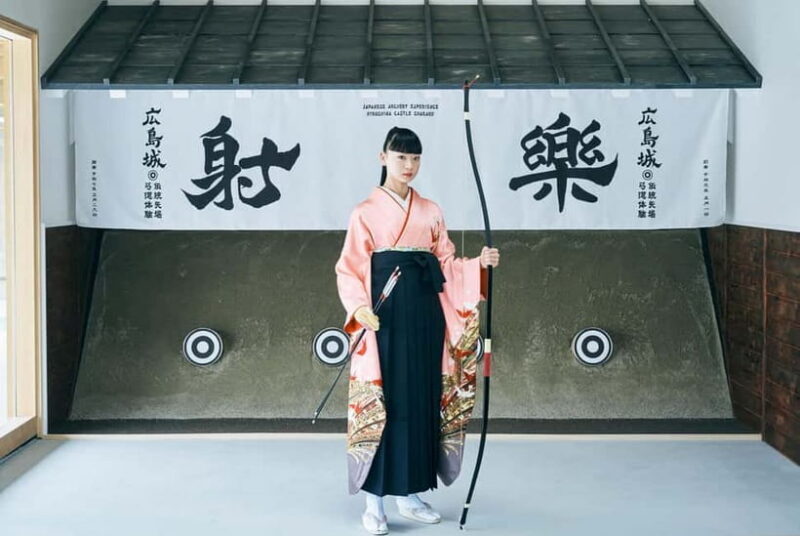
After arriving, you’ll change into traditional kyudo clothing: a dogi upper garment and hakama lower garment. The clothing is more than a photo opportunity. It gives you a feel for how the practice is carried out, and it adds a new physical detail to managing the bow and following the shooting sequence.
Choose trousers rather than a skirt or shorts, as recommended for the activity. You’ll be moving through a series of steps while wearing the outfit, and comfortable, practical clothing makes that easier. The session also includes armor as part of the traditional dress and equipment experience, though the exact sequence for putting it on is not specified.
The clothing is included in the $41 price, along with traditional tools. That makes the cost easier to judge: you are paying for instruction, a chance to shoot, and the use of the gear and costume, rather than just access to an archery range.
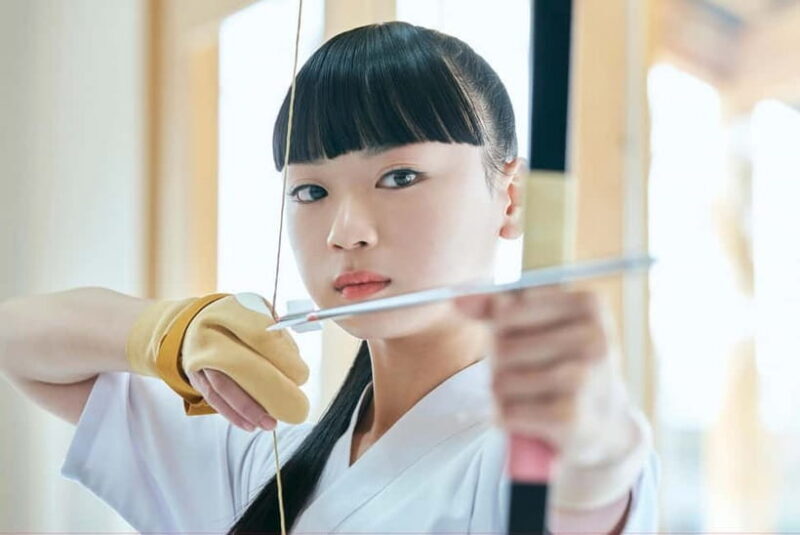
The instructor begins with an explanation of kyudo, then demonstrates and teaches the movements involved in handling and shooting the bow. Expect attention to the details of loading and firing, not a quick demonstration followed by a free-for-all. The sequence matters, and learning it is a central part of the hour.
This is where the activity’s small-group limit helps. With up to four participants, the instructor can watch your form and offer corrections as you practice. Some sessions may be smaller still. One participant described a solo session with two instructors, which felt close to a private lesson, though you should not count on having the range to yourself.
English is the listed language, but communication can vary. Some instructors use a translation app to explain a point or answer a question. Demonstrations are useful here: you can see the movement, try it, and get a correction even when a spoken explanation is brief. One participant specifically recalled an instructor named Kenji-san, but instructors may differ by session.
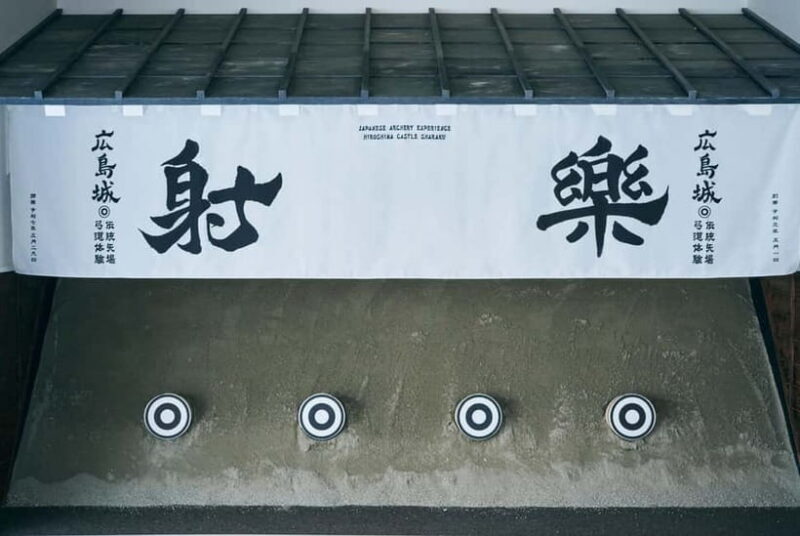
After learning the basics, you’ll shoot arrows at a target. The allotted hour includes about 45 minutes for practice and target shooting, leaving 15 minutes for changing, closing, and photos. That gives you a substantial part of the session with a bow in your hands, though it is still a short introduction.
The target may be closer than you expect from formal kyudo competition, but don’t take that as a promise of easy hits. Participants describe the technique as harder than it looks. The challenge comes from coordinating the movements and handling the bow in the traditional way, rather than simply aiming and pulling.
That learning curve is a plus if you enjoy trying a genuine skill. A missed shot gives you something specific to adjust, and the moment you do hit the target can feel earned. The activity also includes a small-scale shooting ground, and hitting the target is believed to bring good luck and help wishes come true. Treat that as a bit of local fun, not a guarantee from the universe.
Some sessions finish with a friendly competition among participants. It can add a playful finish after the more careful instruction, especially for families or friends. A contest is not specified as a fixed part of every session, so think of it as a possible extra rather than a promised feature.
More Great Tours Nearby
At $41 per person, this is not the cheapest way to fill an hour in Hiroshima. But the price includes the traditional tools and costume, instruction, practice, and target shooting. You also get an activity that is specific to Japanese archery, rather than a standard attraction you could find in many cities.
The main value is the balance between explanation and participation. A history-focused visitor might wish for more discussion of kyudo’s past, including the use of archers in Japanese battles. Some sessions include background about samurai or different kinds of bows, but the amount of history can vary. If historical context is your main reason for booking, ask how much time the instructor usually gives it.
For most people, the best return is the chance to learn enough to understand the sport from the inside. You’ll handle the equipment, follow the formal movements, and see how much concentration a shot takes. If you want a long lesson or a detailed history lecture, this short session may feel too brief. If you want a memorable hands-on introduction, the price is reasonable.
This suits curious beginners, people interested in Japanese traditions, and anyone who likes learning by doing. You do not need archery experience, and the instructors teach the basics before you shoot. It can also work well for families: the instruction has been described as suitable for adults and children, though no minimum age is provided, so check before booking with young children.
You do not need to be an archery fan to enjoy it. The rhythm, clothing, and formal sequence make it distinct from a typical sports lesson. If you already practice archery, the experience may be most interesting as a comparison with a different style rather than as advanced coaching.
This is not recommended for people with limited mobility. The activity is also marked wheelchair accessible, so those two details may seem at odds. If you have a mobility concern, contact the provider before booking to check what access and movement the session requires. There is also a small risk that a bowstring can hit your arm or wrist and cause swelling.
Arrive ready to focus and follow directions. Kyudo’s careful routine is part of the activity, so rushing through the setup will not make the lesson more enjoyable. Give yourself a little time to locate the shop, especially if you are coming from the Atomic Bomb Dome.
Wear trousers rather than a skirt or shorts, and bring questions if you are interested in the tradition behind the technique. You may get some historical context, but the core of the session is instruction and practice. If you want more background, ask during the explanation rather than waiting until the last few minutes.
Keep your expectations practical. You will learn basic movements and get a chance to shoot, not complete a formal kyudo training course. The target can be difficult even at close range, and that challenge is part of what makes a successful shot satisfying.
I’d book this if you want a hands-on cultural activity that is easy to fit into a central Hiroshima itinerary. The combination of traditional clothing, careful instruction, and real target practice gives you more than a quick photo stop. At $41, it offers good value for a small-group lesson with equipment and costume included.
Skip it if you need an in-depth history session, a long training block, or an activity suited to limited mobility. Otherwise, this is a strong choice for first-timers, families, and anyone curious about how Japanese archery differs from western target shooting. Book it for the experience of learning the form, not for a guaranteed bullseye.
“This was a wonderful little experience. Instructions were very thorough and we got plenty of rounds in. Would absolutely recommend!”
The activity lasts one hour. About 45 minutes are set aside for practice and target shooting, while the remaining 15 minutes cover changing, closing, and photos.
Yes. Beginners are welcome, and the session teaches the basics before giving you a chance to shoot at a target.
Pants are recommended instead of a skirt or shorts. Traditional dogi upper-wear and hakama lower-wear are provided for the activity.
Meet at the Hiroshima Castle Sannomaru shopping mall shop named HIROSHIMA CASTLE SHARAKU. It is about a 15-minute walk from the Atomic Bomb Dome.
English is listed as the instruction language. In some sessions, instructors may also use a translation app to help communicate.
It is not recommended for people with limited mobility. Although the activity is listed as wheelchair accessible, contact the provider to confirm whether it suits your needs.
The price includes traditional tools and costumes, plus the one-hour Japanese archery experience. Hotel transfers, food, and drinks are not included.
You can check availability for your dates here: