Physical Address
304 North Cardinal St.
Dorchester Center, MA 02124
Physical Address
304 North Cardinal St.
Dorchester Center, MA 02124

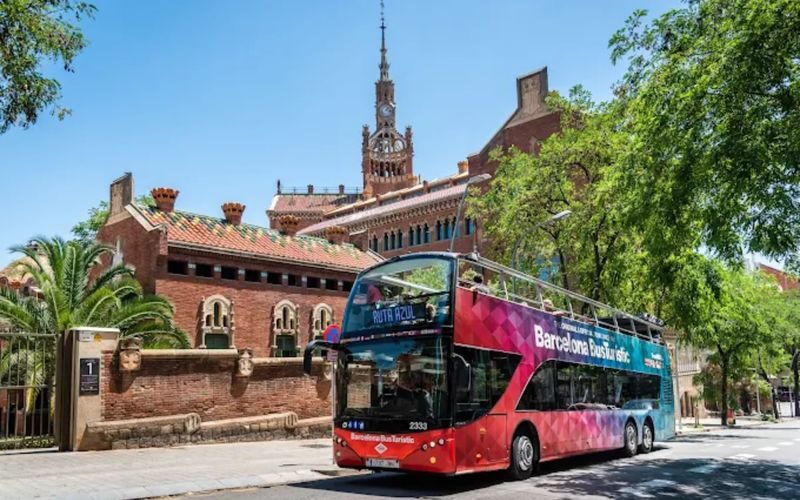
Compare Barcelona’s red and blue sightseeing bus routes, key stops, ticket options, audio guide, and practical tips before you book.
Barcelona’s two sightseeing bus routes make a useful introduction to a city whose landmarks are spread from the seafront to the hills. Start at Plaça de Catalunya, choose the red or blue route, and use the stops to connect places that would otherwise take a fair bit of planning to reach.
I like two things in particular: the open-top views make the ride part of the sightseeing, and the two routes cover a wide mix of Gaudí buildings, Olympic sites, beaches, and central streets. One thing to plan around: each route takes about two hours for a full loop, so traffic or a late start can leave little time for hopping off.
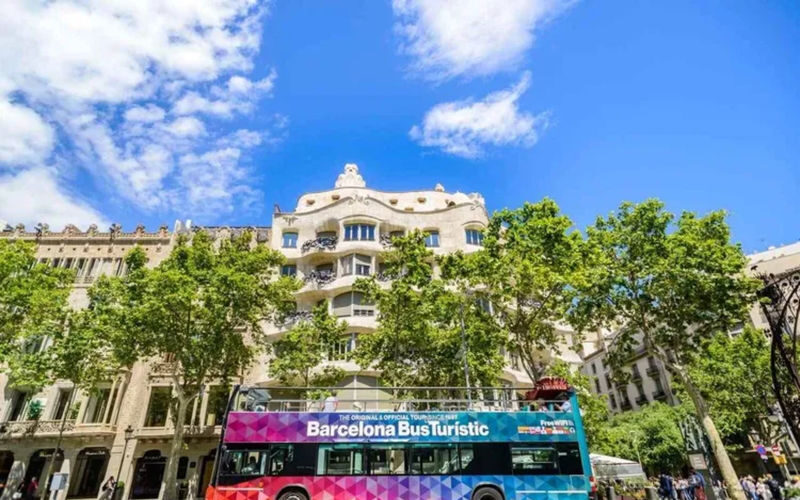
Barcelona’s sights do not sit in one compact historic center. Gaudí’s buildings, Montjuïc’s museums and Olympic venues, the beaches, and the northern neighborhoods are spread across the city. The sightseeing bus helps you see how these areas fit together, without working out every connection on public transport first.
The red and blue routes meet at two points, according to the route information, so you can change lines and cover more ground. You can board at any designated stop, not only Plaça de Catalunya, and hop off when a place deserves more time.
Think of this as a flexible city tour and transport option, not a guided visit to the attractions. Your pass gets you on the bus, but entry to Sagrada Família, Park Güell, Casa Batlló, and other paid sights costs extra. For popular places, plan admission separately rather than assuming the bus ticket includes it.
Looking for more options in Barcelona? Here are some other experiences worth considering.

The red route begins at Plaça de Catalunya, a convenient central starting point, then passes along Passeig de Gràcia. This is a good stretch for noticing Barcelona’s grand apartment buildings and the modernist façades of Casa Batlló and the Fundació Antoni Tàpies. The bus also stops near Casa Batlló, so you can get off for a closer look or a pre-booked visit.
From the center, the route heads toward Montjuïc, where the stops connect you with CaixaForum, the Mies van der Rohe Pavilion, Poble Espanyol, the National Art Museum of Catalonia, the Olympic Ring, and the Joan Miró Foundation. This is a large area with several museums and viewpoints, so do not expect to see it all in a quick stop. Pick one or two places that matter to you, and check how much walking you want to do before leaving the bus.
The route continues past Miramar and the Costa i Llobera Gardens, then swings toward the World Trade Center and the Columbus Monument. From there it passes La Rambla, the Museum of the History of Catalonia, and Port Olímpic before reaching the beaches, including Bogatell and Nova Mar Bella.
That combination makes the red route especially useful if you want a broad sense of Barcelona, from city center to coast. The seaside section is a pleasant contrast to the architecture stops, though the bus is a moving viewpoint, not a beach shuttle for carrying your towel and settling in for the day.
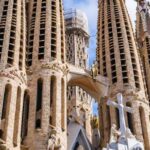
The route also serves the Forum, Parc Diagonal Mar, Poblenou, Torre Glòries, Sagrada Família, and Arc de Triomf. The stop list is extensive, but a bus passing a landmark is not the same as visiting it. For the Sagrada Família, in particular, plan time to get off and see the basilica properly.
The blue route starts at Plaça de Catalunya and shares early stops near Casa Batlló and the Fundació Antoni Tàpies. It then follows Passeig de Gràcia toward La Pedrera, another of Gaudí’s best-known buildings. If architecture is your main interest, this route gives you a useful sequence of major modernist sights, with the option to pause rather than view everything through a bus window.
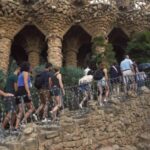
The route continues to the Recinte Modernista de Sant Pau, a striking former hospital complex, then Park Güell. The bus stop is not the same as being inside the park: you will need to get off and continue to the attraction, and the stop may not put you directly at the entrance. Allow time for the walk and check admission arrangements before you set out.
Beyond Park Güell, the route covers Tramvia Blau, Tibidabo, Sarrià, the Monastery of Pedralbes, Palau Reial, and the Güell Pavilions. These stops take you away from the central tourist circuit and show a different side of the city. The hill and outer-neighborhood sections can be rewarding if you have time, but they make the blue route a longer commitment than a quick hop between central landmarks.
The bus also serves the area around FC Barcelona, as well as Diagonal, Les Corts, Francesc Macià, Eixample, and Sant Antoni. Not every stop will be a priority for every visitor. Use the route map to pick your targets before boarding, especially if you have only one day and want to spend meaningful time inside museums or monuments.
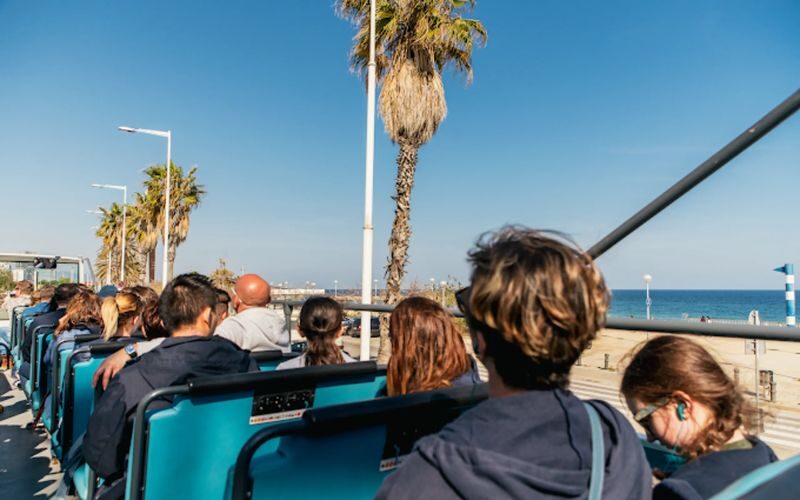
Each route takes about 120 minutes for a complete loop. Ride both without getting off and you are looking at roughly four hours on the bus, before breaks or time at attractions. That is a useful orientation tour, but it can become a long sit if you expect constant close-up views or detailed commentary.
The bus frequency is listed as 5 to 20 minutes, depending on the season. That range matters: a short wait is likely at busy times, but you should not build a tight schedule around the shortest interval. Traffic can slow the ride, and the route is one-way, so hopping off may mean waiting for the next bus rather than simply crossing the street to reverse direction.
The stated operating window is 9 a.m. to 7 p.m., with the last bus leaving Plaça de Catalunya at 7 p.m. The tour runs all year except December 25, January 1, and January 6. If you are boarding somewhere other than the main square, confirm the route and timing before you set out, rather than relying on the last departure from the city center to match your stop.
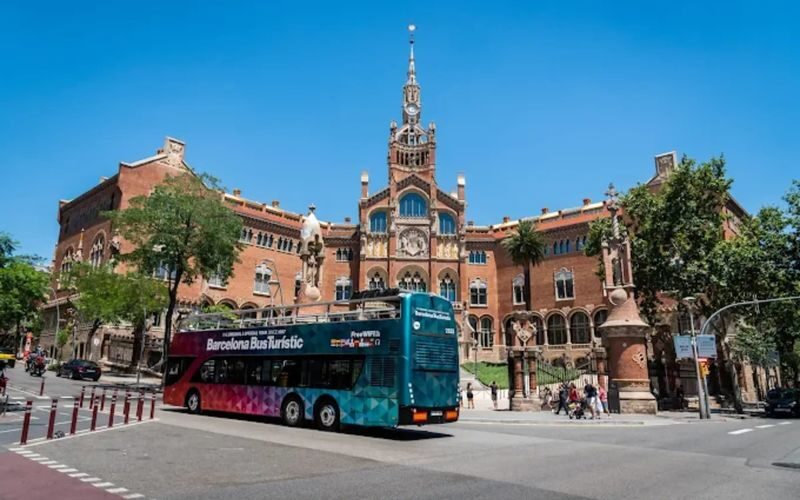
The upper deck is the main pleasure of the ride. It gives you broad views of façades, avenues, and the waterfront, and it is easier to take photographs from up there than from a street-level vehicle. In sun or rain, though, an open deck is exposed. One useful compromise is to choose a shaded seat when available, or use the lower deck, which some passengers find more comfortable in hot weather.
An audio guide is available in 16 languages, and headphones are provided. It can add context as you travel between landmarks, but the timing may not always match the buildings outside. Keep your eyes up and treat the commentary as a bonus rather than a precise, stop-by-stop narration. If a particular sight matters to you, use the bus to get close and then explore on foot.
Wi-Fi is included, though connection quality can vary. Do not depend on onboard internet to download a map or locate a stop at the last minute. The pass also advertises more than EUR 250 in discounts for attractions, sights, and shopping. That headline figure is a collection of possible offers, not a guaranteed saving; check which discounts match places you actually plan to visit.

At a starting price of $40.65, this is not the cheapest way to move around Barcelona. Its value comes from combining transportation with a broad visual introduction to the city, plus the freedom to hop off at selected sights. If you use it for several stops in one day, avoid extra transit planning, and make use of the audio guide, the fare can feel reasonable.
The 24-hour ticket suits a visitor who wants to cover one route well or sample both routes with limited stops. The 48-hour pass is the more relaxed choice if you want to visit attractions along the way, take breaks, or divide the red and blue routes between days. Remember that the pass is valid only on the date selected, so choose dates that fit your plans.
It is less compelling if you already know Barcelona’s public transport system, prefer walking, or want a detailed account of every landmark. The audio can be out of sync, and city traffic can turn a scenic ride into a slow one. You are paying for coverage and convenience more than for a polished guided tour.
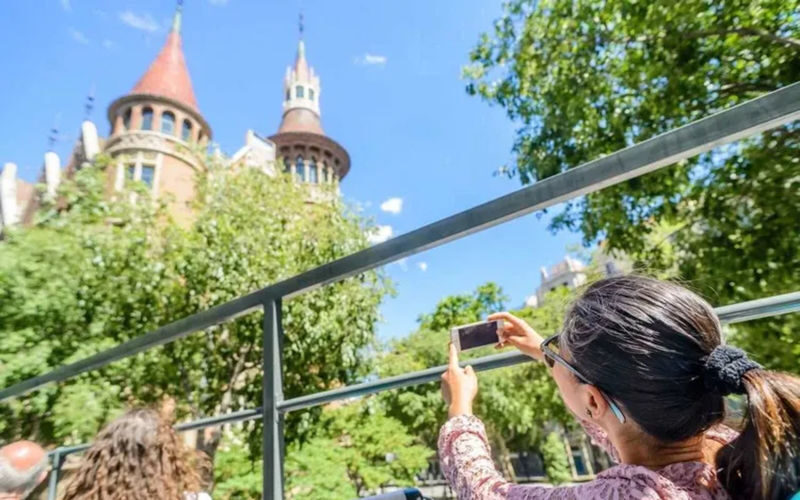
Start early if you want to ride both routes and still have time for stops. A smart plan is to ride one route for orientation, get off at one or two chosen attractions, and decide later whether you have time for the second. Trying to complete every stop in a single day can turn sightseeing into a checklist.
Check the route map before leaving your hotel or accommodation. Some bus stops can be difficult to locate, and the signs may not be immediately obvious when you are unfamiliar with the area. The mobile voucher can be presented to board, and staff at stops may help explain the map, but having the route saved beforehand is a safer plan than counting on Wi-Fi.
Pay attention to the bus you are boarding. The red and blue routes cover different areas, and Barcelona also has other sightseeing buses. Confirm the line and stop sign before you climb aboard, particularly when changing routes.
Most buses are wheelchair accessible. The wheelchair spaces are designed for wheelchairs up to 70 cm wide, 120 cm long, and 135 cm high; contact the operator if your chair is larger or you are unsure about compatibility. Children aged zero to three ride free, while children aged 13 and older pay the adult rate.
I would consider this pass if you are new to Barcelona, want a low-effort overview, or are traveling with someone who would rather not spend the day walking between far-flung sights. Families may also appreciate the double-decker ride itself, while the route coverage makes it easier to choose which neighborhoods deserve a return visit.
Book it if the open-air views and flexible stops matter more to you than perfectly timed narration or quick point-to-point travel. Choose 48 hours if you want to explore attractions at a comfortable pace. If you have just one day, start early, pick stops in advance, and accept that you will need to leave some of the route for another trip.
“🧒🏼I got my "actual" ticket and map from the person / staff assigned at the Casa Batlló stop. wasn't able to get her name but she's very atte…”
The listed meeting point is Plaça de Catalunya, 08002 Barcelona. You can also start or end at any designated City Sightseeing, or Barcelona Bus Turístic, stop.
A full loop on either route takes about 120 minutes. Riding both routes without stops takes roughly four hours.
You can choose a 24-hour ticket or a 48-hour ticket. The pass is valid only on the selected date.
The stated operating hours are 9 a.m. to 7 p.m. The last bus leaves Plaça de Catalunya at 7 p.m.
The listed frequency is every 5 to 20 minutes, depending on the season.
Stops include areas near Casa Batlló, La Pedrera, Sagrada Família, Park Güell, Montjuïc’s museums and Olympic sites, and several beaches. The red and blue routes cover different parts of the city.
No. The bus ticket does not include admission to attractions. It does include access to advertised discounts for selected attractions, sights, and shopping.
The audio guide is available in English, Spanish, French, German, Italian, Dutch, Hebrew, Japanese, Chinese, Portuguese, Russian, Swedish, Arabic, Turkish, Catalan, and Norwegian.
Yes. Present your mobile voucher when boarding.
The activity is listed as wheelchair accessible, and most buses have wheelchair spaces for wheelchairs up to 70 cm wide, 120 cm long, and 135 cm high. Contact the local operator if your wheelchair exceeds those dimensions or you are unsure whether it will fit.