Physical Address
304 North Cardinal St.
Dorchester Center, MA 02124
Physical Address
304 North Cardinal St.
Dorchester Center, MA 02124

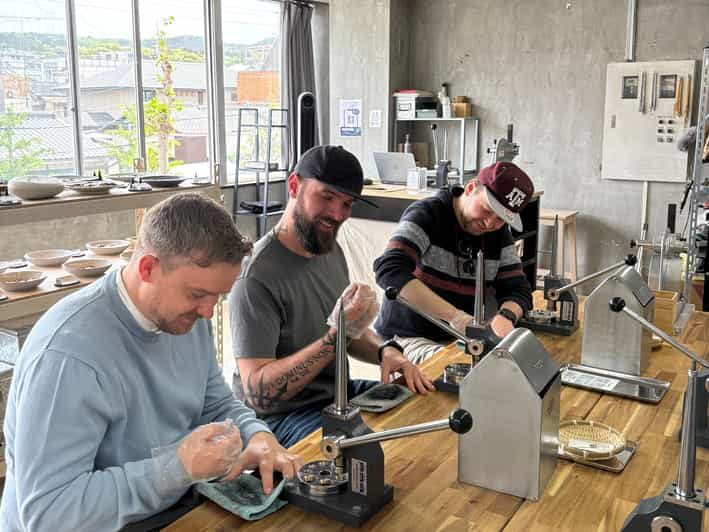
Make a ring from a vintage Japanese coin in Kyoto. Choose from 10,000-plus coins, shape and polish it yourself, then take it home the same day.
A coin becomes a wearable piece of your Kyoto trip in this small, hands-on workshop. You choose from more than 10,000 coins, then punch out the center, shape the band and polish the ring yourself. Even Meiji-era coins more than a century old are in the mix.
I like two things in particular: the standard coin selection is included in the $44 price, and you do the memorable work rather than just watching a craft demonstration. The finished ring is ready to take home the same day, with its original lettering and design still visible.
One consideration: rare and oversized coins cost extra, and turning the center into a pendant or keychain has an additional fee. You can make a lovely ring without add-ons, but decide on a budget before browsing a collection this large.
At Owl Labo, the first task is not picking up a tool. It is deciding which coin you want to wear. The collection includes more than 10,000 pieces, with Japanese coins from the Meiji, Taisho and Showa eras, as well as coins from around the world.
That range changes the mood of the workshop. You can look for a coin from a particular year, choose a design you like, or find one with a personal connection, perhaps a birth year or anniversary. You might also simply be drawn to a pattern or lettering. There is no single right way to choose, which makes this a good activity for people who like souvenirs with a story behind them.
Some Japanese coins date from the Meiji era and are more than 100 years old. The finished ring keeps details from the original coin, so the result has a different feel from a standard piece of jewelry. It is still worth remembering that these are real coins, not all identical blanks. The design, size and character of your ring will depend on the coin you select.
Standard coins are included in the $44 price, and you should be able to find a design without paying more. Rare collector coins and oversized coins may be offered as upgrades. Ask about any additional cost before committing to one. Prices are explained before you choose, so you can stay with the included selection if that suits your budget.
You can check availability for your dates here: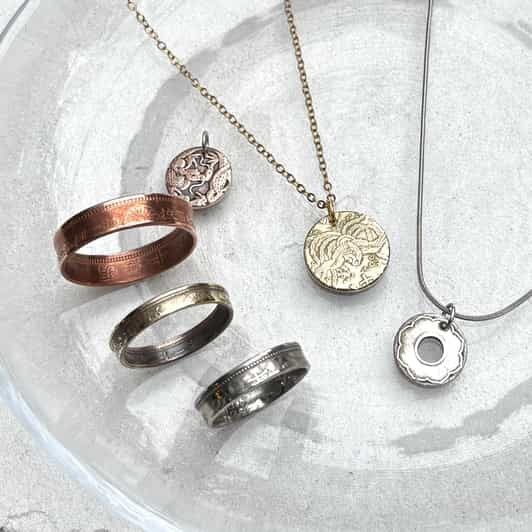
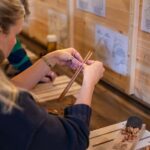
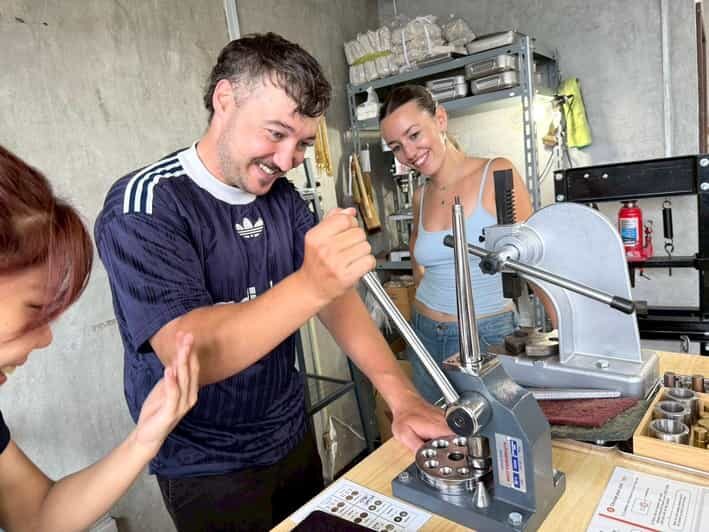
The workshop is a real making session, not a demonstration with a finished ring waiting at the end. An instructor guides you through the process and shows you how to use the professional tools. No experience is needed, and the group size is capped at four, giving the instructor room to help each person.
After choosing your coin, you prepare it and open the center. That removed piece is yours to keep. Then you work the coin into a ring shape, adjusting the band until it fits comfortably. Watching a flat piece of metal become a ring is the satisfying heart of the activity. You stay involved in the work, while the instructor steps in to explain or help when needed.
The shaping and sizing stages call for attention, but the activity is designed for beginners. You do not need to arrive with craft skills or know how to handle jewelry tools. The point is to make the ring yourself, with guidance close at hand. People who like to work carefully will appreciate being able to take part in each stage; those who prefer a quick, polished result with no effort may find a workshop less appealing than buying a finished souvenir.
Reviews of the finished process repeatedly praise the patient, step-by-step help. Rena is a guide name you may encounter, and people describe her as kind, clear and careful not to take over the work. In practice, that balance matters: you get support, but the ring remains your own project.
Looking for more options in Kyoto? Here are some other experiences worth considering.
Once the ring is shaped and fitted, you polish the surface and edges. This is more than a final flourish. Polishing helps reveal the coin’s lettering and patterns, while giving the finished piece a cleaner, brighter look. Several people have been surprised by the contrast between the worn coin they started with and the shiny ring they leave wearing.
Each coin has its own details, and each person handles the work a little differently. That means the rings are not identical, even when two people choose similar designs. If you are making rings as a couple or with family, matching pieces can share a theme without looking machine-made or exactly alike.
The ring-making work takes about 60 minutes, while the full activity is listed as 1.5 hours. Allow for the whole session rather than planning around the shorter estimate. When the ring is complete, you can wear it home the same day. You also receive an original mini pouch, a useful touch if you want to keep the ring safe until you are ready to wear it.
Opening the coin leaves you with a center piece as well as the ring. You can keep it unchanged at no extra cost, which is the simplest option and a nice reminder of what the ring used to be.
If you want to turn it into jewelry, the center can be made into a pendant for ¥1,000. A keychain is another option for ¥800. These are add-ons, not part of the $44 base price, so include them in your budget if you already have a second piece in mind. The workshop also gives you the option to keep both pieces or share one with someone else.
People often choose an add-on after seeing how the coin works as a ring, but you do not need to decide before the session. Still, if a pendant or keychain matters to you, ask about the choices and cost before the work begins. That keeps the extra from becoming an unexpected expense.
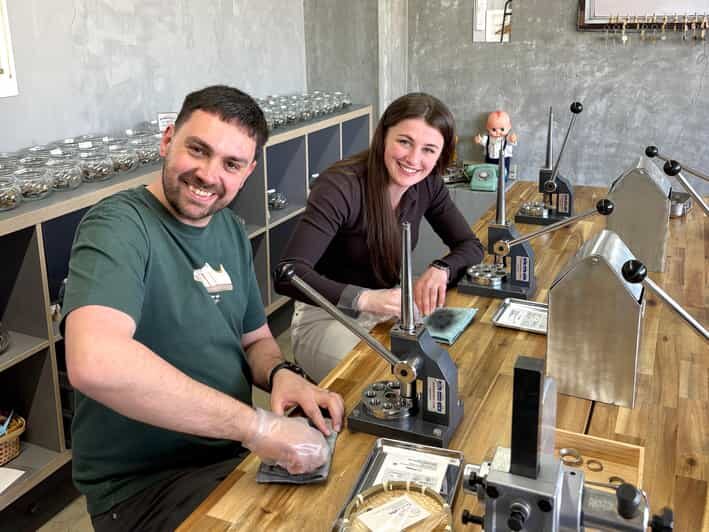
The workshop takes place indoors, so it offers a welcome change from Kyoto’s outdoor sights. It can be a practical choice on a rainy day, or when the heat and hours of walking have worn you down. One person described it as a pleasant break from the summer sun and endless walking, which gets at the appeal: you are still doing something distinctly tied to your trip, but you are seated and focused for a while.
At 1.5 hours, it fits into a day without taking over the itinerary. The small group limit of four keeps the session personal, though it also means this is not a large, drop-in activity. Check the available starting times when planning your day.
The activity is wheelchair accessible. Instruction is offered in English and Japanese, and the workshop suits solo visitors, couples, friends and families. A family with a teenager can make this a shared project, while a solo visitor can focus on choosing a coin and shaping a personal keepsake. People with a cold are advised not to take part.
More Great Tours NearbyThe base price includes an authentic vintage Japanese coin from the standard selection, the ring-making session with a skilled craftsperson, and final polishing. Standard workshop materials are included too, so you do not need to budget for routine supplies. At $44 per person, the value lies in both the activity and the finished ring: you leave with something you made from a real coin, not just an object picked from a shop shelf.
The main cost variables are optional. A rare or oversized coin may carry an upgrade price, while the coin center costs ¥1,000 to turn into a pendant or ¥800 to make into a keychain. The standard coin selection is broad enough that you can avoid these extras and still have plenty of choice.
If you are comparing this with buying a souvenir, consider what matters to you. A ready-made ring may be quicker, but it will not include the process of selecting a coin, shaping it by hand and learning how the piece changes under your tools. If you value making something and having a story attached to it, the workshop offers solid value. If you only want an inexpensive piece of jewelry, the extra time may not be worth it.
I would put this high on the list for couples who want a shared keepsake, friends who enjoy hands-on activities, and culture-minded visitors looking for a more personal souvenir than another shop purchase. It is also a sensible indoor choice when weather or summer heat makes a long outdoor day less appealing.
You do not need to be artistic. The steps are explained, and the instructor is there to help with sizing and small mistakes. The key is being willing to take part rather than expecting the instructor to make the ring for you. If you enjoy choosing among designs and seeing a material change under your hands, this should suit you.
Book it if you want an activity with a tangible result and a clear connection to Japan’s coinage. Skip it if you are short on time, not interested in making things, or determined to keep souvenir spending to the base price while also wanting a rare coin and several add-ons. The standard experience is complete on its own, so there is no need to upgrade to make the visit worthwhile.
“turning a dirty coin into a beautiful, shiny ring. A truly beautiful souvenir from Japan”
The full activity lasts about 1.5 hours. The ring-making process itself takes approximately 60 minutes.
The price includes a vintage Japanese coin from the standard selection, the guided ring-making experience, workshop materials and final polishing.
Yes. Your finished ring is ready to wear home the same day.
No. The instructor guides you through the steps, and the workshop is designed for beginners.
Yes. The center piece is yours to keep at no extra cost. You can also have it made into a pendant for ¥1,000 or a keychain for ¥800.
Yes. Instruction is offered in English and Japanese.
Yes. The activity is listed as wheelchair accessible.
You can check availability for your dates here: