Physical Address
304 North Cardinal St.
Dorchester Center, MA 02124
Physical Address
304 North Cardinal St.
Dorchester Center, MA 02124

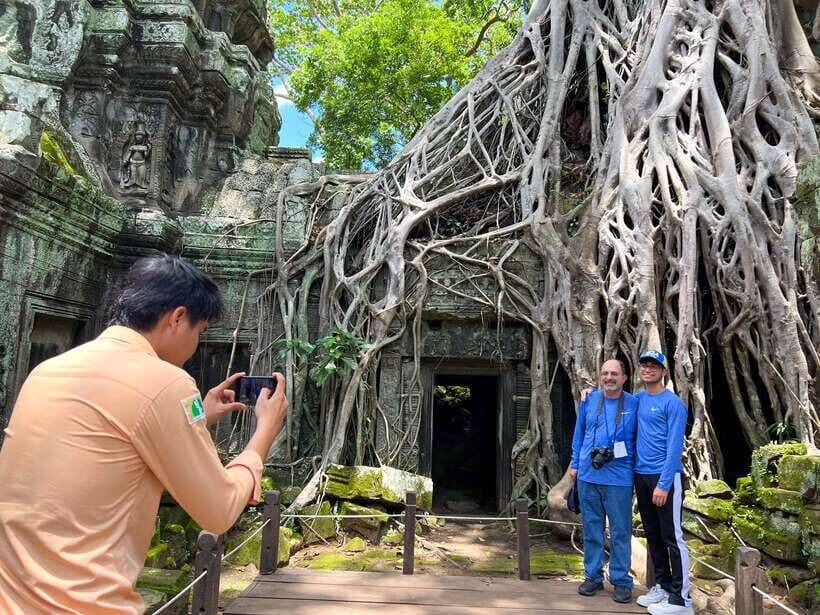
Catch Angkor Wat at sunrise, then visit Ta Prohm, Bayon and Angkor Thom with a guide, breakfast and palm cake included.
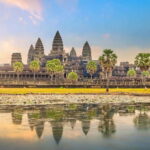
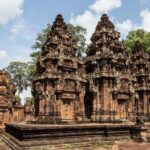
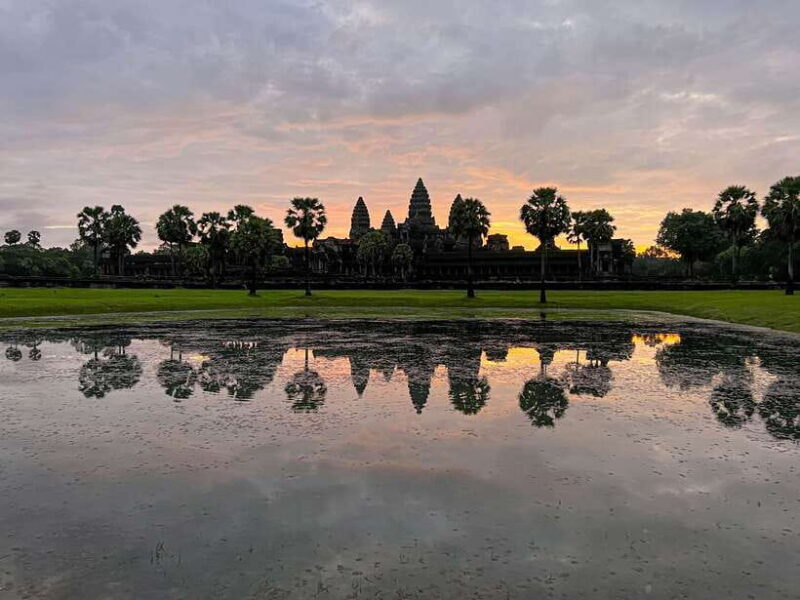
Angkor Wat at sunrise is the draw: you arrive before dawn, watch the temple emerge in the morning light, then have time to explore its vast galleries and courtyards. The day continues to Ta Prohm, Bayon and the royal terraces of Angkor Thom, so you get a broad introduction to the temple complex without planning the route yourself.
I like two things in particular: breakfast at a local family restaurant, with a chance to taste palm cake in Preah Dak village, and a small group capped at 14, which makes it easier to hear your guide and ask questions. Guides named on recent tours include Seila, Mony, Veasna, Sam and Kim, though your guide will depend on the day.
The main drawback is the early start and the long day. Pickup is between 4:30 and 5:00 am, and the temples mean plenty of walking in heat and humidity. You also need to buy the $37 Angkor pass separately before the tour.
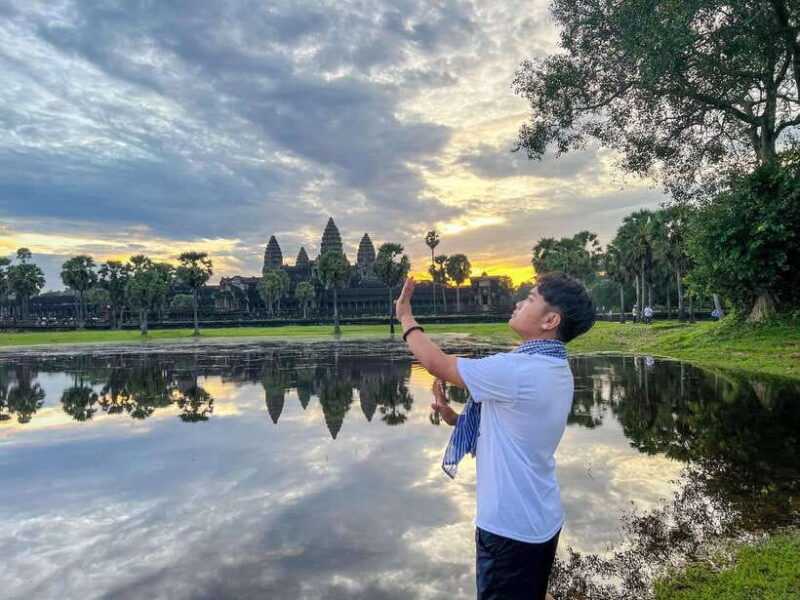
Your pickup is scheduled for between 4:30 and 5:00 am. Be ready in your hotel lobby ten minutes early; drivers wait no longer than five minutes after the scheduled pickup. It is an unkind hour for an alarm clock, but it gives you time to reach Angkor Wat before the day’s heat and busiest hours.
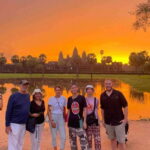
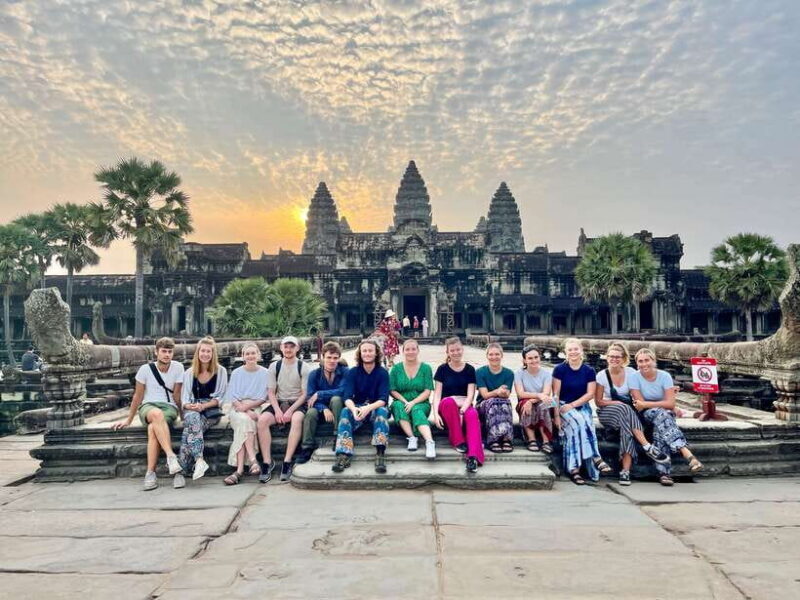
Sunrise is a popular moment, so do not expect to have the temple grounds to yourself. The reward is seeing the silhouette of Angkor Wat take shape in the changing light, with time afterward to look beyond the postcard view. The tour allows roughly 1.5 to two hours at the temple, depending on how the schedule runs, for photos and a guided walk through the enormous complex.
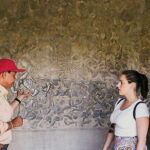
Angkor Wat is not a quick photo stop. Its scale, carved details and layout make a guide especially useful: you can hear about the temple and the Khmer Empire while moving through the site, rather than trying to make sense of it all from a map. The early visit can also help you avoid some of the later crowds and stronger sun, though it cannot promise a quiet sunrise.
Your guide may help with photos as well as explanations. Several guides named on past tours, including Mony, Sam, Seila and Veasna, have been praised for finding useful photo angles and taking pictures for the group. That can be a welcome extra when you want a photo together without asking a stranger.
You might also be interested in these Siem Reap experiences
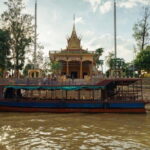
After Angkor Wat, the group stops at Srah Srang for breakfast, with about an hour set aside for the meal and a break. The restaurant is described as a local family-run place, and some visitors have noted its lake view. Breakfast is included, and a vegetarian option is available. One participant also arranged a vegan breakfast, but it is wise to confirm dietary needs when booking rather than assume every request can be met.
This pause matters. You have been up for hours, and there is still a substantial temple walk ahead. A proper meal gives you a chance to recharge before Ta Prohm and Angkor Thom. Lunch and soft drinks are not included, so plan for the rest of the day accordingly.
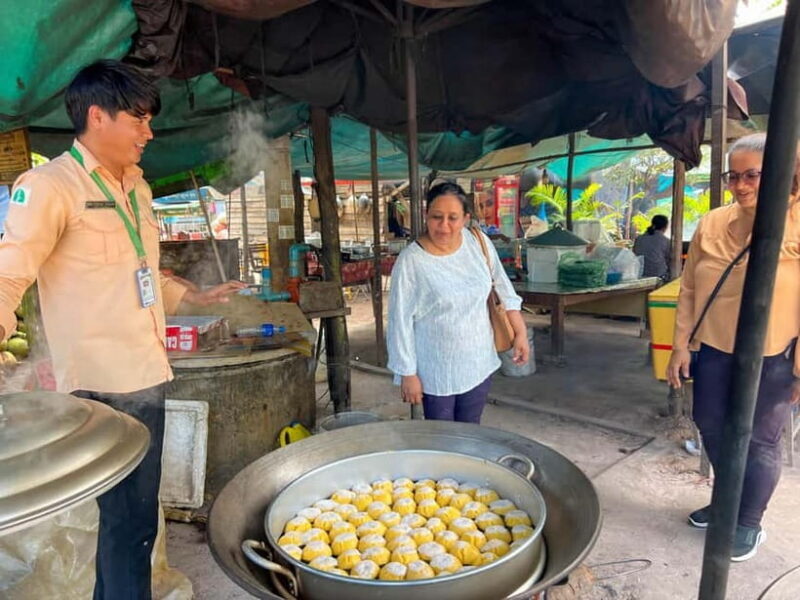
The tour also visits Preah Dak, a village in the countryside near the Angkor temples. Here, you can get a glimpse of rural life and taste traditional palm cake. It is a modest stop rather than a full village tour, but it breaks up the succession of monuments with a local food experience. Palm cake is a distinctive treat, and sampling it gives the morning a more personal note than a string of temple visits alone.
Some visitors have also seen palm sweets being made or sold at roadside stalls. The exact details of the stop may vary, so treat it as a chance to sample local food, not a guaranteed cooking demonstration.
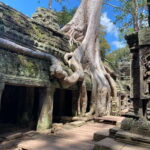
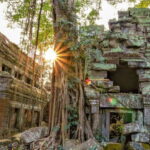
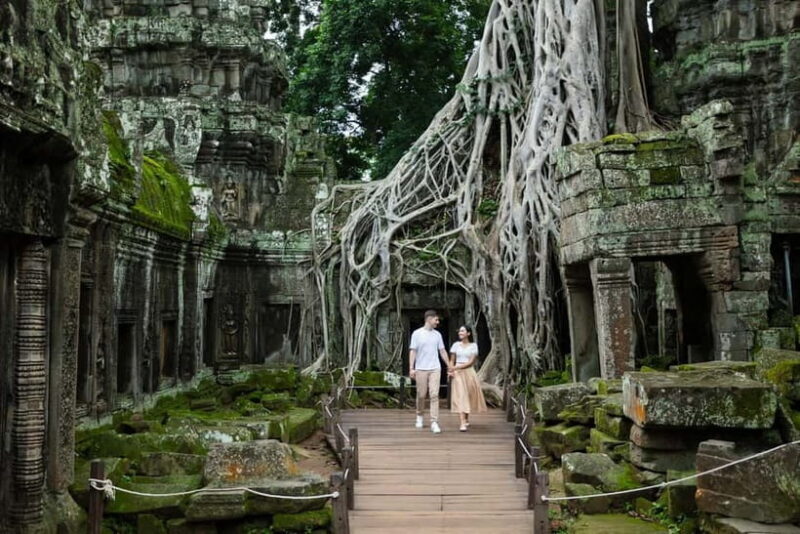
Ta Prohm is the tour’s most atmospheric change of scene. The temple has been left partly overgrown, with trees and huge roots pushing through the stonework. You get about an hour here to walk among the ruins and see how nature and architecture have become entangled.
The setting is a contrast to Angkor Wat’s broad scale and formal design. At Ta Prohm, the appeal is closer and more tactile: roots wrap around walls, and sections of the temple feel enclosed by vegetation. It is also a popular stop, so your guide’s timing and route can help you make the most of the visit, but you should still expect to share the paths.
Wear comfortable shoes with a secure grip. The tour involves walking at each temple, and uneven stone surfaces are part of the experience. If you are hoping for a leisurely, unhurried visit to every detail, remember that Ta Prohm is one stop in a full-day route.
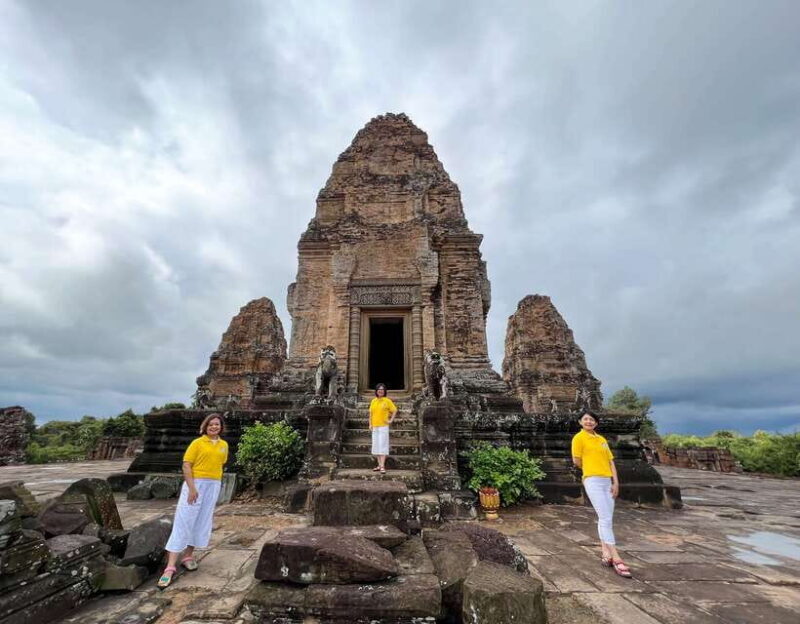
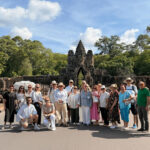
From Ta Prohm, the tour heads to Angkor Thom, the walled city at the heart of the later temple complex. The route includes a stop at Victory Gate and the South Gate, also called Tonle Om Gate. These are brief visits, around 15 to 20 minutes each, so think of them as chances to see and hear about the entrances rather than lengthy explorations.
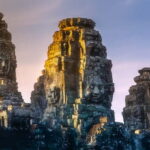
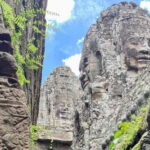
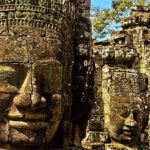
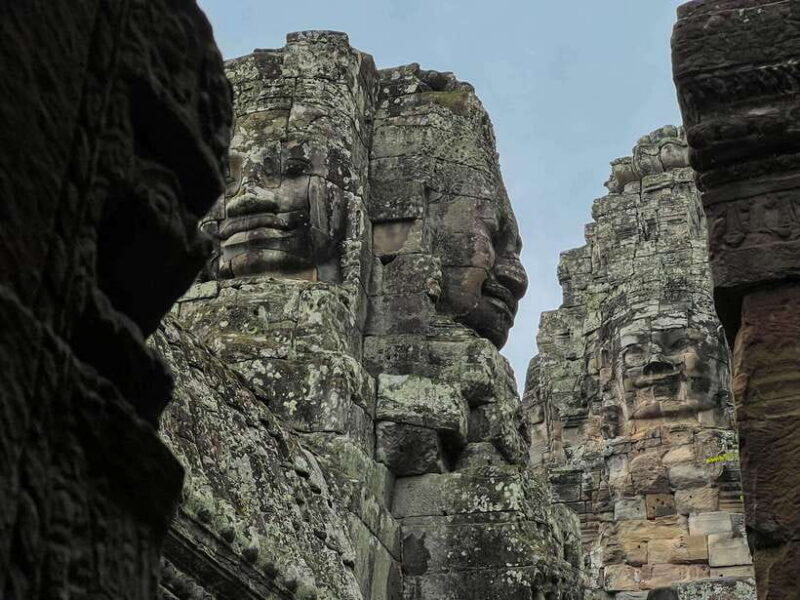
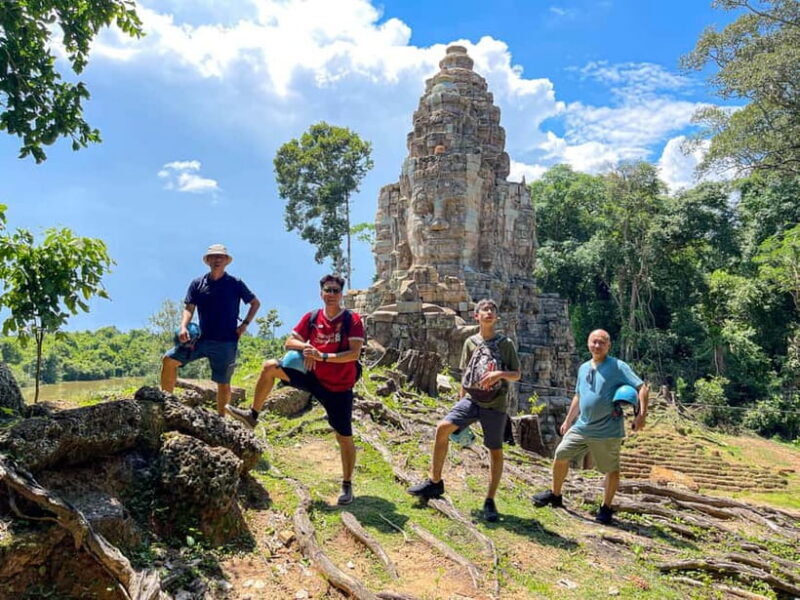
Bayon is the main event within Angkor Thom. Its towers carry the famous smiling stone faces, associated with the bodhisattva Avalokitesvara. The tour allows about an hour here, with a guide to explain the temple’s imagery and place it in the wider story of the Khmer Empire. Bayon’s towers and close-set passages create a very different experience from Angkor Wat’s open plan.
The tour description refers to 54 towers and 216 faces. These are the figures used to introduce Bayon’s iconic design, though the number of towers visible today can differ from the temple’s original form. What matters as you walk through is the repeated presence of the faces, looking out from multiple levels and angles.
More Great Tours Nearby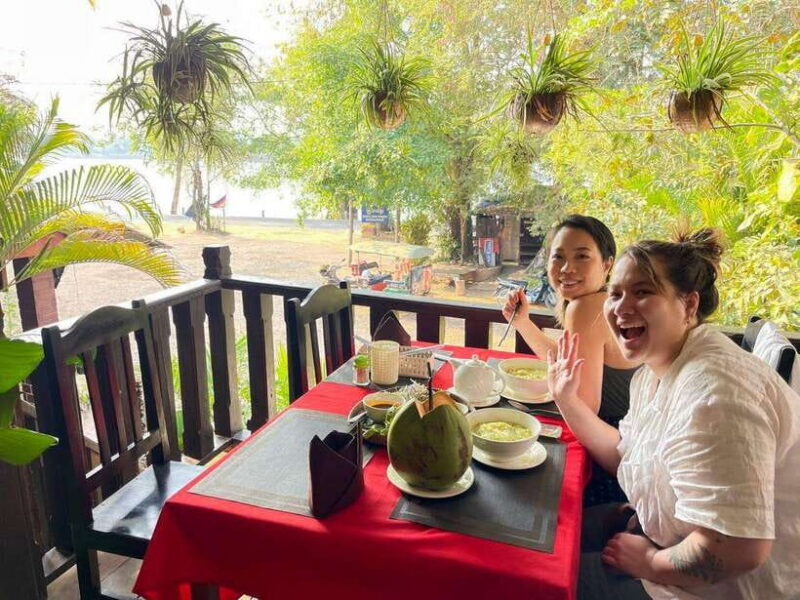
Baphuon follows Bayon, with roughly 30 minutes for a guided visit and walk. It is another major temple within Angkor Thom, and its position on the route gives you a chance to compare its layout and scale with the temples you have already seen. The time is enough for an introduction, but not for a slow, detailed study of every feature.
The Terrace of the Elephants gets about 20 minutes. This long royal viewing platform is linked with public ceremonies and the king’s audience hall. Its carved details reward a closer look, and a guide can help you understand why this open platform mattered beyond its appearance.
The final listed terrace is the Terrace of the Leper King, also called Preah Ponlea Sdach Komlong. Allow about 20 minutes for this stop. Like the Terrace of the Elephants, it is part of Angkor Thom’s ceremonial setting, and its carved walls give you another view of Khmer stonework at close range.
The itinerary also includes a final stop at the South Gate. Since the gates and terraces receive short visits, the day is best for a broad introduction to Angkor Thom rather than an exhaustive exploration. You return to Siem Reap by van, with about 40 minutes listed for the return journey.
At $19 per person, the tour includes an English-speaking guide, air-conditioned transport, hotel pickup and drop-off, breakfast, bottled water and cool towels. Those details add up over a nine-hour day: the transport saves you from arranging rides between spread-out sites, while water and towels make the breaks in the heat more comfortable. Fruit has also been offered by some drivers, though it is not listed as a guaranteed inclusion.
The largest extra cost is the $37 one-day Angkor pass, which is not included in the tour price. That brings the basic combined cost to $56 per person before lunch or soft drinks. You must have the pass before the tour begins, and buying it online in advance is recommended so you do not risk losing time before sunrise.
For the price, you are paying less for any one temple stop than for a day of transport, interpretation and coordination across several sites. The value is strongest if you want to see the main temples in one day and appreciate having someone explain their history and cultural meaning. If you prefer long, quiet visits or want to linger wherever you like, a private tour may suit you better.
The small-group option has a maximum of 14 participants, which is a useful middle ground: more social and less costly than a private vehicle, but more personal than a large coach tour. A private option is available if you want a more flexible schedule or a tour tailored to your preferences.
Take the dress code seriously. Your shoulders and knees must be covered at the temples, so choose light, breathable clothing that meets those rules. Short skirts and sleeveless shirts are not allowed. Comfortable shoes are important because you will walk at several sites, often over stone and uneven ground.
Pack sunscreen, a sun hat, sunglasses, insect repellent and a camera. The morning may feel cool before sunrise, but the day can turn hot and humid. Cold water and towels are provided during the excursion, but they do not replace sun protection or a drink of your own if you need one between stops.
Smoking, alcohol and drugs are not allowed on the tour. Children under 10 are not considered suitable for the small-group option, so families with younger children should check whether the private tour is a better fit.
The day is full, and the combination of an early alarm, hours of walking and tropical heat can leave you tired. If you have another demanding activity planned that evening, leave room to rest. The schedule is designed to cover several major sites, not to feel like a slow temple retreat.
Book it if you have one day for the temples, want the sunrise experience and value having an English-speaking guide explain what you are seeing. The route gives you Angkor Wat, Ta Prohm, Bayon and several important parts of Angkor Thom, with breakfast and a village food stop to break up the monuments. Frequent water and cool towels, along with air-conditioned transport, are practical comforts on a long outing.
Choose a private tour if flexibility matters more than the lowest price, or if you want to adjust the pace to your interests. Consider another plan if you dislike early starts, cannot manage several hours of walking, or want to spend much longer at each site. For most first-time visitors with a full day available, this is a strong-value way to see the major temples and understand more than the view in your camera frame.
“Fantastic trip! Seila was a great guide, very knowledgeable and friendly. Thanks to him we had a great day ! We were constantly supplied with cold …”
Pickup is between 4:30 and 5:00 am. Wait in your hotel lobby ten minutes before your scheduled time; the driver waits no longer than five minutes after it.
No. The one-day pass costs $37 per person and must be purchased before the tour starts. Buying it online in advance is recommended.
Yes. Breakfast is included at a local family restaurant, and a vegetarian option is available. Lunch and soft drinks are not included.
The small-group tour is limited to 14 participants. A private option is also available.
Cover your shoulders and knees, and wear comfortable shoes. Bring a camera, sunscreen, sunglasses, insect repellent and a sun hat.
Children under 10 are not considered suitable for the small-group option.
You can check availability for your dates here: