Physical Address
304 North Cardinal St.
Dorchester Center, MA 02124
Physical Address
304 North Cardinal St.
Dorchester Center, MA 02124

See Angkor Wat, Bayon and Ta Prohm on an eight-hour small-group tour from Siem Reap, with an English-speaking guide and hotel transfers.
Angkor Wat is the grand opening act, but this day is about more than one famous temple. You’ll also see Bayon’s face-covered towers, Angkor Thom’s stone gates and Ta Prohm’s tree-wrapped ruins, with a guide to help make sense of what you’re seeing.
I like two things in particular: the small-group format, which leaves more room to ask questions, and the combination of major sites, which gives you a useful first look at the Angkor complex. Guides named in past bookings include Yuth, Pal Saruon, Sam and Sok, though your guide will depend on the date.
The main drawback is the length and heat: eight hours means plenty of walking on uneven paths, and the temples can feel tiring by afternoon. There is also a serious timing mismatch in the tour details, with two different pickup windows listed. Confirm your pickup time with the operator before you plan your morning.
This tour is designed to show you the major sights in one day, not to cover every temple in the Angkor complex. That is a sensible trade-off if you have limited time in Siem Reap: you get three very different places and a guide to connect them.
Angkor Wat gives you monumental scale and carefully worked architecture. Bayon’s towers, covered with more than 200 enormous faces, offer a very different visual experience. At Ta Prohm, the stone buildings and jungle growth make the setting feel more enclosed and atmospheric.
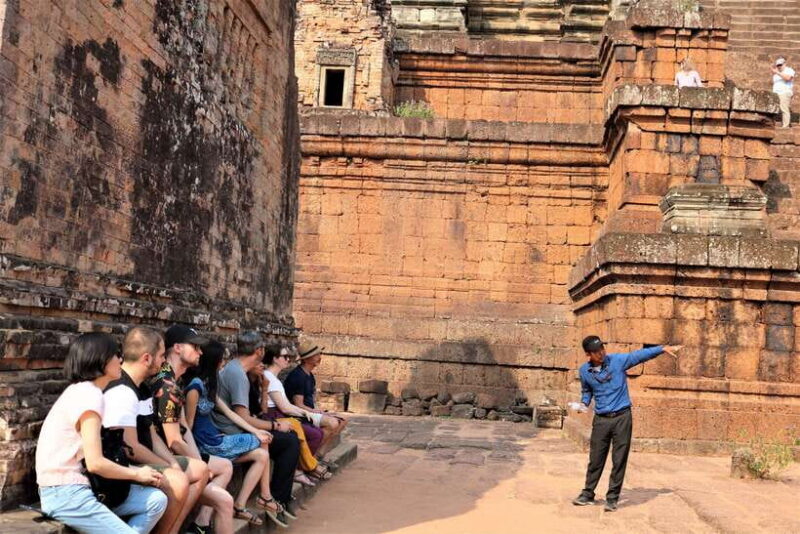
The guide matters because the stones do not explain themselves. The best guides on this tour have been praised for linking temple details to Khmer history, Cambodian life and Buddhist traditions. Names that have come up include Yuth, Pal Saruon, Sam, Sok and Chhay. You cannot choose one based on the information provided, but the consistently warm descriptions of the guiding are a good reason to book a guided day rather than simply arrange transport.
The group size is described as small, though the exact maximum is not specified. In practice, a small group can make it easier to hear explanations and ask questions. One booking had only three people, while another group included seven. You should not count on a private tour, but the format is intended to be more intimate than a large coach outing.
You might also be interested in these Siem Reap experiences
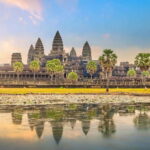
Angkor Wat is the heart of the day and gets about two hours for guided sightseeing. Built in the 12th century at the height of Khmer civilization, it took 30 years to complete. The site is described as the world’s largest sacred building, and its scale is part of what makes a guided visit useful: a quick wander can leave you with little more than a collection of impressive views.
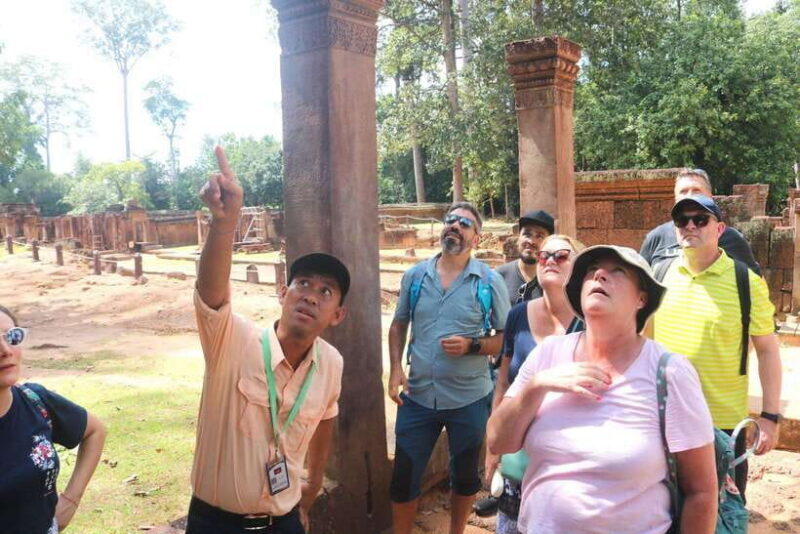
Your guide can point out architectural features and carvings, and place the monument in the history of the region. Past guides have been especially praised for noticing details visitors might otherwise pass, and for answering questions about Cambodian history and religion. If you want more than a photo stop, ask questions as they arise. The small-group format is useful precisely because it can give you room to do that.
Two hours is enough for a focused introduction, not an exhaustive visit. Angkor Wat is a large complex, and you will need to accept that this tour gives you a representative look rather than time to explore every corner at your own pace. Comfortable shoes are essential. Expect walking, and be ready for steps and uneven surfaces.
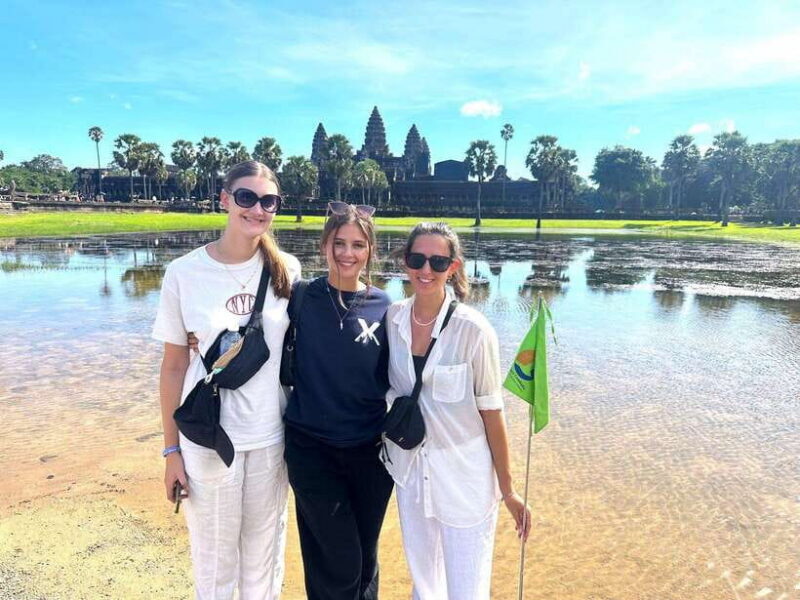
Angkor Thom was a fortified city, entered through a southern gate flanked by 54 stone figures on each side. The figures represent gods on one side and demons on the other. It is a striking threshold into the city, and a good place to listen as your guide explains what the carvings show.
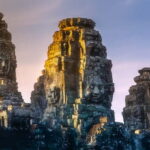
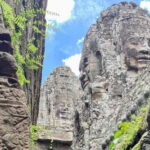
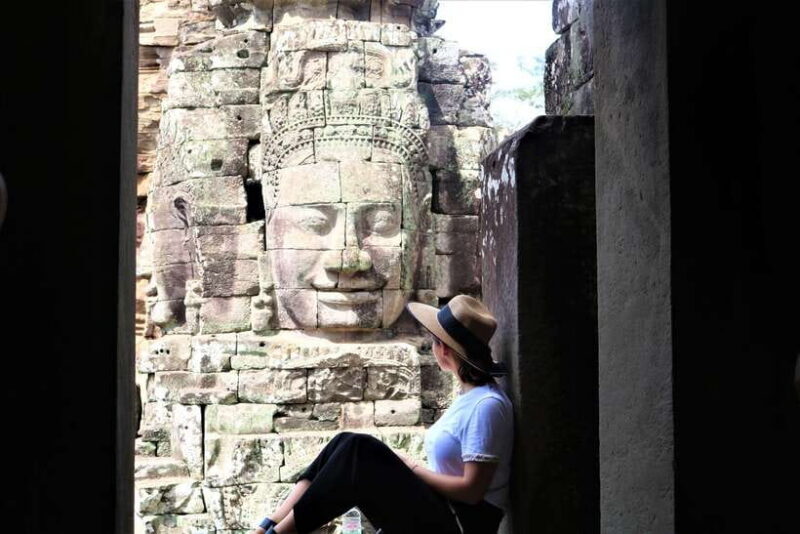
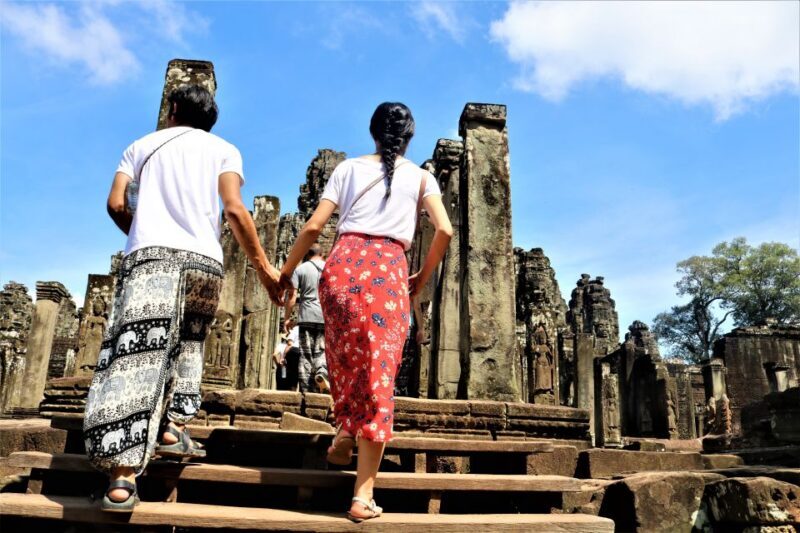
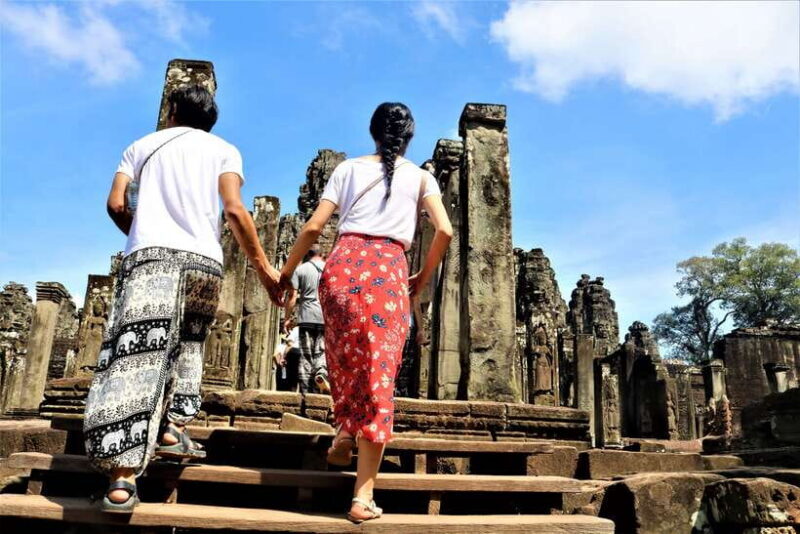
The tour also includes Bayon Temple, known for its central towers covered with more than 200 enormous faces. The faces give Bayon a character all its own. Rather than treating the temple as just another stop, take a moment to look closely at the towers and notice how they change as you move around the site.
The itinerary also names the Terrace of the Elephants and the Terrace of the Leper King. These stops help widen the picture beyond Angkor Wat’s monumental architecture, though the exact time allocated to each is not stated. The written schedule is not fully consistent about the order of stops: the general description places Bayon and the terraces before lunch, while the detailed itinerary lists Bayon after Ta Prohm. Ask the guide at the start how the day is planned.
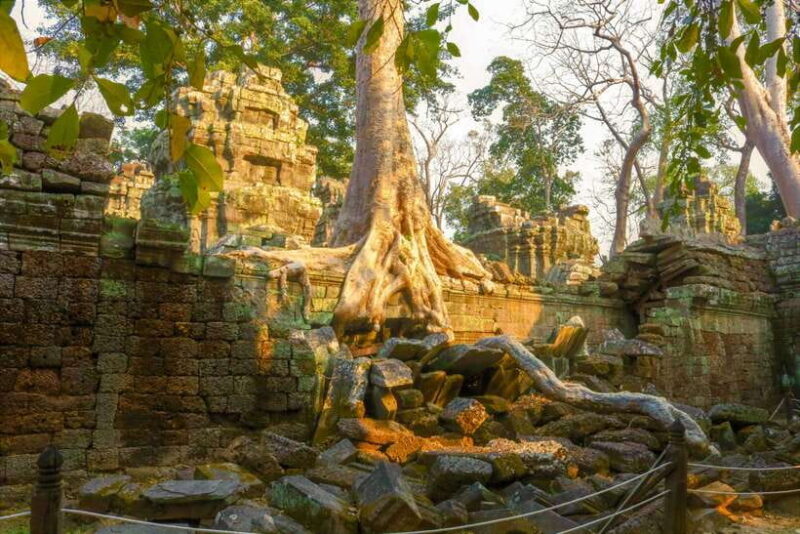
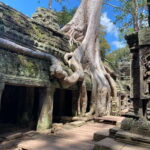
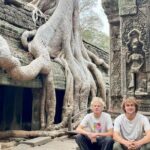
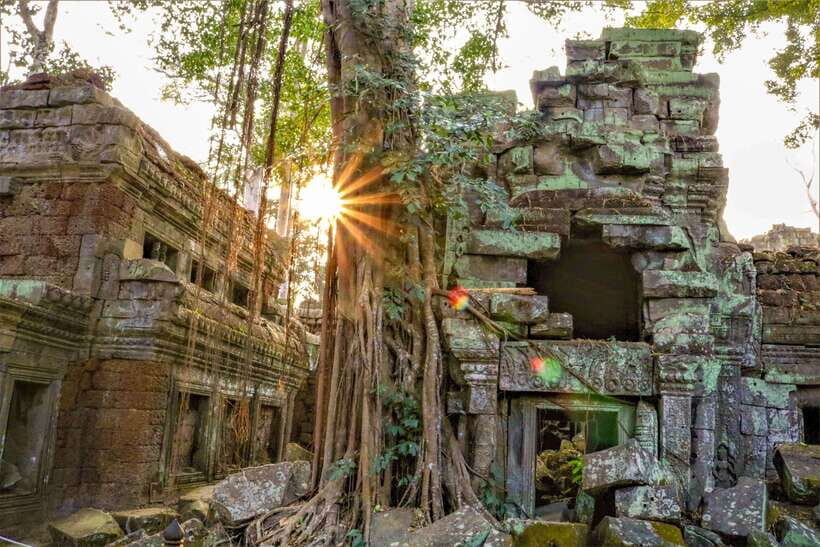
Ta Prohm is the jungle-enveloped temple often called the Tomb Raider Temple. It once housed 2,740 monks. The site was rediscovered by French explorer Henri Mouhot in the early 1850s, and today it remains known for its crumbling structures and the way trees have grown among the ruins.
You get about an hour here, including a guided visit and time to walk. The setting is atmospheric, but the paths can be irregular and the interior maze-like. Keep your footing, wear proper shoes and give yourself time to take in the place rather than rushing from photo to photo.
Ta Prohm is a strong contrast to Angkor Wat. The famous temple offers a sense of order and scale; here, the structures appear entangled with the jungle. That contrast makes this three-temple route more rewarding than a day spent seeing buildings that feel alike.
More Great Tours Nearby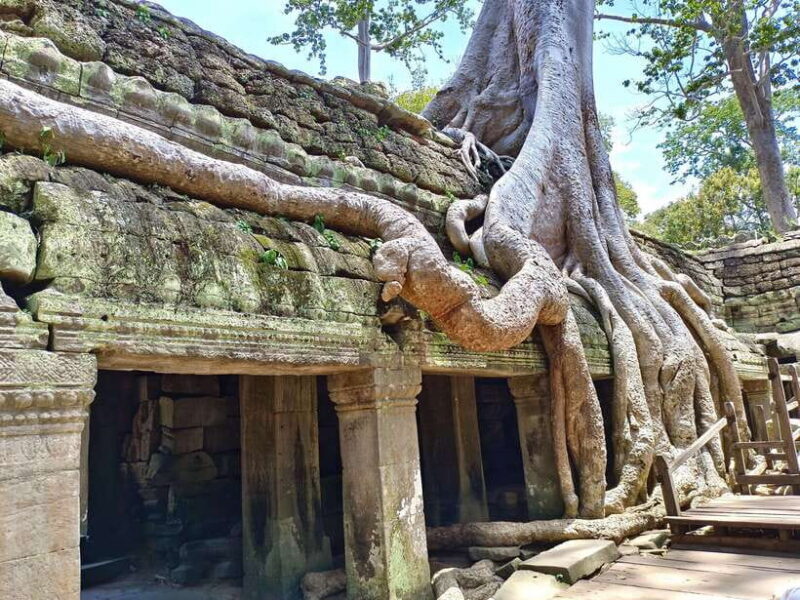
The schedule includes a one-hour stop around Srah Srang for lunch and free time. Lunch is not included in the tour price, and the details say local restaurants near the temples are available. Budget separately for a meal and use the break to rest, drink water and get out of the sun where possible.
The air-conditioned vehicle, bottled water and cool towels are small comforts with practical value. After walking through hot temple grounds, a cool towel and a drink can make the ride to the next site feel like a proper reset. Past groups have particularly appreciated the driver’s attention to water and towels between stops.
The day is not a leisurely stroll. One visitor described the heat and walking as wearing by the end, and that is a fair expectation to take into your plans. If you are sensitive to heat, pace yourself, use the lunch break to rest and do not save all your water for later. The tour provides bottled water, but you should bring sun protection and insect repellent too.
At $17 per person, the tour price covers the guide, shared transport, hotel pickup and drop-off, bottled water and cool towels. For a full day with three major temple areas, those inclusions make the base price look appealing, especially if you value having transport and explanations arranged together.
But the actual cost is higher. The one-day Angkor Pass costs an additional $37 per person and is payable on the day, while lunch is also extra. That makes the minimum known cost $54 per person before food. The pass covers the temples on the tour, so make sure you include it in your budget rather than comparing the $17 headline price with tours that may bundle admission.
An English-speaking guide is part of the value. You are paying not only to get between sites, but also to have someone explain the history and details. That can make a major difference at a place as large as Angkor Wat, where it is easy to see impressive architecture without understanding much about it.
The tour is listed as eight hours, but its published timing information conflicts. One section says pickup is between 4:10 and 4:30 a.m., with the exact time sent the day before. Another says pickup is between 7:40 and 8:00 a.m., and the expected return is between 4:00 and 5:00 p.m. The general description instead says you return in mid-afternoon. Do not guess which schedule applies. Reconfirm directly with the operator before the tour, especially if you have plans that evening.
Wear comfortable shoes, sunglasses and a sun hat, and bring insect repellent. Your shoulders and knees must be covered when entering temples. The information also lists skirts as not allowed, so choose clothing that meets the coverage rule and check with the operator if you are unsure about a specific outfit.
The tour is not suitable for children under five or wheelchair users, and no passport is required. A separate entrance is listed for skipping the line. Free cancellation is available up to 24 hours before the tour for a full refund, and the tour allows booking without immediate payment. Last-minute date changes are allowed up to seven hours before departure at no extra cost, according to the stated conditions.
This tour suits you if you have one day to see Angkor’s best-known temples and want an English-speaking guide to provide context. It is also a good fit if you prefer hotel pickup and shared transport over arranging the route yourself. The small-group setup is helpful if you like being able to ask questions and want a more personal feel than a large bus tour.
It is less suitable if you want to linger for hours at one temple, explore beyond the main sights or set your own pace. The route covers a lot, and the day’s structure leaves limited time for each stop. If you are traveling with a young child under five, use a wheelchair, or struggle with heat and uneven ground, this is not the right choice.
I would book this tour if you want an efficient first visit to Angkor, particularly if you value a guide who can bring history and temple details into focus. Angkor Wat, Bayon and Ta Prohm make a strong trio, and the transport, water and cool towels help take some strain out of a hot day.
Before paying, factor in the $37 Angkor Pass and the cost of lunch. Most importantly, get a clear answer about pickup time: the two stated windows differ by several hours. If the operator confirms a schedule that works for you, and you are ready for a full day on your feet, this is a useful and well-priced introduction to the temples.
“The tour was amazing! Mr.Sarkiya told us all about the history behind the temples and buddhism – undoubtedly showing his passion for the region in …”
The tour costs $17 per person. The one-day Angkor Pass costs an additional $37 per person, and lunch is not included.
The stated duration is eight hours. The return time is given as 4:00 to 5:00 p.m. in one section, while another describes a mid-afternoon return.
The supplied details list two different pickup windows: 4:10 to 4:30 a.m. and 7:40 to 8:00 a.m. Confirm your exact pickup time with the operator before the tour.
The tour includes Angkor Wat, Bayon Temple and Ta Prohm, along with Angkor Thom, its southern gate, and the Terrace of the Elephants and Terrace of the Leper King.
No. Lunch is available at local restaurants near the temples, but you pay for it separately.
Yes. Hotel pickup and drop-off in Siem Reap are included. The tour uses an air-conditioned vehicle.
The live tour guide speaks English.
Bring comfortable shoes, sunglasses, a sun hat and insect repellent. You must cover your shoulders and knees at the temples. The information also lists skirts as not allowed.
It is not suitable for children under five or wheelchair users.
No passport is required for this tour.
You can check availability for your dates here: