Physical Address
304 North Cardinal St.
Dorchester Center, MA 02124
Physical Address
304 North Cardinal St.
Dorchester Center, MA 02124

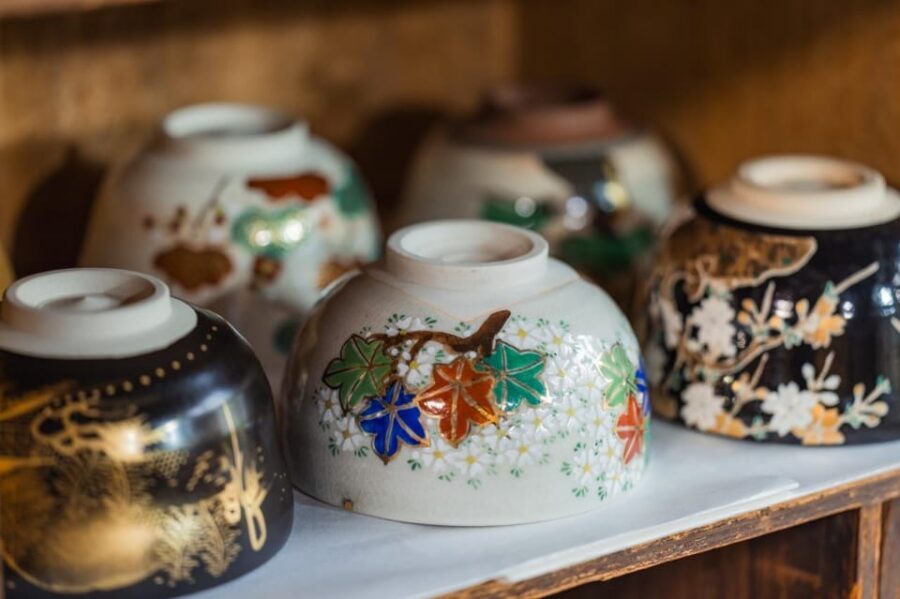
Make matcha, learn tea etiquette and calligraphy, and explore a century-old Kyoto townhouse in a relaxed, chair-seated ceremony.
A tea ceremony in Kyoto need not mean sitting cross-legged on the floor. In this 90-minute session, you settle at a table in a 100-year-old machiya, learn about tea customs, and whisk your own matcha. The setting is a real old townhouse in Fushimi, a southern Kyoto district known for sake.
I like two things in particular: the chair-and-table format makes the ceremony easier for many people to enjoy, and the session folds in calligraphy, flower arranging, sweets, and a chance to explore the house. One consideration: the venue is outside central Kyoto, so you’ll need to allow time for the train ride and walk.
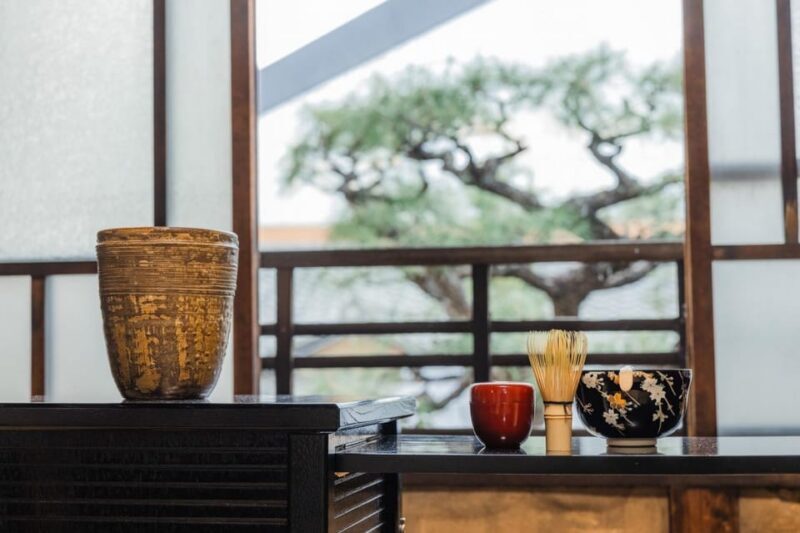
This is not a grand temple hall or a purpose-built attraction. The experience takes place in a traditional Kyoto townhouse, more than a century old, with the worn-in character of a home that has seen daily life. You’ll be shown around the rooms, with old Buddhist and Shinto altars and antiques among the details to look for.
That domestic scale is part of the appeal. Instead of watching a ceremony from a distance, you enter a place where the house itself helps explain Japanese customs. It’s a gentler, more personal introduction to Kyoto than a packed sightseeing stop, though the old building’s stairs and layout mean it is not suitable for wheelchair users.
The hosts welcome you with a drink, which may be sake or juice. The tone is friendly and relaxed, and the instruction is in English, so you can ask questions as the session unfolds rather than trying to follow a silent demonstration.
You can check availability for your dates here: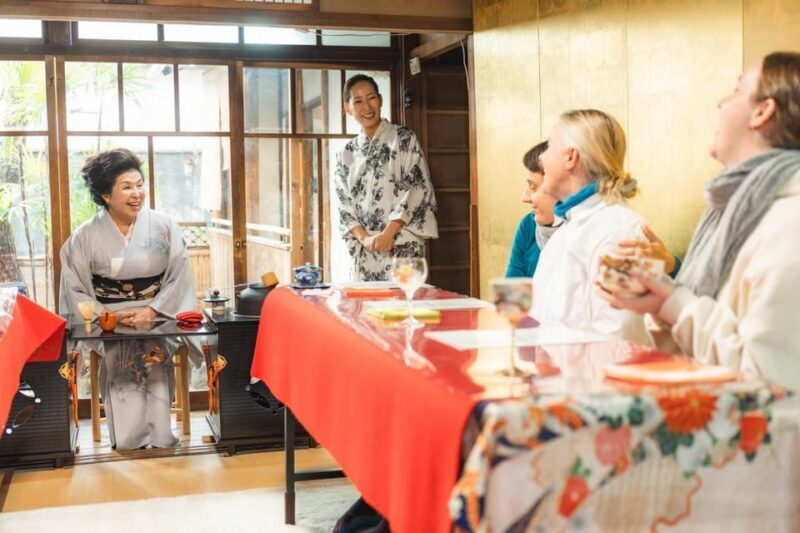
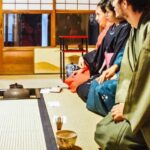
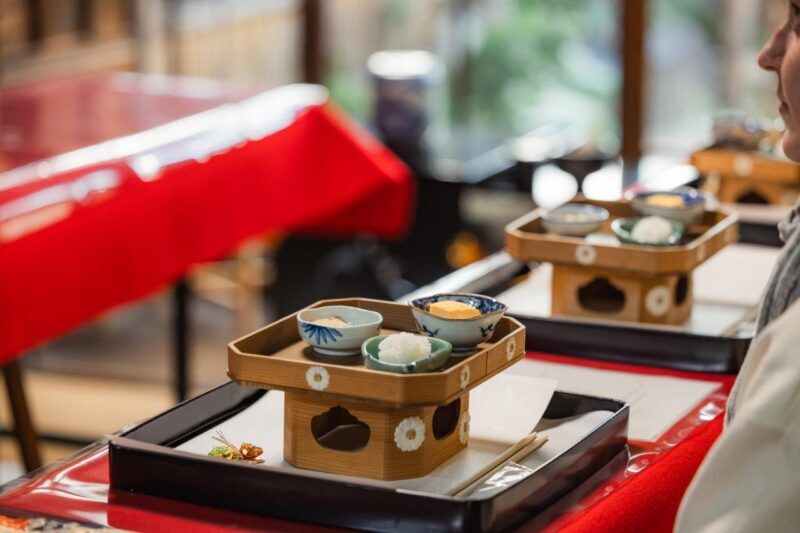
The most practical feature is right in the name: this is a table-style ceremony. You sit in chairs rather than on tatami, a welcome change if kneeling is uncomfortable or if you simply want to focus on what the host is showing you.
The ceremony is introduced through a presentation about its development in Japan, along with the spirit and manners associated with it. The hosts also explain the meaning of movements and utensils as they guide you through the experience. That context matters: a tea ceremony can look like a series of small, precise gestures, but knowing why they are done makes it easier to follow and appreciate.
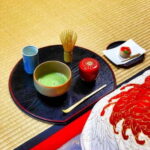
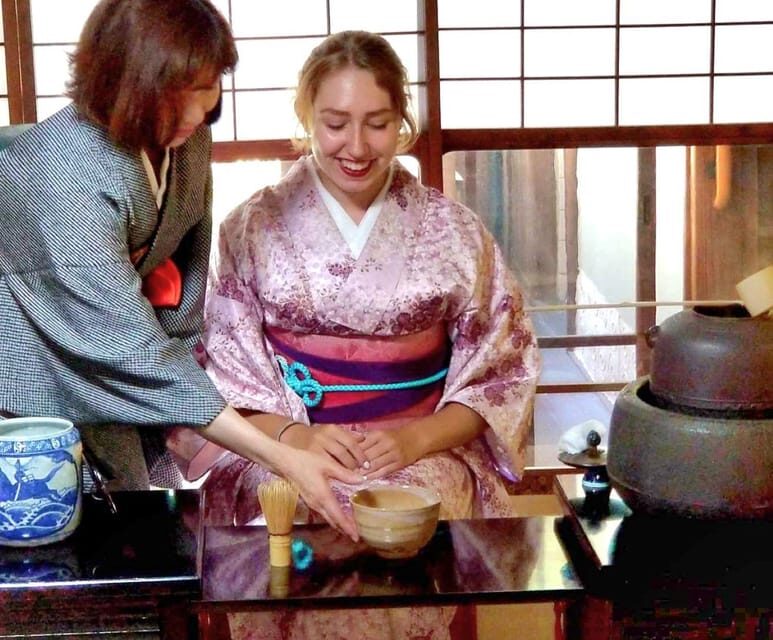
You’ll watch tea being served, then take part yourself. The hands-on portion includes preparing matcha with a bamboo whisk. It’s a simple tool, but making a bowl well takes a little practice: whisk until the tea turns creamy and frothy, then enjoy it with a traditional sweet.
The session is an introduction, not a long course in tea practice. If you’re hoping for hours of formal instruction or an advanced study of tea schools, this is not that. For a first encounter, though, the combination of explanation, demonstration, and a turn at making matcha gives you a useful feel for the ritual.
Looking for more options in Kyoto? Here are some other experiences worth considering.
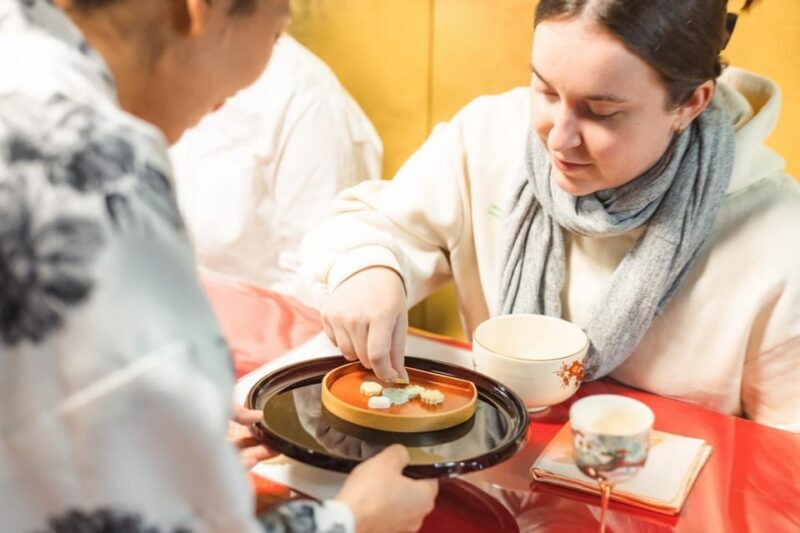
The tea is the heart of the visit, but the experience gives you several ways to engage with it. You’ll taste matcha alongside a traditional sweet, then prepare your own. The contrast between the tea’s strong flavor and the sweetness is part of the pleasure, and the host can help you understand how to handle and enjoy the bowl.
There is also a latte-art activity using thick tea. It adds a playful note to a ceremony that might otherwise feel intimidating to a newcomer. You’re not expected to arrive with tea skills; the point is to try the tools and techniques with guidance.
The welcome drink varies, with sake or juice among the options. Fushimi is known for sake, so this is a fitting place to try it if you drink alcohol. If you prefer not to, juice is available. The supplied information also mentions Japanese tea as a drink option, so check what is being served when you arrive.
The tea ceremony is only one part of the program. You’ll also try Japanese calligraphy, writing your name in kanji or hiragana. The hosts can provide a hanging scroll or envelope with your name written in Japanese, a personal keepsake that feels more connected to the activity than a generic souvenir.
Some participants also practice their names in katakana, alongside hiragana and kanji. The exact writing activity may vary, but it offers a light introduction to how Japanese scripts differ. Don’t worry about producing polished calligraphy. This is a chance to try the brush and enjoy the process, not pass an exam.
Flower arranging is another included activity. It gives you a second hands-on look at Japanese aesthetics, with the hosts guiding you through making a simple arrangement. Together, the calligraphy and flowers keep the session varied and give you a reason to slow down between the tea demonstrations.
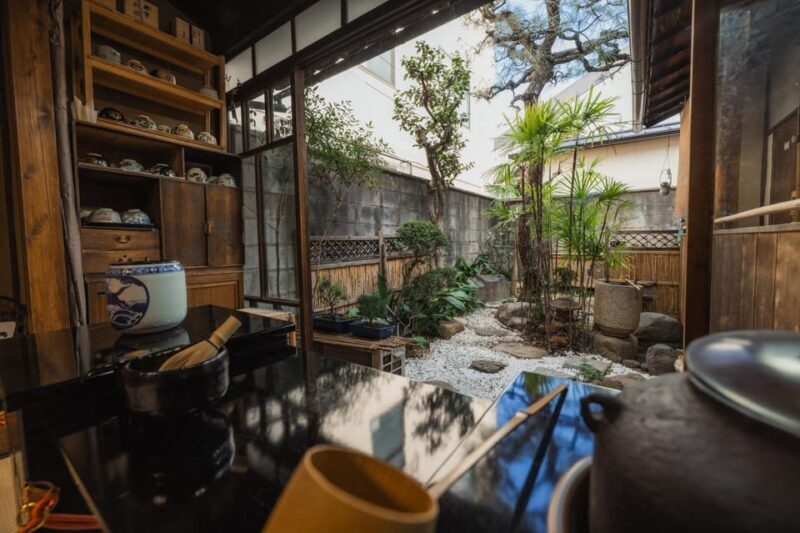
You’re welcome to take photos and videos in the house or garden. Props include umbrellas, folding fans, and a katana sword, so there are plenty of ways to make a playful portrait. Treat these as photo props rather than part of the tea lesson.
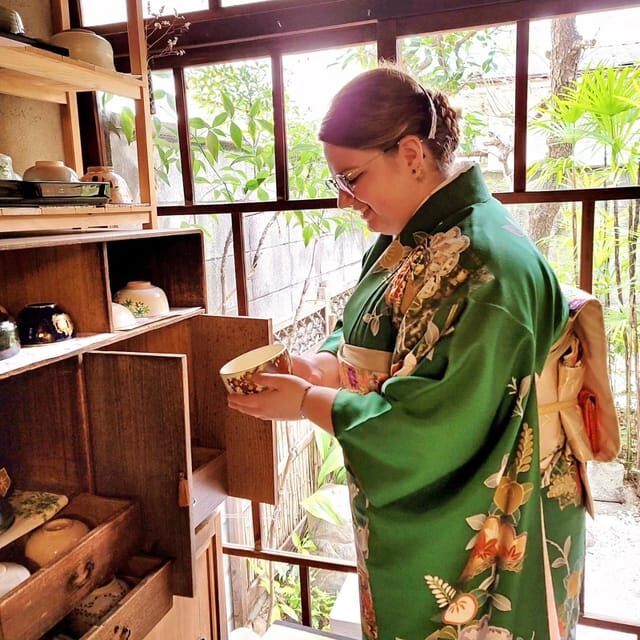
A kimono can make the afternoon feel more special, and it’s a popular add-on. The hosts help you dress, and the available kimonos offer a choice of styles. Some participants also receive help with hairstyling. Wearing one for the ceremony and taking pictures in the garden gives the visit a more memorable, occasion-like feel.
There is a practical tradeoff: if you select the kimono option, arrive 30 minutes before the scheduled start so there is time to get dressed. The booking instructions say to select the kimono option by opening availability twice. The listed price is $45 per person, but check the final price for your chosen option rather than assuming the kimono is included in that base amount.
Pregnant participants are asked not to wear a kimono for health and safety reasons. You can still take part in the activity without choosing that option.
More Great Tours Nearby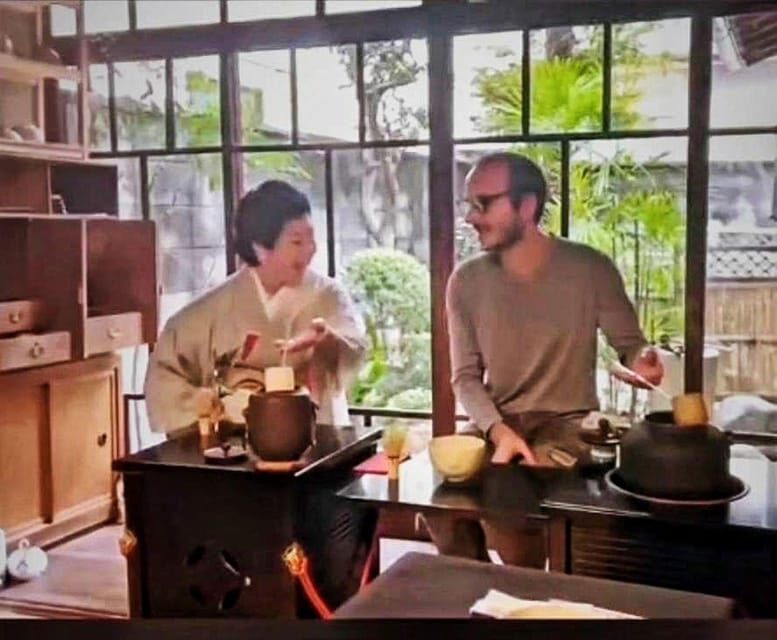
Part of the visit introduces the act of purifying yourself at a stone basin in the garden, much as you might see at a shrine. It’s a small but useful cultural detail: rather than treating the ceremony as a performance alone, the session connects it with customs and manners you may encounter elsewhere in Japan.
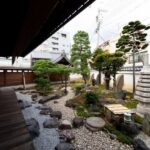
The garden and townhouse also give you room to look around and take photos. The house is the main setting, but the garden adds a change of pace and a visual backdrop, especially if you’ve chosen to wear a kimono. You can enjoy the setting without needing to know the right pose or ritual in advance; the hosts are there to explain.
The venue is in southern Kyoto, around 20 minutes by train from Keihan Gion-Shijo Station and about 25 minutes from Kintetsu Kyoto Station. From Kintetsu Kyoto, take an express train to Kintetsu Momoyama-Goryo-mae. From Keihan Gion-Shijo, get off at Fushimi-Momoyama.
From either station, head toward the Otesuji shopping arcade. The directions point you to turn right near Mizuho Bank or the Rakuten mobile shop; look for an old townhouse with a blue curtain. If you arrive from JR Momoyama, walk northwest past Gokogu Shrine, then continue to the arcade and follow the same turn.
Allow time to find the house, especially if you have booked the kimono option. Guides wearing kimono will be waiting at the venue, which helps confirm you’ve reached the right place.
Fushimi is a good area for a longer outing. The neighborhood is known for sake and has casual restaurants and shopping streets, so you can eat before or after the ceremony. Fushimi Inari Shrine is also reachable by train, and Uji, a town known for tea, is about 20 minutes away by train. Osaka is about 40 minutes by express train, while Nara is listed at about 50 minutes. These connections make the activity easier to fit into a day beyond central Kyoto.
At $45 per person, the session offers more than a short tea tasting. You get a 90-minute guided activity, a ceremony, sweets, a welcome drink, your own matcha-making turn, calligraphy, flower arranging, and time to see the townhouse. If you’re looking for a compact cultural introduction with several hands-on parts, that is a fair amount to fit into an afternoon.
The value depends on what you want. If tea ceremony is your main interest, you’ll get a clear introduction and a chance to participate, but not an extensive formal course. If you like trying different activities and taking photos, the calligraphy, flowers, garden, and optional kimono add welcome variety. Confirm which extras are included in the option you select, since kimono rental is conditional.
The small-group or private formats are another plus. A smaller session can make it easier to ask questions and get help with the matcha, calligraphy, or clothing. Starting times depend on availability, so check the schedule that suits your day.
I’d recommend it to first-time visitors who want a friendly, hands-on introduction to Japanese tea customs without sitting on the floor. It also suits families and couples looking for an activity that mixes learning with photos and a few creative tasks. English instruction makes it accessible if you don’t speak Japanese.
It may not be the right fit if you need step-free access, want a long or highly formal tea study, or have very little time to travel beyond Kyoto’s central sights. The location is a short train trip away, not next door to Gion. But if you’re planning to explore Fushimi, visit nearby sights, or enjoy its food and sake-town character, the location becomes a reason to book rather than a hurdle.
Book it if you want to learn by doing, enjoy a historic home, and like the idea of calligraphy and matcha in one visit. Consider the kimono option if photos and dressing up are part of the fun, and leave an extra half-hour for it.
“Amazingly authentic and interesting experience – the highlight of our visit in Kyoto!The Japanese hosts were incredibly polite, patient and proacti…”
The experience lasts 90 minutes. If you choose the kimono option, arrive 30 minutes before it begins.
The listed price is $45 per person. Check the selected option when booking, as kimono rental is available only if selected.
No. The tea ceremony is arranged with tables and chairs.
Yes. The instructor language is English.
The experience includes a tea ceremony, traditional sweets, a welcome drink, matcha-making, calligraphy, and flower arranging. Latte art using thick tea is also listed as included.
Kimono rental is included if you select that option. You’re asked to arrive 30 minutes early if you choose it.
It takes place in a traditional Kyoto townhouse in the southern part of the city, near the Otesuji shopping arcade in Fushimi.
Yes. You can take photos and videos in the traditional house or garden. Props include umbrellas, folding fans, and a katana sword.
No. The activity is listed as not suitable for wheelchair users.
You can check availability for your dates here: