Physical Address
304 North Cardinal St.
Dorchester Center, MA 02124
Physical Address
304 North Cardinal St.
Dorchester Center, MA 02124

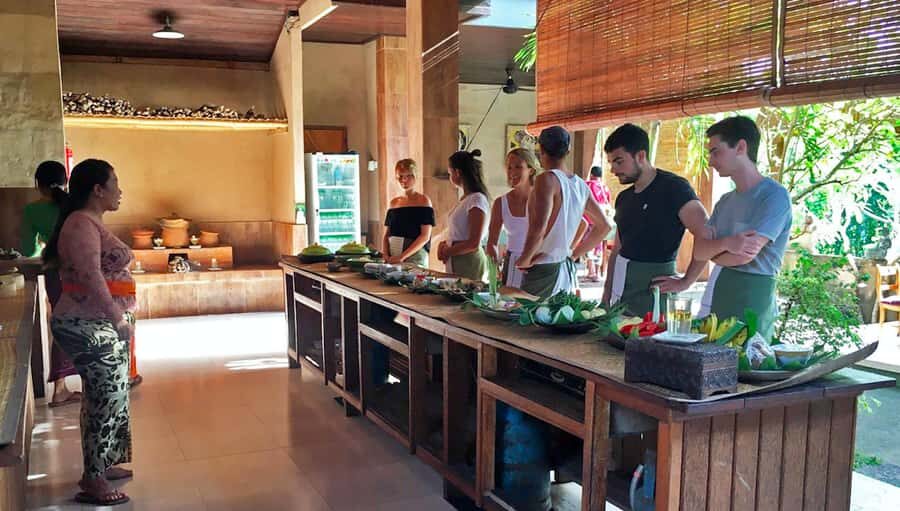
Cook Balinese dishes in a village home near Ubud, with a market visit, rice-plantation stop, hands-on lesson and shared meal.
Balinese cooking here starts well before you pick up a knife. The morning outing takes you to a fresh-food market, past rice fields and into Laplapan village, where Paon Bali’s team teaches you to prepare a full meal in a family setting.
I like the market stop, where local produce and spices have a place in the lesson, not just on a shopping list. I also like the hands-on cooking and shared meal: you take part in the work, then taste what your group has made.
The main choice is timing. The afternoon class is shorter and skips the market visit, so book the morning session if local ingredients and market life matter to you. Plan on about three and a half to four hours, and check whether your hotel is within the included Ubud pickup area.
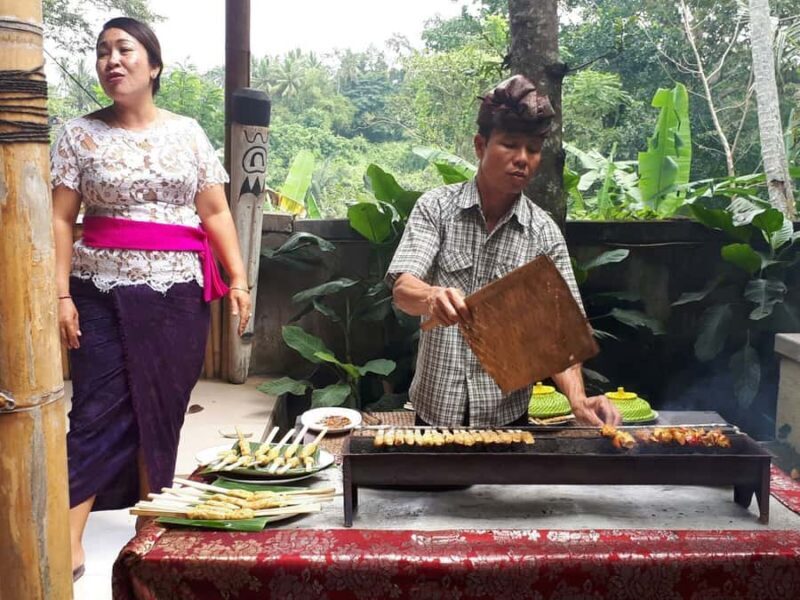
The experience begins with hotel pickup in the Ubud area. Transport matters here: the class is outside the centre, and having a driver means you can enjoy the morning without arranging your own route. Pickup outside Ubud may be available for an extra fee, so confirm that when booking.
The tour lasts roughly 210 minutes to four hours, depending on the session and schedule. That makes it a substantial half-day outing rather than a quick demonstration. The small-group limit is 15 participants, which gives the instructors a chance to move between work areas and help people take part.
The morning program starts at a local fresh-food market. You see vegetables, herbs, meat and spices for sale, and your guide explains what you are looking at and how ingredients fit into Balinese cooking. There may be a chance to sample local fruit, too. Some stalls sell spices and tea, so the market can also be a practical place to pick up something to take home.
This is more useful than a market walk that only asks you to admire the colors. Learning the names and uses of ingredients gives you a head start when you later see them being chopped, pounded or mixed into a dish. It also helps put everyday food culture in view: these are working stalls where local people shop, not a set built for a cooking lesson.
The market visit is for the morning class only. If this stop is a priority, choose that session rather than assuming it comes with every time slot. The afternoon class is shorter, and it does not include the market tour.
You can check availability for your dates here: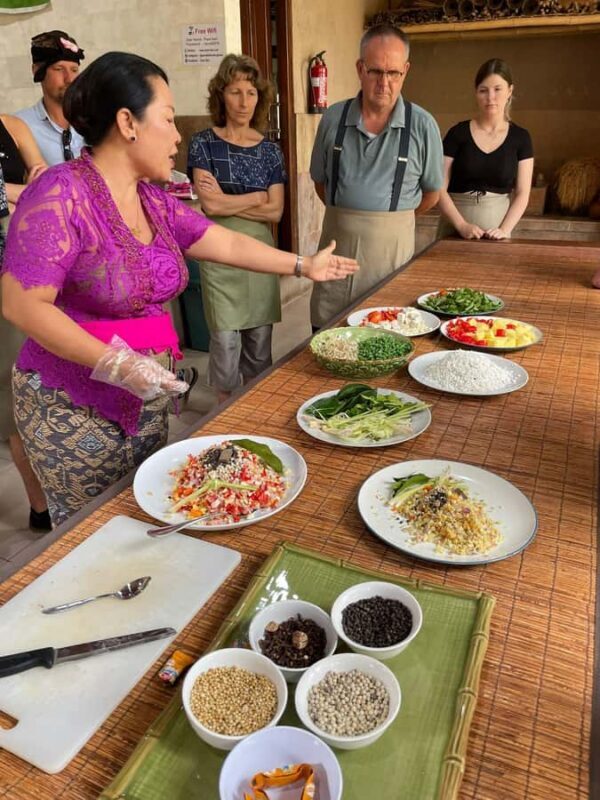
After the market, the route includes a stop at a rice plantation. Rice is central to meals across Bali, and seeing where the staple crop is cultivated adds context to the food you will prepare later. You also get a chance to take in the surrounding scenery before moving on to the village.
The visit is an introduction, not a farming course. Expect an explanation of how rice is grown and prepared, with time to look around. If you want a detailed account of every stage of cultivation, this stop may feel brief. Its value is simpler: it connects the meal to the land and gives you a picture of a crop that can otherwise arrive at the table without much thought.
The morning route then continues to Laplapan, a traditional village near Ubud. The welcome is part of the experience. You are not ushered into a restaurant kitchen or a hotel demonstration room, but into a family setting where the cooking lesson unfolds.
Want to bring Bali flavors home? These cooking classes could be just right
Paon Bali’s home and cooking area provide a domestic backdrop to the class. The host, Puspa, is often at the heart of the welcome and instruction. The team serves Balinese tea or coffee, and the setting can include a look at the family temple. That gives you a small glimpse of home life alongside the food.
The appeal is not that you are seeing a private household routine exactly as it happens every day. This is a prepared cooking experience, organized for visitors. Still, the family setting gives the class a warmer feel than a formal demonstration space, and the hosts’ humor and hospitality help the group relax.
The cooking itself is designed to keep you involved. The team explains the methods, sets out ingredients and guides participants through tasks such as chopping, pounding, mixing and cooking. People work in pairs or take turns on different dishes, so you are not expected to watch an instructor do everything while you stand at the edge.
That structure is helpful if you are new to Balinese food. The techniques are presented in manageable steps, and instructors can answer questions as you go. You will make a spread of three starters, four main courses and one dessert according to the tour description. The exact dishes can vary, so think of this as a broad introduction to a meal rather than a fixed menu guaranteed in advance.
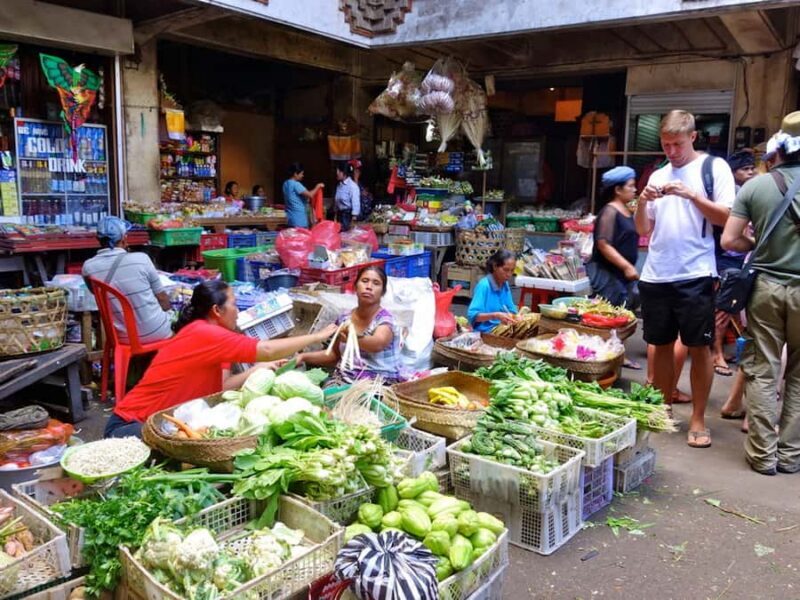
The lesson covers more than a single signature dish. Preparing several courses lets you notice how ingredients and methods work together across a meal. You will handle fresh produce and seasonings, learn how the dishes are assembled, and get practical tips that can help when you try the recipes again at home.
You can choose meat or vegetarian dishes. The team has also accommodated allergies and dietary needs, including requests involving garlic, onion, capsicum and gluten. That is encouraging, but it is not a substitute for checking in advance. If you have an allergy, tell the operator when you book and explain how serious it is. Ask directly about separate preparation and cross-contamination rather than assuming every request can be met.
The recipes and notes are yours to keep, which is one of the more useful extras. They help turn a pleasant holiday meal into something you can attempt after the trip. The instructors may also suggest substitute ingredients for items that are harder to find at home. That matters because a recipe is only useful if you can adapt it to your own kitchen and local shops.
The experience includes all ingredients, tea or coffee, the cooking lesson, lunch and a certificate. The certificate is a souvenir rather than the main reason to go. The better takeaway is the recipe material and the confidence that comes from having prepared the dishes yourself.
Once the cooking is done, you sit down with the group and eat the results. This is not a rushed tasting of one small portion. You have prepared several dishes, and the meal gives you time to compare flavors, ask final questions and enjoy the food while it is fresh.
There is also a social element that suits solo visitors as well as couples, families and groups of friends. The shared tasks make it easier to talk with people, and the meal gives the class a natural finish. For children, the practical work can make the food more engaging, though parents should consider whether a session of several hours suits their family.
The menu is described as a generous spread, but appetite and portion sizes vary. You should expect a full meal, not a promise that every dish will match your tastes. If you are unsure about ingredients or spice levels, ask the instructor while cooking.
More Great Tours NearbyAt $35 per person, the price covers more than the lesson itself. You get Ubud-area transport, ingredients, the class, a meal, tea or coffee and, for the morning session, a market visit. The rice stop and village setting add variety to what might otherwise be a straightforward cooking workshop.
I consider that good value if you want both an activity and a meal, especially because transport is included within Ubud. The market and rice stop also give the outing a broader cultural frame. If you only want to learn one recipe, this may be more time and food than you need. But if you want to spend a half-day learning, cooking and eating, the package makes practical sense.
The class is rated 4.9 from 1,325 reviews, and transport earns especially strong marks. That is reassuring if you are relying on pickup to get you out of central Ubud and back again. A small number of transfer arrangements can still require clear communication, so keep an eye on pickup messages and confirm the agreed time with the driver.
The morning session is the fuller option. It includes the market visit and gives you the most complete sequence from ingredients to finished meal. Choose it if you are curious about produce, want to taste local fruit or would like time to browse spice and tea stalls.
The afternoon class is a sensible choice if your schedule favors a later start or you are mainly interested in cooking. It is shorter because it excludes the market tour. Do not book it expecting the same market experience in a different time slot.
Allow enough room in your day for the stated 210 minutes to four hours, plus any time needed to get to your pickup point. The class itself is a meal-sized commitment, and the shared lunch is part of the point. It is better not to squeeze it between two activities with tight start times.
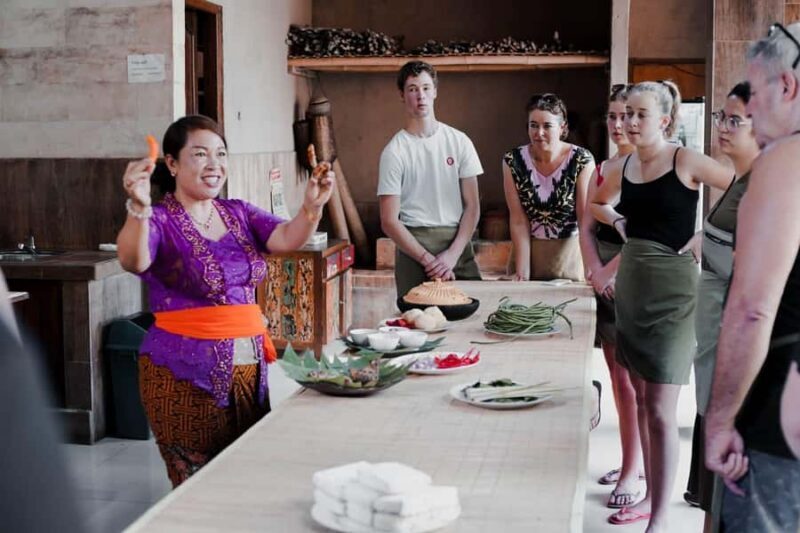
This suits you if you enjoy learning by doing, want a closer look at Balinese food, or like the idea of meeting local hosts through a practical activity. It is also a strong option for a rainy day, since much of the main lesson takes place in the cooking area.
You do not need to be an experienced cook. The instruction is structured for participation, and the work is divided so everyone can have a turn. Families and teenagers may enjoy the hands-on format, while solo visitors can join a small group rather than needing to organize a private class.
It is less suitable if you want a quiet, private meal, dislike group activities or have very little time available. The group can reach 15 people, and the experience involves several hours of shared cooking. If you have strict dietary needs, contact the team beforehand and make sure you receive a clear answer.
I would book this if you want more than a recipe demonstration: the morning market, rice stop, Laplapan setting and shared meal make a well-rounded half-day around Balinese food. At $35, the included Ubud transport and meal strengthen the value.
Choose the morning session for the fullest experience. Pick the afternoon only if you are happy to miss the market, and confirm pickup details and dietary needs before you go. If those conditions fit your plans, this is a practical, sociable way to learn what goes into a Balinese meal and leave with recipes you can try again.
“Amazing. Pick up was prompt and guide was knowledgeable around the markets – we even got to try some different fruits! The cooking class was incred…”
The experience lasts about 210 minutes to four hours. The afternoon class is shorter because it does not include the market visit.
Yes. Free pickup and drop-off are included for hotels in the Ubud area. Pickup from outside Ubud may be available for an additional fee if requested when booking.
No. The fresh market tour is included with the morning class only. The afternoon class skips it.
The class includes a selection of Balinese dishes, described as three starters, four main courses and one dessert. The specific dishes may vary.
Yes. You can choose meat or vegetarian dishes.
Yes. All ingredients, the cooking lesson and lunch are included, along with Balinese tea and coffee.
Yes. Recipes and notes are supplied for you to keep.
Yes. The live tour guide and class are in English.
You can check availability for your dates here: