Physical Address
304 North Cardinal St.
Dorchester Center, MA 02124
Physical Address
304 North Cardinal St.
Dorchester Center, MA 02124

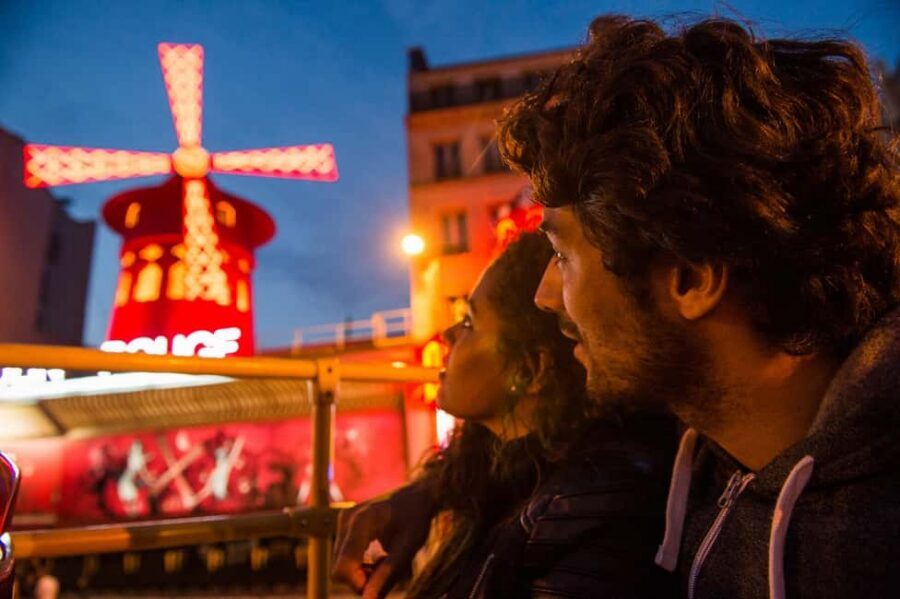
See Paris illuminated from an open-top double-decker, with landmark views, multilingual audio, and a two-hour loop past the Eiffel Tower.
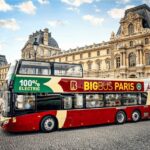
Paris after dark is made for looking up. From the upper deck, the Eiffel Tower, grand boulevards, bridges, and old stone façades take on a different character, and this two-hour circuit lets you see many of them without walking between neighborhoods. The bus starts and ends near the Arc de Triomphe.
I like two things in particular: the broad route, which links the Champs-Élysées, Montmartre, the Louvre, Notre-Dame, and the Eiffel Tower, and the choice of upper-deck or enclosed seating, useful when the weather turns cold or wet. The audio commentary adds context while you watch the city pass.
One consideration: this is a single-loop tour, not a hop-on, hop-off service. You generally stay aboard, so it works best for a first look at Paris by night, not for lingering at a particular landmark. The upper deck can also feel cold, and the audio equipment may not work perfectly on every ride.
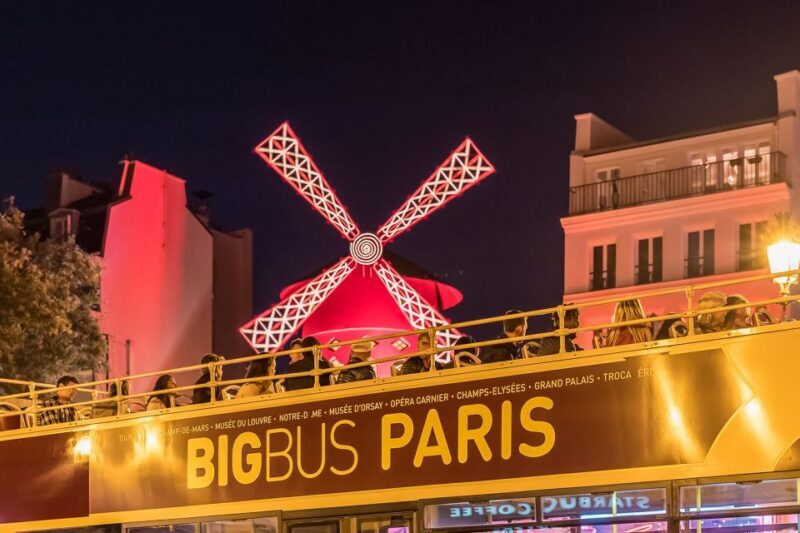
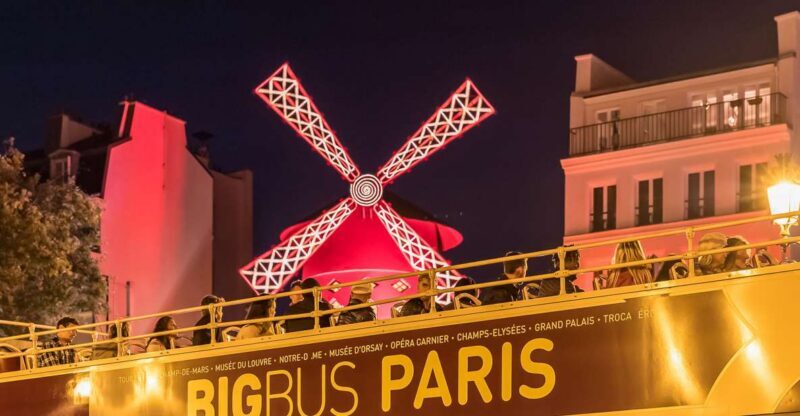
The meeting point is at 156 Avenue des Champs-Élysées, on the corner opposite the Arc de Triomphe. A Big Bus representative helps with check-in and boarding. Arrive with enough time to locate the stop and choose your seat; the address is specific, but the pickup point can be tricky to spot amid traffic and other bus activity.
The route is a single loop of about two hours. It passes a long list of major sights, but you should think of it as a moving overview rather than a series of visits. You won’t be stepping off to explore the Louvre or climb around Montmartre. Instead, the city becomes a sequence of illuminated views, with commentary to help you make sense of what’s outside.
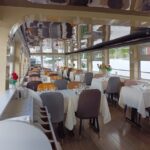
Seating matters. The upper deck is the natural choice for unobstructed views and photographs, but it fills up, so an early arrival can help if you have a particular seat in mind or want to sit together. If it’s cold, rainy, or windy, the lower level offers shelter; in poor weather, the roof may be closed. That protects you from the elements, though it also changes the open-air feel that makes the tour appealing.
Evening activities in Paris include these interesting options
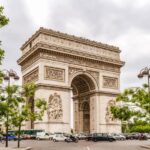
The bus begins on the Champs-Élysées, one of Paris’s grand avenues, then passes the Arc de Triomphe and Place de la Concorde. The scale of the avenue and the formality of the monuments are especially clear from the high seat of a double-decker. The Arc is a major visual marker, while Concorde opens up a broad view across the city’s central streets.
From there, the route continues past Madeleine and Palais Garnier. The Madeleine’s imposing exterior and the Opera’s ornate frontage show two different sides of Parisian architecture. You won’t have time to inspect the details from a moving bus, but nighttime lighting can bring out the outlines and decoration more sharply than a quick daytime glance.
The tour then passes Galeries Lafayette and Avenue de l’Opéra. These streets give you a sense of the city’s grand commercial and cultural center, and the view from above helps connect landmarks that may feel separate when you’re navigating on foot. Treat this section as an introduction, not a substitute for an interior visit: the bus does not stop for shopping or a performance.
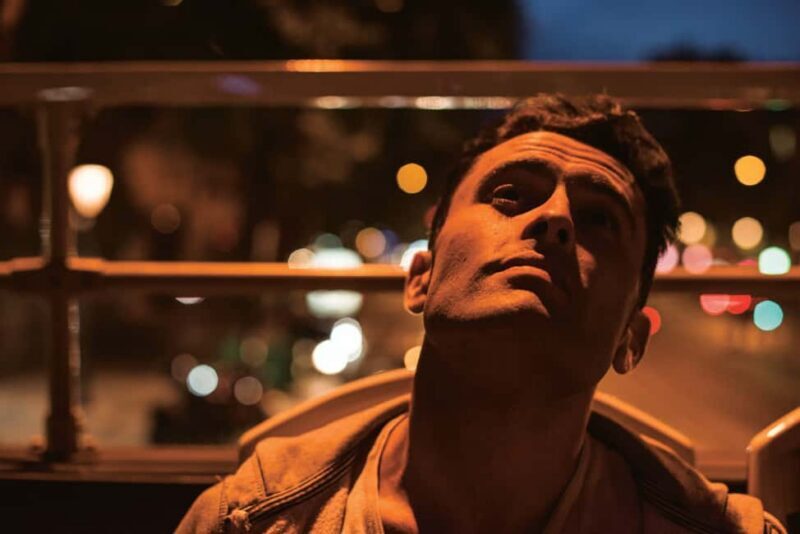
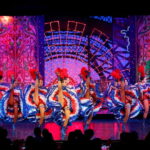
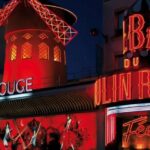
Moulin Rouge is one of the route’s most distinctive nighttime sights. Its façade and famous red windmill are easy to recognize as the bus passes through the Montmartre area. This is a brief street-side view, not a walk through the neighborhood, so you won’t get the hilltop outlook or time to explore the surrounding streets.
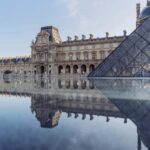
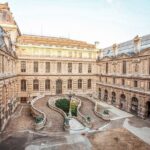
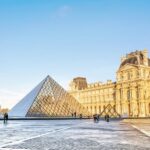
The route then returns toward the center, passing the Carrousel du Louvre and the Louvre itself. At night, the palace’s long façades and courtyards make a striking contrast with the open spaces around them. The moving view is useful for getting a sense of the museum’s scale, though you’ll want a separate visit if you plan to see the collections or spend time in the courtyard.
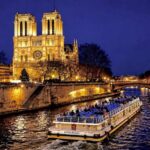
From there, the bus crosses the Pont des Arts and continues toward Île de la Cité. The bridges and river views are a strong part of the evening circuit: lights reflecting on the Seine give the city a softer look than the avenues do. The tour also passes Notre-Dame Cathedral and Place Saint-Michel. You’ll see the cathedral from outside, not enter it, and the time for photographs may be short as the bus continues along its route.
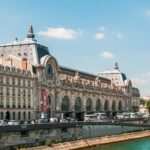
Next comes the Musée d’Orsay, set in a former railway station beside the river. Even from the road, the building’s broad façade and distinctive clock help it stand apart from the surrounding architecture. Together, these central sights make the middle part of the tour more than a parade of famous names: the route links islands, bridges, riverbanks, and monumental buildings in a way that can be hard to appreciate on a map.
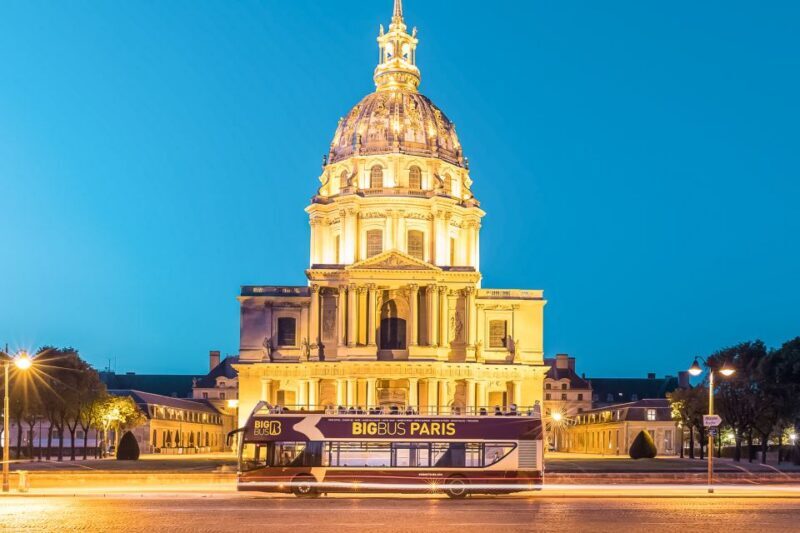
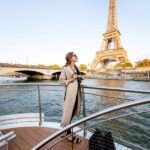
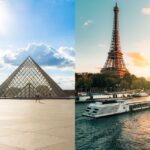
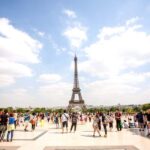
The route passes Place du Trocadéro before reaching the Eiffel Tower and Champ de Mars. Trocadéro is one of the classic vantage areas for viewing the tower, and seeing it from the bus can give you a broad perspective across the river and gardens. The tower itself is the emotional high point for many people, especially when its lights sparkle against the night sky.
The exact timing depends on the departure and season. Paris can stay light late in summer, so an early evening ride may begin before the city is fully dark. On some rides, the driver has positioned the bus near the tower to let passengers watch it sparkle or take photographs. But this is not a guaranteed, scheduled stop in the stated route, so book for the full illuminated circuit rather than relying on time off the bus.
There’s a practical trade-off here. The bus gives you a comfortable, elevated view without needing to walk between Trocadéro, the tower, and Champ de Mars. In return, you’re watching from a moving vehicle, and photo opportunities can pass quickly. If you want to stand beneath the tower or take your time with pictures, plan a separate visit.
More Great Tours Nearby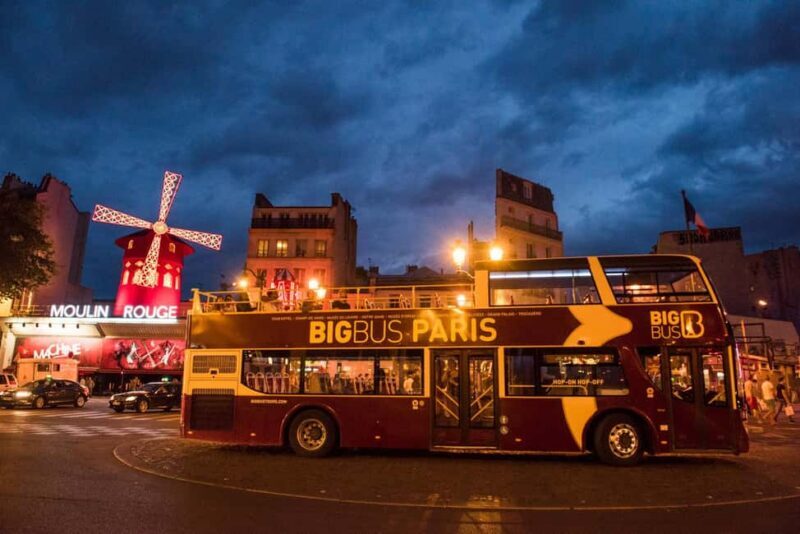
The tour includes prerecorded digital commentary, souvenir earbuds, and onboard Wi-Fi. Commentary is offered in Spanish, Chinese, English, French, German, Italian, Portuguese, Russian, and Korean. A live host or greeter is listed in English and French, but the main explanations are delivered through the audio guide rather than a named live guide.
That format lets you listen while following the route, but the audio system is worth keeping in mind. Some rides have had speakers or headphone connections that cut in and out. If the commentary matters to you, check your earbuds and audio connection early, and let staff know if you can’t hear properly. The information is a useful extra, not the only reason to book.
Comfort depends heavily on weather and where you sit. The open upper deck offers the best unobstructed views, but can feel cold, especially in winter or on a wet evening. The lower level is enclosed and heated according to passenger accounts, making it a sensible alternative when the weather is rough. In poor conditions, the bus may operate with a closed top, so an open-air ride is not guaranteed.
The tour is wheelchair accessible, but hotel pickup and drop-off are not included. You make your own way to the Champs-Élysées meeting point and return there at the end. Starting times vary, so check availability for your date. Booking can be made with a reserve-now, pay-later option, and cancellation is free up to 24 hours in advance.
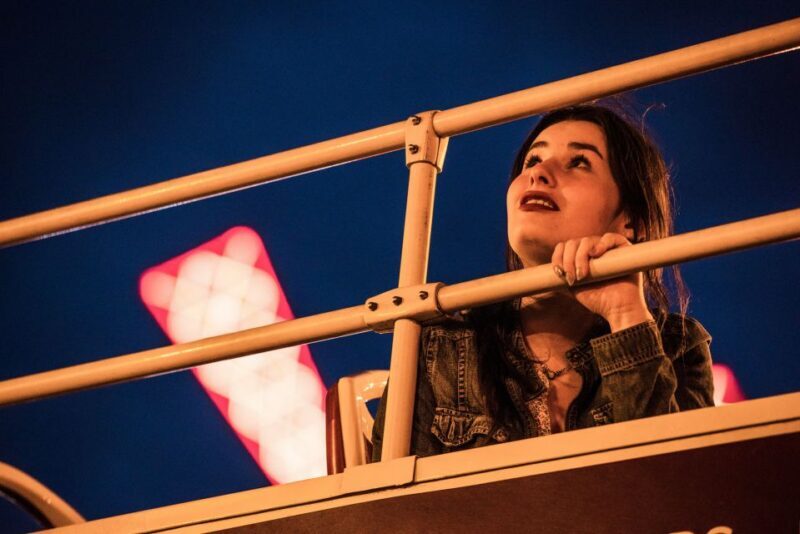
At about $35 per person, this is a paid overview, not a transport pass. Because you cannot hop off, the value comes from seeing a wide sweep of illuminated Paris in one sitting, with commentary and a seat out of the weather. If you would otherwise spend the evening walking between several distant sights or arranging your own route, the bus can be an efficient way to cover ground.
It is less compelling if you prefer to explore at your own pace, want extended photo stops, or already know the city well. You could visit one or two neighborhoods on foot and spend longer at each. The bus also won’t replace a river cruise, museum visit, or guided walking tour; each gives you a different kind of access.
For a first evening in Paris, I see the strongest value in the big-picture view. You can recognize the landmarks you may visit later, get a feel for how the central districts connect, and see the city’s lights without using up your legs. The reported 4.4 rating across 4,168 reviews fits that broad appeal, though the occasional audio fault and the short photo windows are worth weighing.
Book it if you want a low-effort way to see several famous parts of Paris after dark, especially if you’re visiting for the first time, traveling with a child, or would rather not walk long distances in the evening. The route offers a good overview, and the enclosed lower deck gives you a fallback when the weather is unkind.
Think twice if your main goal is to get off at the Eiffel Tower, take unhurried photographs, or spend time in Montmartre or at the Louvre. This is a panoramic circuit, not a collection of stops. Arrive early for a better chance at your preferred seat, dress for the temperature if you hope to sit upstairs, and treat the Eiffel Tower sparkle as a welcome possibility rather than a promise. If those terms suit you, the tour is a practical and memorable way to see Paris lit up.
“This was a brilliant way to see Paris. The recorded audio was done in a way that made the information fun and engaging too. We went on a day when t…”
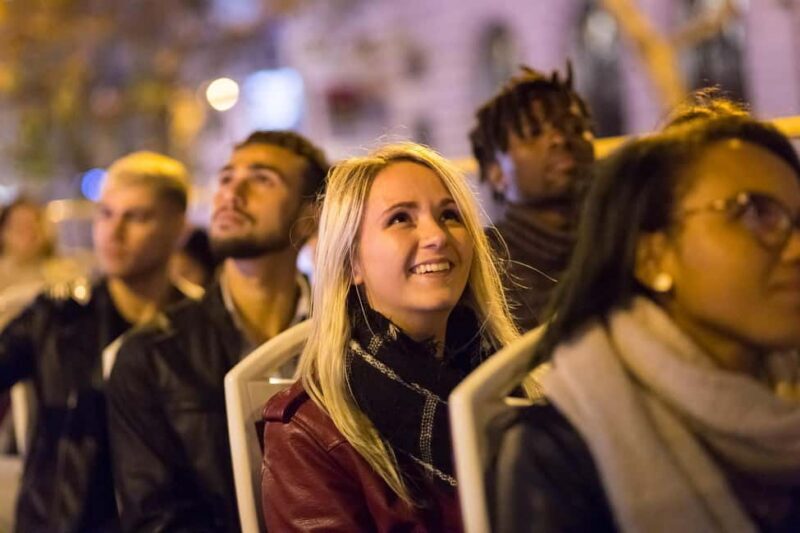
The tour lasts about two hours and follows one loop, returning to its starting point on the Champs-Élysées.
The meeting point is at 156 Avenue des Champs-Élysées, 75008, on the corner opposite the Arc de Triomphe. A Big Bus representative helps with check-in and boarding.
No. It is a single-loop night tour, not a hop-on, hop-off service.
The route passes the Champs-Élysées, Arc de Triomphe, Place de la Concorde, Madeleine, Palais Garnier, Moulin Rouge, Galeries Lafayette, the Louvre, Pont des Arts, Île de la Cité, Notre-Dame, Musée d’Orsay, Trocadéro, the Eiffel Tower, and Champ de Mars.
The digital audio guide is available in Spanish, Chinese, English, French, German, Italian, Portuguese, Russian, and Korean.
No. It operates with a closed top in poor weather. The enclosed lower level is another seating option.
Yes, the activity is listed as wheelchair accessible.
No. You need to make your own way to the Champs-Élysées meeting point, and the tour returns there.
Yes. You can reserve now and pay later, and you can cancel up to 24 hours in advance for a full refund.
You can check availability for your dates here: