Physical Address
304 North Cardinal St.
Dorchester Center, MA 02124
Physical Address
304 North Cardinal St.
Dorchester Center, MA 02124

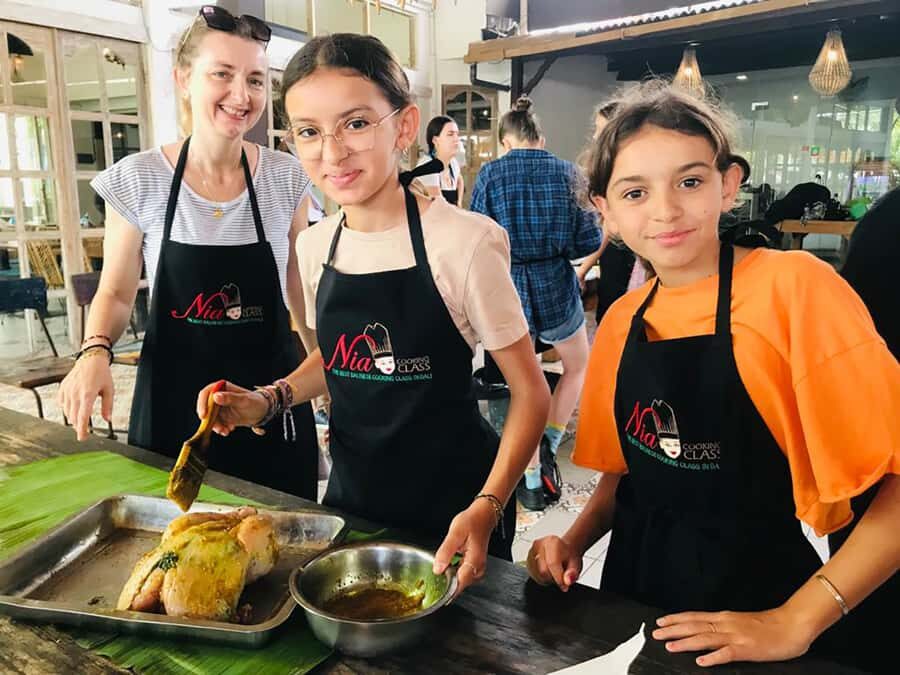
Cook Balinese dishes in Seminyak, visit a local market with a chef, then feast on your creations and take home the recipes.
Balinese cooking starts with its spice pastes, and this class lets you smell, handle, and prepare the ingredients rather than just hear their names. The morning pairs a local market visit with a hands-on session at Warung Nia, then ends with the best sort of lesson: a meal made by your own table.
I like two things in particular: the chef explains how to find useful ingredients back home, and the class gets you cooking several dishes instead of watching a long demonstration. You also leave with a recipe book, so the flavors need not stay a holiday memory.
One consideration: the market stop can feel brief if you want a long browse, and the morning starts early. Wear shoes you can walk in, and do not plan a big breakfast before a class that may finish with a full spread.
The four-hour experience begins with a visit to a nearby market, where your chef introduces the ingredients used in the cooking session. Rather than treating the market as a quick photo stop, the point is to understand what goes into Balinese food and how those ingredients work together.
Your chef leads you from stall to stall, pointing out herbs, spices, vegetables, fruit, fish, and meat. Some of the most useful details are small: how to identify a particular ingredient, what it contributes to a dish, and where you might look for it once you are home. Chef Komang, for example, has explained the different aromas and uses of ingredients, and the cooking team can suggest alternatives when the exact local item is hard to find abroad.
That practical angle matters. A cooking class is more useful when it helps you make the food again, not just enjoy one meal in Bali. Asian grocery stores may carry some of the ingredients, and the recipe book offers a way to match what is available to what you learned in class.
Keep your expectations for the market visit in proportion. It is an introduction tied to the day’s menu, not a long, unstructured market wander. Some people would happily spend more time there; if the market itself is your main interest, this class may move along faster than you would like.
The weather can also affect this part of the morning. One participant chose to skip the market when heavy rain made walking without umbrellas unappealing, then joined the cooking session. That is a useful reminder to bring comfortable shoes and dress for the conditions, though you should confirm with the operator if you need to change any part of your booking.
Looking for more options in Bali? Here are some other experiences worth considering.
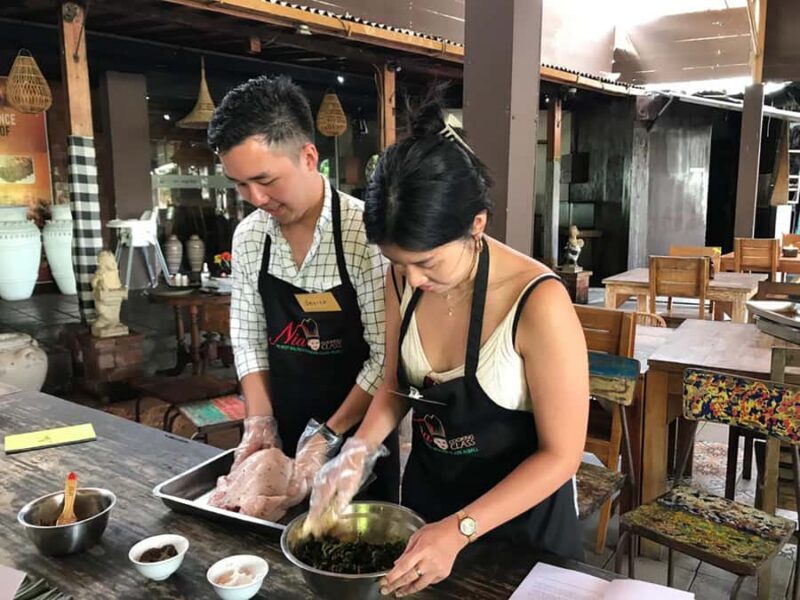
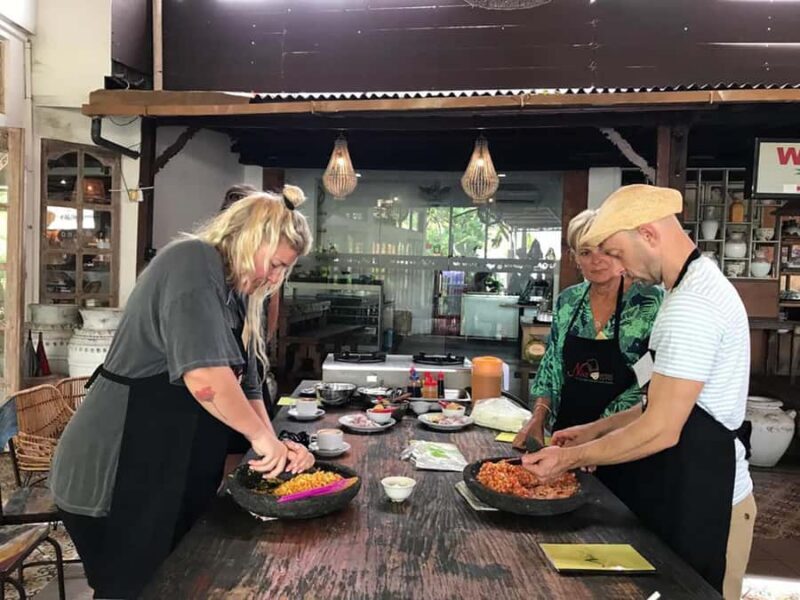
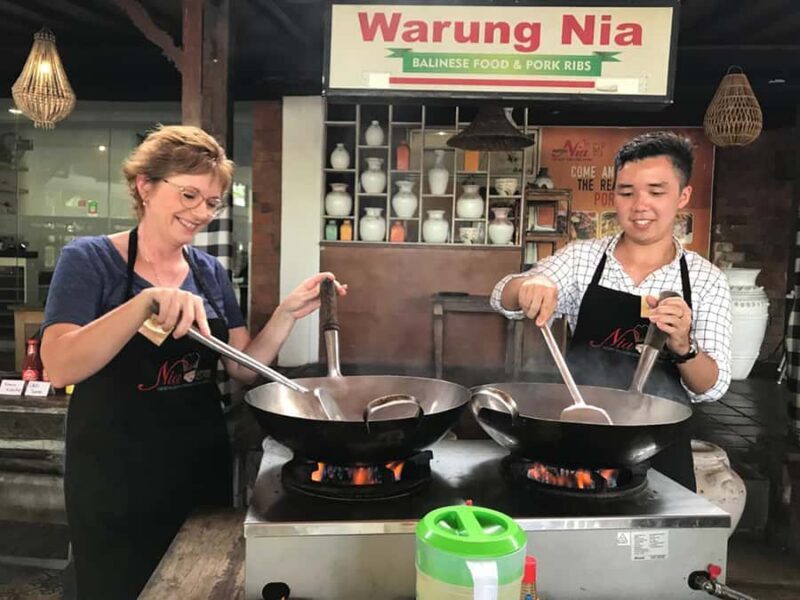
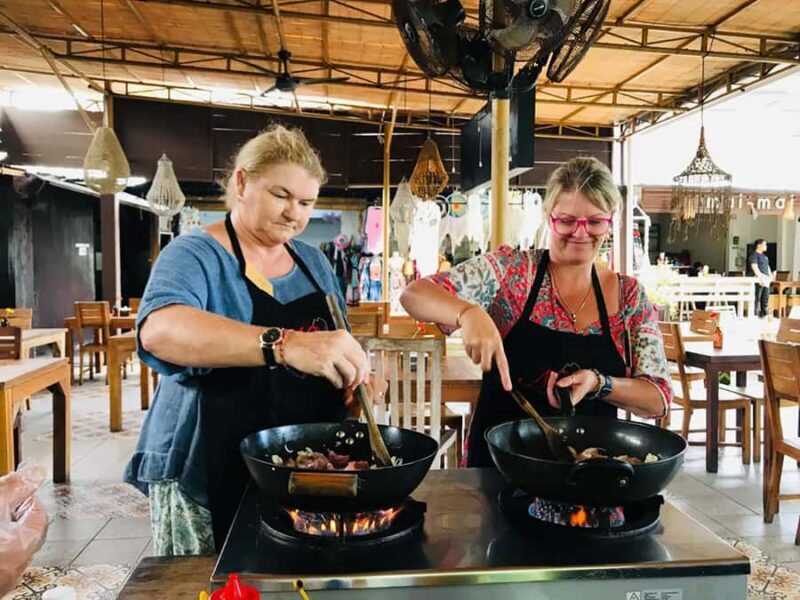
After the market, you return to the cooking venue and take your place at a work station. The class is designed for participation, with a chef demonstrating each step and staff on hand to guide people through preparation. The small-group setup is a real advantage: you can ask for help without having to compete with a crowd for the instructor’s attention.
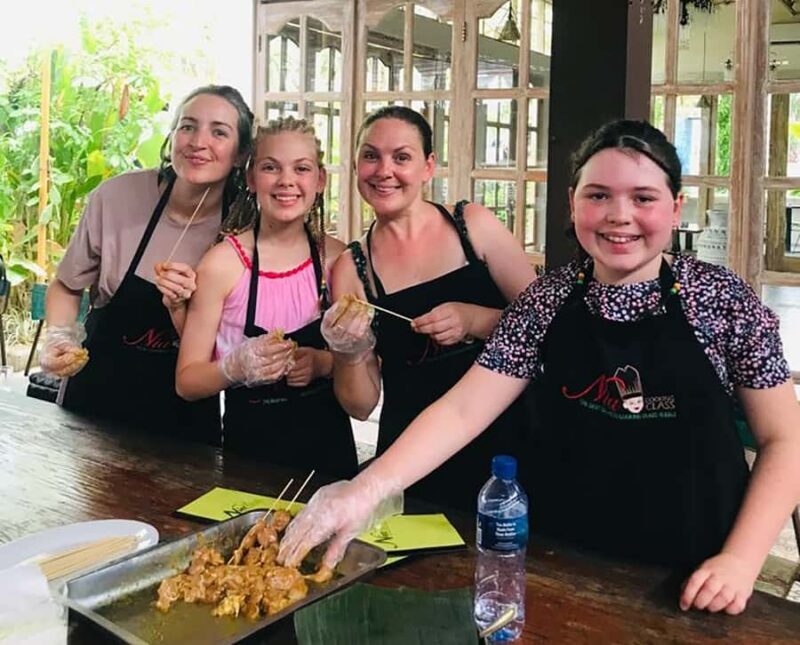
You may work through spice pastes before using them in finished dishes. One account of the class describes making four curry pastes and then preparing dishes with chicken, fish, pork, and satay. Other descriptions count around six to ten dishes, while some participants recall preparing even more components. The exact total can vary, so treat the class as a broad tasting and cooking session rather than a fixed menu with a guaranteed dish count.
The pace is organized. Staff prepare equipment and ingredients for the next stage, clean work areas, and remind the group to wash hands between tasks. That support makes a busy session easier to follow, especially if you have not cooked much Indonesian food before.
The teaching is not limited to chopping and stirring. You will pick up techniques, learn about spices and condiments, and get a closer look at how local ingredients create the flavors of Balinese dishes. Some instructors also add context about the food and its cultural background. Names you may encounter include Komang, Made, Tommy, and Jim, though the chef leading your class can vary.
This is a lively group activity, not a private lesson. You will share the work stations and the meal with other participants, which can make the morning sociable and fun. Solo visitors have found it easy to join in, and families have taken part together, but the group setting may not suit someone who wants a quiet, one-to-one cooking session.
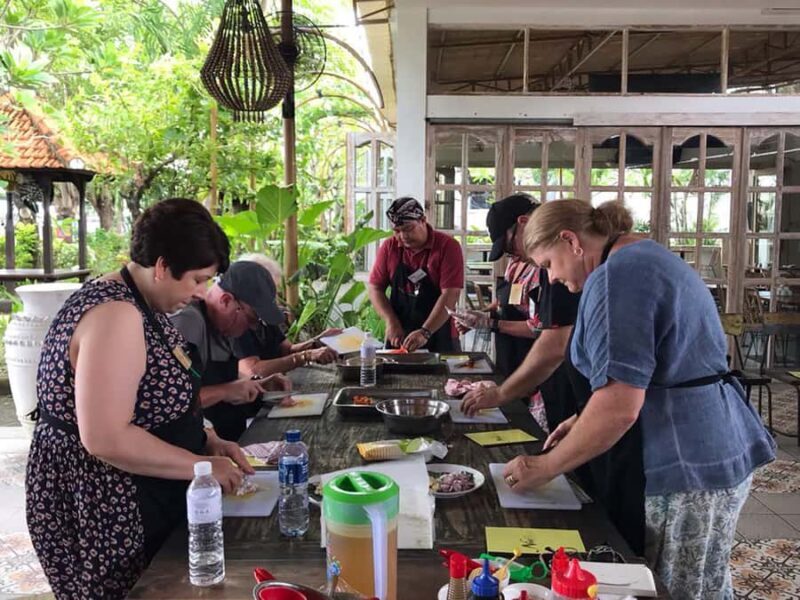
Once the cooking is done, you sit down with your group and eat what you have prepared. This is not a small tasting plate at the end of a demonstration. The class makes enough food for a substantial shared meal, and people often find there is more than they can finish.
That meal gives you a chance to compare the dishes and notice how the pastes, ingredients, and cooking methods differ. It also turns the class into a relaxed social morning. You have worked alongside the people at your table, and now you can enjoy the results together.
Plan your appetite accordingly. You may want to skip or keep breakfast light, since the quantity can be generous. The meal is part of what makes the $45 price feel worthwhile: you are paying for the market visit, instruction, ingredients, and a cooked meal, rather than a short demonstration alone.
The recipe book is the most practical souvenir. It gives you a way to revisit the dishes and share them with friends or family, and chefs may suggest substitutions for ingredients that are difficult to source outside Bali. That advice is especially helpful if you do not live near a specialist grocery store.
You also receive a certificate of completion. It is a small keepsake rather than the main reason to book, but it rounds out the class and gives younger participants a tangible reminder of the morning.
Some sessions have included a video sent by WhatsApp, but that is not listed as a standard inclusion, so do not count on it. The reliable take-home items are the recipe book and certificate.
More Great Tours Nearby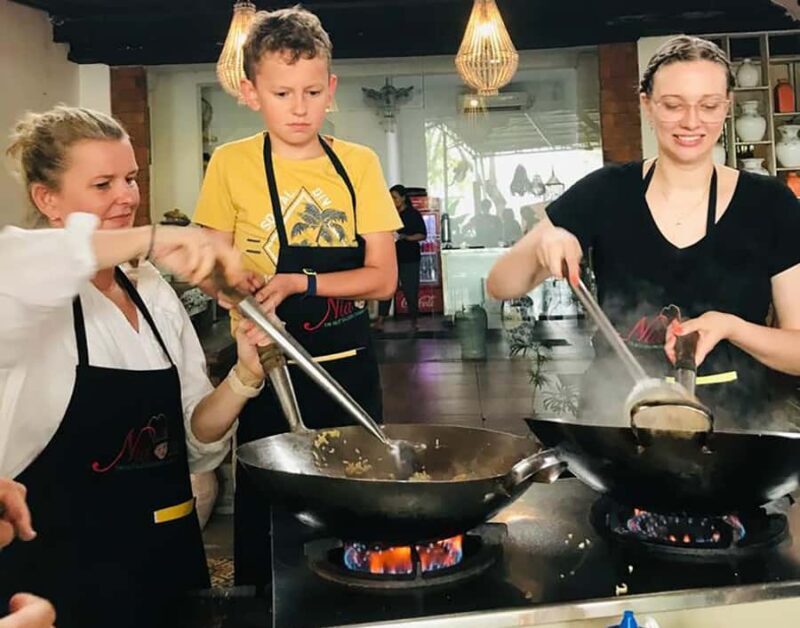
At $45 per person, this is a strong-value half-day activity if you want more than a meal out. The price includes hotel pickup in the stated areas, the market tour, the cooking class, ingredients, morning tea, and the certificate. You also eat the food you prepare, which can make the experience feel like both a class and lunch.
Value depends partly on what you want from the market stop. If you are mainly interested in detailed market browsing, the visit may be too short. If you want a guided introduction to local ingredients followed by plenty of hands-on cooking, the combination makes better use of your morning.
Transport is included only as pickup, not a ride back to your hotel. Pickup is available in Seminyak, Legian, and Kuta at 8:00 AM. If your hotel is outside those areas, the meeting point is Warung Nia, Jl. Kayu Aya Square, No. 19-21, Jl. Kayu Aya, Seminyak.
The transport has generally been rated highly, though one participant found the vehicle overcrowded and chose to walk back after the activity. The class does not include hotel drop-off, so arrange your return separately. The four-hour duration makes it straightforward to fit into a Bali itinerary, but leave room for the meal and the journey to your next stop.
Book it if you like to learn by doing, want a closer look at Balinese food, or enjoy bringing home recipes you can actually use. It suits couples, friends, families, and solo visitors who are comfortable sharing a table and taking part in a group activity.
It is also a good choice if you want a cultural activity that is practical rather than formal. You will learn about local ingredients and cooking methods while spending much of the morning preparing food. The instructors’ humor and hands-on guidance help keep the class accessible, even if this is your first cooking lesson.
Think twice if your priority is a long market tour, a private class, or a late start. You should also be prepared to walk a little, stand while cooking, and share work space. Comfortable clothes and shoes are recommended, and large bags or luggage are not allowed.
I would book this if you want a full, social morning that connects Bali’s ingredients with the food on your plate. The market introduction, active cooking, generous meal, and recipe book work well together, and the $45 price covers more than a simple class.
Choose another activity if you want to spend most of your time exploring a market or need a private, unhurried lesson. For everyone else, this is a practical way to learn how Balinese flavors are built and to bring a little of that cooking home.
“We absolutely loved the cooking class, we learnt I think around 12 different things to make, we decided to opt out of the market part of the tour a…”
The activity lasts four hours. Check the available starting times when you book.
The listed price is $45 per person.
Pickup is included from hotels in Seminyak, Legian, and Kuta. The pickup time is 8:00 AM.
Meet at Warung Nia, Jl. Kayu Aya Square, No. 19-21, Jl. Kayu Aya, Seminyak.
No. Hotel drop-off is not included.
The experience includes the market tour, cooking class, ingredients, morning tea, certificate, and pickup from hotels in Seminyak, Legian, and Kuta.
The instructor language is English.
Yes. A recipe book is included so you can try making the dishes again.
Yes. You can cancel up to 24 hours in advance for a full refund.
You can check availability for your dates here: