Physical Address
304 North Cardinal St.
Dorchester Center, MA 02124
Physical Address
304 North Cardinal St.
Dorchester Center, MA 02124

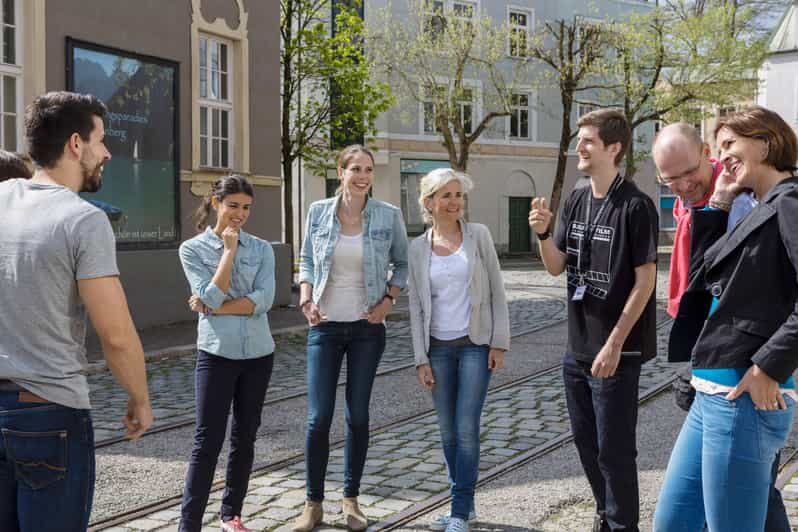
Tour Bavaria Filmstadt’s famous sets, from Das Boot to Die Rosenheim-Cops, and try on-camera scenes on a 90-minute guided visit.
Bavaria Filmstadt lets you walk through real film sets, not just admire props behind glass. I love the Das Boot submarine, where Wolfgang Petersen filmed scenes for the 1981 classic, and the chance to play a role in short scenes at sets from Die Rosenheim-Cops and Fack ju Göhte.
I also like the mix of film history and hands-on fun: one stop might take you from a fantasy space station to a police interrogation room, with a guide explaining how each scene was made. The main consideration is that the tour is in German, and you should not expect a look inside every active production hall.
Bavaria Filmstadt sits at the historic Geiselgasteig studios in southern Munich, where films have been made since 1919. The 90-minute guided tour gives you a compact introduction to that long run, from early silent cinema to German television and international productions.
This is a working film location, but the visit is not a general tour of every soundstage or current production. Instead, your guide leads you through selected sets and explains what they were built for, how filmmaking works, and how the studio’s role has changed over time. That distinction matters: you come to see particular movie worlds and learn their stories, not to watch a film crew at work.
The experience tends to work best when you treat it as both a film-history tour and a playful set visit. The guide supplies the context; the rooms and interactive stops give you a chance to see how camera angles, sets and effects help create what appears on screen.
You can check availability for your dates here: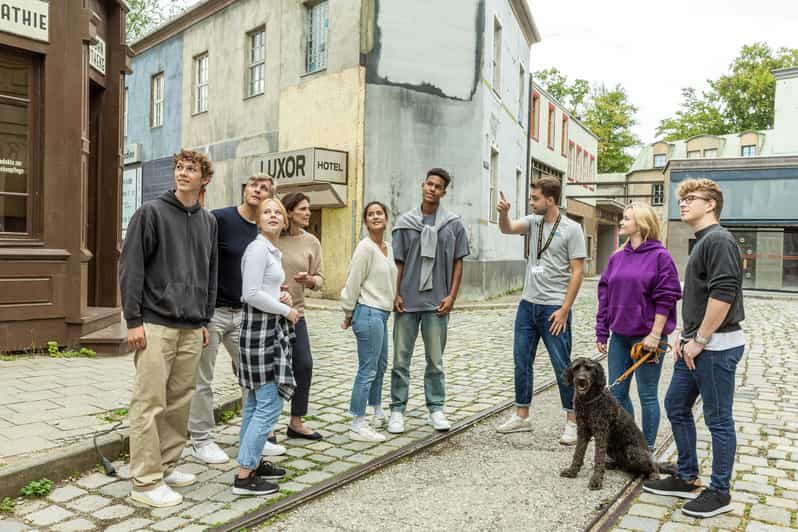
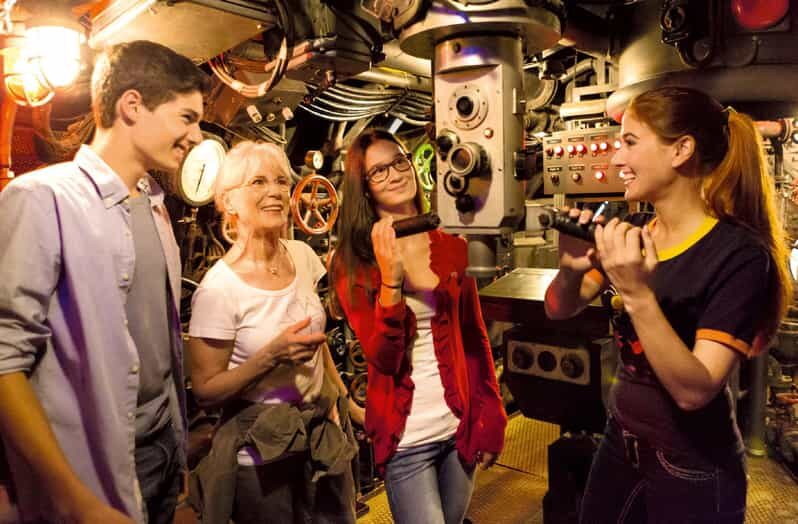
For many visitors, the submarine set is the tour’s most memorable stop. The original set was used for key scenes in Das Boot, Wolfgang Petersen’s 1981 film about life aboard a German U-boat. Inside, the cramped rooms make the physical limits of the setting plain. On screen, the submarine can feel like a world of its own. Standing within the set helps you understand how much of that effect depends on a carefully designed space.
Your guide also puts the set in context, including the film’s later television adaptation. If you know Das Boot, you will have a particular reason to linger here. If you do not, it is still a useful look at how a confined set can serve the story and the camera.
There is a practical caveat: the submarine is an older, much-admired attraction, not a glimpse of a current production. Some visitors who have been to the studio before would rather see more of the present-day soundstages. Go in expecting a historic set, not a working shoot.
If you prefer having a local expert, these guided Munich experiences could work well
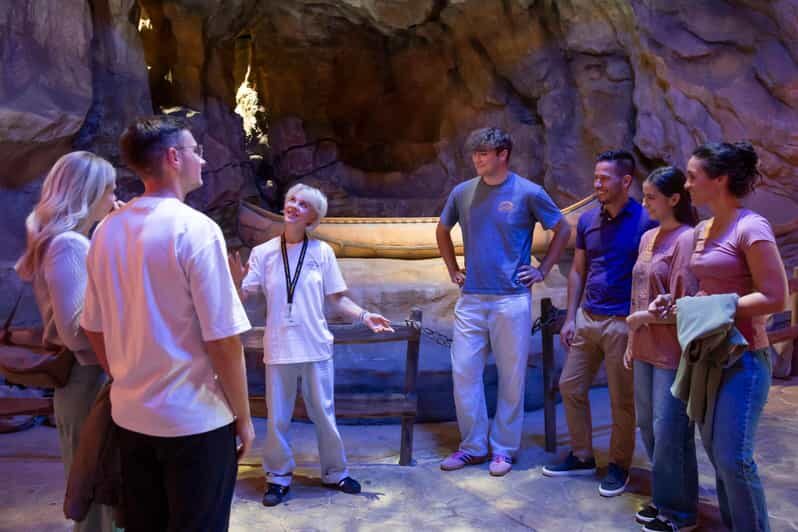
The cave from Das Kanu des Manitu brings the tour into a more recent comedy adventure. It is the setting for Abahachi and Ranger as they face dangers while searching for the legendary canoe. The film is the sequel to Michael Bully Herbig’s Der Schuh des Manitu, and the cave gives fans a chance to stand inside a world they may have seen only on screen.
The set’s value is partly in the contrast with the submarine. One is built around the tight, practical feel of a wartime vessel; the other creates a dramatic, mysterious cave. Your guide can connect those choices to the different genres and stories. If you have recently seen the film, this stop may feel especially immediate. If not, it still shows how a constructed space can give a scene its mood.
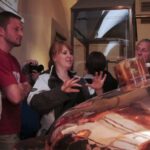
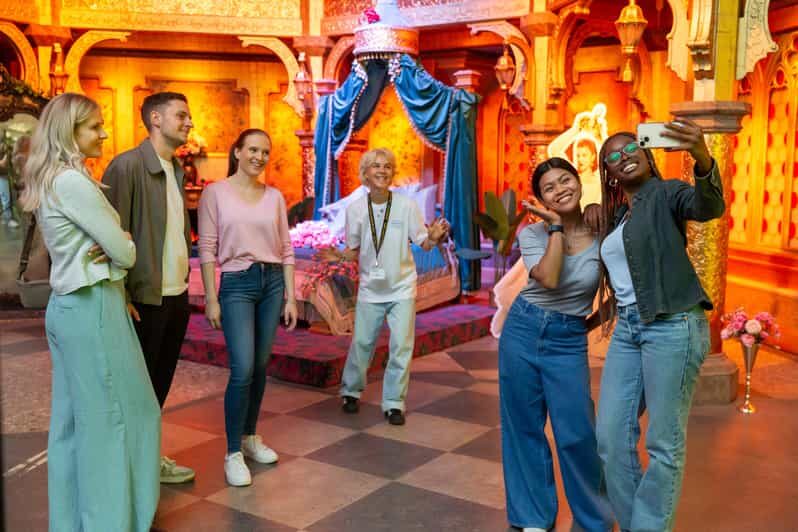
At the Die Rosenheim-Cops locations, you can visit Büro Stockl and an interrogation room. The guide may invite you to take on a role and act out a short scene. It is a small activity, not a full acting workshop, but it changes the pace of the tour and makes the sets more than rooms to walk through.
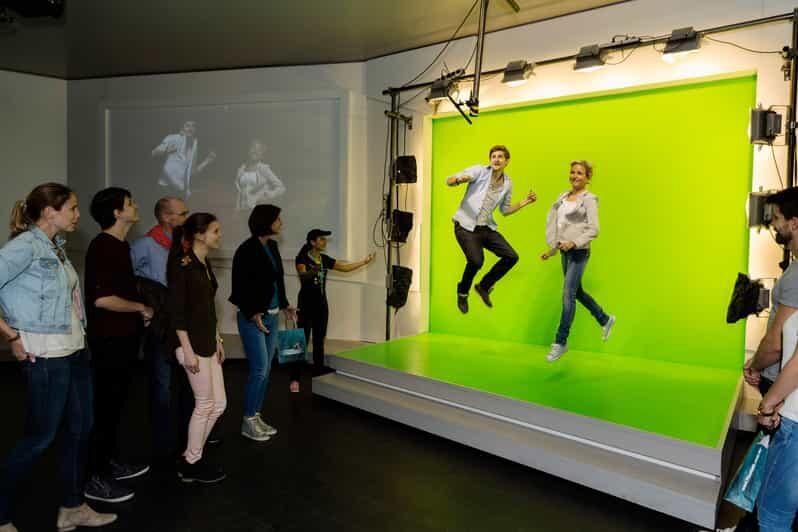
You can also make short on-camera clips at interactive stops. The studio setting helps explain why a scene is framed and staged in a particular way, while participating gives younger visitors a clear reason to pay attention. Digital video souvenirs are available to buy after the tour, so factor that extra cost in if you would like to keep a clip.
The best advice is simple: join in if you are invited. Some people come for film history and would rather stay behind the camera, but the short scenes are designed to be light and accessible. You do not need acting experience to take part.
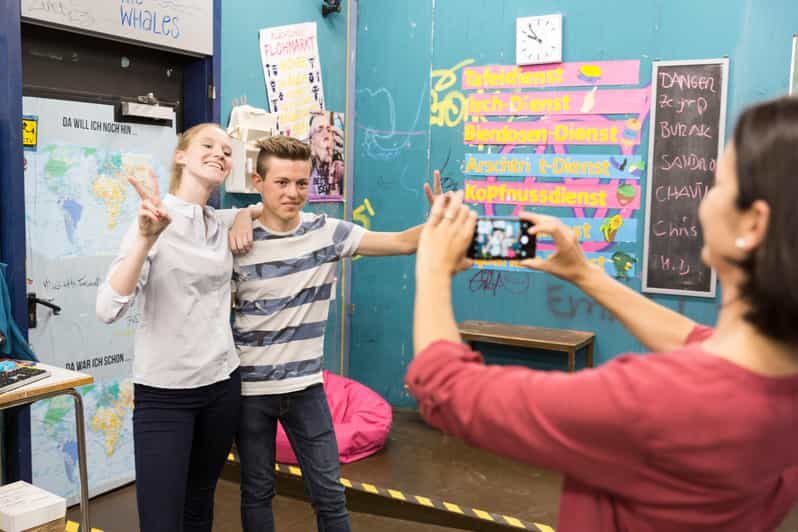
The Fack ju Göhte classroom offers another chance to step in front of the camera. It is a familiar setting for fans of the comedy series, and the interactive element gives you a quick taste of how a classroom scene can be staged for film.
The route also includes the detailed space station from Stowaway, inspired by the International Space Station and used in the 2021 film. This stop shifts the mood from comedy and crime to science fiction. The set is a reminder that studios create convincing environments through design, not by taking a camera to every real location.
You may also see the magical set from Die Zauberflöte and try visual-effects techniques in the VFX studio. These stops broaden the tour beyond famous German films and television. They are especially useful if your group has different tastes: one person can come for classic cinema, another for fantasy or science fiction, and children may be more interested in pressing into a scene than hearing a long history lesson.
More Great Tours NearbyThe redesigned backlot street was transformed for the Amazon Prime series Luden into a 1980s Hamburg Reeperbahn, with clubs, bars and neon-lit façades. It gives you a sense of how a studio street can be altered to suggest another place and period.
Many sets are outdoors, so the weather can shape how comfortable this part of the visit feels. Wear shoes you can walk in and dress for the forecast. The outdoor sections are part of the experience, not merely a route between indoor attractions.
Bavaria Filmstadt is a studio, but the guided visit does not promise access to every hall or a live shoot. Current filming can affect which sets are available, and some areas may be closed or changed. Photography is restricted in certain places, so follow the guide’s instructions rather than assuming you can take pictures at every stop.
A recurring wish among visitors is to see large production halls or current sets, such as those used for television and entertainment programmes. That is understandable, but it is not what this tour reliably offers. You are more likely to see selected original sets and stored or preserved locations than to watch a production in progress.
Set availability can change, too. If one particular film or show is the main reason you want to go, keep in mind that the route may not include every set on every visit. The tour’s strength is its range, not a guarantee of access to one specific room.
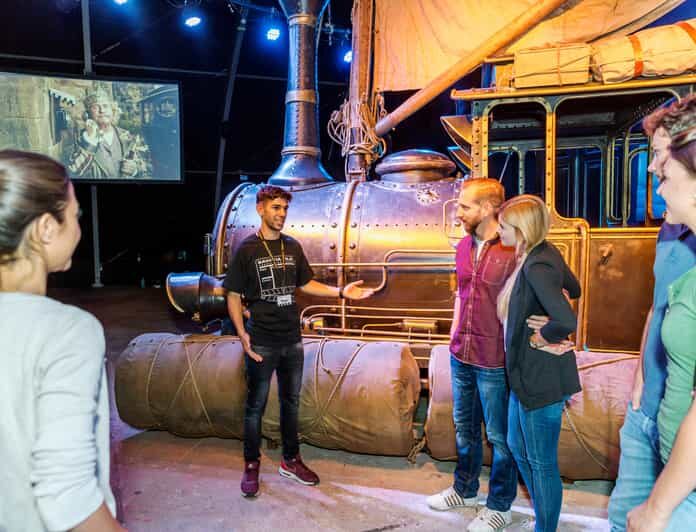
The guide is central to a 90-minute visit. A good one turns a set into a story, explains what the camera does not show, and keeps the group moving without rushing the interactive parts. Guides named by visitors include Jens, Tina, Jonathan, Leopold, Anna, Sven, Alexandra and Anette. Staff assignments vary, so do not book expecting a particular person.
The strongest tours balance facts with a relaxed tone and invite the group to participate. Some visitors have found that a fast pace or a quiet speaking voice makes it harder to catch every detail, especially in a noisy group. If you have trouble hearing, move closer to the guide when possible and ask questions at a stop.
The tour is conducted in German. One English-speaking group was given an English version by its guide, but that is not a dependable substitute for the stated language. If you need an English tour, confirm availability directly before booking rather than assuming one will be provided.
At $18 per person, the tour is a reasonable buy if you are interested in film sets, German cinema or television, or interactive activities. You get a live guide, access to selected sets and chances to take part in camera scenes. The value comes from the combination: you see real locations, hear how they were used and get a little taste of performing in them.
The price may feel less compelling if you expect a broad tour of active studios or a long visit to each set. Some people also compare the fee with what they hope to see inside production halls, which are not part of the regular experience. The 4D cinema and VR Arena Hologate cost extra, as do digital video souvenirs. Food and drinks are not included.
The tour has an average rating of 4.4 out of 5 from 338 reviews. The most consistent strengths are engaging guides, interesting film-making background and the chance to act out short scenes. Families especially appreciate that children can get involved. The main reservations are limited access to current production spaces, occasional issues hearing the guide and extra charges for add-ons.
The studios are in Geiselgasteig, in southern Munich. The tour lasts about 90 minutes, and available starting times vary. The visitor entrance can be a little hard to locate, so check directions before you set out and allow time to find the right entrance.
Wear comfortable shoes and weather-appropriate clothing. Some sets are outdoors, and not every area is step-free. The activity is described as wheelchair accessible, but that does not mean every set has step-free access; contact the provider if you need specific access information.
Cancellation is free up to 24 hours before the tour for a full refund, and you can reserve now and pay later. Those options help if your Munich plans are still shifting, but do not assume a missed tour can be rescheduled at short notice. One visitor who missed a first booking because of illness had to pay again for a new date.
I would book this tour if you enjoy seeing how a film set works, recognize some of the titles, or want a family activity that is more hands-on than a museum visit. The Das Boot submarine and the opportunity to make short scenes give the tour a clear purpose, while the mix of comedy, crime, fantasy and science fiction keeps the route varied.
I would think twice if your main goal is to watch a current production or tour large working soundstages. You should also be comfortable with a German-speaking guide, outdoor sections and the possibility that a particular set may not be available.
For a film fan, a family with children who like to perform, or anyone curious about what lies behind a movie scene, the 90-minute visit offers a useful and entertaining look at Bavaria’s film-making world. Book it for the sets and the stories, and treat the camera clips as a fun extra rather than the whole show.
“A great tour with really fantastic insights and also glimpses into the past. The tour guide was full of joy and emotion as she told us about things…”
The guided tour lasts approximately 90 minutes.
The tour is conducted in German. An English version has been provided to a group on at least one occasion, but English is not the stated tour language.
Selected sets may include the Das Boot submarine, the cave from Das Kanu des Manitu, Die Rosenheim-Cops locations, the Fack ju Göhte classroom, the Stowaway space station and the Die Zauberflöte set. Availability can change, including when sets are used for filming.
Yes. The tour includes interactive on-camera experiences, including opportunities to reenact short scenes. Digital video souvenirs can be purchased after the tour.
No. The 4D cinema and VR Arena Hologate are not included in the guided tour and can be booked on site.
The activity is listed as wheelchair accessible, but some sets are not step-free. Contact the provider to check access for your specific needs.
Photography is restricted in certain areas. Follow the guide’s instructions about where photos are allowed.
Wear comfortable shoes and clothing suitable for the weather. Many sets are outside.
You can check availability for your dates here: