Physical Address
304 North Cardinal St.
Dorchester Center, MA 02124
Physical Address
304 North Cardinal St.
Dorchester Center, MA 02124

Visit Ben Dinh’s Cu Chi Tunnels with a small group, an English-speaking guide and, when available, a Vietnam War veteran.
The most affecting part of this six-hour trip may come not underground but face to face with a Vietnam War veteran, whose account can give the tunnels a human scale. At Ben Dinh, you’ll also see displays of traps, sleeping quarters and barracks before exploring sections of the tunnel network.
I like two things in particular: the group is limited to nine, so you can ask questions without having to shout across a coach, and the guide can translate for the veteran and fill in historical context. I also like that you can choose to go into the tunnels or stay above ground.
One thing to keep in mind: the veteran may be resting on your tour day, and the tunnels can feel tight. The drive from Ho Chi Minh City takes time, too, so this is a substantial half-day outing, not a quick detour.

The Cu Chi Tunnels are a major wartime site, but a guided visit is more than a look at underground passages. The network served as a place to hide and communicate, and its cramped spaces offer a vivid sense of the conditions people faced. At Ben Dinh, you’ll see displays of booby traps, sleeping quarters and barracks before entering sections of the tunnels.
The veteran’s presence can make the history feel less abstract. He may describe life during the war and answer questions, while your English-speaking guide helps translate and place his account in context. The chance to hear directly from someone who lived through the conflict is the tour’s most distinctive feature.
There is an important qualification: the veteran may not be available on every date, as he sometimes rests for health reasons. When he is unable to lead, a member of the family of Phan Thi Kim Phuc, often known as Napalm Girl, takes his place. The tour description says you can hear about Kim Phuc’s survival of a napalm attack, but the format and detail of that conversation may differ from a meeting with the veteran.
It is worth arriving with a few questions ready. The time for conversation is limited, and asking something while the opportunity is there is better than thinking of it once the group has moved on. You can ask about daily life, the tunnels or the speaker’s own experiences, while keeping in mind that these are personal memories of a painful period.
You can check availability for your dates here: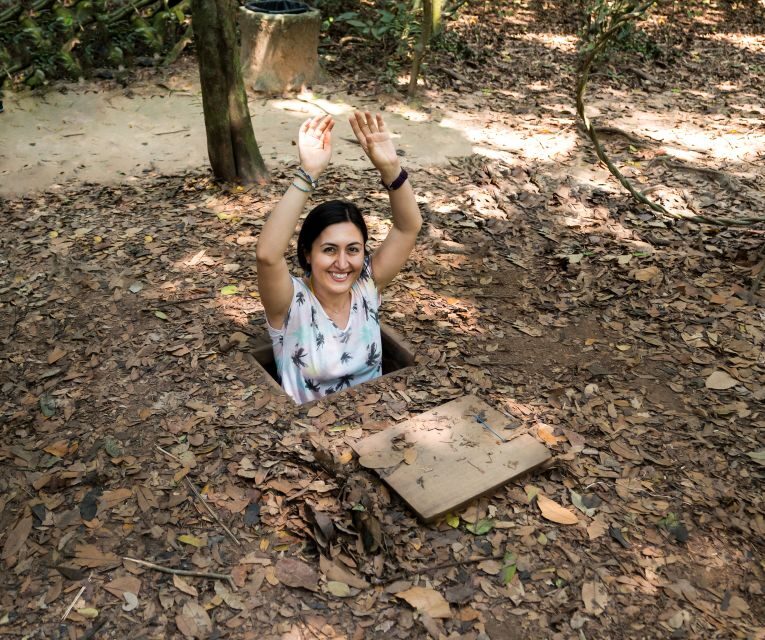
You can book hotel pickup or make your own way to Central Market Le Lai. Pickup is available at hotels in District 1, except Tan Dinh and Da Kao wards, and in District 3, but only in Vo Thi Sau and 6th Ward. If you choose the meeting point, arrive at least 10 minutes before departure; the guide waits for a maximum of 10 minutes.
The trip takes about six hours in total, including the road journey, site visit and return to the city. The drive is a meaningful part of the outing, not just a short transfer. One account describes roughly two hours on the road to the tunnels, though traffic and timing can affect how long your own ride takes. The vehicle is air-conditioned, which is welcome in the heat.
On the way, your guide may talk about Vietnamese history and everyday life, not only the tunnels. Guides named Sunny, Dickies, Alex and Travis have been praised for their clear English, friendly manner and willingness to answer questions. Names and guides vary by departure, of course, but a good guide matters here: the site is easier to understand when someone explains what you are seeing and gives you space to ask follow-up questions.
An early departure can help you reach the site before the day’s crowds build. It does mean getting up early, but it may make the visit feel less congested. Return times can vary: accounts describe arrivals back in the city around 2 p.m. and 3:30 p.m. rather than one fixed hour. If you have a timed appointment later in the day, leave a generous buffer.
Looking for more options in Ho Chi Minh City? Here are some other experiences worth considering.
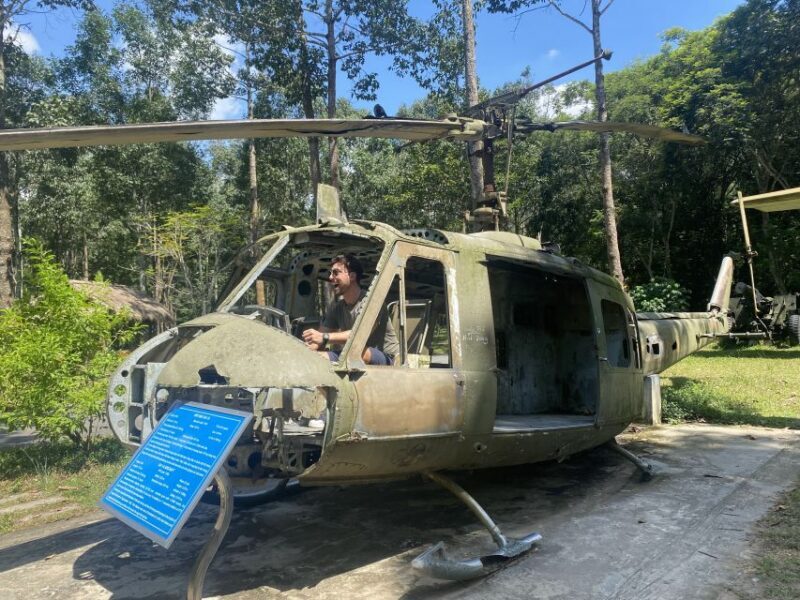
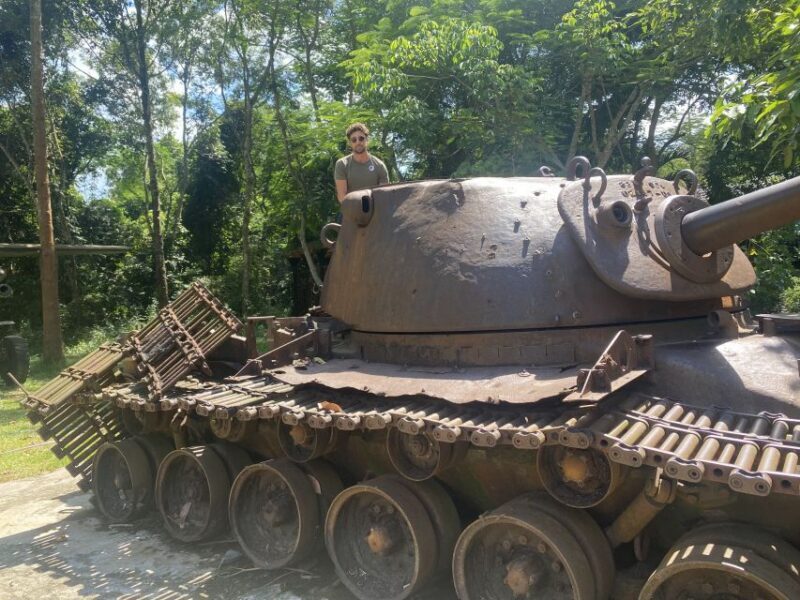
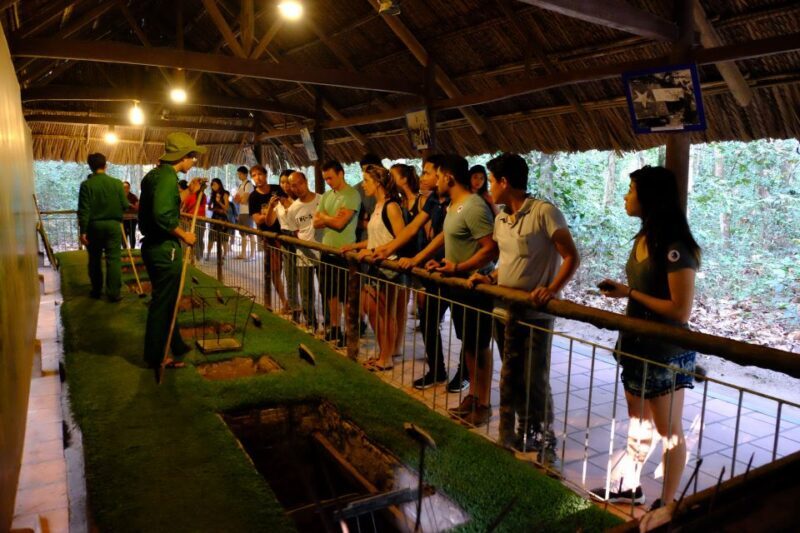
At the Ben Dinh entrance, the guide introduces the site and its wartime use. The tour lists about 30 minutes for this stop, where you can see replicas of booby traps and displays of sleeping quarters and barracks. These reconstructions help explain how people hid, communicated and lived in the tunnel system.
The displays are unsettling by design. They show how traps worked and how the tunnels formed part of a wider effort to survive and operate during the war. Give yourself time to listen to the explanations rather than treating the exhibits as a series of quick photo stops. Understanding their purpose makes the visit more than a spectacle.
The site is popular, and crowds can gather around the main viewing points. A small group gives your guide more room to adapt the order or pace where possible, but it cannot make a busy attraction private. Comfortable shoes, a hat, sunscreen and insect repellent are sensible choices. Bring water, too, and carry some cash for any costs that are not included.
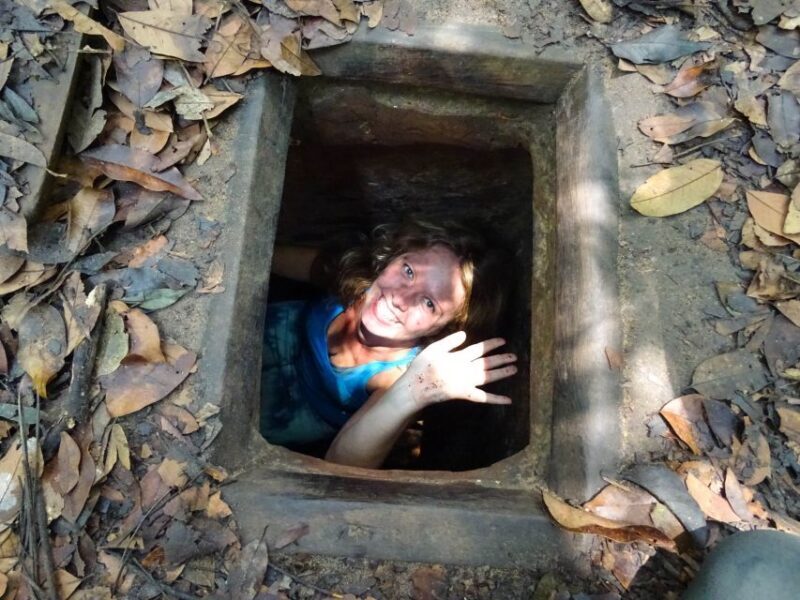
The tunnel complex is not a test of courage. You can look around without going underground, and you are not pressured to enter. If you do want to try a passage, remember that it can feel smaller and harder to move through than you expect. There are exits along the way, so you can stop if you feel uncomfortable.
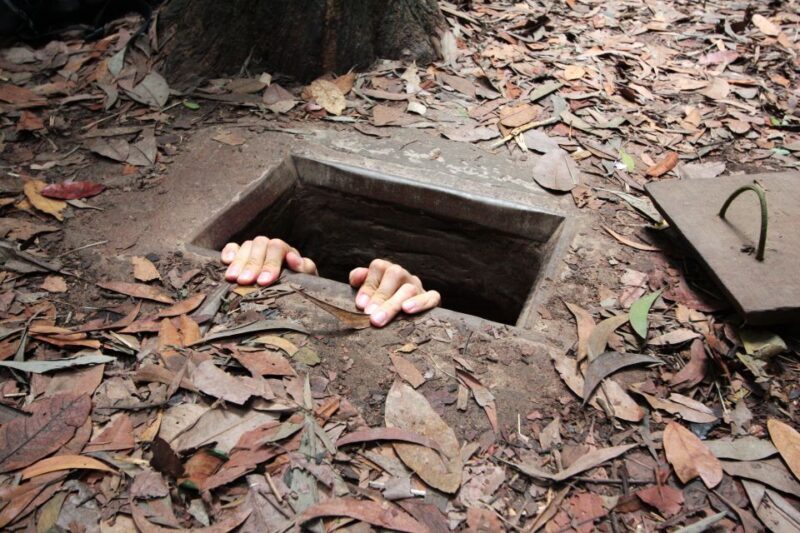
The tunnels are the main physical experience of the visit. You’ll have a chance to move through sections of the underground passageways, which were used for hiding and communication. Even a short stretch can give you a better sense of the cramped conditions than a diagram or an above-ground display can.
The passages can be a challenge if you are claustrophobic, have limited mobility or simply dislike confined spaces. The tour is not suitable for people with mobility impairments, heart problems or respiratory issues, and it is not suitable for children under seven or pregnant women. If you are unsure about entering, stay above ground and follow the explanations there. You can still see the exhibits and learn about the site.
Treat the tunnels as an optional part of the visit, not the measure of whether you have done the tour properly. The historic context and the veteran’s account are valuable even if you decide the passage is not for you. Avoid rushing after someone else; move at a pace that feels comfortable and use an exit if you want to come back up.
The itinerary allots about an hour for the Cu Chi Tunnels visit. Your actual time at each part can depend on the group and the flow of people at the site. Listen to the guide’s instructions, and use the time to ask questions while the group is together.
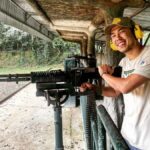
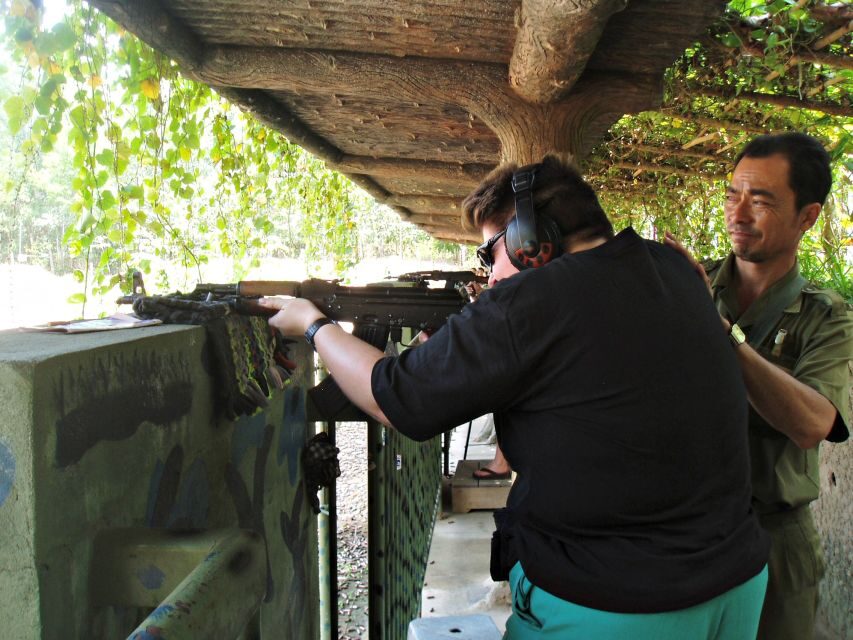
After the tunnel visit, there is an option to fire an M16 or AK-47 at a firing range. The fee is not included, and you can skip it. For some people, trying the rifles is part of understanding the machinery of war; for others, it adds little to a visit already centred on its human cost.
I’d make this choice based on your own interest, not a sense that you have to do every activity. The veteran’s account and the tunnel visit are the core of the experience. If you do want to fire a rifle, plan for an extra cost and follow the range’s instructions.
Some departures have also included a stop at a handicraft or lacquer workshop where people affected by Agent Orange make art. It is not listed as a fixed part of the core itinerary, so do not count on it or build your schedule around it. If an extra stop matters to your plans, ask the guide whether one is planned that day.
More Great Tours Nearby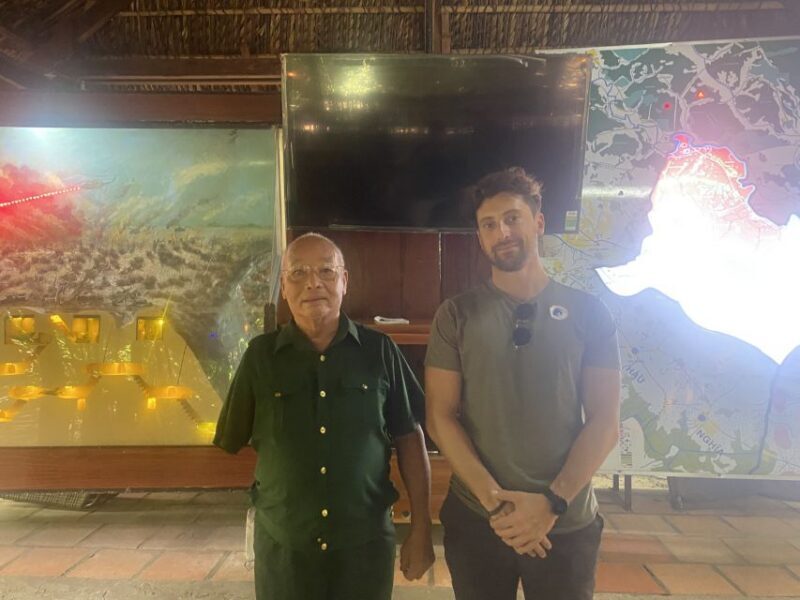
At $23 per person, the price is low for a guided trip with air-conditioned transport, hotel pickup and drop-off where available, bottled water, an English-speaking guide and a small group. The included one-hour veteran interaction, when available, adds something you cannot get simply by walking around the site alone.
Check the selected booking option carefully. Entrance fees are included only with some options; if yours does not include them, the Cu Chi Tunnels entrance fee is VND 125,000. Rifle firing costs extra, and meals are not included. The tour also includes exclusive use of a resting hut, though the details of that feature are not specified, so I would treat it as a useful extra rather than the main reason to book.
The value is strongest if you want context and a direct account, not just transport to the tunnels. A guide can explain the exhibits, translate for the veteran when needed and answer questions along the way. If you only want to see the site briefly, the group tour may be more than you need. But for a half-day visit with transport arranged, the price is a practical way to fit the tunnels into a short stay in Ho Chi Minh City.
This is a good fit if you want a guided introduction to the tunnels and the war, value the chance to ask questions, and are comfortable spending much of the outing in a vehicle or at a busy historic site. The group limit of nine helps keep conversation possible, and pickup can save you the task of arranging transport from central Ho Chi Minh City.
It may not be right for you if tight spaces are distressing, you need step-free access, or you have a health condition listed among the tour’s exclusions. You can opt out of entering the tunnels, but the visit still involves a lengthy road transfer and walking around the site. Wear comfortable shoes and bring sun protection, an umbrella, insect repellent and cash.
If you want to make the most of the veteran interaction, think of questions before you arrive. Ask your guide to translate if needed, and remember that the veteran may not be present on your date. The substitute family member offers a different personal perspective, but the tour’s exact conversation can change.
Book this tour if you want the Cu Chi Tunnels explained by a guide and value the chance to hear a personal account from a veteran when he is available. The small group, transport and chance to explore the passages make the $23 starting price appealing, provided you check whether your option includes the entrance fee and accept that the day involves a long drive.
Skip it if you want a quiet, uncrowded visit or know that confined spaces will make the tunnel section unpleasant. You do not have to go underground or pay for rifle firing to get something from the trip, but you should be comfortable with the site’s crowds and the possibility that the veteran will be absent.
“Our full day trip was great!! Not a huge group to travel with so it makes things much more relaxed (about 9 people). We started early but finished …”
The activity lasts about six hours, including transport from Ho Chi Minh City, the visit to Ben Dinh and the return journey. Return times can vary, so leave a buffer before any later plans.
Hotel pickup and drop-off are included when you choose an eligible pickup option. Pickup is available in District 1 except Tan Dinh and Da Kao wards, and in District 3 only in Vo Thi Sau and 6th Ward. You can also choose the meeting point at Central Market Le Lai.
The veteran is expected to join for about an hour when he is able, but he may take some tour days off to rest for health reasons. If he is unavailable, a family member of Phan Thi Kim Phuc fills in.
No. Entering the tunnels is optional, and you can remain above ground if you prefer. There are exits along the passageways if you start to feel uncomfortable.
Entrance fees are included only with some booking options. If your option excludes them, the Cu Chi Tunnels entrance fee is VND 125,000. Firing an M16 or AK-47 is optional and costs extra.
Wear comfortable shoes and bring sunglasses, a hat, sunscreen, insect repellent, an umbrella, a camera and cash. Bottled water is included.
You can check availability for your dates here: