Physical Address
304 North Cardinal St.
Dorchester Center, MA 02124
Physical Address
304 North Cardinal St.
Dorchester Center, MA 02124

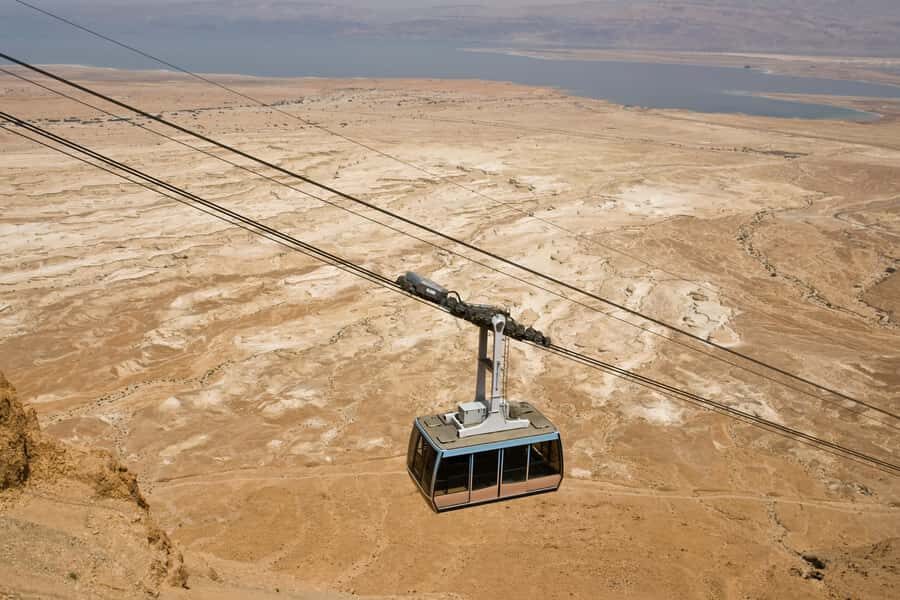
Ride the cable car to Masada, explore Herod’s desert fortress, see Qumran, and float at the Dead Sea on a full-day trip from Jerusalem.
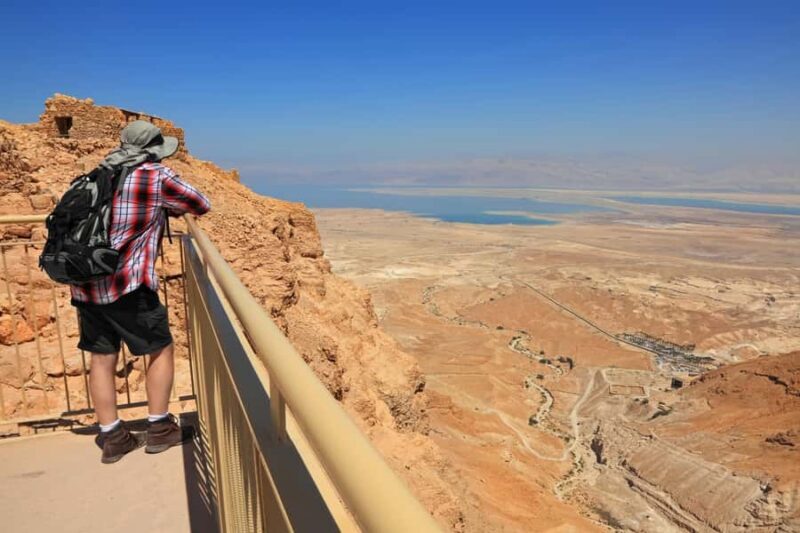
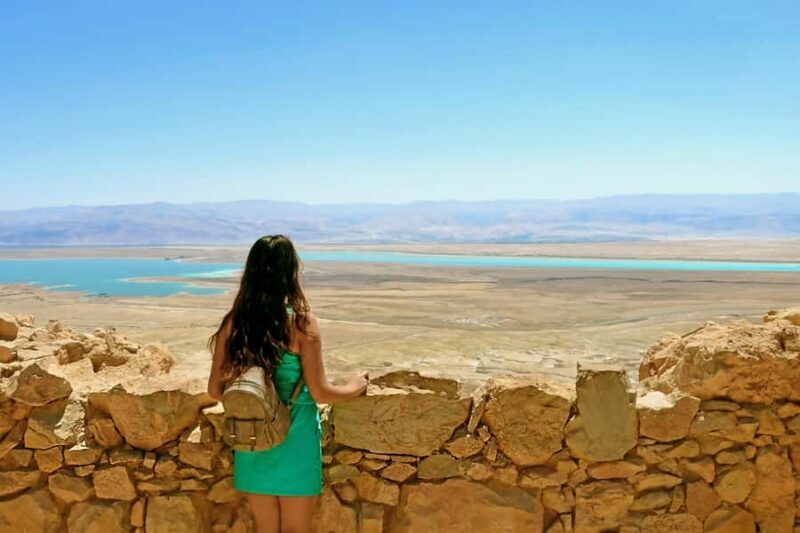
Masada makes a dramatic first impression: a fortress on a high desert plateau, with the Dead Sea and Judean Desert spread out below. This full-day trip pairs that view with time to float at the Dead Sea, so you get two very different sides of the region without arranging transport yourself.
I like the cable car ride and included Masada entry, which make the ancient site easier to reach, and the 1.5 hours at the Dead Sea, enough for a float and a mud bath. Guides including Daniel, Dorit and Udi have earned praise for clear explanations and lively storytelling.
The day lasts about 10 hours, with several coach legs and a relatively short stop at Qumran. Lunch and drinks are not included, and the Dead Sea can feel rushed if you want a long, slow beach visit.
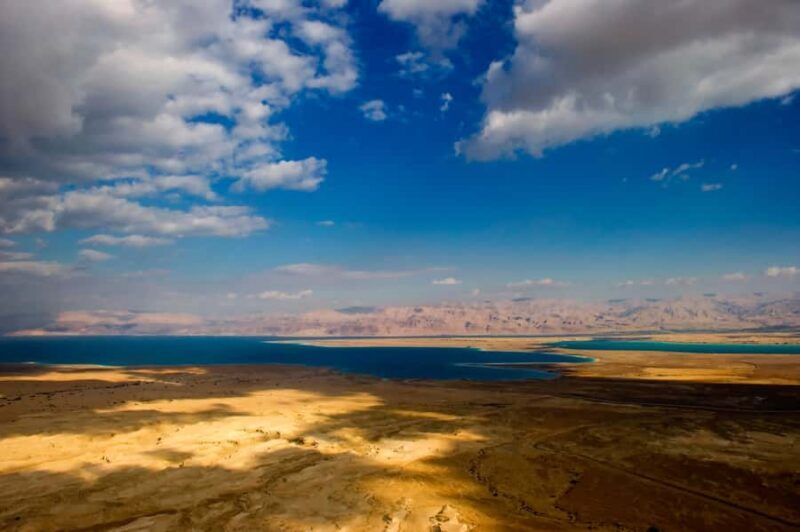
This is a broad sweep of the Judean Desert region, not a slow visit to one site. You travel from Jerusalem to Masada, continue to Qumran, then end at the Dead Sea before returning to the city. The coach takes care of the long distances, while a guide supplies the historical and geographic context that can be hard to piece together on your own.
The strongest part of the plan is its contrast. At Masada, you walk among the remains of a fortress and palace built for King Herod. At the Dead Sea, the main activity is wonderfully simple: ease into the water and let its high salt content keep you afloat. Qumran adds another layer, linking the desert scenery to the discovery of the Dead Sea Scrolls.
You should think of this as a full sightseeing day with a swim at the end, not a beach holiday with a brief stop at Masada. The scheduled 1.5 hours at the Dead Sea is useful, but it leaves less room for lingering than a dedicated beach day would.
Looking for more options in Jerusalem? Here are some other experiences worth considering.
The tour begins with pickup from the location selected when you book, followed by travel by air-conditioned coach. The route includes long stretches on the road, with one ride listed as about an hour and further legs of roughly 45 minutes between major stops. The return journey is listed at about 1.5 hours, though the full day can vary with the route and schedule.
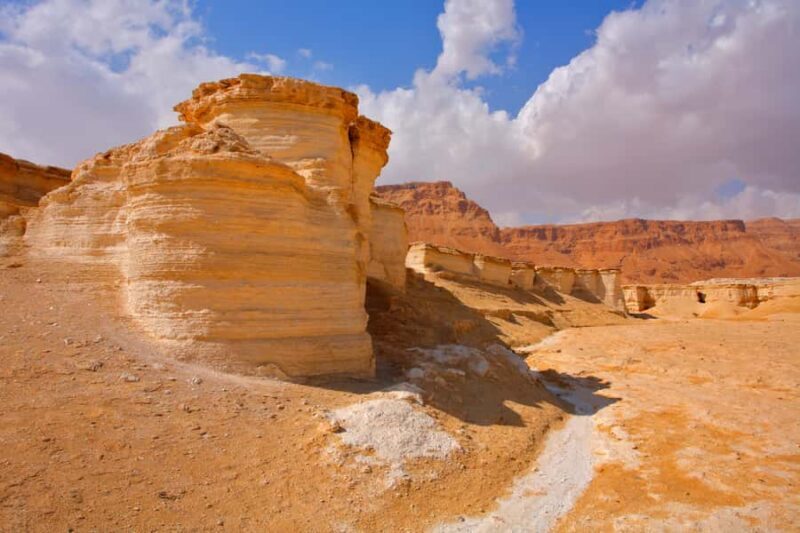
The drive is part of the visit rather than dead time. The scenery shifts from Jerusalem’s hill country to the dry Judean Desert and the Jordan Rift Valley. Your guide may use these stretches to explain the area’s geography, history and present-day setting. Past guides on this route have included Daniel, Dorit, Ben, Yuval and Udi; the guide on your date will depend on the departure.
A short desert stop is listed for photos and a camel ride. It is a brief pause, so treat it as a chance to stretch and take in the surroundings, not as a separate camel excursion. The route also offers a roadside view of the Good Samaritan, a landmark tied to the biblical parable. It is a quick look rather than a long site visit.
Pickup is optional, and the precise meeting arrangement depends on your selected option. Hotel pickup is available; if you are staying elsewhere, the operator provides details of the closest pickup point. The tour lists several Jerusalem drop-off locations, including the David Citadel Hotel, Ramada, Dan Panorama, Grand Court and Leonardo Plaza. Check the available choices when booking rather than assuming the coach will stop at your accommodation.
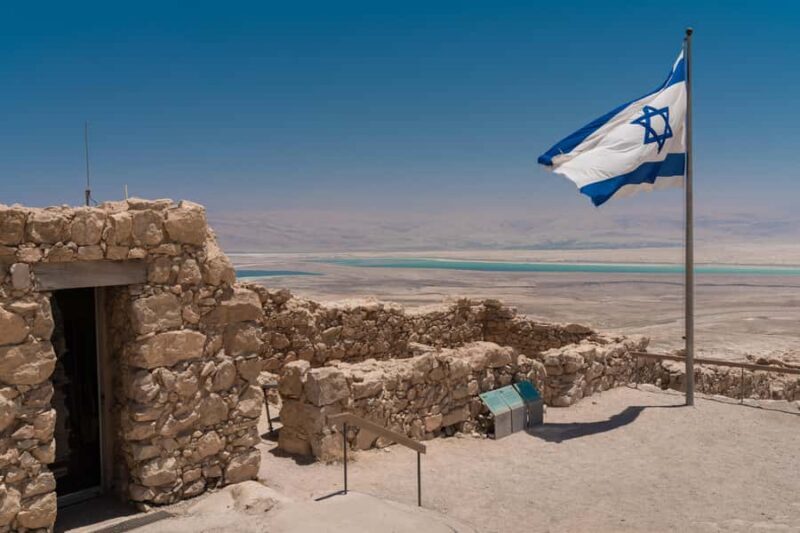
At Masada, the cable car takes you from the base to the plateau, about 1,300 feet above sea level. The ride is short, around 15 minutes, and the ascent offers a striking view of the desert as the ruins come into sight. Cable car transport and Masada admission are included, a useful saving on a day when separate tickets and transport would add up.
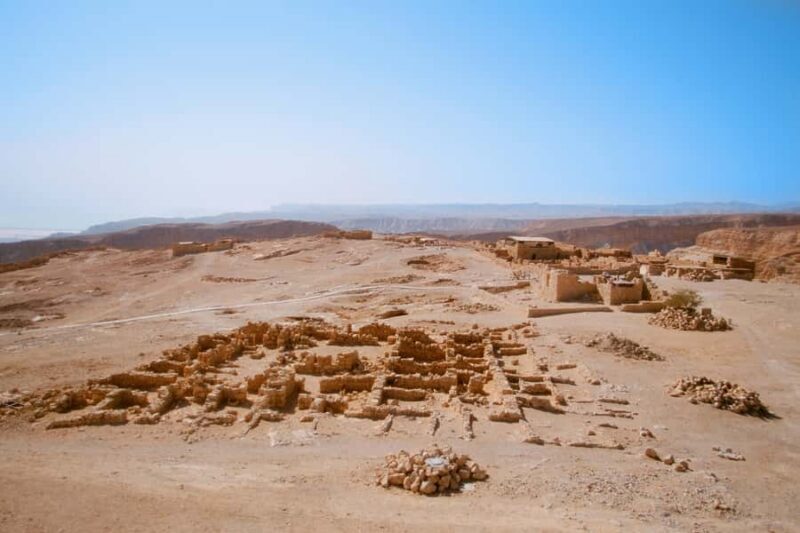
You have about 1.5 hours at the site, including a guided visit and time to walk among the remains. The complex began as a fortified palace built by King Herod around 37 BC. Look for traces of palaces, mosaic floors and Roman baths, as well as the remains of what is described as Israel’s oldest synagogue.
The water system is one of the site’s most telling features. Masada’s 12 cisterns each held a reported 140,000 cubic feet of water, a remarkable scale for a remote plateau. Your guide can help you see the fortress not simply as a collection of ruins, but as a place engineered to support life in an unforgiving setting.
Masada also carries a difficult story. After the Roman siege, Jewish rebels took refuge here; the resistance ended in 73 AD with the mass suicide of the remaining Zealots, as the account of the site is commonly presented. A good guide gives this story room and context rather than reducing it to a dramatic slogan. Guides such as Dorit, Daniel and Udi have been praised for connecting the site’s archaeology with its place in Jewish history.
The views alone make the cable car ascent worthwhile, but the guided explanations are what help the stones make sense. The trade-off is time: an hour and a half allows a substantial overview, yet you will not see every corner at a leisurely pace. Wear comfortable shoes, bring sun protection and keep an eye on the group’s meeting time.

The next stop is Qumran, associated with the caves where the Dead Sea Scrolls were discovered. This part of the day is allotted about an hour, including lunch and shopping. That means the visit is more of a compact stop than a long archaeological exploration.
The scrolls give Qumran an importance that goes well beyond its desert setting. Seeing the area and its caves helps place the discovery in its physical surroundings, while your guide can explain why the find matters. The schedule does not promise a long walk through the site, so if Qumran is your main interest, keep your expectations measured.
Lunch is not included, and food and drinks are at your own expense. The stop gives you a chance to eat and browse, but bring money for your meal and any purchases. Shopping is part of the scheduled hour, so you may need to choose between a longer lunch and time to look around.
More Great Tours Nearby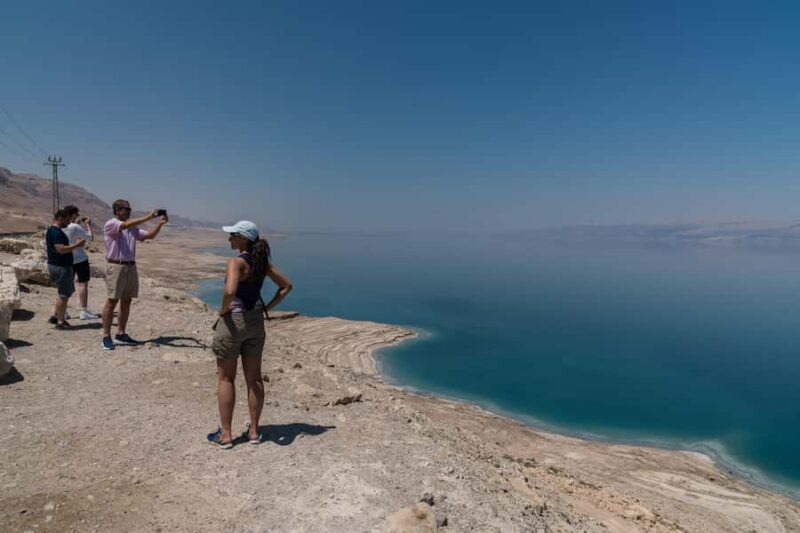
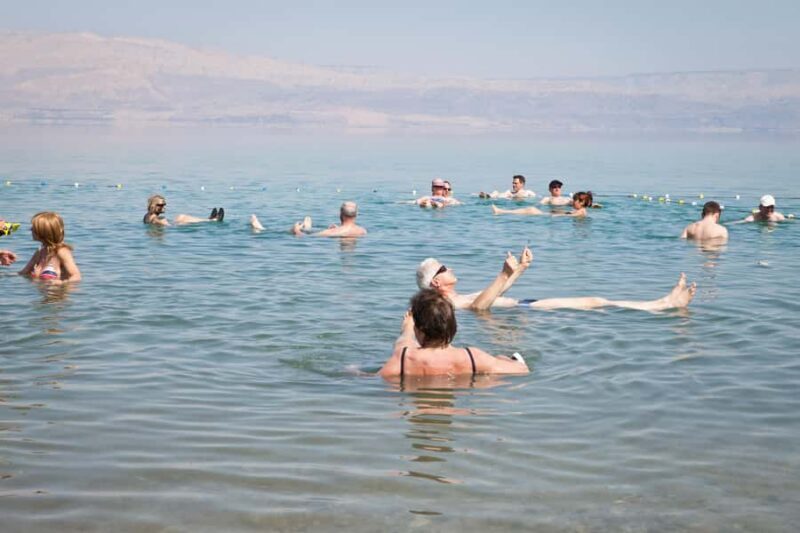
The Dead Sea Mineral Beach is the day’s most hands-on stop. You have about 1.5 hours to swim and use the natural mud. The beach entry fee is included, so you can focus on getting changed and enjoying the water rather than sorting out another admission ticket.
The water’s high salt content is the main attraction. Instead of swimming as you might in an ordinary sea, you can lean back and float on the surface with little effort. It is an unusual sensation, and for many people the simple pleasure of bobbing in the water is the highlight of the day.
Dead Sea mud is another reason to bring swimwear and a towel. You can apply the natural mud during the beach visit, then rinse off before getting back on the coach. Take care around the water and follow any instructions at the beach. The experience is about a short float and a mud bath, not a full spa treatment.
The 90-minute stop is enough for a swim and a little time to relax, but not necessarily for a long beach afternoon. Some people would rather trade part of the Masada visit for more time by the water; others will find the balance just right. If floating is your top priority, go in ready to make the most of the allotted time.
At $111 per person, the value rests on how much of the day is bundled together. The price includes round-trip coach transport, pickup and drop-off, a professional guide, Masada entry, the round-trip cable car and Dead Sea beach entry. Those inclusions cover the main costs at both headline stops and save you from arranging a complicated route independently.
Food and drinks are not included, and Qumran’s lunch stop is your responsibility. Keep a little extra in your budget for lunch and anything you choose to buy. The tour also includes time for shopping at Qumran, but purchases are not part of the price.
This is good value if you want both Masada and the Dead Sea in one day and appreciate having the transport and entry fees handled. It is less compelling if you prefer to set your own pace or want several hours by the water. The coach format makes a long-distance day manageable, but you follow the group’s schedule.
I would choose this tour if you have limited time in Jerusalem and want to see Masada, Qumran and the Dead Sea without renting a car or planning separate transfers. It suits history-minded visitors who also want a memorable swim, and it works well for people who value a guide’s explanations as much as the views.
It is not suitable for children under 4 or for wheelchair users. The day includes coach travel, walking at an archaeological site and a beach stop, so comfortable shoes and a tolerance for a full schedule matter. Bring sunglasses, a sun hat, swimwear, a towel and your passport, as specified for the tour.
Guides are a major part of the day’s appeal. Names such as Daniel, Dorit, Udi, Ben and Yuval have been associated with warm, clear explanations and a strong sense of the region’s history. You cannot choose a particular guide from the information provided, but the guiding is central to turning the drive and ruins into a coherent visit.
Book this tour if you want a practical, guided day that combines Masada’s history with the odd pleasure of floating in the Dead Sea. The cable car, entry fees and transport make the $111 price easy to assess, and the itinerary covers three distinctive stops in one outing.
Skip it if you want to spend most of the day at the beach, avoid long coach rides or explore Masada at your own pace. For a first visit with one day to spare, though, this is a sensible way to see the fortress, connect Qumran to the region’s story and finish with a float.
“We so enjoyed our tour to Masada and the Dead Sea! People learn so much on these tours. ❤️”
The tour lasts about 10 hours, including the coach journeys and stops at the Judean Desert, Masada, Qumran and the Dead Sea.
The $111 price includes a professional guide, air-conditioned coach transport, pickup and drop-off, Masada entry, round-trip cable car and entry to the Dead Sea beach.
No. Food and drinks are not included. The schedule has a lunch stop at Qumran, where you can buy food.
About 1.5 hours is allocated for the guided visit and sightseeing at Masada, including the cable car ride.
The Dead Sea stop is about 1.5 hours, with time for swimming and using the mud.
Live guides are listed in English, Spanish, German and French.
Yes. Hotel pickup is an option. If you need pickup from another location, the local operator will provide details of the closest pickup point.
Bring comfortable shoes, sunglasses, a sun hat, swimwear, a towel and your passport.
No. The tour is not suitable for children under 4 or for wheelchair users.
You can check availability for your dates here: