Physical Address
304 North Cardinal St.
Dorchester Center, MA 02124
Physical Address
304 North Cardinal St.
Dorchester Center, MA 02124

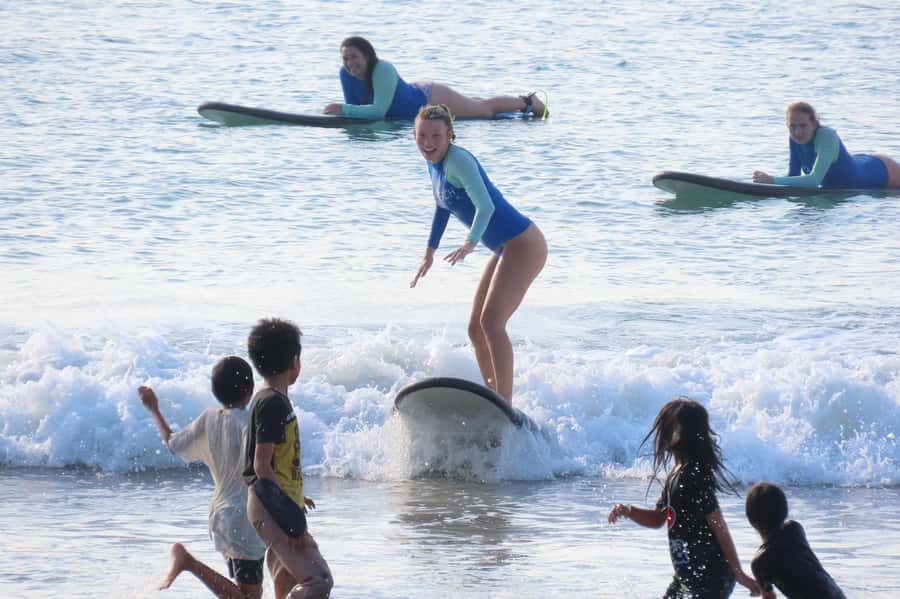
Learn to surf at Uluwatu’s Balangan, Jimbaran, or Dreamland Beach with a small-group lesson, gear, water, and photos for groups of two or more.
At Uluwatu, the beach for your lesson can change with the surf. Your instructor chooses among Balangan, Jimbaran, and Dreamland, aiming for the best conditions that day. That flexibility matters: the right break can make a first lesson feel manageable, while a change of beach may be part of the plan.
I like two things here: the small group, capped at six, and the unusually clear teaching structure, with a shore briefing followed by two sessions in the water. Instructors including Luis, Irawan, and Aldin are often singled out for patient, calm coaching that helps beginners get their first rides.
One consideration: surfing takes effort. Paddling can tire you out, and waves may be strong, so this is not a passive beach activity. The schedule and beach can also shift with the weather and swell, so leave a little flexibility in your day.
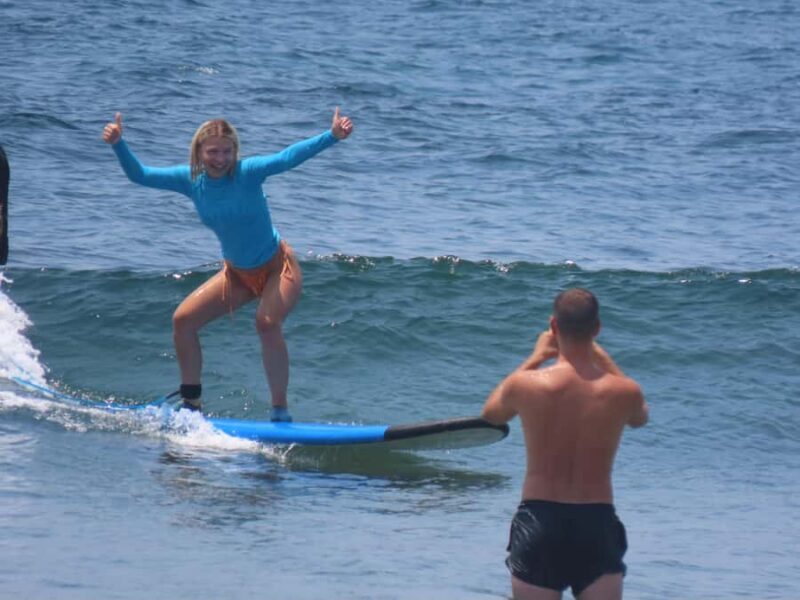
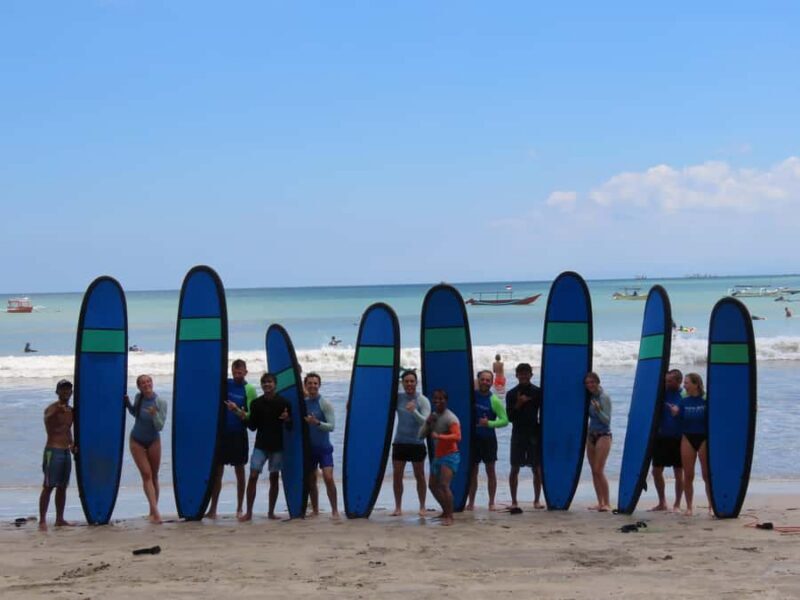
This is a two-hour lesson with Cakrawala Asia, priced at $36 per person. Rather than promise one fixed stretch of sand, the provider may take you to Balangan, Jimbaran, or Dreamland Beach, depending on weather and wave conditions.
That choice is useful in Uluwatu, where a day’s surf can call for a different beach than the one you first had in mind. It also means you should not build a tight schedule around a particular beach or assume the location will stay fixed. If conditions require a change, the provider says it will contact you in advance; if an unforeseen issue cancels the lesson, another suitable time or date can be arranged.
The group limit of six is a practical advantage for learning. You are not joining a large class where an instructor has to divide attention among a crowd. Most participants are taught at a ratio of one instructor to two students, while children under 12 receive one-to-one instruction. That gives you the chance to hear an individual tip and try it on the next wave.
Looking for more options in Uluwatu? Here are some other experiences worth considering.
The lesson begins with a 15-minute safety and theory briefing on the beach. You learn the basics of how to lie on the board, paddle, stand up, and surf safely before you try to put them together in the water. For a first-timer, that order is reassuring: you get a chance to understand the movements before the waves and the excitement compete for your attention.
Then comes 45 minutes of practice. Instructors help you apply the basics and, when needed, guide you toward the right break. Intermediate surfer Kane specifically praised Luis for offering tips and helping him choose where to catch a wave. If you already have some experience, that kind of practical help can be more useful than repeating a beginner lesson from scratch.
There is a 10-minute break before the last 50-minute session. Two hours in the surf is long enough to get repeated attempts, but it is still a workout. Paddling takes effort, and one first-timer found it tiring without strong swimming fitness. Bring a towel and swimwear, and be honest with yourself about your energy and comfort in the water.
The pace is a good fit for learning by doing. Several first-time surfers were able to stand after only a few attempts, but that is not something you should treat as a guarantee. Your progress depends on the waves, your stamina, and how quickly the basic movements click. The useful promise is not instant surfing; it is a chance to get instruction and repeated practice in a small class.
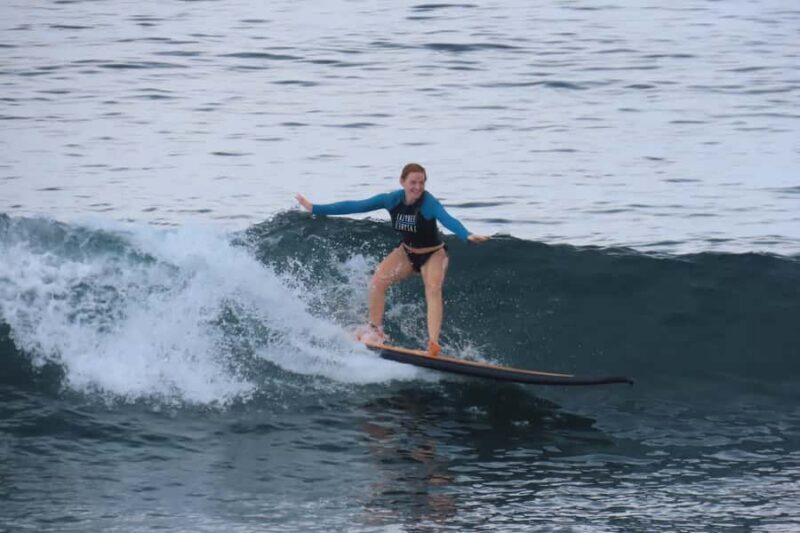
The teaching is a major reason to consider this session, especially if the surf makes you nervous. The instructors’ names that come up often include Luis, Irawan, and Aldin, along with coaches such as Repho and Yasmin. The common thread is clear explanations, patience, and active help in the water.
For beginners, that can mean breaking the pop-up into simple steps, encouraging you to try again, or helping you position yourself for a wave. One participant appreciated being pushed into waves so they could concentrate on standing rather than paddling. That approach may suit you if you want hands-on help. If you would rather manage every part of the ride independently, tell your instructor what you are comfortable with.
The instructors also play an important safety role. Participants describe clear shore briefings and calm guidance in the water, and one person felt well looked after despite being afraid of surfing. Still, an instructor cannot remove the effort or risks of the ocean. Follow directions, use the reef shoes provided, and take the briefing seriously.
Intermediate surfers need not assume the class is only for first-timers. The experience is described as suitable for beginners and intermediate surfers, and individual guidance can focus on choosing a better break or improving your approach. If you have surfed before, explain your level when you meet the instructor so the advice can be relevant to you.
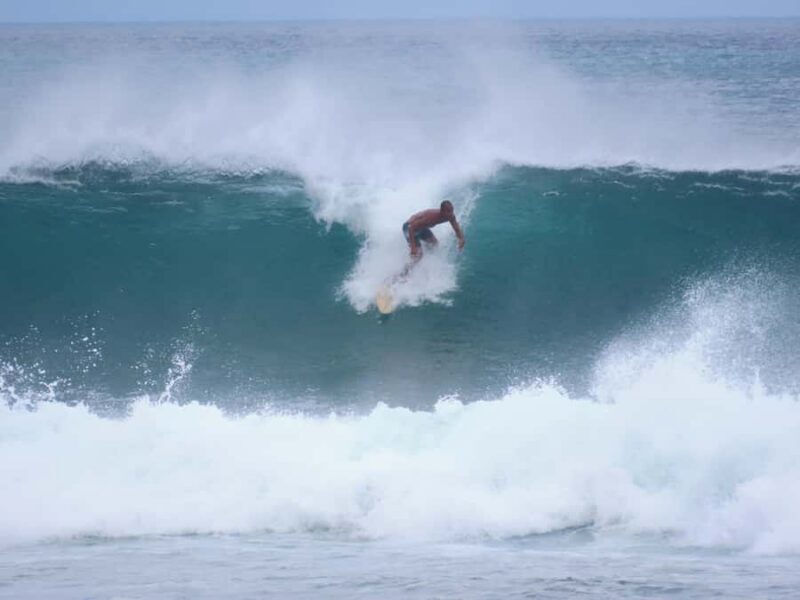
Your package includes surf equipment, a rash guard, reef shoes, sunblock, mineral water, locker storage, and a shower. That is a practical bundle, particularly if you are visiting the beach without your own surf gear. You only need to bring swimwear and a towel.
The lockers offer a place to store your things while you are in the water. They are described as small, so pack light and do not count on fitting a large bag. A shower is available after the lesson, which is welcome after a salty, sandy session. Mineral water is included too, a small but useful detail when the lesson itself takes steady effort.
Photos and videos are included when at least two people book together. If you are travelling with a friend or partner, that gives you a chance to keep a record of the session without arranging your own camera in the surf. Solo bookings do not meet the stated two-person condition, so do not assume photography is included if you book alone.
The equipment reduces the amount you need to arrange, but it does not replace the basics you bring yourself. Pack swimwear and a towel, and keep valuables to a minimum. Pickup and hotel drop-off are not included, so you need to arrange your own transport to the meeting point and back.
More Great Tours Nearby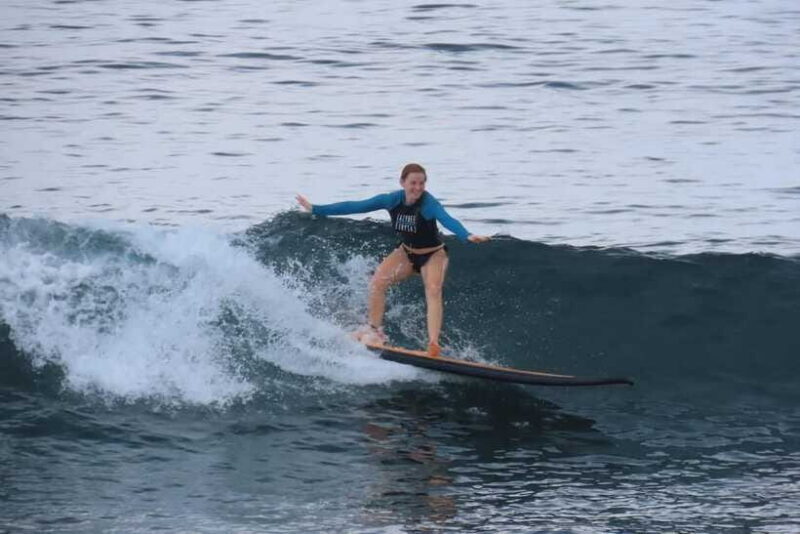
Once the session ends, you return your surf gear and can stay at the beach for a while. There is no need to rush straight back to your hotel, which gives you room to rest or enjoy the shore after the lesson. You make your own way back whenever you are ready.
The setting is part of the appeal. The lesson takes place on a beach where waves roll onto soft sand, with the Uluwatu coast providing a memorable backdrop. One participant described the cliffs, turquoise water, and strong reef breaks at Uluwatu, but the exact beach and conditions can vary. Keep the focus on the lesson itself: this is a surf session, not a sightseeing tour.
Some participants found that the waves were strong but still rideable, while others noted that the sea could feel demanding. Conditions change, which is why the beach may change too. If you are new to surfing, listen closely when the instructor explains where to enter and how to stay safe. The same waves that make the session exciting call for attention and respect.
At $36 per person, the value rests on more than time in the water. You get a two-hour session, a small group capped at six, an instructor, surf equipment, rash guard, reef shoes, sunblock, water, a locker, and shower access. Photos and videos are included for bookings of two or more. You do not need to rent the main gear separately for this lesson.
The format is especially good value if you are starting from zero. A short briefing, then 95 minutes of active practice split by a break, gives you a proper chance to try the key movements repeatedly. The instructor-to-student ratio is also a meaningful part of the price. You are paying for direction in the water, not just access to a board.
It is less convenient if you expect transport to be covered. Hotel pickup and drop-off are not included, and you need to allow for the possibility that the beach or schedule changes with conditions. If you are booking as a solo participant, also factor in that photos and videos are only included when at least two people book together.
The experience has a 4.9 rating from 832 reviews, a strong signal of consistent satisfaction. Many participants describe it as a fun first surf lesson, with clear teaching and supportive instructors. That does not mean every person will stand up or catch a wave, but it does suggest the lesson is well suited to people who want an encouraging introduction.
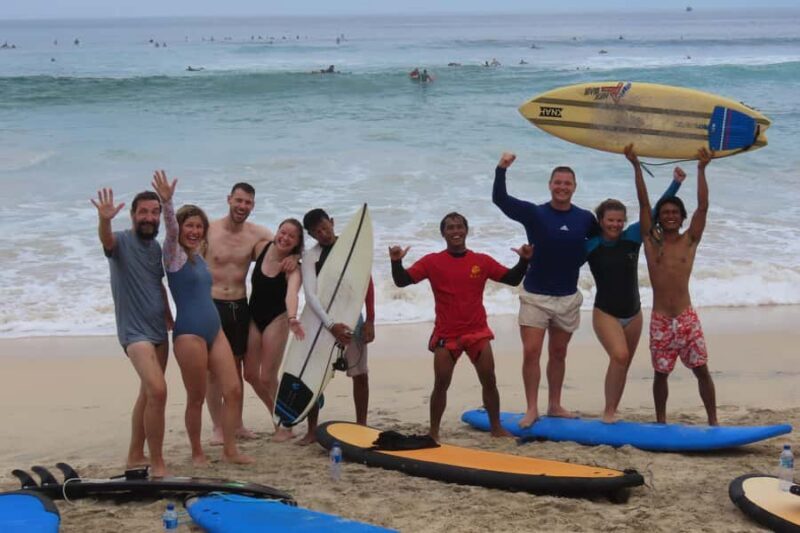
This is a sound choice if you are curious about surfing and want guided practice rather than trying to figure it out alone. First-timers in particular benefit from the land briefing, small group, and instructors who can offer individual encouragement. Couples and friends can book together and qualify for the included photos and videos.
It can also suit an intermediate surfer who wants coaching in the water, though the specific instruction will depend on your needs and the day’s conditions. Tell your coach what you have already learned so you can get tips that build on your experience.
The lesson is not suitable for children under 9 or people over 65, according to the activity information. Anyone considering it should also keep in mind that paddling is tiring and waves can be powerful. You do not need to be an expert, but you should be prepared for physical effort and ready to follow safety instructions.
Booking is flexible: you can reserve now and pay later, and cancellation up to 24 hours in advance qualifies for a full refund. Starting times depend on availability. English and Indonesian are the listed lesson languages.
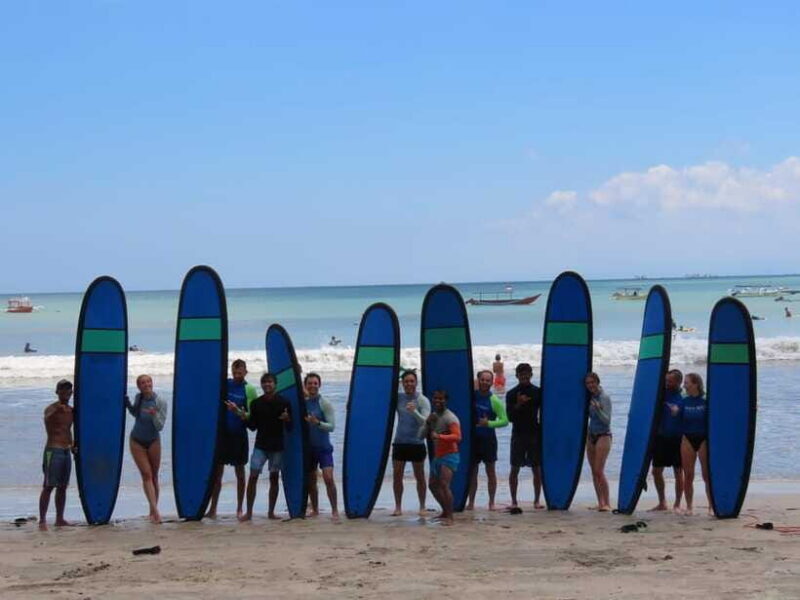
Book this lesson if you want a practical, encouraging introduction to surfing, have two hours to spare, and are comfortable with the fact that the beach may change to suit the waves. The small class, thoughtful equipment package, and hands-on coaching make $36 a fair price for a supported first try.
Skip it if you need hotel transport, cannot manage a tiring session in the water, or require a fixed beach and schedule. If you are keen but unsure, book with a friend: you can share the experience and qualify for the included photos and videos.
“For the intermediate site very happy with luis giving tips and pushing in the right break when needed 10/10”
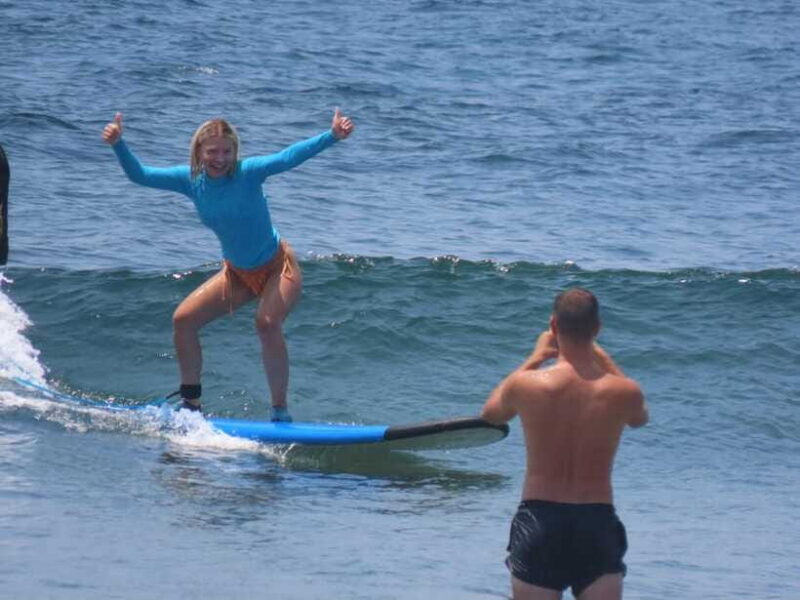
The session lasts two hours. It includes a 15-minute safety and theory briefing, 45 minutes of practice, a 10-minute break, and a final 50-minute practice session.
The lesson may take place at Balangan, Jimbaran, or Dreamland Beach. The provider chooses the location based on the day’s weather and wave conditions.
Yes. The lesson covers how to lie on the board, stand up, paddle, and surf safely. Beginners start with an explanation on the beach before practising in the water.
The group is limited to six participants. The usual ratio is one instructor for every two students. Children under 12 have one instructor each.
Surf equipment, a rash guard, reef shoes, sunblock, mineral water, locker storage, and a shower are included.
Yes, when at least two participants book together. The activity information does not promise photos and videos for a solo booking.
Bring swimwear and a towel. The activity provides the surf equipment and listed lesson gear.
Hotel pickup and drop-off are not included, so you need to make your own way to and from the meeting point. If weather or waves require a change in schedule or location, the provider will contact you; if an unforeseen issue cancels the lesson, another suitable time or date can be arranged.
You can check availability for your dates here: