Physical Address
304 North Cardinal St.
Dorchester Center, MA 02124
Physical Address
304 North Cardinal St.
Dorchester Center, MA 02124

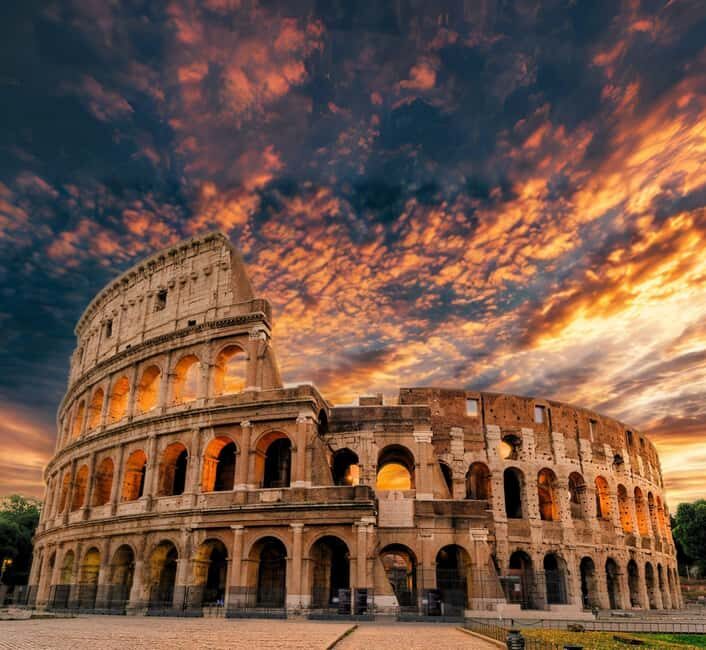
Walk the Colosseum’s arena, Roman Forum and Palatine Hill with a guide, and choose the underground option for a closer look at its hidden workings.
The striking part of this tour is stepping onto the Colosseum’s arena floor through the Gladiators’ Gate, where the spectacle once began. I like that you get both the close-up view from the arena and the wider context of the Forum and Palatine Hill, and that a guide links the ruins to Roman life rather than leaving you to puzzle them out alone.
I also like the chance to add the underground, where the machinery and spaces beneath the arena help explain how the games were staged. The main caution is practical: the underground is not an add-on you can choose on the spot, and the stated 2.5-hour duration conflicts with the itinerary’s longer time estimates and reports of tours lasting three to four hours.
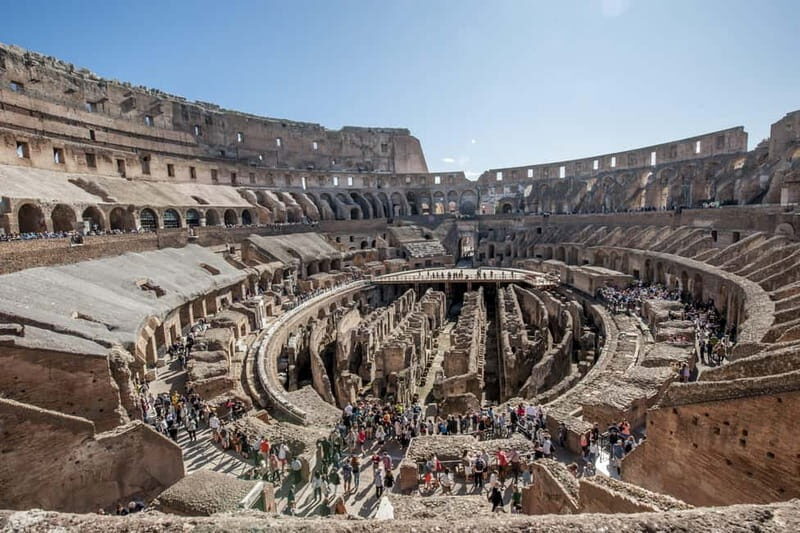
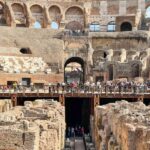
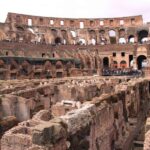
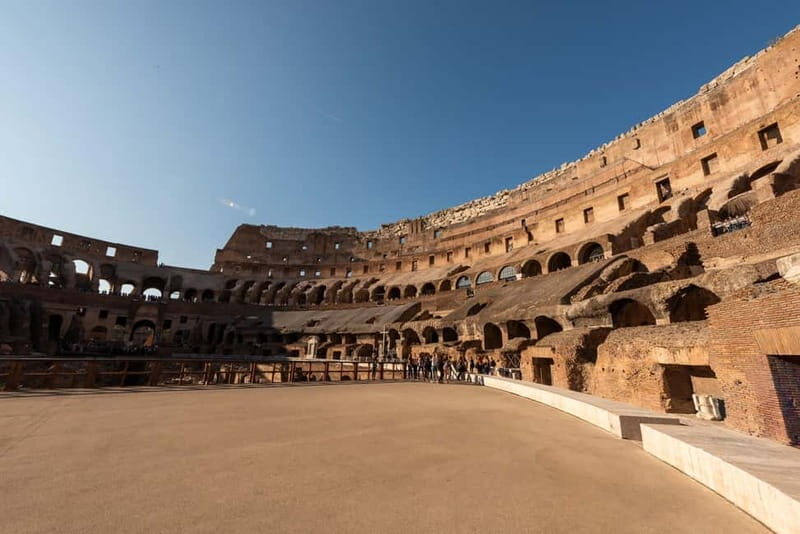
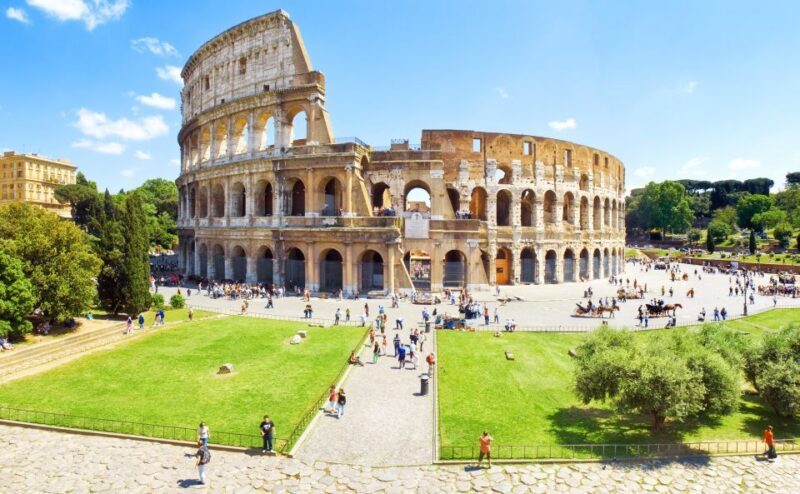
The Colosseum is easier to grasp from the arena than from the street. Through the Gladiators’ Gate, you step into the vast bowl and see the stands rising around you. That change of viewpoint gives the building a human scale: you are standing where performers and fighters faced the crowd, not merely looking at a famous façade.
A guide helps you picture the games without reducing them to a string of dates. Expect stories about gladiators, the events staged for Roman citizens and the engineering that made the amphitheater work. The Colosseum was the largest amphitheater ever built, and its architecture was part of the show: it had to move people, manage crowds and support elaborate spectacles.
The arena access is a major reason to choose this tour over a simple exterior visit. It lets you look across the floor and up into the seating levels, making the relationship between the arena and audience clear. There is time for photos, though this is still a guided group visit, not an open-ended session.
One weather caveat matters. In bad weather, staff may close the arena floor without notice. The Gladiators’ Gate entry may still take place, but you will not be allowed onto the floor, and no refund is offered in that circumstance. If standing on the arena itself is your main reason for booking, accept that this part is not guaranteed.
Looking for more options in Rome? Here are some other experiences worth considering.
The optional underground visit adds another layer to the Colosseum. Beneath the arena, you can see the hidden spaces and engineering connected with preparing the games. It helps explain how the visible spectacle depended on work and infrastructure below the floor, where people and animals were kept before entering the arena.
The underground segment is listed as a 45-minute guided visit. It is not included automatically in every booking, despite the tour’s optional-underground wording. Select the version that includes it when you reserve, and check your confirmation carefully. Do not assume you can decide at the meeting point or pay to add it once the tour has started.
That distinction is worth taking seriously. One person who booked believing the underground could be selected on arrival found that it had to be arranged beforehand. Another was disappointed when the underground was not open. Access depends on the ticket option and site conditions, so confirm what your specific booking covers and be prepared for changes.
If the underground is important to you, it makes sense to choose it rather than rely on a last-minute decision. If you are content with the arena floor, the Colosseum’s upper structure and the Forum, the base option still covers a substantial visit.
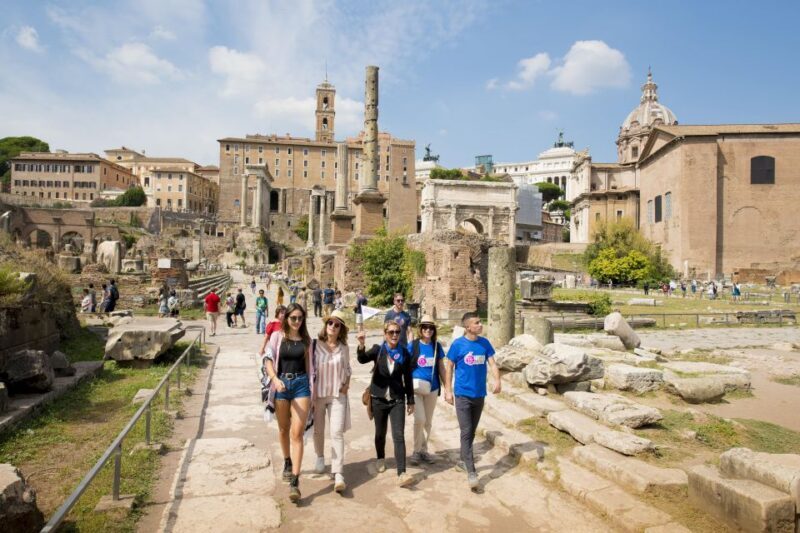
After the Colosseum, the Roman Forum shifts the focus from public spectacle to the workings of the city. This was the centre of ancient Rome’s political, social and economic life. Today, its scattered columns, arches and foundations can look like a puzzle. A guide supplies the links between them.
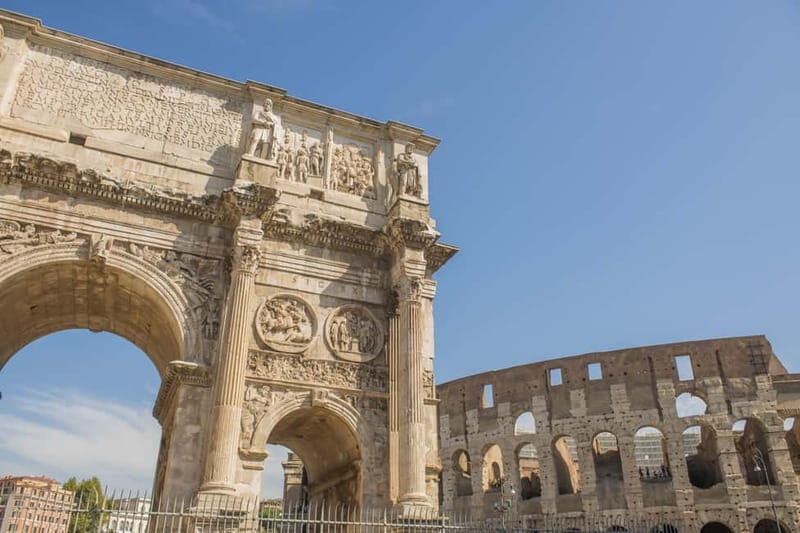
The route includes sites such as the Senate House, the Temple of Saturn and the Arch of Titus. Each points to a different part of Roman public life: government, religious practice, ceremony and imperial power. The Arch of Titus is also one of the monumental arches associated with the emperors named in the tour’s highlights, alongside the Arch of Constantine near the Colosseum.
This is where good guiding makes a noticeable difference. A name on a sign tells you what a structure was called; a guide can explain why it mattered and what people did there. Guides have used pictures to show how places looked in the past, and the tour’s headsets help you hear explanations in crowded areas without having to stand right beside the guide.
The Forum is sprawling, so the guided portion gives you a useful route and a framework for what you are seeing. But it cannot cover every corner in detail. If you become interested in a particular ruin, allow extra time to return to it after the tour, if your ticket and schedule permit. One participant noted that the area is large enough to invite a closer second look.
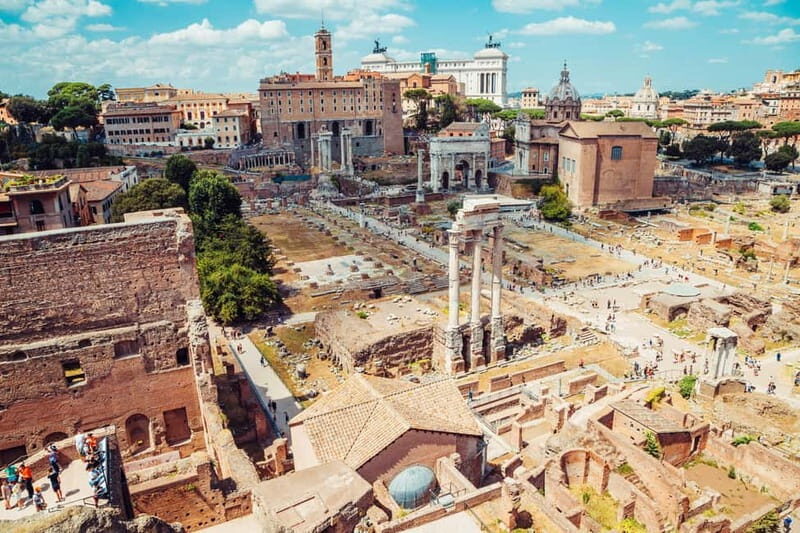
Palatine Hill is the tour’s final stop in the stated itinerary, though the order can change with Colosseum ticket availability. It is identified as one of Rome’s seven hills and as the city’s birthplace. Here, the story shifts to founding legends, imperial life and the people who lived on the hill, including emperors and poets.
The reward is not only the remains of palaces and gardens. From the hill, you get views over the Forum and the Circus Maximus, with the city spread out below. That higher vantage point helps you see how the sites relate to one another rather than treating each ruin as a separate stop.
Expect walking over an extensive archaeological area. The tour is not suitable for wheelchair users or people with mobility impairments, so this is not a good choice if uneven historic sites or sustained walking are difficult for you. Comfortable shoes are specifically recommended, and a full day of Roman sightseeing can make that advice feel less like a suggestion than a necessity.
More Great Tours Nearby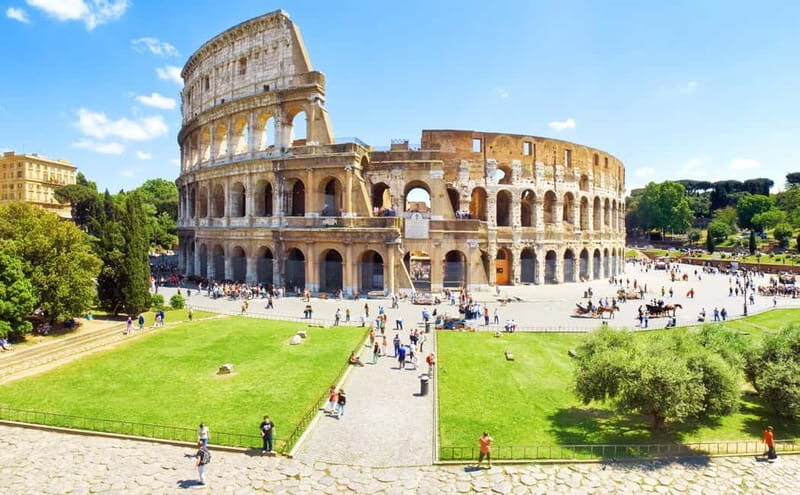
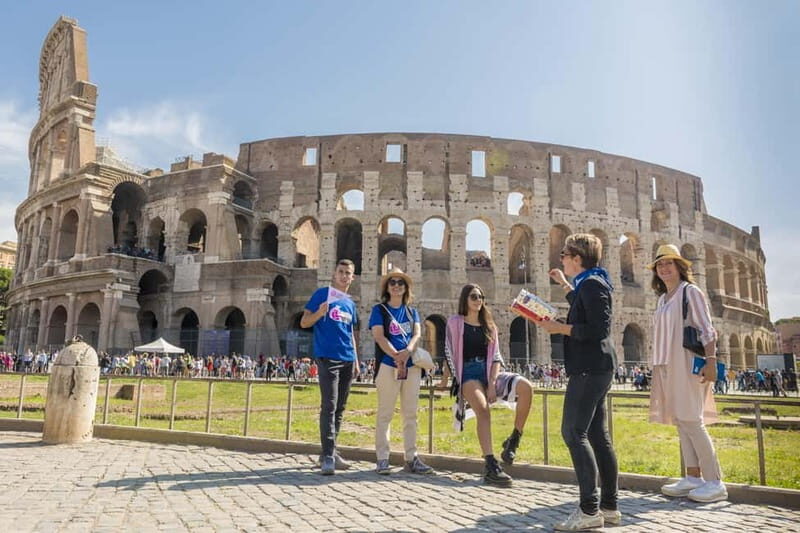
The clearest strength of this tour is its live guiding. Groups have had guides such as Maria, Laura, Alessandro, Valerio and Lucy, among others. You cannot request or guarantee one of them, but the recurring qualities described by people who took the tour are clear: guides tell stories, answer questions, keep the group together and make complicated sites easier to follow.
That matters at the Colosseum and Forum because the physical remains do not explain themselves. A guide can point out what to notice, put a building in its Roman context and help you imagine how the space worked. The best guides add humour and use visual aids, while keeping the explanations clear enough for a mixed group.
The included headset is useful in busy areas, particularly when the group spreads out or ambient noise makes it hard to hear. Still, there can be a crowd of tour groups around the meeting area, and pre-tour changes have caused some confusion. Arrive with time to locate your guide and confirm you are with the correct group.
The experience is not always brisk. Some guides finish close to the stated schedule, while others spend much longer explaining details. A few people have found the extra time rewarding; others would have liked another break. Bring water and plan your day with some flexibility, rather than scheduling a tight connection immediately afterward.
At $112 per person, this is more expensive than simply arranging a basic site visit, but the price includes guided entry to the Colosseum and arena floor, Roman Forum and Palatine Hill, plus a headset. It also offers skip-the-ticket-line access. That does not mean you bypass airport-style security, which all participants must pass through, but it can save time at the ticket queue.
The value is strongest if you want interpretation and a route through all three sites. A guide gives you a starting point in places where the scale and number of ruins can otherwise make independent visits feel scattered. The underground option may add value for anyone especially interested in the Colosseum’s operation, but check that it is actually part of the ticket you select.
Food, drinks and hotel transfers are not included. Meet at Via delle Terme di Tito 93. From the Colosseo metro station, go to the terrace above the station, walk about 100 metres along Via Nicola Salvi, then turn left. Bring a passport or ID card, including for children, because all participants must provide full names and go through security.
You can cancel up to three days in advance for a full refund. Pets, weapons or sharp objects, large bags, luggage, alcohol, drugs and glass objects are not allowed. These rules are worth checking before you leave your hotel, since a large bag or prohibited item could complicate entry.
The tour is advertised as 2.5 hours, but its listed sections total 3 hours and 45 minutes: one hour at the arena, 45 minutes underground, one hour in the Forum and one hour on Palatine Hill. Some outings have also lasted around three or four hours. The precise timing may depend on which option you book, the order of visits and the guide’s pace.
The itinerary order can change because of Colosseum ticket availability. That is important if you have a particular site you want to see first or need to leave at a set time. Ask the provider to clarify the expected duration for your chosen option, especially if you are booking the underground segment or have another appointment afterward.
The meeting point is close to the Colosseo metro station, but the site can be crowded with tour groups. Follow the stated directions and allow time to identify the right guide. The tour is offered in English, Spanish, French and German, with starting times depending on availability.
I would choose this tour if you want to understand the Colosseum, Forum and Palatine Hill in one visit rather than simply collect photos of the headline monuments. It is particularly useful for a first visit to ancient Rome, for anyone who enjoys asking questions, and for people who value an organized route through a large archaeological site.
The arena floor is a strong draw, and the underground makes the visit more revealing if you book the correct option. On the other hand, this is not ideal if you need step-free access, dislike group pacing or have a strict time limit. The listed duration is inconsistent with the time assigned to each stop, and weather can close the arena floor.
My practical advice: reserve the underground in advance if it matters to you, wear comfortable shoes and leave the rest of the day open enough to absorb a longer tour. If you want context as much as access, the guide is likely to be worth the $112. If you prefer to move at your own pace, need mobility accommodations or cannot allow for timing changes, consider another way to visit.
“Great tour, well organised, I would highly recommend it”
The stated duration is 2.5 hours, but the individual itinerary estimates add up to 3 hours and 45 minutes. Some tours have lasted three to four hours, so allow extra time and confirm the expected schedule for your booking.
The underground is optional and must be selected when booking. Do not assume you can add it at the meeting point. Check your booking confirmation to make sure the option you chose includes access.
The tour includes the Colosseum and arena floor, Roman Forum and Palatine Hill. Underground access is available only with the relevant option.
Meet at Via delle Terme di Tito 93. From the Colosseo metro station, go to the terrace above the station, walk about 100 metres along Via Nicola Salvi and turn left.
Live tours are offered in English, Spanish, French and German. Starting times depend on availability.
Bring a passport or ID card, including for children, and wear comfortable shoes. All participants must provide their full names and pass through airport-style security.
Yes. In inclement weather, the arena floor may close without notice. Entry through the Gladiators’ Gate may still take place, but access to the floor will be prohibited, and refunds are not provided in this situation.
You can check availability for your dates here: