Physical Address
304 North Cardinal St.
Dorchester Center, MA 02124
Physical Address
304 North Cardinal St.
Dorchester Center, MA 02124

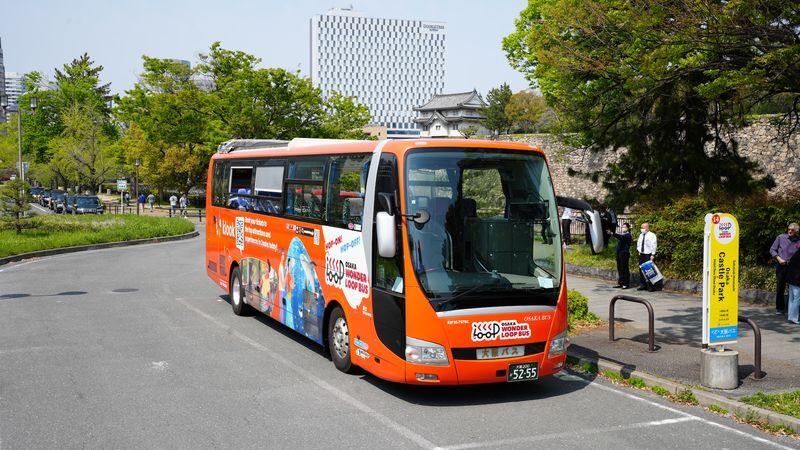
See Osaka’s major sights from an open-top bus, with 14 stops, live English commentary, and optional subway and Dotonbori cruise add-ons.
Osaka’s Wonder Loop bus gives you a city tour from street level, with the extra perk of an open roof and the freedom to get off at 14 stops. It can be a handy way to spot places you want to return to, especially if you’re new to Osaka and short on time.
I like two things in particular: live English commentary makes the ride more personal than a recorded tour, and the route links well-known sights such as Osaka Castle, Dotonbori and Tsutenkaku. The trade-off is time: buses can be far apart and traffic can slow the loop, so this works better as a relaxed overview than a fast way to tick off every stop.
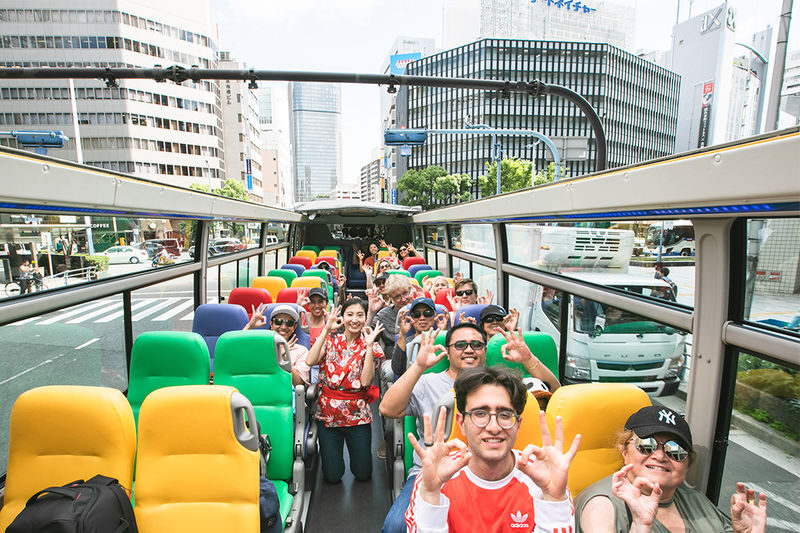
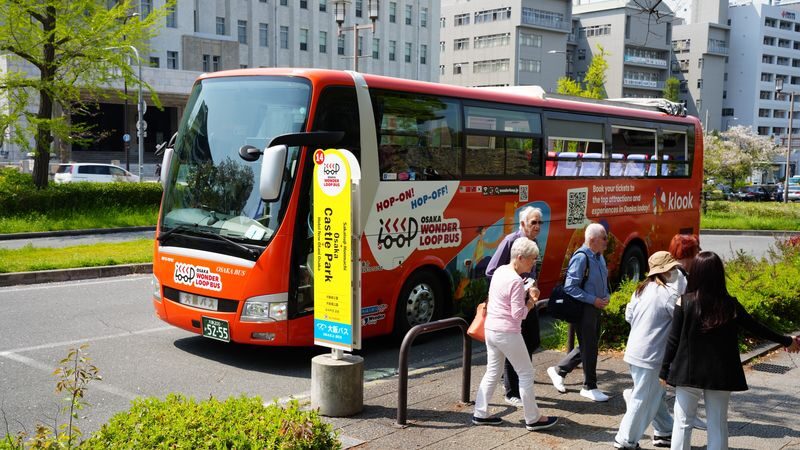
The main value of the Wonder Loop is orientation. Osaka’s sights are spread across several districts, and a ride above ground helps you see how the city fits together before you decide where to spend more time. You can stay aboard for a broad look, or hop off at places that suit your plans.
The bus is not a substitute for the subway when you need to get somewhere quickly. It follows a road route, so traffic matters, and waiting for the next bus can eat into your day. Think of it as sightseeing transport first, practical point-to-point transport second.
That distinction matters when you plan. The stated operating hours are 9:00 a.m. to 6:45 p.m., but a bus departing late in the day may not complete the full loop. Start early if you want to ride a long stretch and still have time to get off at a few stops.
Looking for more options in Osaka? Here are some other experiences worth considering.
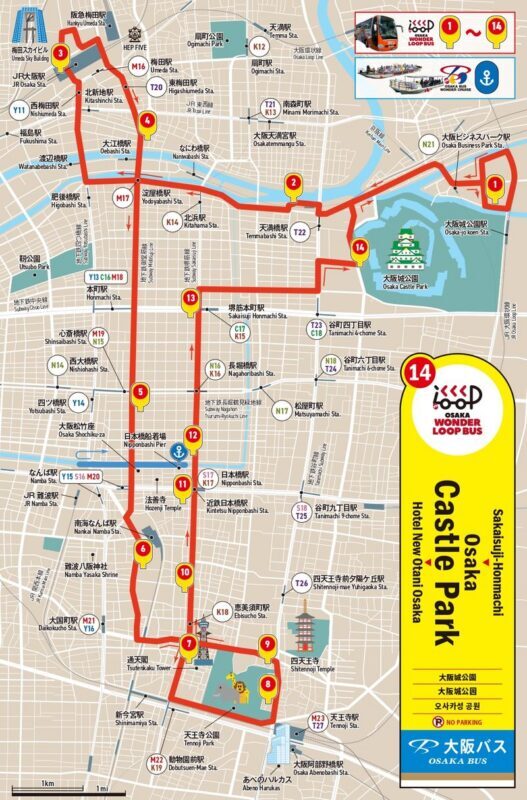
The route links central Osaka with several familiar sights and shopping districts. It can help you decide which areas deserve a longer visit, but a stop name alone does not guarantee time at the attraction. Check where the bus actually stops, and leave room for the ride back.
The listed stops are:
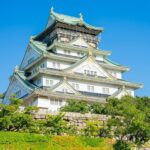
Osaka Castle Park is one of the headline stops. It puts a major Osaka landmark on the route and is a good place to get off if you want to focus on the castle area rather than view it from the bus. The park stop is listed as Osaka Castle Park, so check the walk to your intended destination before you set off.
At the other end of the sightseeing spectrum, the route includes Dotonbori and Namba Kuromon Market. These stops bring you into areas where you can browse, eat or simply get a feel for central Osaka on foot. Food and drinks are not included in the ticket, so budget separately if you plan to make a meal of the visit.
Shinsekai Kushikatsu Daruma and Tsutenkaku are another useful pairing to keep in mind. Tsutenkaku is named among the main sights covered by the tour, while the listed bus stop is Shinsekai Kushikatsu Daruma. Check the exact stop location and walk involved before assuming the bus drops you at the door.
The rest of the route adds a mix of transport hubs, shopping areas and cultural stops. Shitennoji Temple is a clear choice if you want to break up the city ride with a temple visit. Stops such as JR Osaka Station, Tennoji Station, Namba Parks and Shinsaibashi Daimaru-mae can also work as convenient points to join or leave the route, depending on where you are staying or what you want to explore.
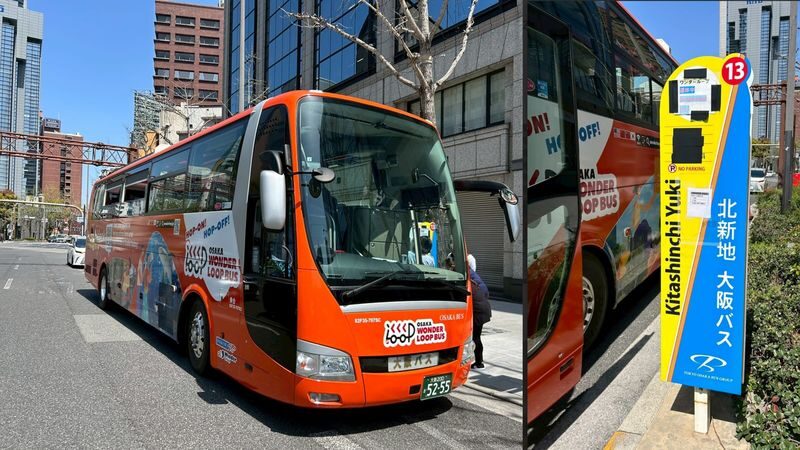
An open-top bus gives you a different view from the subway: streets, buildings and passing neighborhoods unfold around you, rather than through station names and tunnels. On a clear day, the open deck is a real part of the appeal. It also makes the bus useful for photos and for getting a broad sense of Osaka without navigating underground.
Weather can change the calculation. One rider described starting inside during rain and enjoying the ride more when the back was open later. The bus has air conditioning, which helps when you’re seated inside, but it is sensible to check the forecast and dress for the conditions if you hope to sit in the open air.
You may not get a clear view of every landmark from your seat. Buildings can block the sightline, and the bus keeps moving through traffic. If a place matters to you, hop off and see it on foot rather than counting on a passing view.
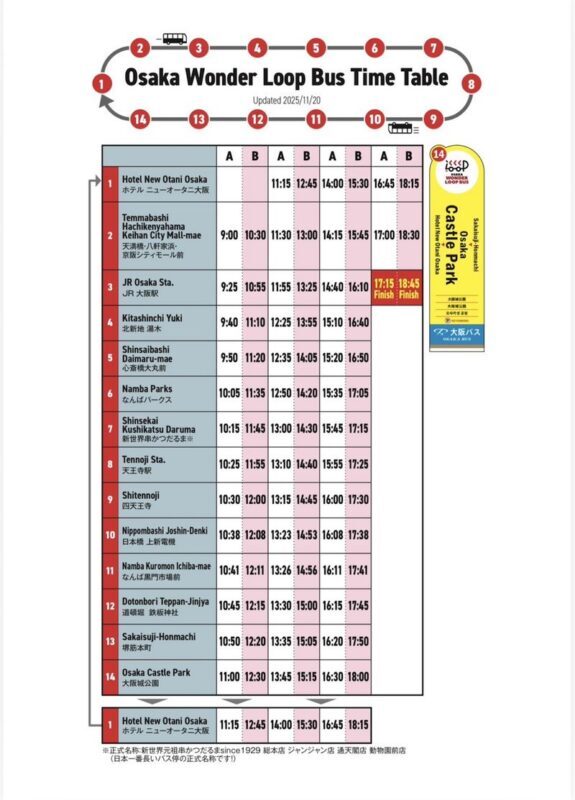
The English-speaking host is one of the tour’s most praised features. Some provide detailed explanations and local recommendations; passengers have singled out Kazue, Mali, Kayo, Nikki, Jasmine, Sakura and Niki for friendly, engaging commentary. Mali has even handed out small origami animals, while Kayo has helped with Japanese words and local suggestions.
The quality and amount of information can vary. Some people find the narration clear and useful; others have found it brief or hard to follow. That is worth knowing if your main reason for booking is a deep historical account. The bus is better treated as a friendly introduction than as a specialist history tour.
I’d use the ride to gather ideas, then follow up on the places that catch your interest. Hosts may offer practical tips, but the tour’s main purpose is to connect the stops and give you a feel for the city.
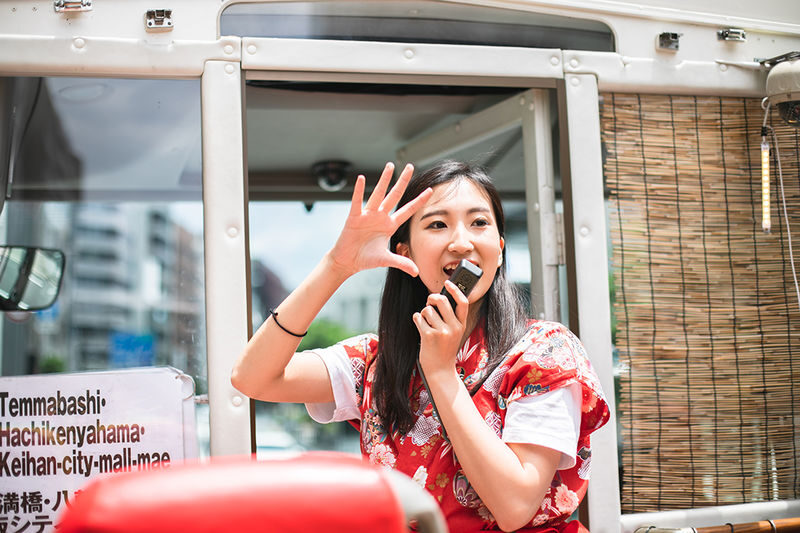
The biggest planning challenge is frequency. Passenger feedback describes waits of around 90 minutes between buses at times, with traffic adding further delays. Some people find the wait gives them time to explore a stop properly; others find it makes the day drag. Both reactions make sense, depending on how much you want to see and how tightly you plan.
Avoid building your day around a quick hop off and back on. If you get off, choose a stop where you’re happy to spend a good while, and check the next departure time before wandering off. Keep a subway or taxi as a backup if you need to reach a specific place by a certain time.
There is also a late-day risk. A passenger who boarded at 3:25 p.m. reported being told that the last bus would end at stop 2 rather than finish the full route. The stated operating hours run until 6:45 p.m., but that does not mean every departure completes the whole circuit. For the full loop, begin early and ask the host about the day’s final route before boarding.
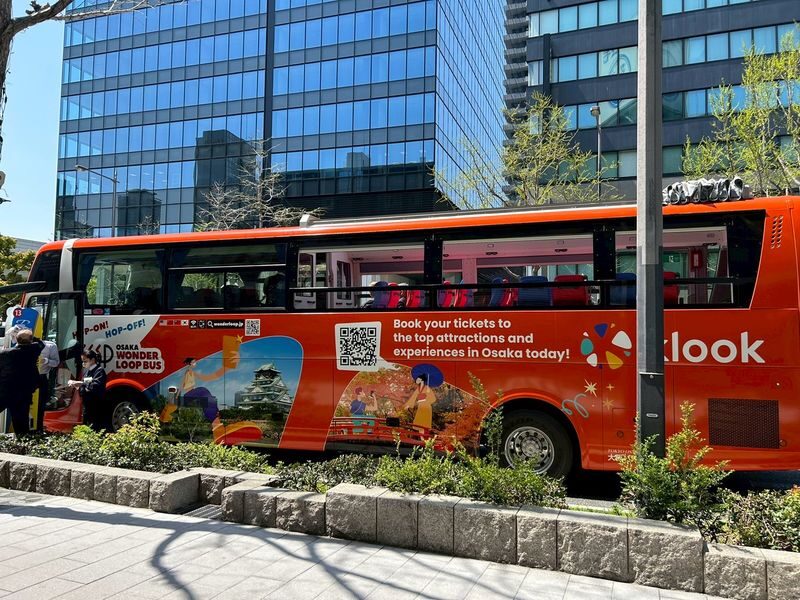
The one-day bus pass starts at $27.79 and includes unlimited stops along the route and an English-speaking guide. You are paying for the open-top ride, commentary and convenience of linking several sightseeing areas, not simply for the cheapest way to travel across town.
It can be good value if you ride a substantial part of the route, get off at more than one stop and enjoy the commentary. It is less compelling if you only need to get from A to B. For that, Osaka’s subway may be faster, and the bus fare alone does not include food, drinks or other personal spending.
A two-day bus pass is available for people who want to spread the sightseeing across more than one day. But don’t assume a second day is automatically worthwhile: if you plan to use the subway more, a longer bus pass may go unused. The best option depends on how much time you want to spend above ground and how willing you are to work around the bus schedule.
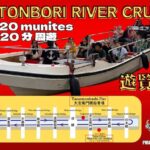
The Osaka City Pass packages combine a one- or two-day Wonder Loop pass with Osaka Metro and city bus access, plus a Wonder Cruise boarding ticket. This can widen your transport options and add a boat ride through Dotonbori. One passenger reported confusion about using the transport passes, so check the redemption instructions for the exact package you choose and confirm how to use each included ticket before setting off.
You can present your mobile voucher when boarding at any listed bus stop and exchange it for the physical ticket. There is no designated exchange location. The voucher is valid for 90 days from booking confirmation, but the bus ticket is available within 24 hours of exchanging the voucher. Once redeemed, the ticket is non-transferable.
The bus operates daily from 9:00 a.m. to 6:45 p.m., though hours and holidays can change. Check current operating information before you go. Changes are allowed before redemption, and cancellation is free before the voucher is redeemed. After redemption or expiry, refunds are not available.
Children aged five and under ride free if they do not need a separate seat. Child seats are not available. Anyone using a wheelchair or mobility equipment must be accompanied.
This tour makes the most sense for first-time visitors, people with a short Osaka stay, families who want an easy overview, and anyone who enjoys seeing a city from above street level. It is also useful if you want a low-effort first day: ride, take notes, and choose where to return later.
It is not the best fit if you have a packed schedule, want a fast way to cross town, or expect a long, detailed account of each landmark. The long gaps between buses can turn a tightly planned day into a waiting game. If you’re comfortable keeping your schedule loose, though, the combination of major stops, an open roof and live English commentary can be a pleasant way to get your bearings.
Book the Wonder Loop if you want an easy overview of Osaka and can give it a generous slice of your day. The live hosts and open-top views are the main reasons to choose it, with the 14-stop route offering a useful way to connect districts before exploring on foot.
Skip it if speed matters more than sightseeing, or if you only need transport between a few places. For a better day, start early, check the next bus time whenever you get off, and treat the subway as your fallback. If you want the cruise and transit add-ons, confirm how each ticket works before you board.
“1) have a better English speaking guide. could hardly understand Mato. the narration of stops is inadequate, not intelligent information about the …”
The listed duration is 4 to 8 hours. Your actual day depends on how many stops you visit and how long you wait between buses.
There are 14 stops, including Osaka Castle Park, Dotonbori Teppan Shrine, Shitennoji Temple and Shinsekai Kushikatsu Daruma.
The stated operating hours are Monday to Sunday, 9:00 a.m. to 6:45 p.m. Hours and holidays can change, so check current information before your visit.
Yes. The ticket includes an English-speaking guide on board, who shares information about Osaka during the ride.
You can exchange it for the physical ticket at any bus stop when boarding. There is no designated exchange location.
No. Food, drinks and other personal expenses are not included.
Children aged 0 to 5 can ride free if they do not occupy a separate seat. Child seats are not available.