Physical Address
304 North Cardinal St.
Dorchester Center, MA 02124
Physical Address
304 North Cardinal St.
Dorchester Center, MA 02124

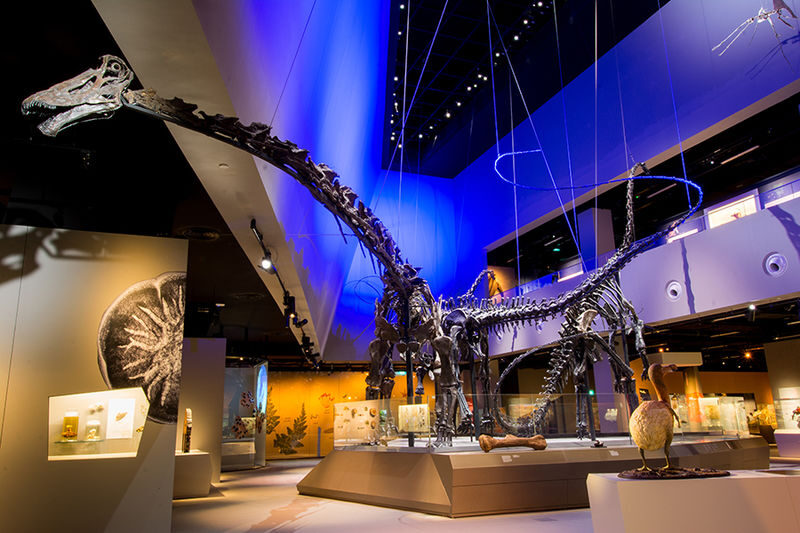
Meet sauropod fossils, a sperm whale skeleton and Southeast Asian wildlife at Singapore’s Lee Kong Chian Natural History Museum.
Three enormous sauropod skeletons set the tone at the Lee Kong Chian Natural History Museum: this is a place where Earth’s past feels close enough to inspect. I love the real fossils, including three sauropods that are more than 80 percent complete, and the chance to encounter regional wildlife specimens that bring Southeast Asian biodiversity into focus.
I also like the mix of headline exhibits and smaller finds, from the sperm whale skeleton salvaged in 2015 to heritage specimens more than a century old. The main drawback is location: the museum is on the National University of Singapore campus, away from the city center, and its relatively compact galleries may not justify the trip if natural history is not your thing.
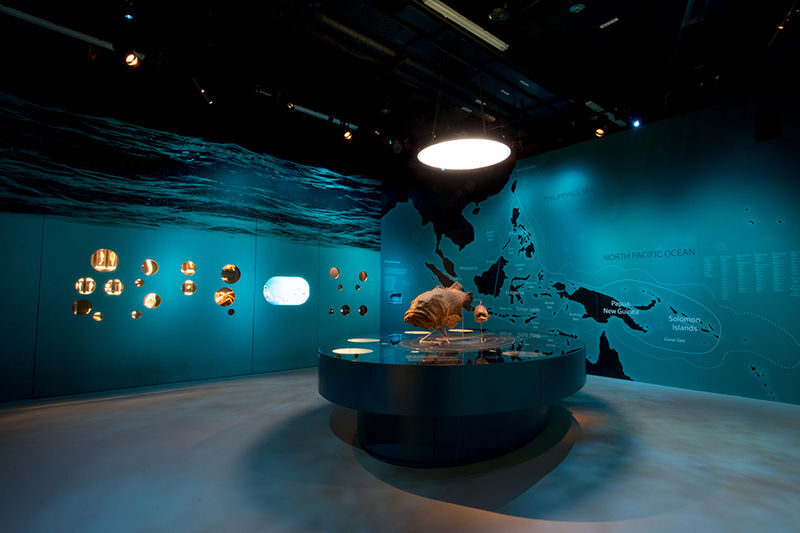
The museum’s most arresting sight is its trio of sauropod fossils. These long-necked dinosaurs were immense in life, and seeing three relatively complete skeletons together makes their size easier to grasp than a picture ever could. More than 80 percent of each fossil is complete, a detail that makes these displays especially compelling for anyone interested in paleontology.
You do not need to be a dinosaur expert to appreciate the effect. The skeletons make a strong first stop for children, and they give adults a natural point of comparison as the exhibits move from ancient life to the plants and animals of the region. Some fossil material can be touched, too, which offers a welcome change from the usual museum rule of looking but never laying a finger on anything.
The displays are not a dinosaur park, and that is part of the appeal. The fossils sit within a natural history collection that asks you to think about life across time, not just marvel at the biggest bones in the room. If dinosaurs are your main reason for coming, you will find them. If you want more than dinosaurs, keep moving through the galleries.
You might also be interested in these Singapore experiences
The museum presents its collection through 16 thematic zones across two permanent galleries. Together, they explore the diversity of life on Earth, with material on plants, insects, amphibians, mammals and more. The building itself is a large, seven-storey structure, but the public exhibition experience is more compact than that figure might suggest. You are likely to spend most of your visit on two gallery levels.
That scale has both advantages and limits. You can cover a good deal in a few hours without facing the marathon distances of a very large museum. On the other hand, the displays are dense with information, and you may find yourself reading longer than expected. One family could spend two hours and still feel there was more to learn; another visitor may be ready to leave sooner.
I recommend moving at a pace that suits you rather than trying to read every label. Choose the subjects that catch your eye, then give yourself time to linger at the specimens that make you curious. The museum’s regional focus is a real strength: it helps put local and Southeast Asian plants and animals in context, rather than treating natural history as a parade of faraway curiosities.
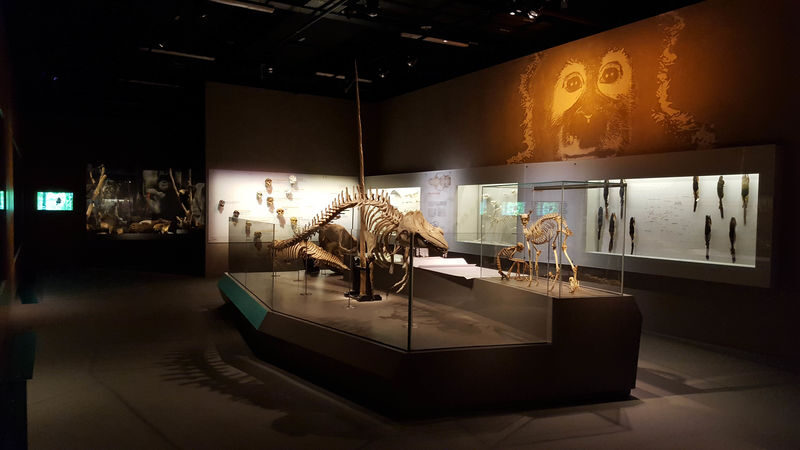
The collection also has deep institutional roots. The museum opened in 2015, but it inherited an older collection from the Raffles Museum of Biodiversity Research. More than a million regional specimens belong to the broader collection, while over 2,000 are showcased in the two permanent galleries. That contrast matters: the public displays offer a carefully selected window into a much larger research collection.
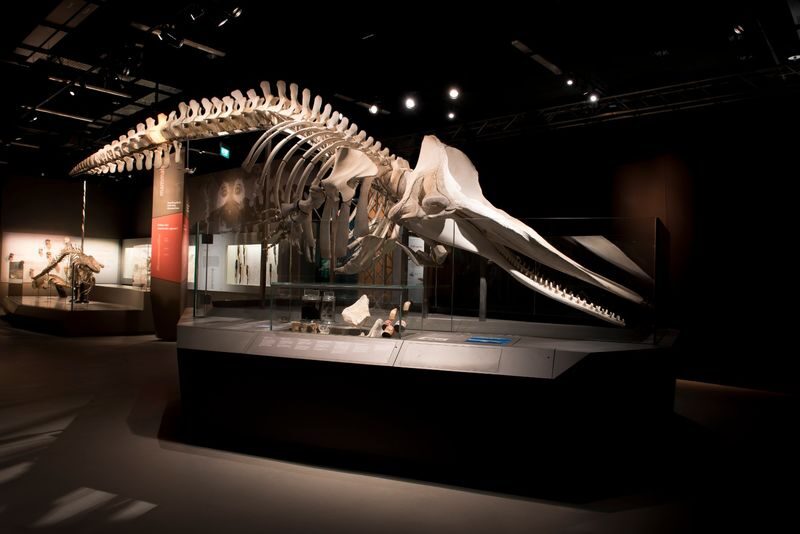
The sperm whale skeleton is another major draw. Salvaged in 2015, it offers a striking look at a large marine mammal and gives the museum a chance to connect a dramatic specimen with the wider subject of biodiversity. It is one of the stops I would make sure not to rush past, especially if you are visiting with children who respond best to objects they can immediately understand.
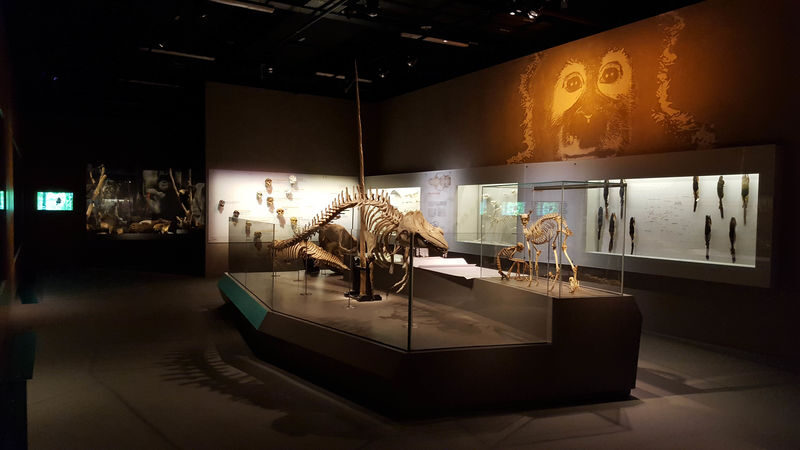
The older collection pieces tell a quieter story. Heritage specimens more than 100 years old connect the museum to the history of natural history study in the region. They are a useful reminder that museums are not only about spectacular animals. They also preserve records that can help people study how species and scientific understanding change over time.
Look beyond the largest displays, too. The collection includes many kinds of animals and insects, and that range is part of what makes the visit worthwhile for anyone with an interest in biology. If you are uneasy around winged creatures, be aware that butterflies are among the specimens on display. You can choose how closely to inspect them, but the museum is not exclusively about big mammals and dinosaurs.
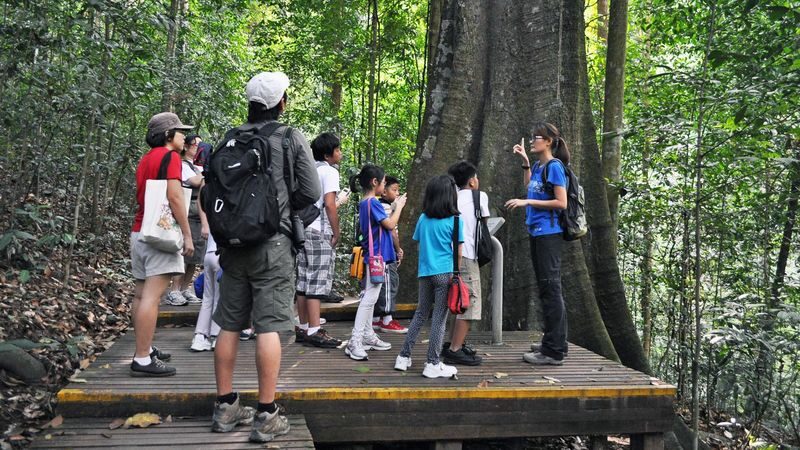
Complimentary guided tours are offered on Saturdays and Sundays: English at 11 am and 1 pm, Mandarin at 2 pm. They are led by volunteers, and availability can vary. Register in person at the ticketing counter when you arrive; do not assume a place is guaranteed.
A tour can help you pick out useful details and connect the specimens to larger ideas. That is especially helpful if you are visiting with children, or if you would rather listen than read label after label. The trade-off is that a volunteer tour follows its own pace, while exploring independently lets you linger wherever you like.
If you miss a tour, the galleries can still be visited at your own speed. Labels provide information, but visitors who do not read English may need a translation tool for some explanations. If you are keen to get more from the science, choose a few displays to study rather than trying to absorb every panel.
Admission starts at $14.05, with separate fixed-date packages for Singaporeans and permanent residents and for foreign visitors. The price is easier to justify if you enjoy natural history, want an educational outing with children, or plan to take your time with the collection. If you are mainly looking for a large, highly interactive attraction, this may feel like a costly visit for a relatively small set of gallery floors.
The museum’s value lies in the specimens and the subject matter, not in a long list of rides or hands-on activities. Some visitors find the real fossils, whale skeleton and regional collections worth the admission; others may prefer to spend their budget elsewhere. I would treat it as a specialist museum with broad family appeal, rather than a must-see for every Singapore itinerary.
POSB debit card and POSB Everyday Card holders may be eligible for 60 percent off bookings, capped at $60, using a monthly refreshed code. Terms apply, so check the current offer before paying. NUS students and staff receive complimentary admission with a valid NUS ID. Birthday-month admission has also been mentioned, but check directly with the museum for current terms before counting on it.
Be careful to select the right ticket type. The Singaporean and permanent resident rate applies to citizens, permanent residents and certain ICA- or MOM-approved pass holders with a valid FIN. Student-rate visitors should bring proof of student status. Children aged 3 to 12 need a child ticket; children under 3 enter free.
History buffs will find these Singapore heritage tours enlightening
The museum is at the National University of Singapore, away from the central sightseeing area. The nearest MRT station is Clementi. Bus options include service 151 from the Museum stop, and services 96, 151 and 151e from NUS Raffles Hall. If you are driving, parking is available at Carpark 3A, with further options at Carpark 3 by Yong Siew Toh Conservatory of Music and Carpark 4 at NUS Raffles Hall.
The supplied address details vary: the meeting point is given as 2 Estate Office Drive, while the redemption instructions give the National University of Singapore, 2 Conservatory Drive, Singapore 117377. Use the map and the address on your voucher to confirm the precise approach before setting out. This is a campus visit, so allow some extra time to find the right building rather than assuming the museum is directly beside the MRT.
Opening hours are Tuesday to Sunday, 10 am to 6 pm, with last admission at 4:30 pm. The museum is closed Mondays and public holidays. A visit can take one to three hours, but the last admission time makes a late-afternoon arrival a poor choice if you want to read displays or join a tour.
The ticket terms also need a careful look. The activity information describes a ticket valid only for the selected date and says cancellations are not allowed, while the FAQ describes an open-dated voucher and a possible refund if requested more than 24 hours in advance. These details do not match. Check the conditions shown on your actual voucher before booking, and do not buy on the assumption that you can change dates or get a refund.
This is a strong choice for families with school-age children, biology students, natural history fans and anyone curious about the wildlife of Singapore and Southeast Asia. The dinosaurs give younger visitors an immediate hook, while the wider collection offers enough variety to keep adults engaged. The volunteer tours can add structure, particularly if you are visiting with children who would benefit from someone pointing out the stories behind the specimens.
It may be less satisfying if you need an activity with lots of interactive stations, a play area or a full day of entertainment. The museum is informative, but reading is a substantial part of the experience. Very young children may not yet have the patience or context to appreciate the displays, and there are limited nearby play options mentioned for families with small children.
I would make the trip if the collection itself interests you, and pair it with other plans on or near the NUS campus rather than treating it as a quick stop in the city center. Give yourself at least two hours if you like to read, and aim for a weekend tour if a guided explanation would help. If you mainly want a brief dinosaur photo, weigh the campus journey and admission cost against that narrower goal.
Book the Lee Kong Chian Natural History Museum if you want a thoughtful look at dinosaurs, regional wildlife and scientific collections in one manageable visit. The three sauropods, sperm whale skeleton and century-old specimens give it real substance, while the free weekend tours can make the galleries easier to follow. Just plan your campus route, check the ticket category and confirm the date and refund terms before you pay.
“Lovely place if you like history and artifacts. The exhibit had multiple things to see. The Best part was you can touch some of the fossils which w…”
Plan for one to three hours. If you like reading exhibit information or want to join a guided tour, allow more time within that range.
It is open Tuesday to Sunday from 10 am to 6 pm. Last admission is at 4:30 pm. It is closed on Mondays and public holidays.
Volunteer-led tours are offered on Saturdays and Sundays at 11 am and 1 pm in English, and at 2 pm in Mandarin. Register at the ticketing counter, as tours are subject to availability.
Children aged 3 to 12 need a child ticket. Children under 3 may enter free.
Yes. The Singaporean and permanent resident rate applies to citizens, permanent residents and specified ICA- or MOM-approved pass holders with a valid FIN. Bring valid identification.
The nearest MRT station is Clementi. Bus 151 stops at the Museum stop; buses 96, 151 and 151e serve NUS Raffles Hall.
Present your mobile voucher at the museum ticketing counter for gallery admission. Check the address and map on your voucher, since the supplied location details list both 2 Estate Office Drive and 2 Conservatory Drive.
The supplied ticket information gives conflicting terms: one section says the voucher is valid only on the selected date and is nonrefundable, while another describes an open-dated voucher and refunds requested more than 24 hours ahead. Check the terms on your specific voucher before booking.