Physical Address
304 North Cardinal St.
Dorchester Center, MA 02124
Physical Address
304 North Cardinal St.
Dorchester Center, MA 02124


Walk Nairobi’s central district with a local guide, sample fresh fruit, learn Swahili and see the city from KICC’s rooftop.
Nairobi’s centre makes more sense on foot with someone who can explain what you’re seeing. This three-hour walk links market stalls and historic buildings with the Supreme Court, Parliament area and KICC rooftop, giving you a quick, grounded introduction to the capital.
I like two things in particular: the stop at City Market, where a fresh fruit salad offers a simple taste of local produce, and the guide’s practical help with Swahili, shopping and getting around. The rooftop view from KICC adds a useful city-wide perspective to all that street-level detail.
One point to plan for: KICC entry is not included, and the route involves walking, so this is not suitable for wheelchair users or people with mobility impairments. Pickup is optional, and on some occasions the operator may ask you to take a paid taxi to the meeting point.

The tour begins at a selected pickup point or at CJs on Koinange Street, depending on the option you choose. If you meet at CJs, look for the guide in a Happy Tribe cap or T-shirt. Staff at the restaurant can point you in the right direction, and the operator describes the area as safe.
There is a short safety briefing before the walk. That matters in a busy city centre, where it helps to know how the group will move and where to stay close to your guide. If you have questions about the route, local customs or the day’s plan, ask early. The guides are known for answering questions and adjusting the pace when the group needs more time.
Hotel pickup and drop-off are available only if you choose that option. Pickup instructions ask you to wait in the hotel lobby ten minutes before the scheduled time. If the operator cannot conveniently collect or drop off everyone, you may be asked to take a taxi to the meeting point or onward. The tour information says the company may request and pay for that cab, including a tip, but you should clarify the arrangement with the operator if transport is important to your plans.
The walk takes in a compact stretch of central Nairobi, with stops for history, shopping, food and views. You will cover several sites in three hours, so expect a brisk overview rather than a long visit inside every building. Much of the value comes from the guide’s commentary between landmarks, not just from the stops themselves.
You can check availability for your dates here:
Jeevanjee Gardens is an early stop, with about ten minutes for a guided walk and a look around. It gives the tour a gentler start before the city’s commercial streets and market activity take over. Your guide can set the scene for Nairobi’s past and present while introducing the landmarks you will encounter later.
The route then passes Jamia Mosque and the McMillan Memorial Library. These are brief exterior stops, not extended visits, so think of them as pieces in a city-centre story rather than full architectural tours. The same goes for Nation Centre and the sights along Kenyatta Avenue: you’ll see important buildings and hear why they matter, while continuing on foot.
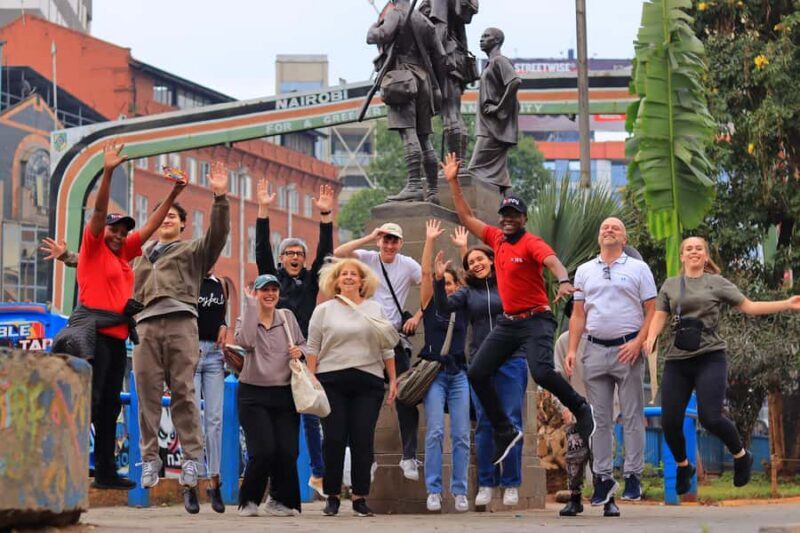
The Askari Monument, the Stanley Hotel and the Dedan Kimathi Monument add further historical markers. They help make the route more than a checklist of prominent buildings. A good guide can connect each place to the broader changes that shaped Kenya and Nairobi, and the tour’s guides are repeatedly praised for being clear, patient and ready to take questions.
You may hear about the city’s colonial past, its independence-era history and its economic development. The balance of those topics depends on the guide and the group’s interests. If you want to linger over a particular subject, ask; guides such as Jacqueline, Simon, Jeff and Dennis have been praised for giving visitors time and explaining things in an accessible way.
Looking for more options in Nairobi? Here are some other experiences worth considering.
City Market is the route’s most hands-on stop. You have time to look around the market, hear about local food and browse for souvenirs. It is a useful place to practise the Swahili phrases your guide teaches, and to see how buying and selling work in the centre of town.
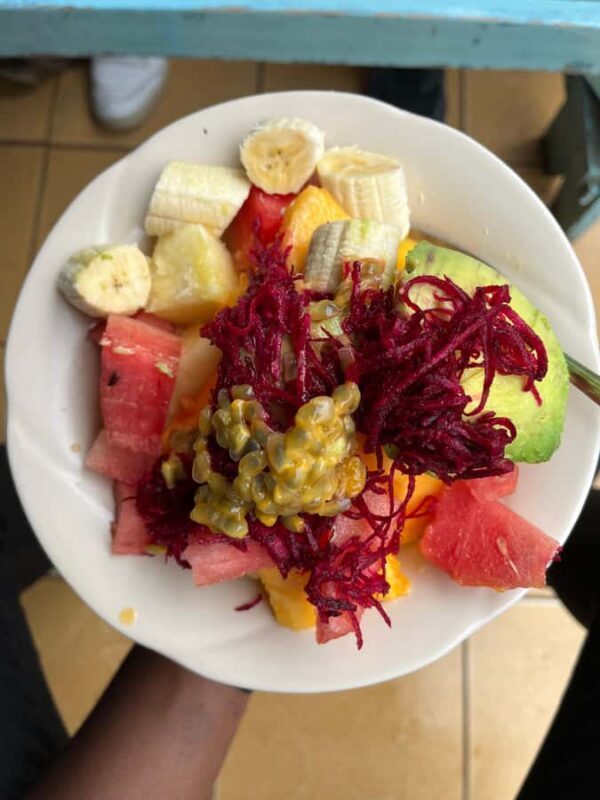
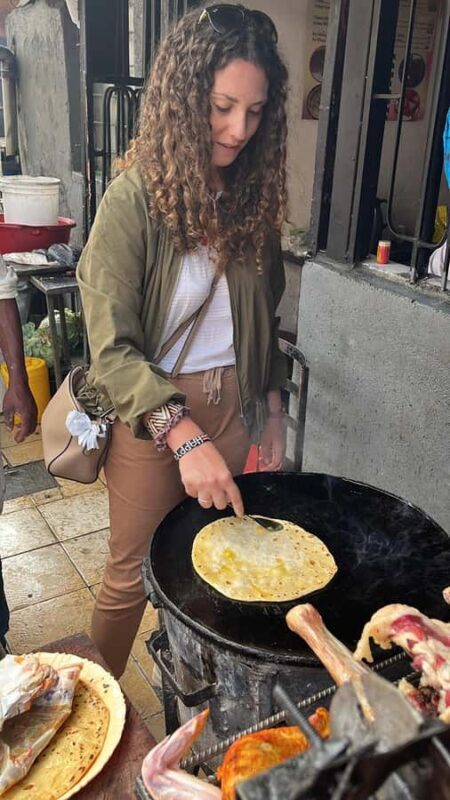
A fruit salad is included as a snack. It gives you a low-key introduction to Kenyan fruit and a chance to pause during the walk. Nyama choma, or roasted goat meat, is also mentioned as a possible taste, but it is not listed among the included items. Treat it as an optional extra and ask the guide what is available on the day.
The tour also promises advice on bargaining and points out fixed-price shops where you can buy souvenirs without negotiating. That can be especially useful if you are unsure what an item should cost or simply prefer a clear price. One stop is listed at a shop near the Hilton on Mama Ngina Street, with time for browsing.
Shopping is optional, of course. You do not need to buy anything to benefit from the stop, and the guide’s practical context can help you understand what you are seeing without turning the walk into a sales pitch. If you do want to shop, keep your purchases and spending decisions your own.
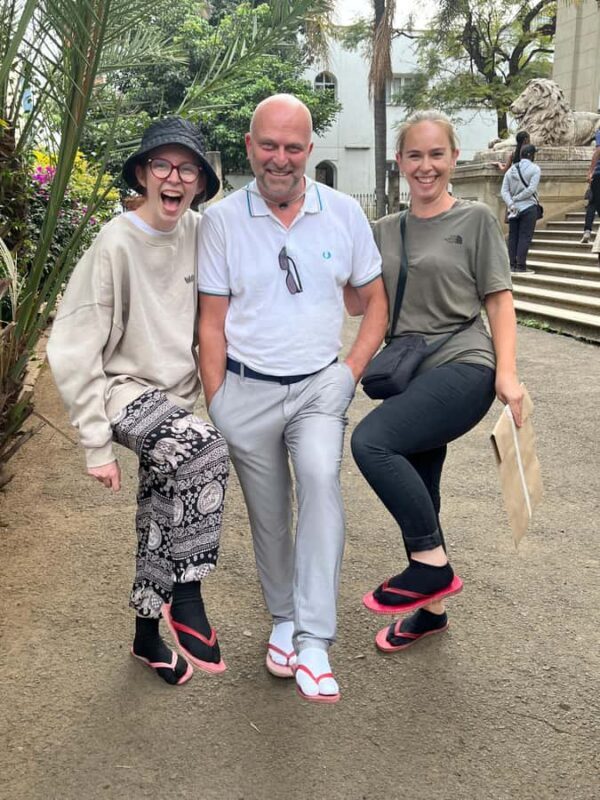
Learning a few popular Swahili words is a small but practical part of the tour. You will not leave fluent, but you can pick up greetings and everyday expressions to try while interacting with people along the way. The guide can also help if you do not speak fluent English, using Google Translate as needed.
The route includes a coffee break at Java House on Mama Ngina Street. The stop is listed for about twenty minutes, giving you a chance to sit down and ask more questions about Kenyan life and the city. Coffee and other food or drinks are not included in the stated price, so budget for anything you order.
There is also a complimentary shoe shine and a street-style photograph described as part of the experience. Those extras add a local, personal touch, but they are not itemized in the formal list of included services, which names the guide, water, WiFi hotspot and fruit salad. I would confirm with the operator before booking if the shoe shine or photo is a deciding factor.
The guides’ warmth is a major part of the appeal. Jacqueline, also called Jackie, and guides including Sharon, Simon, Jeff, Dennis, Lea and Leah are named by past participants. Their strengths are described in consistent terms: clear explanations, patience, a relaxed manner and a willingness to answer questions. Your guide may be someone else, so treat those names as examples, not a guarantee.
After the market, the route continues along Kenyatta Avenue and past the Stanley Hotel, the Kimathi Statue and the Supreme Court. It also passes the Governor’s Office and Parliament Buildings. These are largely brief viewing stops, with some sites seen from the street rather than entered.
The Holy Family Basilica and the Galton-Fenzi Memorial appear near the end of the route. Their short stop times make this a quick look, not a detailed visit. If you are particularly interested in a church, memorial or government building, ask your guide what you can see from the route and whether there is time for a longer pause.
KICC is the tour’s visual finale. You get around thirty minutes for the rooftop visit and views across Nairobi. The tour description refers to the helipad, while the schedule calls it the KICC rooftop; either way, the point is the elevated panorama and the chance to orient yourself after walking through the centre.
The extra entry charge is worth remembering when comparing the $23 price with your total cost. You pay separately for KICC entry, and any coffee, extra food or shopping also comes out of your pocket. The view is a strong finish, but if you want to keep spending down, ask the operator about the current entry fee before you go.
Some groups have taken longer than three hours. One guide-led group added about an hour so everyone could experience the full route, and other comments flag delays. If you have a tight onward connection or a fixed dinner booking, leave a buffer rather than planning your day to the minute.
More Great Tours Nearby
At $23 per person, the tour offers a guide for three hours, bottled water, a WiFi hotspot and a fruit salad, with optional hotel pickup and drop-off if selected. The value lies less in entering buildings and more in having someone explain the city as you walk, help you navigate the centre and answer the questions you might not know how to ask on your own.
The experience also brings together several small services: Swahili practice, market advice, fixed-price souvenir suggestions and, as described, a shoe shine and street photograph. Since those last extras are not in the formal included list, check before relying on them. You will also need to add the KICC entry fee and any drinks, meals or purchases.
This is a strong choice for a first day in Nairobi, especially if you want to get your bearings before exploring the city centre independently. Several people have found a local guide made streets and places feel more approachable, while others appreciated being able to ask questions without feeling rushed. That does not mean you should let your guard down; follow your guide’s advice and keep your belongings secure as you would in any busy city.
The tour is less suited to anyone looking for a slow architectural study or a full meal. Most landmarks receive only a few minutes, and the walk covers a lot of ground. Sundays also have a different feel: the city centre can be quiet on Sunday mornings, when many shops are closed, while Sunday afternoons may be livelier with young people filming videos, cycling, skateboarding, taking photographs and making music.
The listed languages are English, Swahili and Spanish. If you need help with English, the operator says the guide can use Google Translate. Wear comfortable clothes and shoes, and avoid scheduling this walk if mobility is a concern: it is not suitable for wheelchair users or people with mobility impairments.
Book it if you want a useful first impression of central Nairobi, enjoy asking questions and like the idea of mixing history with markets, fruit, local tips and a rooftop view. The guide’s role is the main reason to choose this over simply walking the same streets with a map.
Skip it if you need step-free access, want extensive time inside every landmark or have no flexibility around the three-hour schedule. Before booking, check the pickup option, ask about the KICC entry fee and confirm whether the shoe shine and street photograph are included. For a modest price, it can turn an unfamiliar city centre into a place you can read and navigate with more confidence.
“Outstanding experience. The guide Jacky (?) was amazing. Calm, friendly, knowledgeable, well-spoken. Couldn‘t ask for a better guide. I learnt an…”
The walk is scheduled to last three hours. Some groups have taken longer, so leave extra time if you have another commitment afterward.
The listed price is $23 per person. KICC entry, additional food and drinks are not included.
Hotel pickup and drop-off are available if you select that option. If you choose pickup, wait in your hotel lobby ten minutes before the scheduled time.
If you are not using a pickup option, the meeting point is CJs on Koinange Street. Look for a guide wearing a Happy Tribe cap or T-shirt.
A fruit salad is included as a snack. Additional food and drinks are extra; nyama choma is described as an optional taste.
No. KICC entry is not included in the tour price.
The listed guide languages are English, Swahili and Spanish. The operator says Google Translate can be used if you do not speak fluent English.
Bring comfortable clothes and comfortable shoes for the walk.
No. The tour is listed as unsuitable for wheelchair users and people with mobility impairments.
You can cancel up to 24 hours in advance for a full refund. The activity also offers a reserve-now, pay-later option.
You can check availability for your dates here: