Physical Address
304 North Cardinal St.
Dorchester Center, MA 02124
Physical Address
304 North Cardinal St.
Dorchester Center, MA 02124

Compare three striking Chiang Rai art sites on a long but convenient day trip from Chiang Mai, with hotel pickup, a guide and an air-conditioned ride.
Chiang Rai’s White Temple is a temple with a modern artist’s imagination: white, intricate and dotted with unexpected pop-culture details. I like this trip for two reasons: it pairs that visual surprise with the Blue Temple’s deep-blue interior and white Buddha, and it adds Baan Dam Museum for a darker, more unusual counterpoint.
The trade-off is the distance. Chiang Mai to Chiang Rai takes about three and a half hours each way, so much of your day is spent in the vehicle. If you want to see all three sites without arranging your own transport, that is a fair exchange. If you dislike long road days, consider staying overnight in Chiang Rai instead.
This is not a quick temple outing. The schedule starts around 7:00 a.m. and returns to Chiang Mai at about 7:00 p.m., with traffic and weather able to shift the timing. Some pickups happen earlier, around 6:45, so keep your morning flexible and watch for the operator’s confirmation.
The long ride is the biggest factor in deciding if this trip suits you. You get air conditioning, bottled water and a towel, but the road can be bumpy, especially where roadworks are underway. If you are prone to motion sickness, bring whatever usually helps and take the opportunity to pause at Mae Kachan Hot Spring.
The tour is sold as a private trip, and the private format can make it easier to adjust time between stops than a large fixed group outing. Still, it is a packed day with several destinations and a long return drive. Tell your guide early if one site matters most to you, rather than waiting until the schedule is already tight.
The guide is part of the value, not just a person who points out the entrance. Guides such as P’Sing and Lynn have been noted for explaining the sites, helping with photos and giving practical advice. The standard is not guaranteed to be identical on every departure, though: some past visitors found the language difficult to follow or wanted more explanation. If clear commentary matters to you, confirm your preferred language when booking.
For a more personal experience, these private Chiang Mai tours deliver individual attention
Mae Kachan Hot Spring is an early stop on the route. Think of it primarily as a chance to stretch, use the restroom and break up the drive, rather than a major attraction that needs a long visit. That short pause matters on a day with several hours of road time ahead.
The stop may be modest, and expectations should stay modest too. It gives you a breather before the temples, but it is not the reason to book the tour. Use the break to get water, move around and settle in for the next stretch.
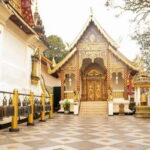
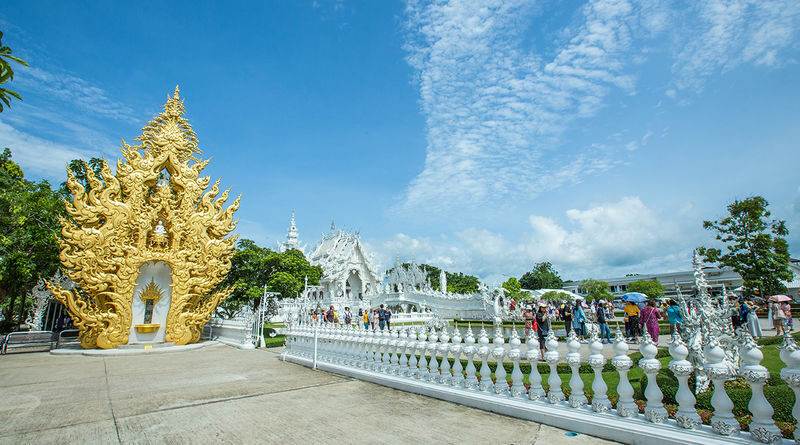
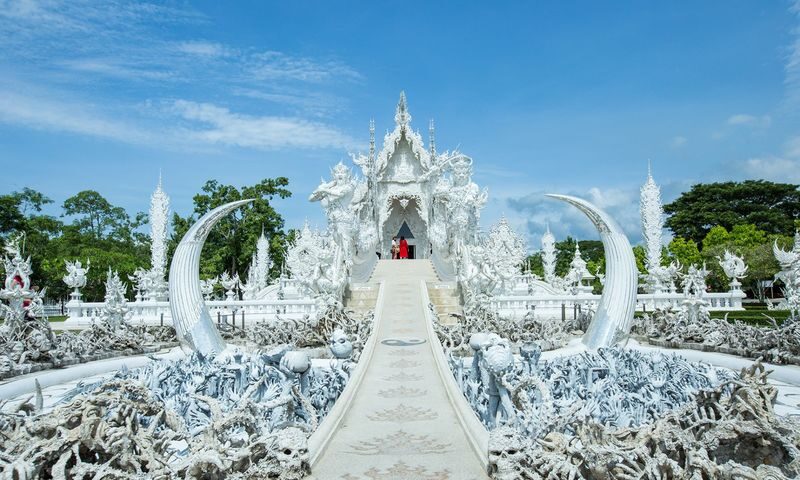
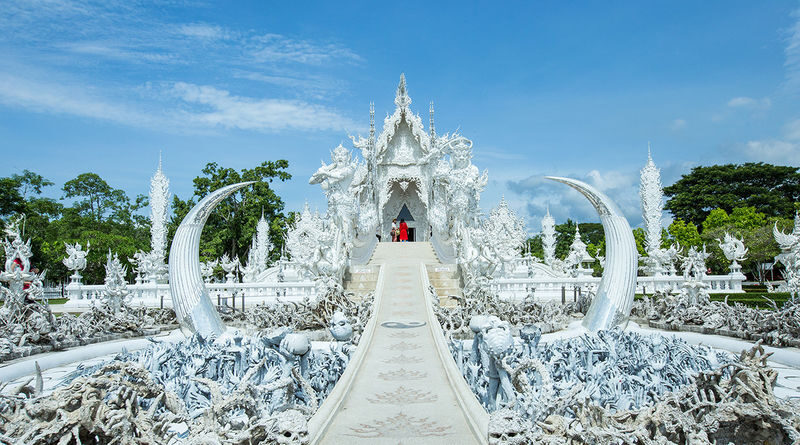
Wat Rong Khun, designed by Thai National Artist Chalermchai Kositpipat, is the most distinctive stop on the route. Its dazzling white exterior, elaborate detail and dramatic approach make it feel very different from a conventional historic temple. Outstretched hands frame the entrance, while contemporary sculptures and pop-culture references add unexpected notes to the design.
The contrast is what makes the visit memorable. From a distance, the building looks almost pristine and delicate; closer up, its imagery can feel strange, theatrical and even unsettling. Give yourself time to look beyond the first photo and notice the small details in the structure and grounds.
Crowds can affect how relaxed the visit feels, particularly around the most photographed spots. Guides who know the busy periods may help with timing, but you should still expect other people at a well-known attraction. If photography is a priority, ask your guide where and when to get the clearest views, and be prepared to move along if the schedule calls.
This is the place most likely to justify the long ride for someone drawn to architecture and contemporary art. It is also a visually rich stop rather than a quiet retreat. You will get more from it if you arrive curious about the artist’s unusual choices, not expecting a standard, centuries-old temple.
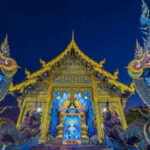
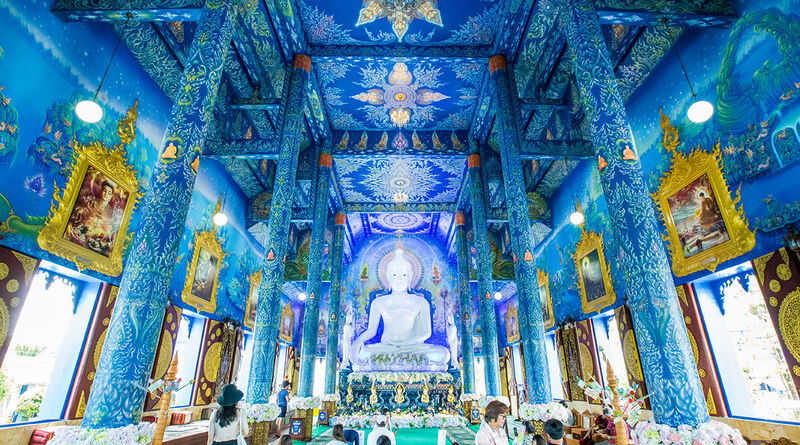
The Blue Temple, Wat Rong Suea Ten, gives the day a striking change of tone. Its blue interior is the defining feature, set around a large white Buddha. After the White Temple’s bright surfaces and surreal touches, this site feels more saturated and calm, even when there are plenty of people around.
The two temples work well together because they are not variations on the same idea. The White Temple invites you to inspect its contemporary symbols and fine detail; the Blue Temple makes an impression through color, pattern and the central Buddha figure. If you are choosing which site to photograph most, both offer very different compositions.
Crowds can make it hard to take photos without people in the frame. A guide may point out useful angles and help take pictures, but the visit is still a shared public-site experience. Take a few minutes to look around before reaching for your camera; the interior is worth seeing as a whole, not only through a screen.
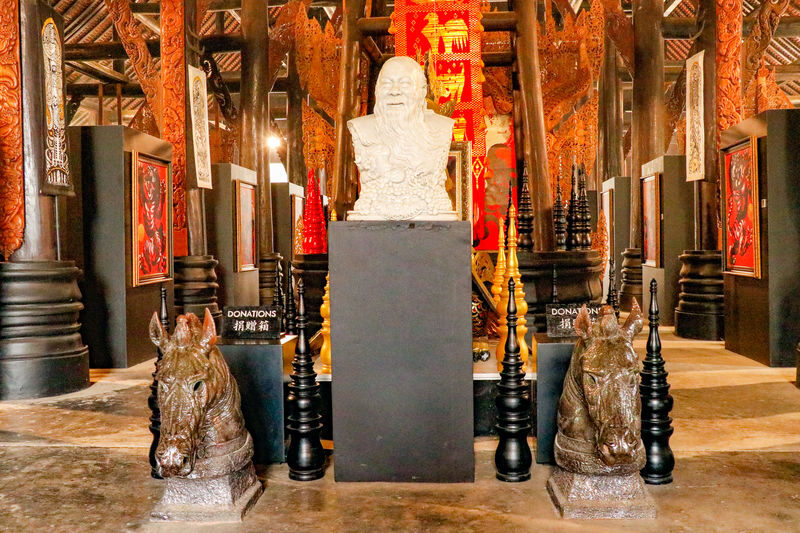
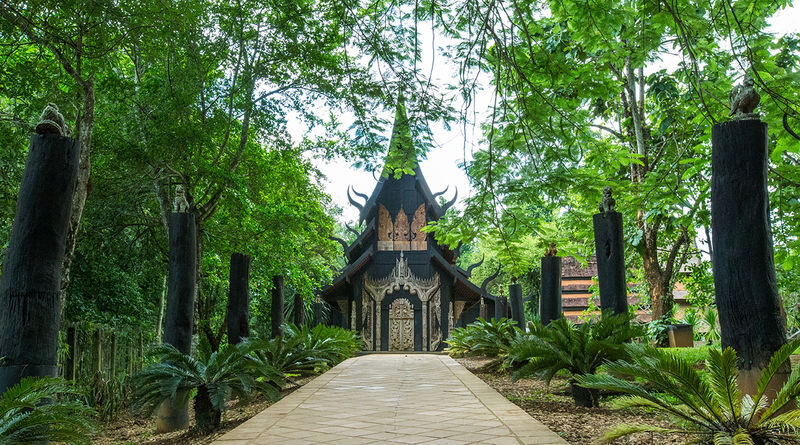
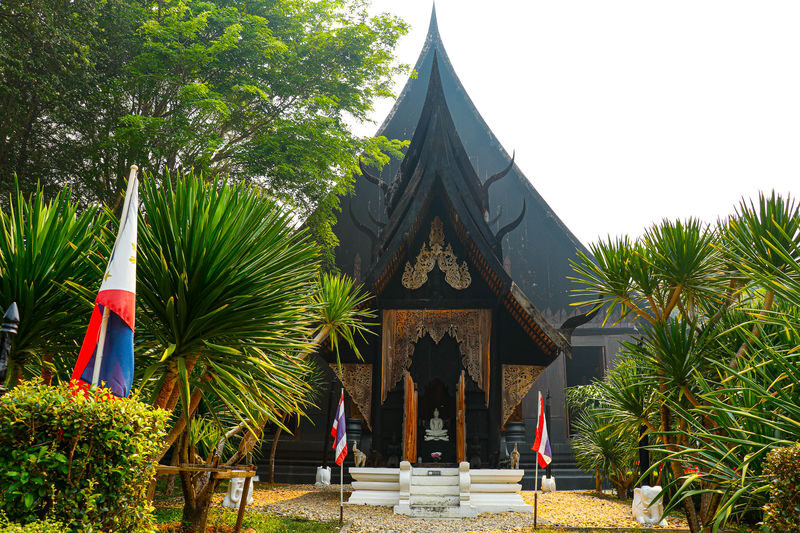
The final major stop is Baan Dam Museum, also called the Black House. Artist Dr. Thawan Duchanee created a complex of dark, artistic structures with bone and fur ornamentation. It is not a temple, and it does not offer the same kind of devotional atmosphere as the White and Blue Temples.
The Black House gives the day its most unsettling contrast. Its buildings and collections have an earthy, sometimes stark character, and they can prompt a different response from the temples’ elaborate color and pattern. Some people find it fascinating; others feel they have seen enough after a short visit. That difference in taste is worth keeping in mind when deciding whether this three-stop combination is right for you.
If the Black House interests you, take time to look at how the buildings and objects relate to one another instead of treating it as a quick photo stop. If you are mainly coming for the temples, it may be the least essential part of the day. The advantage of seeing all three is the comparison: one artist’s bright, modern temple vision, another temple’s blue interior, and Duchanee’s darker artistic world.

The day’s description includes a buffet lunch at a local resort, but the listed inclusions do not name a meal. One account of the trip also notes that lunch was not included, so do not assume the cost is covered. Confirm this with the operator for your selected package before departure, and bring money for food and personal expenses.
The lunch stop is intended to refuel you between sightseeing, not to be a major attraction in its own right. Some groups have opted for a local restaurant instead of a buffet. If you have dietary needs or a strong preference about where to eat, ask what flexibility is available before the trip.
An air-conditioned vehicle and a dedicated driver make this route far simpler than trying to connect Chiang Mai and the three Chiang Rai sites on your own. The road time is substantial, and driving yourself would add navigation and parking to an already long day. A guide can also help with site explanations, timing, restroom stops and photos.
Service can vary by guide and vehicle. Several named guides, including P’Sing, Lynn, Alisa and Johnny, have been singled out for clear explanations, warm service or help finding good photo spots. Some have spoken both English and Chinese, though the tour information guarantees a Chinese- or English-speaking guide, not a particular person or level of fluency. If you need a specific language, confirm it before you book.
The driver matters just as much as the guide on a long route. Many accounts describe comfortable, steady driving, but there have also been concerns about vehicle condition and driving style. You cannot choose the driver in advance based on the information here. If you feel uncomfortable at any point, speak to your guide.
Prices are shown from US$136.79 for the Black House, White Temple and Blue Temple package, while the overall experience information gives a starting price of US$157.30. Treat those as starting figures that can vary by booking details, and check the final price for your date and group before paying.
The value is mainly in combining transport, a guide and three widely spaced sites in one day. Admission, bottled water, a towel and an air-conditioned vehicle are included. If you are travelling with a small group, sharing the cost of a private vehicle can be more appealing than booking separate transport, while a guide adds help with context and logistics.
There are extra costs to watch for. Hotel pickup is covered within 5 km of Chiang Mai’s old town, but surcharges apply farther out: THB 200 for round-trip transfers beyond the 5 km radius, THB 700 to 2,000 for hotels in Chiang Mai South (Hang Dong), THB 700 for Veranda High Resort, THB 500 to 1,200 for hotels in the east, and THB 700 to 1,800 for hotels in the north. These surcharges are paid in cash to the driver. Personal expenses and, unless confirmed otherwise, lunch should also be budgeted separately.
The tour requires at least two participants. Children aged 0 to 2 can join free if they do not need a separate seat. The voucher is valid only on the selected date, and cancellations made at least 24 hours before the activity date qualify for a full refund.
I would choose this trip if I had one day to spare in Chiang Mai, wanted to see the White and Blue Temples, and preferred not to arrange a long-distance drive myself. It is especially useful for a small group that values hotel pickup, a guide and the convenience of visiting three contrasting sites in one outing.
It is less appealing if you want an unhurried day, dislike long drives or care more about lingering at one temple than checking off several stops. In that case, stay overnight in Chiang Rai or arrange transport with more control over how long you spend at each place. For most people with a single free day, the tour is a practical way to see the region’s most distinctive art sites, provided you go in knowing the road journey is a major part of the experience.
“very well timed tour, with ample time to visit each of the 3 locations (white temple, blue temple, black museum). p'sing was very friendly and well…”
Departure is scheduled for around 7:00 a.m., with return to Chiang Mai around 7:00 p.m. Traffic and weather can change the schedule.
The drive takes about three and a half hours each way, though roadworks, traffic and other conditions may affect travel time.
Pickup is included within 5 km of Chiang Mai’s old town. Hotels in other areas may have a surcharge, paid in cash directly to the driver.
The tour includes a Chinese- or English-speaking guide. Confirm your preferred language when booking, as the specific guide is not guaranteed.
Lunch is described as a buffet at a local resort, but it is not listed among the included items. Check with the operator for the details of your chosen package before departure.
You can receive a full refund if you cancel at least 24 hours before the activity date, based on the destination’s local time.