Physical Address
304 North Cardinal St.
Dorchester Center, MA 02124
Physical Address
304 North Cardinal St.
Dorchester Center, MA 02124

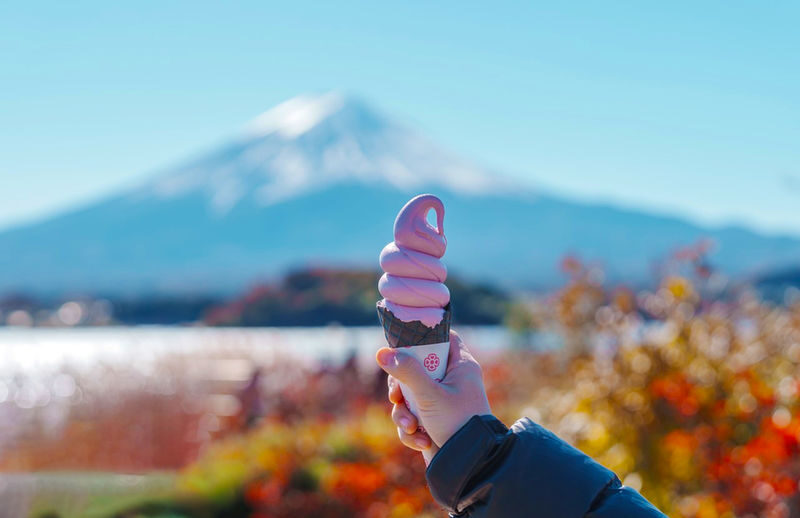
Compare six Mount Fuji photo stops, from swan-lined Lake Yamanaka to the five-story pagoda, on a budget-friendly day trip from Tokyo.
Mount Fuji is the star, but this day trip gives you six different ways to see it: reflected in a lake, framed by a pagoda, or peeking over a familiar Japanese street. For about $49.29, you can cover a wide stretch of the Fuji area without arranging your own transport.
Two things I like: the unusual variety, especially swans at Lake Yamanaka and the spring ponds at Oshino Hakkai, and the practical all-in-one transport, which bundles the long drive and local transfers. Guides named Andy, Luna, Aoki and Serina have drawn praise for keeping the day organized and helping people find photo spots.
The trade-off is time. You get roughly 20 to 60 minutes at each stop, and clouds can hide Fuji while traffic can eat into the schedule. Think of this as a broad first look, not a slow-paced visit to any one place.
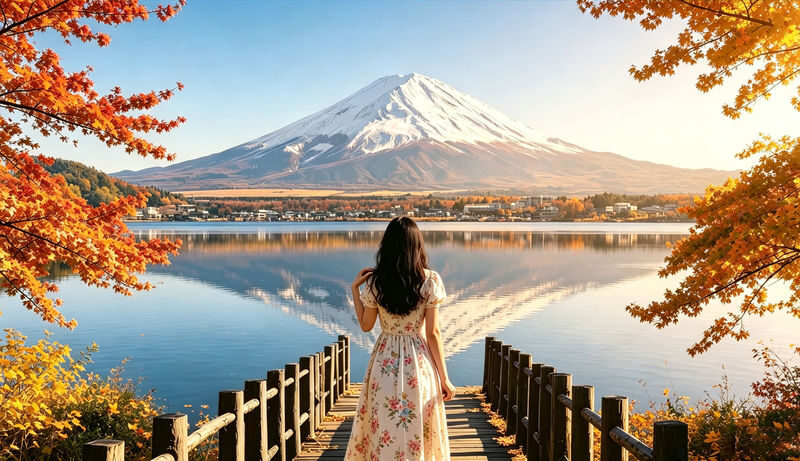
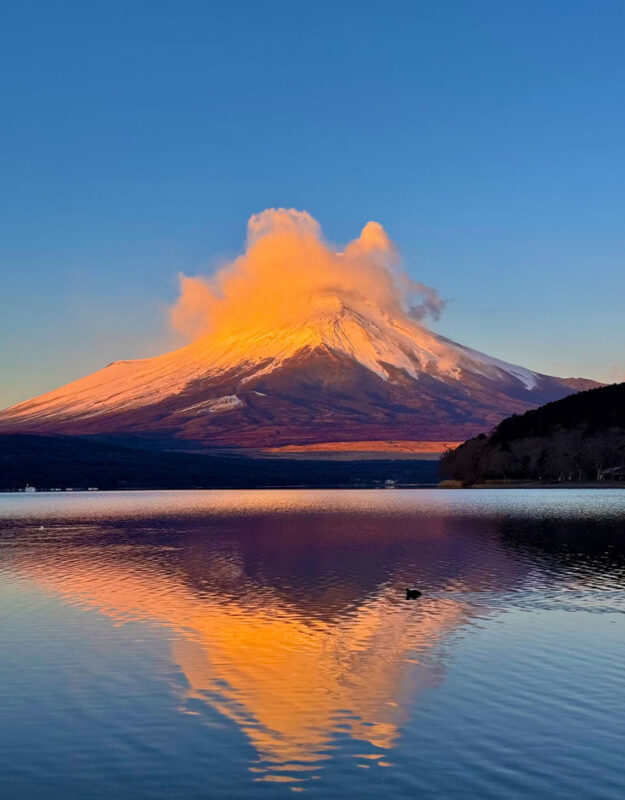
This is a full-day outing from Tokyo, with a stated schedule of about 07:20 to 18:00 and around 10.5 hours in all. You meet at either Tokyo Station’s Marunouchi North Exit or Shinjuku MODE Gakuen, then ride by shared vehicle between the Fuji-area stops.
That transport is the main practical value. The six stops are spread across the region, and doing them independently in one day would mean coordinating several local journeys as well as the trip from Tokyo. Here, tolls, parking and fuel are included, along with an English- or Chinese-speaking guide when one is assigned to the vehicle.
There is also a package described as a nine-person small group with hotel pickup and drop-off. Check the exact package before booking: the standard options depart from Tokyo or Shinjuku, while hotel pickup is a separate choice.
Group size affects the setup. For groups under 12, the operator may send a vehicle with fewer than 14 seats and a driver only, rather than a separate tour guide. Larger groups are assigned a driver and guide. The experience is still a carpool tour, not a private vehicle, so follow the meeting instructions and be ready to keep to the agreed stop times.
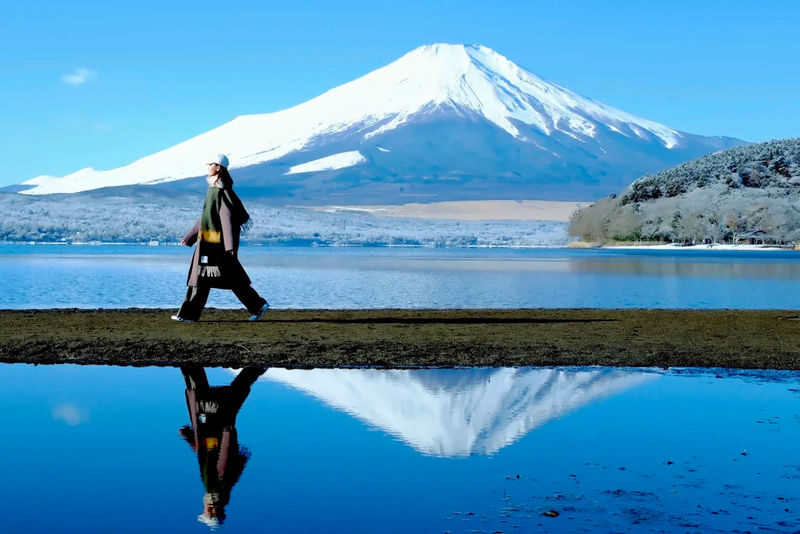
The first listed sightseeing stop is Hirano Beach on Lake Yamanaka, scheduled for about 10:30, with roughly 40 minutes there. It is a pleasingly different opening: the lake, swans and Fuji can share one frame, and the shallows offer a chance at a reflection shot.
The tour suggests going before noon for photos with Fuji and its reflection. That is a useful aim, not a promise. Fuji’s visibility depends on the weather, and some people have had only brief glimpses or no clear view at all. Even under cloud, you still have the lake and birds to enjoy.
You may be able to feed the swans, but keep the short stop in mind. Forty minutes is enough for a walk and photos, not a long lakeside wander. Dress for the conditions, and have your phone or camera ready before leaving the bus.
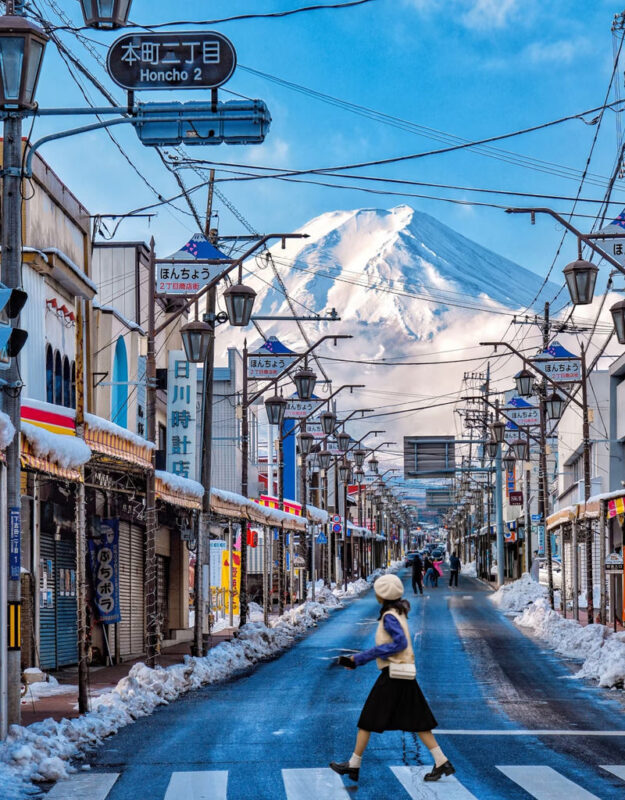
The group is due at Hikawa Clock Shop around 11:30 for 20 minutes. The appeal is the street itself: a Japanese town scene with Mount Fuji appearing behind the buildings. It is a quick photo stop, so expect to take a few frames and move on rather than settle in.
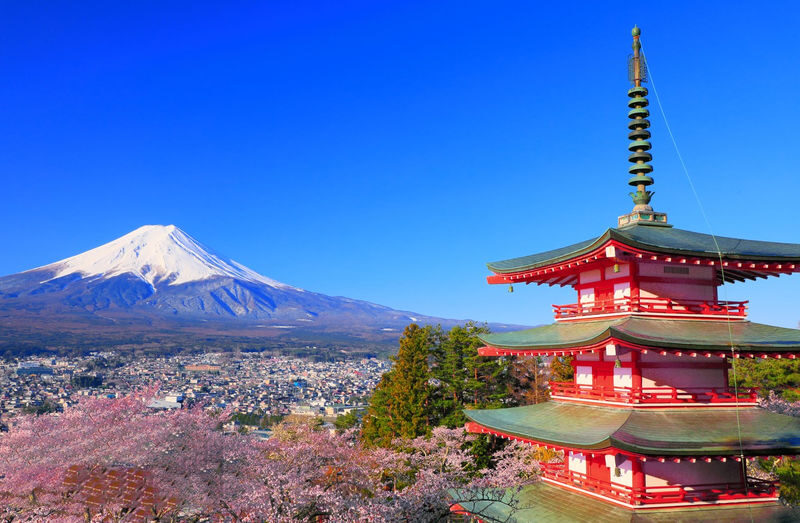
Arakurayama Sengen Park follows around noon, with about an hour allotted. The park is famous for its five-story pagoda and views toward Fuji, and its appearance changes with the seasons. This is likely to be one of the day’s most sought-after photo locations, so the limited time can feel tight, particularly when the paths and viewpoints are busy.
The operator notes that stops may be skipped or changed because of capacity, weather or traffic. That matters here: the pagoda view is a major reason many people book, but the tour cannot guarantee ideal conditions or an uninterrupted visit. If this spot is your main goal, ask before booking how the day’s route handles changes.
Lunch is not included, and the plan can vary. The guide may suggest restaurants, but you are not required to buy a meal there. You can bring food, choose a convenience-store bento, or eat at a stop if time allows. In some circumstances, including traffic or when most of the group does not want a meal break, the planned lunch time may be canceled.
I would bring a snack and water, then treat a restaurant lunch as a bonus rather than a fixed part of the day. The tour excludes meals and drinks, and the timing can shift. Sealed light snacks and unopened drinks are allowed on the bus, though eating inside the vehicle is prohibited.
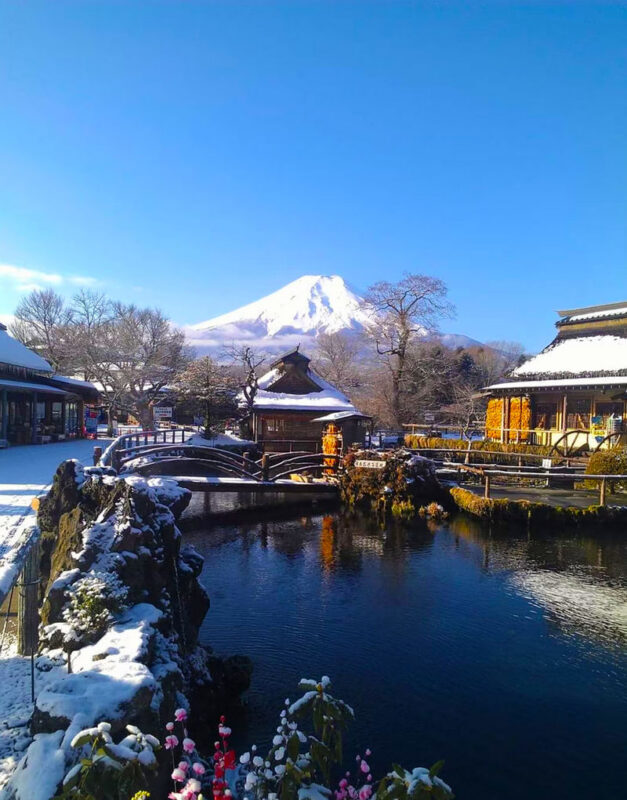
Oshino Hakkai is scheduled for about 13:15, with an hour to explore. Its name refers to eight natural spring ponds formed by snowmelt from Mount Fuji. The clear water and ponds give you a more grounded, quieter counterpoint to the tour’s famous street and pagoda photo setups.
This stop is not just a Fuji backdrop. Take time to look at the pools and the village setting, though an hour still means choosing what to see. If you want a proper sit-down meal here, check the group’s timing with the guide before committing.
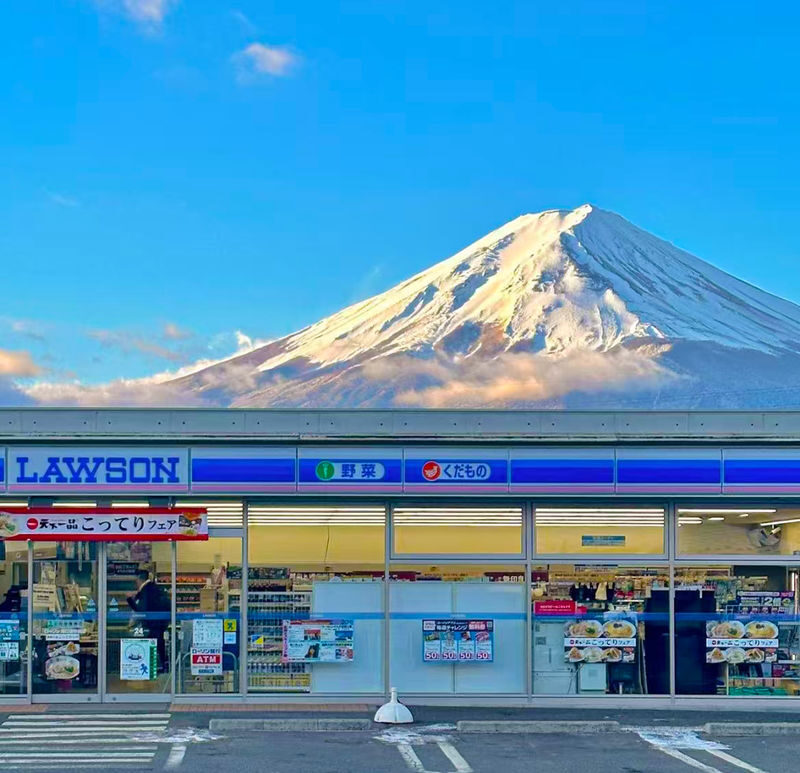
At about 14:30, the bus stops at Lawson Fujikawaguchiko Town Hall for around 20 minutes. The convenience store has become a photo subject because of the way Fuji rises behind an ordinary slice of Japanese town life. It is a novelty stop, and its appeal is strongest if you enjoy the contrast between a familiar shop and the mountain.
This is also a place to be considerate. The stop is short, and the tour description does not promise exclusive access or a quiet scene. Take your photos promptly and follow the guide’s directions so the group can stay on schedule.
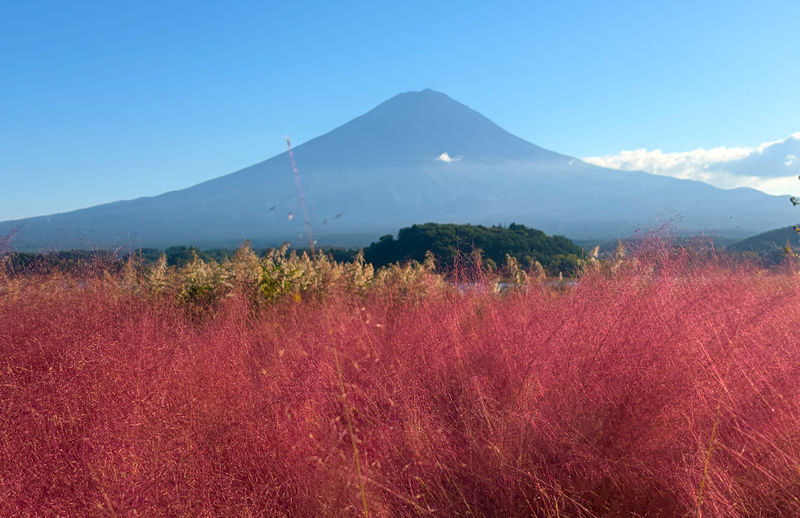
Oishi Park, by Lake Kawaguchi, is due around 15:10 for 40 minutes. Here, the scenery changes with the calendar: cherry blossoms in spring, flowers in summer, autumn leaves and winter snow. The lake and Fuji are the central view, with the park’s seasonal color adding something different to each visit.
During the stated seasonal dates, the tour substitutes other locations: from March 28 to April 12, it goes to the Lake Kawaguchiko Cherry Blossom Festival instead of Oishi Park; from October 20 to November 23, it visits Maple Corridor. The dates are estimates for seasonal viewing, not a guarantee of peak bloom or leaf color. Weather and natural timing decide the show.
The listed departure choices are 07:20 from Tokyo Station, leaving promptly at 07:30, or 07:50 at Shinjuku MODE Gakuen, leaving at 08:00. Arrive at least 10 minutes early. Late arrivals and no-shows are not refundable, and the driver-guide may wait no more than five minutes at later stops.
The plan shows a return to Tokyo around 18:00, but that is not a firm arrival time. Weekend, holiday and public-holiday traffic can cause delays of two to five hours, and the operator warns that the route or time at each stop may change. Keep your evening plans flexible, especially if you have a timed booking or train to catch.
You should receive an email the day before with the meeting time, vehicle details and guide contact information. Check spam as well as your inbox, keep your phone available and contact the operator if the message has not arrived by 21:00. If you use LINE, the guide sends a group link by email for you to join.
The trip does not include travel or accident insurance. The operator also lists health restrictions, including high blood pressure, heart disease, acrophobia, asthma, epilepsy and pregnancy. Anyone aged 65 or older must be fit for the trip and accompanied by a family member or friend aged 22 or older.
At a starting price of about $49.29, the tour is appealing if your priority is seeing several famous Fuji-area sights in one day without driving. Round-trip transport, tolls, parking and fuel are included, and you get a guide in English or Chinese depending on the option and vehicle setup. Meals, drinks, tips and personal expenses are extra.
The value comes from coverage and convenience, not leisurely time at each site. You are paying for a busy route that links six distinct photo opportunities, including places that are awkward to combine without a vehicle. The trade-off is the fixed pace: some visitors find the stops short, and weather may obscure the mountain that ties the day together.
Guide quality can make a noticeable difference to a tightly timed tour. Andy, Luna, Aoki, Serina, Tommy and Zoe are among the guides praised for clear updates, friendly help and keeping the schedule on track. Your guide will depend on the departure date, and the smaller-vehicle option may have a driver but no separate guide.
Book it if this is your first visit to the Fuji area, you want a range of photo settings, and you would rather leave the driving and route planning to someone else. It also suits you if a full day of bus travel and short stops sounds like a fair price for seeing the region’s headline views.
Skip it if you want long walks, a slow lunch, or a guaranteed clear view of Mount Fuji. Clouds can hide the peak, crowds can shorten time at popular spots, and traffic can push your return much later than planned. For the best chance of enjoying the day, keep your schedule open, bring food or snacks, and treat Fuji’s appearance as a gift rather than a promise.
“Our Mount Fuji trip was truly unforgettable! From the very first glimpse of the magnificent Mount Fuji, the view was absolutely breathtaking. The e…”
The stated duration is about 10.5 hours. The schedule runs from a morning departure in Tokyo or Shinjuku to an expected Tokyo return around 18:00, though traffic can cause substantial delays.
You can meet at Tokyo Station’s Marunouchi North Exit or Shinjuku MODE Gakuen. The Tokyo Station group meets at 07:20 and departs at 07:30. The Shinjuku group meets at 07:50 and departs at 08:00.
The main stops are Lake Yamanaka’s Hirano Beach, Hikawa Clock Shop, Arakurayama Sengen Park, Oshino Hakkai, Lawson Fujikawaguchiko Town Hall and Oishi Park. The route may change because of weather, traffic or capacity.
Yes. An English-speaking package is offered, as is a Chinese-speaking package. For groups under 12, the vehicle may have a driver only and no separate tour guide.
A small-group option for nine people with hotel pickup and drop-off is listed separately. Other options meet at Tokyo Station or Shinjuku, so check which package you select.
No. You pay for meals and drinks yourself. You can bring food, buy a bento, or choose a restaurant recommended by the guide, but meal timing may change or be canceled.
The tour still visits its scheduled locations when possible, but a clear view is not guaranteed. Weather can also lead to route changes or skipped stops.
Children aged 0 to 2 can join free if they do not need their own seat, but the activity is not recommended for that age group. Children who need a seat, and children aged 2 or older, pay the adult rate.
A full refund is available if you cancel at least 24 hours before the activity date, in destination local time. Late arrivals, no-shows and leaving the tour partway through are not refundable.
No. The tour does not include travel or personal accident insurance, so you need to arrange your own cover if you want it.