Physical Address
304 North Cardinal St.
Dorchester Center, MA 02124
Physical Address
304 North Cardinal St.
Dorchester Center, MA 02124

Visit Fuji’s classic photo stops, clear spring ponds and Lake Kawaguchi on an 11-hour Tokyo day trip, with optional lunch and multilingual guides.
Mount Fuji’s best-known photo scenes come with a practical bonus on this day trip: you can reach several far-flung stops from Tokyo without planning separate train and bus connections. The route pairs the classic pagoda-and-Fuji viewpoint at Arakurayama Sengen Park with spring-fed ponds, a lakeside park and a convenience-store photo stop.
I like two things in particular: the variety of stops, from the mountain panorama to Oshino Hakkai’s clear spring ponds, and the guide support. Guide names vary by departure; past groups have been led by Linda, Jack, Hou Jing, Kanazawa and Christie. Guides often help with photos and adjust the order when traffic or weather calls for it.
The main drawback is the pace. This is a long day with several short visits, and Mount Fuji can disappear behind clouds. If you want time for a long lakeside walk, relaxed shopping or a second try at a photo, a bus tour may feel rushed.
This tour is for people who want to collect the region’s signature views in one day, not for those seeking a slow, independent visit to each place. The coach does the long-distance work, while you get a set amount of free time at each stop to walk, look around and take pictures.
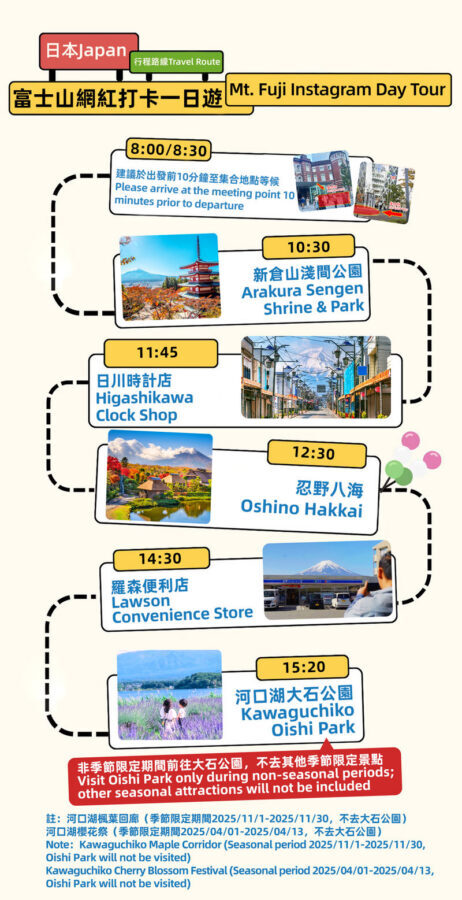
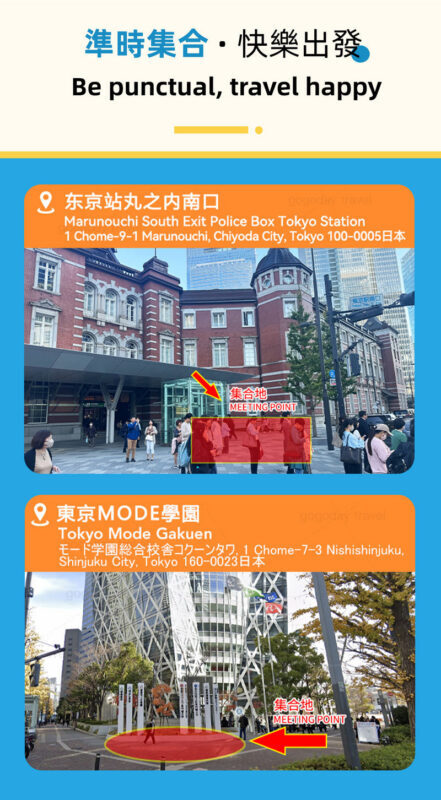
The advertised schedule runs roughly from 8:00 a.m. to 6:50 p.m., or about 11 hours. The exact meeting time and location can vary: the information gives both 8:00 and 8:30 departures, and lists Tokyo Station’s Marunouchi South Exit and a Shinjuku bus stop as meeting points. Check your booking confirmation for the specific time and place, then arrive at least 10 to 15 minutes early. Late arrivals cannot be refunded.
There is a guide, but much of the sightseeing is self-guided. Expect commentary on the coach and help with directions, timing and photo spots, then explore each stop at your own pace. For groups of 14 or fewer, the driver may also act as the guide; larger groups get a separate guide.
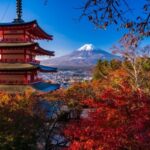
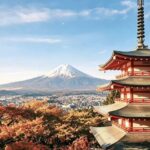
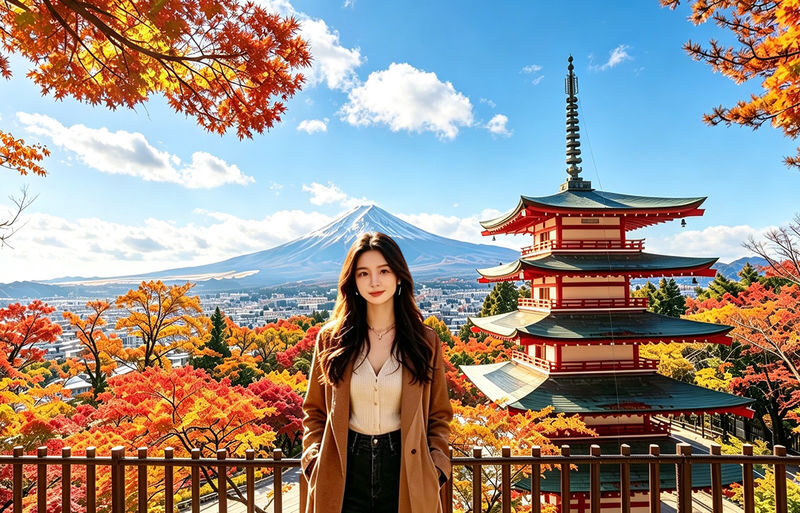
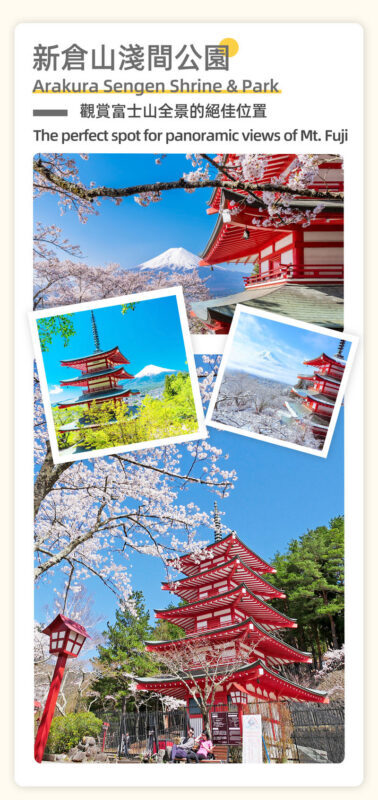
The first stop is Arakurayama Sengen Park, scheduled for about an hour. Its best-known view brings together Mount Fuji, Fujiyoshida and the park’s pagoda in one frame. It is a striking introduction to the day, and one of the places where the mountain’s size becomes easiest to read against the town below.
The view takes effort. Reaching the main viewpoint means climbing 397 steps, so wear shoes that feel steady on stairs and be ready for an uphill start. The stop is self-guided, and the hour includes the climb, the view and time for photographs. If you move slowly or want to linger, you may need to choose between taking your time and seeing every angle.
One useful point: this stop is not included for some mainland Chinese customers, who are instead directed to Fujikawaguchiko Town and its Stairway to Heaven. Confirm the version of the route attached to your booking if this applies to you.
Looking for more options in Fujiyoshida? Here are some other experiences worth considering.
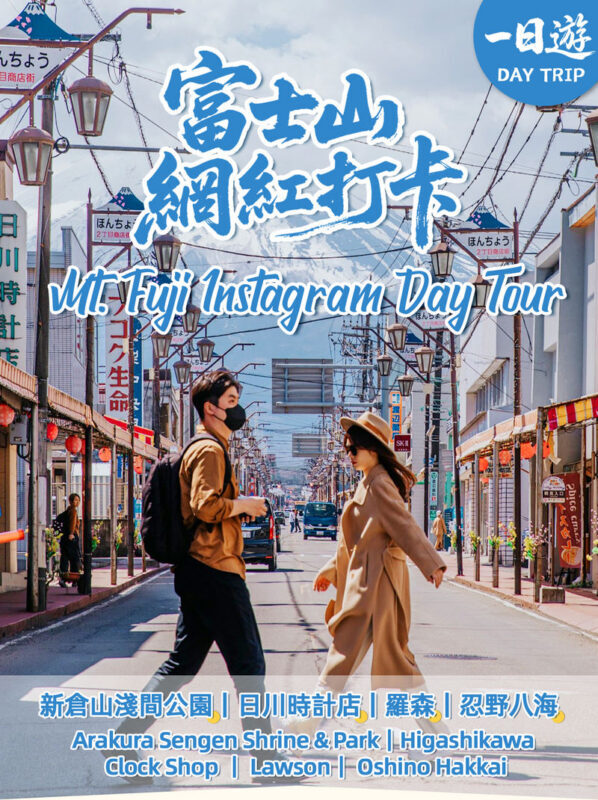
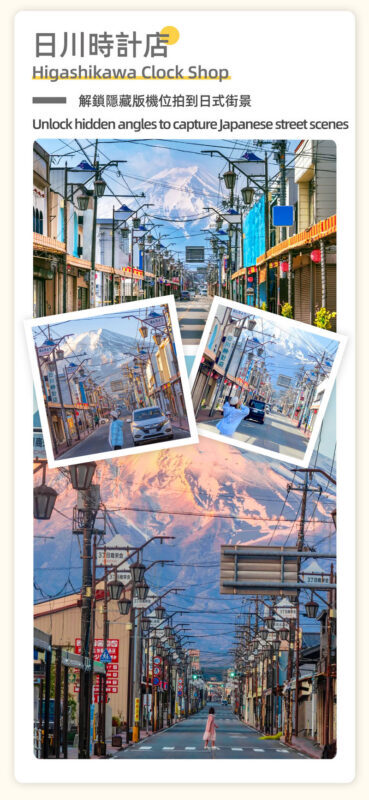
Next comes a 20-minute stop near the Hikawa Clock Shop, a modest street scene made memorable by the view of Mount Fuji at the end of the road. The appeal is the contrast: Japanese shopfronts and utility poles in the foreground, with the mountain rising beyond them.
This is a quick photo opportunity, not a long neighborhood visit. Keep your camera ready and follow the guide’s instructions about where to stand. A clear view of Fuji is never assured, but the street itself can still make a pleasing frame when the peak is hidden.
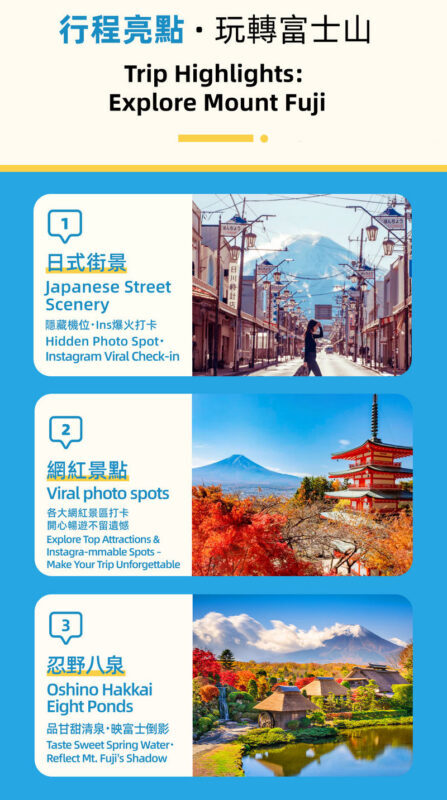
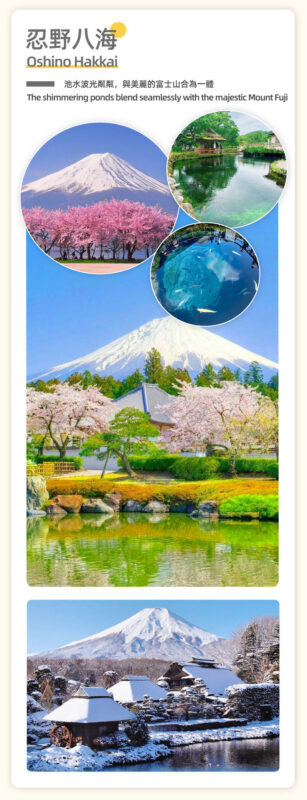
Oshino Hakkai gets about an hour and a half, the longest stop on the route. Its eight spring ponds are fed by snowmelt that has filtered through Mount Fuji’s volcanic layers. The clear water, small bridges and traditional village setting offer a change of pace from the roadside photo stops.
I’d use this time to slow down a little. Walk between the ponds, look closely at the water and leave room for a snack if you want one. Food is available nearby, but meals and drinks are not included in the base package. If you’ve chosen a lunch option, the meal is listed as eel rice or Wagyu cooked teppanyaki-style, with the exact meal depending on the package you select.
An hour and a half is generous compared with the other stops, but it can pass quickly if you shop, eat and photograph every pond. Decide what matters most before you arrive. This is also a good spot to buy a small treat rather than relying on the convenience-store stop later as your only food break.
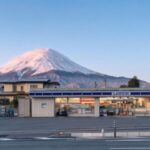
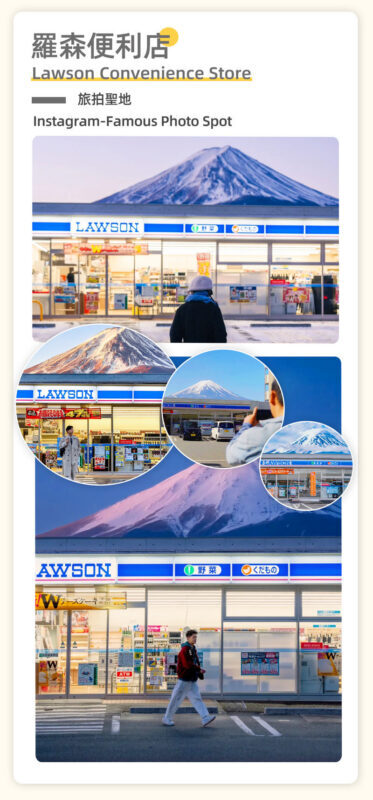
The Kawaguchiko Station Lawson stop lasts about 20 minutes. The familiar blue-and-white shop has become a popular backdrop for Mount Fuji photographs, and the composition is simple: store, street and mountain in the same view.
The time is short, so have your camera ready before you get off the vehicle. The tour’s photo tip is to frame the store from across the road and wait for a quieter moment. Be patient, but don’t block the pavement or road for a picture. This is a busy public area, not a private photo set.
The stop’s appeal is more about the unusual pairing than a deep local visit. If you prefer quieter scenery, you may find the shop less rewarding than Oshino Hakkai or the lake. Still, it is an easy way to get a distinctly modern Japan photograph alongside the day’s natural views.
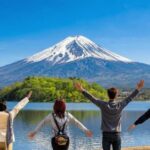
The route includes a drive along Lake Kawaguchi’s northern shore. The schedule describes this as a scenic drive, not a separate lakeside stop, so don’t count on time to wander along the water. The coach then spends roughly 50 minutes at either Oishi Park or the Maple Corridor, depending on the season.
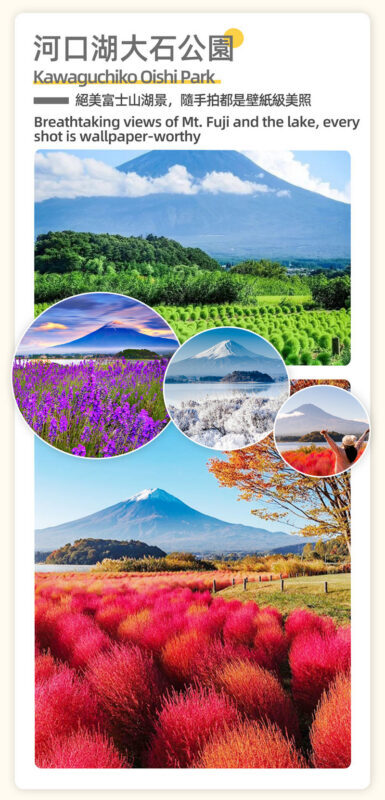
Oishi Park gives you a broad view of the lake and Mount Fuji, with planting that changes through the year. Lavender is associated with summer, while kochia turns red in autumn. The combination of seasonal color, lake and mountain makes this one of the more rewarding places to take a wider landscape photograph.
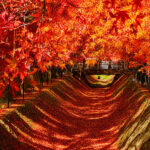
In autumn, the tour may switch to the Maple Corridor, where red leaves frame the mountain. The schedule gives different date ranges for this seasonal change, so confirm which stop is planned for your date rather than assuming a precise window. The itinerary specifies that the group visits one or the other, not both.
The park visit is short, but its open views make the time feel less hurried than the roadside stops. If Fuji is clouded over, the seasonal plants and lakeside setting still give you something to see. The mountain, however, is the main event, and no tour operator can guarantee a clear day.
Five main stops sound leisurely, but the day also includes long drives from Tokyo and between the Fuji-area sights. The itinerary assigns one hour to Arakurayama, 20 minutes to the clock shop, 90 minutes to Oshino Hakkai, 20 minutes to Lawson and about 50 minutes at the seasonal park. The lake portion is listed as a drive-by, except for the seasonal Maple Corridor visit.
That structure works well if you want a sampler of the region’s best-known photo points. It is less suited to anyone who wants to hike, spend hours by the lake or explore shops at length. Several stops are self-guided, and the guide may change the order or reduce stops if traffic, weather or safety conditions require it.
The departure details also deserve a careful look. The information lists different meeting times and two possible Tokyo locations, while the return is expected around 6:50 p.m. A separate note says the return journey may begin earlier if the day runs smoothly. Use the latest message from the operator for your actual plan. The guide and vehicle details are sent by email the evening before, sometimes as late as 9:00 p.m.; check your spam folder too.
The basic meeting-point package does not include food. You can add a meal option featuring eel rice or Wagyu, or choose a hotel pickup package with or without lunch. The private charter option is another choice for people who want hotel pickup and drop-off without joining the standard group. Prices vary by package, so compare the total cost rather than using the starting fare alone.
At from $49.29, the basic tour can be good value if you would otherwise need to arrange transport to several stops yourself. The price covers round-trip transfers, tolls, parking, fuel and guide service. It does not cover meals, drinks or personal purchases. For a family or anyone who values convenience over flexibility, avoiding the transport puzzle may be worth more than the short duration at some stops.
The listed guide languages are English, Chinese, Hindi, Japanese and Korean, although a Korean-speaking guide is not guaranteed. If one cannot be arranged, an English-speaking guide is provided. Don’t book on the assumption that a particular guide or vehicle type is guaranteed. The vehicle depends on group size and fleet availability.
Mount Fuji is famously visible one moment and hidden the next. Several recent departures have gone ahead in rain or cloud, and the day can still be pleasant, but the main photo goal may not come through. A guide can point out brief openings in the clouds and help you make the most of them; that is useful, but it cannot change the weather.
Pack for a long day outdoors and bring shoes suitable for the Arakurayama stairs. Some walking between parking areas and attractions may also be required, which can be tiring in rain or for anyone with limited mobility. The tour is not recommended for people with high blood pressure, epilepsy, heart disease, asthma or other serious medical conditions, or for pregnant women. Children aged 0 to 2 ride free only if they do not need a separate seat; ages 3 and up pay the adult rate, and anyone under 18 must be with a paying adult.
I’d choose this trip if you want a convenient, guided introduction to the Mount Fuji area and care most about seeing several iconic photo locations in one day. The strongest parts are the variety, the guide’s practical help and the chance to visit both natural sights and familiar everyday Japan. Skip it if you need a guaranteed Fuji view, dislike early starts and coach travel, or want long stretches of unplanned time at one place.
“Although the traffic made it a bit difficult, thanks to guide Lee Han-san's smooth guidance, we were able to successfully finish the Mount Fuji tou…”
The tour is scheduled for about 11 hours, from a morning departure in Tokyo to an expected return around 6:50 p.m. Traffic and weather can change the timing.
Not in the basic meeting-point package. You can select an option that includes eel rice or a Wagyu meal, and hotel pickup packages are offered with or without lunch.
The main route covers Arakurayama Sengen Park, Hikawa Clock Shop, Oshino Hakkai, Lawson Kawaguchiko and either Oishi Park or the Maple Corridor. Lake Kawaguchi is generally a scenic drive-by.
No. Visibility depends on weather, and clouds may hide the mountain during some or all of the day.
The tour lists English, Chinese, Hindi, Japanese and Korean. A Korean-speaking guide is not guaranteed; if unavailable, an English-speaking guide is provided.
The meeting point may be Tokyo Station’s Marunouchi South Exit or a Shinjuku bus stop. The details also give different possible departure times, so check the latest confirmation email for your exact location and time.