Physical Address
304 North Cardinal St.
Dorchester Center, MA 02124
Physical Address
304 North Cardinal St.
Dorchester Center, MA 02124

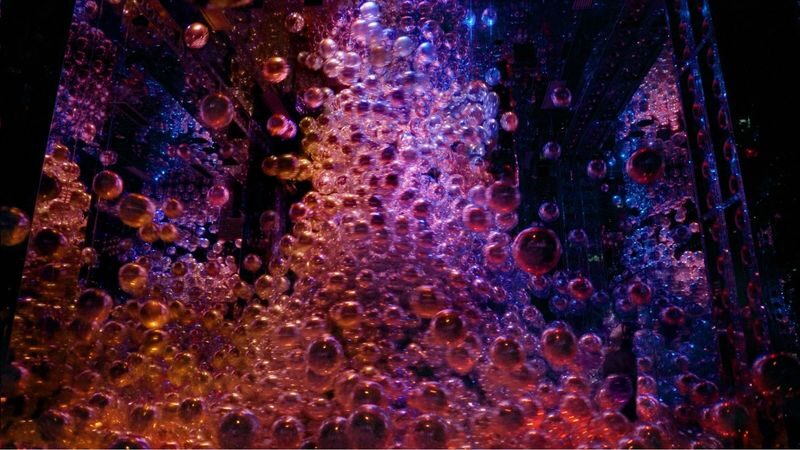
Explore teamLab Biovortex Kyoto, a hands-on digital art museum with creative play, shifting installations, and practical tips for planning your visit.
The surprise at teamLab Biovortex Kyoto is how often you go from looking at art to changing it. Your movements can affect what appears around you, while drawing and shared creations feed into a shifting digital world. It is less a quiet gallery visit than a hands-on outing where kids and adults can take different paths through the same rooms.
I like the balance between Athletics Forest, where your body is part of the artwork, and Future Park, where you help make art with other people. I also like that the museum’s digital work has a meaningful connection to Kyoto’s traditions of gardens and sliding-door paintings, rather than feeling like a high-tech attraction dropped anywhere.
The main drawback is that the museum can be hard to navigate, and its dim rooms, sounds, flashing lights, and changing surfaces may not suit everyone. You may also want food before or after: one visitor found little nearby, although a small coffee shop was reported a minute away.

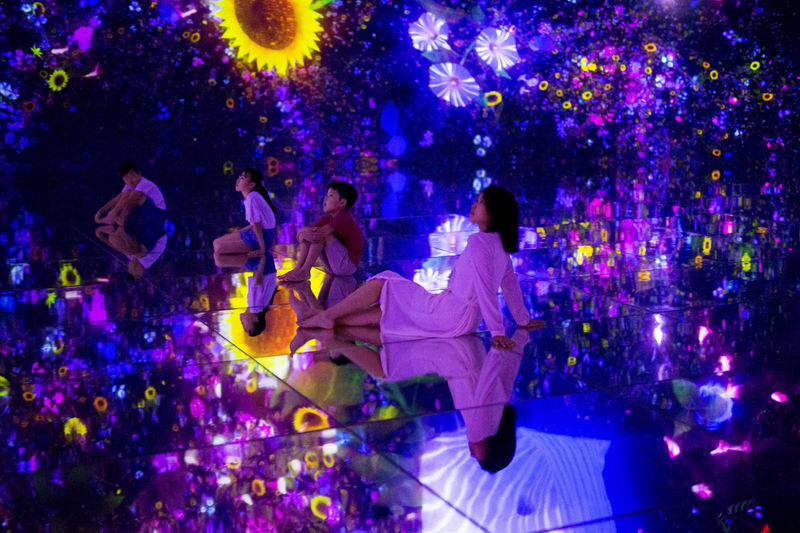
teamLab Biovortex Kyoto brings together more than 50 artworks built around a simple idea: an artwork can exist because of the conditions around it. Light, movement, sound, and your own presence may change what you see. Rather than walking past a fixed sequence of framed pieces, you enter rooms where the art can shift as people move through them.
That distinction helps explain why the museum works for families, couples, and adults who do not usually seek out contemporary art. You do not need a lesson in digital media to take part. You can watch the effects, try the interactive elements, or simply pause in a room and see how it changes.
The exhibition includes recently unveiled works such as Megaliths, Transient Abstract Life, and Return, alongside Athletics Forest and Future Park. The available details do not map out a fixed route through each work, so think of this as a set of different rooms and experiences rather than a guided tour with a prescribed order.
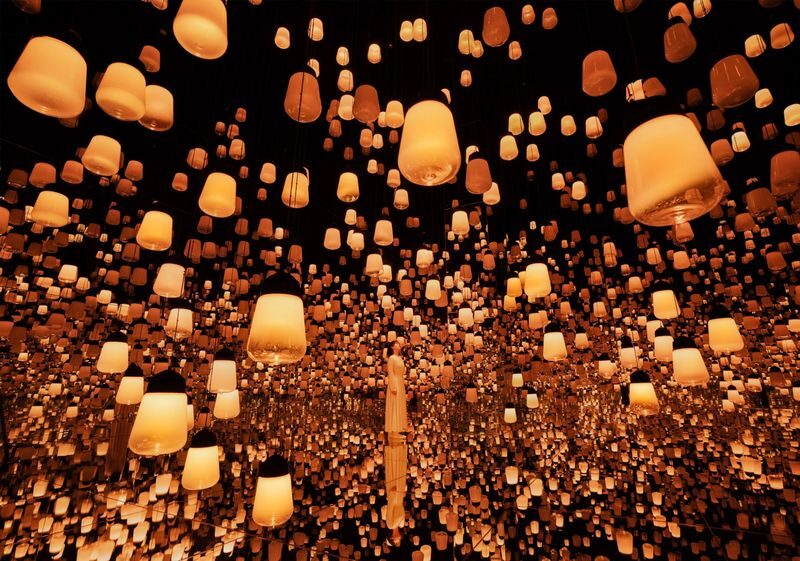
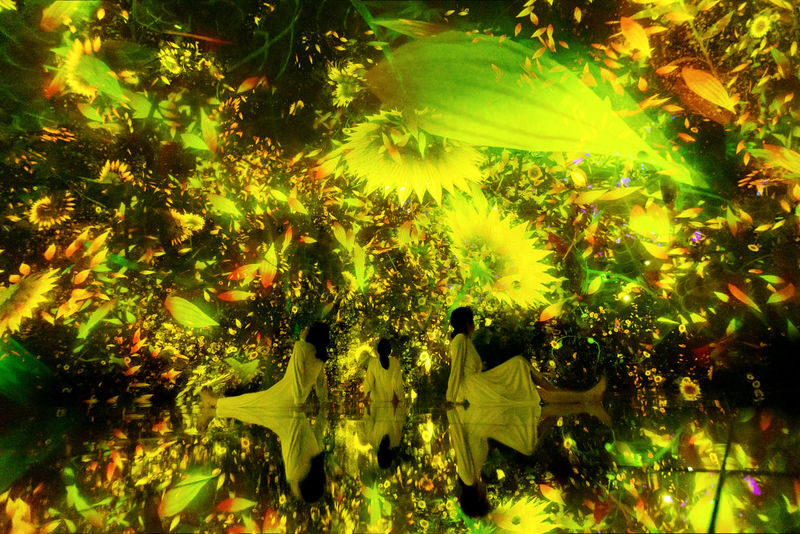
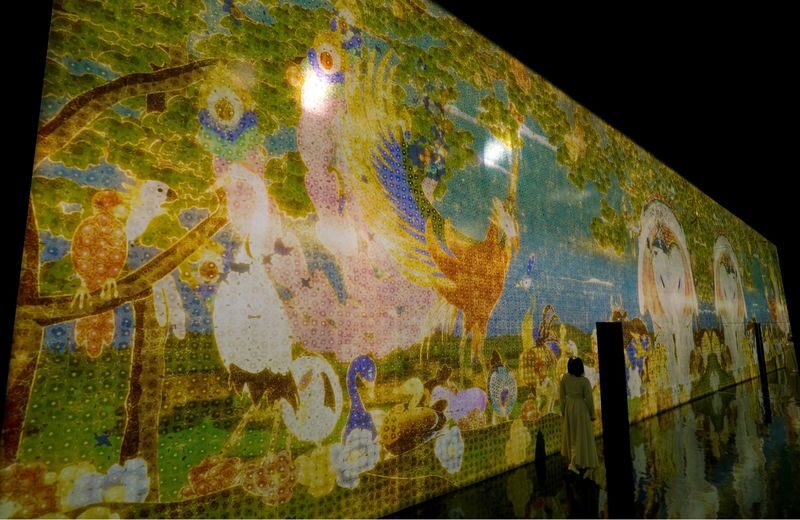
teamLab describes its art as connected to Japanese aesthetics, including Zen gardens and fusuma-e, the paintings traditionally made on sliding doors. That link is worth keeping in mind as you move through the rooms. A garden is not just a picture to look at: it changes with light, weather, and the person walking through it. These digital works also depend on their surroundings and on the people who enter them.
You do not need to know art history to enjoy the museum, and it would be a stretch to treat every installation as a direct lesson in Kyoto culture. But the comparison gives you a useful way to think about what you are seeing. The artwork is not always a fixed object. It can feel more like a setting that responds to the room and to your presence.
This makes Biovortex a good contrast with Kyoto’s temples, gardens, and historic streets. You get a contemporary art experience in the same city as some of Japan’s best-known traditional settings, and the museum gives you a fresh lens for considering how a work of art can relate to the space around it.
You might also be interested in these Kyoto experiences
Athletics Forest is the museum’s physical, active side. It is described as a complex, multidimensional creative space where your body helps shape the experience. You are not merely standing in front of a screen. Movement and the presence of people in the space can affect the work, making this section feel more like an art playground than a conventional gallery.
For children, this is likely to be one of the strongest parts of the visit. It gives them permission to engage physically, and the activities offer a change of pace from rooms where the main task is to look. Adults can join in too, though some parts may feel challenging or require careful movement. The museum warns that certain attractions are not suitable for people wearing sandals or high heels.
Bring your own sneakers if you can. Rental shoes are available, but only in limited quantities. The floors and rooms may be dim, uneven, or unstable, so take your time and keep an eye on children as you move around. The museum’s visual effects are part of the fun, but they can make it harder to judge a surface or see another person approaching.
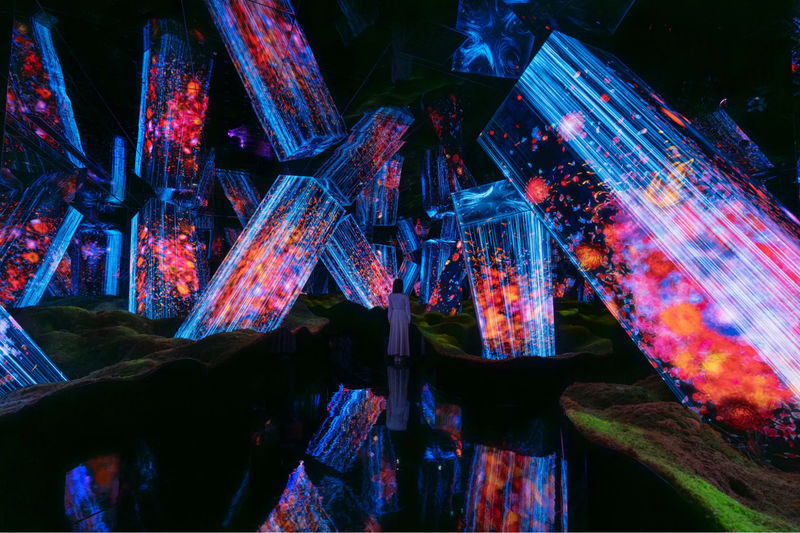
Future Park is built around collaborative creativity. In Sketch Ocean, you can contribute a drawing to a digital world; other activities include A Musical Wall Where Little People Live. The important idea is that your creation becomes part of a shared work, and that work can keep changing as other people add to it.
That shared element is what makes Future Park different from simply pressing buttons on an interactive display. Your own contribution is one piece of a larger, changing scene. It suits children especially well, but adults can enjoy the pleasure of seeing a simple drawing become part of something bigger.
There is a limited-time offer for a custom tin badge made from your artwork in Sketch Ocean or Graffiti Nature. The offer says to book by October 31, and the badge is listed as worth ¥600. Check the current conditions before booking, since promotions and redemption rules can change. If several people in your group expect a badge, check how each ticket and voucher is handled. Some groups have encountered confusion when several tickets were tied to one QR code.
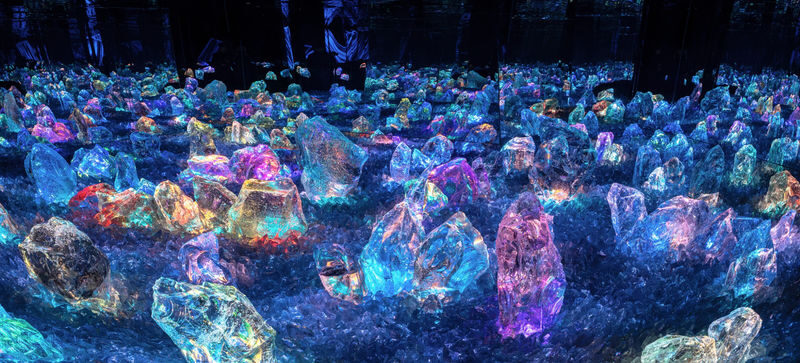
The museum also features works such as Megaliths, Transient Abstract Life, and Return, as well as a Sculpture and Moss Garden. The overall concept is environmental: the setting and phenomena around an artwork help bring it into being. This is a useful way to approach the quieter and more contemplative parts of the exhibition, which may feel quite different from Athletics Forest.
Do not expect every room to be a game. Some spaces are more about observing how an artwork shifts or taking a moment to look. The contrast between active and reflective areas helps the visit avoid becoming one long sequence of screens and effects. It also gives adults who want a calmer pace something to appreciate while children work through the more physical activities.
The museum can be loud, and some installations use flashing lights and aromas. If you are sensitive to sound, light, or strong sensory effects, be prepared for an environment that can feel intense. The dim lighting and mirrored floors also call for practical choices: a wrap skirt is available near some mirrored-floor artworks, and sensible shoes are a better choice than dress shoes.

One of the practical challenges is orientation. The exhibition spaces can be difficult to navigate, and it is possible to miss rooms if you simply wander without a plan. Download the official app before you arrive and use the map to help you find artworks. The app also provides more information and lets you take part in interactive experiences that bring parts of the exhibition to life.
Allow time to explore rather than racing through. Some people finish in about an hour and a half; a more comfortable plan is two to three hours. There is no time limit once you enter, and some people stay longer, especially when children want to repeat activities or take time with the interactive pieces.
Arriving early may help you make the most of the visit. One family that arrived at 9 a.m. found minimal queues and spent several hours inside. That is not a guarantee of a quiet entry, but an early start gives you more of the day and may make it easier to move through the rooms before they feel crowded.
Admission starts at $25.29, with the exact price depending on the option and date. For a short visit, the ticket may feel costly; for two or three hours of varied, hands-on art, the value is more convincing. Families can get particular mileage from the physical and collaborative sections, while adults who prefer quiet, traditional galleries may find the price harder to justify.
The standard entrance pass is for a selected date and time. A flexible pass allows entry at any time during opening hours on the selected date, subject to availability. Other options combine admission with a kimono rental, a day tour, or a one-way JR Haruka ride between Kansai International Airport and Kyoto Station. These are separate package choices, so compare what is actually included before paying for a bundle.
The museum is at 21-5 Higashikujo Higashi Iwamoto-cho, Minami Ward, about a seven-minute walk from Kyoto Station. There is no parking, so public transportation is the practical choice. Fushimi Inari Taisha is listed 2.3 kilometers away and Kiyomizu-dera Temple 2.8 kilometers away, but the museum itself can easily fill a substantial part of your day.
Opening hours are listed as 9 a.m. to 9 p.m., with last entry at 7:30 p.m. Hours and closures can change, so check the official site before setting your plans. The voucher is valid only for the selected date and, where applicable, time. Re-entry is not allowed after you leave.
I would put this high on the list for families with children who like to move, draw, and experiment. The mix of physical challenges and shared art gives different ages something to do, and parents can join rather than watch from the sidelines. It also works well as a change of pace after several days of temples and sightseeing.
If you have already been to a teamLab museum in Tokyo, expect some overlap in broad ideas but not an identical visit. Biovortex has a strong emphasis on Athletics Forest and collaborative activities, while individual works differ. Some people prefer this Kyoto museum; others feel that a particular installation is stronger in Tokyo. If you are choosing only one, consider whether you want more active, family-friendly art or a different balance of installations.
It is less suited to anyone seeking a quiet, orderly gallery visit or who finds sensory-heavy environments tiring. The layout can be confusing, rooms may be busy and loud, and the lighting and floor surfaces call for attention. You can still enjoy the quieter works, but the museum’s main appeal is interaction rather than stillness.

Book it if you want a modern, hands-on experience that is a real change from Kyoto’s historic sights. The best reasons to go are the combination of Athletics Forest’s physical play and Future Park’s shared creativity, plus the chance to see digital art shaped by its environment. Bring sneakers, download the app, and set aside at least two hours.
Skip it if you dislike crowds, sound, flashing lights, or interactive attractions, or if your idea of art is a quiet room and a fixed collection. For most curious families and visitors who want a lively break from sightseeing, the ticket offers good value, especially if you stay long enough to explore beyond the first striking rooms.
“Cute but nothing more, eat/drink before you come because there's nothing there or around it. Mostly for children I think, but nice to see.”
Plan on two to three hours for a full visit. Some people spend around an hour and a half, while others stay longer. There is no time limit once you are inside.
The listed hours are 9 a.m. to 9 p.m., with last entry at 7:30 p.m. Opening hours and closure dates can change, so check the official website before your visit.
The museum is about a seven-minute walk from Kyoto Station. There is no parking, so public transportation is recommended.
Yes. Athletics Forest offers physical, creative activities, and Future Park focuses on making things together. Children aged 0 to 12 must be accompanied by an adult aged 18 or older. Each adult may accompany up to three children.
Wear sneakers. Some attractions are not accessible in sandals or high heels, and rental shoes are available only in limited quantities. Some artworks have mirrored floors, with wrap skirts available nearby.
The activity is wheelchair accessible, but some artworks cannot be experienced for safety reasons.
No. Re-entry is not allowed after you leave the venue.
Some artworks include flashing lights, loud sounds, and aromas. The exhibition is dimly lit, and some surfaces may be uneven or unstable.