Physical Address
304 North Cardinal St.
Dorchester Center, MA 02124
Physical Address
304 North Cardinal St.
Dorchester Center, MA 02124


Walk Jerusalem’s Old City with an English-speaking guide, from the Western Wall and Temple Mount to the Via Dolorosa and Holy Sepulchre.
Jerusalem’s Old City puts Jewish, Muslim and Christian holy places within a short walk of one another, but their significance is anything but simple. This four-hour tour starts at Jaffa Gate and connects sites including the Western Wall, Temple Mount, Via Dolorosa and Church of the Holy Sepulchre with the stories that give them meaning.
I like two things especially: the guide brings religious history into the places where it happened, and the route crosses all four quarters rather than treating the Old City as a single, uniform place. The main consideration is that access to the Temple Mount changes by day, and four hours on crowded, uneven streets is a lot of walking.
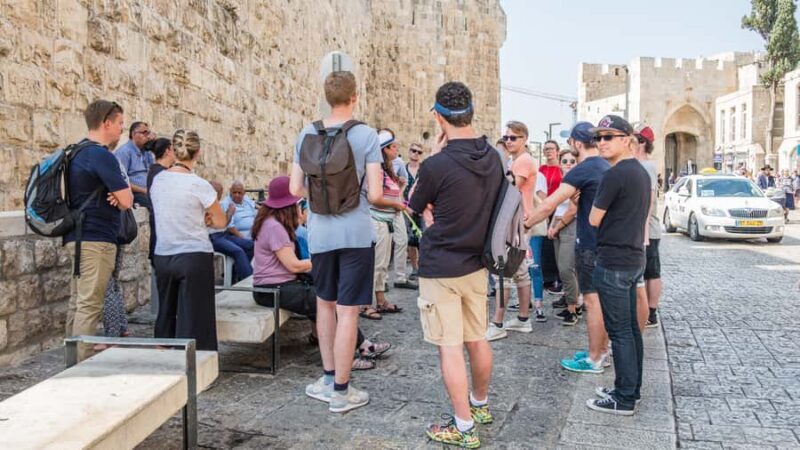
The meeting point is the stone bench just outside Jaffa Gate. Look for a guide wearing a green shirt with Guide in yellow on the back. Arrive ready to walk: this is a pedestrian tour through narrow lanes, not a coach trip between major sites.
Jaffa Gate is a useful place to begin because it brings you straight into the Old City’s maze of streets and quarters. Your guide helps make sense of the route as you move, explaining how different communities and traditions meet in a compact space. That context is valuable from the start. Without it, the Old City can feel like a beautiful jumble of ancient stones, shops and people moving with purpose.
The experience is in English and lasts four hours. Guides named by people who have taken the tour include Tania, Shahar, Yoni, Alex and Nimrod, among others. The individual guide can vary, but the strongest accounts describe clear explanations, patient answers and a lively way of telling stories. Those qualities matter here: the places are meaningful to millions, and a good guide helps you listen and look with care.
Looking for more options in Jerusalem? Here are some other experiences worth considering.
The walk passes through the Old City’s four quarters, giving you a chance to see more than a string of famous stops. The quarters have their own character and religious associations, and the guide’s job is to make those differences understandable without flattening them into a simple lesson.
Expect the pace to be active but not necessarily hurried. Several people who took the tour described enough time to see major sites and ask questions, while still covering a great deal in four hours. That is a useful balance for a first visit: you get an overview and can return later to places where you want more time.
The streets can be crowded, and the route involves a lot of walking. One group described a four-hour outing in heavy rain and cold wind, while another noted that summer heat made shade and pacing important. Conditions are not controlled by the tour, so check the forecast and come prepared. The narrow lanes and changing surfaces also make this a poor fit for wheelchair users or anyone with significant mobility impairments.
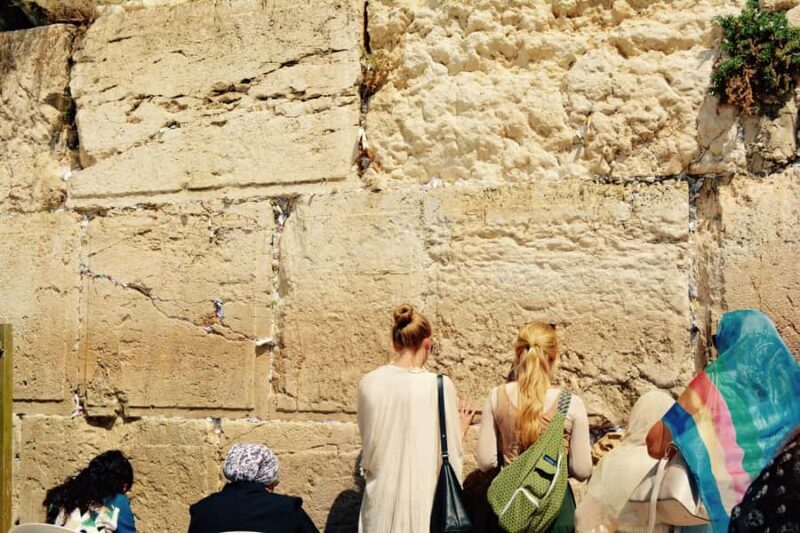
The Western Wall, also known as the Wailing Wall, is among the tour’s central stops. It is a remaining section associated with the Jewish Temple that stood here thousands of years ago, and it remains a major place of Jewish prayer. Standing there while your guide explains its history gives the visit more depth than a quick photograph can.
You may hear about the foundations of the Jewish nation and the wall’s connection to the Temple. The guide can also help place the site within the wider story of Jerusalem, where different faiths attach distinct meanings to nearby ground. This is one of the tour’s strengths: it gives you a way to understand the site without pretending that one short visit can cover every historical or religious debate.
The experience at the wall is shaped by the day and the atmosphere around you. Keep your attention on the site and follow your guide’s directions. One account describes being taken to a particular spot at the Western Wall, but the precise stops and access can vary, so treat that as a possibility rather than a promise.
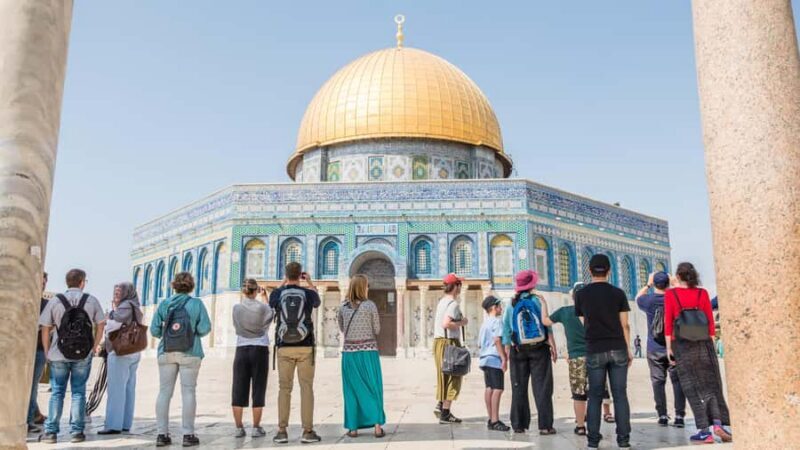
The Temple Mount is one of the tour’s most important and most changeable stops. The site is sacred to Muslims, and the tour introduces the Dome of the Rock and Al-Aqsa Mosque, as well as the belief that the Prophet Mohammed ascended to heaven from this place. The guide also discusses the five pillars of Islam, giving the landmarks a broader religious context.
Access is not guaranteed. The Temple Mount, including the Dome of the Rock and Al-Aqsa Mosque, is closed to visitors every Friday and Saturday, as well as during various Muslim and Jewish holidays. When it is closed, the tour substitutes a viewpoint overlooking the site. That still gives you a chance to understand the layout and importance of the area, but it is not the same as entering.
Check the calendar before booking if access matters particularly to you. Even on a day when the site is open, visiting a sacred place calls for patience and respect. The schedule and access conditions can shape the experience, so it is wise to think of this part as an introduction to the site rather than a guaranteed interior visit.
More Great Tours NearbyThe Via Dolorosa follows the route associated with Christ carrying his cross toward his crucifixion. Walking it with a guide gives the streets a specific meaning, especially if you are unfamiliar with the Christian traditions connected to the route. Your guide can relate biblical stories to the places around you and explain why the journey matters to pilgrims.
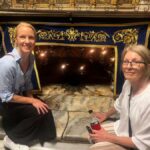
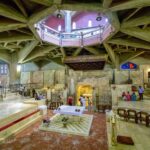
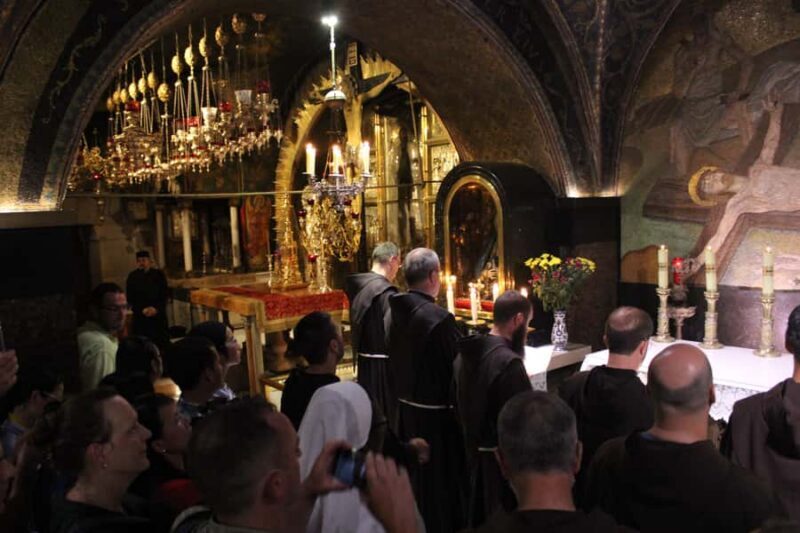
The tour also visits the Church of the Holy Sepulchre, a major Christian holy site. You can go inside and see places associated with the crucifixion and burial of Jesus. The church is a place of worship as well as a historic site, so it can be crowded and solemn. Give yourself room to take it in, and remember that visitors around you may be there for prayer rather than sightseeing.
The Last Supper room is also included in the advertised route. Together, these stops make the tour particularly useful for understanding Christian traditions in Jerusalem, though the experience is not limited to Christian sites. The guide’s role is to connect these places with the Jewish and Muslim landmarks you encounter elsewhere in the Old City.
King David’s Tomb is another stop associated with Jewish tradition. Along with the Western Wall, it helps the guide explain the foundations of the Jewish nation and Jerusalem’s place in that story. The tour also discusses the discovery of the True Cross, one of several historical and religious subjects that can make familiar biblical accounts feel more grounded in place.
These explanations are most useful when they stay connected to what you are seeing. The tour’s format makes that possible: instead of hearing a long lecture far from the sites, you walk through the streets and stop where the stories matter. Guides are described as taking questions and adjusting explanations to the group, which is helpful when people arrive with different levels of religious knowledge.
You do not need to be religious to get something from the tour. You do need curiosity and a willingness to encounter traditions that may not be your own. The guide’s job is to explain significance, not to turn the walk into a test of what you already know.
This is a walking tour in the full sense. Comfortable shoes are essential, and water and a sun hat are sensible items to bring, especially in hot weather. A scarf is also on the suggested packing list. Bring your passport or a copy, as requested for the activity.
Shorts and sleeveless shirts are not allowed, so dress with coverage in mind. That advice is practical as well as respectful when visiting religious sites. If the weather turns, rain protection and a warm layer may also help, though the listed essentials are shoes, a hat, water, a scarf and passport or copy.
A four-hour tour can feel long if you are tired, uncomfortable or hoping to linger at every stop. On the other hand, the time allows the guide to cover a lot of ground without reducing the visit to a quick checklist. If you have only one half-day for the Old City, this is a sensible way to see its leading landmarks and understand their connections before exploring further on your own.
At $57 per person, the main value is having an English-speaking guide connect the sites and explain their religious and historical importance. A self-guided visit can take you to many of the same places, but it will not automatically provide the context that links the Western Wall, Temple Mount, Via Dolorosa and Holy Sepulchre into one coherent introduction.
The value is strongest if this is your first visit, or if you want a broad orientation before returning to particular sites. The tour is also useful if you have questions about more than one faith and want a guide who can address them as you walk. Several accounts describe guides who handled varied questions patiently, kept a good pace and made the four hours engaging. Names that appear repeatedly include Tania and Shahar, but you cannot count on a specific guide unless that is confirmed for your departure.
Food and drinks are not included. A local falafel stop has been part of at least one outing, but it should not be treated as a promised meal or part of the price. Bring water, and plan separately for food if you need it.
You can reserve now and pay later, and cancellation up to 24 hours in advance is eligible for a full refund. That flexibility can help if your plans are still taking shape, but check the terms when booking.
I’d recommend it to first-time visitors who want to understand the Old City’s main religious landmarks in one half-day. It also suits people who enjoy asking questions and hearing different traditions explained in their physical setting. The guides’ clear English and willingness to handle questions are important advantages for an international group.
It may be less suitable if you want a slow, unstructured visit or need to spend a long time at each site. Four hours is enough for an overview, not an exhaustive exploration. Anyone with mobility limitations should also consider the walking demands and the stated restriction against wheelchair users and people with mobility impairments.
Book it if you want a strong first framework for the Old City, and treat the walk as an introduction rather than the final word. Keep your expectations flexible around Temple Mount access, bring suitable clothes and water, and leave space in your schedule to revisit the places that stay with you.
“Amazing tour. Shahar was very informative and answered all our questions. Would recommend booking with him.”
The tour lasts four hours and is conducted in English.
The listed price is $57 per person and includes a guided tour. Food and drinks are not included.
Meet at the stone bench just outside Jaffa Gate. Look for a guide wearing a green shirt with Guide written in yellow on the back.
Wear comfortable shoes and avoid shorts and sleeveless shirts. Bring water, a sun hat, a scarf, and your passport or a copy.
The Temple Mount, including the Dome of the Rock and Al-Aqsa Mosque, is closed to visitors on Fridays, Saturdays and various Muslim and Jewish holidays. When it is closed, the tour includes a viewpoint overlooking the site instead.
No. The tour is not suitable for wheelchair users or people with mobility impairments.
You can reserve now and pay later. You may cancel up to 24 hours in advance for a full refund.
You can check availability for your dates here: