Physical Address
304 North Cardinal St.
Dorchester Center, MA 02124
Physical Address
304 North Cardinal St.
Dorchester Center, MA 02124

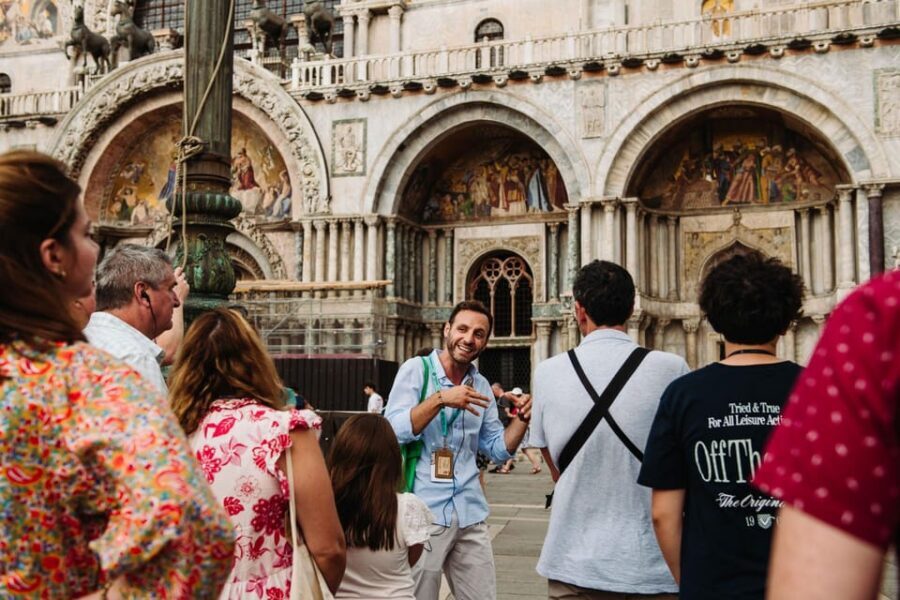
See St. Mark’s Basilica and the Doge’s Palace after hours, with a guide, fewer crowds, the Bridge of Sighs, and the Pala d’Oro.
St. Mark’s Basilica is a different place when the daytime crowds have gone and the lights come on over its gold mosaics. This evening tour pairs that quieter visit with the Doge’s Palace, including its grand council hall, prisons and the inside of the Bridge of Sighs.
I like two things here: the after-hours access gives you room to look, and a guide can connect the palace’s art and architecture to the workings of the Venetian Republic. One consideration: this is a long walking tour, and the break between the palace and basilica can run as long as 1.5 hours.
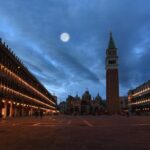
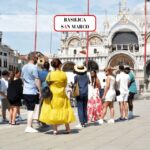
St. Mark’s Square is one of Venice’s busiest places by day. After-hours entry changes the pace: instead of trying to take in the basilica over a crowd’s shoulders, you can stand beneath its mosaics and give the decoration your attention. The quieter setting is a major part of the value, not just a convenient way to skip a line.
The Doge’s Palace benefits from the same calmer atmosphere. Its halls and apartments were built to impress, and it is easier to notice their scale when you are not being swept along by a dense flow of people. The tour is guided, so you hear how the palace functioned as the center of government as well as the home of Venice’s rulers.
The experience is not private in the sense of having the buildings to yourself. Other tour groups may be present, and group sizes can vary. Still, the evening format can mean far fewer people in the spaces than during normal daytime hours, giving you more time to listen, look around and take in the details.
You might also be interested in these Venice experiences
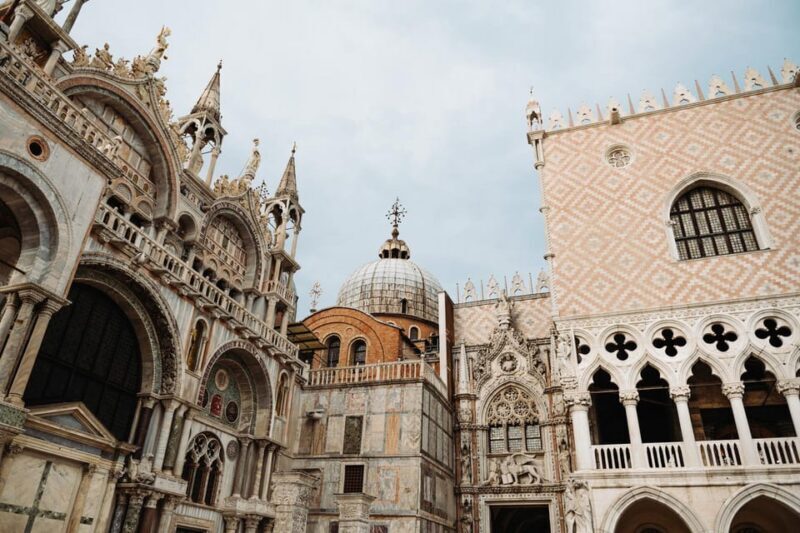
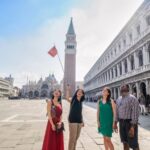
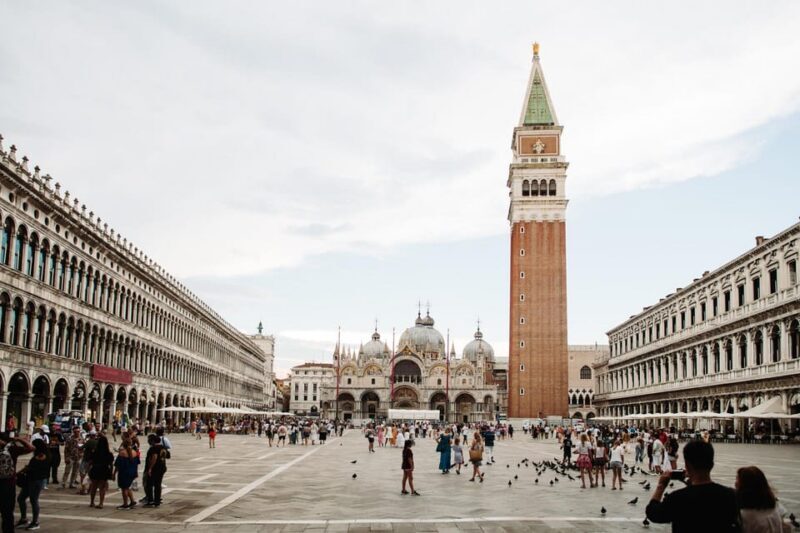
The meeting point is beneath the portico outside the Correr Museum, at Piazza San Marco 52. Arrive 15 minutes early and look for a guide holding a green Walks sign. The activity starts near the square’s most famous buildings and finishes back at the meeting point.
It’s worth arriving with enough time to find the portico without rushing. St. Mark’s Square can be confusing when it is busy, and starting calmly helps you make the most of a long guided visit. Hotel pickup and drop-off are not included.
The tour is in English. Guides named by participants include Roberta, Elena, Nico, Giulia, Ione, Pamela, Susan, Mosè and Laura. You cannot choose a particular guide, but the best guides make the evening more than a sequence of rooms: they explain how Venice’s leaders were elected, what their roles involved and what the buildings reveal about their power.
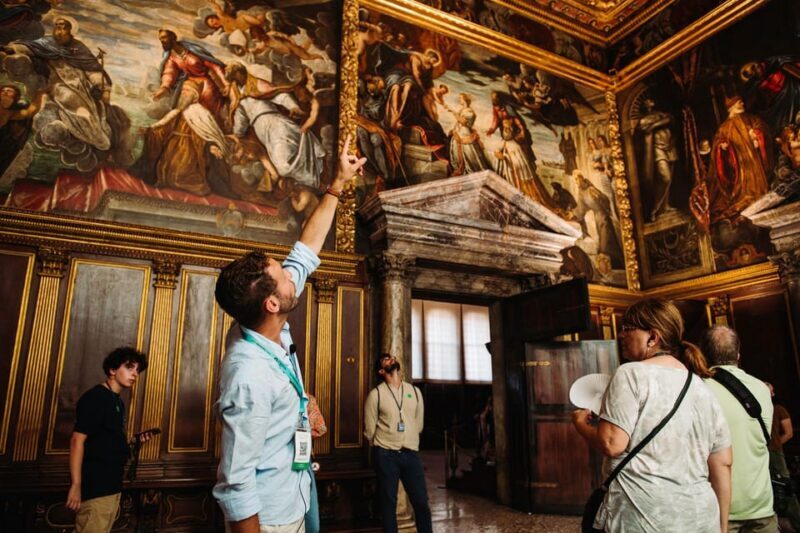
The Doge’s Palace was a center of political life in the Venetian Republic. Your guide leads you through its lavish apartments and meeting spaces, where decorative art and grand proportions were meant to project authority. The tour’s value lies partly in being shown how to read the setting, rather than simply admiring ornate ceilings without knowing what happened beneath them.
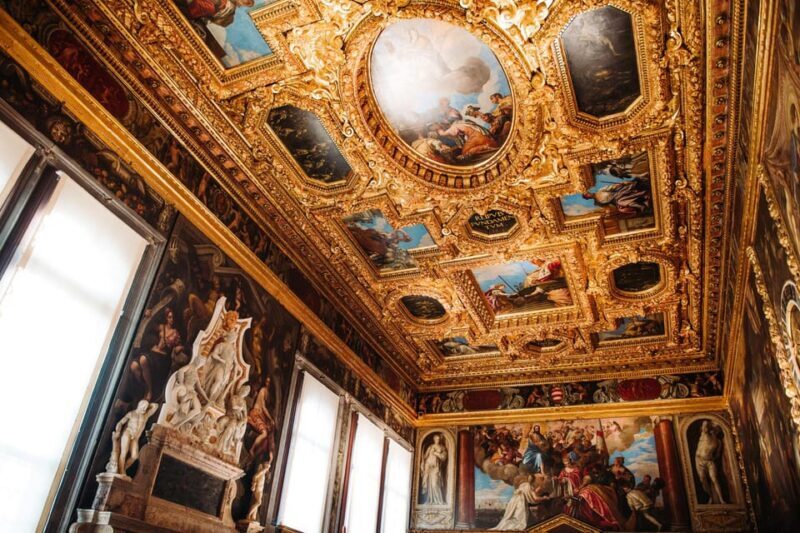
The Great Council Hall is a high point. Its large scale and paintings by Veronese and Tintoretto make an immediate impression, but the guide also gives you stories to hold on to. One detail raised on the tour is a doge in the painted series whose portrait is covered by a black veil. That image offers a memorable opening into the politics and customs of the republic.
The palace’s rooms can feel like a procession of grand interiors, especially if you have already visited other European palaces. Here, the guide helps keep the focus on Venice: how its rulers were chosen, how they governed and how art helped express the republic’s status. If history is your main reason for booking, this is where the guided format earns its keep.
The tour also visits the massive armory and the palace prisons. That contrast is useful. After the bright, formal halls, the prison spaces bring you closer to the machinery of authority and punishment. They are a darker part of the visit, and their atmosphere gives the palace’s political story a more human edge.
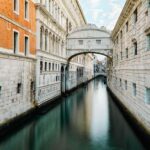
The Bridge of Sighs connects the palace with the New Prisons. You cross it from the inside, rather than viewing its enclosed stone exterior from the canal-side vantage point. The passage is a striking architectural feature, but it also has a practical purpose: it linked the court and government complex with the prison.
The bridge’s romantic reputation can distract from that history. Your guide explains why its real story is less dreamy than the name suggests, adding a useful correction to the familiar postcard image. The passage itself is enclosed, so do not expect broad views or a long photo stop. Its importance is in understanding where it leads and what it connected.
More Great Tours Nearby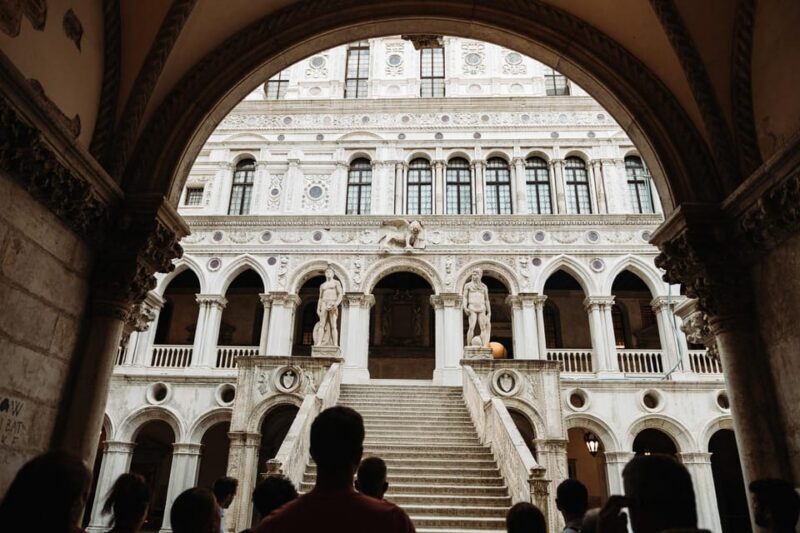
After the palace, the group takes a break before continuing to the basilica. The exact timing can vary, and the gap may be up to 1.5 hours. That is long enough to matter when planning dinner, especially if you are hungry after walking through the palace.
Bring a little flexibility to the evening. You may have time to eat, but don’t assume the pause will be a brief stop or that the two sites follow one another without a wait. Check your schedule with the guide, and avoid making dinner plans that depend on an exact finish time.
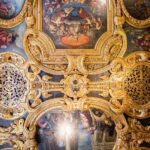
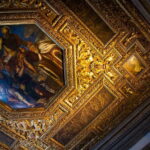
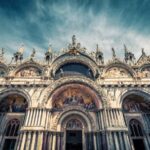
The basilica visit is the emotional centerpiece for many people. After the daytime crowds leave, a cathedral custodian unlocks the doors for the group. The mosaics are seen in a quieter setting, and the lights may be turned on gradually, revealing the gold decoration overhead. That slower reveal can help you notice the ceiling and walls as a whole, rather than treating the interior as a quick photo stop.
The basilica’s Byzantine character sets it apart from the palace. Its glittering surfaces, mosaics and layered decoration reflect Venice’s long ties to the eastern Mediterranean. Your guide gives context for the art and the city’s history, while the evening quiet makes it easier to pause and look.
You also see the Pala d’Oro, the jeweled altarpiece. Its gemstones are a clear reason to visit with a guide who can point out what makes it special. Without context, it is easy to register the shine and move on; with an explanation, you can better understand why it draws so much attention.
The route includes the crypt, where the bones of St. Mark are said to be kept. Access and the route can change because of religious observances, high tides, flooding or private events. Those changes are outside the tour operator’s control, and the route may be adjusted for safety if water levels rise.
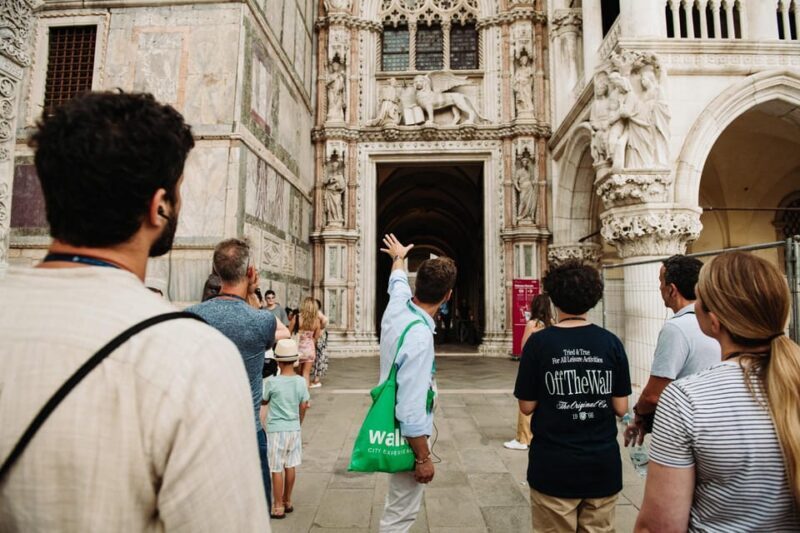
At $157.47 per person, this is much more expensive than simply entering the two landmarks during the day. You are paying for after-hours entry to St. Mark’s Basilica, admission to the Doge’s Palace and a live English-speaking guide over a 3.5-hour tour. The main value is access and atmosphere: quieter rooms, a less hurried look at the basilica and interpretation that ties the sights together.
For a visitor who enjoys history and wants time to appreciate the interiors, that can justify the premium. If you mainly want to see the buildings and take a few pictures, daytime admission may be better value. The guided experience matters most when you want the stories behind the doges, the palace’s political rooms and the art.
The strongest guides are a big part of the experience. Roberta, Elena and Nico are among the names associated with warm, story-led explanations. Elena is described as sharing personal knowledge of growing up in Venice, while Nico is noted for bringing history and architecture together. Since guide assignments vary, treat those names as examples, not a promise.
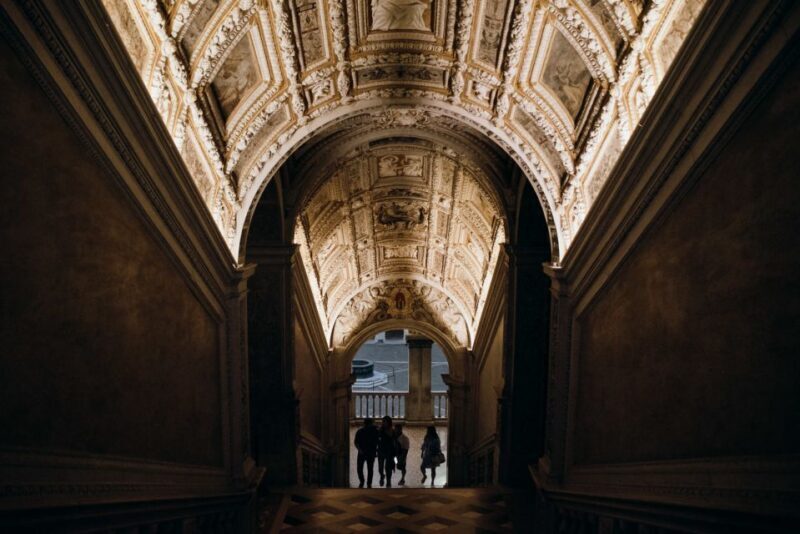
Wear comfortable shoes. The tour lasts 3.5 hours and involves walking at a moderate pace, with no hotel transport included. The operator says the activity is not suitable for wheelchair users, people with mobility impairments or strollers.
Dress for the basilica’s rules: everyone must cover shoulders and knees, regardless of gender. A scarf or shawl can help if your clothing does not meet the requirement, but the operator cannot be held responsible if you are refused entry. Shorts and sleeveless shirts are not allowed.
Leave luggage and large bags behind. The tour is not suitable for them, and carrying extra weight through the palace and basilica would make the walk less comfortable anyway. Seasonal conditions also matter: one visitor on a November tour found it very cold, so bring layers if you are visiting in chilly weather.
High tides and flooding can affect the route. If water prevents access to part of the tour, the guide may make changes for safety, but there is no refund for sections that cannot be visited. Occasional holy observances or private events can also restrict access to either site.
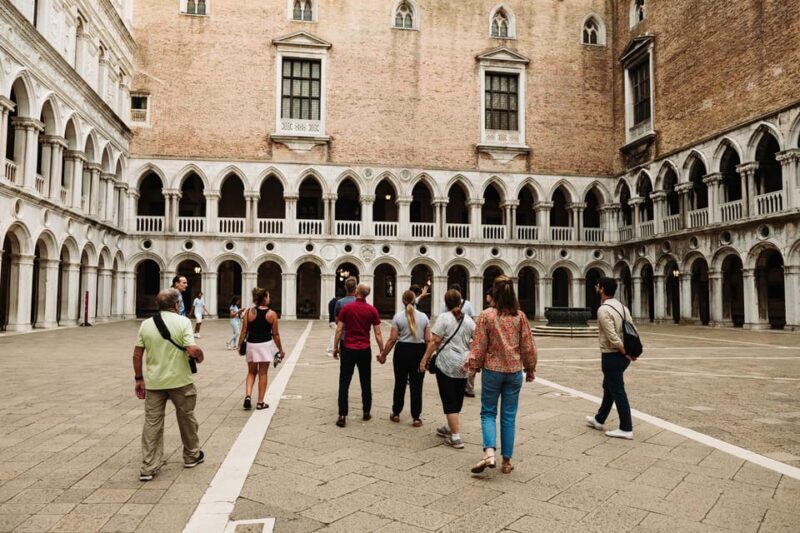
This is a strong choice if you want to see Venice’s two most important landmarks with fewer crowds and understand what you are looking at. It suits first-time visitors with a keen interest in art, architecture or Venetian history, as well as repeat visitors who found the daytime crowds made it hard to appreciate the buildings.
It is less suitable if you have limited stamina, need step-free access, are traveling with a stroller or dislike evening schedules with a possible long pause. It also may not suit a tight itinerary: the tour itself is 3.5 hours, and the break between sites can stretch the evening further.
I would book it if the after-hours atmosphere and expert storytelling matter more to you than saving money. Bring comfortable shoes, a shoulder-covering layer and a plan for the break. If you prefer to set your own pace and do not mind crowds, visit independently instead.
“Our guide Roberta was very informative and a real pleasure to tour with. It was great to see the sights after the big tourist rush during the day.”
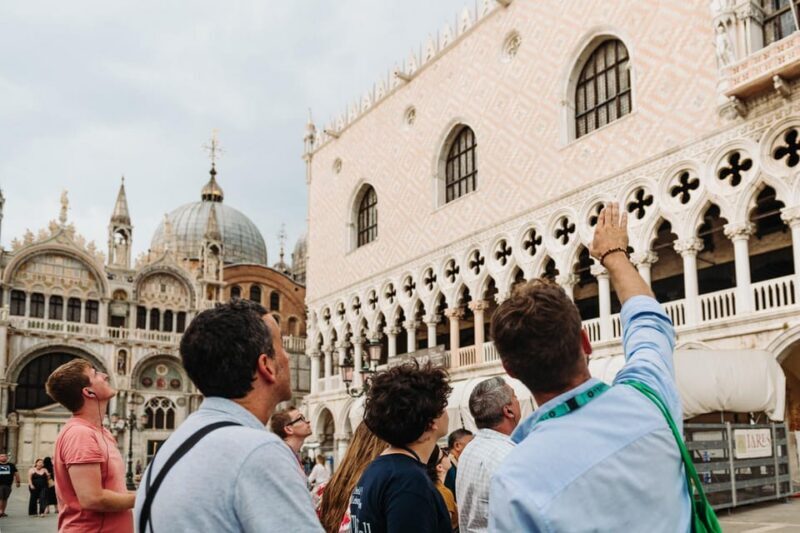
The tour lasts 3.5 hours. A break between the Doge’s Palace and St. Mark’s Basilica may last up to 1.5 hours.
Meet at the Correr Museum in Piazza San Marco 52, beneath the portico just outside the museum entrance. Arrive 15 minutes early and look for the green Walks sign.
The live tour guide speaks English.
Yes. Entry to the Doge’s Palace and after-hours entry to St. Mark’s Basilica are included.
Wear comfortable shoes, and make sure your shoulders and knees are covered for the basilica. Long sleeves and long pants are listed as items to bring.
No. Luggage and large bags are not allowed on the tour.
No. It is not suitable for wheelchair users, people with mobility impairments or strollers. Participants should be able to walk at a moderate pace without difficulty.
The route may be adjusted for safety if high tide or flooding affects access. Holy observances or private events can also restrict entry to either site. No refund is provided when those circumstances prevent access to part of the tour.
You can check availability for your dates here: