Physical Address
304 North Cardinal St.
Dorchester Center, MA 02124
Physical Address
304 North Cardinal St.
Dorchester Center, MA 02124

Cycle from Phnom Penh to Silk Island for village life, silk weaving, local food stops and ferry crossings with an English-speaking guide.
Silk Island is close to Phnom Penh, but the ride out gives you a quick change of scene: ferries, village roads, farms and local workshops replace city traffic. I like the silk-weaving visit, where a local family explains a craft passed from parent to child, and the chance to stop at a tofu-skin business that makes a familiar food by hand.
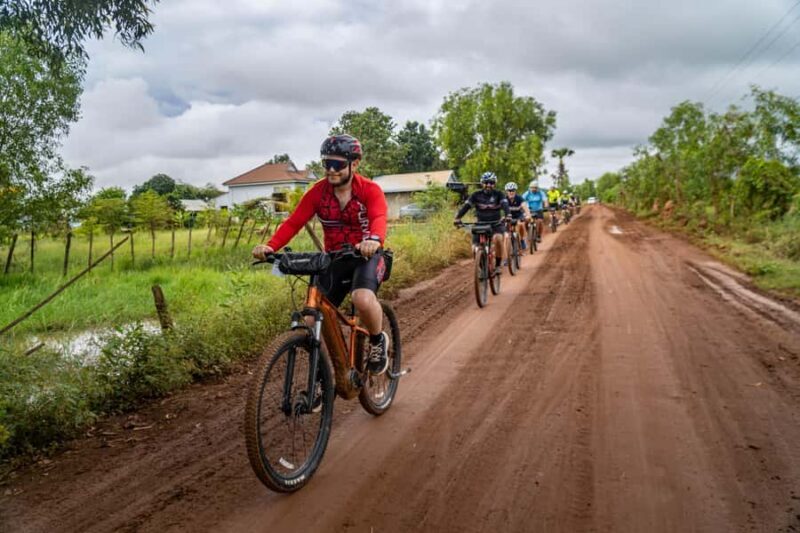
The ride is mostly flat, but it can cover 24 to 50 kilometres depending on the route and group. That is a fair bit of time in the saddle, and the tour runs in rain or shine. If cycling is not for you, check the tuk tuk option before booking, since most of the practical details here relate to the bicycle and e-bike trips.
The tour begins with hotel pickup, if selected, and a transfer to the bike shop. There, you get a bike fitting and a briefing before heading out of the city. A helmet is mentioned by one rider, but the stated inclusions do not list one, so ask the operator if you want to confirm what is supplied.
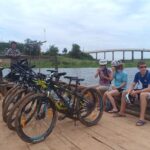
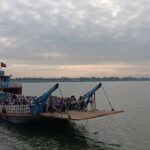
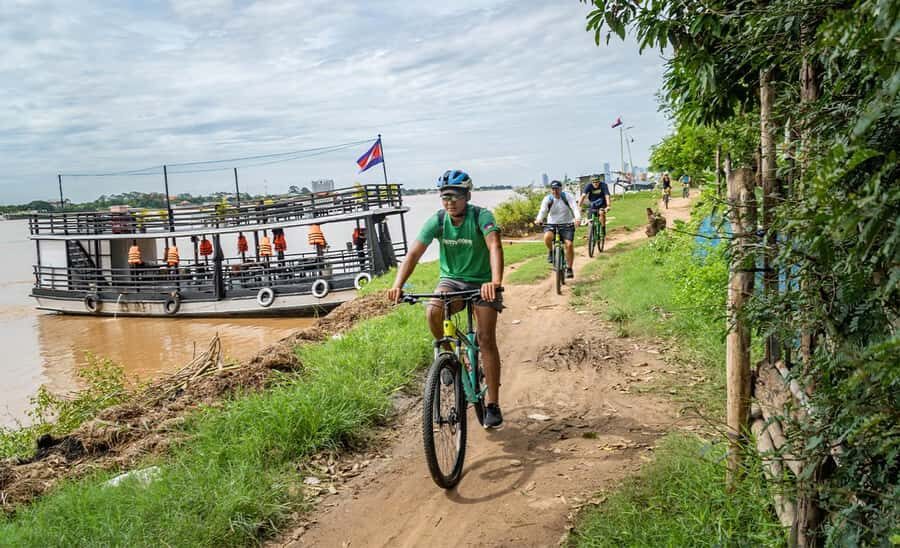
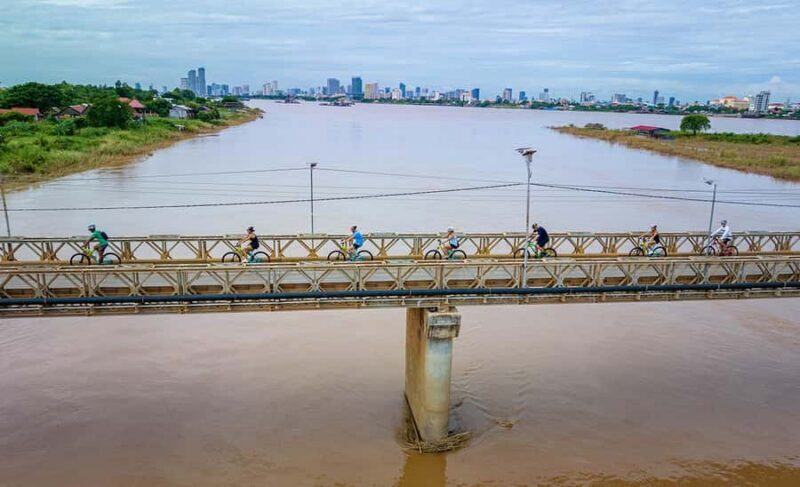
The river crossing marks a practical and pleasing shift in pace. You board local ferries to reach Silk Island, and the crossings offer a break from pedalling as well as views back toward Phnom Penh. Some trips use several ferries, with one reported route crossing four times. The exact number can depend on the day’s route and ferry service.
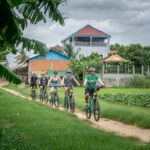
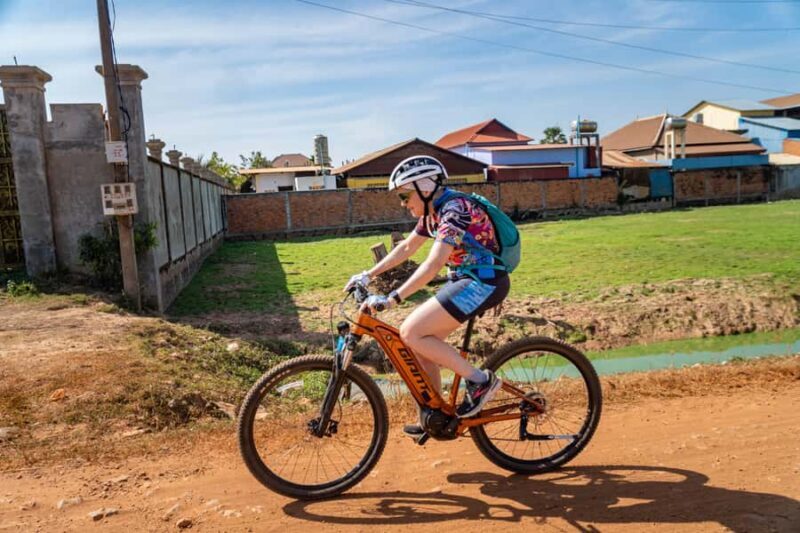
Once across, the ride follows country roads through villages and agricultural areas. The terrain is generally flat, though some stretches may be dirt and there can be small rises. Guides such as Sam and Seer have been praised for clear riding signals and for choosing smaller roads where possible. That matters in a place where you want to look around without losing track of the group.
Cyclists might enjoy these other Phnom Penh biking routes and tours
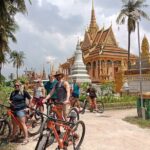
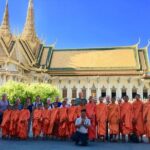
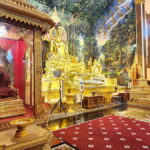
One planned stop is a golden temple, with about 30 minutes for a guided visit. The temple’s interior murals have been singled out as a highlight, and the stop offers a moment to look closely at religious art rather than simply pass another building from the road.
The temple is a useful early stop because it adds cultural context to a trip otherwise focused on village life and production. Still, it is not a long temple visit. If you want an in-depth religious or architectural tour, this ride is not designed to provide one.
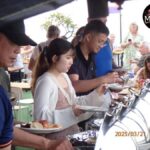
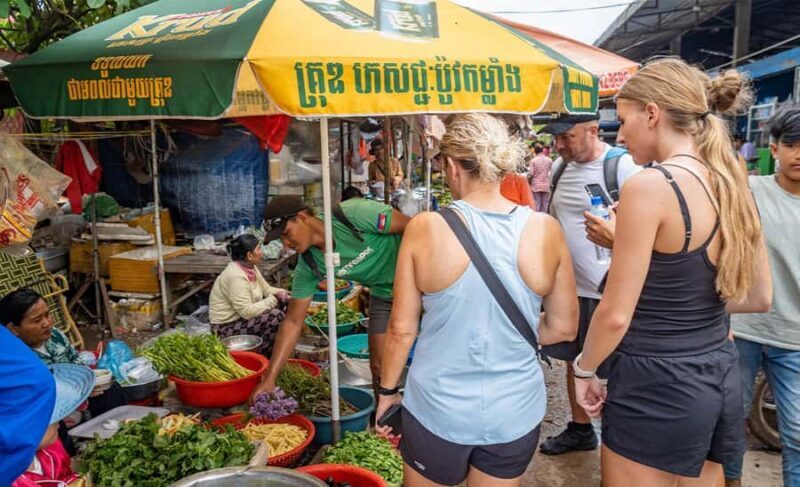
The route also includes Koh Oknha Tei Market, where the planned visit lasts about an hour. A market stop lets you see the ordinary business of shopping and selling, and guides may help explain what you are seeing or introduce local snacks. Fruit and snacks are included, so there is a chance to taste something along the way without turning the tour into a formal food crawl.
A stop at Koh Oknha Tei Secondary School is also part of the itinerary, with around 30 minutes set aside. The available details do not specify what you do inside the school, so treat it as a brief cultural stop rather than a promised school visit or classroom exchange.
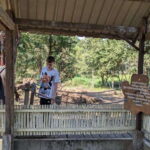
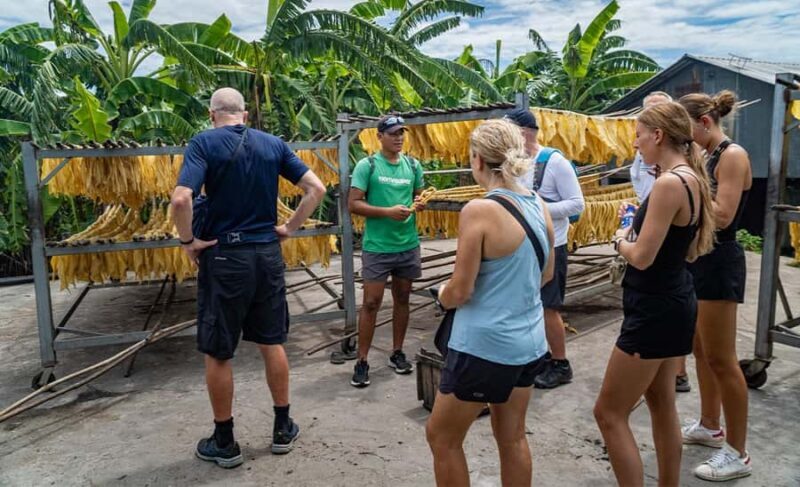
The tofu-skin producer is one of the tour’s most distinctive stops. Rather than only seeing finished goods, you get an introduction to a local family business and how it makes dried tofu skin, a food with a place in everyday cooking. It is the sort of small-scale production visit that helps explain how work and food are tied to village life.
Availability may vary. At least one trip found the makers out of season, but the guide was still able to explain the process. If seeing production in action is a priority, keep in mind that the stop may not look the same on every date.
This is not a large factory tour or a staged demonstration. Its appeal is the chance to see a local enterprise at close range and ask questions through your guide. The stop is likely to mean more if you are curious about food and livelihoods than if you are looking for a polished visitor centre.
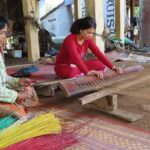
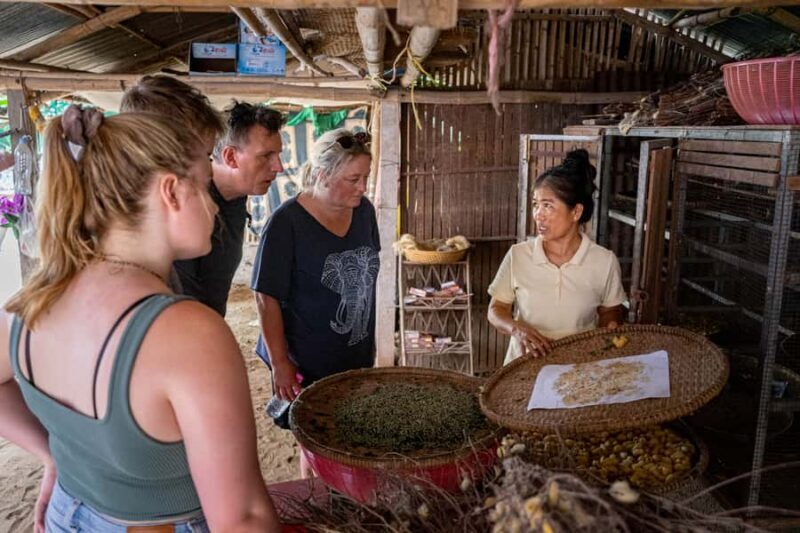
Silk Island’s weaving visit is the cultural heart of the trip. You meet local villagers and learn about the stages and history of Cambodian silk work. One family has described a tradition spanning six generations, from raising silkworms to making finished silk products. The precise process you see can vary, but the focus is on a craft taught within families over time.
There is also time to look at the finished fabric and, if something catches your eye, to shop. The workshop products have been described as reasonably priced, though buying is entirely optional. For anyone interested in textiles, the visit gives the patterns and products a human context: you can connect the cloth to the people and skills behind it.
The itinerary allows about an hour and a half for the Silk Island stop, including a break. A locally prepared lunch is included with the full-day option, not necessarily with the shorter ride. That distinction matters when comparing tour lengths, especially if you are booking an afternoon departure or planning meals around the excursion.
More Great Tours Nearby
The 4-to-8-hour duration is a broad range, not a promise of one fixed schedule. Shorter outings have covered about 24 or 25 kilometres, while full-day rides have reached 42 to 50 kilometres. The route is generally flat and described as manageable, but distance still matters if you do not ride often or are travelling with children.
A standard bicycle or e-bike is available depending on the option selected. The tour title also offers a tuk tuk choice, but the detailed route and participant accounts focus mainly on cycling. Confirm what the tuk tuk version includes before paying, especially if you want the same stops or ferry crossings.
Guides appear to adjust the pace to the group. Some trips have moved briskly with experienced cyclists; others have allowed beginners time and plenty of water breaks. One guide, Ting Ting, was praised for patience with less confident riders, while Sok and Kim were noted for checking on the group’s comfort and safety. Ask questions if you are unsure about the route or pace. Guides are there to help, and clear communication makes the ride more relaxed.
Check the exact start time and duration when you book. The morning outing is described as returning around midday, but afternoon departures have also been offered, with one ride finishing around sunset. An afternoon trip may bring evening views over the city, but it also means some roads can be dark toward the end. Do not assume every departure follows the same schedule.
The tour goes ahead rain or shine, so wear comfortable clothes and shoes that can handle a full ride and possibly wet or dusty roads. Cambodia’s heat makes water breaks important; bottled water is included, and fruit and snacks are provided. A past rider also advised bringing a mask if smoke from burning grass or leaves bothers you.
If you are pregnant, this activity is listed as unsuitable. Otherwise, choose the bike option that matches your comfort and fitness. The route’s flat character helps, but it does not erase the distance. If you have doubts, ask the operator how far the specific departure is expected to ride.
At $35 per person, the tour bundles hotel pickup and drop-off, an English-speaking guide, a standard bike or e-bike depending on your selection, bottled water, snacks, fruit and a village donation. The full-day option also includes lunch. That is solid value if you want transport, local introductions and a guided route rather than arranging separate ferries and stops yourself.
The value is not just the number of sights. The guide links them together, helps you navigate the village roads and gives context at the temple, market and workshops. Guides such as Seer, Sam, Tin Tin and Sok have been praised for being attentive, friendly and clear. Quality can depend on who leads your departure, but the strong overall rating of 4.8 from 414 ratings, along with the high transport score, points to a generally reliable operation.
The main caveat is that the day’s details can shift. Ferry operations may change, tofu-skin production can be seasonal, and different ride lengths cover different distances. The tour is best treated as a guided rural outing, not a guaranteed checklist of demonstrations.
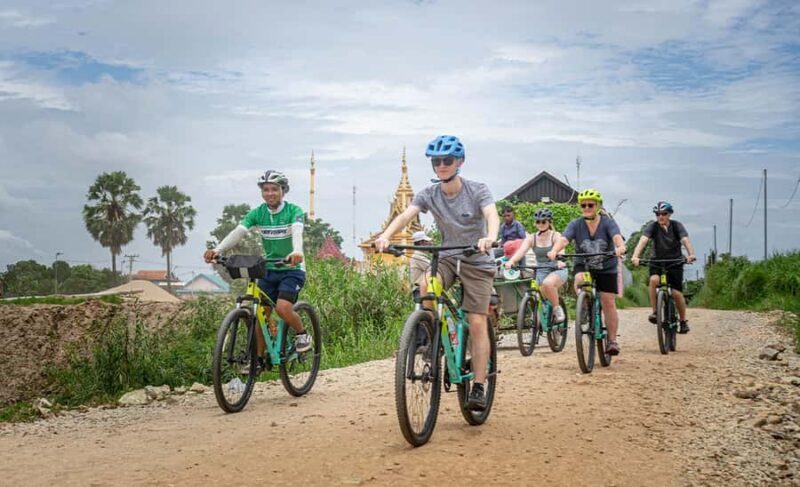
Book it if you want to get beyond central Phnom Penh for a few hours and see how people work, travel and make things in nearby villages. It suits curious, reasonably active visitors, solo travellers looking for a small group, and families whose children are comfortable on bikes. The group limit of 12 gives the guide room to pay attention without making the outing feel private or formal.
Choose the full-day option if you want the longer ride and included lunch. The half-day version can still cover several stops and a good stretch of countryside, though the route may be more direct. If you are not a confident cyclist, ask about an e-bike or tuk tuk before booking rather than assuming either option follows the exact same route.
Skip it if you want a relaxed vehicle-based sightseeing tour, dislike cycling in changing weather, or need a very short outing. The strongest reason to go is the mix: ferry crossings, rural roads and small family businesses make a nearby island feel genuinely different from the city, without requiring a long journey.
“Outstanding! Your was better than described. Cycled about 25 kilometres and used 4 ferries. Route was mainly flat with little or no traffic. Bicycl…”
The activity lasts between 4 and 8 hours. Check the available start times and options for the date you want.
The distance varies by route and group. Trips have covered about 24 to 50 kilometres, generally on flat ground.
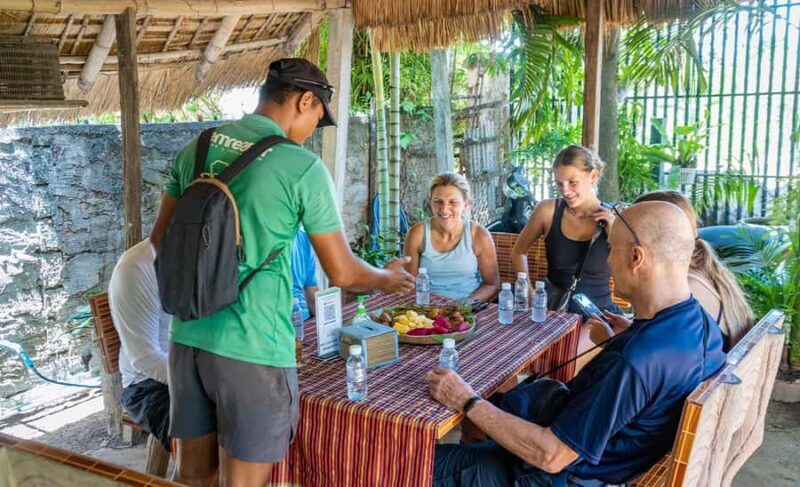
Lunch is included if you select the full-day option. Bottled water, snacks and fruit are included.
You can select a standard bicycle or e-bike, depending on the option offered. The tour also advertises a tuk tuk option, but check what that version includes.
The planned route includes a golden temple, Koh Oknha Tei Market, Koh Oknha Tei Secondary School, Silk Island and a pass by Akreiy Ksatr Village. Stops and timing can vary with the route.
Wear comfortable clothes and shoes. The tour operates rain or shine, so consider the weather when choosing what to wear.
No. Pregnant women are listed as unsuitable for this activity.
You can check availability for your dates here: