Physical Address
304 North Cardinal St.
Dorchester Center, MA 02124
Physical Address
304 North Cardinal St.
Dorchester Center, MA 02124

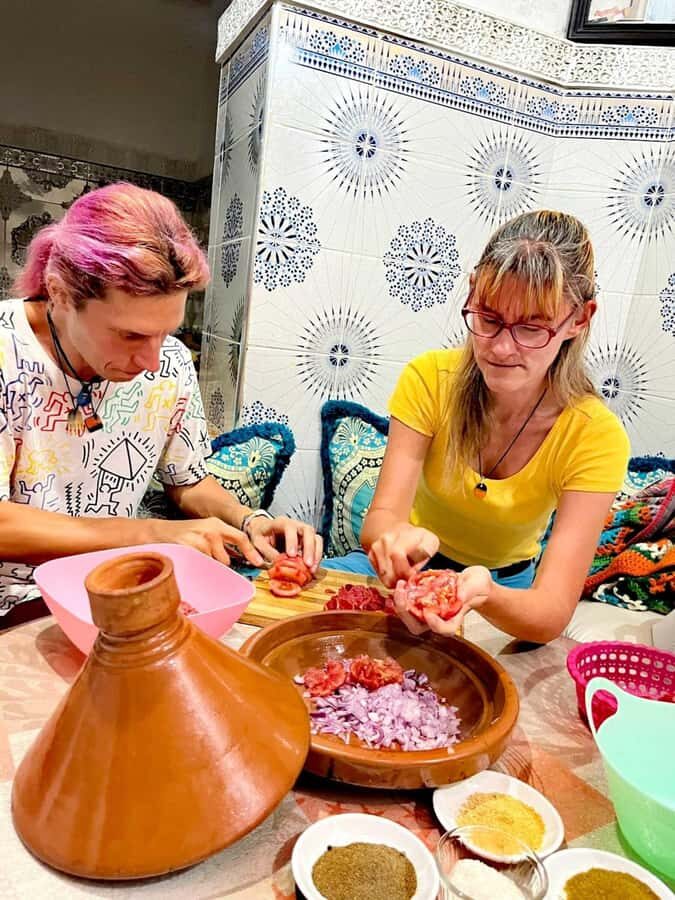
Cook tagine, Moroccan bread and salads in a local Marrakech home, then share the meal and hear cultural stories from host Abdo.
In a local Marrakech home, cooking is the point, but the conversation around the table is what gives this class its character. I like that you prepare several dishes yourself, including bread, and that host Abdo folds stories about Moroccan food and daily customs into the lesson.
The meal is included in the $24 price, along with ingredients, guidance and take-home recipes, so the value is strong. One thing to plan for: transport is not included, and the meeting point can be a walk from your riad. Use Google Maps, and wait outside Riad Les Etoiles Berberes rather than going inside.
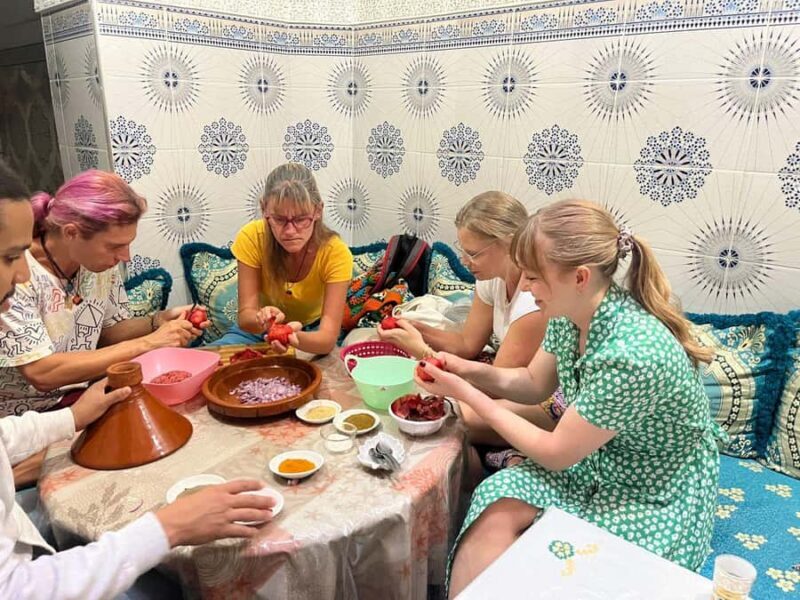
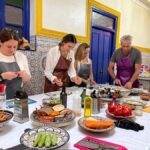
This three-hour class puts you to work. Rather than watching a chef prepare a finished dish, you chop, mix and cook alongside the host in a traditional home in the medina area. The class is designed for beginners, but you do not need to be new to cooking to enjoy it. You can focus on the techniques, ask questions about spices, or simply take your turn at the prep table.
That setting matters. A cooking lesson in a home can make food feel less like a menu item and more like part of everyday life. You get a chance to see how a shared meal comes together, and the host’s stories add context that a recipe card cannot. The focus is welcoming and social, not formal or technical.
Host Abdo is described as friendly and funny, and the class works in English, Dutch, French or Arabic. The teaching style is step by step, with participants encouraged to help with the tasks. Past groups have ranged from a small handful to around a dozen people, so the number of cooks can vary. A smaller group may give you more time for individual questions, but there is no fixed group size promised.
You can check availability for your dates here: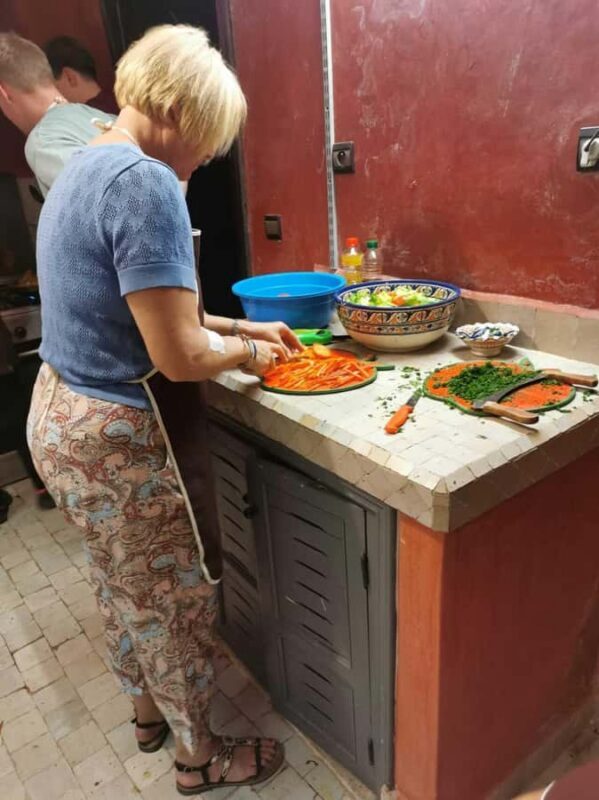
The meeting point is outside Riad Les Etoiles Berberes, not inside. The guide is due to arrive 10 minutes before the start and wears a green hat to help you identify them. Wait outside, check your name with the guide, and allow time to get there without rushing.
Finding the location can take a little attention. One useful tip is to use Google Maps rather than Apple Maps, and make sure you have the meeting point saved before setting out. The cooking home is near the riad, but it is not necessarily the same place as your accommodation. One participant found the walk from their lodging took 15 to 25 minutes, a reminder to check your own route in advance.
There is no transportation included, so make your way to the meeting point yourself. The activity is listed as wheelchair accessible, but if you need specific access details, ask the provider before booking rather than assuming every part of the route or home will suit your needs.
Want to bring Marrakesh flavors home? These cooking classes could be just right
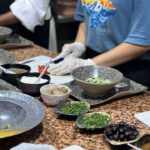
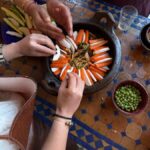
The class starts with an introduction to the food and the plan for the meal. Then the host guides you through preparation, explaining what to do as you go. The exact dishes can change, but the menu described includes freshly baked Moroccan bread, chicken tagine with olives and golden fries, meatball tagine topped with melted cheese, tomato and green pepper salad, zaalouk, and fruit salad.
You may not make every listed dish in every session. The menu is changeable, and accounts of the class describe different combinations, including skewers, multiple tagines, salads and dessert. Treat the named dishes as a good sense of the cooking, not a guaranteed menu. If you have dietary restrictions, tell the provider as early as you can. The menu can be adjusted, but the more notice you give, the easier it is to plan.
Making bread is a welcome detail. It gives you a hands-on task beyond the main stew, and it rounds out the meal in a way that helps you understand how the dishes are meant to be eaten. You also learn how ingredients are prepared in a Moroccan style, rather than simply being handed a finished recipe.
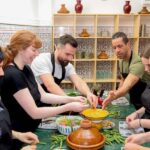
The tagine is the heart of the cooking. You follow its preparation step by step, building a dish that needs time to cook while the group works on other items. That pace gives you room to ask about the ingredients and methods, and to see how the different parts of the meal fit together. This is not a high-pressure class or a race to finish.
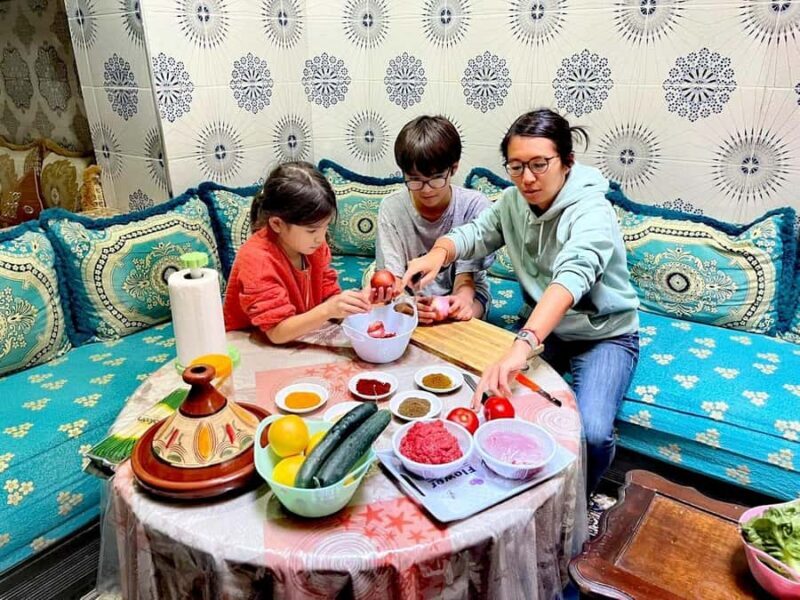
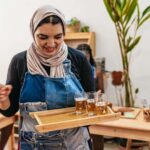
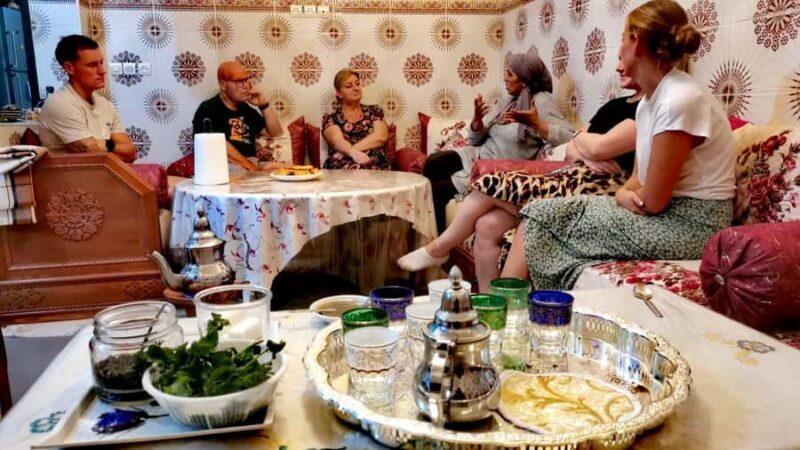
The experience is as much about conversation as cooking. Abdo talks about Moroccan culture, food customs and social life, with tea traditions often part of the discussion. Questions are welcome, and the guide can also share practical suggestions for exploring Marrakech, shopping for spices or finding cooking tools.
The cultural element is at its best when it stays connected to what you are doing. A tagine offers a natural opening to talk about cooking traditions; preparing tea gives the group a chance to ask how it is made and served. You are not signing up for a lecture, but you can expect more than a recipe lesson.
After the cooking, everyone sits down to eat the meal they have made. That shared meal is a real part of the class, not an optional add-on. It also turns the work into a social occasion: you meet the other people in your group, compare dishes and enjoy the results while the host continues the conversation.
The food is consistently described as plentiful and full of flavor, but the more useful point is that you have helped make it. You leave with both a meal and the basic steps to recreate it. Recipes are provided to take home, which makes the class more practical than a pleasant lunch that ends at the table.
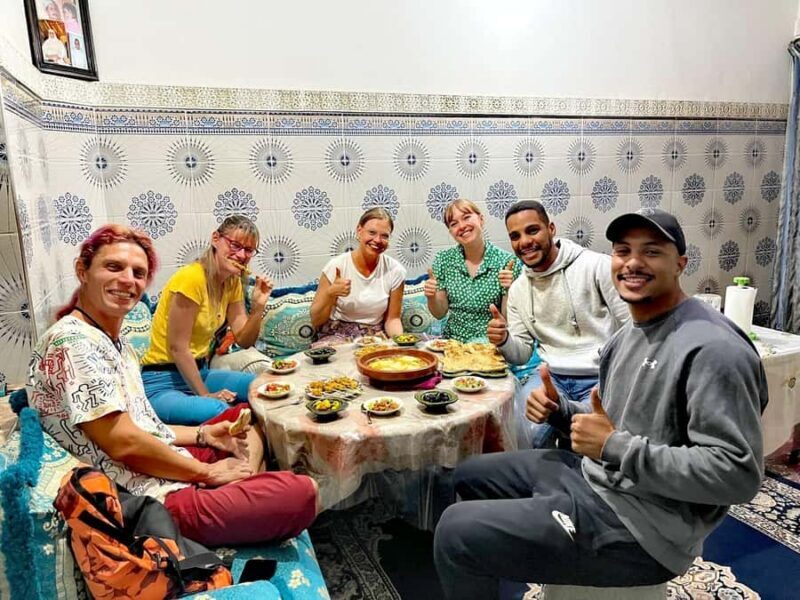
At $24 per person, the price covers a three-hour guided class, fresh ingredients, hands-on preparation, the meal, fruit salad, cultural storytelling, plating tips and recipes to take home. You are not paying just for a demonstration or a single dish. You take part in a multi-course cooking session and then eat what the group has prepared.
That is good value if you enjoy food and conversation, or want an activity that gives you something to do as well as something to eat. The class is also a sensible choice on a rainy day, or when you want a break from walking around the city. It can work for families and mixed-age groups, since the tasks are accessible and the host helps include everyone.
The value is less compelling if you only want a quick meal, or if you expect a highly technical cooking course with advanced instruction. This is a friendly, participatory introduction to Moroccan home cooking. The point is to learn a few useful methods, share a meal and get a local perspective, not to earn a chef’s certificate.
More Great Tours NearbyI would choose this for anyone curious about Moroccan food who wants to do more than order tagine in a restaurant. It suits couples, families and solo visitors who are comfortable sharing a kitchen and table with a mixed group. You do not need cooking experience, and you do not need to be a confident cook to take part.
It is especially useful early in a visit. The host can offer advice about the city, food and local shopping, and you can put that information to use during the rest of your stay. If your schedule allows, booking before your final day gives you more time to follow up on any spice or food tips.
It may not suit you if you prefer a quiet, private meal or need a tightly fixed menu. Group size and the menu can vary, and the experience depends partly on the energy of the people cooking together. The host works to keep everyone involved, but this is a communal class rather than a private lesson unless your booking happens to be the only one.
You might also be interested in these Marrakesh experiences
The class lasts three hours and is offered as a lunch or dinner experience; check the available start times for your date. Wear comfortable shoes and clothes, bring cash, and tie back long hair. Smoking, alcohol and drugs are not allowed, and the group is asked to keep noise down.
You can reserve now and pay later, and cancellation up to 24 hours before the activity earns a full refund. Languages listed are English, Dutch, French and Arabic. If you have dietary needs, contact the provider ahead of time, since the menu may be modified.
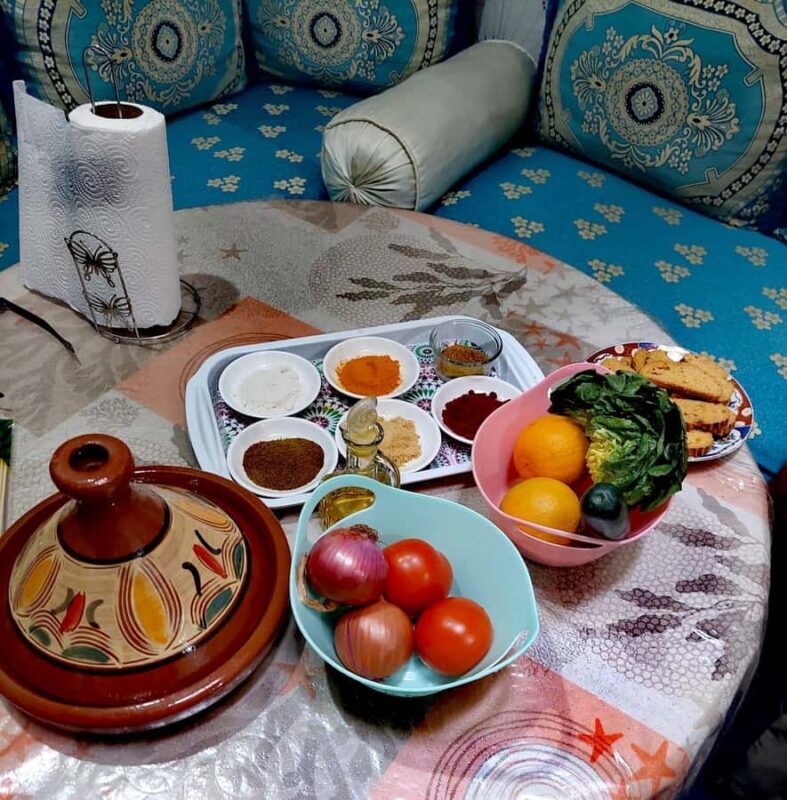
Book it if you want a warm, practical introduction to Moroccan home cooking, and like the idea of sharing the work and the meal with a small group. The combination of bread-making, tagine, salads and cultural conversation gives the three hours a clear purpose, while the recipes make the experience useful after your trip.
Skip it if you want transport included, a guaranteed dish list or a formal, advanced cooking course. For most curious eaters, though, this is a good-value way to spend an afternoon or evening: you leave fed, with new recipes and a better sense of how food brings people together in Morocco.
“We really enjoyed our cooking class! Had a really funny evening with Abdul and the food was delicious. Would definitely recommend this for your vis…”
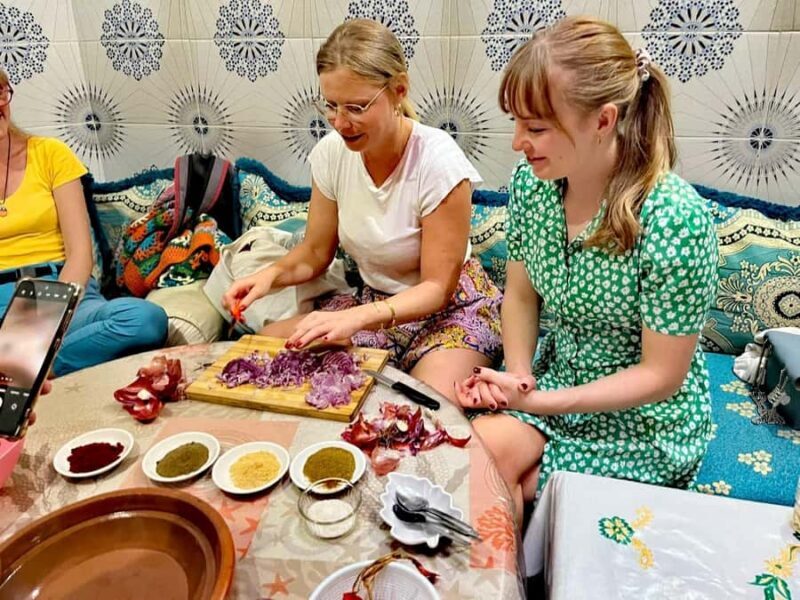
The class lasts three hours.
The listed price is $24 per person.
Meet outside Riad Les Etoiles Berberes. Do not go inside the riad.
The guide is expected to be at the meeting point 10 minutes before the start time.
The guide will wear a green hat and check your name before you set off.
The listed tour languages are English, Dutch, French and Arabic.
No. The class is suitable for beginners and people with prior cooking experience.
The menu can change. It may include Moroccan bread, tagine, salads, zaalouk and fruit salad.
The menu can be modified for dietary restrictions. Contact the provider as early as possible to discuss your needs.
No. You need to make your own way to the meeting point.
You can check availability for your dates here: