Physical Address
304 North Cardinal St.
Dorchester Center, MA 02124
Physical Address
304 North Cardinal St.
Dorchester Center, MA 02124

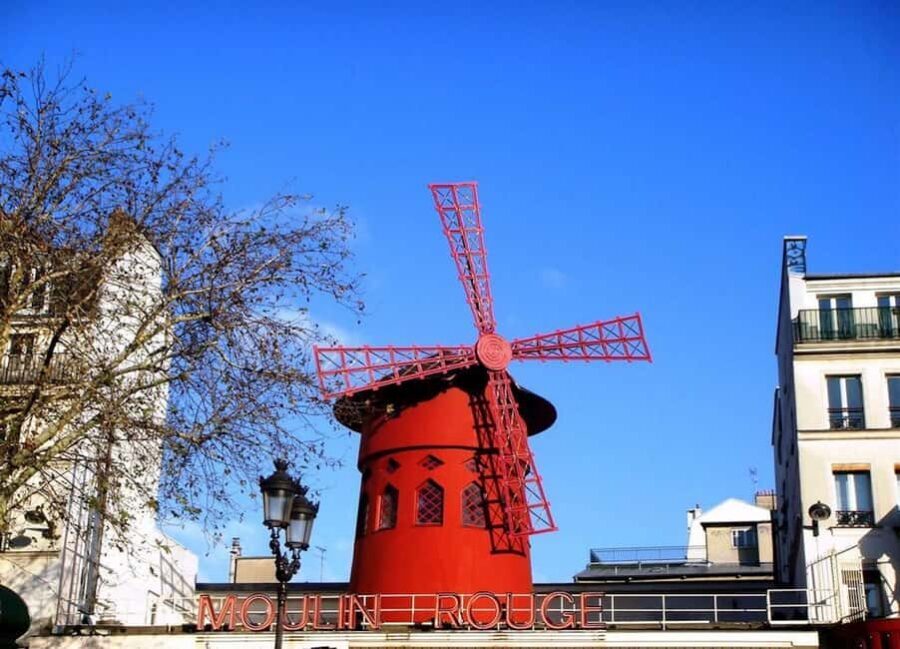
Walk Montmartre from Moulin Rouge to Sacré-Cœur with a local guide, hearing artists’ stories and finding quieter lanes for $35.
Montmartre is more than a hilltop church and a postcard view. This two-hour walk starts by the Moulin Rouge and climbs through the old artists’ quarter, connecting famous sights with quieter lanes and stories about the painters, rebels, and nightlife that shaped the neighborhood.
I like two things here: the route links well-known stops such as Place du Tertre and Sacré-Cœur with corners you could easily miss on your own, and the guides are praised for making local history lively and easy to follow. Guides named in past tours include Vera, Nadine, Solene, and Christin, though you cannot count on a particular guide for your date.
The main consideration is the uphill walk, which ends at Sacré-Cœur, and the tour is not suitable for wheelchair users. Also check the language schedule carefully: German and English departures run on different days and at different times.
Meet outside Blanche metro station, at the traffic island in front of Moulin Rouge. Look for a guide with a HelpTourists bag and a pink base cap. The meeting point can be tricky to pinpoint because there is more than one traffic circle across from the cabaret, so give yourself a little time to find the right spot.
Moulin Rouge is a fitting place to begin. Its name calls up Montmartre’s nightlife and its long association with entertainment, while the hill beyond hints at a very different past: farms, vineyards, and windmills on the edge of Paris. Your guide connects those layers as the walk moves uphill.
The tour includes a photo stop and short walk at the cabaret, rather than a visit inside. That distinction matters if you are hoping for a show or a look at the interior. This is a neighborhood walking tour, not a Moulin Rouge performance or ticket.
From here, the route heads into Montmartre. The guide’s role is more than pointing out façades. You get context for how the district became a home for artists, writers, dreamers, and rebels, with anecdotes that help you read the streets as more than a pretty backdrop.
You can check availability for your dates here: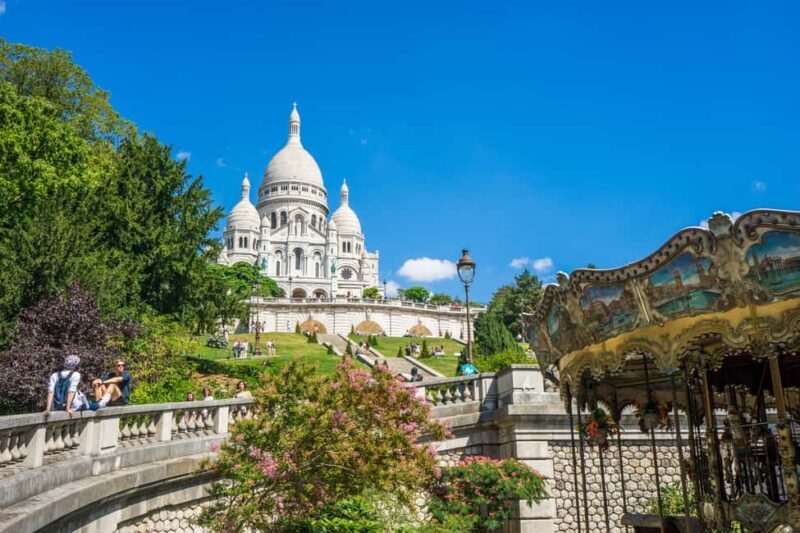
Moulin de la Galette is one of the tour’s stops, and it gives the guide a natural opening to talk about Montmartre’s windmills and rural past. The district was once countryside, with vineyards and mills, before it became part of the city’s cultural imagination.
That transition is useful context. Without it, the narrow streets and hilltop setting can feel like a charming pocket that simply appeared in Paris. Hearing about the earlier village landscape helps explain why Montmartre developed its own character and why it drew people who wanted room to work, live, or rebel outside the established center.
You will have a chance to stop for photos and take in the setting. The tour does not list an interior visit, so treat this as an outdoor landmark and a point along the walk. The value is in the story attached to it, not in spending a long time at one windmill.
Looking for more options in Paris? Here are some other experiences worth considering.
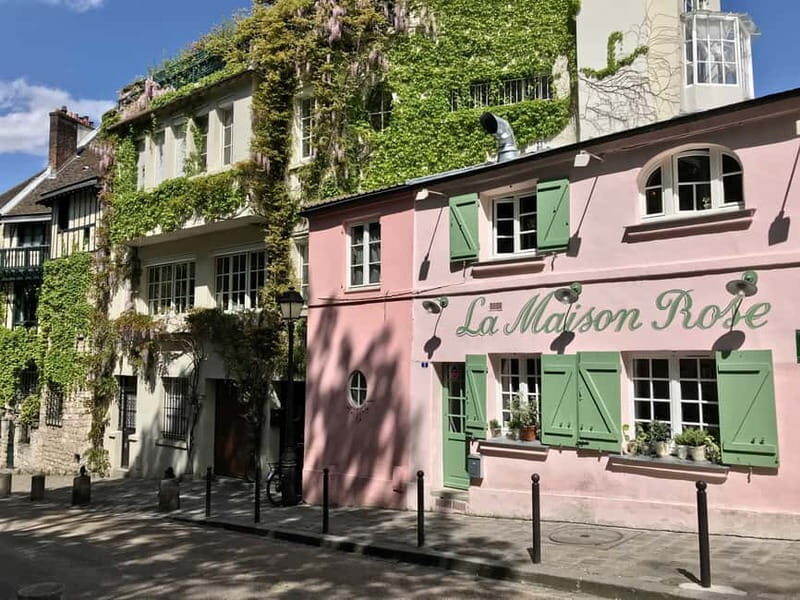
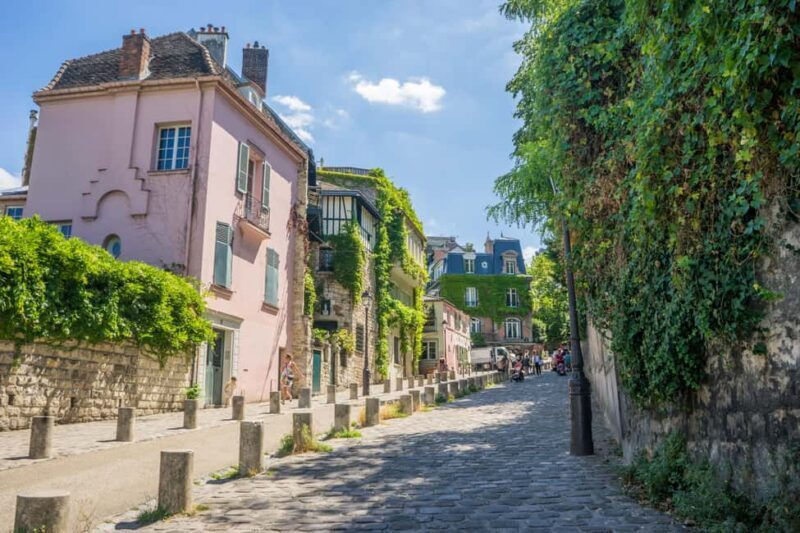
La Maison Rose is another photo stop on the route. Its familiar pink exterior offers a pause on the climb and a chance to take in one of Montmartre’s most recognizable corners. The tour does not promise a visit inside, so expect to see it from outside as part of the neighborhood walk.
The less obvious benefit is the route between the named sights. The guide takes you through cobbled streets, passages, and small squares that many people might pass without knowing what they are looking at. Past participants have particularly valued seeing the quieter side of Montmartre, rather than spending the whole outing in its busiest spots.
This is where a guided walk can earn its price. Montmartre is easy to admire on your own, but the stories turn a sequence of attractive streets into a place with a past and a local rhythm. You can also ask questions along the way, and guides have been praised for taking time to answer them.
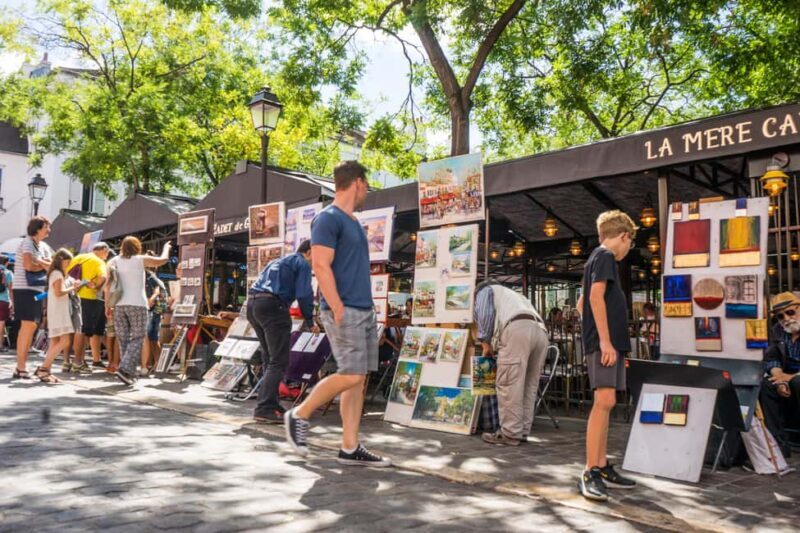
Place du Tertre is the tour’s main artist stop. Painters still work outdoors here, giving the square a visible link to Montmartre’s creative past. You will have time to visit, look around, and take photos, rather than simply passing through.
The square can be busy, particularly when many visitors are in the neighborhood. That is part of the trade-off: its painters and open-air art are a genuine feature of the district, but the concentration of people can make it feel less like a quiet village square. The guide helps put the scene in context, so you can understand why this corner matters even when it is crowded.
You may find yourself tempted to browse or buy a piece of art. One past participant did just that, but shopping is not part of the tour and should not be treated as a planned stop. If you want to spend more time looking at the artists’ work, consider returning after the walk rather than trying to fit everything into the group’s schedule.
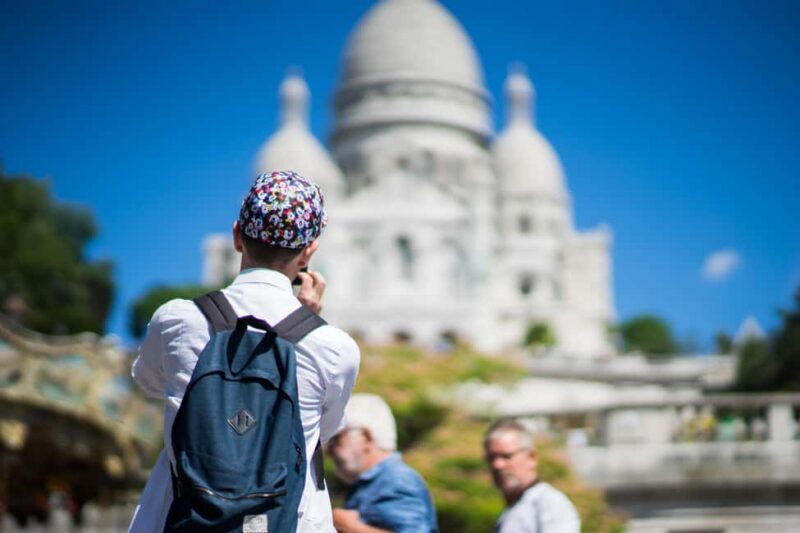
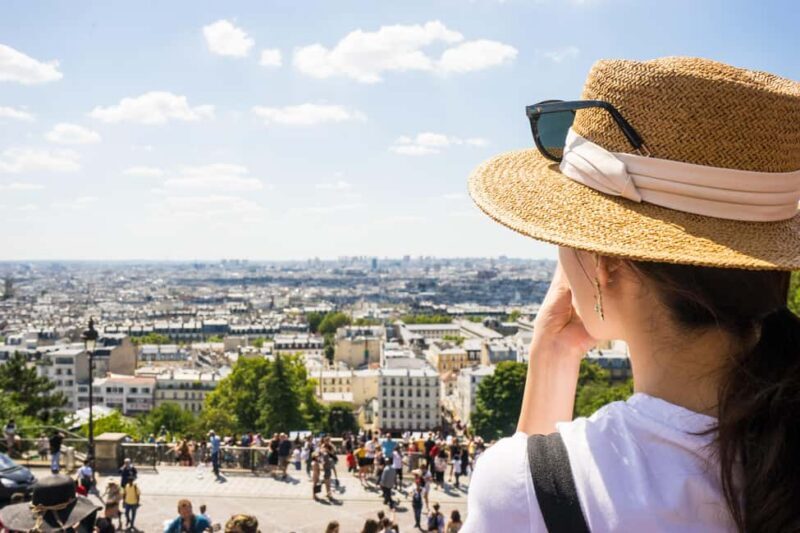
The route ends at the Basilica of Sacré-Cœur, the landmark crowning Montmartre. You will have a photo stop and a visit at the basilica, with time to admire the building and the city view from the hill. It is a satisfying finish: after tracing the district’s smaller streets, you arrive at its best-known monument.
The ending also makes the uphill direction clear. One participant described the climb as gradual, but it is still a hill walk, and the route includes cobbled streets. Wear shoes you are comfortable walking in and plan for two hours on foot. The activity is specifically not suitable for wheelchair users.
Because the tour finishes at Sacré-Cœur, you can decide what to do next based on your energy and schedule. The provided route does not include transport back to the starting point, so plan for the tour to end at the basilica rather than looping back to Blanche metro.
More Great Tours NearbyThe strongest reason to book is the guide’s storytelling. Past guides named Vera, Nadine, Solene, and Christin were praised for being engaging, funny, attentive, and full of useful background. That does not guarantee who will lead your departure, but it gives a good sense of the tour’s intended style: history mixed with everyday Parisian anecdotes, not a dry lecture.
A guide also helps keep the group together as the route moves through streets and public spaces. You can ask questions, hear the context behind the landmarks, and get practical tips about the area. One local resident took the walk to learn more about a neighborhood they already knew, which says something about the value of having an informed guide rather than relying only on a map.
The provider tries to keep groups small, but groups may be larger on public or national holidays. If you prefer a quieter outing, consider the date as well as the language and time. The experience remains a group walk, not a private tour.
There is one practical caution about language. The tour is offered in German and English, but those departures follow separate schedules. A past booking had an English-speaking guide fail to appear, leaving two English speakers with only a brief recap while most of the group received the tour in German. This appears to have been an exception, but it is a good reason to confirm that you select the right language when booking.

At $35 per person, the price is reasonable for a two-hour guided walk if you want more than a checklist of landmarks. Your fee covers the walking tour and guide, not food, drinks, or any separate attraction admission. The value rests on the stories, the route through quieter corners, and the time saved figuring out how the district’s places connect.
If you are content to wander on your own, Montmartre’s streets and major outdoor sights are available without a tour fee. You can still see Moulin Rouge, Place du Tertre, and Sacré-Cœur independently. But you will miss the guided thread linking windmills and vineyards to the neighborhood’s artists, nightlife, and everyday life.
The two-hour length works well as an introduction, especially early in a Paris visit. It gives you a sense of the district without taking up half a day, and you can return to any spot that catches your interest. For visitors who want a full museum-style account or extended time at each stop, this brisk walking format may feel too short.
The booking terms add some flexibility: you can reserve now and pay later, and cancel up to 24 hours before the tour for a full refund. Those details are useful if your plans are still shifting, but the most important booking check is still the language and departure time.
This tour suits first-time visitors who want orientation and context, as well as returning visitors who have seen the big sights but want to understand Montmartre beyond the obvious. It is also a good fit if you enjoy local anecdotes and are happy to walk uphill with a group.
Choose it if you like hearing how a neighborhood changed over time, want someone to lead you through side streets, and value the chance to ask questions. It may be less appealing if you want to spend a long time sketching or shopping at Place du Tertre, visit the Moulin Rouge, or move at your own pace throughout.
Before booking, match the departure to your language. German tours run Tuesday and Thursday at 4 pm, Saturday at 3 pm, and Sunday at 2 pm. English tours run Monday and Wednesday at 3 pm, and Saturday at 5 pm. Starting times can change, so check availability for your date.
My call: Book it if you want a compact, story-led introduction to Montmartre, with its famous sights and quieter streets in one uphill walk. Skip it if the climb, group format, or fixed language schedule does not suit your plans.
“Great guide. Lots of great insights and backgrounds. Really enjoyed the tour.”
The walking tour lasts two hours.
The live tour guide speaks German or English, depending on the departure you book.
German tours are scheduled for Tuesday and Thursday at 4 pm, Saturday at 3 pm, and Sunday at 2 pm. Check availability for your date.
English tours are scheduled for Monday and Wednesday at 3 pm, and Saturday at 5 pm. Check availability for your date.
Meet outside Blanche metro station, at the traffic island in front of Moulin Rouge. Look for a guide carrying a HelpTourists bag and wearing a pink base cap.
The walk ends at the Basilica of Sacré-Cœur de Montmartre.
The price includes the walking tour and a tour guide. Food and drinks are not included.
No. The activity is listed as not suitable for wheelchair users.
You can cancel up to 24 hours in advance for a full refund. The reserve-now, pay-later option lets you book without paying at the time of reservation.
You can check availability for your dates here: