Physical Address
304 North Cardinal St.
Dorchester Center, MA 02124
Physical Address
304 North Cardinal St.
Dorchester Center, MA 02124

Travel from Marrakech to Fes via Ait Ben Haddou and Merzouga on a budget-friendly three-day Atlas and Sahara trip.
From the High Atlas to the Sahara’s Erg Chebbi dunes, this three-day journey takes you across Morocco rather than back to where you started. You’ll visit Ait Ben Haddou, sleep in or near Tinghir, ride a camel to a desert camp and finish in Fes.
I like the contrast between the mountain passes, kasbahs and desert dunes and the chance to reach Fes without retracing your route to Marrakech. I also like that camel trekking, sandboarding, two dinners, two breakfasts and both nights’ accommodation are included at a listed price of $90 per person.
The trade-off is time on the road. Day three alone is about nine hours from Merzouga to Fes, and lunch, drinks and entrance fees cost extra. Come for the varied scenery and Sahara night, not for a slow-paced trip.
This tour’s main appeal is its changing scenery. You leave Marrakech, climb into the High Atlas, cross dry valleys and kasbah country, then reach the Sahara before continuing north to Fes. The route gives you a broad introduction to the country, but it is a fast-moving introduction, with plenty of time in the van.
You’ll travel in a private or small group, with an English- or French-speaking driver. The driver is central to the experience: recent trips have been led by people such as Chaimae, Hamza, Youssef and Hassan, with Karim among the drivers. Names and pairings can vary, so book the route and service level rather than expecting a particular person.
The trip is listed at $90 per person, a low price for three days of transport, two nights of lodging, camel riding, and four included meals. The value depends partly on which accommodation option you choose and how much you spend on meals and site visits along the way.
You might also be interested in these Marrakesh experiences
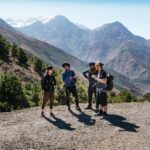
Pickup begins early in Marrakech. The road climbs toward the High Atlas and the Tizi n’Tichka Pass, where the mountain views make the first day more than a long transfer. Stops are made for photos, coffee and a chance to stretch your legs, though they are brief pauses rather than extended walks.
Bring a layer you can reach easily. Mountain conditions can feel cooler than Marrakech, and you’ll want sunglasses and comfortable shoes for getting in and out at stops. The route passes small villages, and the changing terrain is one of the trip’s strengths: city gives way to mountain, then to more arid country.
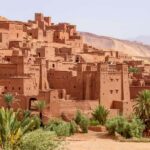
The main visit is Ait Ben Haddou, a fortified village and UNESCO World Heritage site. Its mud-brick buildings rise above the surrounding area, and its use as a film location has made it familiar to many visitors. You can look for settings associated with Gladiator, Lawrence of Arabia and Kingdom of Heaven as you explore.
A local guide is available for an additional listed fee of €2 per person. Entrance fees are not included, so keep some cash available for site costs. Ait Ben Haddou is a worthwhile stop, but don’t expect it to fill half a day: the visit sits within a packed drive.
Afterward, the route continues past Ouarzazate, Skoura Oasis, Kelaat M’Gouna and the Dades area toward Tinghir. The itinerary places lunch on the way, at your own expense. Lunch stops can fall late: one useful planning note is that food may not come until around 2 p.m. and can be served as a buffet. A small snack in your bag can help if you get hungry before then.
You reach your hotel in Tinghir late in the afternoon. The included first-night stay is a private hotel room at Kasbah Safari Rose or a similar property. Dinner is included as part of the trip, with vegetarian options available. This overnight stop breaks up the crossing, and gives you a proper bed before the desert portion.
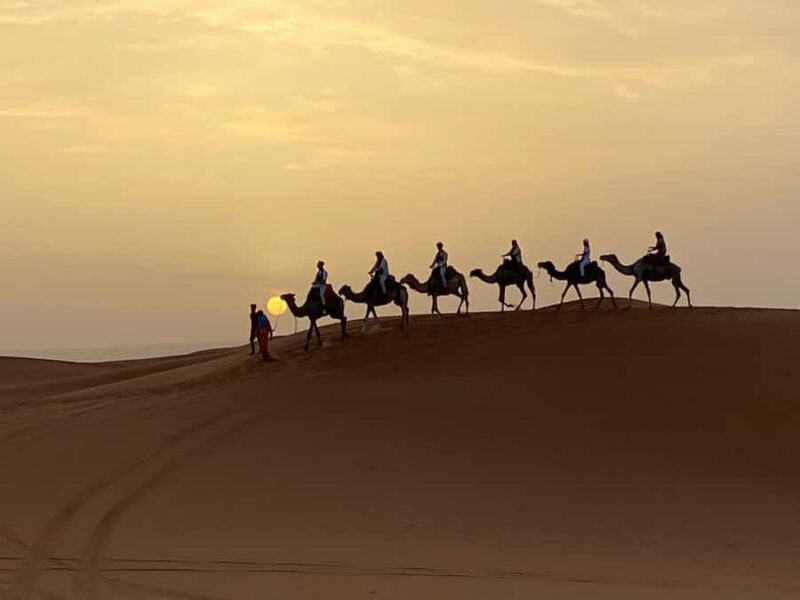
After breakfast, you travel toward Merzouga and Erg Chebbi, passing Berber villages and the Todra Gorges, as well as Tinjdad, Jorf and Erfoud. The gorges add a striking change of scale to the day, with steep rock walls narrowing the route. The tour description doesn’t set a fixed visit length at each stop, so think of these as highlights along a transfer day rather than a full walking tour.
At Merzouga, you’ll have time to prepare for the camel ride. Pack a small backpack with what you need for one night; your main luggage stays safely in the van. That simple arrangement matters. You don’t want to haul a large suitcase across sand or leave yourself without a warm layer when the sun goes down.
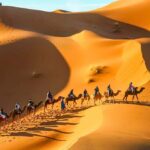
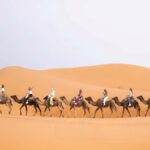
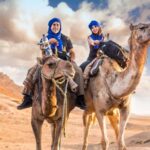
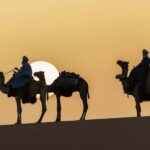
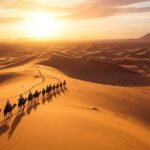
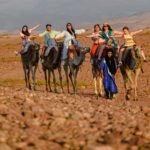
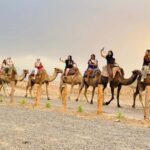
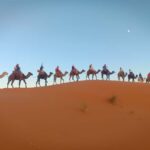
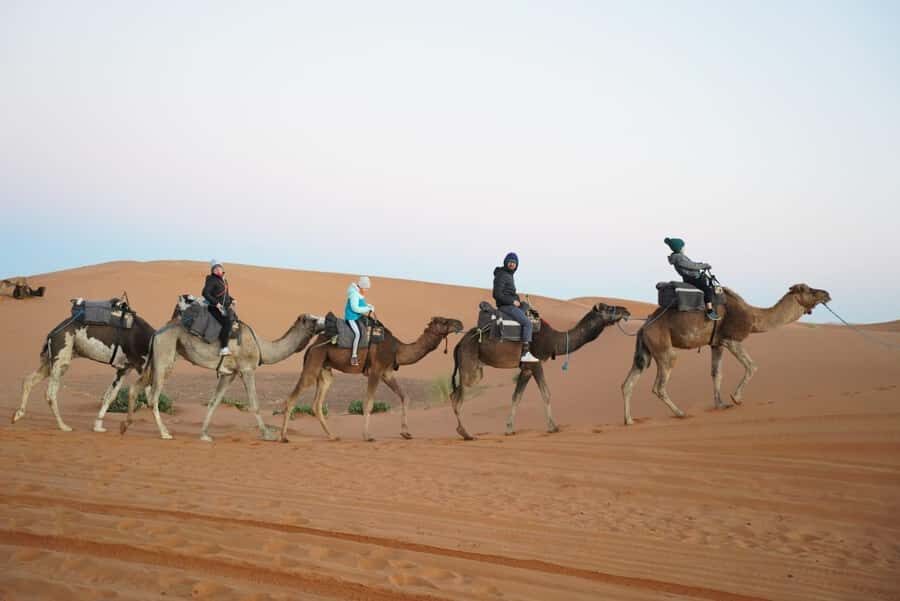
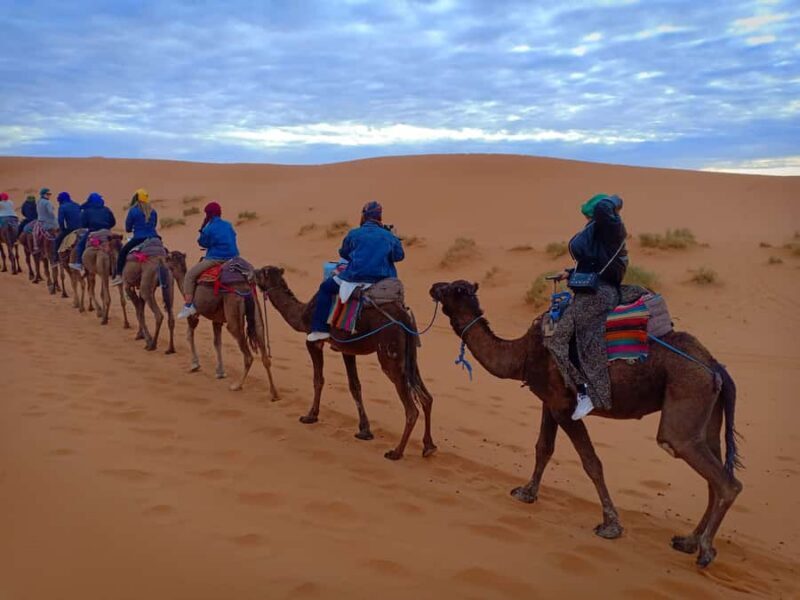
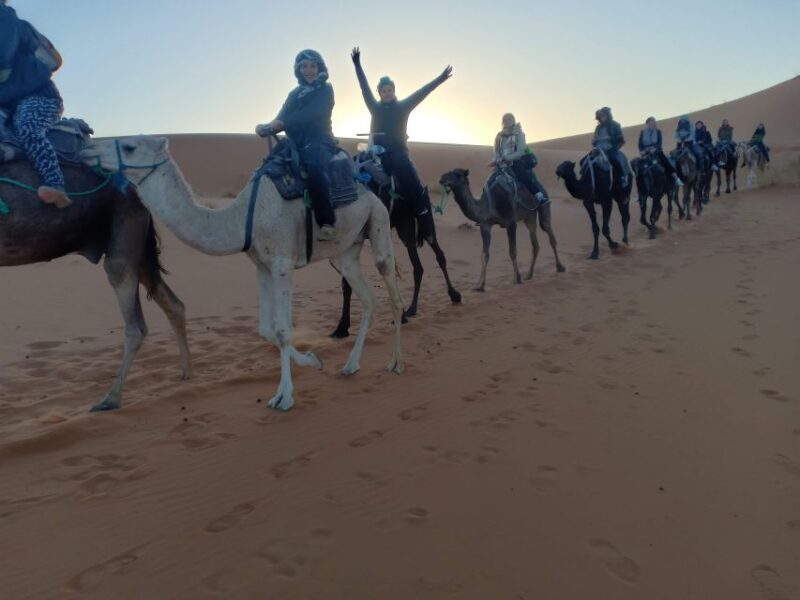
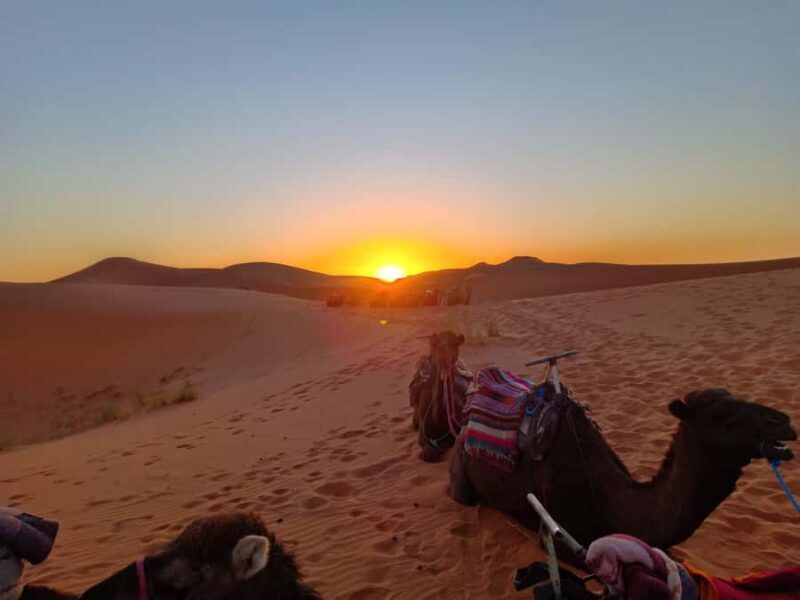
The camel trek takes you across the golden dunes of Erg Chebbi toward the camp. Each person has a camel, and sandboarding is included, subject to boards being available at the lodge. Ask for one before setting out if you want to try it. The boards are limited, so it is sensible to treat sandboarding as a bonus rather than a guaranteed activity.
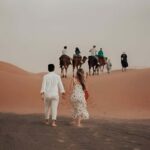
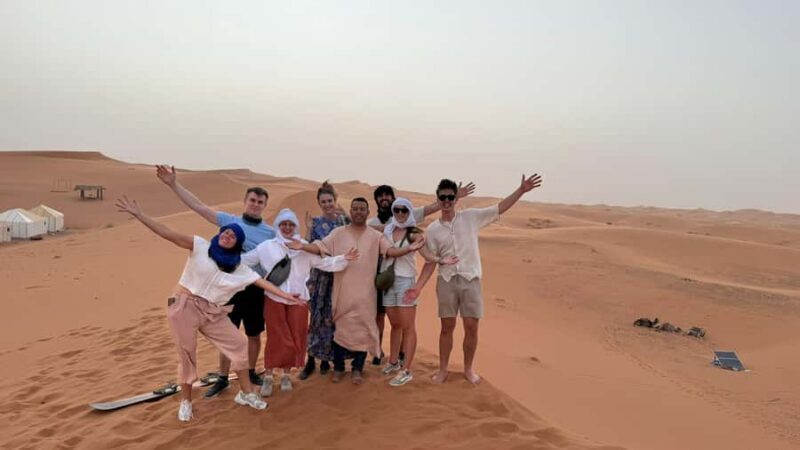
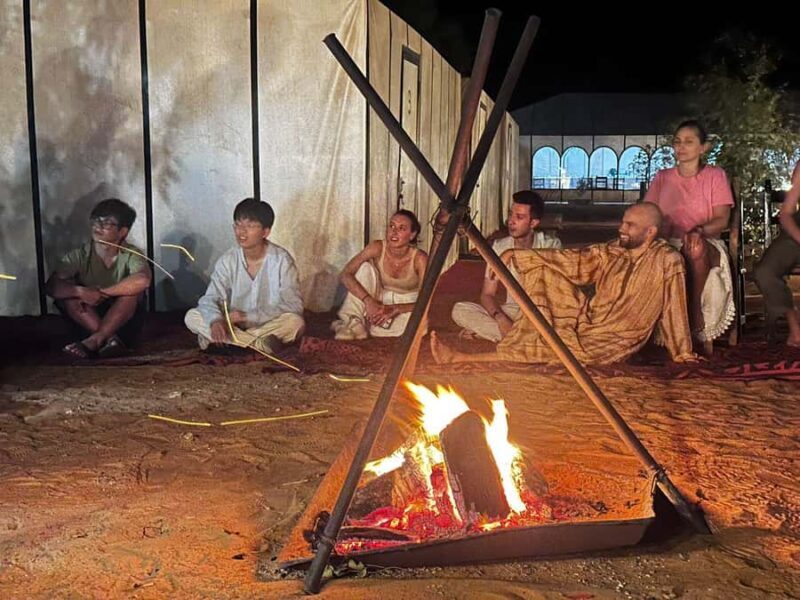
The camp is the emotional high point for many people. After arriving, you leave the camels and walk up to a high dune to watch the sunset. The evening includes dinner and Berber music, followed by a night in a tent beneath the stars. The setting is memorable, but expectations should match the option you book: standard and luxury camps differ in tent arrangements and bathroom access.
Standard tents may be shared, and bathroom facilities can also be shared. Private tents and private bathrooms are available depending on the option selected. A luxury booking may mean staying at a different campsite from the standard group, not simply sleeping in a nicer tent beside them. If you’re travelling with friends and want separate sleeping arrangements, check the room and tent setup before you book.
The desert is not warm simply because it is the Sahara. Winter nights can fall to 0°C, and blankets are supplied, but you should still pack warm sleeping clothes. Even outside winter, wind can make the camp feel colder. A head covering, sunglasses and comfortable shoes are useful for the sandy sections; bring wet wipes too, especially if your camp’s shower water is cold.
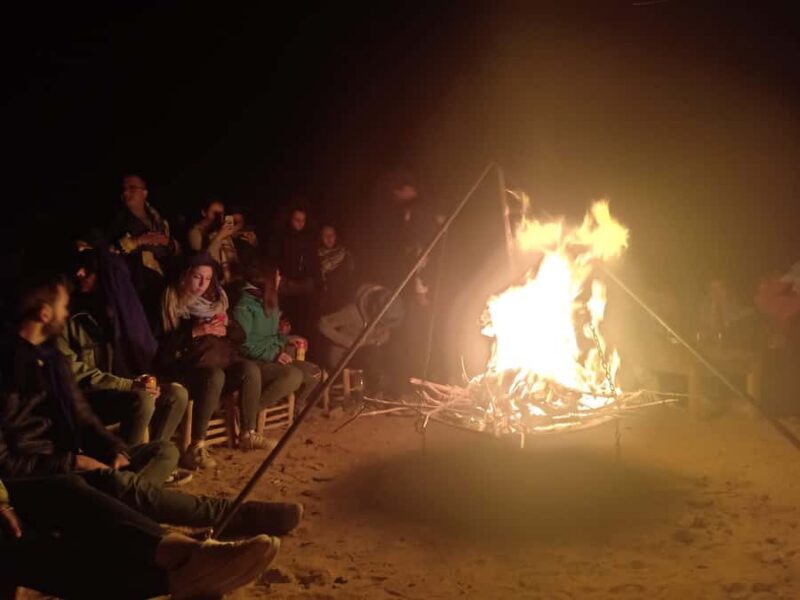
The day starts early if you want to see sunrise over the dunes. Breakfast is served at the camp, then you ride a camel back to Merzouga and set off north for Fes. The sunrise is a clear reason to accept the early alarm: the dunes look different in the first light, and this quiet stretch is a welcome contrast to the busy road days.
The drive passes through the Ziz Valley and Errachidia, then stops for lunch in Midelt, which you pay for yourself. After that, the route continues through Ifrane and Imouzzer and the Middle Atlas, with cedar woods and Berber towns along the way. The area is known as a winter ski destination for Moroccans, an unexpected footnote after the desert.
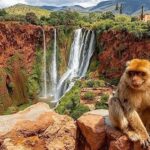
Your driver may spot Barbary apes in the cedar forest. If you see them, you can stop for photos, but sightings are not guaranteed. The woodland and mountain scenery make a pleasant change from the open desert, though the day remains mostly a long ride with breaks rather than a series of extended excursions.
Expect about nine hours between Merzouga and Fes. You arrive in the late afternoon, with drop-off at your accommodation or the nearest place accessible by vehicle. This is the hardest day of the tour for anyone who dislikes long drives, and the most important fact to weigh before booking.
More Great Tours Nearby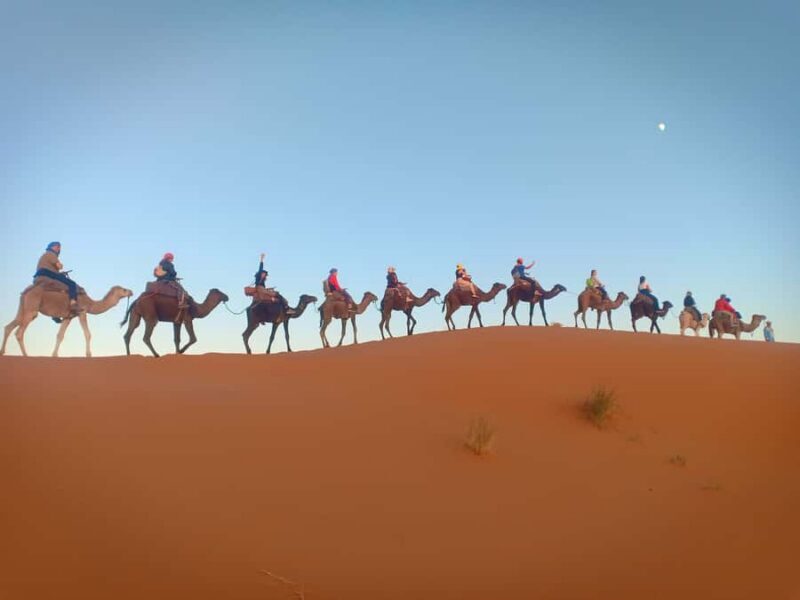
The listed price includes hotel pickup and drop-off, transport to Fes, the first night’s private hotel room, a night at the desert camp, a camel for each person, sandboarding and two breakfasts and two dinners. Vegetarian meals are available. Towels are supplied at the accommodation.
Lunches, soft drinks, entrance fees and personal expenses are extra. There is also a listed local-guide charge of €2 per person. The price is strong value if you want a guided route with lodging and the core desert activity arranged, but it is not an all-inclusive trip. Budget for meals and entry costs rather than treating $90 as your final spend.
The range of accommodation options is another value question. A standard camp keeps the price lower but may involve shared tents or bathrooms. The luxury option offers private tents or bathrooms depending on the selection, but can use a separate campsite. Read the accommodation choice carefully and ask about the specific arrangement if having a private room or bathroom matters to you.
The most consistently praised part of the trip is the care provided by guides and drivers. Names including Chaimae, Hamza, Youssef, Hassan and Karim appear often in connection with friendly service, safe driving and keeping the group organized. Some guides add stories, jokes, music and practical help; the depth of cultural explanation can vary, so ask questions if you want more context about the places you pass.
The vehicle is an important part of the experience because so much of the trip happens on the road. Breaks are built into the journey, including restroom stops, but space can feel tight in a small van, especially on long stretches. One useful detail from the trip’s practical side: some passengers have found legroom limited. If comfort is a priority, ask about the group size and vehicle before booking, since the exact arrangement is not specified.
Pickup is available from a hotel or riad in town, or from the nearest vehicle-accessible point. Pickups are not available from Airbnbs or private homes. In those cases, or if you arrive by rental car, taxi or bus, the meeting point is in front of Hotel Restaurant Café France at 7:30 a.m. Send your accommodation details and WhatsApp number after booking so the pickup location can be confirmed.
I’d choose this tour if you have three days, want to cross the country rather than loop back to Marrakech, and are happy to trade long drives for a broad sample of Moroccan scenery. It suits budget-minded visitors who want the main desert elements arranged: camel ride, camp night, dinner, music and sunrise.
It is less suited to anyone who needs a leisurely pace, has difficulty with long vehicle journeys or wants substantial time at each stop. The activity is not suitable for pregnant women or people with mobility impairments. Bring comfortable clothes, shoes, a sun hat, sunglasses, ID or passport, and a small overnight bag.
Book it for the route and the desert night, not for luxury at every stage. If a private bathroom, a private tent or extra legroom is essential, confirm the exact option before paying. If you can handle an early start and a long final drive, this is a practical way to connect Marrakech and Fes while seeing the Atlas, Ait Ben Haddou and Erg Chebbi along the way.
“Hicham was a great driver, he made us feel very comfortable the whole trip.”
Yes. The tour includes one camel for each person for the ride across the Erg Chebbi dunes and back to Merzouga.
Sandboarding is included, but the number of boards at the lodge is limited. Ask for a board before leaving for camp, as availability is not guaranteed.
The tour includes two breakfasts and two dinners. Lunches and soft drinks are not included, and vegetarian meal options are available.
No. Entrance fees are extra. A local guide is listed at €2 per person.
The camp stay is included. Depending on the option selected, you may have a private or shared tent and private or shared bathroom facilities.
The final drive takes approximately nine hours, with a lunch stop in Midelt.
Yes. Your luggage can travel in the van and is safely stored while you camp in the desert. Bring a small backpack or rucksack for the camel ride and overnight stay.
Bring comfortable shoes and clothes, sunglasses, a sun hat, and warm sleeping clothes in winter. Blankets are supplied, but winter temperatures can reach 0°C.
You can check availability for your dates here: