Physical Address
304 North Cardinal St.
Dorchester Center, MA 02124
Physical Address
304 North Cardinal St.
Dorchester Center, MA 02124

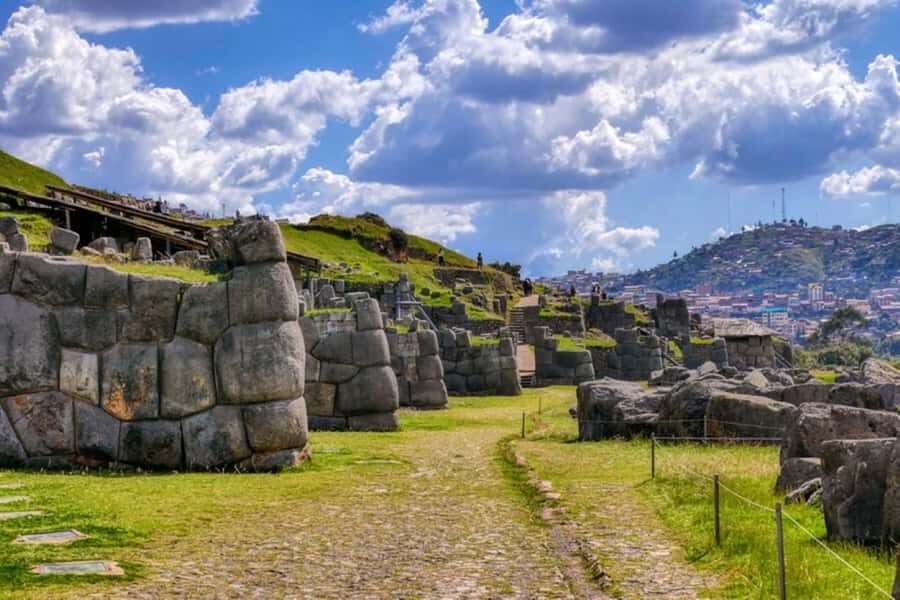
See Cusco’s Inca sites with a local guide, from Qorikancha’s stonework to Sacsayhuamán’s hilltop views, in a five-hour shared tour.
Cusco’s past is written into its walls: Inca stonework supports a Spanish convent at Qorikancha, while huge fitted blocks crown the heights above town at Sacsayhuamán. This half-day tour connects those landmarks with Qenqo, Pucapucara, and Tambomachay, giving you a quick, guided introduction to the city and its surrounding Inca sites.
I like two things here: the range of places makes a single outing feel useful, and a local guide can explain details you might otherwise walk past. Guide names vary, but Nilo, Erick, Manuel, Sergio, and Condor have led tours, with English and Spanish available. One consideration: the $13 price does not include the stated entrance fees, and the tour involves moving between archaeological sites at Cusco’s altitude.
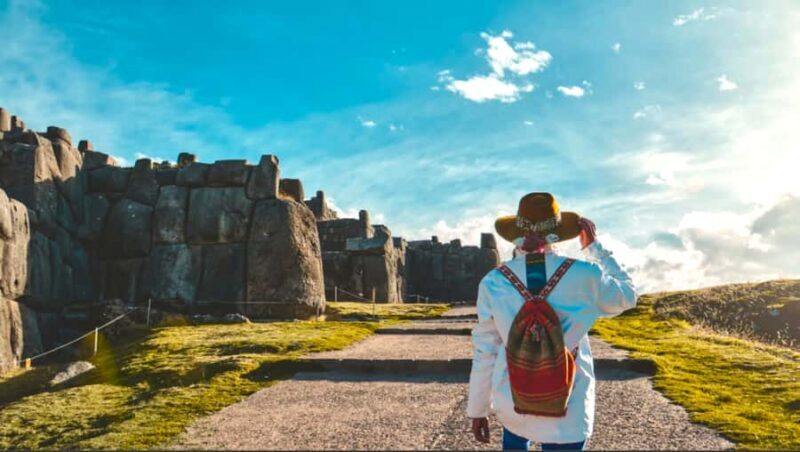
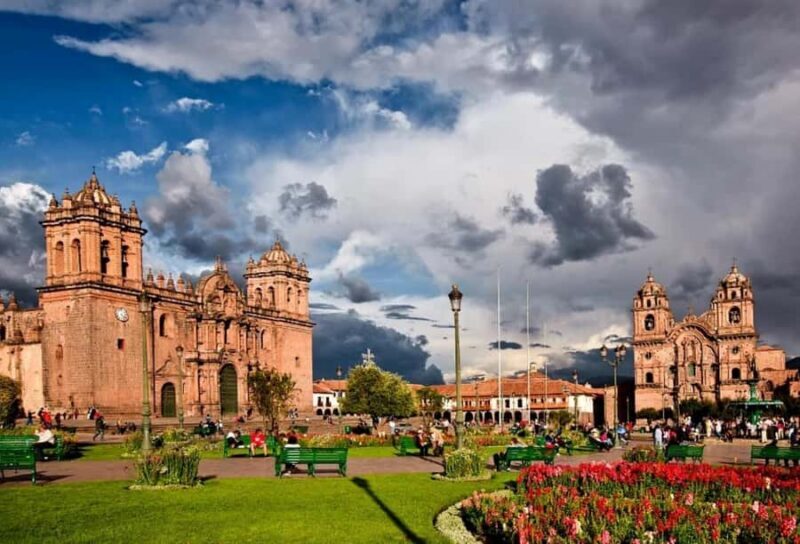
This is not just a walk around the center. The route starts at the Plaza de Armas, visits Qorikancha, then heads to archaeological sites on the hills above Cusco. Shared transport connects the stops, while short guided visits and walks give you time to look around.
That mix is valuable if you have limited time. You get the city’s central landmarks and several major sites in one outing, without having to plan separate transport to each. It also gives you an initial framework for the Inca and Spanish histories that shape what you see around Cusco.
The advertised duration is five hours. Morning tours run from 9:00 a.m. to about 2:00 p.m.; afternoon tours start at 1:00 p.m. and finish around 6:30 p.m. The stated end point is Plaza Regocijo or a nearby place in the historic center. That timing makes the tour a substantial half-day, not a quick add-on.
The tour is led by a local guide, with English and Spanish listed as available languages. An English and Spanish audio guide is also included. Because some groups use more than one language, it is sensible to ask how the guide will handle both when you arrive. One English-speaking participant on a past tour felt the commentary leaned more heavily toward Spanish, while another visitor described a guide adapting the tour for a solo English speaker. The language balance can matter if you want to catch every detail.
Looking to discover more of Cusco? Consider these other city tour options
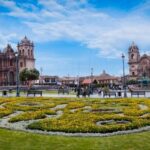
Meet beside the central fountain in Cusco’s Main Square, near the Inca monument, and arrive 10 minutes early. The guide begins with an introduction before leading the group through the square. It is a fitting starting point: Cusco’s central plaza puts the city’s layered past in view before you head to the older stones beyond it.
The square portion is brief, listed as a seven-minute guided walk. Think of it as an introduction rather than a full tour of the center. The main payoff comes as your guide links the city’s layout and landmarks to the sites that follow.
This is also a good moment to ask questions and mention any limits that could affect the pace. The tour includes walking and time outdoors, and Cusco’s altitude can make even a moderate climb feel harder than expected. An early tour may help you get your bearings while leaving later days open for more exploring.
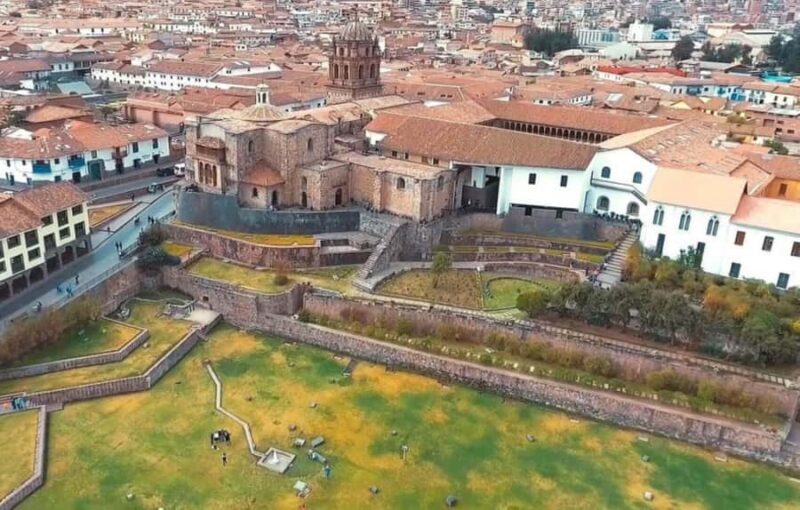
Qorikancha, also spelled Coricancha or Qoricancha, is presented as the most important religious site of the Inca Empire. You spend about 40 minutes here, with time for a guided visit and photographs. The focus is its ceremonial purpose, its finely made stone walls, and the Santo Domingo Convent built over the Inca foundations.
The site’s special value is the contrast between two kinds of construction and two periods of history. Your guide can help you notice how the Inca masonry fits together and explain how the later convent occupies the same sacred ground. That context turns a look at stone walls into a story about how Cusco changed after the Spanish arrived.
Admission is not part of the $13 tour price. The stated Qorikancha entrance fee is S/ 20, paid separately. The tour information also lists a S/ 70 Cusco Tourist Ticket as not included. Check what each payment covers before you set out, and carry cash as advised.
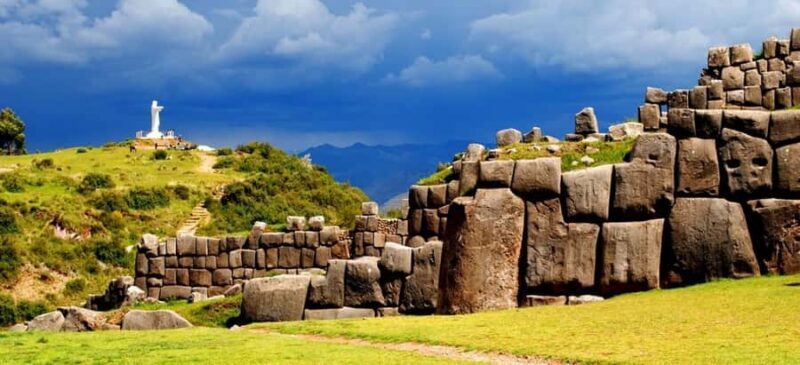
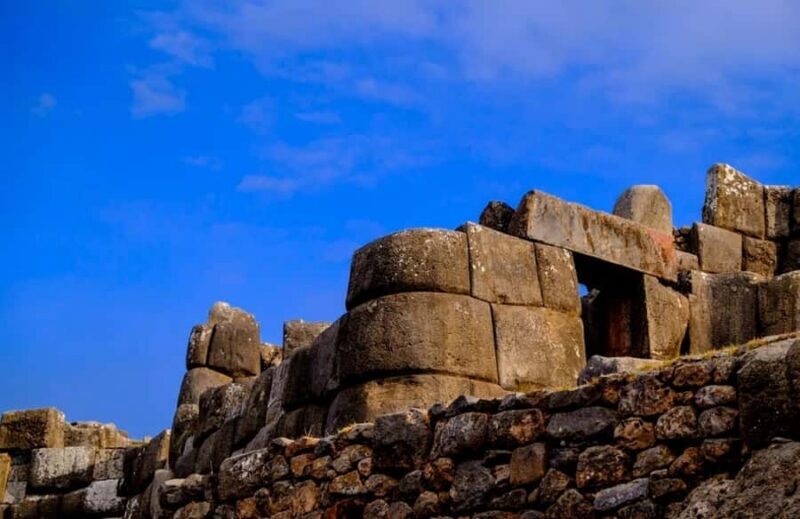
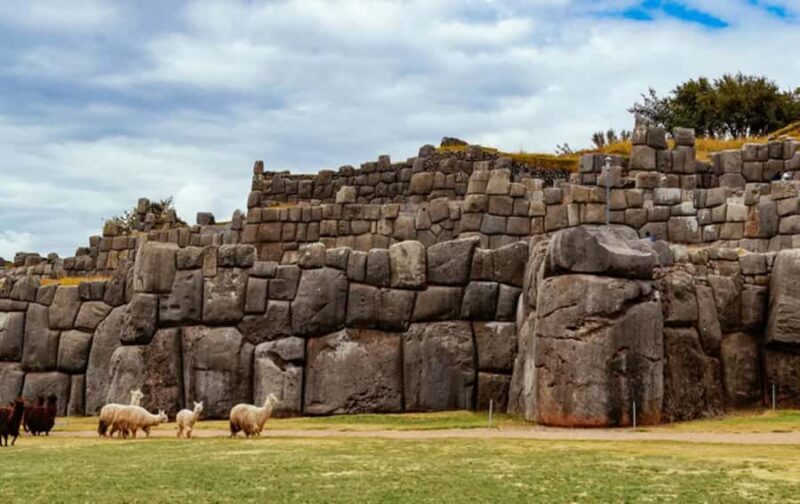
A shared vehicle ride of about 25 minutes takes you to Sacsayhuamán, the tour’s first major site outside the center. You have around 40 minutes here, including a guided visit, some free time, and a chance to take photographs. The fortress is known for its enormous stone blocks, its strategic and ceremonial role, and broad views over Cusco.
This is where the scale of Inca building becomes especially clear. Look closely at the way the stones meet, then step back to take in the walls and their setting. The view is part of the experience too: guides have taken groups to places with good vantage points over the city.
The stop combines explanation with room to look around, but it is still a timed visit. If you like photographing details, use your free time with a little purpose: get the wide view first, then look at the stonework before the group moves on. Sacsayhuamán can be physically demanding for anyone still adjusting to Cusco’s altitude, so take your time rather than trying to keep pace by rushing.
More Great Tours Nearby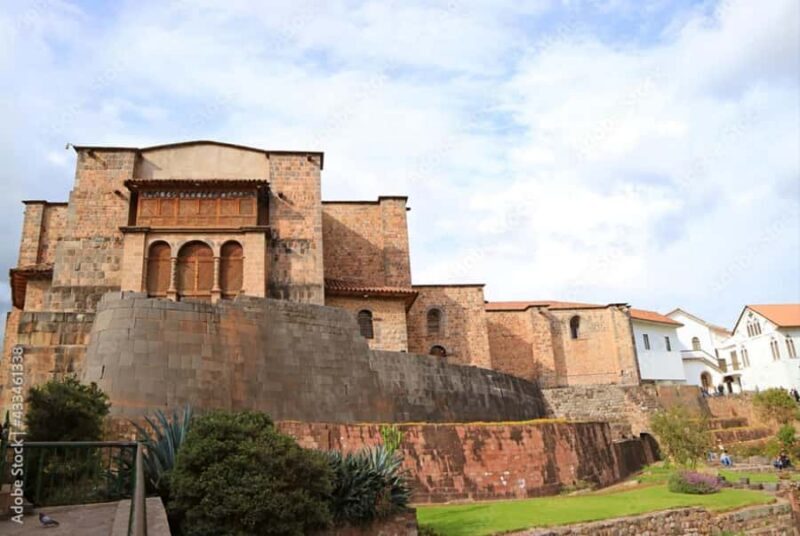
From Sacsayhuamán, the group takes a short drive to Qenqo, a ceremonial center with altars, underground passages, and unusual rock formations associated with religious rituals. The visit is about 25 minutes, including a guided walk and photo time.
Qenqo adds a different kind of site to the day. Where Sacsayhuamán impresses through its scale and defensive character, Qenqo draws attention to the way rock itself was used in ritual spaces. A guide’s explanation is useful here, since the forms and passages may not tell their story at a glance.
The short visit means you will not have time to linger at every feature. If something catches your eye, ask about it while the guide is nearby. These smaller stops can become more memorable when you know what you are looking at.
Pucapucara is described as a military and control post, as well as a resting place for Inca visitors. Its terraces and defensive structures offer a different view of how the sites around Cusco served practical purposes as well as ceremonial ones. The listed visit is about 20 minutes, with a guided look and time for photographs.
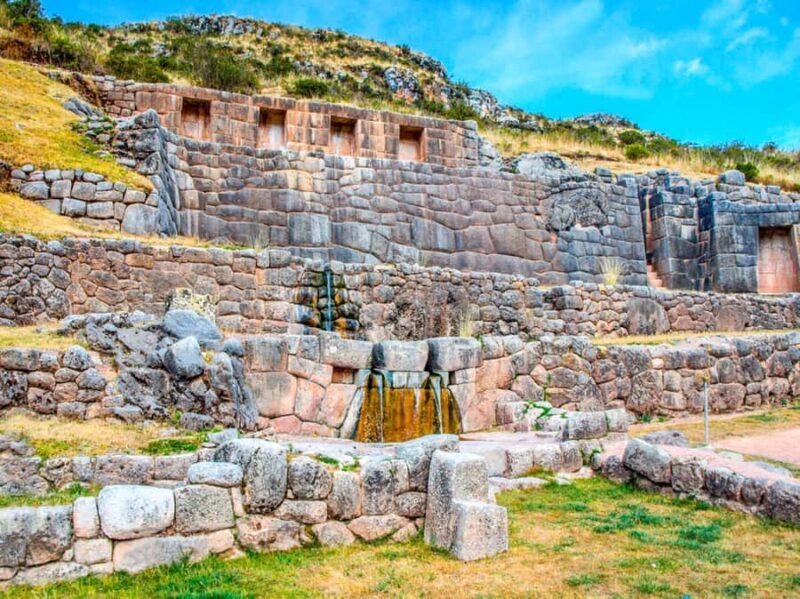
Tambomachay, known as the Inca Baths, is dedicated to the worship of water. Channels and fountains still flow at the site, making it one of the route’s most distinctive stops. The visit is also listed at about 20 minutes, with time for a short walk and views along the way.
The published stop order is not entirely consistent: the itinerary places Tambomachay before Pucapucara, while the tour description names Pucapucara first and Tambomachay last. The route includes both sites, but ask your guide about the order on your departure. Either way, the brief visits are best treated as an introduction rather than a deep exploration.
Together, these two stops help round out the day. You move from defensive and travel-related structures to a site organized around water, seeing more than one side of Inca life. They are also farther from the city center, which is why shared transport makes the route practical.
At $13 per person, the tour includes a local guide, shared tourist transport, visits to the main sites, and assistance throughout the outing. That is a useful package for a route that covers both the historic center and several sites outside it. The guide’s role is important: the stones and views are striking, but explanations give the stops context and help you connect them.
The base price is not the full cost. Qorikancha admission is listed at S/ 20, and the Cusco Tourist Ticket at S/ 70, both excluded. Add those costs to your budget before booking. The information provided does not spell out exactly what the tourist ticket covers, so confirm which admissions you need rather than assuming every site entry is included.
A few guides have also ended tours with a Pisco sour, and some outings have included small extras such as a llama keychain or a chocolate tasting. These are pleasant surprises, not guaranteed parts of the package. Do not include them in your value calculation.
The tour’s strongest value is convenience and interpretation, not a low final total alone. If you would otherwise arrange transport and hire a guide for the sites, combining them in a half-day outing can make sense. If you prefer to spend a long time at each ruin, the brisk schedule may feel restrictive.
Bring your passport or ID, cash, comfortable clothes, a daypack, sunglasses, a sun hat, sunscreen, and a camera. The tour involves outdoor stops and walking, so practical clothing matters more than dressing for a city café. Keep your hands free when moving between sites and pack only what you want to carry through the day.
The experience suits first-time visitors who want a broad introduction to Cusco and its nearby Inca sites. It is also a good fit if you have just a few days in town and want a guide’s overview before deciding which places deserve a return visit. Solo visitors can join the shared group, and the guide-led format gives you an easy way to ask questions and get oriented.
If you are still adjusting to altitude, do not treat this as a strenuous trek, but do expect some walking and time at higher sites around Cusco. A past visitor found the tour helpful for exploring while adjusting to the altitude, but each person’s comfort varies. Move at a steady pace, drink water, and tell the guide if you need a moment.
There is conflicting accessibility information: the activity details call the tour wheelchair accessible, while the suitability notes say it is not suitable for wheelchair users. The archaeological stops include walking, and the information does not explain what access is available at each site. If you use a wheelchair, contact the operator before booking and ask about the specific route and vehicle.
The experience is offered in English and Spanish, and the stated cancellation option allows a full refund up to 24 hours before the tour. You can also reserve now and pay later. Check the available departure times when booking, since the exact schedule may depend on the date.
Book it if you want one guided outing that links Qorikancha, Sacsayhuamán, Qenqo, Pucapucara, and Tambomachay, with transport between the central city and the surrounding sites. It is especially useful near the start of a Cusco stay, when a guide can help you understand what you are seeing and point out places worth revisiting.
Think twice if you want long, unhurried visits or need certainty about wheelchair access without first speaking to the operator. Also budget for the listed entrance fees, and confirm the language balance and site order if those details matter to you. For an efficient first look at Cusco’s Inca landmarks, the route offers a practical half-day, provided you plan for the extra costs and a brisk pace.
“Having our trip to Machu Picchu cancelled, we booked this trip instead. Very informative, nice to see some areas around Cusco and our guide, Luis, …”
The stated duration is five hours. The morning shift runs from 9:00 a.m. to about 2:00 p.m., and the afternoon shift from 1:00 p.m. to about 6:30 p.m.
Meet at Cusco’s Main Square, beside the central fountain and near the Inca monument. Arrive 10 minutes early.
It finishes at Plaza Regocijo or a nearby point in Cusco’s historic center.
The route includes the Plaza de Armas, Qorikancha, Sacsayhuamán, Qenqo, Pucapucara, and Tambomachay.
Yes. Shared tourist transportation between the sites is included.
No. The stated extra costs are S/ 20 for Qorikancha and S/ 70 for the Cusco Tourist Ticket.
English and Spanish are listed for the live guide and audio guide.
Bring your passport or ID, sunglasses, a sun hat, a camera, sunscreen, comfortable clothes, cash, and a daypack.
The information conflicts: it describes the activity as wheelchair accessible but also says it is not suitable for wheelchair users. Contact the operator to confirm access for the route and sites before booking.
You can check availability for your dates here: