Physical Address
304 North Cardinal St.
Dorchester Center, MA 02124
Physical Address
304 North Cardinal St.
Dorchester Center, MA 02124


Wear hanbok at Gyeongbokgung, see the guard ceremony, explore Bukchon and visit Baek In-je’s House on this guided four-hour Seoul walk.
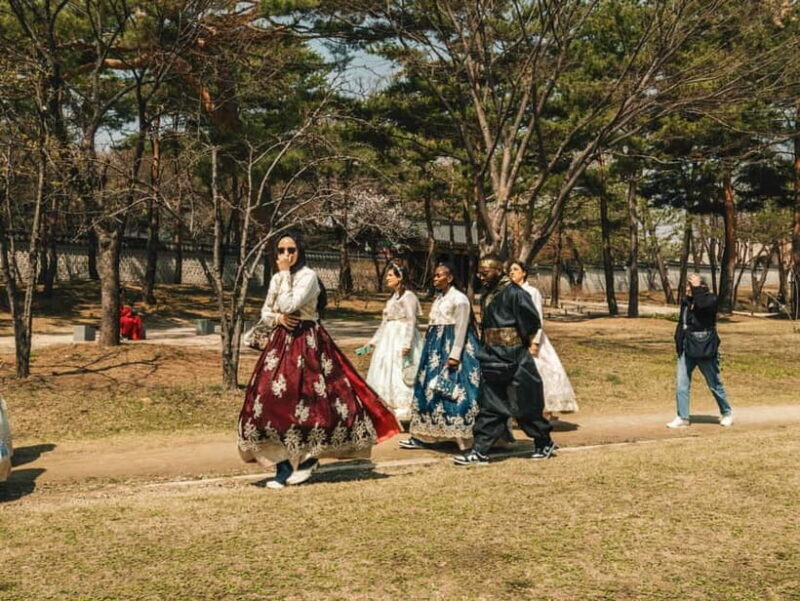
Gyeongbokgung is a grand place to meet Seoul’s past, but it becomes more than a photo stop when you walk its courtyards in hanbok, Korea’s traditional dress. This four-hour tour pairs the palace and its Changing of the Guard ceremony with Bukchon’s old lanes and a preserved early twentieth-century home.
I like two things in particular: the guide gives context that helps the palace’s buildings make sense, and the hanbok makes the visit feel participatory rather than simply scenic. Guides such as Pearl, Lia, Gina, Thomas and Jane have led tours, though your guide will depend on the date.
The main consideration is the pace. Four hours covers several stops on foot, and dressing in and returning the hanbok takes time. If you want a slow, in-depth visit to every site, you may prefer to explore independently.
This is a compact introduction to several sides of old Seoul: royal ceremony, Korean dress, traditional homes and a glimpse of elite life in the early twentieth century. The guide ties the stops together, which is useful if you are new to Korean history or want more than a set of attractive photos.
The tour costs $49 per person and lasts four hours. That price includes an English-speaking historical guide, entrance fees, bottled water and a seasonal snack. Premium hanbok rental is included only with certain booking options, so check the option details before paying. Makeup service, shopping and hotel transport are not included.
A small-group feel is possible, and a private group is available. The exact meeting point depends on the option you book. The tour is a walking experience, so expect time on your feet rather than rides between sights.
Looking to discover more of Seoul? Consider these other city tour options
The first stop is K Star Hanbok, where you spend about 30 minutes choosing and putting on traditional clothing. That short block is part of the tour, not extra time, so it helps to arrive promptly and follow the guide’s instructions. There is also time needed to return the outfit later.
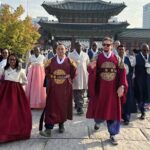
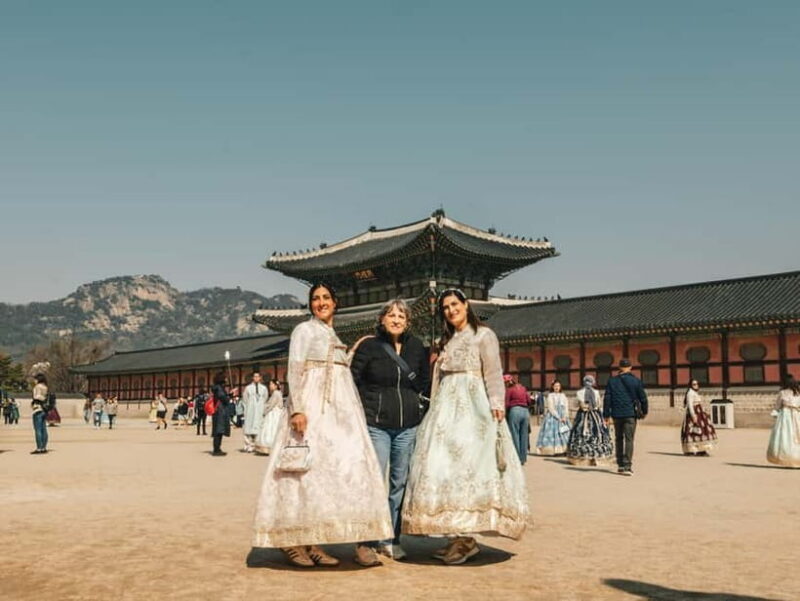
The rental adds more than a costume change. Wearing hanbok gives the palace visit a sense of occasion, and it makes for memorable photos against the old architecture. Guides often help with pictures, a thoughtful extra if you want a group shot without asking strangers. Visitors have singled out guides including Gina, Pearl and Lia for taking photos and helping the group find good spots.
Keep comfort in mind. The tour is on foot, and a palace visit involves walking across a large site. One visitor specifically advises comfortable shoes and water, particularly in hot weather, when hanbok can feel warm and shade is limited. Bottled water is included, but dressing in layers may help in cold weather.
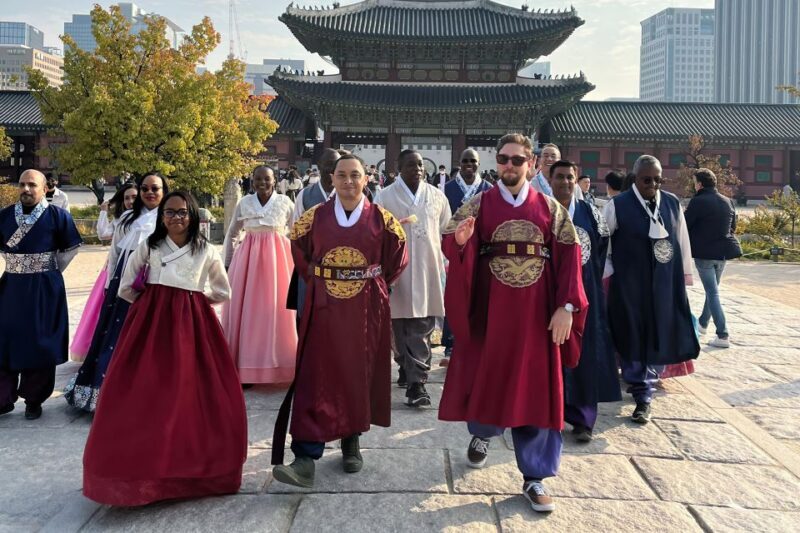
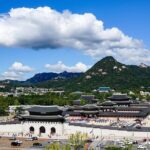
The palace visit takes about an hour and a half, including sightseeing, a guided walk and time for photos. Gyeongbokgung was a royal palace of the Joseon Dynasty, and the guide’s explanations help turn its halls and courtyards from impressive backdrops into places with a story.
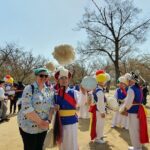
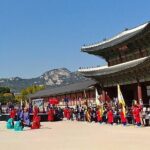
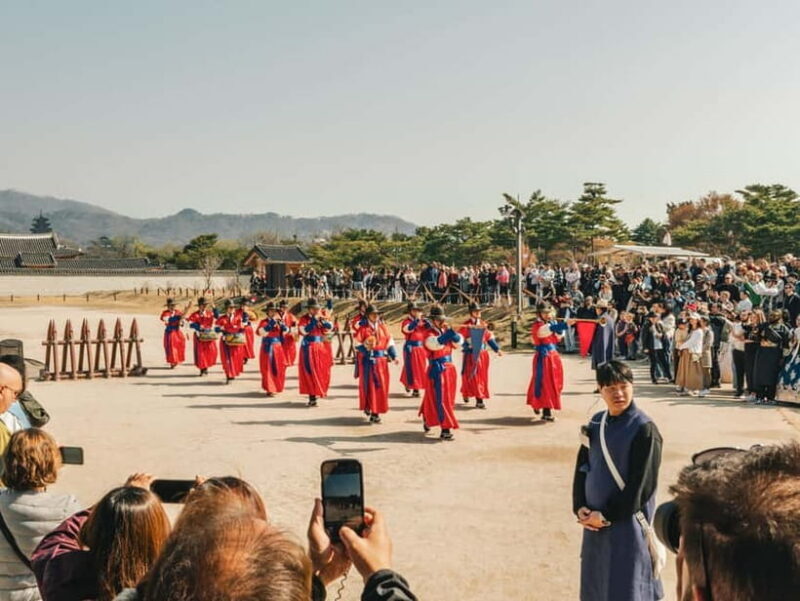
The Changing of the Guard is a highlight. Elaborate outfits and precise movements make the ceremony a lively contrast to the stillness of the palace buildings. It also creates a natural moment for photos in hanbok. The schedule can change with local circumstances, so treat the ceremony as a planned feature rather than a reason to expect a specific performance time.
The palace grounds are broad, and it is easy to spend longer than expected stopping for pictures. Your guide has to balance that with the rest of the route. Many guides build in photo time and keep the group moving, but the pace can feel brisk if you want to linger at every building. If taking many posed photos is your priority, be ready to work with the group’s timing.
The National Palace Museum of Korea adds a quieter, more reflective layer to this palace section. Its royal artifacts show the craftsmanship and artistic traditions of the Joseon court. The detailed tour description includes the museum, though the timed itinerary does not list it as a separate stop. Ask your guide how the museum fits into that day’s schedule, especially if the palace ceremony or local conditions affect timing.
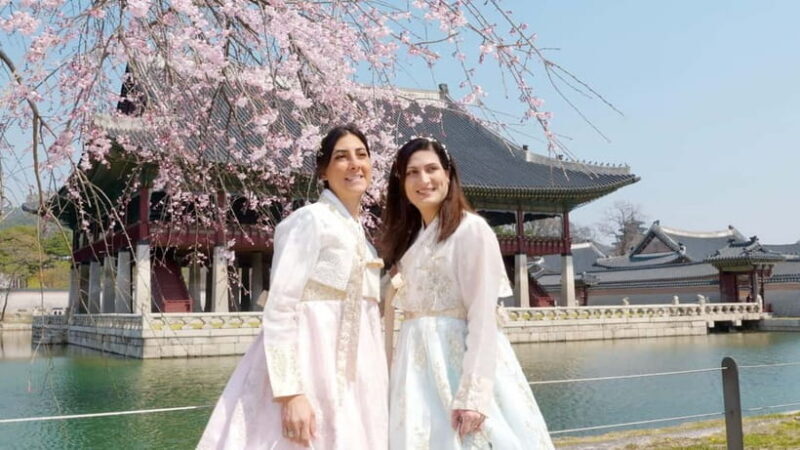
After the palace, the group takes a 30-minute snack break. The Korean-style snack changes with the season: something cool in summer or warm in winter. That flexibility makes practical sense after walking outdoors, and gives you a chance to rest before the next stretch.
The exact snack is not fixed in the tour details. One guide has taken a group to a tteokbokki spot, while another visitor recalls a café stop, so the experience may vary. Think of this as a light refreshment, not a full meal. If you need a substantial lunch, plan to eat before or after the tour.
More Great Tours Nearby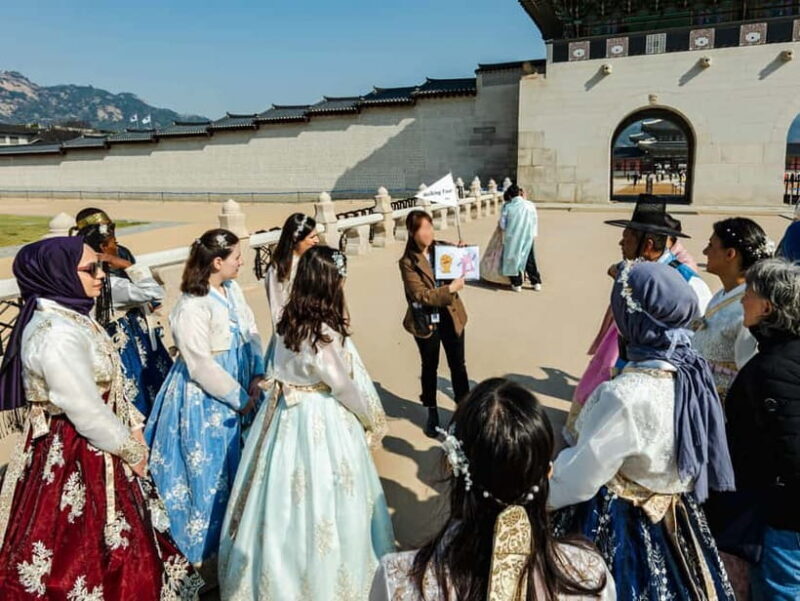
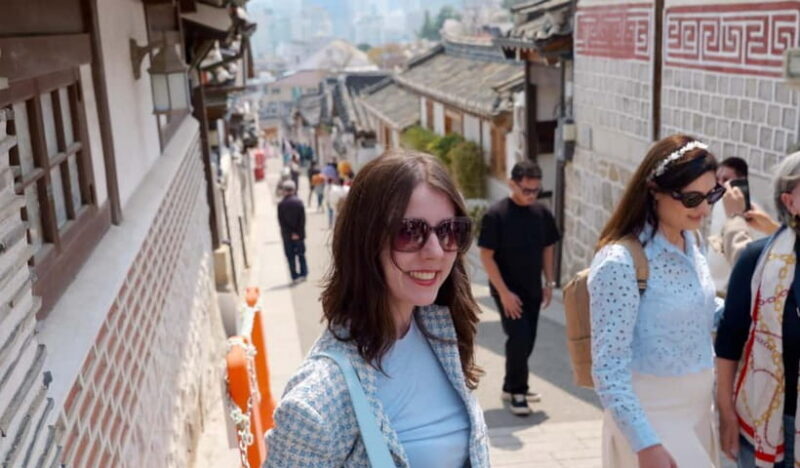
Bukchon Hanok Village gets about an hour, with time for a guided walk, sightseeing and photos. Its narrow lanes are lined with hanok, traditional Korean houses that offer a striking change from the palace’s grand scale. Here, the focus shifts from royal life to a neighborhood shaped by older domestic architecture.
This is one of the tour’s more atmospheric walks, and a guide can help you notice details you might otherwise pass by. Some guides seek out quieter lanes, a welcome touch when you want to enjoy the neighborhood rather than spend the whole walk in the most crowded spots. The route is still a walk through a real neighborhood, not a museum display, so stay with the group and follow your guide’s directions.
The one-hour limit is worth noting. Bukchon rewards a slower wander, but this tour has several stops to fit into four hours. If you want time to explore side streets at your own pace or take extensive photos, consider returning on your own after the tour.
You might also be interested in these Seoul experiences
The final stop is Baek In-je’s House, with about 30 minutes for a guided visit. The preserved home offers a look at the lifestyle of Korea’s upper class in the early twentieth century. After the palace and village, it gives the tour a different angle: not royal authority or traditional neighborhood life, but the world of an influential household in a more recent period.
Half an hour is enough for an introduction, not a long study of the home. Still, this stop rounds out the day well. It adds an architectural and social-history perspective that you would not get from the palace alone.
The guide is central to the experience. The best moments in the tour’s format depend on someone who can explain the buildings, keep the walking pace manageable and make room for questions and photos. Guides named Pearl, Lia, Gina, Thomas, Jane, Mia and others have led tours, but no particular guide is guaranteed.
The strongest guide experiences combine history with practical care. Guides have helped late-arriving participants stay in touch, adjusted the pace for the group, answered family questions and offered suggestions for places to eat or visit afterward. Photo help is another recurring strength. If you want pictures of your whole party in hanbok, ask early and be ready to move when the group does.
The tour is in English. A private group is available if you would rather have a more personal experience, though you should confirm the details and price for your chosen option.
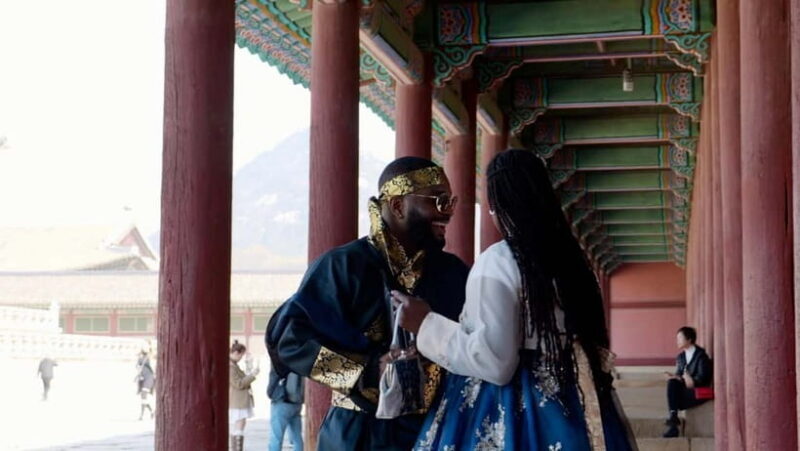
At $49, the value depends partly on which hanbok option you choose. The fee covers the guide, entrance fees, a seasonal snack and bottled water. Premium hanbok rental is included only with certain options, so compare the exact booking choices rather than assuming every price includes it.
The palace itself may not be the main source of value for everyone. One visitor noted that the palace entrance can be free for people wearing hanbok, which makes the guided service, outfit and organized route especially important to assess. The tour’s real advantage is having someone connect the palace, museum, village and historic home in one outing, while also helping with photos and keeping the day on track.
For a first visit to Seoul, that structure can be worth paying for. If you already know the palace and Bukchon well, or prefer unhurried independent walks, you may get better value from visiting on your own. The tour is most useful when you want history explained and several major sites handled in one half-day.
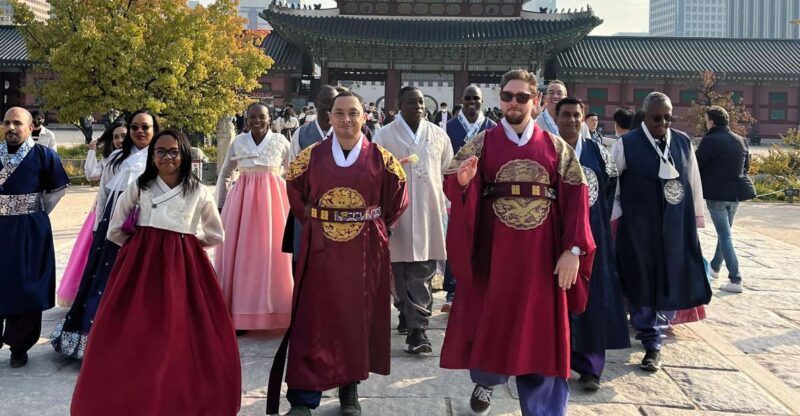
Wear comfortable walking shoes and bring clothes suited to the weather. The tour operates in rain or snow, and the schedule may change due to local conditions. Hanbok dressing and return take time, so arrive at the correct meeting point promptly.
Meeting points vary by option, so confirm yours before the tour. Hotel pickup and drop-off are not included as standard, though an optional pickup may be available for some bookings. If your selected option includes hotel pickup, the instructions say to meet on the hotel’s first floor 10 minutes before the start, even if the lobby is elsewhere.
The tour ends at one of the listed drop-off locations around Insa-dong and Seoul. Starting times depend on availability. You can cancel up to 24 hours in advance for a full refund, and the reserve-now, pay-later option lets you hold a place without paying at booking.
Book it if you want a guided first look at royal Seoul, like the idea of wearing hanbok, and value having a guide explain the palace and help with photos. The combination of Gyeongbokgung, Bukchon and Baek In-je’s House gives you a broad cultural introduction in four hours, with a snack and water included.
Think twice if you want a slow visit, dislike walking, or mainly want to take your time photographing the palace. For most first-time visitors who want history, dress-up and a well-organized route in one outing, this is a practical way to make a half-day in Seoul count.
“Landy truly went above and beyond! I couldn’t have chosen a better tour for my last day in Korea. Thanks to her, I was able to see and experience…”
The tour lasts four hours, with about 30 minutes for hanbok rental, 1.5 hours at Gyeongbokgung, 30 minutes for a snack, one hour in Bukchon Hanok Village and 30 minutes at Baek In-je’s House.
Premium hanbok rental depends on the option you select. Check your chosen option to see whether rental is included.
Yes. The live tour guide speaks English.
Yes. The Gyeongbokgung visit includes the Changing of the Guard ceremony. The schedule may change because of local circumstances.
The tour description includes a visit to the National Palace Museum of Korea, where you can see royal artifacts. It is not listed as a separate timed stop, so ask your guide how it fits into the day’s schedule.
No full meal is specified. A Korean-style snack is included, with a cool option in summer or a warm one in winter.
Hotel pickup and drop-off are not included as standard. Pickup may be optional for some bookings, so check your selected option and confirm the meeting instructions.
The meeting point depends on the option booked. Confirm the exact location before the tour.
Yes. The tour operates as scheduled in rain or snow, though the schedule may change because of local circumstances.
You can cancel up to 24 hours in advance for a full refund. A reserve-now, pay-later option is also available.
You can check availability for your dates here: